Forehead reduction is a hairline-advancement operation that shortens a high forehead by bringing the hairline forward, so for someone travelling from abroad the practical question is how to plan the trip. Plan for around 10 to 14 days so the surgery, suture removal and first review all fit your time on the ground.
The short answer
Forehead reduction in Korea shortens a tall forehead by advancing the hairline forward through an incision along the hairline. It is a surgical procedure that needs planned recovery time.
Most international patients plan around 10 to 14 days in Seoul so the incision sutures can be removed before flying instead of at home.
You can settle suitability, your realistic result and the plan in an online consultation from abroad before you ever book a flight.
At a single-surgeon clinic the same board-certified surgeon consults, operates and reviews you at 1, 3 and 6 months, with remote follow-up once you return home.
Start forehead reduction planning with an online consultation
The first step for an international patient comes before booking travel: finding out whether forehead reduction is even the right operation for you, and what it can realistically achieve on your hairline and forehead height. Forehead reduction works by advancing the hairline forward, so it suits people whose main concern is a tall forehead and who have reasonable hair density at the hairline; it is a different operation from a forehead lift, which raises low or heavy brows. Sorting out which one fits your face is exactly what a first conversation is for.
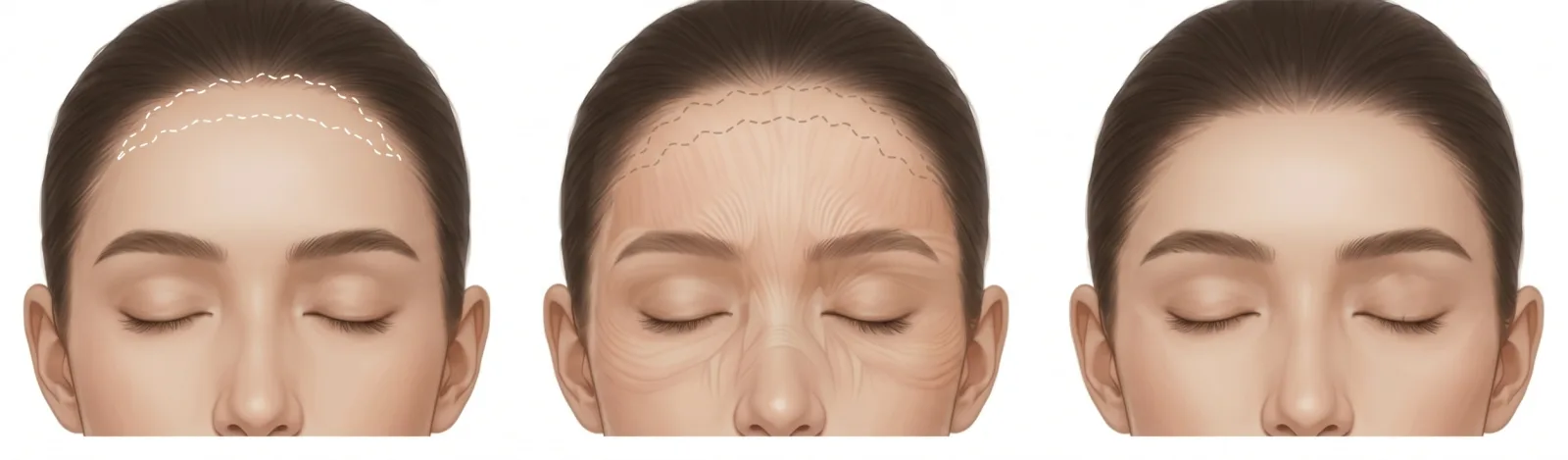
Illustration: through a fine line along the hairline (dotted), the hairline is brought forward to shorten a tall forehead.
You can do all of this remotely. Send clear photos of your forehead and hairline from the front and side, describe what bothers you, and ask the questions that matter to a traveller: if you are a candidate, how much forward movement of the hairline is realistic, and what recovery looks like before you can fly. A pre-assessment over an online consultation means you only commit to the trip once the plan makes sense, and it spares you flying in for a procedure that may not suit you.
A good online consultation should also be willing to tell you no. If your hairline is already low, or hair density at the front is limited, a careful surgeon will say so and will not sell you the surgery. Use the call to confirm who will actually perform the operation, how many of these the surgeon does, and how follow-up works once you are back in your own country.
How long to stay
How long to stay in Korea for forehead reduction
For forehead reduction, the length of your stay is driven by one practical milestone: the incision runs along the hairline and is closed with sutures, and it is far better to have those sutures removed in person before you fly than to manage removal at home. As a general guide for this kind of hairline incision, plan to be in Seoul for around 10 to 14 days, which covers the consultation and surgery, the early swelling settling, and an in-person suture check and removal before departure.
Build the trip backwards from that. Arrive a day or two before surgery so there is time for an in-person consultation, any photographs and a calm pre-operative discussion, so nothing is decided in a rush on the same day. Then allow the days afterwards for the forehead to settle and for the surgeon to confirm the incision is healing cleanly before you sign off on the flight home. Our general overview of how long to stay in Korea for surgery walks through how to think about this for facial procedures.
If your schedule is tight, raise it in the online consultation instead of assuming the minimum. Healing is individual, and a surgeon who knows your case can tell you whether your particular plan leaves enough margin, and what the trade-offs are if you have to leave a little earlier than ideal.
Your days in Seoul
What your days in Seoul actually look like
On the consultation day you meet the surgeon in person, the hairline and forehead height are assessed and marked, and the plan agreed online is confirmed against what is seen on the day. This is the moment to ask anything still open: how far the hairline can move, where the incision sits, and what the early days will feel like. There is no obligation to proceed the same day, and an unhurried clinic will not pressure you to.
On surgery day, the hairline-advancement procedure is carried out through the incision along the hairline, the scalp is advanced to bring the hairline forward, and the incision is closed with sutures. Afterwards you can expect a dressing and some forehead swelling, with the early days being the most noticeable. You rest, keep the head elevated as advised, and let the swelling begin to settle. Most of the visible puffiness eases over the first week or two, though full settling continues for longer.
Because Garnet is in Apgujeong, your recovery days are spent in a central, walkable part of Seoul close to the clinic, which makes it easy to return for a quick check if anything feels off. For practical guidance on these in-between days, see recovering in Seoul after surgery.
Before you fly
Suture removal and the green light to fly
The two things to settle before you fly are suture removal and a final wound check. The incision along the hairline is closed with sutures, and having them removed in person by the operating surgeon, instead of by a clinic at home that did not perform the surgery, lets him confirm the line is healing as expected and that the hair is starting to grow back through the scalp incision as it should. This in-person check is one of the main reasons to plan a stay of 10 to 14 days.
For this kind of procedure, flying itself is generally a question of timing and comfort, but the sensible order is: swelling settling, sutures out, surgeon satisfied, then travel. Our guide on when you can fly after plastic surgery covers the general considerations; for your specific case, the surgeon who operated should be the one to give the green light.
Before you leave, get your after-care in writing: how to care for the incision, what is normal as the scar matures along the hairline, what would count as a warning sign, and exactly how to reach the clinic from abroad. Pack that information with your travel documents so you are not searching for it later.
Follow-up from home
How follow-up works once you are home
Forehead reduction does not end when you board the plane. The scar along the hairline keeps maturing for months. It fades and softens over time and is progressively concealed as hair grows through and around the incision line, so meaningful follow-up runs well past your stay in Korea. A clinic that treats international patients should plan for this from the start.
In practice, remote follow-up means staying in contact with the clinic by messenger and photos. You can send updates of the hairline and scar so the surgeon who operated can confirm healing is on track, reassure you about normal stages, and flag anything that needs local attention. That continuity matters more for a hairline scar than for many procedures, because how the scar settles and is concealed unfolds gradually over the first months.
At a single-surgeon clinic the person reviewing your photos is the same surgeon who performed the operation, which removes the guesswork of explaining your case to someone new. The structured 1, 3 and 6 month checks are designed to map onto exactly this timeline. Read more in our overview of how a single-surgeon clinic handles continuity of care.
At Garnet
How Garnet handles international forehead reduction
Garnet is a single-surgeon plastic surgery clinic in Apgujeong, Seoul, registered with Korea's foreign-patient programme. Its only operating doctor, Dr. In-Soo Baek, is a board-certified plastic surgeon (Korean medical licence no. 77407). He runs the consultation, performs the hairline-advancement procedure himself, removes the sutures and reviews every follow-up. A dedicated coordinator stays with you from the first online message through to your departure and beyond.
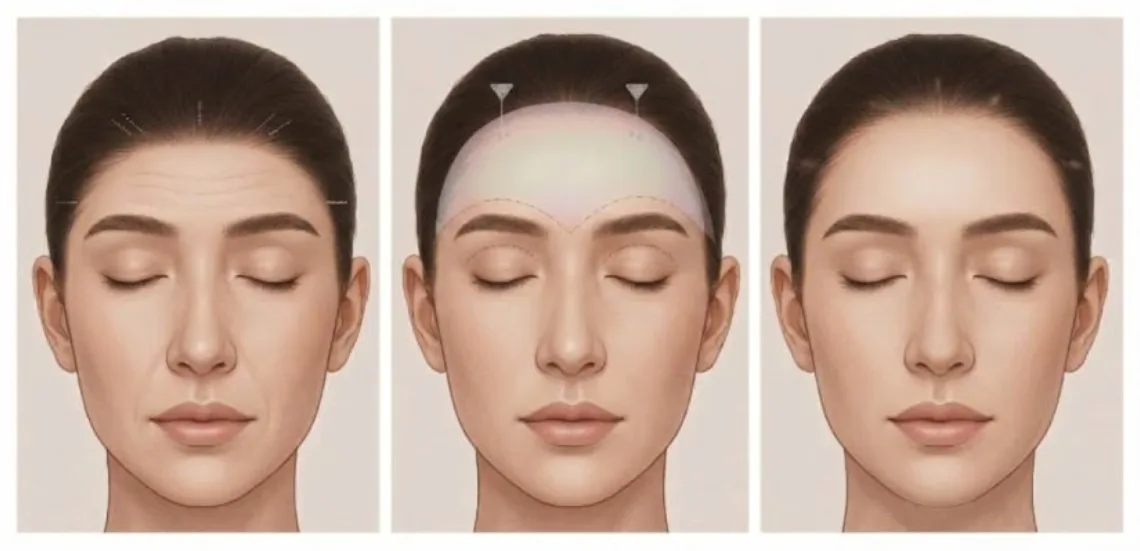
Illustration: the forehead and brow are lifted from within and held at fixation points behind the hairline (Pentafix™), rather than pulled at the skin.
For an international patient that translates into a clear, joined-up plan: an online assessment of your hairline before you book, an in-person consultation and surgery during your stay, suture removal and a wound check before you fly, and structured follow-up at 1, 3 and 6 months with remote check-ins by messenger once you are home. There is no consultation or imaging fee and no pressure to decide on the day.
If you are weighing the trip, start with the facts about your own forehead. You can read the full forehead reduction overview, compare it against a forehead lift if you are unsure which fits, and review what to expect from forehead reduction recovery. Then send photos for a no-obligation pre-assessment before you plan anything.
Real Results
Before & After
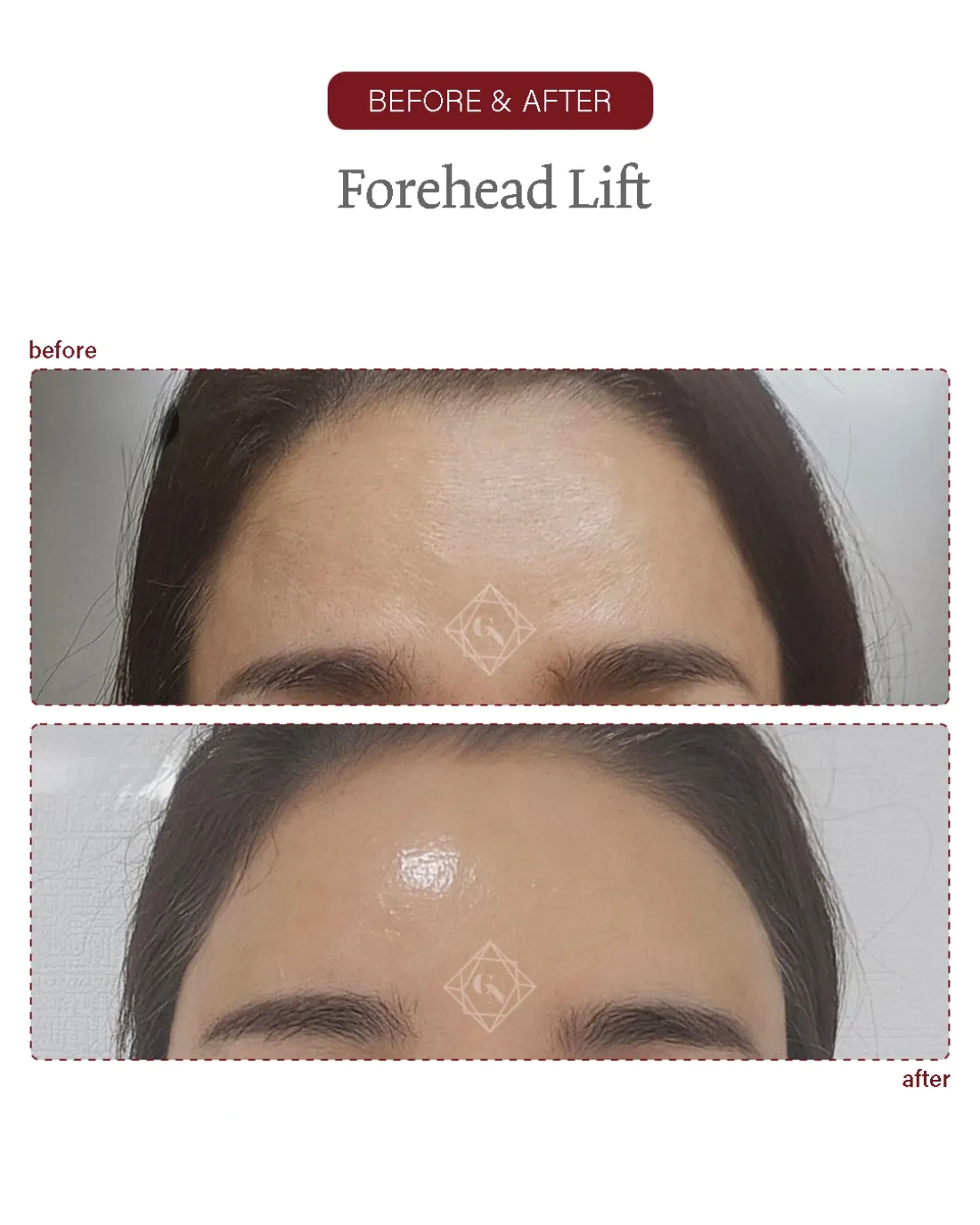
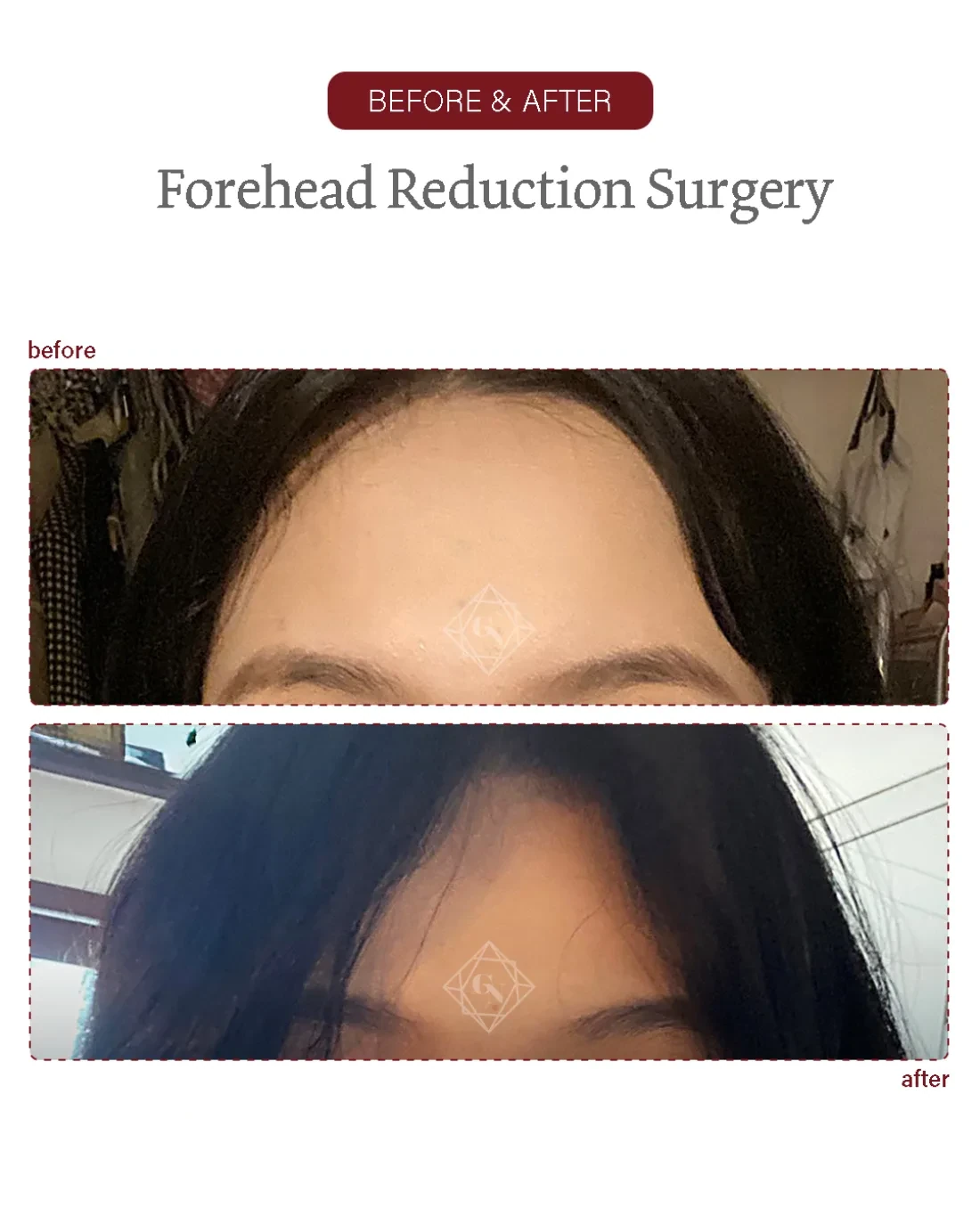
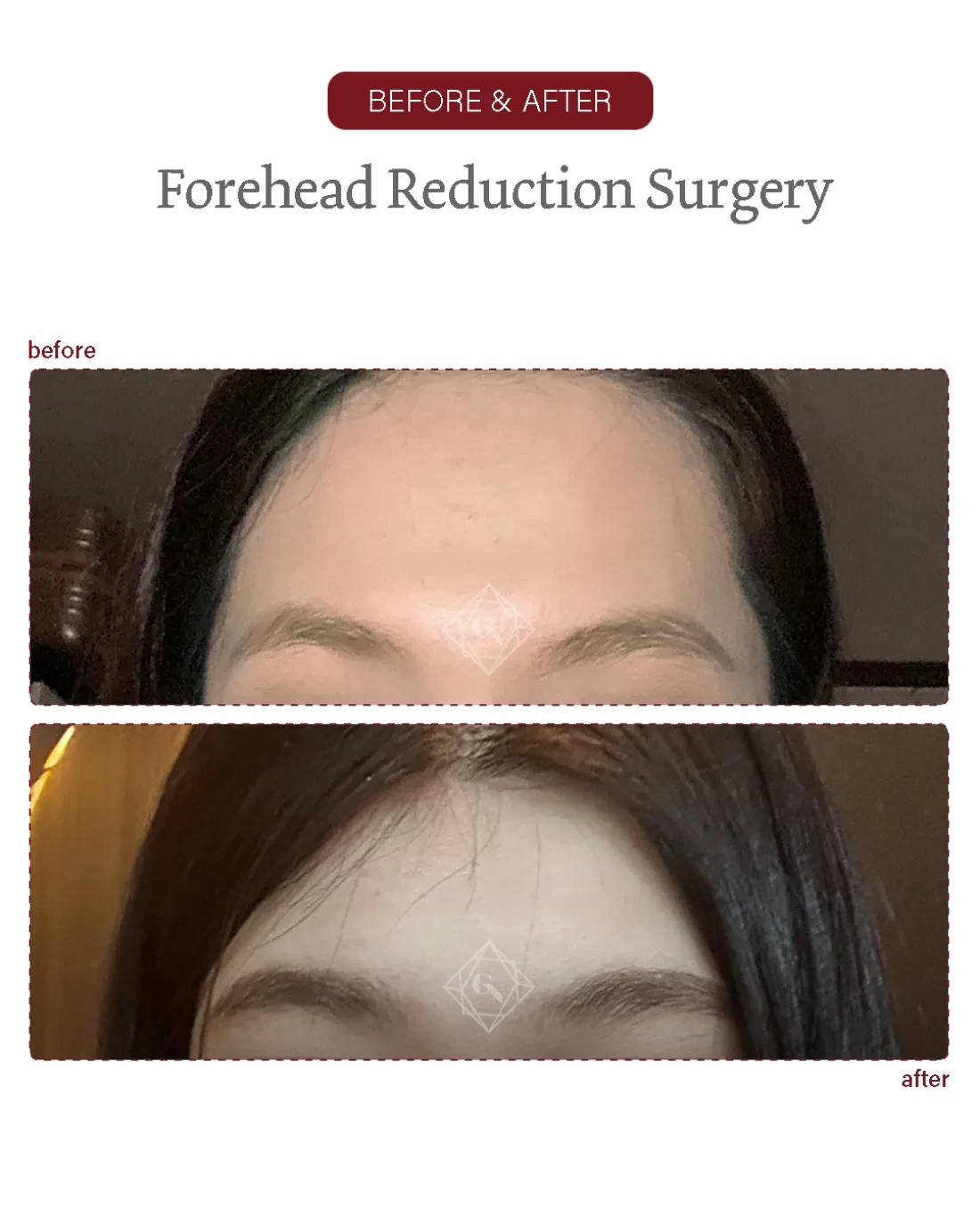
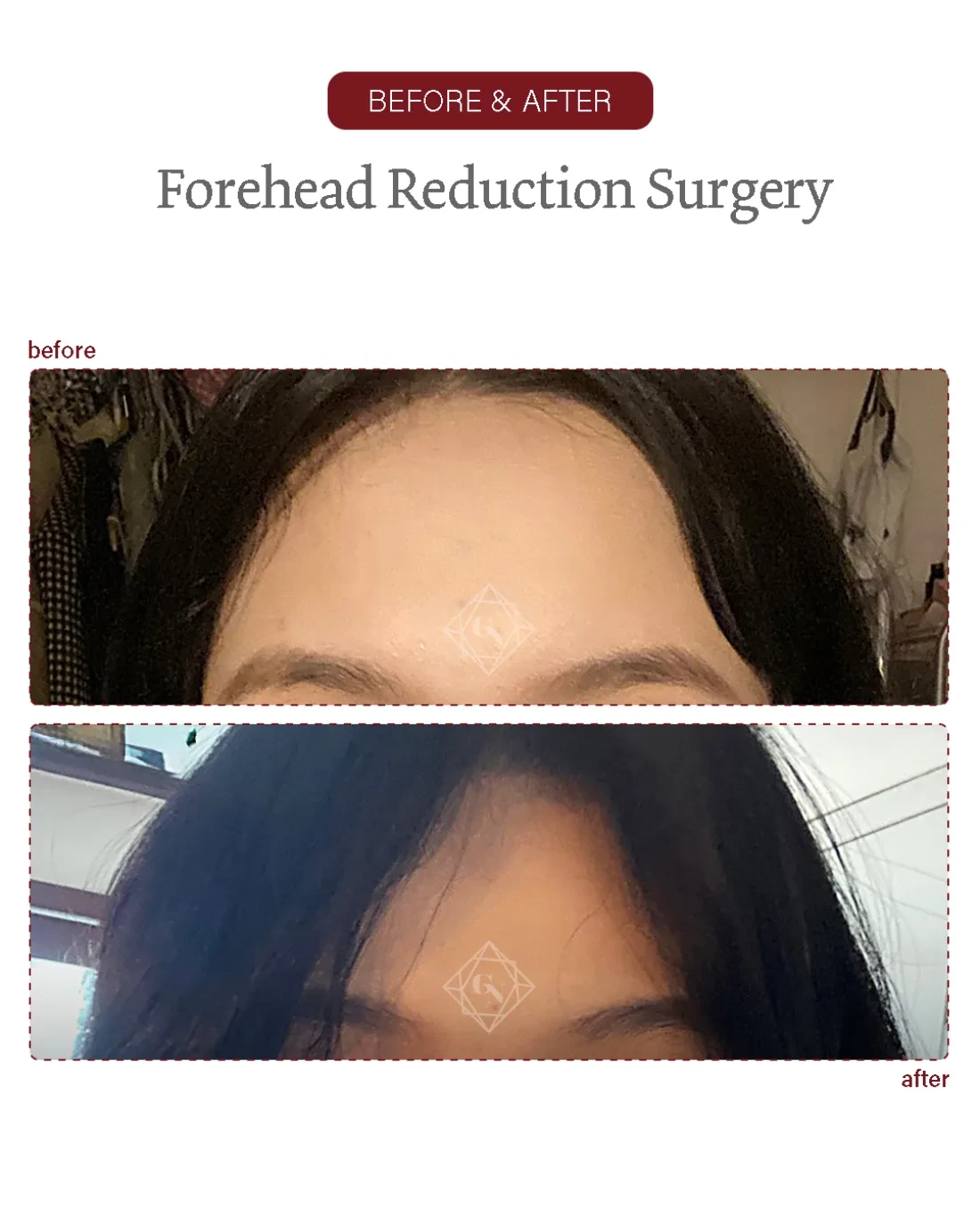
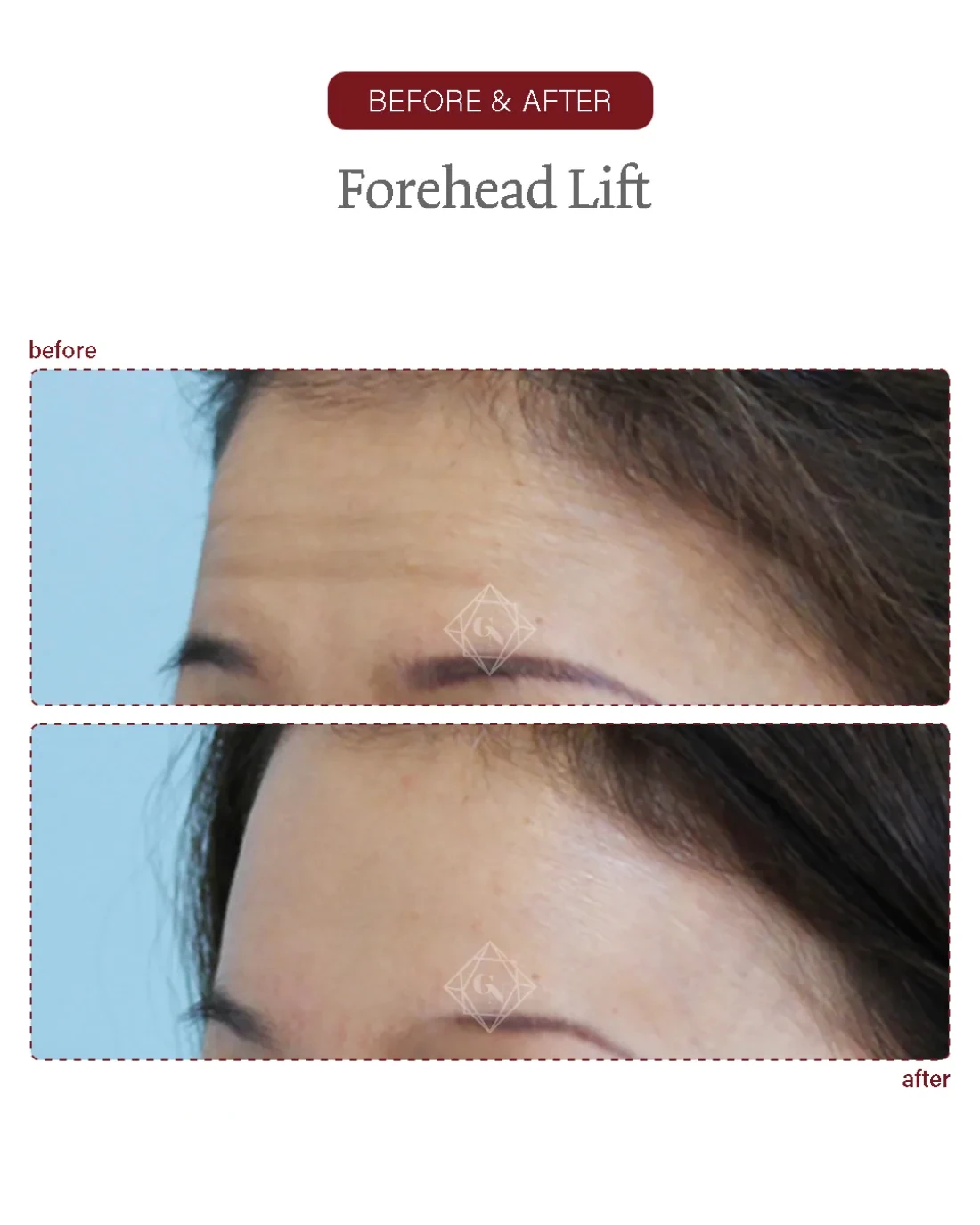
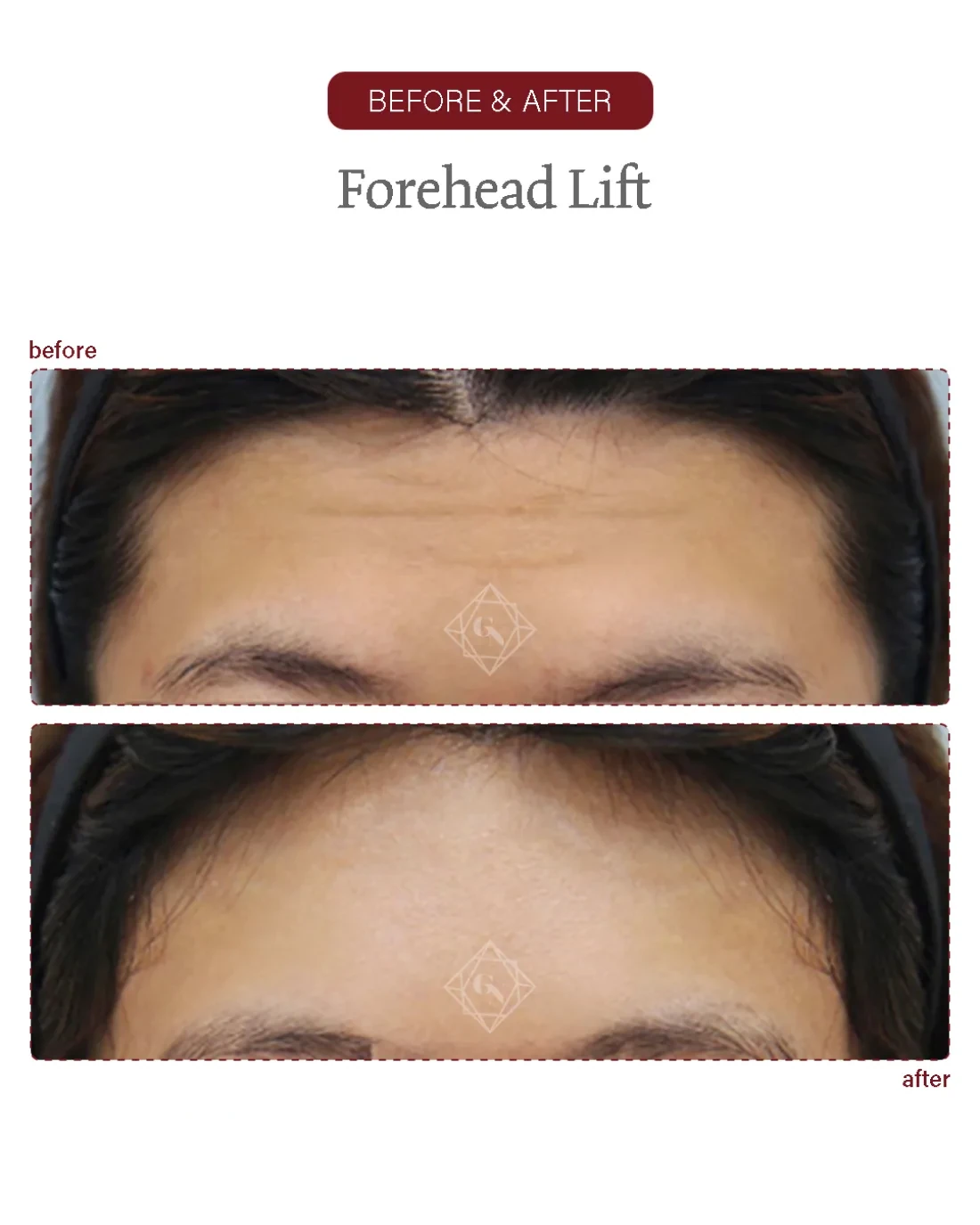
Forehead reduction before/after sets of actual Garnet patients (published with consent). Results, recovery and scar appearance vary by individual, depend on scalp laxity and hair density, and are not guaranteed.
Prices
Price at Garnet
Forehead reduction
₩7,000,000 + VATExcluding VAT (10% VAT is added at payment)Book now
Same price as Korean patients. Prices shown exclude 10% VAT; your written quote, issued after the in-person consultation, shows the full amount payable.
Dr. In-Soo Baek
Director & sole operating surgeon
Korean medical licence no. 77407
Operate on what you came for. Trained at Korea University Medical Center. Every case planned, performed and reviewed by the same hands.
1Operating surgeon
~2Surgeries per day
7Registered techniques
Board-certified plastic surgeon
Plastic surgery training at Korea University College of Medicine & graduate school
Korean Society of Plastic and Reconstructive Surgeons member, in its facial-contour, eye & rhinoplasty groups
Consults, operates and follows up each case himself
Peer-reviewed papers behind the facts on this page. Each describes findings in its own study group — not results at Garnet — and none predicts your own outcome.
Lee SH et al. Forehead Reduction Surgery via an Anterior Hairline Pretrichial Incision in Asians: A Review of 641 Cases. Aesthetic Plastic Surgery. 2021. doi:10.1007/s00266-020-02103-4
Keramidas E et al. Flying Following Breast Augmentation. How Safe is it? An Evidence-Based Report of 20 Years of Experience. Aesthetic Plastic Surgery. 2026. doi:10.1007/s00266-026-06028-2
Epstein J et al. Hairline-Lowering Surgery. Facial Plastic Surgery Clinics of North America. 2020. doi:10.1016/j.fsc.2020.01.002
Maltezou HC et al. Challenges with medical tourism. Current Opinion in Critical Care. 2024. doi:10.1097/mcc.0000000000001148
FAQ
Common questions
How do international patients get forehead reduction in Korea?
The usual path is an online consultation first, where you send photos of your forehead and hairline for an assessment of whether forehead reduction suits you. A planned trip follows to Seoul for an in-person consultation, the hairline-advancement surgery, suture removal before you fly, and remote follow-up once you return home.
How long should I stay in Korea for forehead reduction?
Plan for roughly 10 to 14 days. The incision runs along the hairline and is closed with sutures, so it is far better to stay until the early swelling settles and the surgeon can remove the sutures and confirm clean healing in person before you fly.
Can I start with an online consultation for forehead reduction?
Yes. You can send clear front and side photos of your forehead and hairline and get a pre-assessment of your candidacy, the realistic amount of hairline advancement, and the recovery timeline before you commit to any travel. You only book the trip once the plan makes sense.
Do I need to remove the sutures in Korea or can I do it at home?
It is strongly preferable to have them removed in Korea by the surgeon who operated. An in-person suture removal lets the surgeon confirm the hairline incision is healing as expected and that hair is beginning to grow back through it, which is hard to assess remotely or for a clinic that did not perform the surgery.
When can I fly home after forehead reduction?
The sensible order is swelling settling, sutures removed, and the operating surgeon satisfied with the wound, then travel. For this procedure, flying is generally a question of timing and comfort, but the surgeon who performed your operation should be the one to give the green light for your specific case.
How does follow-up work after I return to my country?
Remote follow-up is done by messenger and photos. You send updates of your hairline and scar so the operating surgeon can confirm healing is on track and reassure you about normal stages, with structured reviews mapped to 1, 3 and 6 months. A single-surgeon clinic means the same surgeon who operated reviews your photos.
Is forehead reduction the same as a forehead lift?
No. Forehead reduction shortens a tall forehead by advancing the hairline forward, while a forehead lift raises low or heavy brows and the upper face. They address different concerns, so part of the first consultation is confirming which one, if either, actually fits your face.
Will a coordinator help me through the process?
Yes. At Garnet a dedicated coordinator stays with you from the first online message through scheduling, your stay in Seoul and after-care, so you are not navigating consultation, surgery and recovery on your own in an unfamiliar city.
Is Garnet registered to treat foreign patients?
Yes. Garnet is registered with Korea's foreign-patient programme and coordinates consultation, scheduling and after-care for international visitors, with the same board-certified surgeon, Dr. In-Soo Baek, consulting, operating and following up throughout.
My mom recently had a brow lift and lower blepharoplasty with Dr. Baek, and our experience has been wonderful so far. The Garnet team was incredibly kind and welcoming, with Kelly assisting us as our English consultant—she made everything…
I’m so happy I chose this clinic for my lower blepharoplasty. I was traveling from abroad by myself, so I was a little nervous, but from the beginning I felt comfortable and truly cared for. Everyone was kind, patient, and professional…
Came in for an in-person consult and ended up choosing Garnet and Dr.Baek for my non-incisional DES and tiplasty/alarplasty. I communicated with Kelly (English consultant) from the start till now (3 weeks post-op). She really help me feel…
My under-eyes have been sagging and folding for years... I tried to cover it up with makeup, but it actually got stuck in the wrinkles and made it stand out even more. While going for consultations, I noticed that the bigger the hospital…
If you are thinking about forehead reduction from abroad, send front and side photos of your hairline for a no-obligation pre-assessment before you plan a trip to Seoul.
Send photos and your question before you travel. An English-speaking coordinator reviews every enquiry and replies with guidance on whether surgery is appropriate, the likely plan and timing.
✓ Reviewed by the clinic coordinator, not a bot
✓ Photo-based pre-assessment before you fly
✓ Foreign-patient scheduling & after-care
✓ One surgeon for consultation, surgery and follow-up
Prefer to chat now? Reach the coordinator directly:








 T S7 months ago



