Revision lower blepharoplasty corrects a lower eyelid that a previous procedure left pulled down, rounded, hollowed or scarred. It is its own kind of surgery: quieter, more technical, and harder than the first operation. Correction is often possible, but it needs a careful assessment of what can realistically be improved and when it is wiser to wait.
The short answer
The most common reasons for revision are lid retraction or a pulled-down, rounded eye (often from removing too much skin), an over-hollowed look, residual bags, or visible scarring.
Revision is technically harder than primary surgery because tissue is scarred and support may be weakened. It usually focuses on adding support and volume; removing more is rarely the answer.
Timing matters: many problems soften over months as swelling and scar tissue settle, so the right time to revise is often not immediately.
At Garnet a board-certified plastic surgeon assesses your previous result in person and gives a clear read on what revision can and cannot achieve before any plan is made.
Common problems after a previous lower blepharoplasty
Most patients who seek revision fall into a few groups. Some have a lower lid that sits too low, showing white below the iris (scleral show) or pulling the eye into a rounded, sad shape, usually because too much skin or muscle was removed, or because lid support was weakened. Others have the opposite complaint: a hollow, scooped-out under-eye where too much fat was taken away, leaving a tired or skeletal look. Residual bags, asymmetry between the two sides, a visible or pulled scar, or a persistent stiff, dragged feeling are also common reasons to ask about correction.
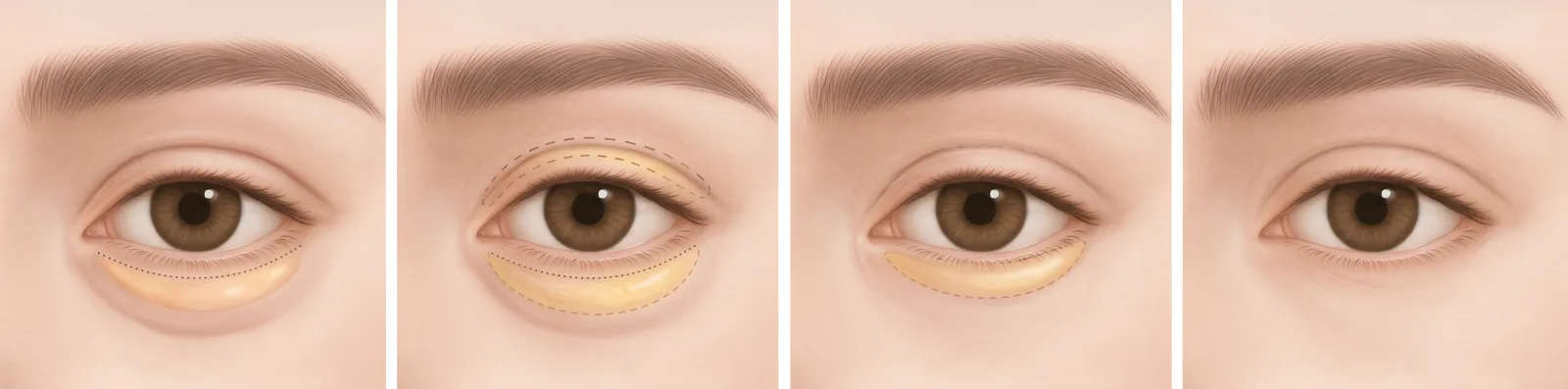
Illustration: through a fine line just below the lashes, the under-eye fat (yellow) is repositioned over the bony rim to fill the groove rather than removed.
Understanding which problem you have is the whole basis of a revision plan, because the fixes are different and sometimes opposite. A lid that is pulled down needs support and often added tissue; an over-hollowed eye needs volume restored; residual bags may need a careful, conservative second look. This is the reverse of the instinct that brought many patients to surgery in the first place: revision is more often about putting back and supporting than about taking away. For the underlying procedure itself, the lower blepharoplasty page covers how a primary operation is structured.
It also helps to separate a genuine complication from normal, slow healing. Numbness, mild stiffness, lingering swelling and an under-eye that simply has not fully settled are common in the months after surgery and frequently improve on their own. A true problem that warrants revision tends to be a fixed change in shape or position, or a result that has plateaued and is clearly not what you wanted. A recovery that is merely incomplete does not qualify.
Retraction
Lid retraction, scleral show and a pulled-down eye
The most consequential complication of lower blepharoplasty is lid retraction, where the lower lid is drawn downward, exposing white beneath the iris, rounding the outer corner, and in more pronounced cases turning the lid edge outward (ectropion). Beyond appearance, this can cause functional problems: dryness, irritation, watering and difficulty closing the eye fully, because the lid no longer hugs the eyeball as it should. It typically follows removal of too much skin or muscle, weakened lid support, or scarring that tethers the lid downward.
Correcting retraction is one of the more demanding tasks in eyelid surgery. The aim is to restore the lid's height and support: releasing scar tissue that is pulling the lid down, reinforcing the lid's tendon support so it sits snugly again, and frequently adding tissue (a graft or repositioned fat) to replace what was lost, since you cannot simply pull missing skin back into place. The exact combination depends on how the lid was affected and how much support remains, which is why this is assessed individually. No single standard fix applies.
Because the under-eye area is delicate and already operated on once, revision for retraction rewards patience and conservatism. A surgeon experienced across the full range of eye procedures will weigh the functional issues (protecting the eye and tear film) alongside the cosmetic ones. Appearance is not chased on its own. Realistic expectations matter here: revision can usually improve lid position and comfort meaningfully, but a previously operated lid may not return to a perfectly pristine state, and that is part of the conversation.
What's involved
What lower blepharoplasty revision involves
Revision lower blepharoplasty is planned around the specific problem. It does not repeat the original operation. For a pulled-down or rounded lid, it commonly involves releasing scar tissue, reinforcing lid support so the lid sits higher and tighter, and adding tissue where skin or volume is lacking. For an over-hollowed under-eye, the focus shifts to restoring volume, by repositioning remaining fat or grafting, to refill the scooped area gently. For residual bags or asymmetry, a careful, limited second procedure may rebalance the area without over-correcting.
Technically, revision is harder than the first surgery for a simple reason: the tissue is scarred, the natural planes are less clean, and the lid's support may already be compromised. That means there is less margin for error and a stronger emphasis on adding and supporting, because further removal can worsen retraction. The transcutaneous, layered approach Garnet uses for primary lower blepharoplasty (repositioning fat and respecting the muscle and skin layers) reflects the same philosophy that makes revision safer: work with the structures and avoid simply excising them.
Anaesthesia and recovery broadly resemble a primary lower blepharoplasty: typically local anaesthesia with light sedation, with swelling, bruising and a tight feeling in the early days. A more complex revision can mean a little more swelling and a longer, more gradual settling. Sutures are generally removed at around a week, and the final result of a revision can take longer to mature than a first operation. Because of that, structured follow-up over several months is especially valuable; you can read more about comfort and recovery on the pain and anaesthesia page.
Timing
When to wait and when to revise
One of the most important, and most overlooked, parts of revision is timing. Immediately after a lower blepharoplasty, swelling, scar tissue and tissue stiffness can make a result look worse than it will eventually be. Many early concerns, including mild lid stiffness, a slightly low lid, lingering puffiness and numbness, soften over the following months as the tissues relax and scar tissue matures. Operating too soon can mean correcting a problem that would have improved on its own, on tissue that is still inflamed and harder to work with.
For that reason, unless there is a functional emergency (an eye that cannot close or protect itself), revision is usually planned only once the first result has fully settled, often a number of months later. Waiting also gives a truer picture of what actually needs correcting, so the revision can be precise. The exception is genuine, significant retraction with eye-surface symptoms, which may need earlier intervention to protect the eye; that is a judgement for an experienced surgeon.
If you are unhappy with a recent lower blepharoplasty, the most useful first step is often not to rush into another operation but to get an unhurried assessment of where things stand and how much further they are likely to settle. A surgeon who is not under pressure to operate can tell you when waiting is the better medicine. You can begin that conversation from home through an online consultation before deciding whether and when to travel.
Assessment
How a previous result is assessed
Assessing a previously operated lower lid is more involved than a first consultation. The surgeon looks at lid position and tone, how the lid springs back when gently drawn down, the presence and direction of scleral show or rounding, where volume has been lost or scar tissue is tethering, and the quality and position of the original scar. Just as importantly, they check eye-surface health (dryness, watering, closure), because in revision, function and appearance have to be solved together.
Your history is central: what was done before, how long ago, what you were told, and how the result has changed over time all shape what is realistic now. Knowing how much skin, muscle or fat was removed previously matters, because it determines whether the answer is to add support, restore volume, release scar, or some combination. This is also why a previously operated case is hard to judge from photos alone. The in-person tests of lid support and tissue mobility carry a lot of the information.
Candour is the heart of a revision assessment. A previously operated lid will never be entirely as it was before any surgery, and a candid surgeon will tell you what revision can realistically improve, what it cannot, and when waiting is wiser than operating. Hearing 'let's wait' or 'this is as good as it will safely get' is not a brush-off. On a delicate, twice-operated area it is often the responsible answer, and it is the kind of assessment Garnet aims to give.
At Garnet
How Garnet approaches revision
Garnet is a single-surgeon clinic in Apgujeong, Seoul. Dr. In-Soo Baek is a board-certified plastic surgeon (Korean medical licence no. 77407) and the only operating doctor. He assesses your previous result, plans the correction, performs the revision himself and reviews every follow-up. For revision, that continuity is especially valuable: the same surgeon who judged what was wrong is accountable for the correction and for guiding the slower, more gradual recovery that revision often involves.
The clinic's working principles suit revision well. Only the area you came for is addressed, there is no pressure to book the same day, and the day is kept deliberately small so each case has unhurried time. All of this matters when the surgery is technically demanding and the margins are fine. With a background spanning many thousands of eye procedures, the assessment of a previously operated lid is grounded in experience, and structured follow-ups at one, three and six months let a revision result be judged fairly as it matures.
If a previous lower blepharoplasty has left you with a pulled-down lid, a hollowed under-eye, residual bags or a scar you are unhappy with, the sensible first step is a clear read on what can be improved and when. Send clear photos and your history through an online consultation for a no-obligation pre-assessment, and you can decide, without pressure, whether revision, or simply more time, is the right path. This page focuses on revision; for the primary operation, see the lower blepharoplasty overview.
Real Results
Before & After
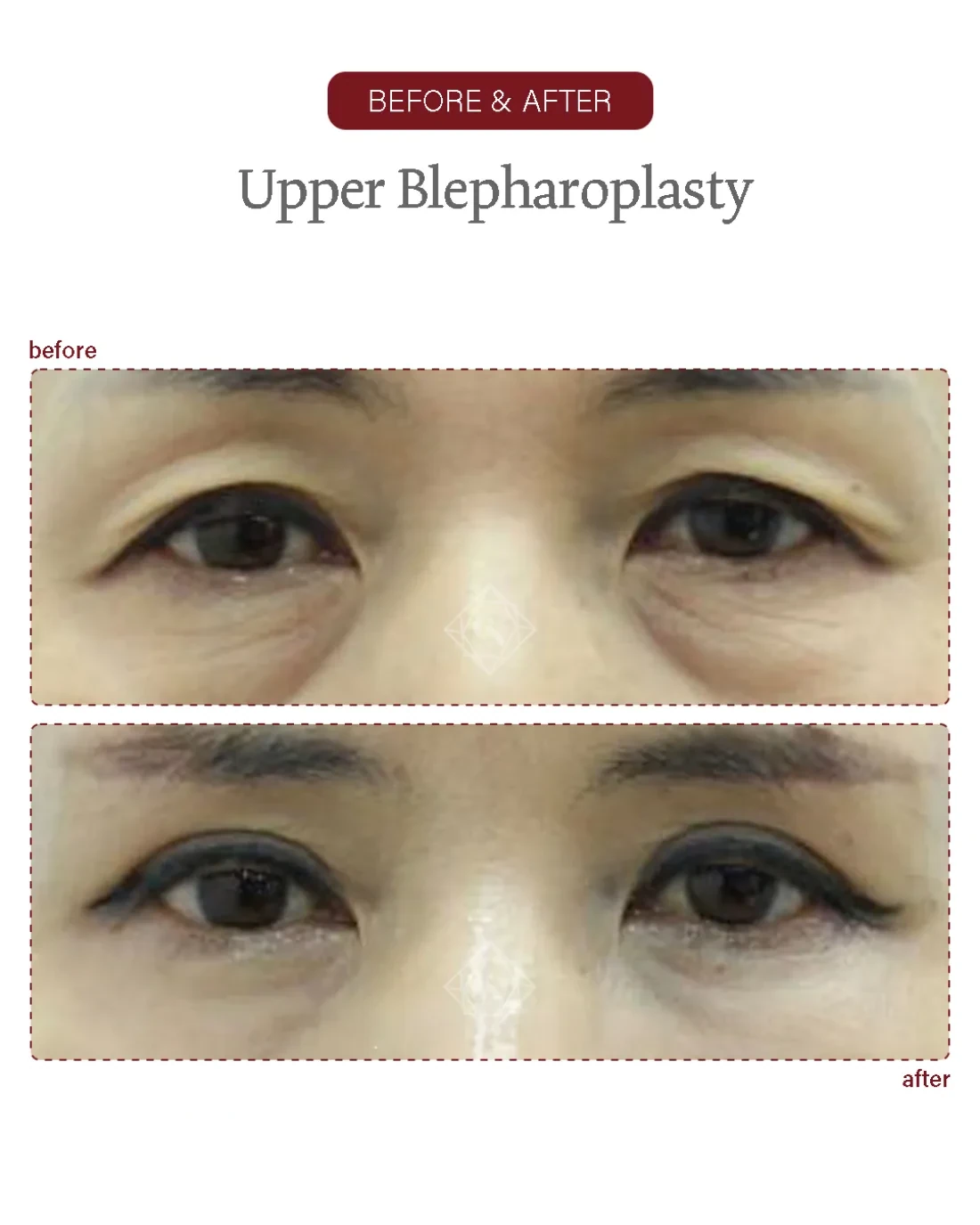
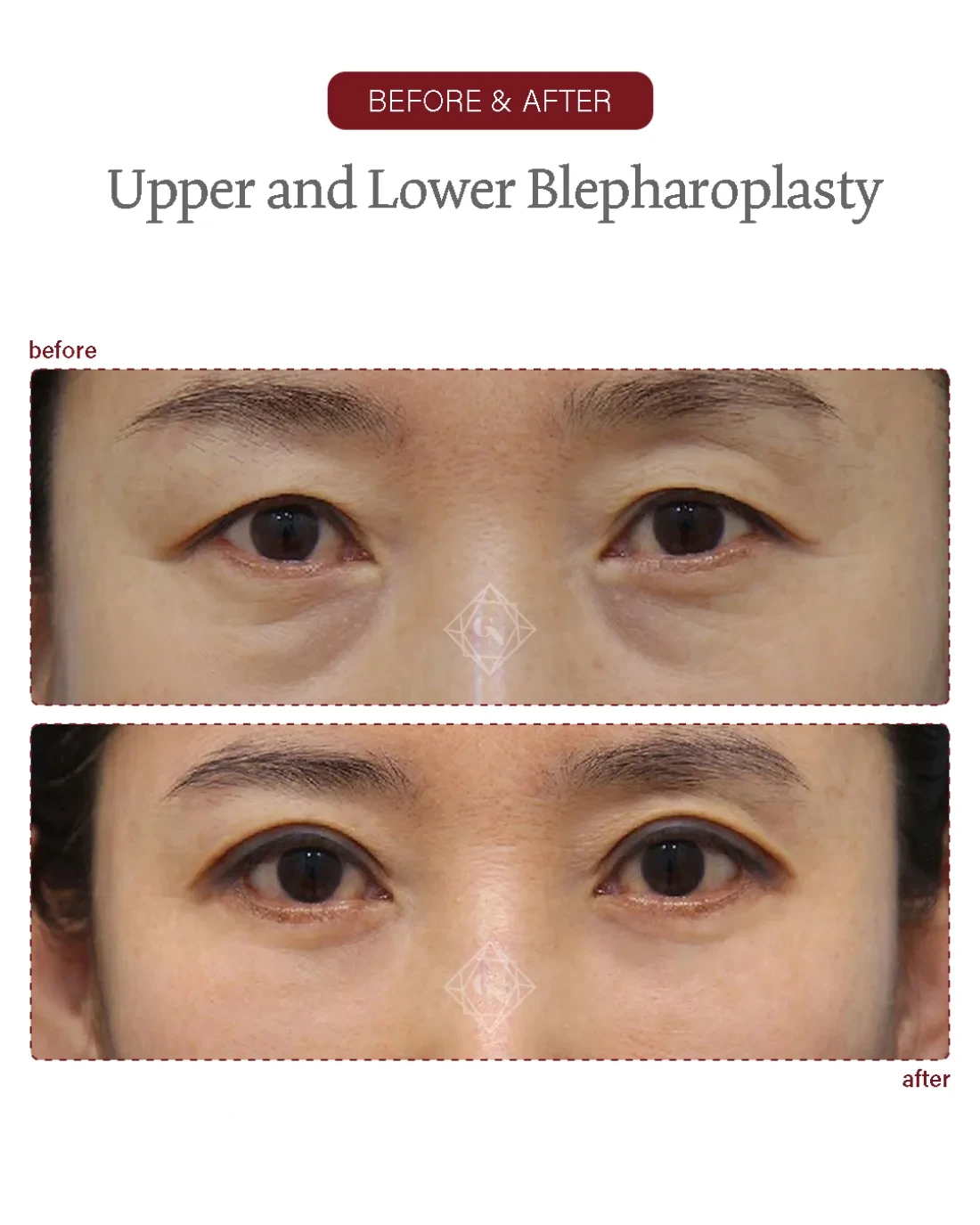
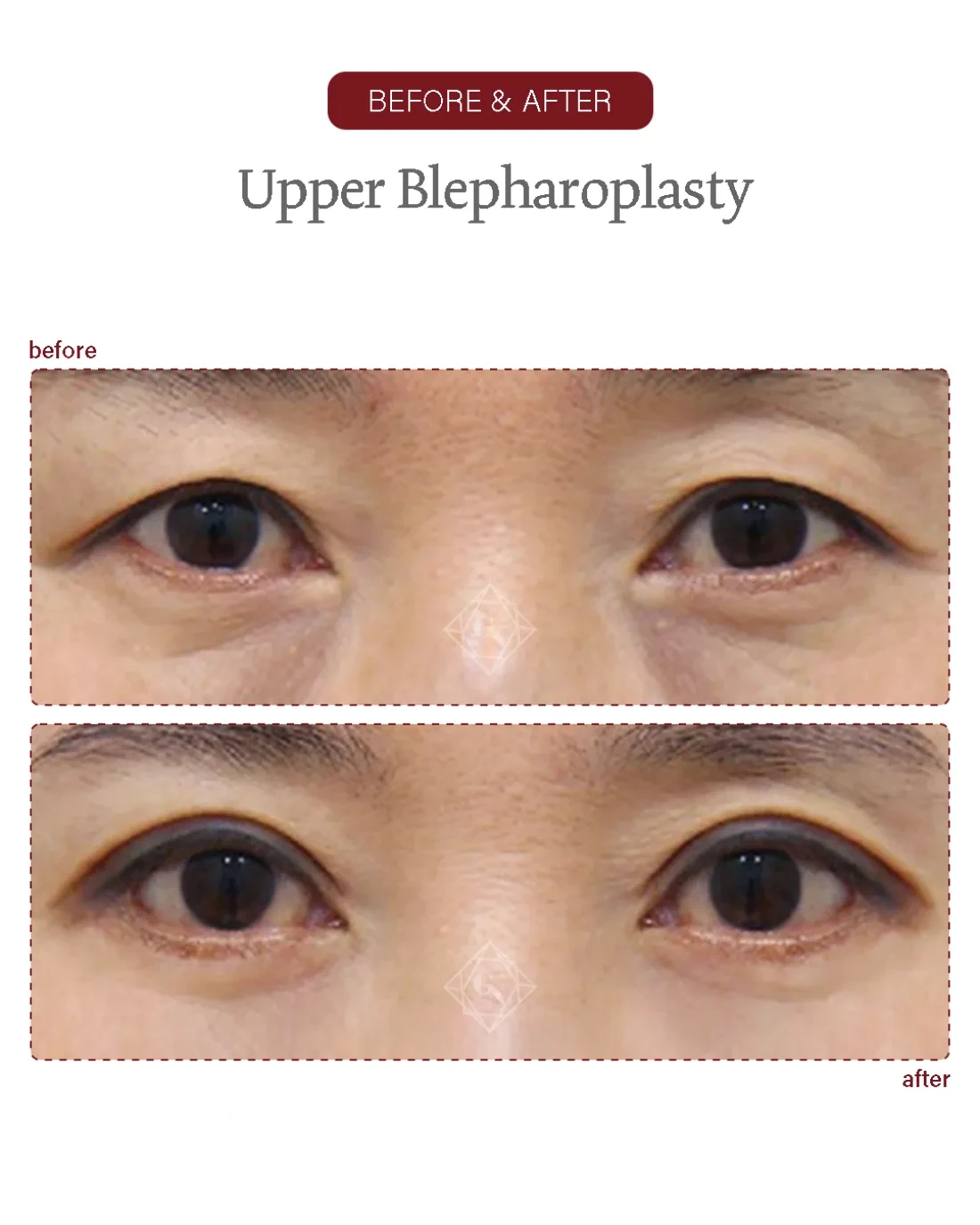
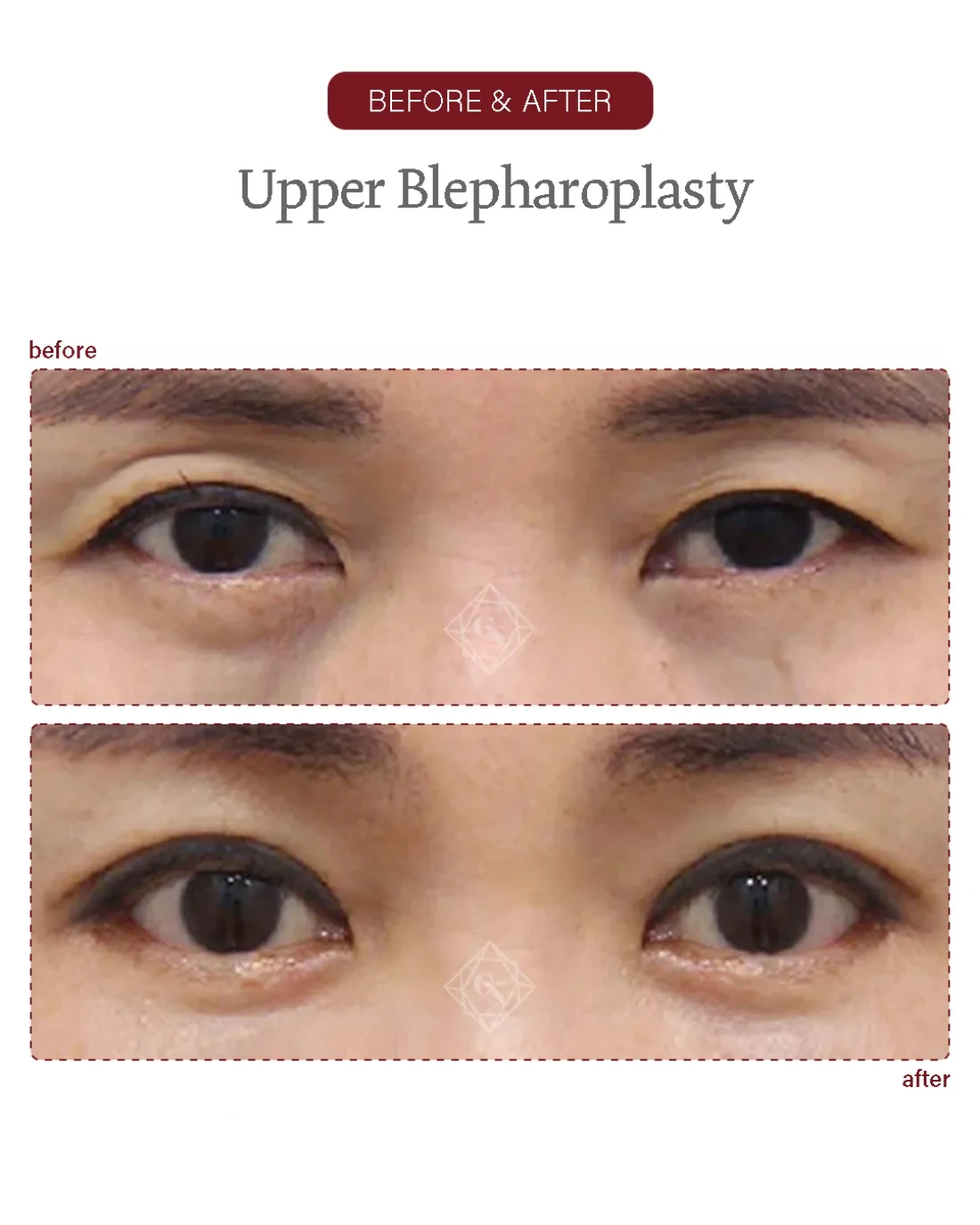
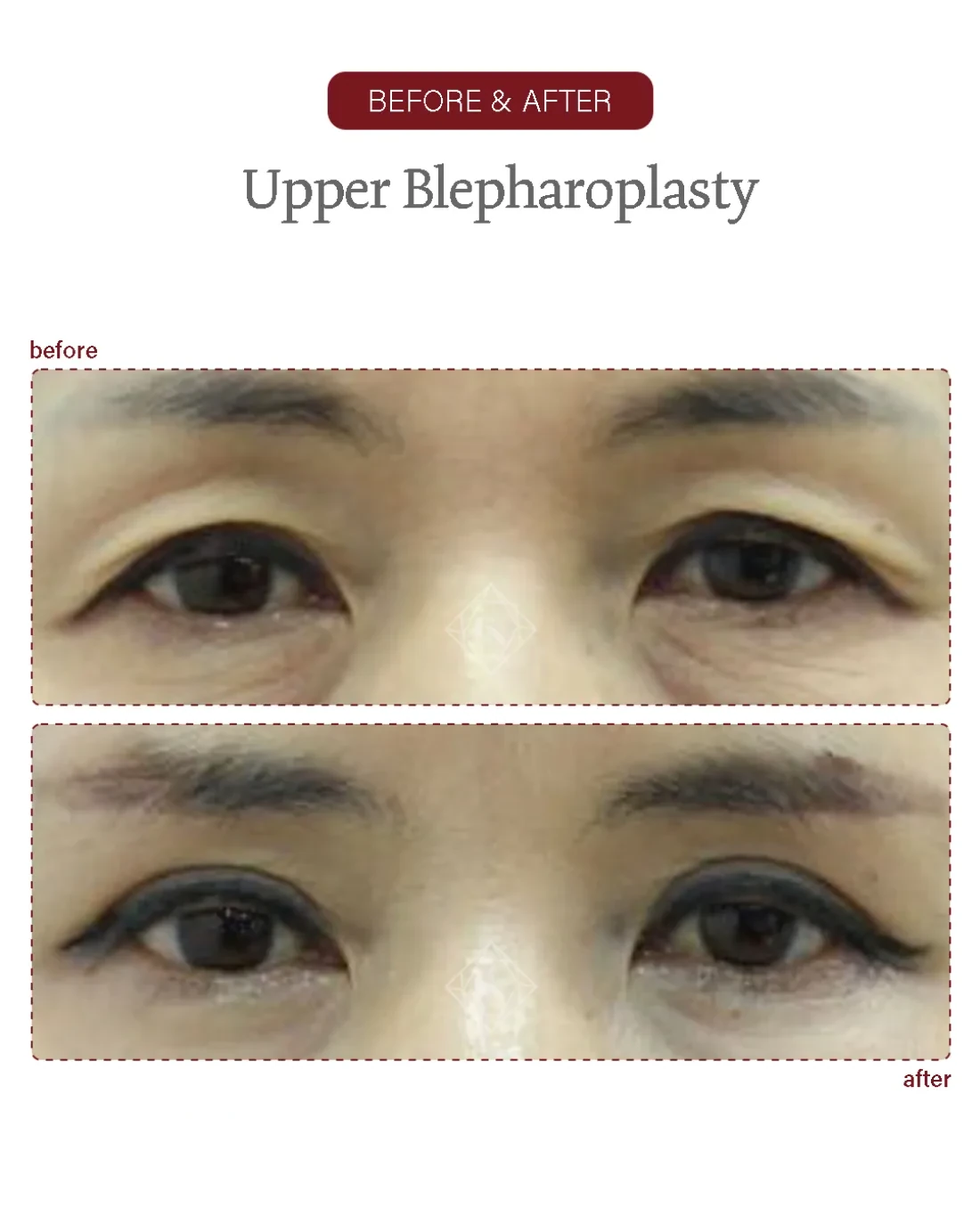
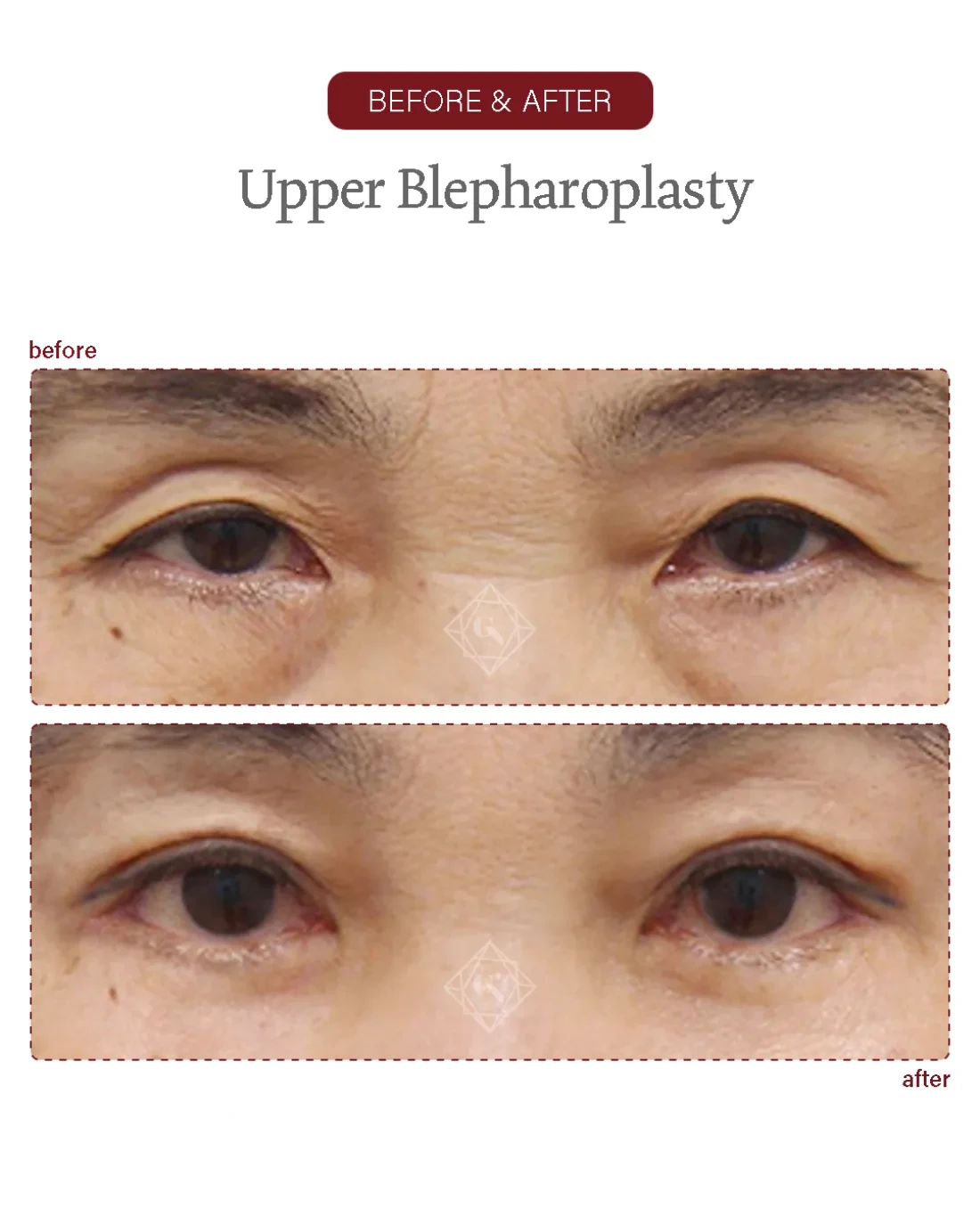
Eyelid before/after examples of actual Garnet patients (published with consent). Results, recovery and suitability vary by individual and are not guaranteed; the right approach depends on an in-person examination.
Prices
Price at Garnet
Lower blepharoplasty
From₩3,500,000 + VATExcluding VAT (10% VAT is added at payment)Book now
Same price as Korean patients. Prices shown exclude 10% VAT; your written quote, issued after the in-person consultation, shows the full amount payable.
Dr. In-Soo Baek
Director & sole operating surgeon
Korean medical licence no. 77407
Operate on what you came for. Trained at Korea University Medical Center. Every case planned, performed and reviewed by the same hands.
1Operating surgeon
~2Surgeries per day
7Registered techniques
Board-certified plastic surgeon
Plastic surgery training at Korea University College of Medicine & graduate school
Korean Society of Plastic and Reconstructive Surgeons member, in its facial-contour, eye & rhinoplasty groups
Consults, operates and follows up each case himself
Peer-reviewed papers behind the facts on this page. Each describes findings in its own study group — not results at Garnet — and none predicts your own outcome.
Branham GH. Lower Eyelid Blepharoplasty. Facial Plastic Surgery Clinics of North America. 2016. doi:10.1016/j.fsc.2015.12.004
Pepper JP et al. Transcutaneous Lower Blepharoplasty with Fat Transposition. Clinics in Plastic Surgery. 2015. doi:10.1016/j.cps.2014.09.002
Nassif PS. Lower Blepharoplasty: Transconjunctival Fat Repositioning. Facial Plastic Surgery Clinics of North America. 2005. doi:10.1016/j.fsc.2005.06.006
FAQ
Common questions
Can a previous lower blepharoplasty be corrected?
Often, yes. Problems such as a pulled-down or rounded lid, an over-hollowed under-eye, residual bags, asymmetry or a visible scar can frequently be improved with revision surgery. How much can be corrected depends on what was done before and how the lid healed, so a careful in-person assessment of the lower eyelid is essential first.
What does lower blepharoplasty revision involve?
It is planned around the specific problem. A pulled-down lid usually needs scar release, reinforced lid support and added tissue; an over-hollowed eye needs volume restored; residual bags may need a conservative second look. Revision generally focuses on adding support and volume, with little or no further tissue removed.
When should I consider lower blepharoplasty revision?
Consider it once the first result has fully settled, often several months later, because early concerns like stiffness, mild low lid position and puffiness frequently improve on their own. The exception is significant lid retraction with eye-surface symptoms, which may need earlier attention to protect the eye.
What is lid retraction after lower blepharoplasty?
Lid retraction is when the lower lid is drawn downward, showing white below the iris and rounding the eye; in more pronounced cases the lid edge turns outward (ectropion). It usually follows removing too much skin or muscle, or weakened lid support, and can cause dryness and watering as well as a changed appearance.
Is revision harder than the original surgery?
Yes. The tissue is scarred, the natural surgical planes are less clean, and lid support may already be compromised, so there is less margin for error. That is why revision emphasises adding support and volume over further removal, and why surgeon experience matters more for a revision than a primary case.
Why is it better to wait before revising?
Because swelling and scar tissue can make an early result look worse than it will become, and many concerns soften over months. Operating too soon risks correcting something that would have improved on its own, on inflamed tissue that is harder to work with. Waiting also reveals what truly needs correcting.
Will the under-eye look completely normal again after revision?
Revision can usually improve lid position, comfort and appearance meaningfully, but a previously operated lid may not return to a perfectly pristine state. A careful surgeon will tell you what is realistic for your specific case before any plan is made, so your expectations match what the surgery can achieve.
Can the over-hollowed look from too much fat removal be fixed?
Often, yes. A scooped-out, hollow under-eye from over-resection is usually addressed by restoring volume through repositioning remaining fat or grafting. Nothing further is removed. The aim is to refill the area gently and naturally, and the right approach is decided after assessing how much was lost.
Can I get assessed for revision before flying to Korea?
Yes. You can send clear photos and your surgical history through an online consultation for a pre-assessment of what revision could improve and whether the timing is right, before committing to travel. An in-person check of lid support and tissue mobility then confirms the plan on the day.
My mom recently had a brow lift and lower blepharoplasty with Dr. Baek, and our experience has been wonderful so far. The Garnet team was incredibly kind and welcoming, with Kelly assisting us as our English consultant—she made everything…
I’m so happy I chose this clinic for my lower blepharoplasty. I was traveling from abroad by myself, so I was a little nervous, but from the beginning I felt comfortable and truly cared for. Everyone was kind, patient, and professional…
Came in for an in-person consult and ended up choosing Garnet and Dr.Baek for my non-incisional DES and tiplasty/alarplasty. I communicated with Kelly (English consultant) from the start till now (3 weeks post-op). She really help me feel…
My under-eyes have been sagging and folding for years... I tried to cover it up with makeup, but it actually got stuck in the wrinkles and made it stand out even more. While going for consultations, I noticed that the bigger the hospital…
Send photos and your question before you travel. An English-speaking coordinator reviews every enquiry and replies with guidance on whether surgery is appropriate, the likely plan and timing.
✓ Reviewed by the clinic coordinator, not a bot
✓ Photo-based pre-assessment before you fly
✓ Foreign-patient scheduling & after-care
✓ One surgeon for consultation, surgery and follow-up
Prefer to chat now? Reach the coordinator directly:









 T S7 months ago



