Lower blepharoplasty corrects under-eye fat bulges, a tear-trough hollow and loose lower-lid skin, and it is one of the most requested under-eye operations. It does not suit every tired-looking eye. The real question is whether your particular eye-bags, hollows or loose skin are what the surgery actually corrects.
The short answer
Lower blepharoplasty suits true under-eye fat bulges (eye-bags), a tear-trough hollow, or loose lower-lid skin — often a combination of all three.
Dark circles from pigment alone, or puffiness from sleep, allergy or fluid, are not corrected by surgery and need a different approach.
Lid laxity and how well the lower lid supports itself are as important as the bag itself. They decide the technique and the risk of complications.
At Garnet the same board-certified plastic surgeon assesses candidacy in person and will say so if a non-surgical option, or no surgery, is the better choice for you.
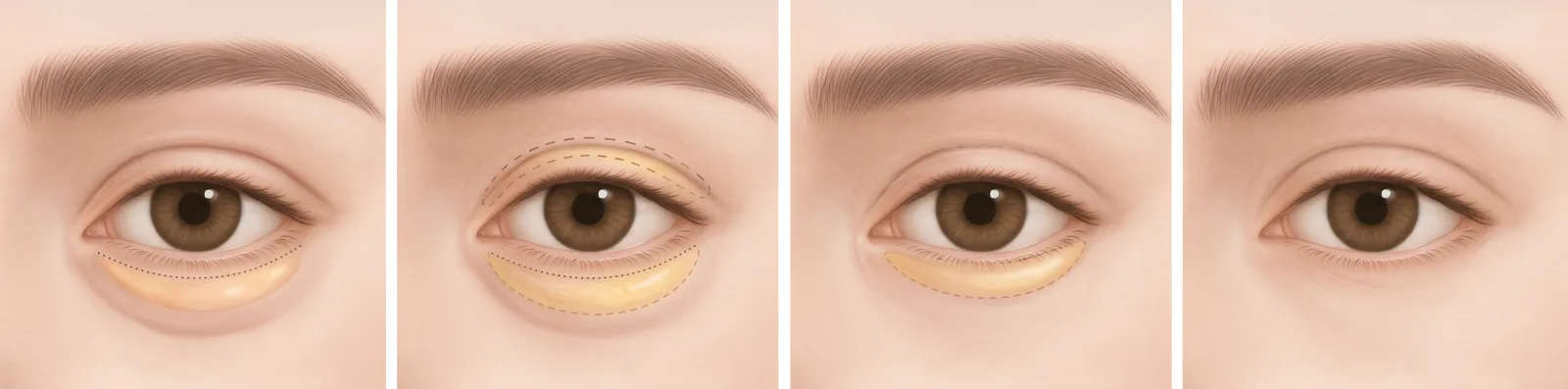
Lower blepharoplasty addresses three things that make the lower eyelid look aged or tired: bulging fat pockets that create eye-bags, a hollow tear-trough where the cheek meets the lower lid, and loose or crepey lower-lid skin. Many people have a mix of all three, which is why a good result usually comes from re-balancing the area instead of simply removing tissue. At Garnet the lower blepharoplasty technique is a four-step approach: fat is repositioned (it is not just cut away), the deeper cheek fat (SOOF) is lifted, the muscle is suspended, and the skin is redraped. The under-eye is smoothed without leaving a scooped-out look.
Illustration: through a fine line just below the lashes, the under-eye fat (yellow) is repositioned over the bony rim to fill the groove rather than removed.
Understanding what the surgery corrects is the whole point of the candidacy question. If your under-eye concern is a genuine fat bulge, a shadowed hollow, or skin that no longer sits smoothly, the procedure is aimed squarely at your problem. If your concern is something else (colour, fluid, or a feature you have had your whole life), surgery may do very little, and that is worth knowing before you book a flight.
The transcutaneous (external skin-incision) route used at Garnet places the incision just below the lash line, which gives the surgeon direct access to both fat and skin and allows redraping. That makes it well suited to patients who have skin excess as well as bags, but it also means lid support and laxity have to be assessed carefully, as covered further down this page.
Good candidate
Who is a good candidate
The clearest candidate is an adult in reasonable health with persistent under-eye fat bulges that are visible in normal lighting and do not come and go with sleep or salt. If you have looked tired for years, your eye-bags photograph the same in the morning and the evening, and you can feel a soft fullness when you press gently below the eye, the concern is usually structural, which is exactly what this surgery is designed for.
Loose lower-lid skin that creases or folds, a defined tear-trough hollow that casts a shadow, or a combination of bag-above and hollow-below are all good indications, because the four-step technique can move fat from where there is too much into the hollow where there is too little. Candidates also do well when their expectations are specific and realistic — wanting to look less tired and more rested, without wanting a different set of eyes. Non-smokers, or those willing to stop around surgery, and people without uncontrolled eye or bleeding conditions tend to recover most smoothly.
Equally important is lid quality: a lower lid that still has good tone and support tolerates skin removal and redraping far better. Where the lid is already lax, the surgeon may add a supporting step or favour a more conservative skin approach. None of this rules you out. It simply shapes the plan, which is why an in-person assessment matters more than a photo.
Not suitable
Who lower blepharoplasty is not for
Surgery will not fix dark circles caused by pigment. If the darkness is colour in the skin, common with certain skin tones, sun exposure or genetics, removing fat or skin changes the contour but leaves the shade, and you may be disappointed. The same is true of puffiness that fluctuates: morning swelling that settles by midday, or puffiness driven by allergy, salt, alcohol, thyroid issues or simply poor sleep is fluid, and is better managed medically than surgically.
Caution also applies if your lower lid is already very lax, if you have had previous lower-lid surgery, or if you have a prominent eye or a tendency to dry eye. In these situations aggressive skin removal can pull the lid down or out, and a more conservative, support-focused plan is safer. Active eye infection or inflammation, poorly controlled bleeding tendencies, and unrealistic expectations are all reasons to pause. A careful surgeon will tell you when the risk-to-benefit balance is not in your favour.
If you are not a candidate, that is useful information. Many people who are turned away from lower-lid surgery have a treatable concern that a different treatment suits. Garnet's approach is to address only the area you came for and to recommend against surgery that will not help you, which is why a careful candidacy conversation can save you a procedure you did not need. You can ask about your specific case in an online consultation before travelling.
Alternatives
Alternatives worth considering
When the main issue is a tear-trough hollow with little or no fat bulge, repositioning existing fat, or a related under-eye approach, may give a softer, more natural correction than removing tissue. Garnet also offers under-eye fat repositioning as part of its eye work, which moves fat into the hollow without excising it, and that can suit younger patients whose skin is still tight.
For colour-based dark circles, non-surgical skin treatments aimed at pigment and texture are the more logical route, and for fluctuating puffiness the first step is identifying the medical cause. Where the concern is mostly volume loss across the whole midface, beyond the lower lid, restoring volume can lift the under-eye indirectly. These are not lesser options. They are matched to a different problem, and choosing the right one is the entire value of a proper assessment.
Some patients sit between categories: a modest bag, a little hollow, and early skin laxity. Here the decision is genuinely individual and often depends on what bothers you most and how much downtime you can take. A surgeon who performs the full range of eye procedures can weigh a smaller, targeted operation against the four-step lower blepharoplasty without defaulting to the biggest option.
Assessment
How candidacy is actually assessed
A proper assessment looks at four things: the amount and position of fat, the depth of the tear-trough hollow, the quality and excess of the skin, and the tone and support of the lower lid. The surgeon will also check your eye health, ask about dry eye, and gently test how the lid springs back. Laxity that is invisible in a photo can change the whole plan. This is why a lower blepharoplasty decision is hard to make properly from selfies alone.
Your history matters too: previous eye or under-eye surgery, contact-lens use, thyroid or autoimmune conditions, bleeding tendencies and the medicines you take all feed into the risk picture. None of these are automatic disqualifiers, but they help the surgeon choose between repositioning and removal, between a generous and a conservative skin trim, and whether to add a lid-supporting step. The goal is a plan matched to your anatomy.
Realistic expectations are part of candidacy. The aim of lower blepharoplasty is to look rested; it softens bags and hollows and can refresh the lower lid, but it does not stop ageing or erase every line. Knowing what recovery feels like also helps you decide, which is covered on the pain and anaesthesia page. A candid conversation about what the surgery can and cannot do is the strongest protection against disappointment. A clinic that has that conversation before money changes hands is doing its job.
At Garnet
How Garnet decides whether to operate
Garnet is a single-surgeon clinic in Apgujeong, Seoul. Dr. In-Soo Baek is a board-certified plastic surgeon (Korean medical licence no. 77407) and the only operating doctor. He consults, assesses your candidacy, performs the lower-lid surgery himself and reviews every follow-up, so the person judging your suitability is the same person who will operate. With a background spanning more than ten thousand eye cases, the assessment is grounded in experience.
Two principles shape the candidacy conversation here: only the area you came for is addressed, and there is no pressure to book the same day. If your under-eye concern is better treated another way, or left alone, you will be told. There is no consultation or imaging fee, so the assessment costs you nothing, and structured follow-ups at one, three and six months mean the plan is judged over time instead of at a single visit.
If you are weighing whether lower blepharoplasty is right for you, the simplest first step is a no-obligation pre-assessment. Send clear photos through an online consultation and you can get a clear read on your candidacy, what technique would suit, and whether travelling for surgery makes sense for your case, all before you plan a trip.
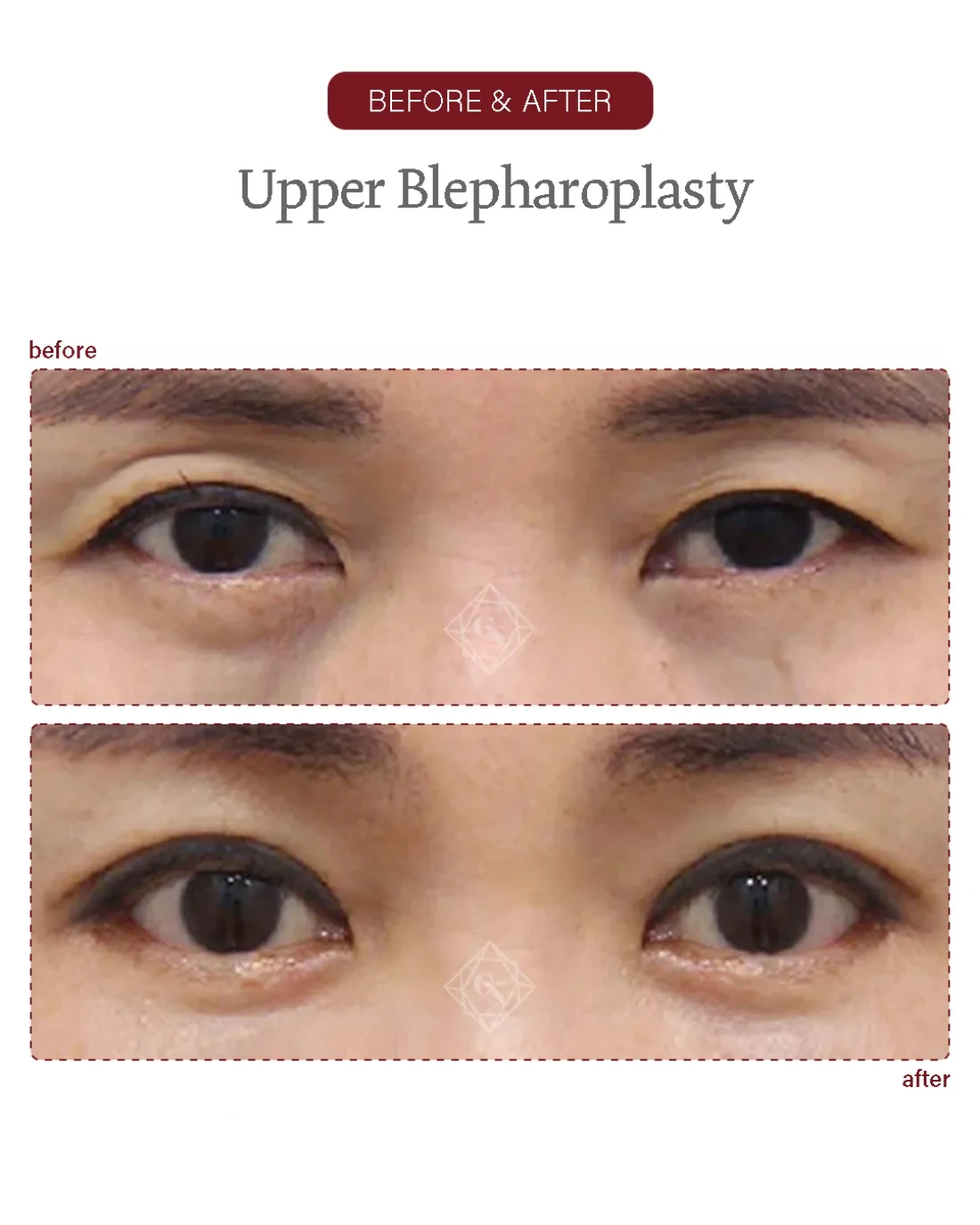
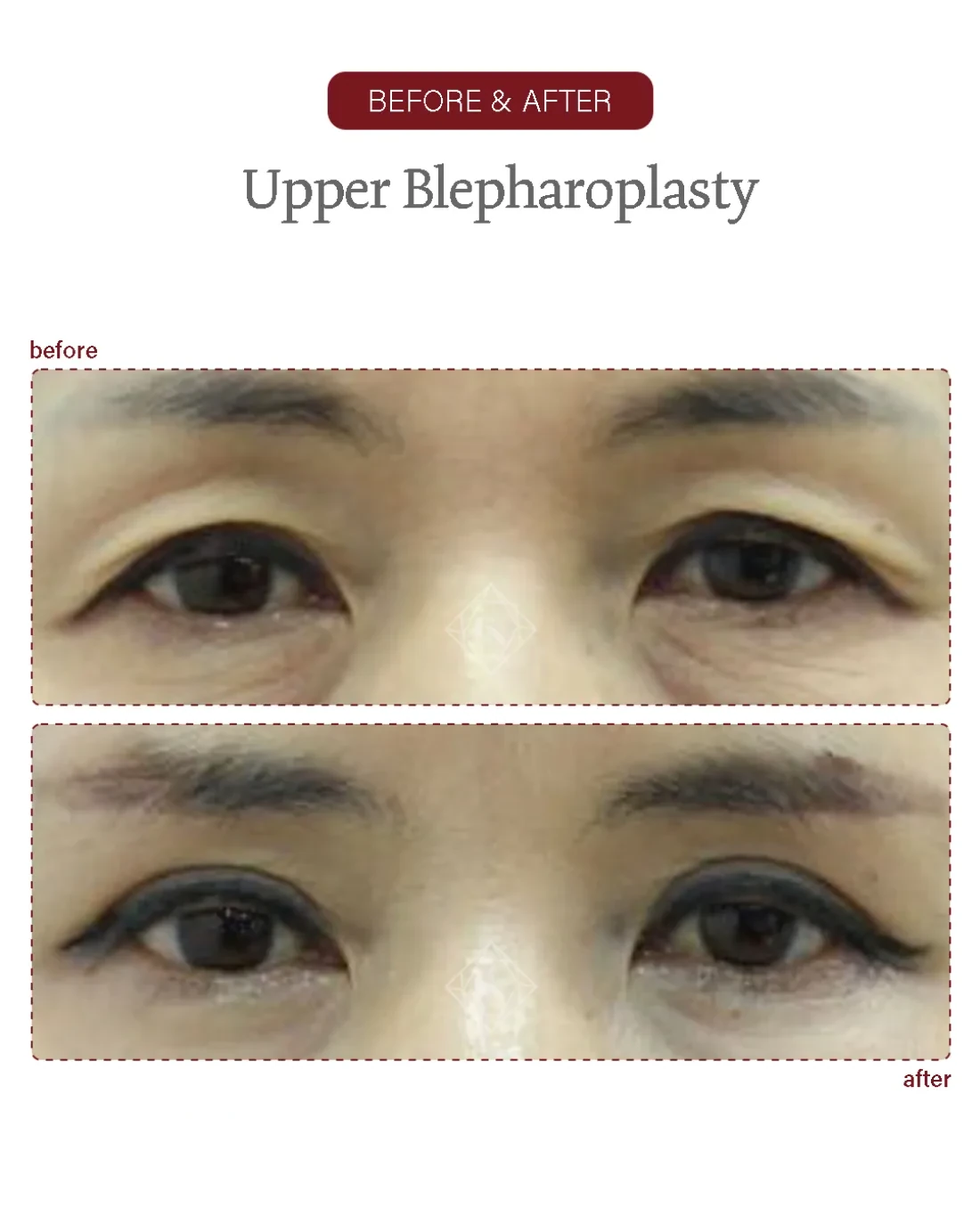
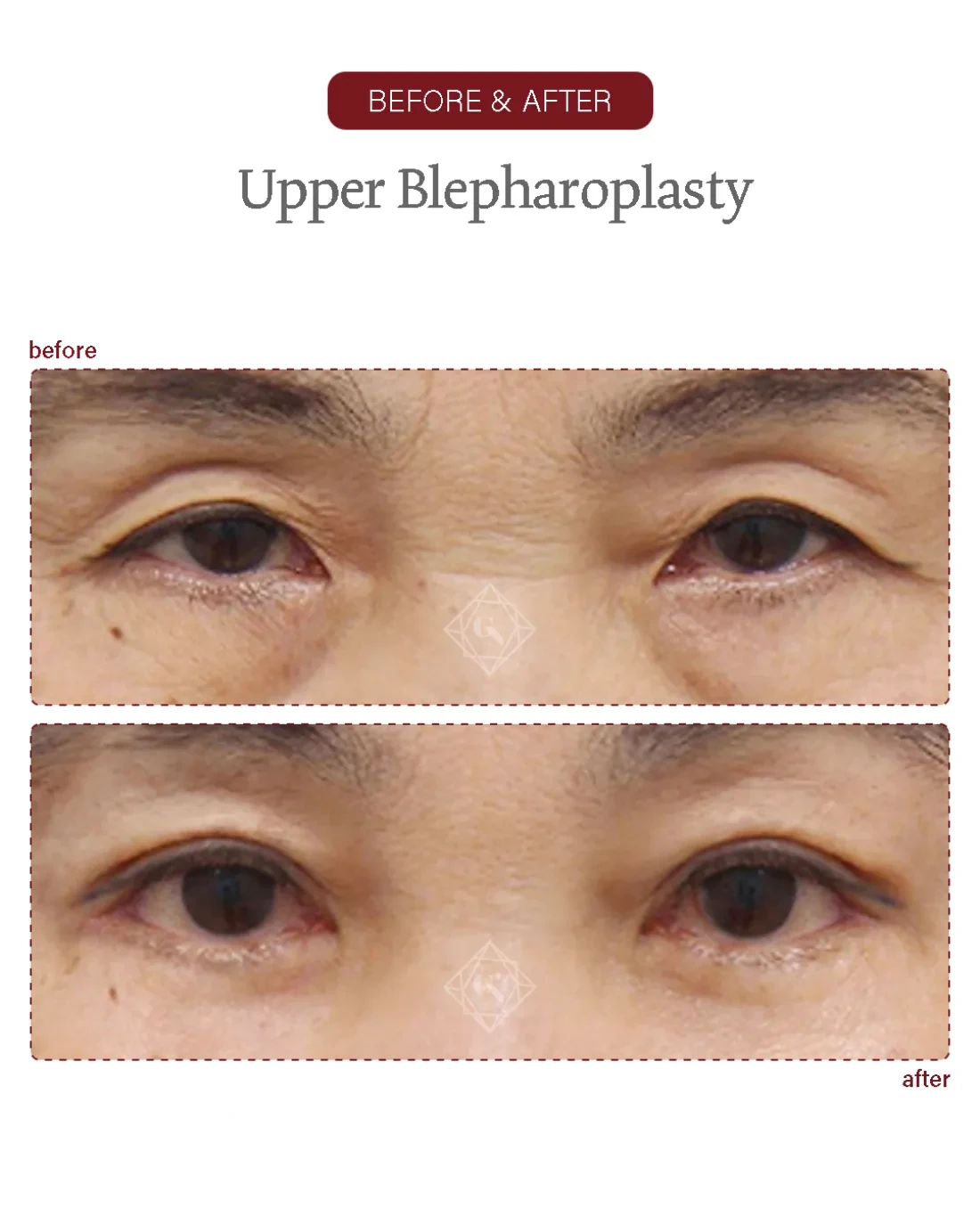
Real Results
Before & After
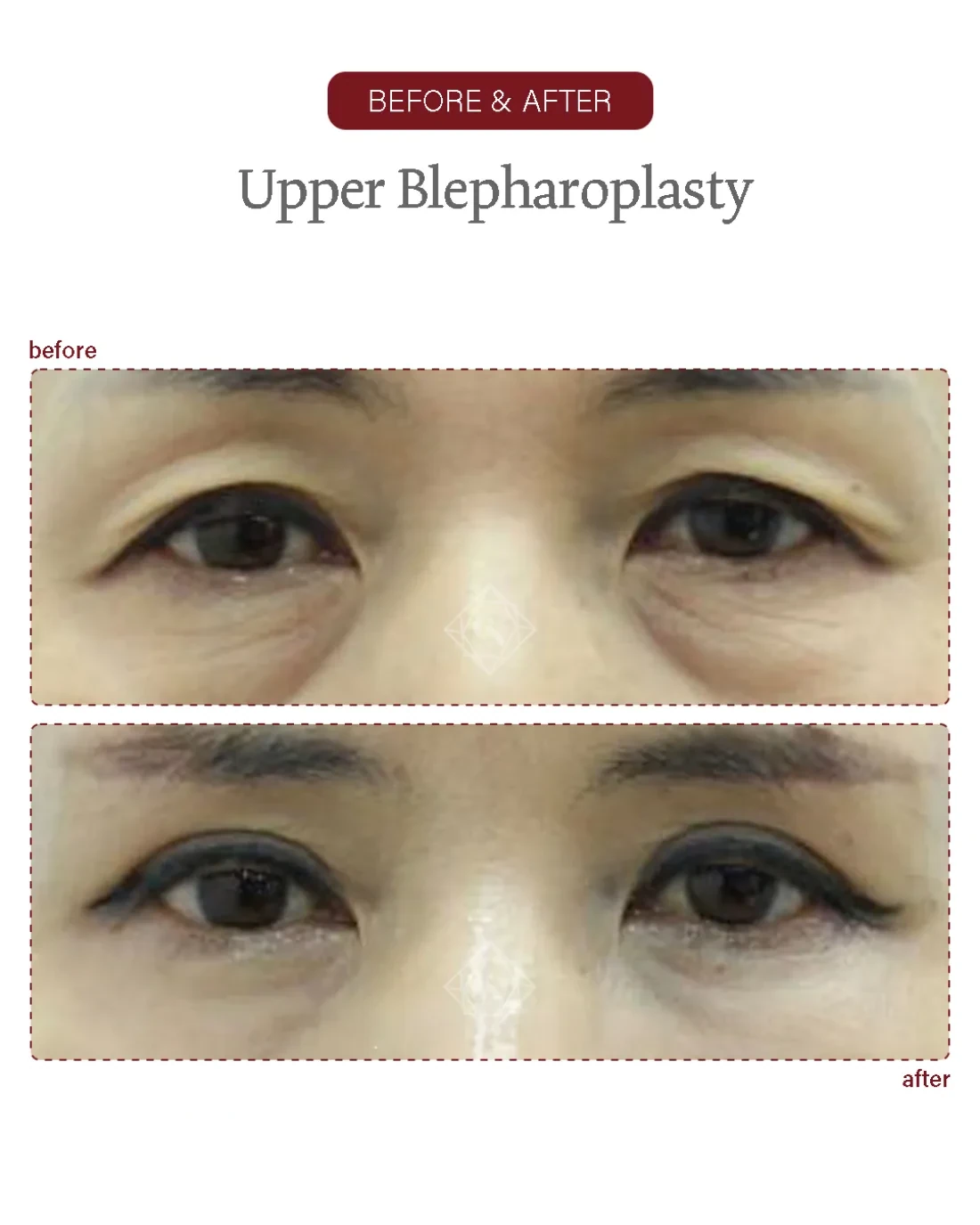
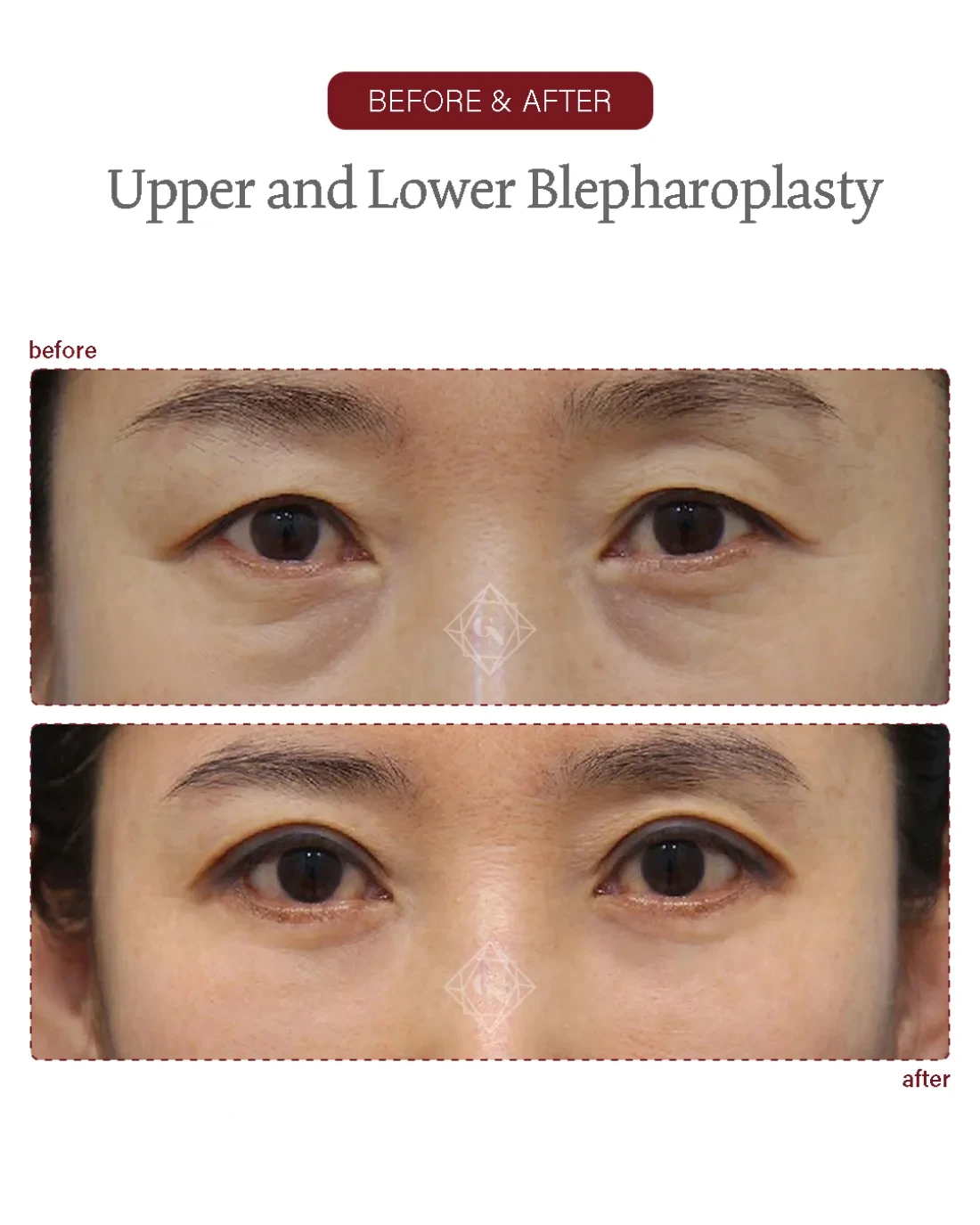
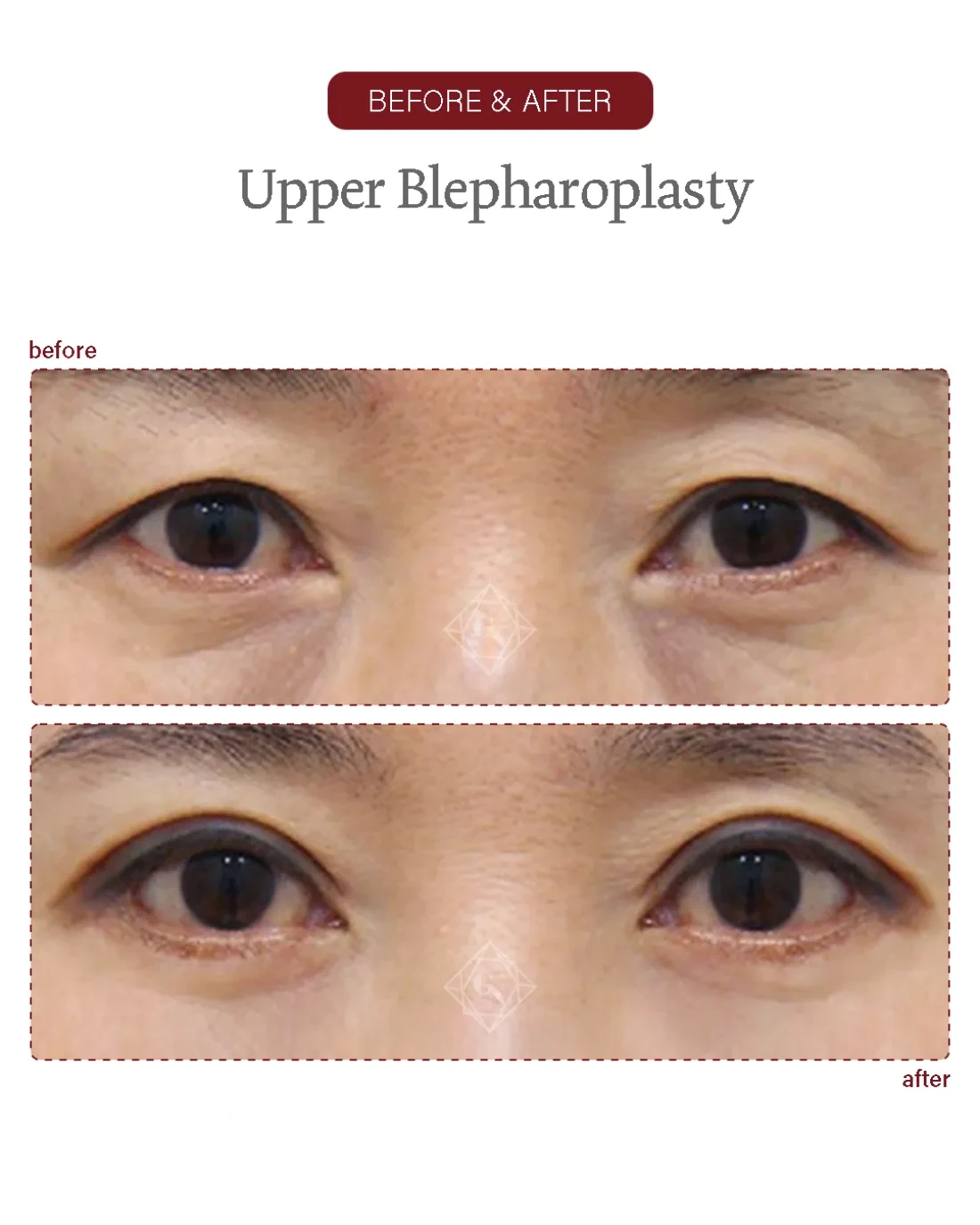
Eyelid before/after examples of actual Garnet patients (published with consent). Results, recovery and suitability vary by individual and are not guaranteed; the right approach depends on an in-person examination.
Prices
Price at Garnet
Lower blepharoplasty
From₩3,500,000 + VATExcluding VAT (10% VAT is added at payment)Book now
Same price as Korean patients. Prices shown exclude 10% VAT; your written quote, issued after the in-person consultation, shows the full amount payable.
Dr. In-Soo Baek
Director & sole operating surgeon
Korean medical licence no. 77407
Operate on what you came for. Trained at Korea University Medical Center. Every case planned, performed and reviewed by the same hands.
1Operating surgeon
~2Surgeries per day
7Registered techniques
Board-certified plastic surgeon
Plastic surgery training at Korea University College of Medicine & graduate school
Korean Society of Plastic and Reconstructive Surgeons member, in its facial-contour, eye & rhinoplasty groups
Consults, operates and follows up each case himself
Peer-reviewed papers behind the facts on this page. Each describes findings in its own study group — not results at Garnet — and none predicts your own outcome.
Fedok FG. Transconjunctival Lower Blepharoplasty. Facial Plastic Surgery Clinics of North America. 2026. doi:10.1016/j.fsc.2025.08.005
Fakih-Gomez N. Lower Blepharoplasty. Facial Plastic Surgery Clinics of North America. 2026. doi:10.1016/j.fsc.2026.06.011
Chen CF et al. Carbon Dioxide Laser Transconjunctival Lower Blepharoplasty: An Objective and Quantitative Comparison to Monopolar Electrosurgery. Plastic & Reconstructive Surgery. 2023. doi:10.1097/prs.0000000000010255
FAQ
Common questions
Who is a good candidate for lower blepharoplasty?
A good candidate is a healthy adult with persistent under-eye fat bulges, a tear-trough hollow, loose lower-lid skin, or a combination, where the concern is structural (it is not fluid or pigment). Good lid tone and realistic expectations, such as looking rested, also point to a strong candidate.
Am I suitable for lower blepharoplasty if I only have dark circles?
Probably not, if the darkness is pigment in the skin and no shadow is cast by a bag or hollow. Surgery changes contour and leaves colour, so colour-based dark circles are usually better addressed with non-surgical skin treatments. A surgeon can tell which type you have during assessment.
When is lower blepharoplasty not recommended?
It is not recommended when puffiness fluctuates with sleep, salt or allergy (that is fluid), when the lower lid is very lax, when there is active eye infection or uncontrolled bleeding tendency, or when expectations are unrealistic. In these cases a different treatment, or none, is the safer choice.
Does age decide whether I am a candidate?
Not on its own. Younger patients often have a hollow or early bag with tight skin and may suit fat repositioning, while older patients more often have skin excess as well and suit the full four-step lift. Lid quality and the specific concern matter more than a number.
I have bags and loose skin — can both be treated together?
Yes. The transcutaneous, four-step technique used at Garnet is designed to address fat and skin in one operation: fat is repositioned, the deeper cheek fat is lifted, the muscle is suspended and excess skin is redraped. It suits patients who have a combination of issues.
What if my lower lid is already loose?
Lid laxity does not automatically rule out surgery, but it changes the plan. The surgeon may favour a more conservative skin trim or add a supporting step to avoid pulling the lid down or out. This is exactly why lid tone is tested in person; a photo cannot show it.
Can I find out if I am a candidate before flying to Korea?
Yes. You can send clear under-eye photos through an online consultation and get a pre-assessment of your candidacy, which technique would suit and whether travel makes sense, before committing to a trip. An in-person check confirms lid support on the day.
Will I be told if surgery is not right for me?
At Garnet, yes. The clinic addresses only the area you came for and advises against surgery that will not help. If your concern is better treated another way or left alone, the same board-certified surgeon who would operate will tell you so during the assessment.
Is lower blepharoplasty a good option for puffiness?
Only if the puffiness is a true fat bulge that is present consistently. Puffiness that changes through the day, or that follows poor sleep, salt, alcohol or allergy, is fluid and is not corrected by surgery. That kind is better managed by finding and treating the underlying cause.
My mom recently had a brow lift and lower blepharoplasty with Dr. Baek, and our experience has been wonderful so far. The Garnet team was incredibly kind and welcoming, with Kelly assisting us as our English consultant—she made everything…
I’m so happy I chose this clinic for my lower blepharoplasty. I was traveling from abroad by myself, so I was a little nervous, but from the beginning I felt comfortable and truly cared for. Everyone was kind, patient, and professional…
Came in for an in-person consult and ended up choosing Garnet and Dr.Baek for my non-incisional DES and tiplasty/alarplasty. I communicated with Kelly (English consultant) from the start till now (3 weeks post-op). She really help me feel…
My under-eyes have been sagging and folding for years... I tried to cover it up with makeup, but it actually got stuck in the wrinkles and made it stand out even more. While going for consultations, I noticed that the bigger the hospital…
Send photos and your question before you travel. An English-speaking coordinator reviews every enquiry and replies with guidance on whether surgery is appropriate, the likely plan and timing.
✓ Reviewed by the clinic coordinator, not a bot
✓ Photo-based pre-assessment before you fly
✓ Foreign-patient scheduling & after-care
✓ One surgeon for consultation, surgery and follow-up
Prefer to chat now? Reach the coordinator directly:









 T S7 months ago



