Non-incision double eyelid surgery suits a specific kind of eyelid: thin, with little excess skin or fat, paired with a wish for a soft, natural crease that can in principle be reversed. It works well for the right lid and poorly for the wrong one, so the most useful question is whether your eyelid is suited to it.
The short answer
Non-incision (buried-suture) double eyelid suits thin lids with little excess skin or fat and good lid elasticity.
It is a good fit if you want a natural, lighter crease and value that the result is, in principle, reversible.
Heavier lids, significant excess skin or fat, or true ptosis are usually better served by the incision method.
An assessment of your lid, ideally before you travel, is the only reliable way to confirm which method fits your eyes.
Who is a good candidate for non-incision double eyelid surgery
The ideal candidate for non-incision double eyelid surgery has a relatively thin upper lid, little excess skin, modest fat, and skin with good elasticity that holds a fold cleanly. In that lid, the buried-suture fixation line can form a defined crease without cutting the lid open, the small sutures come out at around five days, and the recovery is light. The method works with the lid's natural structure and does not reshape it.
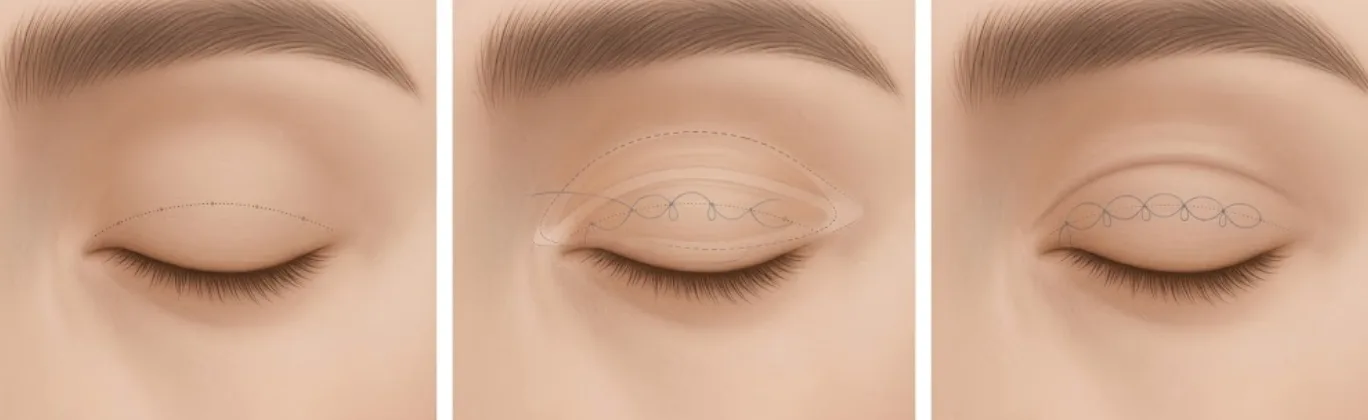
Illustration: a thin buried suture is looped along the planned crease through tiny points, with no skin incision, so the lid folds at the new line.
Age is less important than tissue quality. Younger patients often suit the non-incision method because their lid skin is thinner and more elastic, but plenty of older patients with light lids are good candidates too, and some young patients with heavier or fattier lids are not. What matters is the eyelid in front of the surgeon, which is why candidacy is decided on assessment.
It also helps to want what the method realistically delivers: a soft, natural-looking crease. A deep, dramatic fold is outside what it does. If your goals and your lid line up with that, you are likely a strong candidate. If you are weighing the trade-offs, the comparison page on non-incision vs incision double eyelid sets the two methods side by side.
Thin lids, little fat
Thin lids and little excess skin or fat
The single most important factor is how much there is to fold. A buried-suture crease holds well when the lid is thin and there is little excess skin or fat sitting above the lash line. With less tissue to lift, the fixation points carry the fold comfortably and the crease stays clean and defined. This is exactly the lid the non-incision method was designed for.
When a lid carries more skin or a fuller fat pad, the buried suture has more weight working against it. The crease can sit lower than planned, look uneven, or loosen over time. That happens because the method was asked to do more than it is built for, even when the surgery itself was done well. In those lids the result is more reliable when excess skin or fat is actually removed, which the buried-suture technique does not do.
This is why a careful surgeon looks closely at lid thickness, skin laxity and the fat pad before recommending the non-incision route; being quicker or cheaper is no reason to default to it. This conversation sometimes ends with "your lid would do better with the incision method", and that is the assessment doing its job.
Natural & reversible
If you want a natural, reversible crease
Many people who choose the non-incision method do so because they want a subtle, natural crease and like that it is, in principle, reversible. Because no incision is made and no tissue is removed, a buried-suture crease can be released or revised more readily than a full incisional crease, which is reassuring if you are unsure about committing to a permanent change or are trying a crease for the first time.
That reversibility is a genuine advantage, but it needs to be understood correctly. The fixation is intended to last, and in suitable lids it often does for many years. "Reversible" means the change is less surgically committing than the incision method; it does not mean temporary, or guaranteed to be undone on request. It is the right framing for someone who values a softer, lower-risk first step.
If your priority is a defined, dependable crease that you never have to think about again, you may actually be weighing the incision method, which gives a more permanent result. Neither preference is wrong; they point to different operations. A useful way to test which one you lean toward is to ask, in an online consultation, what each would mean for your specific lid and goals.
When it isn't
When non-incision double eyelid is not recommended
There are eyelids the buried-suture method is simply not built for, and a surgeon should say so plainly. Significant excess upper-lid skin, a heavy or prominent fat pad, very thick lid skin, or true drooping of the lid margin (ptosis) all tend to overwhelm a buried suture. In these cases the crease may sit poorly or relax, and the recommendation is usually the incision double eyelid method, which can remove skin or fat and correct ptosis at the same time.
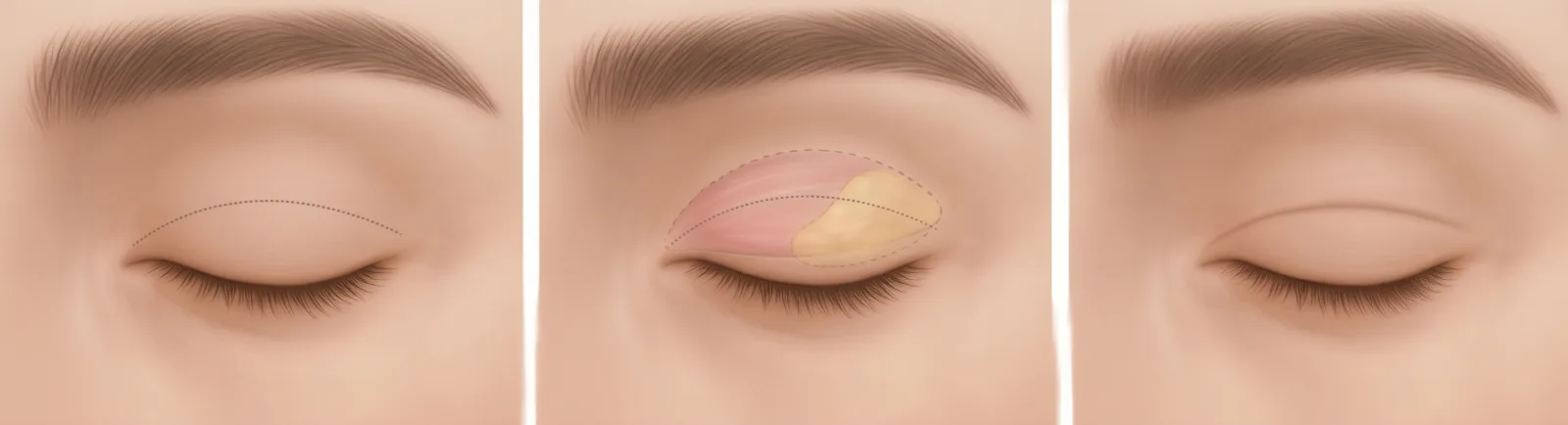
Illustration: the crease is set through an incision along the planned fold; the tissue beneath (muscle in pink, fat in yellow) is adjusted so the crease holds.
Revision candidates also need care. If a previous buried-suture crease has loosened or a crease was set at the wrong height, simply repeating the non-incision method may not be the answer; the surgeon needs to understand why the first one failed before recommending another. Likewise, eyes with marked asymmetry sometimes need the control of an incisional approach to even them out reliably.
Being told you are not an ideal candidate for the non-incision method is the assessment protecting you from a result that would disappoint. A clinic that recommends the method to everyone, regardless of lid type, is selling. The right answer for you depends entirely on your own lid, which is why it is settled on examination.
Which fits you
Non-incision or incision: which fits your eyes
Put simply: the non-incision method fits thin, light lids that want a natural, reversible crease; the incision method fits heavier lids, those with excess skin or fat, or eyes that also need ptosis correction, and it gives a more permanent result. The buried-suture line has a lighter recovery with sutures out at around five days, while the incision method asks for a little more downtime in exchange for its durability and reach.
Most people fall fairly clearly into one camp once their lid is examined, but borderline lids exist, and that is where an experienced eye matters most. The deciding factors are objective (skin amount, fat, elasticity, ptosis, symmetry) as well as preference, which is why two patients who both "want double eyelids" can be advised toward different operations. The detailed comparison on non-incision vs incision double eyelid walks through each factor.
If you do go ahead with the non-incision method, knowing what to expect afterwards helps you plan. The pages on recovery timeline and when you'll see results cover the days and weeks after surgery, so candidacy and recovery can be considered together.
At Garnet
How Garnet assesses candidacy for non-incision double eyelid
Garnet is a single-surgeon clinic in Apgujeong, Seoul. Dr. In-Soo Baek, a board-certified plastic surgeon (Korean medical licence no. 77407), is the only operating doctor and examines every buried-suture candidate himself, then operates and handles the follow-up. Candidacy is assessed by examining the actual lid: its thickness, skin laxity, fat and elasticity, whether there is any ptosis, and how your goals line up with what the buried-suture method realistically delivers.
Because the surgeon who assesses you is the one who operates, the recommendation is specific to your lid. If your lid suits the non-incision method, that is what is advised; if it would do better with the incision method, you are told so plainly, even though non-incision is the quicker option. Garnet is registered with Korea's foreign-patient programme, and you can confirm whether you are a candidate before you travel by sending clear photos of your eyes for a no-obligation online assessment.
Real Results
Before & After
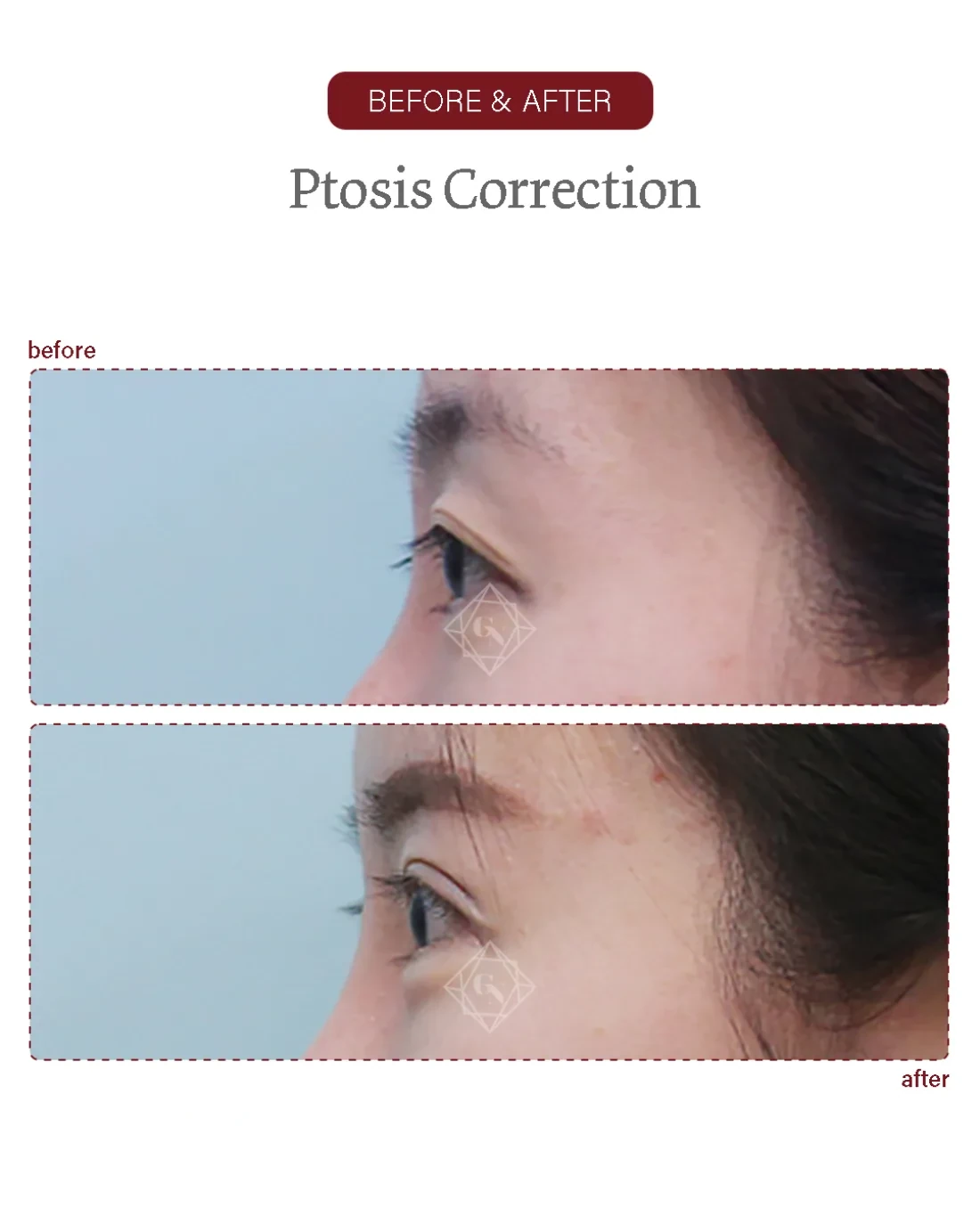
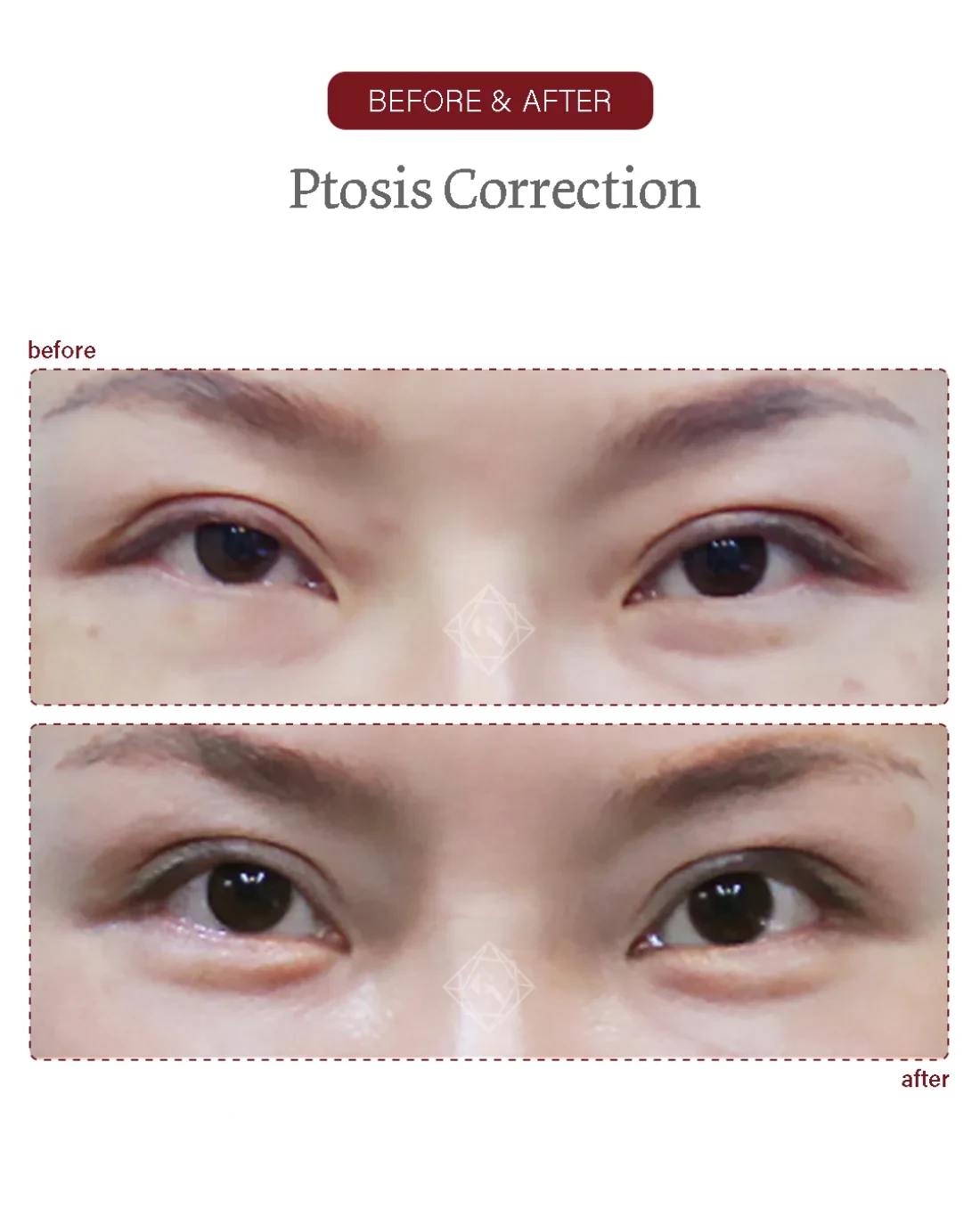
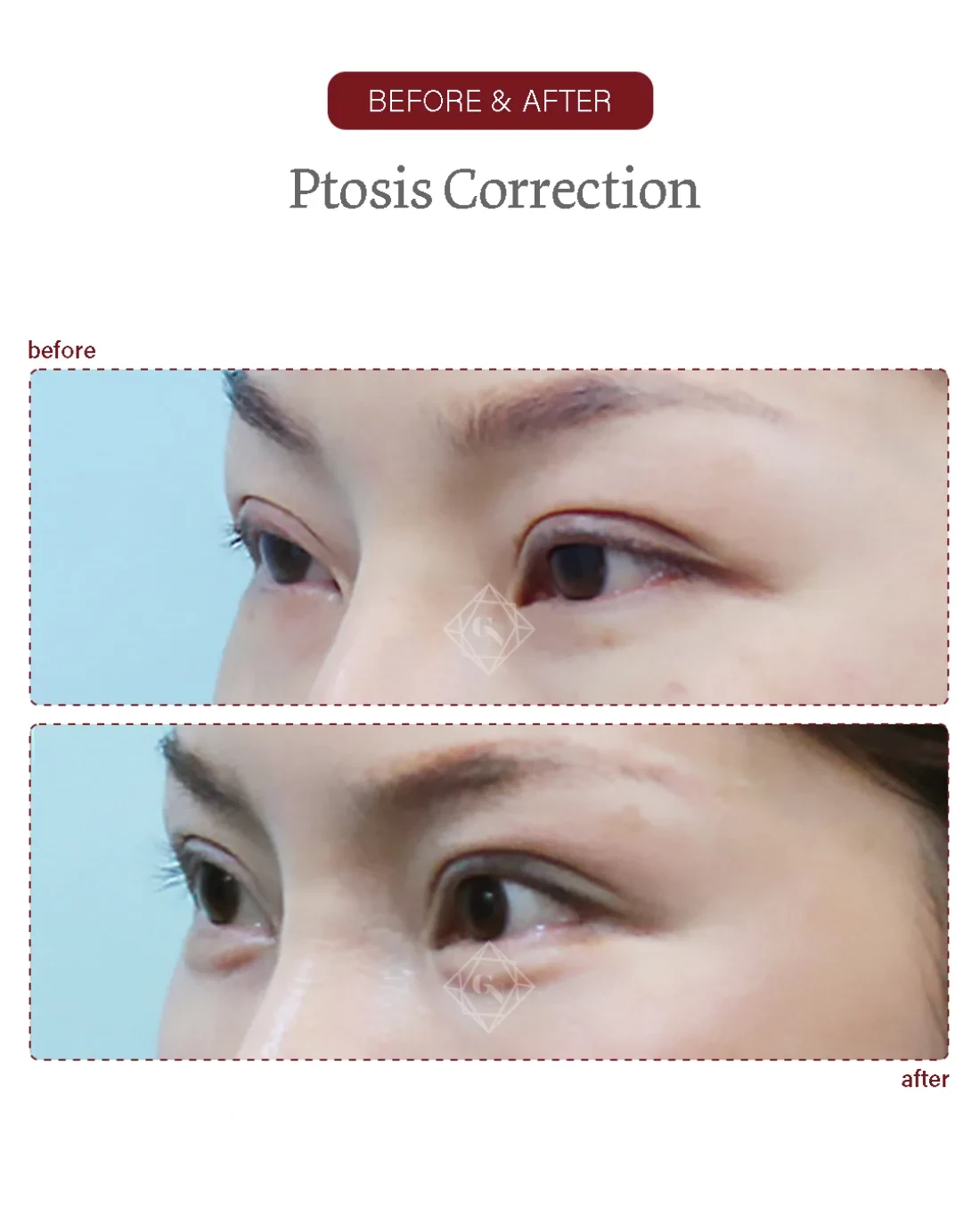
Ptosis-correction before/after examples of actual Garnet patients (published with consent). Results, recovery and suitability vary by individual and are not guaranteed; the right approach is decided at an in-person consultation.
Dr. In-Soo Baek
Director & sole operating surgeon
Korean medical licence no. 77407
Operate on what you came for. Trained at Korea University Medical Center. Every case planned, performed and reviewed by the same hands.
1Operating surgeon
~2Surgeries per day
7Registered techniques
Board-certified plastic surgeon
Plastic surgery training at Korea University College of Medicine & graduate school
Korean Society of Plastic and Reconstructive Surgeons member, in its facial-contour, eye & rhinoplasty groups
Consults, operates and follows up each case himself
Peer-reviewed papers behind the facts on this page. Each describes findings in its own study group — not results at Garnet — and none predicts your own outcome.
Munakata H et al. Comparison of One-Year Outcomes Between Younger and Older Patients Undergoing Continuous Buried Suture Double-Eyelid Surgery: A Retrospective Cohort Study of 788 Cases. Aesthetic Plastic Surgery. 2026. doi:10.1007/s00266-026-05765-8
Okumura K et al. Comparison of Long-Term Stability Between Continuous and Two-Point Buried Suture Methods in Double Eyelid Surgery: A 4-Year Retrospective Cohort Study of 1000 Cases. Aesthetic Plastic Surgery. 2025. doi:10.1007/s00266-025-05024-2
Okumura K et al. Effect of Upper Eyelid Fat Removal on Reoperation Rate and Long-Term Stability in Buried Suture Double Eyelid Surgery: A 4.5-Year Retrospective Cohort Study. Aesthetic Plastic Surgery. 2025. doi:10.1007/s00266-025-05492-6
FAQ
Common questions
Who is a good candidate for non-incision double eyelid surgery?
The ideal candidates have thin upper lids with little excess skin or fat and good skin elasticity, and want a soft, natural crease. In that kind of lid the buried-suture method forms a clean crease with a light recovery and sutures out at around five days. Candidacy is decided on assessment of your actual lid, not on age alone.
Am I suitable for non-incision double eyelid if I have thin eyelids?
Thin lids with little fat and good elasticity are exactly what the buried-suture method is designed for, so you are likely a strong candidate. The fixation line carries the fold comfortably when there is little excess tissue, which keeps the crease clean and defined. A surgeon should still examine your lid to confirm, ideally including any skin laxity or asymmetry.
When is non-incision double eyelid not recommended?
It is usually not recommended when there is significant excess upper-lid skin, a heavy fat pad, very thick lid skin, or true ptosis (drooping of the lid margin). In those lids a buried suture can sit poorly or loosen, and the incision method, which can remove skin or fat and correct ptosis, tends to give a more reliable result.
Is non-incision double eyelid reversible?
More so than the incision method, yes. Because no tissue is removed and no incision is made, a buried-suture crease can be released or revised more readily than a full incisional crease. That said, the fixation is intended to last and often does for years; "reversible" means less surgically committing, and it does not mean temporary.
Is the non-incision method only for young patients?
No. Younger patients often suit it because their lid skin is thinner and more elastic, but many older patients with light lids are good candidates too. What matters is tissue quality (lid thickness, fat and elasticity) more than age, so candidacy is judged on the eyelid itself.
I want a natural-looking crease. Is non-incision right for me?
Often, yes. The buried-suture method tends to produce a softer, more natural crease and suits patients who want a subtle result. If your lid is also thin with little excess tissue, the method and the goal line up well. An assessment confirms whether your lid can hold the crease you have in mind.
Can I have non-incision double eyelid if I have a lot of eyelid fat?
It is usually not the right choice. A fuller fat pad adds weight that works against a buried suture, so the crease can sit lower than planned or loosen over time. Lids with significant fat are generally better served by the incision method, which can actually remove the excess and set a stable crease.
What if my previous non-incision crease loosened?
Revision needs care. Simply repeating the buried-suture method may not solve the problem if the lid was unsuited to it in the first place, so the surgeon should understand why the original crease failed before recommending another. In some cases the incision method gives a more dependable correction.
How do I know whether I'm a candidate before travelling to Korea?
Send clear photos of your eyes through an online consultation. A surgeon can give a pre-assessment of whether the non-incision method suits your lid, or whether the incision method would serve you better, before you commit to flights. The final decision is confirmed in person, but the online step usually gives a clear direction.
Will Garnet tell me if I'm not suited to the non-incision method?
Yes. As a single-surgeon clinic, the surgeon who assesses you is the one who operates, so the recommendation is specific to your eyelid. If your lid would do better with the incision method, you are told so plainly.
My mom recently had a brow lift and lower blepharoplasty with Dr. Baek, and our experience has been wonderful so far. The Garnet team was incredibly kind and welcoming, with Kelly assisting us as our English consultant—she made everything…
I’m so happy I chose this clinic for my lower blepharoplasty. I was traveling from abroad by myself, so I was a little nervous, but from the beginning I felt comfortable and truly cared for. Everyone was kind, patient, and professional…
Came in for an in-person consult and ended up choosing Garnet and Dr.Baek for my non-incisional DES and tiplasty/alarplasty. I communicated with Kelly (English consultant) from the start till now (3 weeks post-op). She really help me feel…
My under-eyes have been sagging and folding for years... I tried to cover it up with makeup, but it actually got stuck in the wrinkles and made it stand out even more. While going for consultations, I noticed that the bigger the hospital…
Send photos and your question before you travel. An English-speaking coordinator reviews every enquiry and replies with guidance on whether surgery is appropriate, the likely plan and timing.
✓ Reviewed by the clinic coordinator, not a bot
✓ Photo-based pre-assessment before you fly
✓ Foreign-patient scheduling & after-care
✓ One surgeon for consultation, surgery and follow-up
Prefer to chat now? Reach the coordinator directly:








 T S7 months ago



