In your 20s, facial surgery is most often about the structure of the eyelids, nose or inner corner of the eye: refining features that have always bothered you, before any age-related change has begun. Reversing ageing is rarely the aim yet. Age is only a guide, though; whether a procedure suits you depends on your anatomy and expectations, which a consultation decides.
The short answer
In your 20s the tissue is firm and healing is quick, so surgery here is usually about structure (eyelids, nose, inner-corner shape) and seldom about lifting.
Double-eyelid surgery and rhinoplasty are the procedures most often chosen at this age; lifting and volume work rarely apply yet.
Being young is not a reason to rush. A good clinic will tell you when to wait, or when a lighter option fits better.
The same board-certified surgeon should assess whether a procedure genuinely suits your face, without steering you toward more than you came for.
Why surgery in your 20s is usually about structure
In your twenties the skin still has strong elasticity, the deeper tissues sit where they should, and there is little or no descent to correct. That changes what surgery is for. Instead of lifting or restoring, the aim at this stage is almost always structural: refining a feature that has always been there, such as an eyelid without a defined crease, a nasal tip that lacks projection, or an inner-corner shape that makes the eyes look shorter than you would like.
Illustration: the deeper facial layer (SMAS, shown in yellow) is released and repositioned as one unit with the skin, rather than pulling the skin alone.
This is also the stage where healing tends to be quickest and swelling settles fastest, because younger tissue recovers well. That is an advantage, but it is not a reason to have more done. The soundest decisions in your 20s are narrow and specific: one clearly defined concern, addressed properly. A list of small changes chased at once rarely serves you.
It helps to separate two very different ideas that both get called "plastic surgery". Structural surgery changes a feature's shape; anti-ageing surgery lifts or restores tissue that has moved with time. In your twenties you are nearly always in the first group, which is why a facelift or heavy volume work rarely belongs in the conversation yet.
Eyes
Eyes: the most common starting point
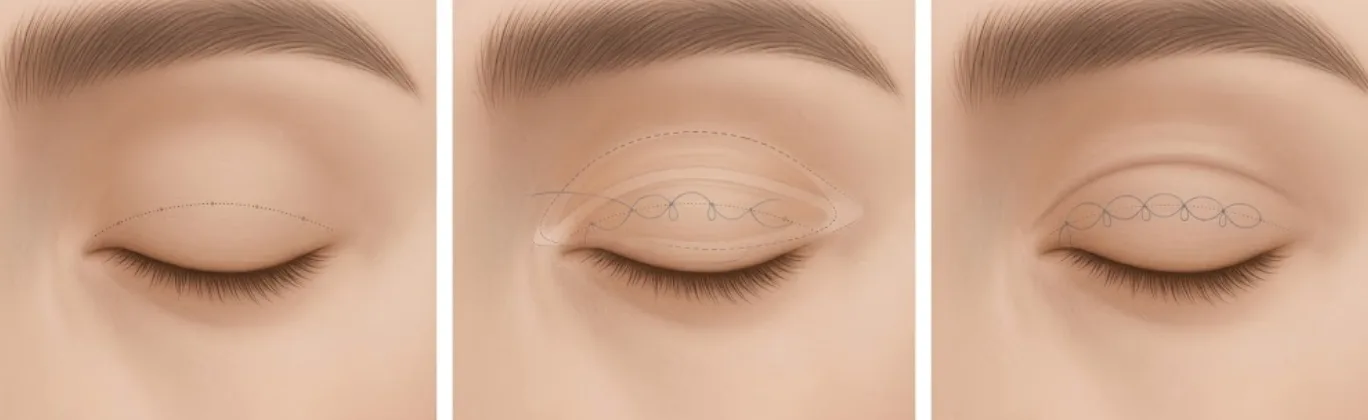
For most people in their 20s, the eyes are where facial surgery begins. A defined upper-lid crease can make the eyes look more open and awake, and this is why double-eyelid surgery is the single most requested procedure at this age. There are two broad routes. Non-incision double eyelid forms the crease with buried sutures and no skin cut, which suits thinner lids with little excess skin and has a shorter settling period. Incision double eyelid uses a full upper-lid incision and is chosen when there is more skin or fat to adjust, or when eye-opening (ptosis) correction is added in the same operation.
Illustration: a thin buried suture is looped along the planned crease through tiny points, with no skin incision, so the lid folds at the new line.
Which route fits is an anatomy question; it is not a preference you can pick from a menu. Lid thickness, skin quality and how your eye muscle works all decide whether a buried-suture line will hold or whether an incision gives a cleaner, longer-lasting result. A surgeon who does both should be willing to talk you out of the one you arrived asking for if your lids point the other way.
The inner-corner shape is the other common eye concern at this age. Epicanthoplasty releases the fold that partly covers the inner corner, which can make the eyes look longer and less "closed". At Garnet this is done as a Two-way release, and it is frequently combined with double-eyelid surgery; it is less often performed alone. Again, a face-to-face assessment decides.
Nose
The nose in your 20s
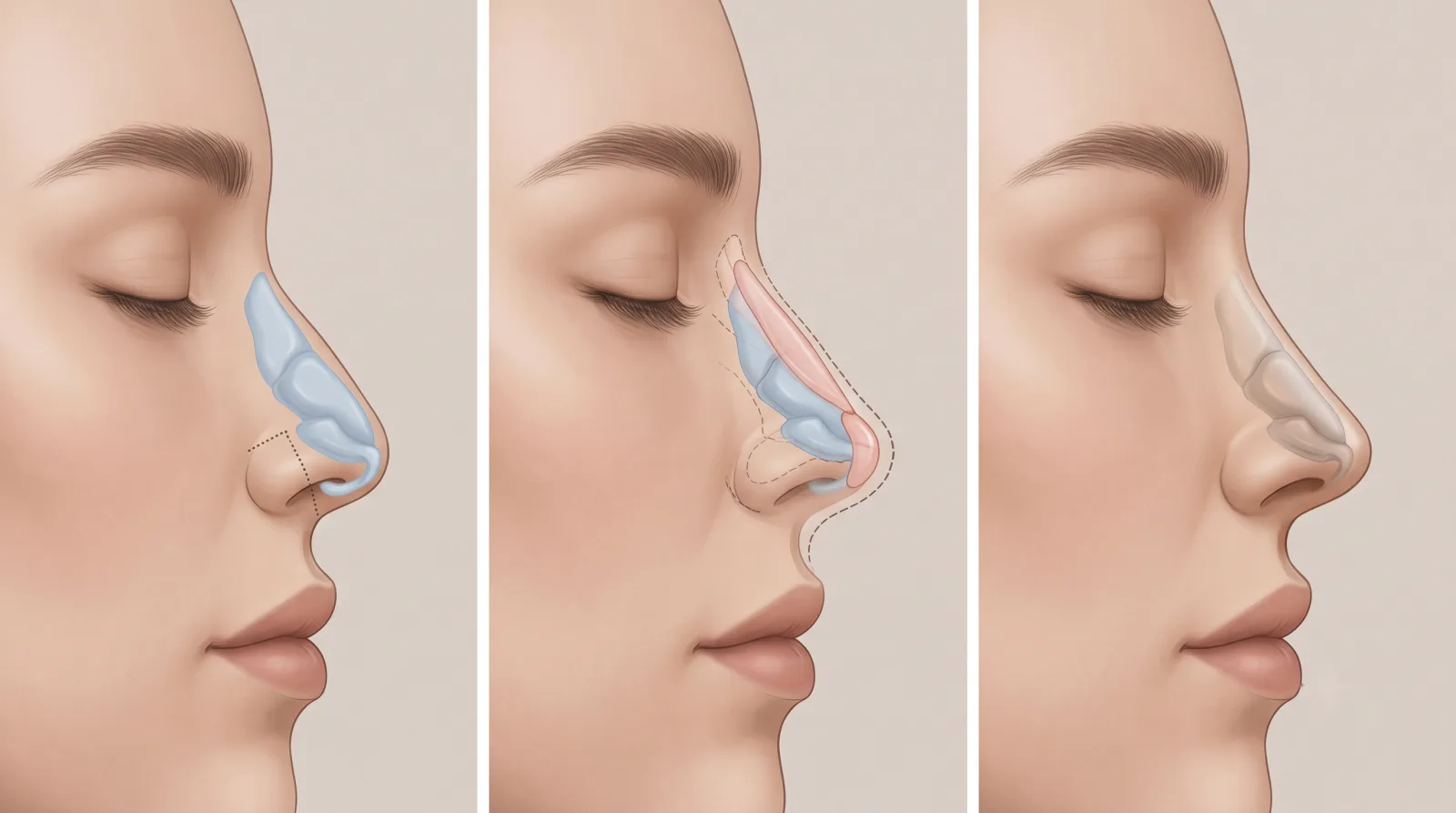
After the eyes, the nose is the feature people most often address in their twenties, because a nasal shape is structural and does not change with age. Rhinoplasty in this age group is usually about refining the bridge and the tip. The typical approach combines a dorsal (bridge) refinement with tip work using your own cartilage from the septum or ear, so the tip is built with your body's own tissue and does not rely on an implant alone.
Illustration: the nasal framework (blue) is reshaped to raise the bridge and refine the tip. The dashed outline shows the original contour.
Because the nose is a load-bearing three-dimensional structure, results here depend heavily on technique and on realistic planning about what your existing cartilage and skin will allow. A tip can only be projected so far before the skin resists; a bridge can only be raised so much before it looks unnatural on your face. A careful surgeon plans to your anatomy; a photograph of someone else is a poor template.
Recovery is real but manageable at this age: dressings are typically checked on the first and third days and nose sutures come out at around a week, with visible swelling continuing to settle for weeks afterward. If you are also considering eye surgery, it is often possible to plan the two thoughtfully. That combination should still come as a surgeon's recommendation.
What waits
What usually does not apply yet
A large part of good advice in your 20s is knowing what not to do. Lifting procedures (mini and deep-plane facelifts, neck lifts, brow and forehead lifts) correct tissue that has descended over time. In your twenties there is generally nothing to lift, so these operations are rarely appropriate and can look overdone on a young face. The same is true of aggressive volume work; a youthful face usually has its own volume already.
If you do notice something early, such as faint under-eye shadowing, it is often anatomical (unrelated to age) or too soon to treat surgically. Minor concerns are frequently better watched than operated on. A clinic that tells you "not yet", or "this will not help you", is giving you the most valuable answer, even though it is not the one that books a surgery.
This is where a single-surgeon, assessment-first model matters most for younger patients, who are the group most exposed to being sold a longer list than they need. The goal is that you leave a consultation understanding your face better, whether or not you decide to proceed.
Candidacy
Candidacy in your 20s
Age alone does not make you a candidate, and being young does not disqualify you either. Good candidacy in your twenties usually means a clearly defined structural concern, realistic expectations, stable physical and emotional health, and a feature that has finished developing. For a few procedures there is also a lower bound: very young patients may be advised to wait until growth and, sometimes, until their own sense of what they want has settled.
It is worth being clear with yourself about motivation, too. Surgery done for your own long-standing reasons tends to sit better than surgery chased under social or online pressure to look a certain way. A responsible consultation will explore this gently and will not ignore it, and there is no obligation to proceed on the day.
The safest way to test whether a procedure suits you is a proper assessment with the surgeon who would actually operate, including photographs, a discussion of your anatomy, and a frank account of what surgery can and cannot do for your specific face. You can begin that with an online consultation from abroad before committing to travel.
At Garnet
How Garnet approaches younger patients
Garnet is a single-surgeon clinic in Apgujeong, Seoul. Dr. In-Soo Baek is a board-certified plastic surgeon (Korean medical licence no. 77407), and he personally consults, operates and reviews every follow-up, with the day capped at two surgeries so each case has unhurried time. For patients in their 20s that continuity matters, because the person assessing your eyelids or nose is the same person who will carry out the surgery. There is no incentive to add procedures you did not come for.
In practice that means younger patients are often advised toward the narrowest appropriate plan, such as a single eyelid procedure or a focused rhinoplasty, and sometimes advised to wait. Structured follow-ups at one, three and six months mean your healing is reviewed by the surgeon who operated. If you are weighing your options, you can send photographs for a no-obligation pre-assessment through an online consultation before you plan a trip.
Real Results
Before & After
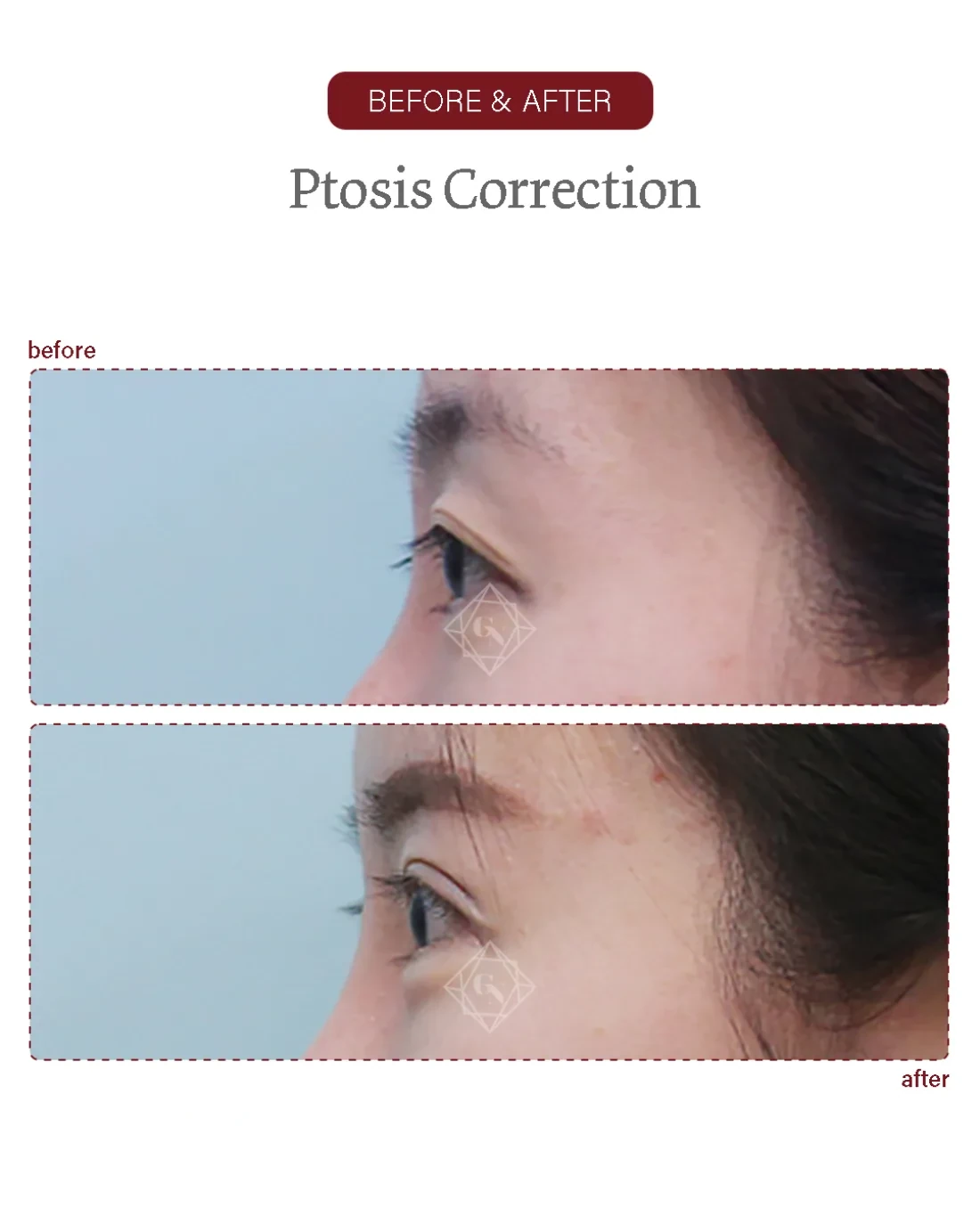
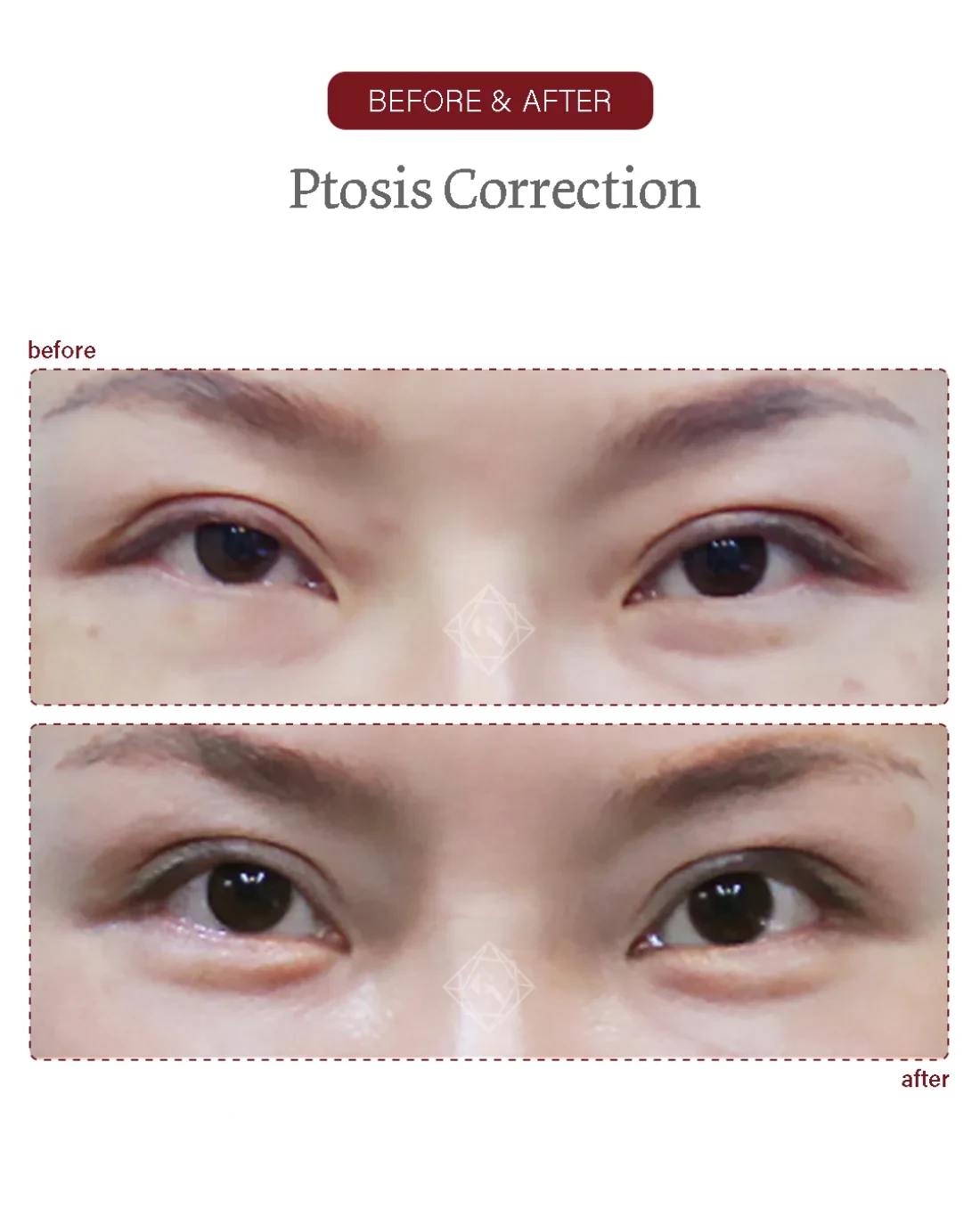
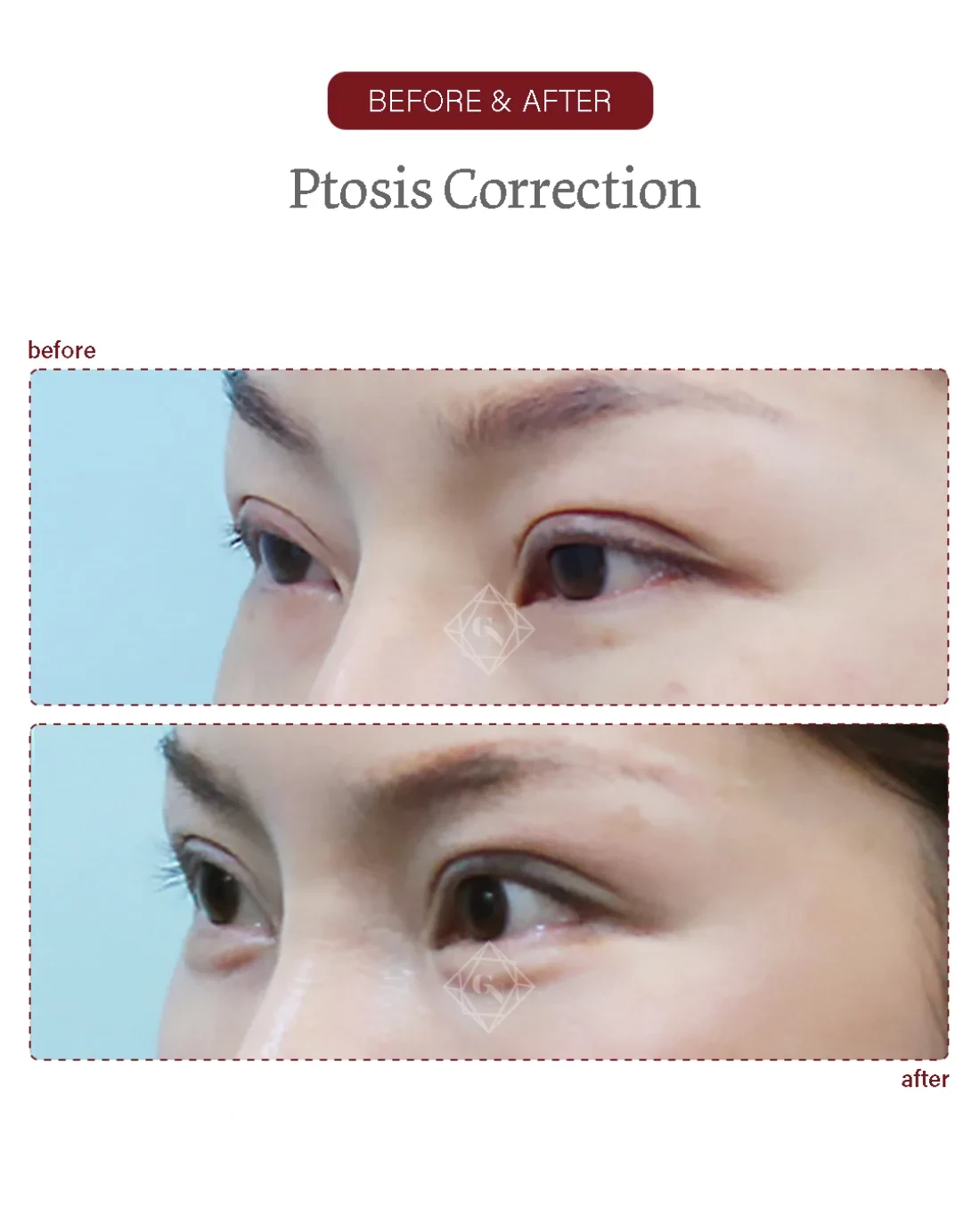
Ptosis-correction before/after examples of actual Garnet patients (published with consent). Results, recovery and suitability vary by individual and are not guaranteed; the right approach is decided at an in-person consultation.
Dr. In-Soo Baek
Director & sole operating surgeon
Korean medical licence no. 77407
Operate on what you came for. Trained at Korea University Medical Center. Every case planned, performed and reviewed by the same hands.
1Operating surgeon
~2Surgeries per day
7Registered techniques
Board-certified plastic surgeon
Plastic surgery training at Korea University College of Medicine & graduate school
Korean Society of Plastic and Reconstructive Surgeons member, in its facial-contour, eye & rhinoplasty groups
Consults, operates and follows up each case himself
Peer-reviewed papers behind the facts on this page. Each describes findings in its own study group — not results at Garnet — and none predicts your own outcome.
Kaleeny JD et al. Body Dysmorphic Disorder in Aesthetic and Reconstructive Plastic Surgery—A Systematic Review and Meta-Analysis. Healthcare. 2024. doi:10.3390/healthcare12131333
Mandavia R et al. An Evidence-based Pathway for Body Dysmorphic Disorder in Facial Aesthetics. Facial Plastic Surgery. 2024. doi:10.1055/a-2244-1066
Pereira IN et al. Evidence‐based review: Screening body dysmorphic disorder in aesthetic clinical settings. Journal of Cosmetic Dermatology. 2023. doi:10.1111/jocd.15685
FAQ
Common questions
What facial surgery suits your 20s?
In your twenties, facial surgery is usually structural; anti-ageing work rarely applies. The most common procedures are double-eyelid surgery (incision or non-incision), inner-corner epicanthoplasty and rhinoplasty. Lifting and volume procedures rarely apply yet, because there is little age-related descent to correct at this stage.
Am I too young for plastic surgery?
There is no single cut-off. For most structural procedures the question is whether the feature has finished developing and whether you have a clear, settled reason. A responsible clinic will sometimes advise you to wait, and will assess motivation as well as anatomy before proceeding.
Which procedures do people in their 20s choose most?
Double-eyelid surgery is the single most common choice, followed by rhinoplasty and inner-corner epicanthoplasty. These address structural features that do not change with age, which is why they suit younger faces better than lifting or volume work.
Should I get incision or non-incision double eyelid?
It depends on your lid anatomy more than on preference. Non-incision uses buried sutures with no skin cut and suits thinner lids with little excess skin. Incision suits lids with more skin or fat, or when eye-opening correction is added. A surgeon who performs both should recommend the one your anatomy points to.
Is rhinoplasty a good idea in your 20s?
It can be, because nasal shape is structural and does not change with age. At this stage rhinoplasty usually refines the bridge and tip using your own cartilage. Results depend on technique and on realistic planning around what your skin and cartilage allow, so a careful assessment matters.
Do I need a facelift or lifting surgery in my 20s?
Almost never. Lifting procedures correct tissue that has descended over time, and in your twenties there is generally nothing to lift. Lifting a young face can look overdone. A clinic that declines to offer these procedures at your age is giving you sound advice.
Is healing faster when you are younger?
Generally yes. Younger tissue tends to recover well and swelling often settles faster, which is an advantage. It is not a reason to have more done, though. Good decisions at this age are narrow and specific.
Can I combine eye and nose surgery at this age?
Sometimes it can be planned thoughtfully, but it should be a surgeon's recommendation based on your anatomy and recovery. The safest approach is to bring your priorities to a consultation and let the surgeon advise what is sensible to do together, if anything.
What if the surgeon says I don't need surgery?
That is a good sign. Being told a procedure will not help you, or that it is too soon, is among the most valuable outcomes of a consultation, especially for younger patients, who are most exposed to being sold more than they need.
Can I be assessed from abroad before travelling?
Yes. You can send photographs and have a pre-assessment in an online consultation with the surgeon who would actually operate, before committing to a trip. That lets you understand your options and realistic outcomes before planning travel to Seoul.
My mom recently had a brow lift and lower blepharoplasty with Dr. Baek, and our experience has been wonderful so far. The Garnet team was incredibly kind and welcoming, with Kelly assisting us as our English consultant—she made everything…
I’m so happy I chose this clinic for my lower blepharoplasty. I was traveling from abroad by myself, so I was a little nervous, but from the beginning I felt comfortable and truly cared for. Everyone was kind, patient, and professional…
Came in for an in-person consult and ended up choosing Garnet and Dr.Baek for my non-incisional DES and tiplasty/alarplasty. I communicated with Kelly (English consultant) from the start till now (3 weeks post-op). She really help me feel…
My under-eyes have been sagging and folding for years... I tried to cover it up with makeup, but it actually got stuck in the wrinkles and made it stand out even more. While going for consultations, I noticed that the bigger the hospital…
Send photos and your question before you travel. An English-speaking coordinator reviews every enquiry and replies with guidance on whether surgery is appropriate, the likely plan and timing.
✓ Reviewed by the clinic coordinator, not a bot
✓ Photo-based pre-assessment before you fly
✓ Foreign-patient scheduling & after-care
✓ One surgeon for consultation, surgery and follow-up
Prefer to chat now? Reach the coordinator directly:








 T S7 months ago



