In your 30s, the first subtle signs of ageing, such as under-eye shadowing, start to sit alongside purely structural concerns like the nose or eyelid crease. Not everyone in their 30s needs anything at all, and lifting surgery is usually still years away. What suits you depends on your face more than your age, and an assessment of that face is what decides.
The short answer
In your 30s the tissue is still firm, so most concerns are early and subtle: under-eye shadowing, faint volume loss, the first hint of laxity.
Procedures at this stage are often lighter or preventive: under-eye fat repositioning, a thread lift, or a structural procedure you simply chose to have in your 30s.
A full facelift is rarely appropriate yet, and for many 30-somethings surgery can wait.
The same board-certified surgeon should tell you whether the timing is right, without defaulting to the biggest option available.
Your thirties are a transitional decade. For most of it the skin still has good elasticity and the deeper tissues have barely moved, so you are not in facelift territory. But small changes often start to appear — a little shadowing under the eyes, a faint softening along the jaw, subtle volume loss. These are early signs, and the first thing to settle is whether they need surgery at all yet. Which surgery would fix them comes second.
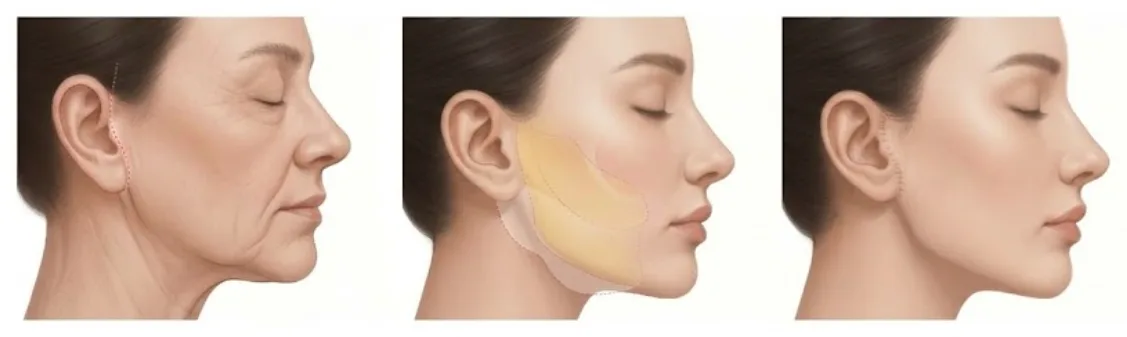
Illustration: through a shorter incision around the ear (dotted), the deeper layer (yellow) is lifted using the deep-plane principle (Deep mini™).
This is why the 30s conversation splits in two directions. Some people in their 30s are simply having a structural procedure (a double eyelid or a rhinoplasty) that they could equally have done in their 20s; age changes nothing about that decision. Others are noticing the earliest signs of ageing and wondering whether to act. Those are very different conversations, and blending them is where over-treatment creeps in.
The useful frame is prevention versus correction. In your 30s you are almost always on the prevention side of that line, where lighter, more conservative options usually make more sense than surgical lifting. Knowing which side of the line you are actually on (often earlier than people fear) is the single most important thing a consultation clarifies. Heavy lifting procedures such as a deep-mini facelift generally belong to a later stage.
Under-eye
Under-eye shadowing: the classic 30s concern
If there is one concern that defines the 30s, it is the under-eye area. Many people start to look tired even when well rested, because the fat pads under the eye begin to bulge slightly while a shadow, the tear-trough hollow, forms just below. This is not always an ageing problem; in many people the tendency is anatomical and simply becomes more visible over time.
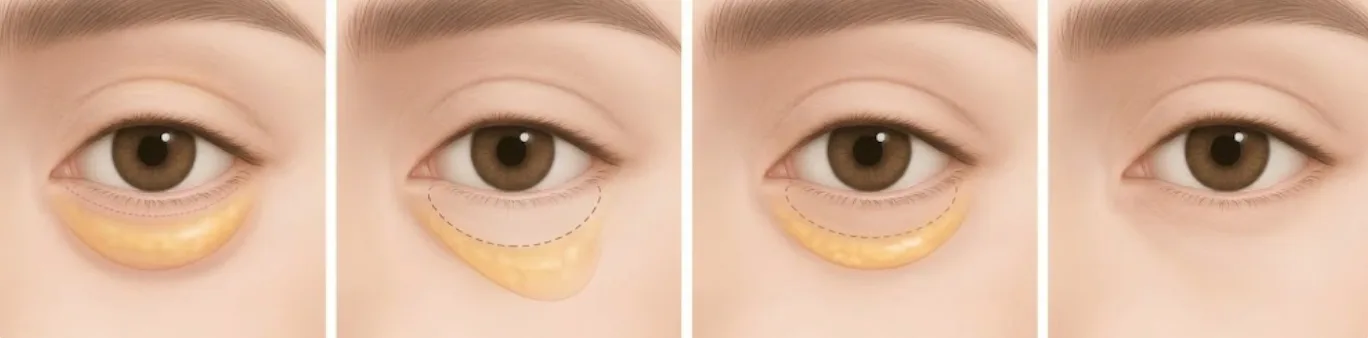
Illustration: working from inside the lower lid, the under-eye fat (yellow) is moved down into the hollow instead of being removed; the dashed line shows where it sat.
The surgical answer that suits this stage well is under-eye fat repositioning. The herniated fat is kept, moved down over the orbital rim and fixed there to fill the hollow beneath it, smoothing the transition between lid and cheek. At Garnet this is done through the inside of the lower lid, so there is no external skin scar, and because there are no external sutures to remove the downtime is comparatively minimal.
It is a good example of a procedure that fits the decade: targeted, relatively conservative, and aimed at a specific concern under the eyes. Whether repositioning or a lighter, non-surgical option suits you better still depends on the amount of bulge, the depth of the hollow and your skin. That calls for an in-person assessment.
Early laxity
Early laxity and the thread lift
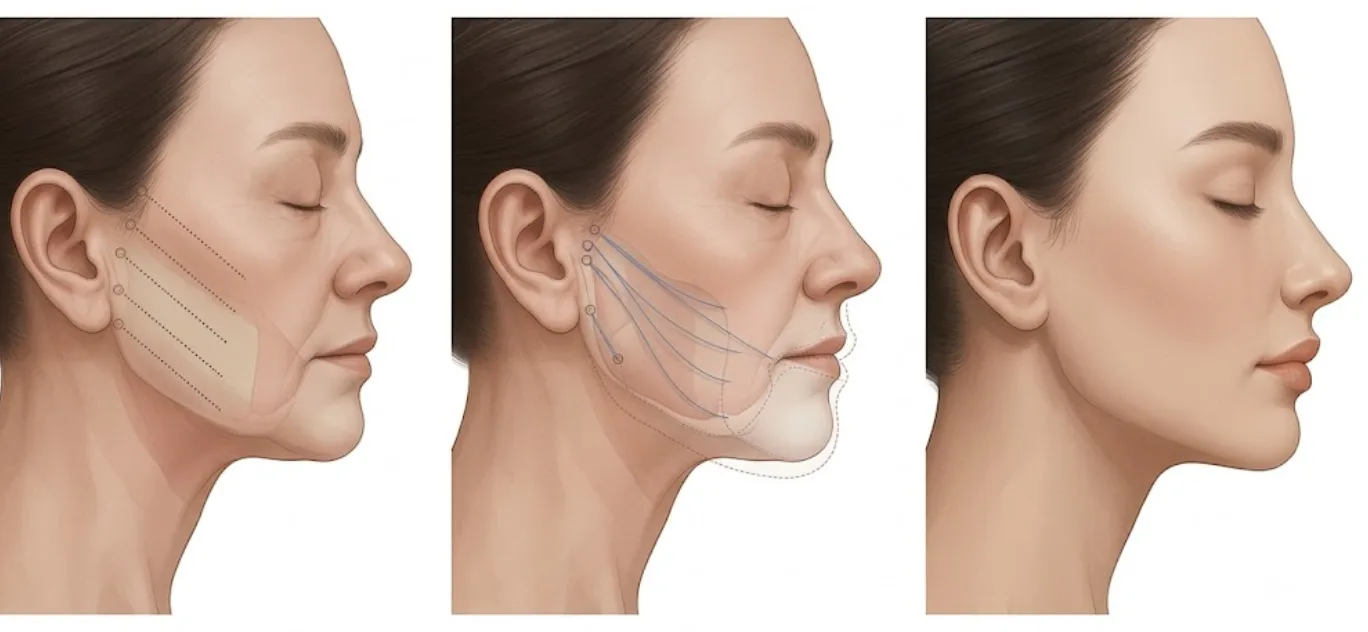
Toward the later 30s, some people notice the very first softening of the jawline and cheek. It is too little to lift surgically but enough to want something. This is where a thread lift can fit. Fine barbed threads are passed under the skin and anchored to gently reposition soft tissue, giving a subtle lift without the incisions, dissection or downtime of surgical lifting. At Garnet this uses a fixed-point technique, entered through small cannula points with no open incision.
Illustration: barbed threads are placed along the paths shown and anchored at fixed points to lift early laxity of the lower face (Fixpoint Thread Lift™).
A thread lift has clear limits. It is a lighter, temporary measure whose effect softens over time as the threads dissolve, and it does not do what a facelift does. For genuine, established descent it is the wrong tool. But for early laxity in your 30s, where a surgical lift would be premature and overdone, it can bridge the gap and defer bigger decisions.
A measured step now, in place of a large step too soon, is what suits the decade. The mistake to avoid is treating early laxity with surgery designed for later-stage ageing, which is both unnecessary and harder to make look natural on a face that has not really descended yet.
Structure
Structural procedures you can still address
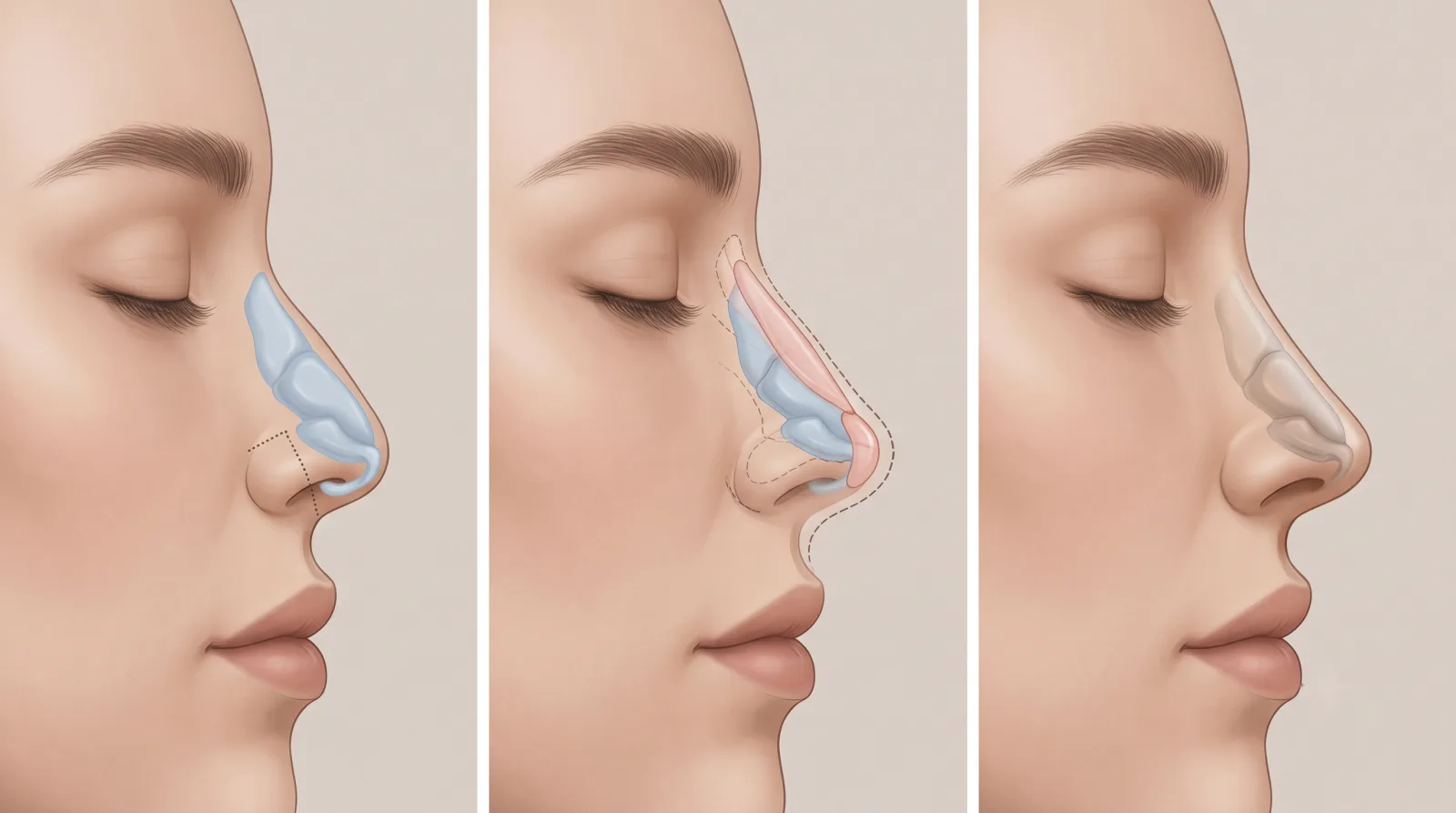
Not everyone in their 30s is thinking about ageing at all. Plenty of people reach this decade having always wanted to address a structural feature, such as an eyelid without a crease or a nasal shape they have never liked, and simply did not do it earlier. There is nothing about your 30s that changes that decision; a rhinoplasty or an incision double eyelid is just as reasonable now as it would have been in your 20s.
Illustration: the nasal framework (blue) is reshaped to raise the bridge and refine the tip. The dashed outline shows the original contour.
Double-eyelid surgery in your 30s sometimes overlaps with a mild early change, because a little extra upper-lid skin can begin to appear. In that case an incision approach can address both the crease and the skin at once, whereas a purely structural case in a younger patient might have suited a non-incision method. This is a nuance a surgeon judges from your lids.
The point is that structural and preventive concerns can coexist in this decade, and a good consultation separates them clearly: what is a feature you have always wanted to change, and what is an early sign of ageing. Treating each on its own terms, without bundling them into one large plan, is what keeps results natural.
Timing
Prevention vs correction: getting the timing right
In your 30s, timing is harder to judge than the choice of procedure. Acting too early means operating on changes that are not really there yet. Waiting has its own logic, because a concern that is anatomical and not age-driven may be better addressed once, properly, than chased repeatedly. There is no universal answer, which is why age is only a guide.
A useful principle is proportionality: the intervention should match the change. A faint under-eye hollow suits a targeted repositioning; early jawline softening might suit a thread lift or nothing at all; established descent, which is uncommon in this decade, is the only thing that would justify surgical lifting. When the change is genuinely minor, watching it is a legitimate plan.
The safest way to get the timing right is an assessment with the surgeon who would actually operate, who can tell you whether now is the moment or whether you are better waiting. You can start that with an online consultation from abroad, sending photographs before you commit to travelling to Seoul.
At Garnet
How Garnet approaches patients in their 30s
Garnet is a single-surgeon clinic in Apgujeong, Seoul. Dr. In-Soo Baek is a board-certified plastic surgeon (Korean medical licence no. 77407) who personally consults, operates and reviews every follow-up, with the day capped at two surgeries. For patients in their 30s, where the answer is often a lighter procedure or waiting, that continuity matters, because the person judging whether you should proceed is the same person who would carry out any surgery, with no reason to steer you toward more than the change warrants.
In practice, patients in this decade are often guided toward the most proportionate option: a focused under-eye repositioning, a thread lift for early laxity, or a structural procedure they had simply deferred, and sometimes toward doing nothing yet. Structured follow-ups at 1, 3 and 6 months keep your recovery under the operating surgeon's eye. If you are weighing timing, you can send photographs for a no-obligation pre-assessment through an online consultation before you plan a trip.
Real Results
Before & After
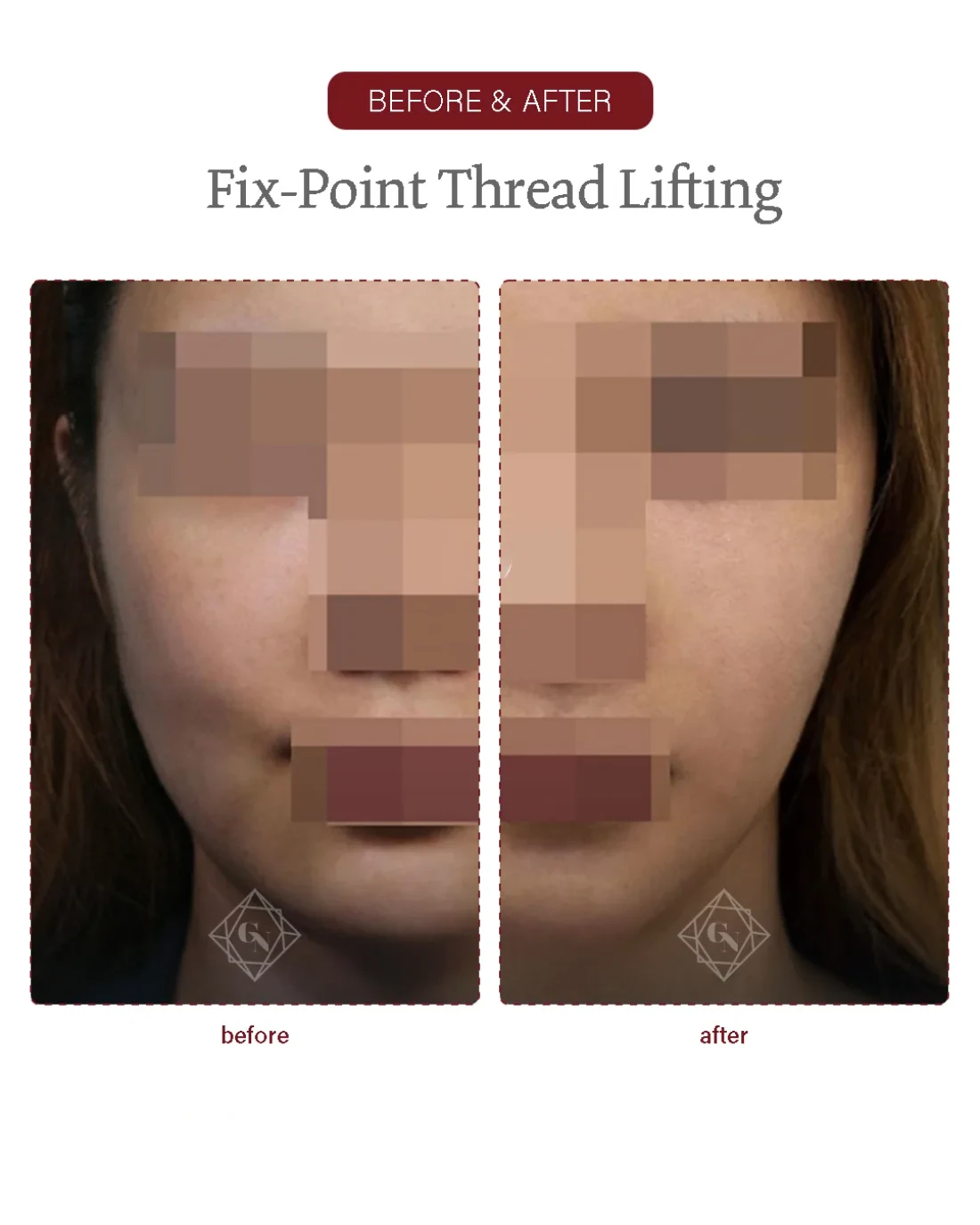
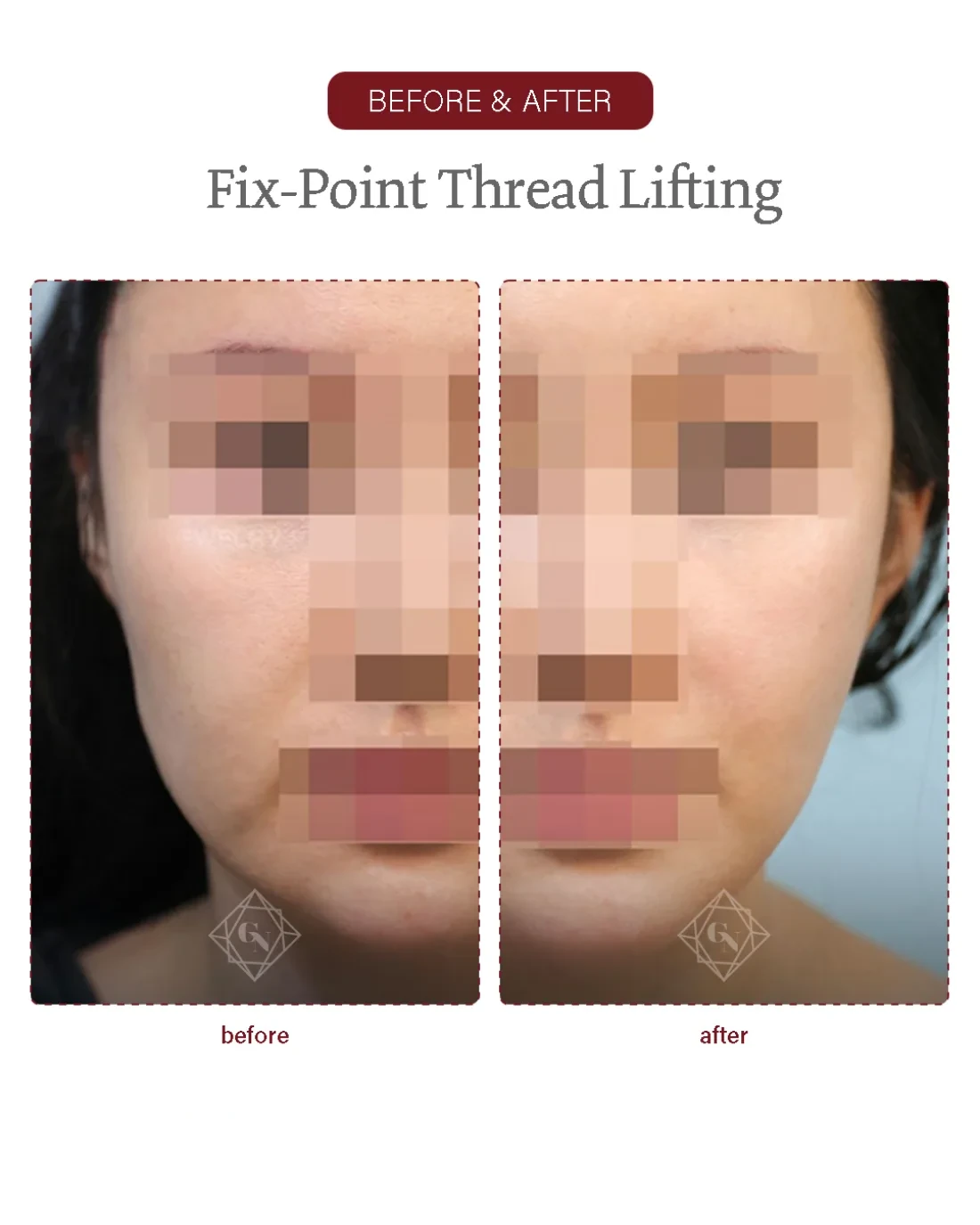
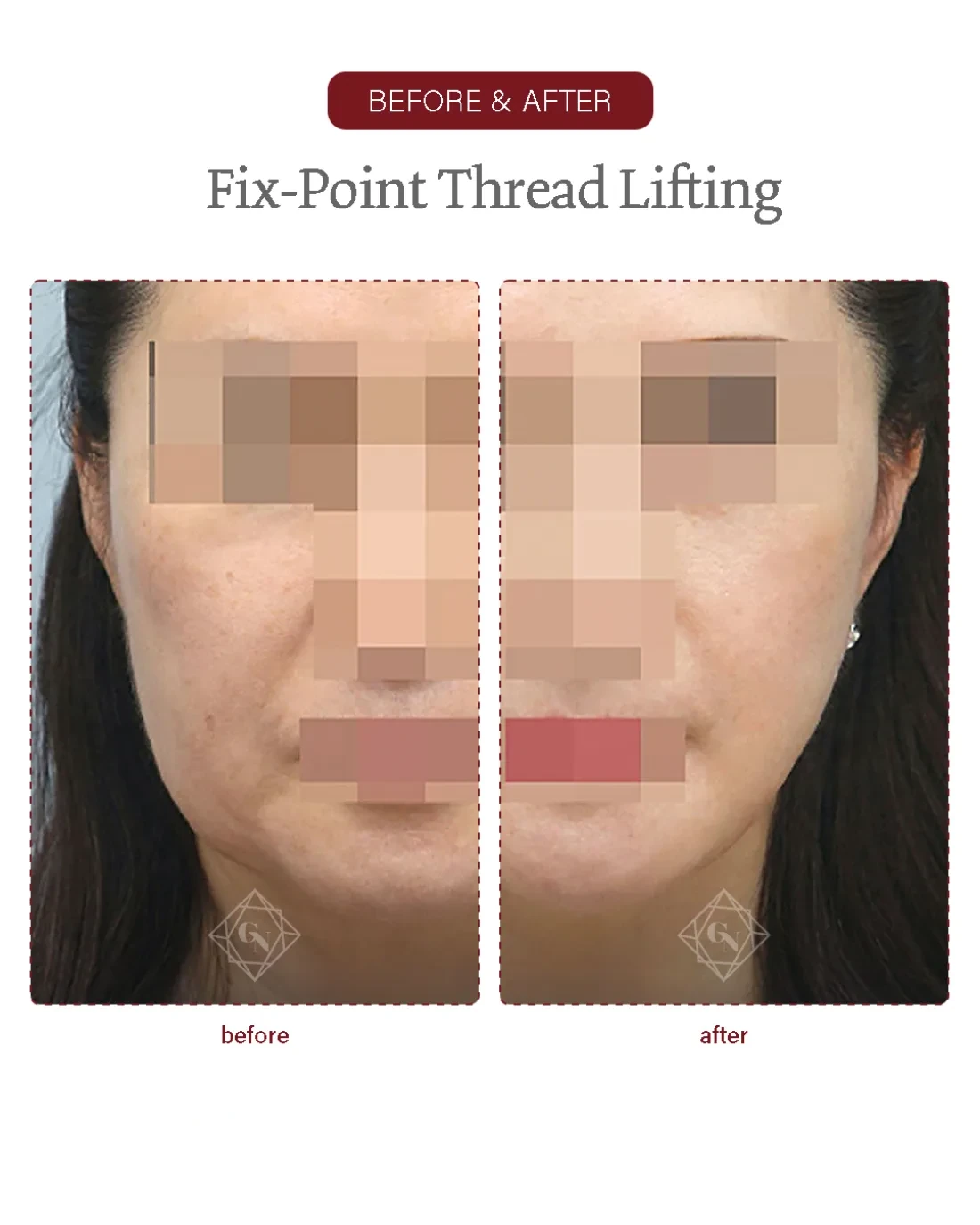
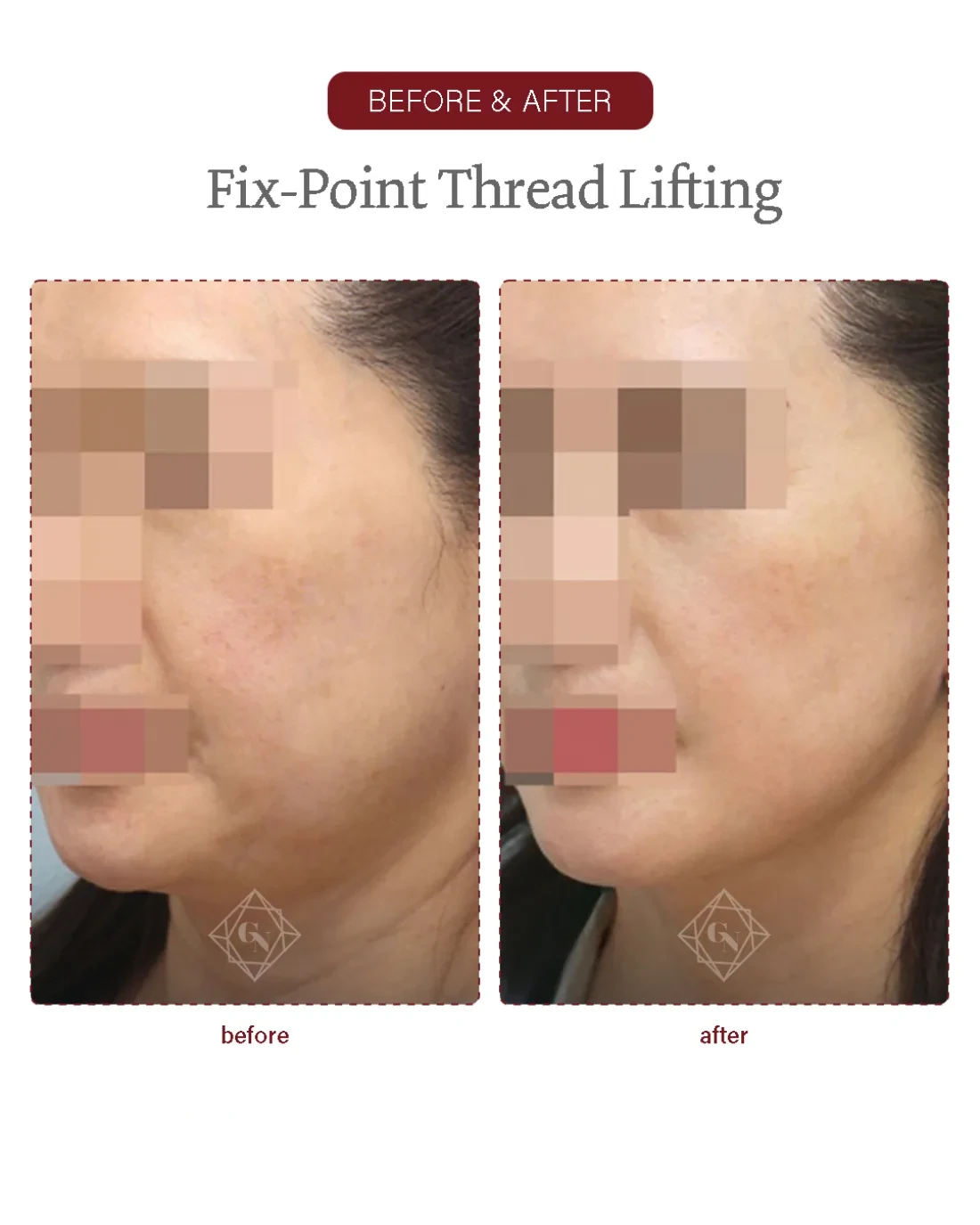
Thread-lift and contouring results of actual Garnet patients (published with consent, with date, procedure and clinic labelled). The lift is temporary and results, recovery and suitability vary by individual and are not guaranteed.
Prices
Price at Garnet
Thread lift
From₩100,000 + VAT per threadExcluding VAT (10% VAT is added at payment)Book now
Same price as Korean patients. Prices shown exclude 10% VAT; your written quote, issued after the in-person consultation, shows the full amount payable.
Dr. In-Soo Baek
Director & sole operating surgeon
Korean medical licence no. 77407
Operate on what you came for. Trained at Korea University Medical Center. Every case planned, performed and reviewed by the same hands.
1Operating surgeon
~2Surgeries per day
7Registered techniques
Board-certified plastic surgeon
Plastic surgery training at Korea University College of Medicine & graduate school
Korean Society of Plastic and Reconstructive Surgeons member, in its facial-contour, eye & rhinoplasty groups
Consults, operates and follows up each case himself
Peer-reviewed papers behind the facts on this page. Each describes findings in its own study group — not results at Garnet — and none predicts your own outcome.
Freytag L et al. Understanding Facial Aging Through Facial Biomechanics. Facial Plastic Surgery Clinics of North America. 2022. doi:10.1016/j.fsc.2022.01.001
Swift A et al. The Facial Aging Process From the “Inside Out”. Aesthetic Surgery Journal. 2020. doi:10.1093/asj/sjaa339
Rohrich RJ et al. Prediction of Facial Aging Using the Facial Fat Compartments. Plastic & Reconstructive Surgery. 2020. doi:10.1097/prs.0000000000007624
FAQ
Common questions
What facial surgery suits your 30s?
Your 30s sit between structure and early prevention. Common choices are under-eye fat repositioning for shadowing, a thread lift for the first signs of laxity, or a structural procedure such as double-eyelid surgery or rhinoplasty that you had put off until now. Full lifting surgery is rarely appropriate yet.
Is your 30s too early for a facelift?
For most people, yes. A facelift corrects tissue that has descended over time, and in your 30s that descent is usually minimal. Lighter options or waiting are more common at this stage. Only genuinely established laxity, which is uncommon in this decade, would point toward surgical lifting.
Which procedures do people in their 30s choose most?
Under-eye fat repositioning is one of the most common, because under-eye shadowing often appears in this decade. Thread lifts for early laxity and structural procedures such as rhinoplasty or double eyelid are also frequent. The right choice depends on whether your concern is structural or an early sign of ageing.
What causes tired-looking under-eyes in your 30s?
Often the lower-lid fat pads begin to bulge slightly while a hollow (tear trough) forms just beneath, casting a shadow that reads as tiredness. It is frequently anatomical and only partly age-related. Under-eye fat repositioning can smooth this by moving the fat down to fill the hollow, without removing it.
Is a thread lift worth it in your 30s?
It can suit early laxity (the first softening of the jawline or cheek), where a surgical lift would be premature. Threads give a subtle, temporary lift with little downtime, but they do not replace a facelift and the effect softens as they dissolve. For established descent they are the wrong tool.
Can I still get structural surgery like a nose job in my 30s?
Yes. Structural features such as nasal shape or an undefined eyelid crease do not change with age, so a rhinoplasty or double-eyelid procedure is just as reasonable now as earlier. Sometimes a little extra lid skin has appeared, which an incision approach can address at the same time.
Should I treat early ageing signs now or wait?
It depends on the change. Proportionality is the guide: minor, watchable changes often do not need surgery yet, while a genuinely anatomical concern may be better addressed once, properly. Acting too early risks operating on changes that are barely there. A careful assessment helps you judge the timing.
Is under-eye fat repositioning surgery a big procedure?
It is comparatively conservative. At Garnet it is done through the inside of the lower lid, so there is no external skin scar, and because there are no external sutures to remove the downtime is relatively minimal. Whether it suits you depends on the degree of bulging and hollowing, which a consultation assesses.
What if the surgeon says I should wait?
That is sound advice, and the visit was still worth it. In your 30s many changes are early enough that watching them is a legitimate plan. Being told it is too soon, or that a lighter option is enough, protects you from over-treatment and from operating on something that is not really there yet.
Can I be assessed from abroad before travelling?
Yes. Photographs of your eyes, jawline or nose can be reviewed online by Dr. Baek, the surgeon who would operate, before you book any trip. That lets you understand whether now is the right time, and which option is proportionate, before planning travel to Seoul.
My mom recently had a brow lift and lower blepharoplasty with Dr. Baek, and our experience has been wonderful so far. The Garnet team was incredibly kind and welcoming, with Kelly assisting us as our English consultant—she made everything…
I’m so happy I chose this clinic for my lower blepharoplasty. I was traveling from abroad by myself, so I was a little nervous, but from the beginning I felt comfortable and truly cared for. Everyone was kind, patient, and professional…
Came in for an in-person consult and ended up choosing Garnet and Dr.Baek for my non-incisional DES and tiplasty/alarplasty. I communicated with Kelly (English consultant) from the start till now (3 weeks post-op). She really help me feel…
My under-eyes have been sagging and folding for years... I tried to cover it up with makeup, but it actually got stuck in the wrinkles and made it stand out even more. While going for consultations, I noticed that the bigger the hospital…
Send photos and your question before you travel. An English-speaking coordinator reviews every enquiry and replies with guidance on whether surgery is appropriate, the likely plan and timing.
✓ Reviewed by the clinic coordinator, not a bot
✓ Photo-based pre-assessment before you fly
✓ Foreign-patient scheduling & after-care
✓ One surgeon for consultation, surgery and follow-up
Prefer to chat now? Reach the coordinator directly:






 T S7 months ago



