Your 40s are usually the decade when surgical lifting of the jawline and mid-face first becomes a genuine option. Early descent is real enough that a lift helps, but not so advanced that the largest operation is needed. Age is only a guide: what suits you depends on how your face has actually changed, which a consultation decides.
The short answer
In your 40s, mild to moderate descent along the jawline and mid-face often becomes real, enough that a lift genuinely helps and no longer looks premature.
A deep-mini facelift is a common entry point at this stage, less extensive than a full facelift but doing more than a thread lift.
The eyelids frequently come into focus too, as excess upper-lid skin and under-eye change become more noticeable.
The same board-certified surgeon should judge whether a lift, an eyelid procedure, or a lighter measure fits your face, without defaulting to the biggest option.
Your forties are usually where the balance tips from prevention to correction. By this stage the deeper support layer of the face, the SMAS, has often begun to loosen, so the jawline softens, the corners of the mouth and the mid-face descend a little, and skin quality changes. These are no longer the barely-there signs of the 30s. They are real, if still moderate, and they are the kind of change that surgical lifting is actually designed to address.
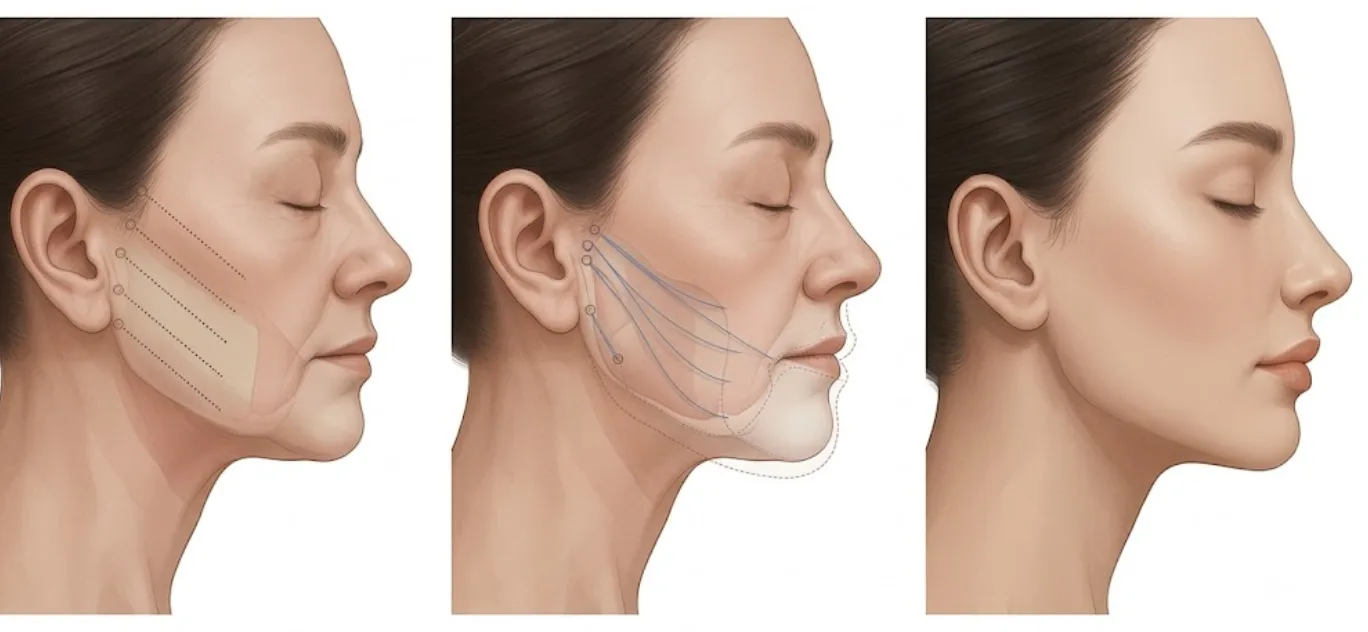
Illustration: barbed threads are placed along the paths shown and anchored at fixed points to lift early laxity of the lower face (Fixpoint Thread Lift™).
That is the important shift: in your 40s a lift can genuinely help, whereas in your 30s it would usually have been premature. But "can help" is a different statement from "is needed now". The forties are a broad decade, and an early-40s face with faint changes is in a very different place from a late-40s face with clear jowling. Where you sit on that range decides what is appropriate; the birthday does not.
It also changes what the lighter options can do. A thread lift that suited early laxity in the 30s may no longer be enough once descent is established, because threads reposition soft tissue but do not release and re-support the deeper layer. Recognising when you have crossed from "lighter measure" territory into "lift" territory is one of the key judgements of this decade.
Deep-mini
The deep-mini facelift as an entry point
For moderate descent in the forties, a deep-mini facelift is often the natural entry point into surgical lifting. It sits between a thread lift and a full facelift: more than the former, because it works at the deeper SMAS layer as well as under the skin, but less extensive than a full deep-plane lift, with a shorter incision and a more focused scope aimed mainly at the lower face and jawline.
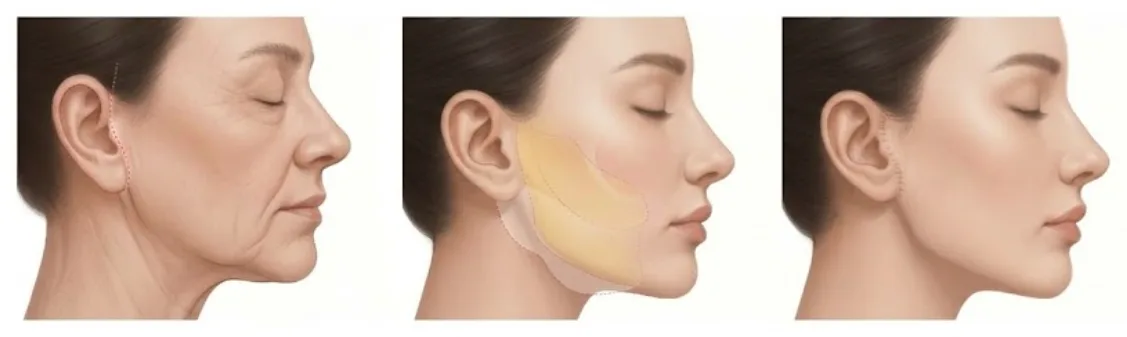
Illustration: through a shorter incision around the ear (dotted), the deeper layer (yellow) is lifted using the deep-plane principle (Deep mini™).
At Garnet the deep-mini uses an incision from the temporal hairline to the ear lobe and releases the sub-SMAS layer, so the lift comes from repositioning the deeper structure instead of pulling on skin. That is what keeps the result looking natural without a tight look. Sutures typically come out at around 10 days. It is well suited to a 40s face where the jawline has softened but the changes have not yet reached the point that a full facelift addresses.
Not every 40s face needs even this. Early in the decade, or where descent is mild, a lighter measure or waiting may still be the better answer, and later in the decade some faces are already better suited to a fuller lift. The deep-mini is a common fit for this stage, though never an automatic one. That distinction is exactly what an in-person assessment is for.
Eyelids
Why the eyelids come into focus in your 40s
Alongside the lower face, the eyes are often where change is first noticed in the forties. Upper-lid skin can begin to sag and hood, sometimes enough to make the eyes look heavier or more tired, and occasionally enough to feel like it presses on the field of vision. Upper blepharoplasty addresses this by removing the redundant skin through the natural lid crease and tidying the tissue beneath, with sutures usually out at around a week.
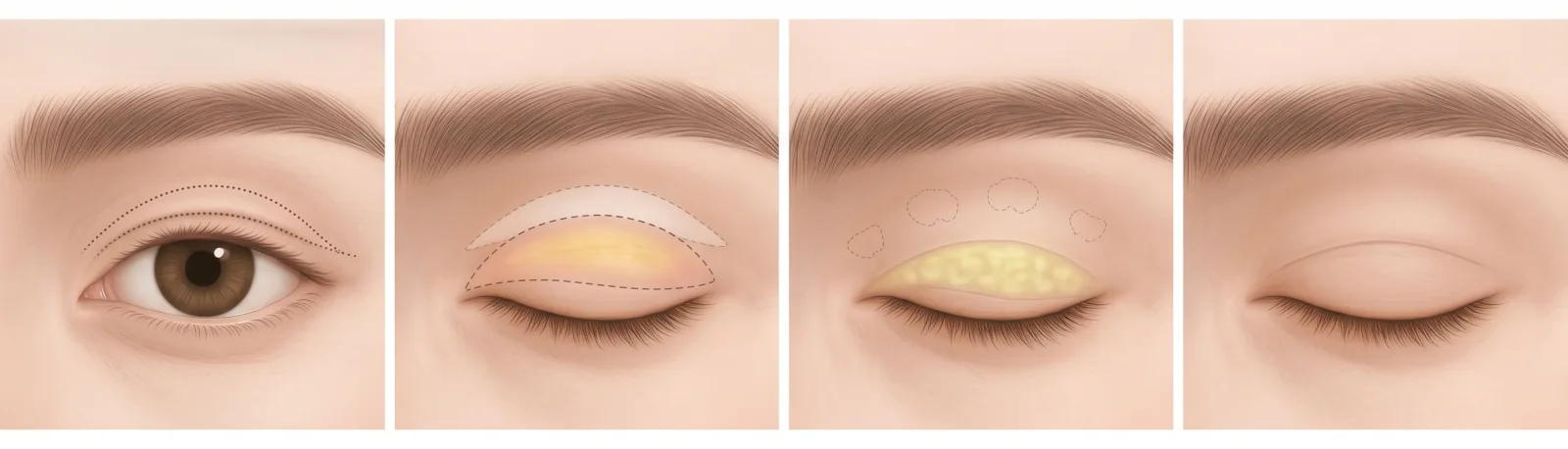
Illustration: the planned crease is marked, the excess upper-lid skin and selected fat pads are addressed through that line.
The under-eye area also continues to evolve. The shadowing that often begins in the 30s can deepen, and under-eye fat repositioning (moving the bulging fat down to fill the hollow through the inside of the lid, with no external scar) remains a relevant option in the 40s. Upper and lower eyelid concerns frequently appear together, and can sometimes be planned thoughtfully in one setting.
Eyelid surgery is often the highest-impact, lowest-disruption change available in this decade, because a tired-looking eye area strongly affects how rested a face reads. For some patients in their 40s, addressing the eyes alone is enough; for others it complements a lift. Which combination suits your face is a judgement for the surgeon assessing you. There is no fixed package.
Combining
Combining lifting with lighter measures
One of the advantages of the 40s is that the options are no longer all-or-nothing. A face with moderate jawline descent but a still-firm mid-face might suit a deep-mini lift for the lower face combined with an eyelid procedure, instead of a single large operation. A face with only early laxity might be better served by a thread lift or under-eye work for now, with a lift deferred to later.
The principle is matching the intervention to the change, region by region. The lower face, the eyes and the under-eye area can age at different rates, and treating them proportionately (a lift where descent is real, a lighter measure where it is early, nothing where it is not needed) tends to produce a more natural, balanced result than applying one big procedure across the whole face.
This is also where sequencing matters. It is often better to address the change that is genuinely present now and revisit others later than to pre-emptively do everything at once. A surgeon who plans in stages, and who is willing to say a particular area can wait, is planning to your face. A menu does not do that.
Candidacy
Candidacy for facial surgery in your 40s
Being in your 40s does not automatically make you a lift candidate, and equally it does not rule out lighter or purely structural procedures. Good candidacy at this stage usually means descent or laxity that is real enough for a lift to genuinely help, reasonable skin quality, stable general health, and realistic expectations about what a lift does. It repositions and re-supports tissue; it does not stop time or change your underlying features.
General health matters more as the decade goes on. Well-controlled blood pressure, avoiding smoking around the time of surgery, and a full account of medications and medical history all affect how safely a lifting procedure can be planned and how well it heals. A thorough consultation covers all of this, and age is only one variable.
The safest way to know what genuinely suits you (a lift, an eyelid procedure, a lighter measure, or waiting) is an assessment with the surgeon who would actually operate. You can begin with an online consultation from abroad, sending photographs for a frank pre-assessment before you commit to travelling to Seoul.
At Garnet
How Garnet approaches patients in their 40s
Garnet is a single-surgeon clinic in Apgujeong, Seoul. Dr. In-Soo Baek is a board-certified plastic surgeon (Korean medical licence no. 77407) who personally consults, performs the surgery and reviews every follow-up, with the day capped at two surgeries so each lift has unhurried time. For patients in their 40s, the decade where the range of appropriate options is widest, that continuity matters, because the surgeon judging whether you need a lift, an eyelid procedure or a lighter measure is the same one who would carry it out.
In practice, patients in this decade are guided toward what their face actually shows: a deep-mini lift for moderate lower-face descent, upper-lid or under-eye surgery where the eyes have changed, a lighter measure where it is still early, and, where appropriate, a combination planned in proportion. Structured follow-ups at 1, 3 and 6 months keep recovery under the operating surgeon's eye. Photographs of your jawline, eyes and under-eye area can be sent for a no-obligation pre-assessment through an online consultation before you plan a trip.
Real Results
Before & After
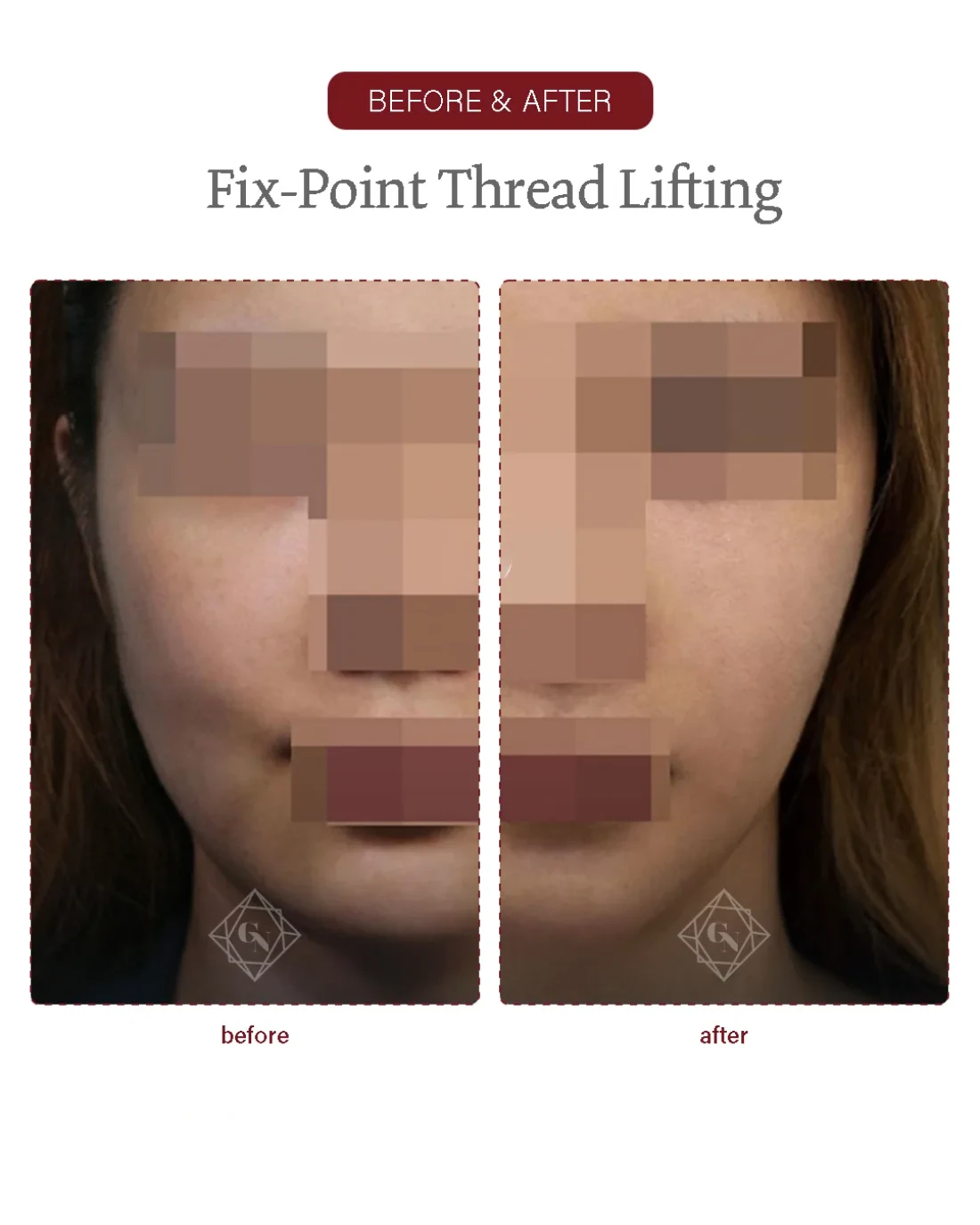
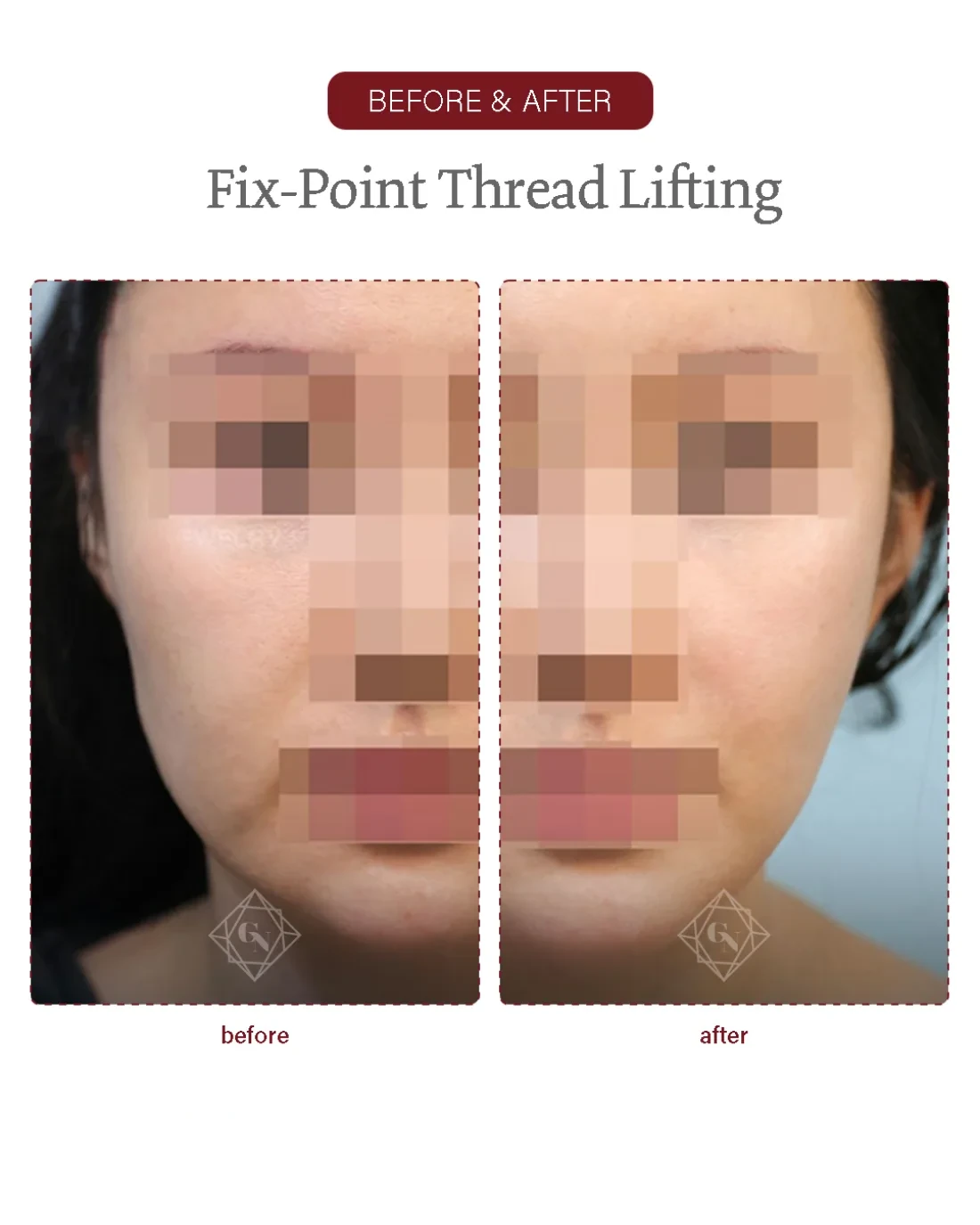
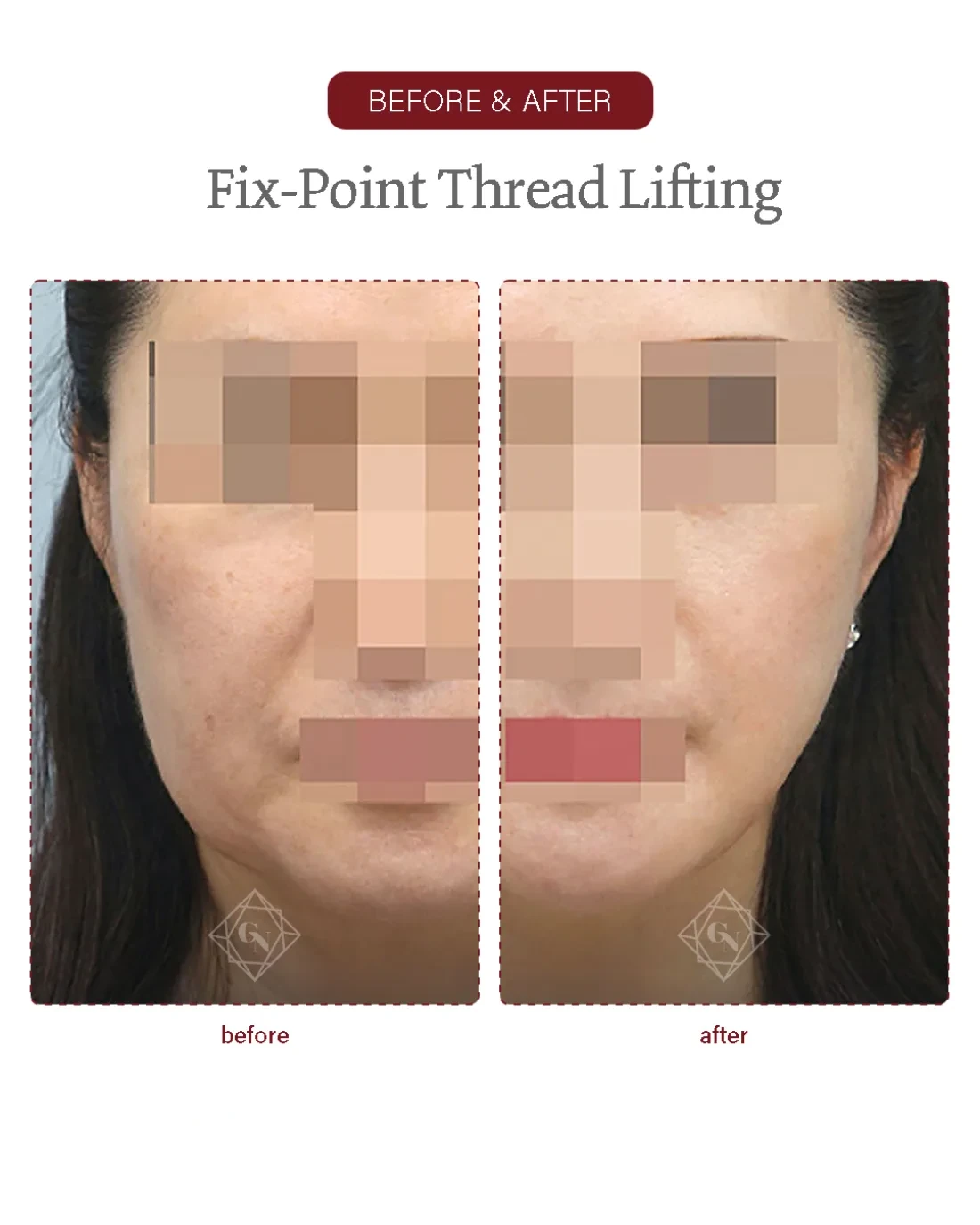
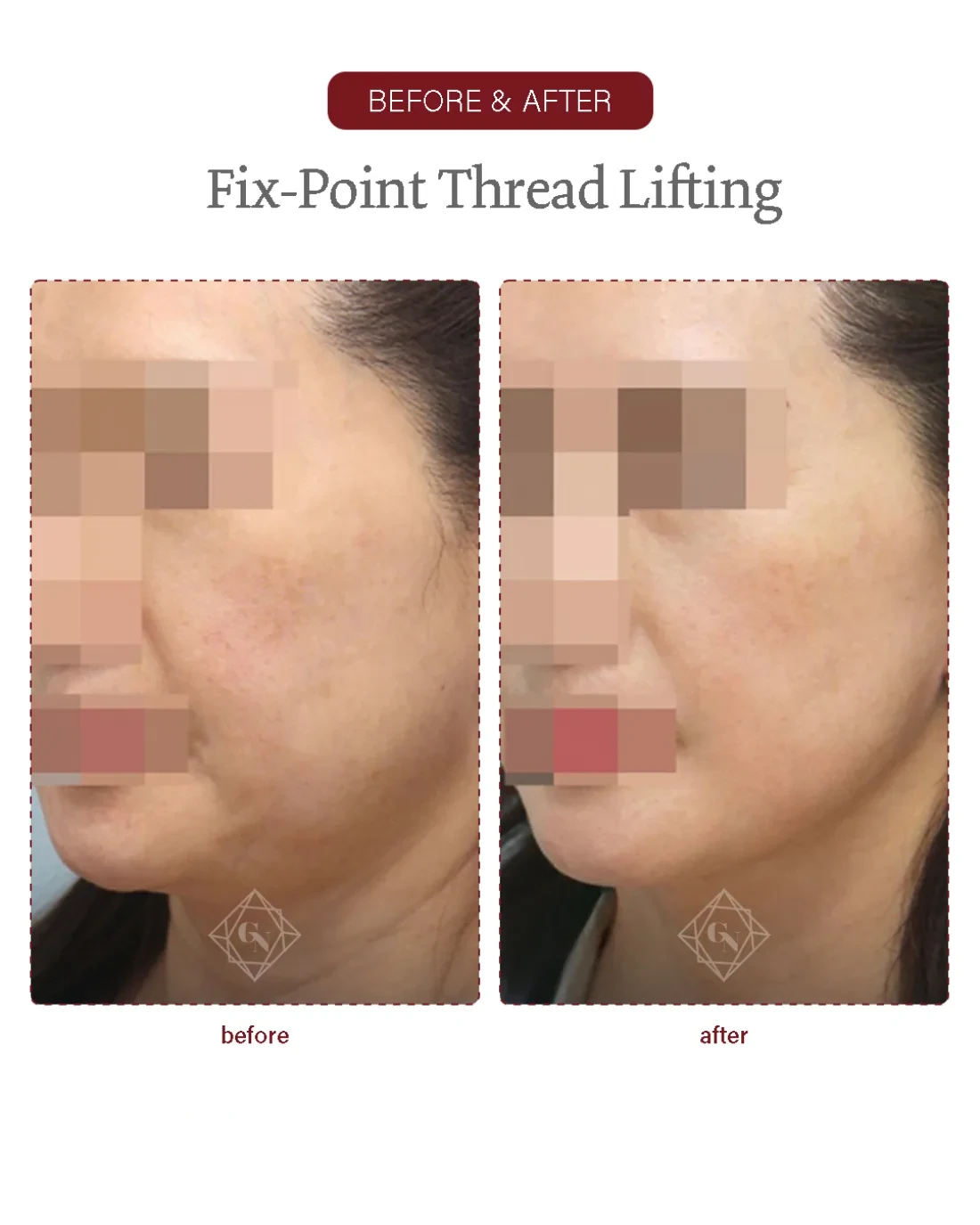
Thread-lift and contouring results of actual Garnet patients (published with consent, with date, procedure and clinic labelled). The lift is temporary and results, recovery and suitability vary by individual and are not guaranteed.
Prices
Price at Garnet
Thread lift
From₩100,000 + VAT per threadExcluding VAT (10% VAT is added at payment)Book now
Same price as Korean patients. Prices shown exclude 10% VAT; your written quote, issued after the in-person consultation, shows the full amount payable.
Dr. In-Soo Baek
Director & sole operating surgeon
Korean medical licence no. 77407
Operate on what you came for. Trained at Korea University Medical Center. Every case planned, performed and reviewed by the same hands.
1Operating surgeon
~2Surgeries per day
7Registered techniques
Board-certified plastic surgeon
Plastic surgery training at Korea University College of Medicine & graduate school
Korean Society of Plastic and Reconstructive Surgeons member, in its facial-contour, eye & rhinoplasty groups
Consults, operates and follows up each case himself
Peer-reviewed papers behind the facts on this page. Each describes findings in its own study group — not results at Garnet — and none predicts your own outcome.
de Souza TSC et al. Body Dysmorphic Disorder in Rhinoplasty Candidates: Prevalence and Functional Correlations. Aesthetic Plastic Surgery. 2020. doi:10.1007/s00266-020-01930-9
Kuhn H et al. Body dysmorphic disorder in the cosmetic practice. Italian Journal of Dermatology and Venereology. 2018. doi:10.23736/s0392-0488.18.05972-2
Fratila A et al. The Anatomy of the Aging Face: A Review. Facial Plastic Surgery. 2016. doi:10.1055/s-0036-1582234
FAQ
Common questions
What facial surgery suits your 40s?
Your 40s are often when lifting first makes sense. Common options are a deep-mini facelift for moderate lower-face descent, upper blepharoplasty for sagging upper-lid skin, and under-eye fat repositioning for deepening shadows. Lighter measures such as a thread lift still fit early laxity. What suits you depends on how your face has actually changed.
Is your 40s a good age for a facelift?
It is often the decade when a lift first genuinely helps, because descent is real but usually still moderate. For many people a deep-mini facelift is the natural entry point, ahead of a full facelift. Readiness depends on the degree of descent along the jawline and mid-face, so an individual assessment matters more than the birthday.
Which procedures do people in their 40s choose most?
A deep-mini facelift, upper eyelid surgery and under-eye fat repositioning are among the most common, sometimes combined. Thread lifts still suit early laxity. The 40s are a broad decade, so an early-40s face and a late-40s face often call for quite different plans.
What is a deep-mini facelift, and why is it common in your 40s?
It sits between a thread lift and a full facelift, working at the deeper SMAS layer through a shorter incision focused on the lower face and jawline. At Garnet it releases the sub-SMAS layer with sutures out at around ten days. It suits moderate descent that is more than a thread lift can address but less than a full lift requires.
Do I need a full facelift or a deep-mini in my 40s?
It depends on how advanced the descent is. Moderate lower-face softening often suits a deep-mini, while clear, more extensive descent (more common later) may point to a fuller lift. A surgeon assessing your face in person decides which is proportionate; a rule based on age cannot.
Why do the eyelids matter in your 40s?
Upper-lid skin often begins to sag and hood in this decade, making the eyes look heavier or tired, while under-eye shadowing can deepen. Upper blepharoplasty removes redundant lid skin through the natural crease, and under-eye fat repositioning addresses hollows. Eyelid surgery is often high-impact with relatively little disruption.
Can a thread lift still work in your 40s?
It can, if the laxity is still early. But once descent is established, threads, which reposition soft tissue without releasing the deeper layer, may no longer be enough, and a deep-mini lift may be the better fit. Recognising when you have crossed from lighter-measure to lift territory is a key judgement of this decade.
Can I combine a lift with eyelid surgery?
Often yes. A deep-mini lift for the lower face combined with an eyelid procedure can suit a 40s face where different regions have aged at different rates. It should be planned in proportion to what each area actually shows, and sequencing some work for later is sometimes wiser than doing everything at once.
Does general health affect surgery at this age?
Increasingly, yes. Well-controlled blood pressure, avoiding smoking around the time of surgery, and a full account of medications and medical history all affect how safely a lift is planned and how well it heals. A thorough consultation covers all of this, and age is only one factor.
Can I be assessed from abroad before travelling?
Yes. Photographs of your face can be reviewed in an online consultation with the surgeon who would actually operate, before you commit to a trip. That lets you learn whether a lift, an eyelid procedure or a lighter measure fits your face before planning travel to Seoul.
My mom recently had a brow lift and lower blepharoplasty with Dr. Baek, and our experience has been wonderful so far. The Garnet team was incredibly kind and welcoming, with Kelly assisting us as our English consultant—she made everything…
I’m so happy I chose this clinic for my lower blepharoplasty. I was traveling from abroad by myself, so I was a little nervous, but from the beginning I felt comfortable and truly cared for. Everyone was kind, patient, and professional…
Came in for an in-person consult and ended up choosing Garnet and Dr.Baek for my non-incisional DES and tiplasty/alarplasty. I communicated with Kelly (English consultant) from the start till now (3 weeks post-op). She really help me feel…
My under-eyes have been sagging and folding for years... I tried to cover it up with makeup, but it actually got stuck in the wrinkles and made it stand out even more. While going for consultations, I noticed that the bigger the hospital…
Wondering whether a lift, an eyelid procedure or a lighter measure fits your face? Send photos for a no-obligation pre-assessment before you plan a trip.
Send photos and your question before you travel. An English-speaking coordinator reviews every enquiry and replies with guidance on whether surgery is appropriate, the likely plan and timing.
✓ Reviewed by the clinic coordinator, not a bot
✓ Photo-based pre-assessment before you fly
✓ Foreign-patient scheduling & after-care
✓ One surgeon for consultation, surgery and follow-up
Prefer to chat now? Reach the coordinator directly:







 T S7 months ago



