Most people who expect a nose operation to be sharply painful are pleasantly surprised by rhinoplasty. It is more uncomfortable than painful: congestion, a blocked feeling and the splint dominate the early days far more than actual pain. This page explains the anaesthesia, what each stage really feels like, and how discomfort settles, so you can plan without fear of the unknown.
The short answer
Rhinoplasty is generally described as more uncomfortable than painful. The main complaints are congestion, a blocked nose and pressure from the splint, and sharp pain is uncommon.
It is performed under anaesthesia, so you feel nothing during surgery; manageable discomfort that responds to ordinary pain relief follows afterwards.
The first two to three days are the most congested; the external splint and nose sutures come off at about a week, which is the moment most patients feel a clear step forward.
At Garnet the same board-certified surgeon plans and performs your surgery and reviews recovery at 1, 3 and 6 months, so comfort and healing are followed by one doctor.
The question almost everyone asks first is whether rhinoplasty is painful, and the answer reassures most people: it is generally described as more uncomfortable than painful. The nose itself has relatively little of the deep aching that people imagine, and the dominant sensations in the early days are congestion, a blocked or stuffy feeling and a sense of pressure, with little sharp, stabbing pain. Patients frequently report that the experience was milder than they had braced themselves for.
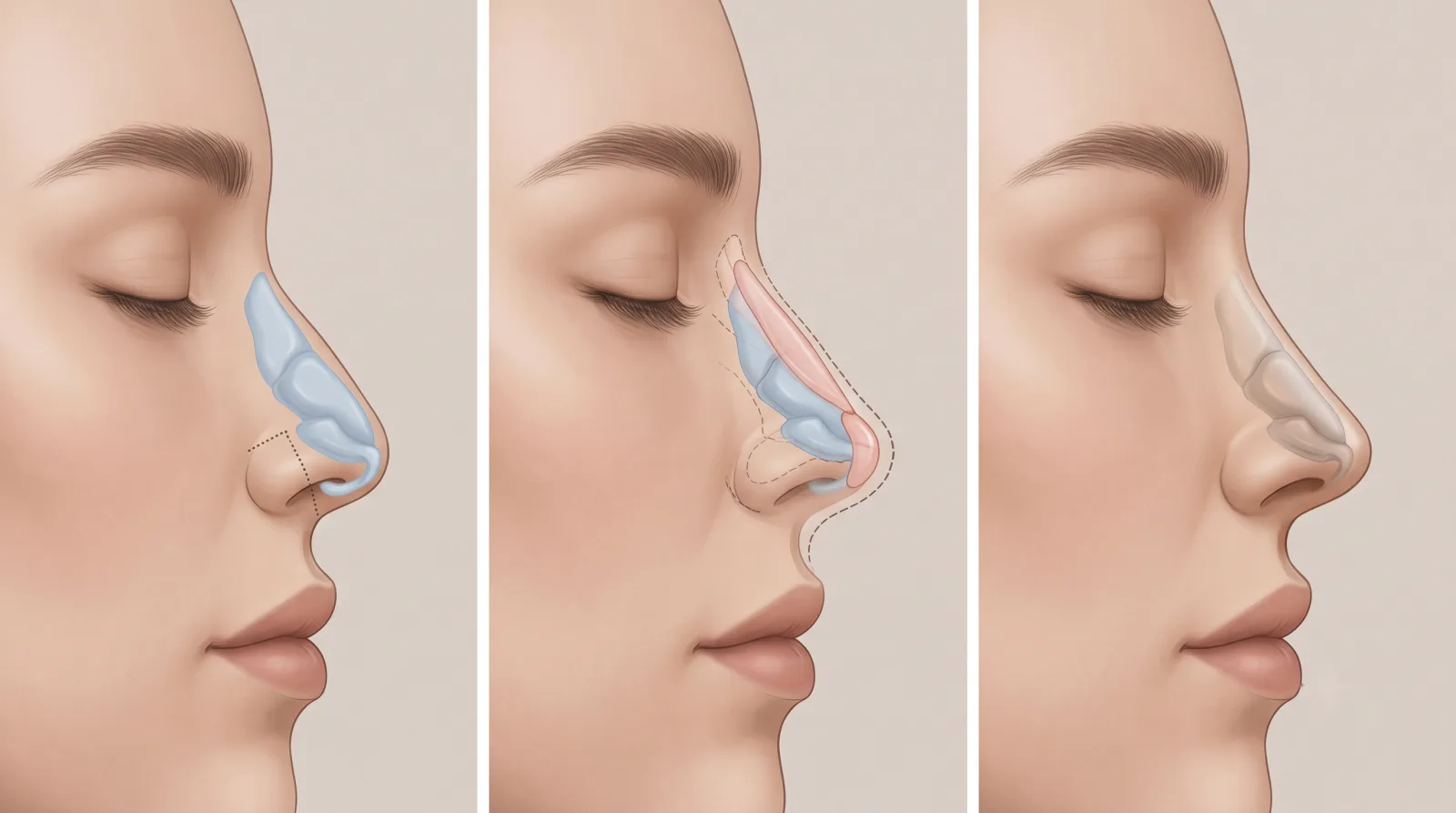
Illustration: the nasal framework (blue) is reshaped to raise the bridge and refine the tip. The dashed outline shows the original contour.
That does not mean there is no discomfort. There is, especially in the first two to three days, but it responds well to ordinary prescribed pain relief and eases steadily; it is not the kind that keeps you awake in agony. Much of what people label as “pain” is actually the blocked, congested feeling of a swollen, packed nose, which is a different sensation and one that improves as swelling subsides.
Every person's experience is individual, and the technique used matters: rhinoplasty at Garnet typically combines a silicone dorsal augmentation with the patient's own septal or ear cartilage for the tip, and where a donor site such as the ear is used, that small area adds its own mild, separate soreness. The realistic summary is straightforward: expect discomfort and congestion with little severe pain, and expect it to settle within the first week.
Anaesthesia
Anaesthesia and what the surgery itself feels like
The most important point about pain is that you feel nothing during the operation itself. Rhinoplasty is carried out under anaesthesia, so the surgery is not something you experience as painful; you are asleep or deeply sedated and comfortable throughout. The discomfort people describe belongs entirely to the recovery afterwards. Knowing this removes a large part of the anxiety many patients carry into the day.
The exact anaesthetic approach is chosen per case and discussed with you beforehand, taking into account the extent of your surgery, whether cartilage is harvested and your own medical background. What matters from a comfort point of view is that the surgery is pain-free, and that the team plans pain relief for the hours and days that follow in advance.
Because the same surgeon at a single-surgeon clinic consults, operates and follows up, the plan for your anaesthesia and after-care is made by the person who knows your case best. You can ask exactly what to expect, including how you will feel as the anaesthetic wears off and what pain relief you will have, in an online consultation from abroad before you commit to travel.
Congestion vs pain
Rhinoplasty recovery: mostly congestion and pressure
The single most useful thing to understand about rhinoplasty recovery is that congestion is the main event, ahead of pain. After surgery the inside of the nose is swollen and the airway is narrowed, so for several days you breathe through your mouth and feel persistently blocked, much like a heavy head cold that you cannot clear by blowing your nose, which you must not do in the early weeks. People who expect pain and instead meet stubborn congestion often find it the most surprising part of the experience.
Alongside the blockage there is a feeling of pressure and fullness across the bridge and tip, and the splint on the outside adds its own tight, weighty sensation. This pressure is normal and reflects swelling and the dressing; it eases as the swelling comes down over the first week or two. Mild headache, a dull ache and tenderness if the nose is touched are also common and manageable.
Distinguishing these sensations matters because it changes how you prepare. You are not bracing for severe pain so much as planning for a few days of breathing through your mouth, sleeping propped up, keeping your head elevated and being patient with a stuffy, pressured feeling. Framed that way, the recovery is far less daunting: it is an inconvenience to manage.
Splint & sutures
What the nasal splint, dressing and sutures feel like
An external splint sits over the bridge to protect and stabilise the nose while it heals, and it is a large part of what the early days feel like. It is not painful in itself, but it feels tight and present, and combined with internal swelling it contributes to the sense of pressure across the nose. Any internal dressing or support adds to the blocked feeling. None of this is sharp pain. It is the snug, packed sensation of a nose that is held still while it settles.
Dressings are checked early in the recovery (at Garnet on around day one and day three), and the external splint together with the nose sutures comes off at about seven days. That splint-removal appointment is the moment most patients describe as a clear turning point: the nose feels lighter, breathing begins to open up as swelling recedes, and the most congested phase is behind them. Suture removal itself is quick and not something patients find painful.
Where the tip cartilage is taken from the ear, the small ear donor site has its own dressing and is typically tender for a little longer, with those stitches usually removed around ten days instead of seven. It is a mild, localised soreness and it does not change the overall picture: the nose-related discomfort is dominated by congestion and pressure that resolve over the first week.
Day by day
How discomfort settles, day by day
In the first two to three days the congestion and pressure are at their peak. You breathe through your mouth, your nose feels heavy and blocked, and there may be mild bruising and swelling around the nose and eyes. This is when prescribed pain relief is most useful, and when rest, head elevation and sleeping propped up make the biggest difference. It is uncomfortable, but it is the kind of discomfort you can manage, and it is already the worst of it.
Across the rest of the first week the pressure eases noticeably as swelling comes down, even though the nose still feels stuffy. By the time the splint and sutures come off at about a week, most patients feel markedly better and find the congestion clearing. From here, what remains is residual swelling and a stuffy feeling that continues to improve gradually. Most people are off pain relief well before this point.
Beyond the first week, the experience is one of steady, undramatic improvement: the nose continues to de-swell over the following weeks, and the fine refinement of the tip settles over months, but this later phase is about appearance and subtle numbness. If at any stage something feels like genuine, increasing pain while the congestion should be easing, that is exactly when to contact the clinic. At a single-surgeon clinic the operating surgeon reviews you directly, including remotely once you are home.
At Garnet
How Garnet manages comfort during rhinoplasty
Garnet is a single-surgeon clinic in Apgujeong, Seoul, where Dr. In-Soo Baek, a board-certified plastic surgeon (Korean medical licence no. 77407), is the only operating doctor. For something as personal as how comfortable your recovery is, that continuity matters: the same surgeon plans your anaesthesia, performs the operation, sets your pain relief and reviews how you settle, with no rotating team. The clinic caps the day at two surgeries, so your case is given unhurried time.
The approach to comfort is practical and direct. You are told in advance what the early days realistically feel like (congestion and pressure more than severe pain), so nothing comes as a shock, and you are given a clear plan for pain relief, dressing checks and what to do at home. Dressings are reviewed around day one and day three, and the splint and nose sutures come off at about seven days, the point most patients feel a clear step forward.
Recovery is then followed with structured check-ups at 1, 3 and 6 months, and international patients can be reviewed remotely after returning home. If you want to know exactly how comfortable your particular case is likely to be, you can send photos and a description of your goals for a pre-assessment in an online consultation before you travel. Garnet is registered with Korea's foreign-patient programme.
Real Results
Before & After
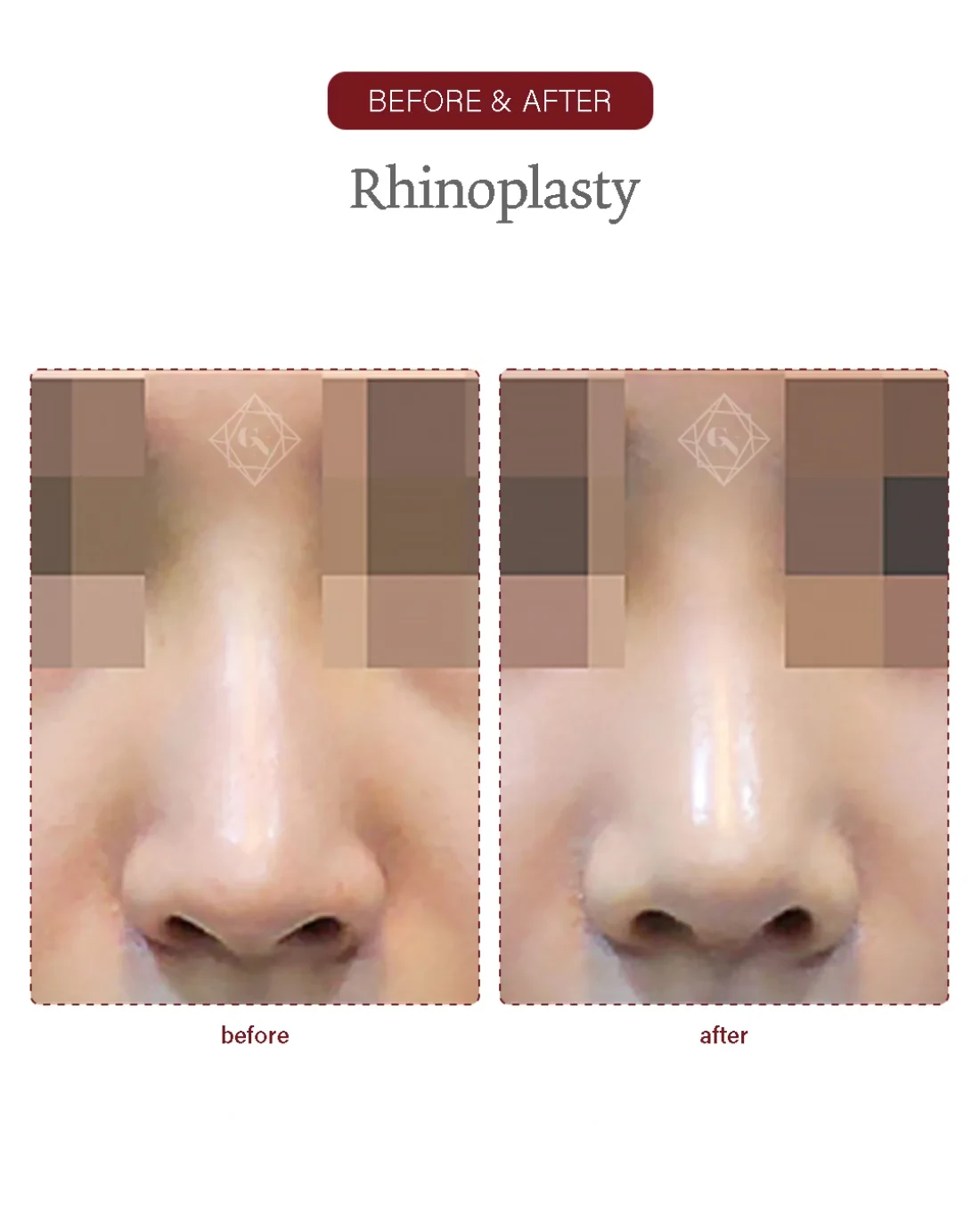
Rhinoplasty result of an actual Garnet patient (published with consent). Date, procedure and clinic (Garnet Plastic Surgery, Apgujeong) are labelled on the image, with the usual same-condition disclaimer. Results, recovery and suitability vary by individual and are not guaranteed.
Dr. In-Soo Baek
Director & sole operating surgeon
Korean medical licence no. 77407
Operate on what you came for. Trained at Korea University Medical Center. Every case planned, performed and reviewed by the same hands.
1Operating surgeon
~2Surgeries per day
7Registered techniques
Board-certified plastic surgeon
Plastic surgery training at Korea University College of Medicine & graduate school
Korean Society of Plastic and Reconstructive Surgeons member, in its facial-contour, eye & rhinoplasty groups
Consults, operates and follows up each case himself
Peer-reviewed papers behind the facts on this page. Each describes findings in its own study group — not results at Garnet — and none predicts your own outcome.
Frederick JW et al. Asian Augmentation Rhinoplasty. Facial Plastic Surgery. 2025. doi:10.1055/a-2595-5275
Park MJ et al. Rhinoplasty Considerations in the Ethnic Patient. Facial Plastic Surgery Clinics of North America. 2022. doi:10.1016/j.fsc.2022.07.007
Suh MK. Cosmetic Augmentation Rhinoplasty for East Asians. Facial Plastic Surgery Clinics of North America. 2021. doi:10.1016/j.fsc.2021.06.010
FAQ
Common questions
Is rhinoplasty painful?
It is generally described as more uncomfortable than painful. The dominant sensations are congestion, a blocked nose and pressure from the splint. There is discomfort, especially in the first two to three days, but it responds well to ordinary prescribed pain relief and eases steadily over the first week.
What anaesthesia is used for rhinoplasty?
Rhinoplasty is performed under anaesthesia, so you feel nothing during the surgery itself. The exact anaesthetic approach depends on the extent of surgery, whether cartilage is harvested and your medical background, and is discussed with you at consultation. Pain relief for the hours and days afterwards is planned in advance.
How much discomfort is there after rhinoplasty?
Most discomfort after rhinoplasty is congestion and pressure. The first two to three days are the most blocked and stuffy, with a feeling of fullness across the bridge and tip from swelling and the splint. It is managed with rest, head elevation, sleeping propped up and prescribed pain relief, and eases noticeably by the time the splint comes off.
Does the splint or packing hurt?
The external splint is not painful in itself, but it feels tight and present and adds to the sense of pressure across the nose. Any internal dressing increases the blocked feeling. It is the snug, packed sensation of a nose held still while it heals, and it eases as swelling subsides over the first week.
How long does rhinoplasty discomfort last?
The most congested, pressured phase is the first two to three days, easing across the first week. At about seven days the splint and nose sutures come off, which most patients describe as a clear turning point. After that, what remains is residual swelling and a stuffy feeling that improves gradually.
Will I be able to breathe after rhinoplasty?
Through the nose, poorly at first. The inside is swollen and the airway is narrowed, so for several days you breathe mainly through your mouth and feel persistently blocked, much like a heavy head cold. This congestion is normal, and it clears as swelling comes down, especially after the splint is removed.
Does taking ear cartilage for the tip add pain?
Where tip cartilage is taken from the ear, the small donor site has its own dressing and is tender for a little longer, with those stitches usually removed around ten days. It is a mild, localised soreness and does not change the overall picture, which is dominated by nasal congestion and pressure that settle over the first week.
Is rhinoplasty pain worse than eyelid or facelift surgery?
Patients generally find rhinoplasty more about congestion than pain. Compared with many facial procedures, the nose is notable less for aching and more for the blocked, pressured feeling of swelling and the splint. As with any surgery the individual experience varies, but severe pain is not the typical report; manageable discomfort and stuffiness are.
What pain relief will I have after rhinoplasty?
You are given prescribed pain relief for the early days, which is when discomfort and congestion are at their peak. Most patients find ordinary prescribed medication sufficient and are off it well before the splint comes off at about a week. At a single-surgeon clinic the operating surgeon sets and reviews this plan personally.
When should I be concerned about pain after rhinoplasty?
Discomfort that steadily eases is expected. What is not expected is genuine, increasing pain, especially with other unusual signs. That is exactly when to contact the clinic. At a single-surgeon clinic the operating surgeon reviews you directly, including remotely once you have returned home, so concerns are assessed by the doctor who knows your case.
My mom recently had a brow lift and lower blepharoplasty with Dr. Baek, and our experience has been wonderful so far. The Garnet team was incredibly kind and welcoming, with Kelly assisting us as our English consultant—she made everything…
I’m so happy I chose this clinic for my lower blepharoplasty. I was traveling from abroad by myself, so I was a little nervous, but from the beginning I felt comfortable and truly cared for. Everyone was kind, patient, and professional…
Came in for an in-person consult and ended up choosing Garnet and Dr.Baek for my non-incisional DES and tiplasty/alarplasty. I communicated with Kelly (English consultant) from the start till now (3 weeks post-op). She really help me feel…
My under-eyes have been sagging and folding for years... I tried to cover it up with makeup, but it actually got stuck in the wrinkles and made it stand out even more. While going for consultations, I noticed that the bigger the hospital…
If you are worried about how much a nose operation hurts, send photos and a note on your goals for a no-obligation pre-assessment, including a realistic picture of what your recovery will actually feel like.
Send photos and your question before you travel. An English-speaking coordinator reviews every enquiry and replies with guidance on whether surgery is appropriate, the likely plan and timing.
✓ Reviewed by the clinic coordinator, not a bot
✓ Photo-based pre-assessment before you fly
✓ Foreign-patient scheduling & after-care
✓ One surgeon for consultation, surgery and follow-up
Prefer to chat now? Reach the coordinator directly:









 T S7 months ago



