Most sub-brow lifts, which take heavy skin off the upper eyelids, settle well, but a small number of patients are unhappy enough to ask about revision. Some things are correctable and some are best left to settle. When you judge the result matters as much as the result itself.
The short answer
Many early concerns after a sub-brow lift (swelling, asymmetry, a firm or pink scar) are part of normal healing and improve without any revision.
Revision is usually considered only once the result has fully matured, often around six months to a year, so a stable result is not disturbed too soon.
What is correctable includes residual or asymmetric heaviness, an over- or under-corrected brow, and a mature scar that has not faded as hoped. Each is handled differently.
At Garnet the same board-certified surgeon who performed your surgery assesses any revision directly, including advising against operating again when waiting is the better course.
Why a sub-brow lift may need revision or correction
A sub-brow lift removes a measured strip of skin at the lower brow border to lift heavy upper-eyelid skin, held by an internal orbicularis suspension fixation. The full overview is on the sub-brow lift procedure page. Most results settle into the intended lift, but occasionally a patient is left feeling that one side sits higher than the other, that too little or too much skin was lifted, or that the scar has not faded the way they hoped. These are the situations where the word "revision" comes up.
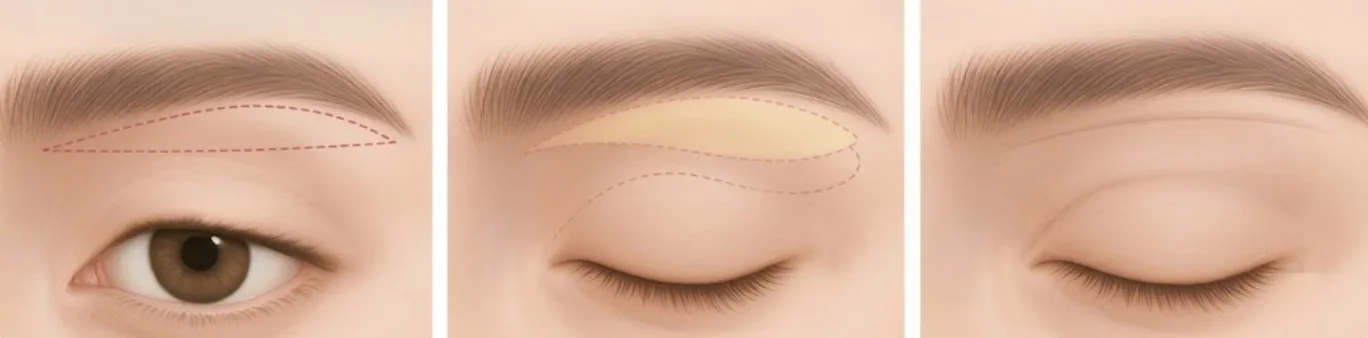
Illustration: a strip of excess skin is taken from just below the eyebrow (dotted line), so the heavy upper lid opens without touching the eyelid itself. The fine line sits along the lower brow edge.
It helps to separate two very different things. The first is a result that is simply still healing (swelling, a pink line, mild asymmetry in the early weeks), which is extremely common and usually resolves on its own. The second is a genuinely settled outcome that, once mature, the patient and surgeon agree could be improved. Only the second is a true revision. The first calls for patience.
Sound revision planning starts by naming which of those two you are dealing with. Operating on a result that is still changing risks chasing a moving target, while a clearly matured concern can be assessed properly. A careful surgeon will not rush to re-operate, and will sometimes tell you that the most useful next step is to wait and review. That message is easier to trust from the surgeon who performed the original operation.
Timing
How long to wait before a sub-brow lift revision
The single most important rule in revision is timing. A sub-brow lift continues to change for months: sutures come out at around day 7, swelling eases over the following weeks, and the scar matures over roughly a year, as set out in the recovery timeline. Judging the result before it has settled is the most common reason patients worry unnecessarily, and the most common reason an unnecessary revision gets considered.
As a general principle, surgeons prefer to wait until the result has fully matured before revising: often around 6 months, and frequently closer to a year for scar-related concerns. Tissues need time to soften, settle and reach their final position, and operating into still-inflamed or still-firm tissue can make the eventual result harder to predict. Waiting is part of getting a revision right.
There are narrow exceptions. A clear functional problem, for example skin or fixation interfering with eye closure, or a wound-healing issue, is assessed promptly and not left for months. But cosmetic concerns about height, symmetry or scar appearance are nearly always better judged on a mature result. You can talk through whether your concern is something to act on or something to give time, through an online consultation before you decide anything.
What is correctable
What can and cannot be corrected
The most common correctable concern is residual or asymmetric heaviness, when one brow still sits a little low, or the two sides are not quite even once healing is complete. Depending on the cause, this can sometimes be refined by adjusting skin or the internal fixation on the heavier side. Because a sub-brow lift works in millimetres, small asymmetries are also sometimes addressed conservatively, without a full second operation.
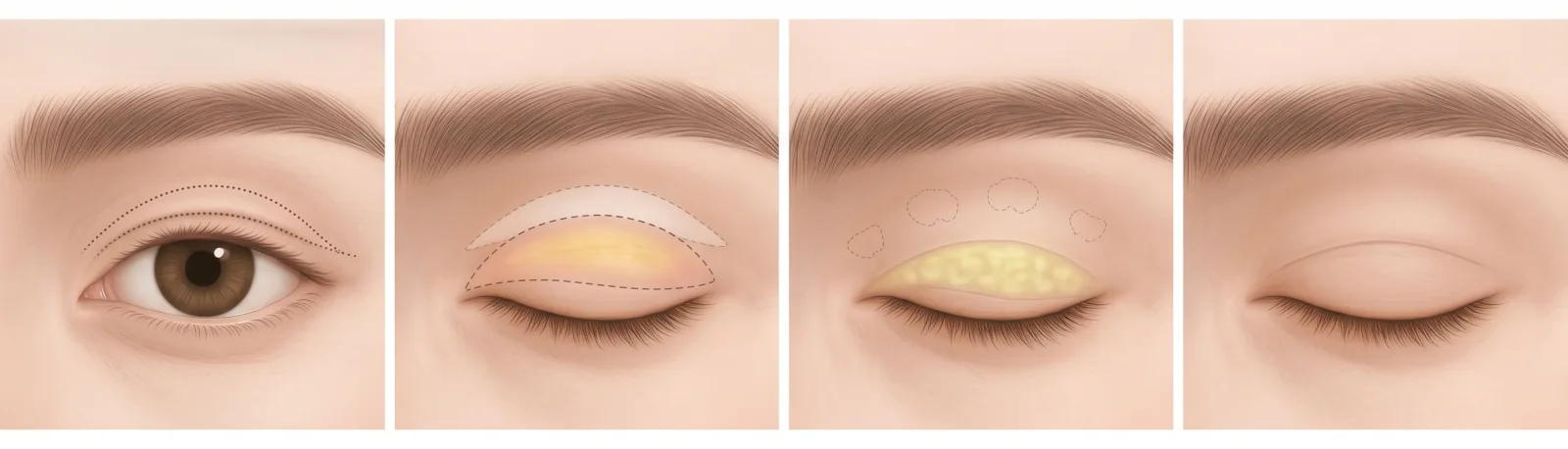
Illustration: the planned crease is marked, the excess upper-lid skin and selected fat pads are addressed through that line.
Over-correction (a brow lifted higher than intended, or a surprised look) is generally more delicate to address than under-correction, because tissue that has been lifted cannot simply be put back. This is one reason a measured, conservative first operation matters: it is usually easier to lift a little more later than to reverse a lift that was too aggressive. Where the original concern was really heavy upper-eyelid skin, a revision conversation may also touch on whether upper-eyelid surgery would suit the anatomy better than re-doing the brow lift.
Some things a revision cannot promise. No operation can guarantee perfect symmetry, since the two sides of a face are never identical to begin with, and no surgeon can promise an invisible scar. A careful assessment will be specific about what a revision can realistically improve, what it cannot, and whether the likely gain justifies a second recovery. It will not imply that any concern can be perfected.
Scar revision
Sub-brow lift scar revision
Scar concerns are the most frequent reason people ask about correction, and they are also the ones most often resolved by time alone. A brow-edge scar typically goes through a pink, sometimes firm phase before fading and flattening over the first year; the detail is in the scars and healing guide. A line that looks raised or dark at a few weeks is usually still maturing, and judging it then often leads to revising something that would have settled on its own.
When a scar is genuinely mature and still not as fine as hoped, there are graded options. Non-surgical measures, such as silicone-based scar care and sometimes treatments a surgeon may suggest for a thickened scar, are usually tried first because they avoid a fresh incision. Surgical scar revision, where the old line is re-excised and closed more favourably, is reserved for a settled, problematic scar and is itself judged over months afterwards, since the new line also has to mature.
A small number of people are simply prone to thicker or wider scars regardless of technique, and for them even a careful revision may not produce a thread-fine line. A careful surgeon asks about your scarring history before the first operation and again before any scar revision, and will tell you frankly if your healing tendency limits what is realistic. The decision is then made with clear expectations and no promise of perfection.
Settling vs problem
Normal settling versus a problem worth flagging early
In the early weeks, mild asymmetry, swelling that is slightly uneven side to side, a pink or firm scar, and a result that looks a touch "too much" before swelling resolves are all common parts of settling. These usually improve steadily, which is exactly why judging the outcome, or booking a revision, in the first weeks is far too soon.
What is worth raising promptly is different in character: spreading redness, pain that increases instead of easing, warmth, discharge, wound edges separating, or any difficulty fully closing the eye. These are uncommon, but they are the signs to contact your surgeon without waiting, because a few of them are time-sensitive. For international patients this is precisely why the operating surgeon himself should be reachable after you return home.
The practical distinction is between something that is changing for the better and something that is getting worse or interfering with function. A concern that is slowly improving is almost always best given time; a concern that is worsening or affecting how the eye works is assessed early. If you are not sure which you are looking at, send photos for review, and read this alongside the scars and healing guide for what normal maturation looks like.
At Garnet
How revision and correction work at Garnet
Garnet is a single-surgeon clinic in Apgujeong, Seoul. Dr. In-Soo Baek is a board-certified plastic surgeon (Korean medical licence no. 77407) and the only operating doctor. He consults, performs the operation himself and reviews every follow-up. That continuity matters most when a revision is in question: the surgeon assessing how your brow has settled is the same one who placed the original incision and chose the original lift, so he knows exactly what was done and why.
Because the day is capped at two surgeries, with structured follow-ups at 1, 3 and 6 months, concerns are caught and tracked over time across several visits. For a patient who has already flown home, the same surgeon can keep reviewing photos as the result matures and advise whether a concern is settling or genuinely a candidate for correction. That is the sound way to decide whether a second operation is even warranted.
Garnet is registered with Korea's foreign-patient programme, so revision care for international patients is coordinated alongside consultation and after-care. If you had a sub-brow lift elsewhere and are weighing a revision, or you are simply unsure whether your result has settled, the most useful first step is an assessment of mature photos. You can send images for a no-obligation online assessment before committing to any travel or surgery.
Real Results
Before & After
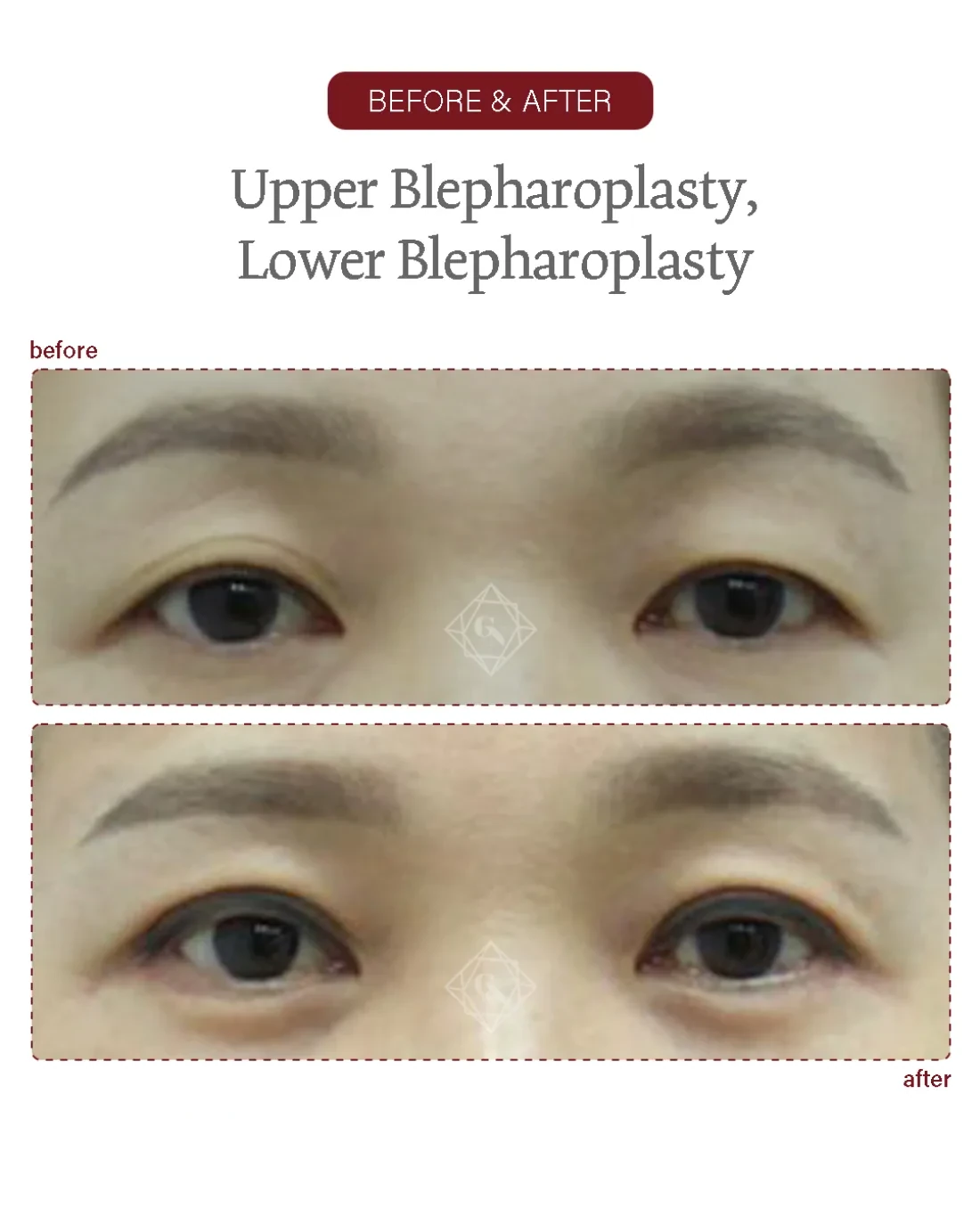
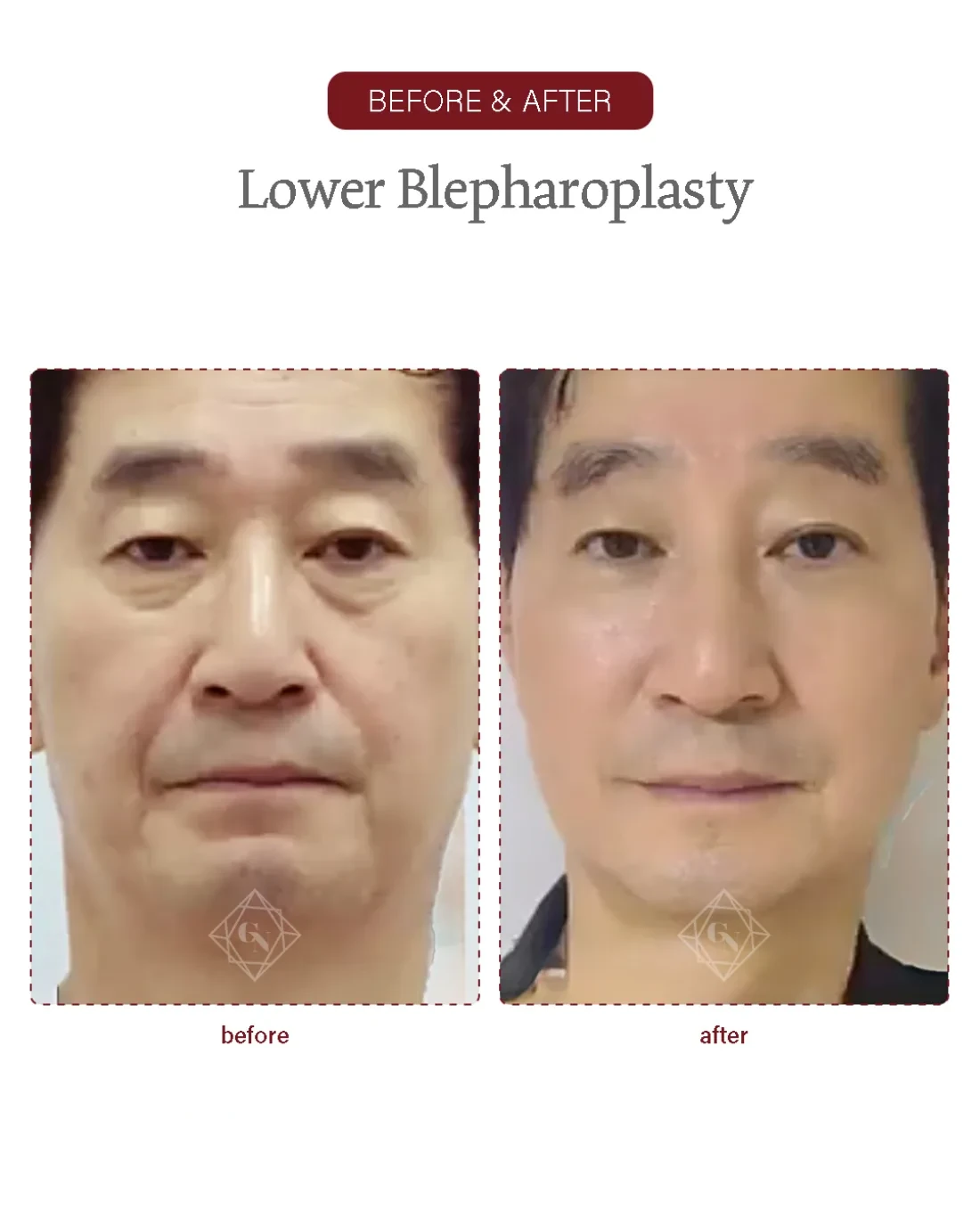
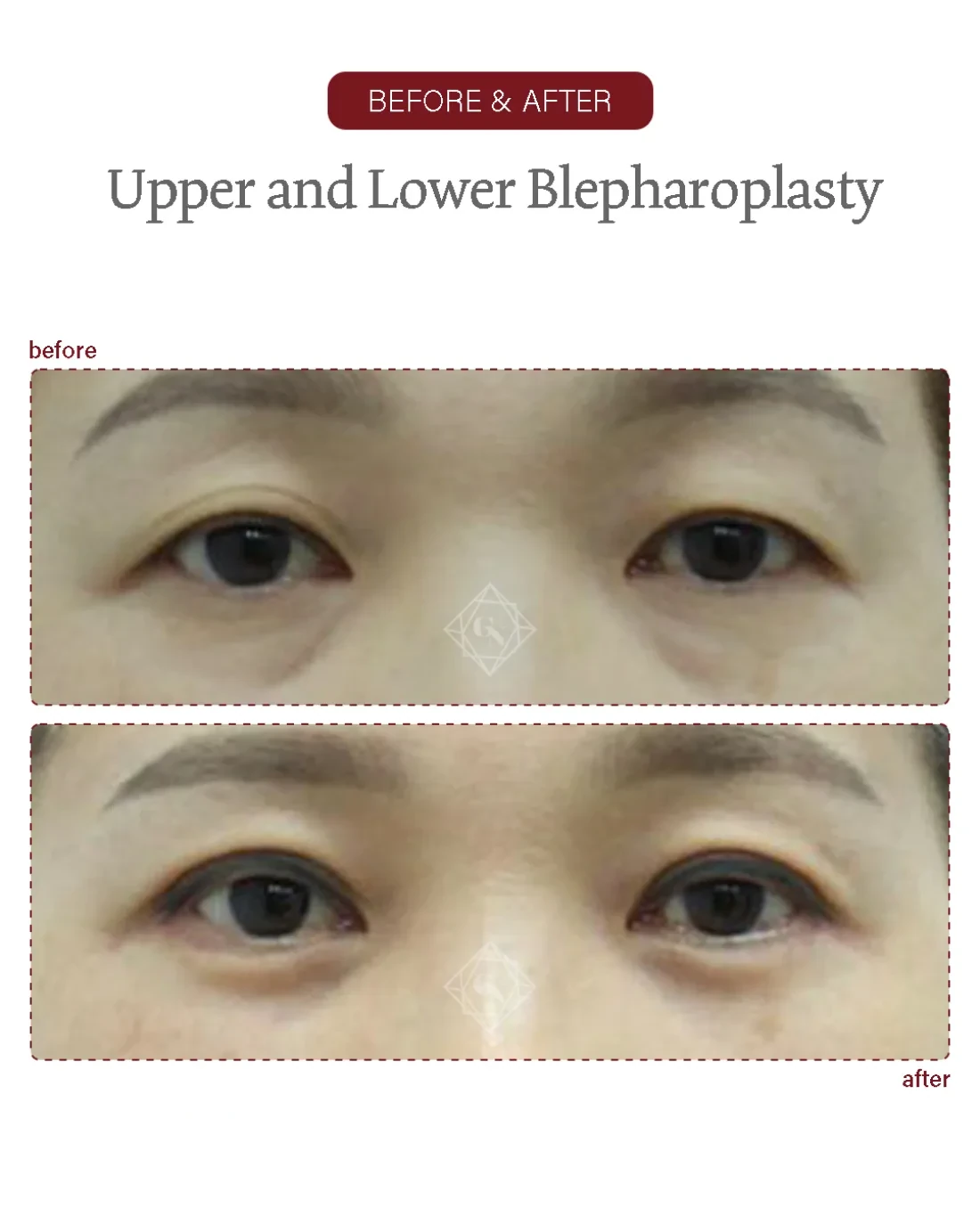
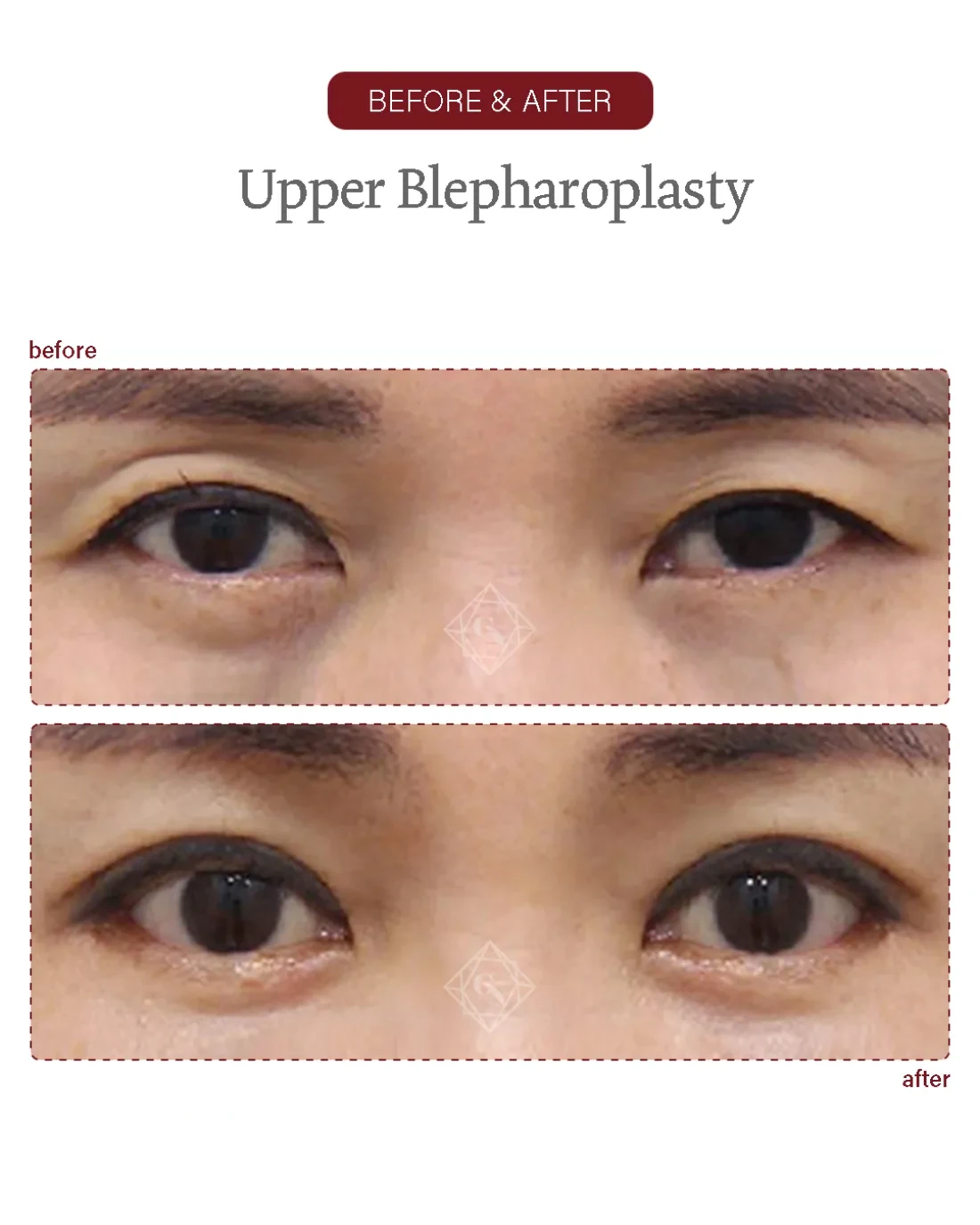
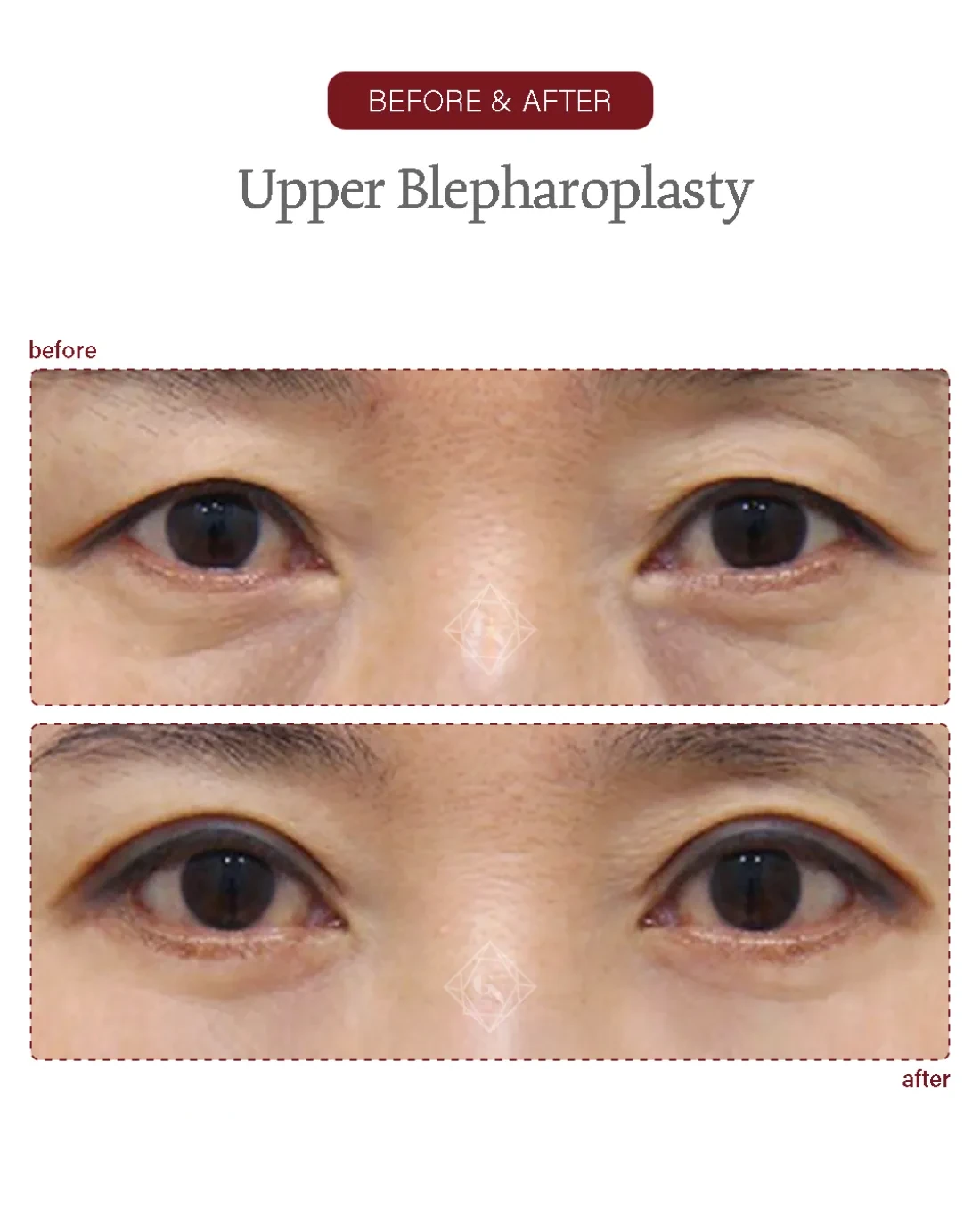
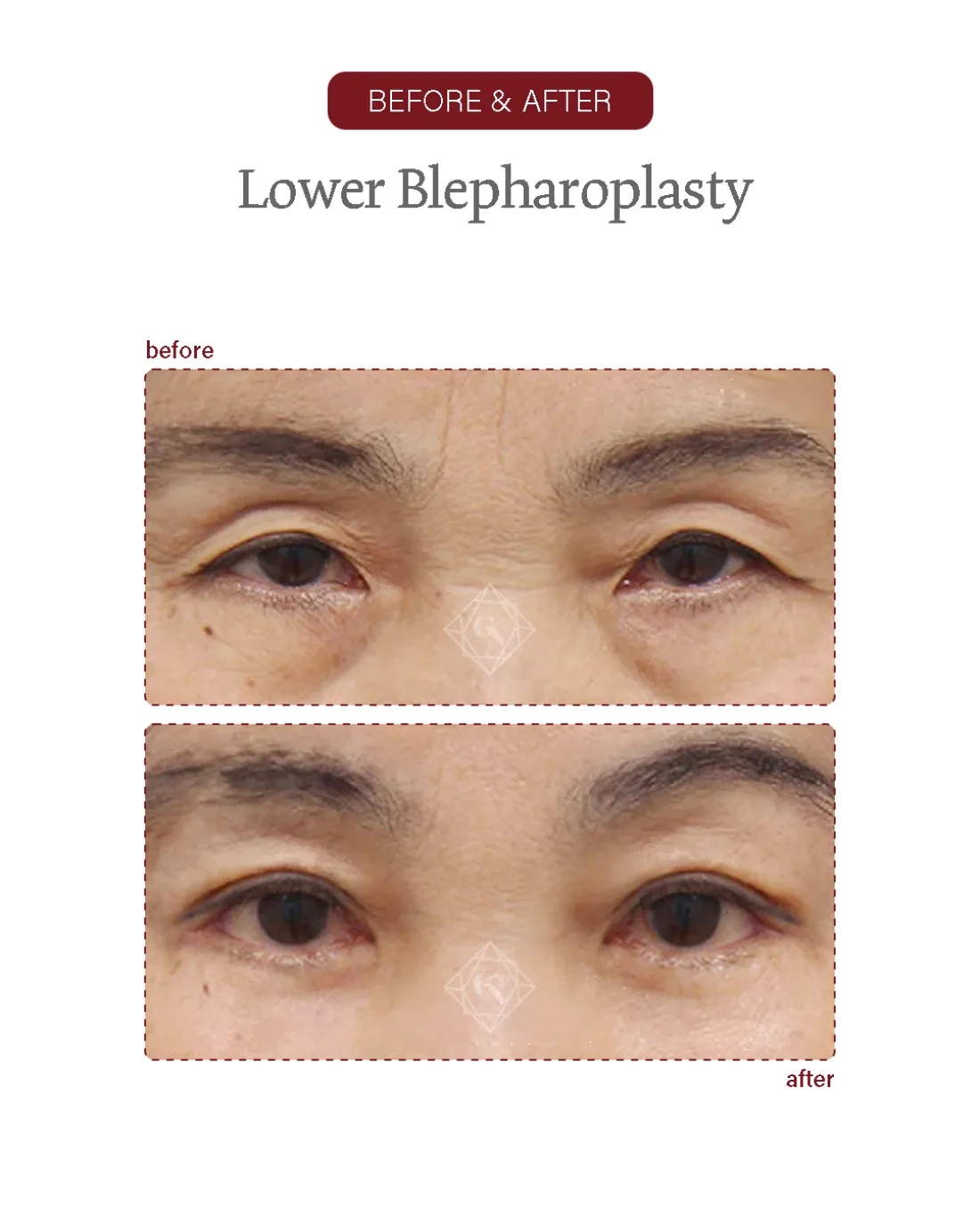
Eyelid before/after examples of actual Garnet patients (published with consent). Results, recovery and suitability vary by individual and are not guaranteed; the right approach is decided at an in-person consultation.
Prices
Price at Garnet
Upper blepharoplasty
From₩3,500,000 + VATExcluding VAT (10% VAT is added at payment)Book now
Same price as Korean patients. Prices shown exclude 10% VAT; your written quote, issued after the in-person consultation, shows the full amount payable.
Dr. In-Soo Baek
Director & sole operating surgeon
Korean medical licence no. 77407
Operate on what you came for. Trained at Korea University Medical Center. Every case planned, performed and reviewed by the same hands.
1Operating surgeon
~2Surgeries per day
7Registered techniques
Board-certified plastic surgeon
Plastic surgery training at Korea University College of Medicine & graduate school
Korean Society of Plastic and Reconstructive Surgeons member, in its facial-contour, eye & rhinoplasty groups
Consults, operates and follows up each case himself
Peer-reviewed papers behind the facts on this page. Each describes findings in its own study group — not results at Garnet — and none predicts your own outcome.
Jung GS. Modified Infrabrow Excision Blepharoplasty for Severity of Medial Blepharochalasia. Plastic Surgery. 2020. doi:10.1177/2292550320928555
Kim HS et al. Subbrow Lift Using Frontalis Sling to Correct Lateral Orbital Laxity. Aesthetic Plastic Surgery. 2020. doi:10.1007/s00266-020-01879-9
Wang J et al. Subbrow Blepharoplasty Combined with Periorbital Muscle Manipulation for Periorbital Rejuvenation in Asian Women. Plastic & Reconstructive Surgery. 2019. doi:10.1097/prs.0000000000006144
FAQ
Common questions
Can a sub-brow lift be revised or corrected?
Yes, a sub-brow lift can be revised in many cases, though not every concern needs surgery. Residual or asymmetric heaviness, an over- or under-corrected brow, and a mature scar can sometimes be improved. A revision is considered only once the result has fully settled, and a careful assessment will say specifically what is realistically correctable.
What goes wrong with a sub-brow lift and how is it fixed?
The most common concerns are mild asymmetry, residual heaviness, over- or under-correction, or a scar that has not faded as hoped. These are addressed differently: by adjusting skin or the internal fixation, by scar care or scar revision, or sometimes by reassessing whether eyelid surgery suits better. Many early concerns are normal healing and resolve without any procedure.
How long should I wait before a sub-brow lift revision?
Surgeons generally prefer to wait until the result has fully matured, often around 6 months and closer to a year for scar concerns, so tissues have settled and the final result is clear. The main exception is a functional problem, such as difficulty closing the eye, which is assessed promptly.
Can a sub-brow lift scar be revised?
Yes, but usually only after the scar has fully matured, around a year. Non-surgical measures such as silicone-based scar care are tried first; surgical revision, where the line is re-excised and re-closed, is reserved for a settled, problematic scar. Even a careful scar revision cannot guarantee an invisible line, especially for people prone to thicker scars.
What if my brow looks uneven after a sub-brow lift?
Mild unevenness in the early weeks is common and usually improves as swelling resolves and tissues settle, so it is judged too early at that stage. If a clear asymmetry remains once the result is mature, it can sometimes be refined by adjusting the heavier side. No surgeon can promise perfect symmetry, since the two sides of a face are never identical to begin with.
Is an over-corrected sub-brow lift harder to fix than an under-corrected one?
Generally yes. Tissue that has been lifted too much cannot simply be put back, so over-correction is more delicate to address, while a little more lift can usually be added if the result was conservative. This is one reason a measured first operation is preferred: it leaves more room to refine later if needed.
What is normal healing versus a problem I should report?
Mild asymmetry, swelling, a pink or firm scar, and a result that looks slightly "too much" before swelling resolves are normal early settling. Spreading redness, increasing pain, warmth, discharge, separating wound edges, or trouble closing the eye are different and should be reported to your surgeon promptly, as some are time-sensitive.
Can I get a revision if I had my sub-brow lift at another clinic?
Often yes, though it depends on what was done and how the tissue has healed, so a careful assessment of mature photos comes first. At a single-surgeon clinic the operating surgeon reviews your case directly and will be clear about what a revision can and cannot improve, including advising against re-operating when waiting is the better course.
Who performs sub-brow lift revision at Garnet?
The same board-certified plastic surgeon, Dr. In-Soo Baek (Korean medical licence no. 77407), who consults, operates and follows up on every case. For a revision this continuity matters, because the surgeon assessing the result is the one who knows exactly what was done in the original surgery.
Can the same surgeon assess my revision after I fly home?
Yes. As a single-surgeon clinic, the operating surgeon can continue to review photos of your result as it matures and advise whether a concern is settling or a genuine candidate for correction, through Garnet's structured 1, 3 and 6-month follow-ups, before any decision to travel back for surgery.
My mom recently had a brow lift and lower blepharoplasty with Dr. Baek, and our experience has been wonderful so far. The Garnet team was incredibly kind and welcoming, with Kelly assisting us as our English consultant—she made everything…
I’m so happy I chose this clinic for my lower blepharoplasty. I was traveling from abroad by myself, so I was a little nervous, but from the beginning I felt comfortable and truly cared for. Everyone was kind, patient, and professional…
Came in for an in-person consult and ended up choosing Garnet and Dr.Baek for my non-incisional DES and tiplasty/alarplasty. I communicated with Kelly (English consultant) from the start till now (3 weeks post-op). She really help me feel…
My under-eyes have been sagging and folding for years... I tried to cover it up with makeup, but it actually got stuck in the wrinkles and made it stand out even more. While going for consultations, I noticed that the bigger the hospital…
If you are unsure whether your sub-brow lift result has settled, or whether it can be improved, send photos for a no-obligation assessment before you plan any revision or travel.
Send photos and your question before you travel. An English-speaking coordinator reviews every sub-brow lift enquiry and replies with guidance on whether surgery is appropriate, the likely plan and timing.
✓ Reviewed by the clinic coordinator, not a bot
✓ Photo-based pre-assessment before you fly
✓ Foreign-patient scheduling & after-care
✓ One surgeon for consultation, surgery and follow-up
Prefer to chat now? Reach the coordinator directly:








 T S7 months ago



