The most common worry before a sub-brow lift is a visible scar across the brow. It is a fair question. There is a scar, and its placement at the brow edge, plus how it is closed and cared for, decide whether anyone ever notices it.
The short answer
The incision is placed right at the lower edge of the brow, hidden in or against the brow hair, so the line follows a natural border of the face.
Every sub-brow lift leaves a scar, but a well-placed, well-closed brow incision typically matures into a fine line that is easy to camouflage.
Healing runs in stages: a fresh line at suture removal around day 7, a pink or firm phase over the first weeks to months, then gradual fading over roughly a year.
How the scar settles depends on placement, closure and aftercare, and on the same surgeon reviewing it at structured follow-ups.
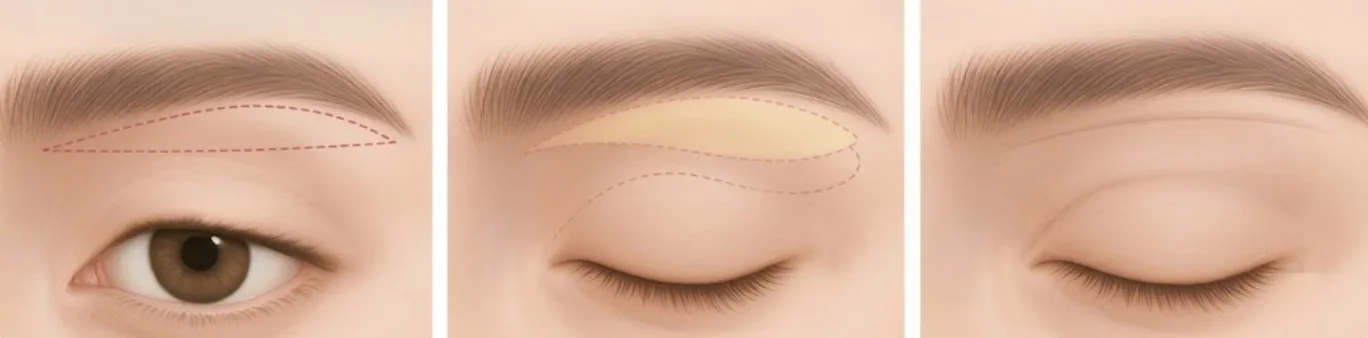
A sub-brow lift removes a measured strip of skin at the lower border of the eyebrow to lift heavy upper-eyelid skin that sits close to the lashes. Because of that, the incision is placed right along the edge of the brow (at Garnet, just below or along the eyebrow hair), so the resulting scar follows the natural line where brow meets eyelid skin and does not cross open skin.
Illustration: a strip of excess skin is taken from just below the eyebrow (dotted line), so the heavy upper lid opens without touching the eyelid itself. The fine line sits along the lower brow edge.
The lift itself is held by an orbicularis suspension fixation: internal sutures that secure the muscle so the skin closure is not under tension. A closure that is not being pulled apart is one of the biggest factors in a fine, flat scar, which is why the technique under the skin matters as much as the line on the surface.
The scar runs horizontally along the brow, roughly the length of the area being corrected. It does not extend down onto the eyelid or out beyond the brow, and it sits in a zone that brow hair, the natural brow shadow and, if you wish, makeup all help to conceal.
Why discreet
Why a brow-edge scar tends to stay discreet
Scars are least visible when they sit in a natural crease, border or hair-bearing zone, and the lower brow edge is all three. The brow hair grows down over the upper part of the line, the slight shadow under the brow disguises it further, and the eye of an onlooker is naturally drawn to the lashes and the eye itself, away from the brow border. For most people, the line becomes genuinely hard to spot once it has matured.
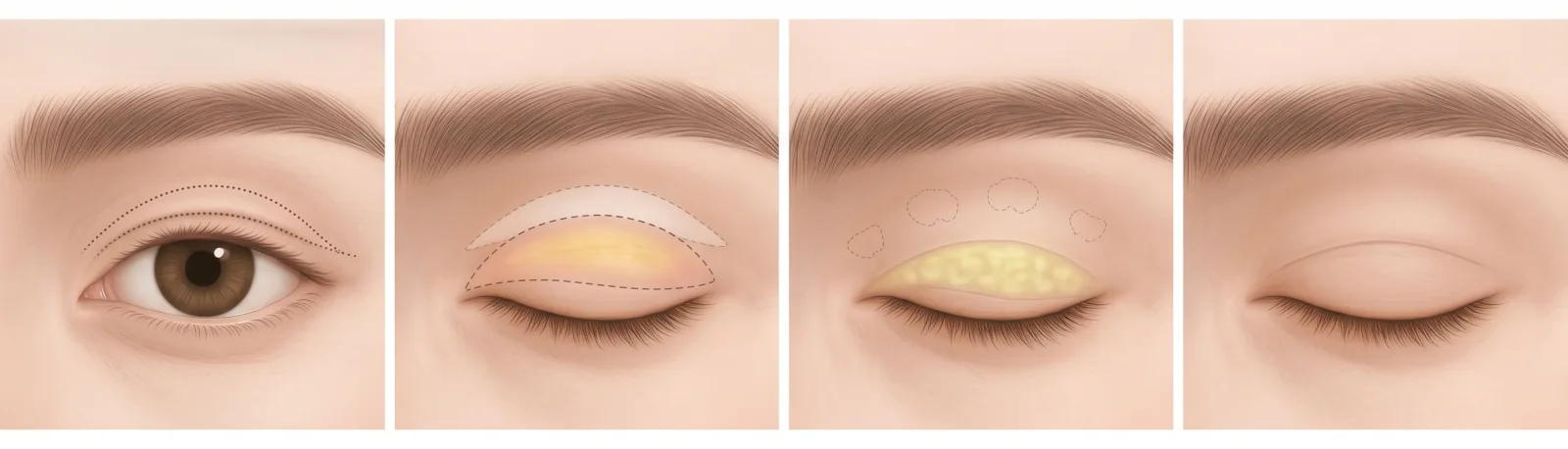
Illustration: the planned crease is marked, the excess upper-lid skin and selected fat pads are addressed through that line.
Sub-brow lift is often chosen precisely for patients whose upper-eyelid skin sits low or whose brow is heavy, where an above-the-lid approach would not address the real cause. Placing the scar at the brow trades a barely-visible brow-edge line for a meaningful lift of the upper field, a trade most candidates accept readily once they understand it.
No surgeon can promise an invisible result, and skin type, healing tendency and how the line is cared for all play a part. What a careful surgeon can do is place the incision in the most forgiving location, close it without tension, and review it over time. You can talk through whether your brow anatomy suits this approach in an online consultation before you travel.
Healing timeline
How the sub-brow scar heals, week by week and month by month
In the first week the line is closed with fine sutures and looks its most obvious: slightly raised, possibly with some bruising or swelling around the brow. At Garnet the sutures come out at around day 7, and once they are removed the line begins to settle and any local puffiness eases. This early phase is covered in more detail in the sub-brow lift recovery timeline.
Over the following weeks to a few months the scar typically goes through a pink, sometimes slightly firm phase as it remodels. This is normal and expected. During this window the line is best protected from sun and treated gently; it is also the period when camouflage with brow makeup is easiest if you have an event.
From a few months out to around a year the colour fades and the line flattens, usually maturing into a fine, pale scar hidden at the brow edge. Scar maturation is gradual and individual, so the final appearance is judged over months, well after the first review. That is why Garnet's structured follow-ups at 1, 3 and 6 months exist.
Aftercare
What helps a sub-brow lift scar heal well
The single most useful thing in the early weeks is keeping the line clean and following the wound-care instructions exactly until the sutures are out. Avoid rubbing or stretching the brow, do not pick at any crusting, and keep the area dry as directed. Because the closure is supported by internal fixation, the surface line is not under tension, but it still benefits from being left undisturbed.
Once the wound has sealed, sun protection is the most important long-term step: a fresh scar that gets sun can darken and take longer to fade, so a hat, sunglasses and sunscreen over the brow once the skin is intact all help. Many surgeons also suggest gentle scar care such as silicone-based products in the remodelling phase; follow your surgeon's specific guidance for your brow.
Smoking, heavy alcohol and vigorous exercise too soon all work against good healing, so easing back into activity as advised matters. If you are flying home soon after surgery, plan it so your sutures are out and the line has begun to settle. The flying-after-surgery guide covers the timing for eye-area procedures.
Normal vs not
Normal brow scar healing, and what is worth flagging
Some redness, mild firmness, slight itching and a pink line in the first weeks are all normal parts of scar remodelling. A scar that looks a little raised or darker than the surrounding skin early on usually softens and fades as it matures; judging it at 1 week is far too soon.
What is worth reporting promptly is spreading redness, pain that increases instead of steadily easing, warmth, discharge, or the wound edges separating. These are uncommon, but they are the signs to raise with your surgeon straight away. For international patients this is exactly why the operating surgeon should be reachable after you go home.
A small number of people are simply prone to thicker or wider scars regardless of technique. A careful surgeon will ask about your scarring history at consultation and tell you if that affects your expectations, and if a mature scar ever needs refining, that is discussed alongside any revision or correction without rushing.
At Garnet
How scar placement and follow-up work at Garnet
Garnet is a single-surgeon clinic in Apgujeong, Seoul. Dr. In-Soo Baek is a board-certified plastic surgeon (Korean medical licence no. 77407) who consults, performs the operation himself and reviews every follow-up, so the surgeon who decides exactly where your brow incision sits is the same one who later assesses how it has healed.
Because the day is capped at two surgeries, the closure is not rushed, and scar checks are built into the structured follow-ups at 1, 3 and 6 months. For patients who have already flown home, the same surgeon can continue to review photos of the line as it matures and advise on scar care; you are not handed to someone who never saw the operation.
If a scar is your main hesitation about a sub-brow lift, begin with a pre-assessment of your brow and eyelid anatomy. Photos of your brows sent for a no-obligation online assessment show where the line would sit, before any flights are booked.
Real Results
Before & After
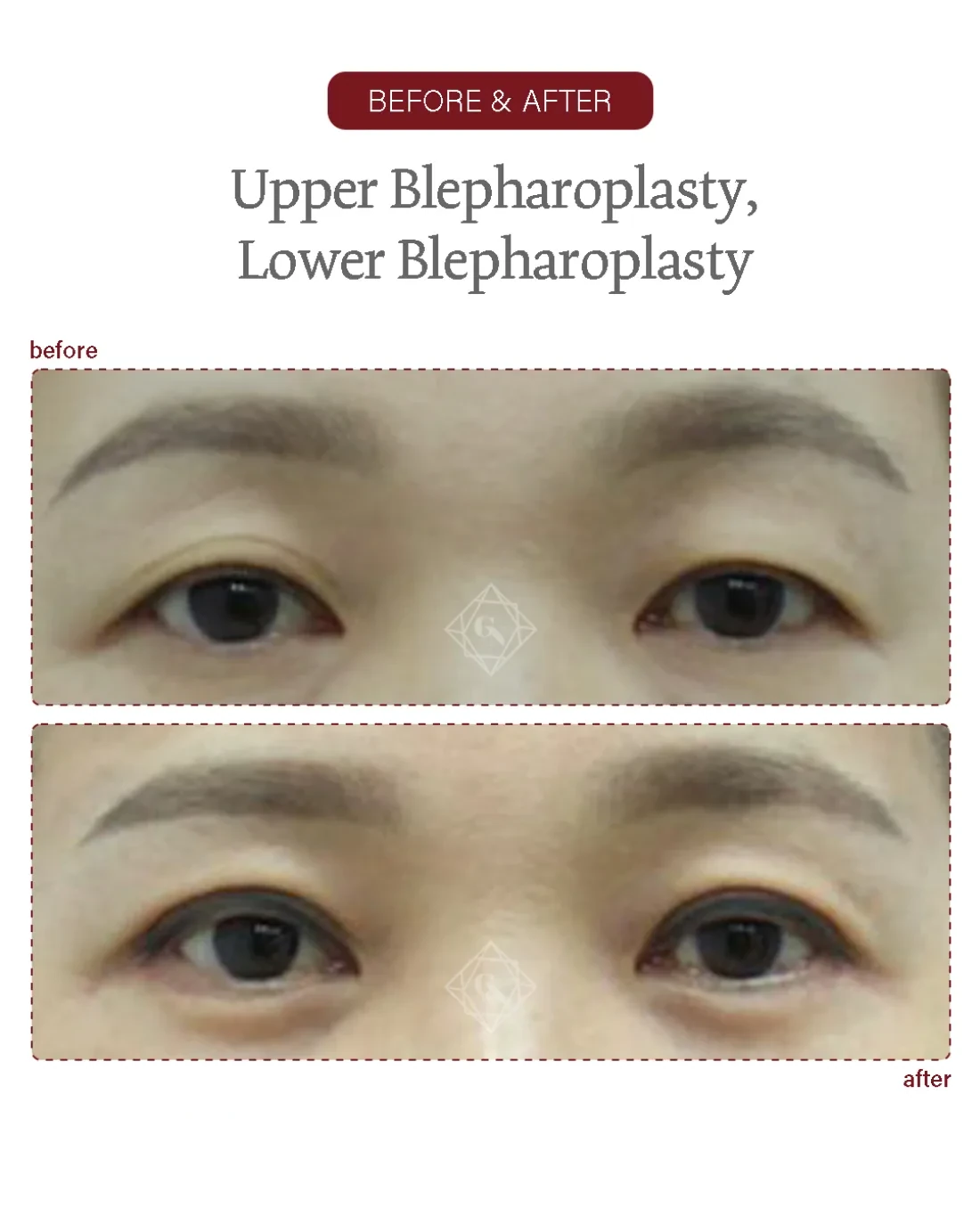
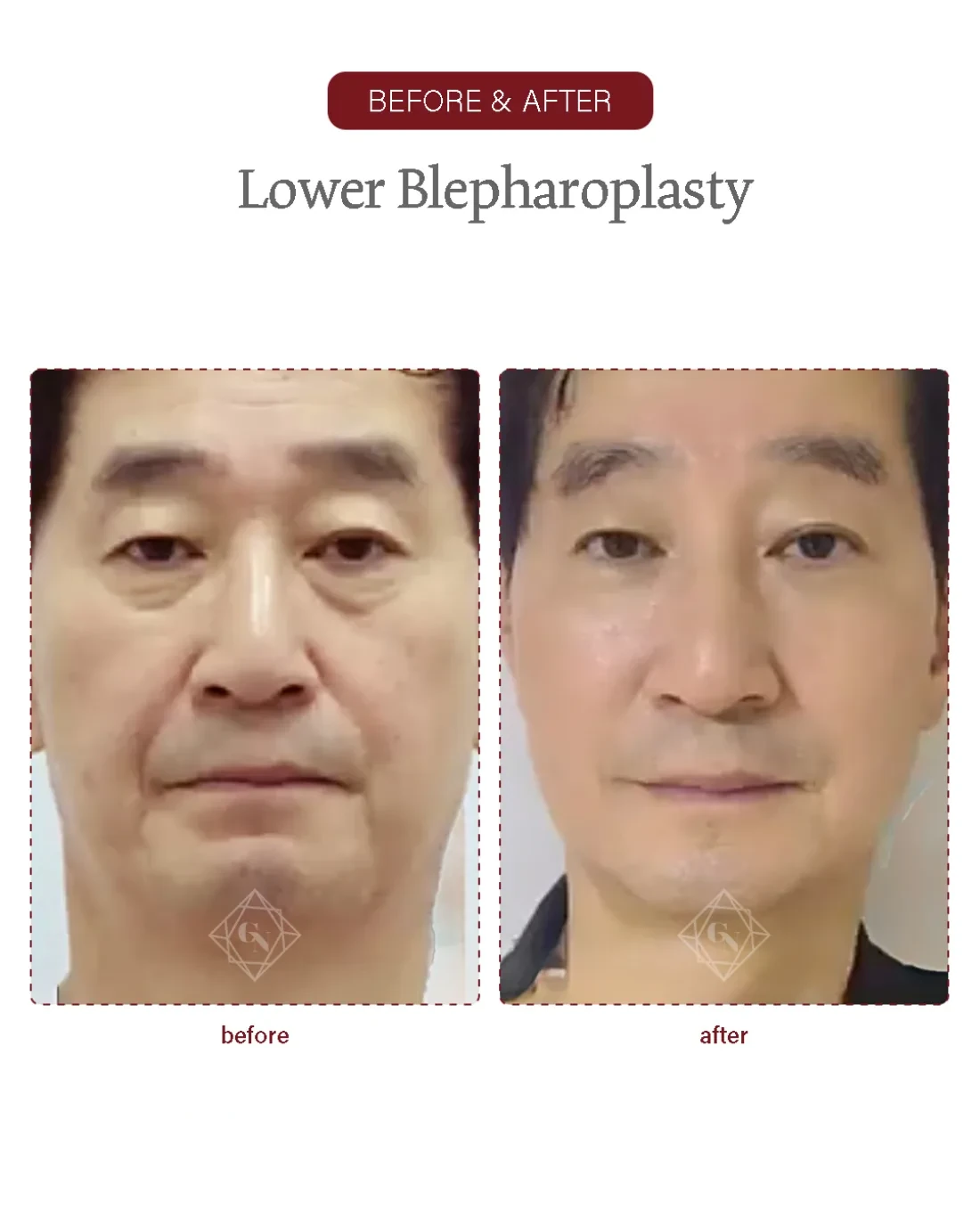
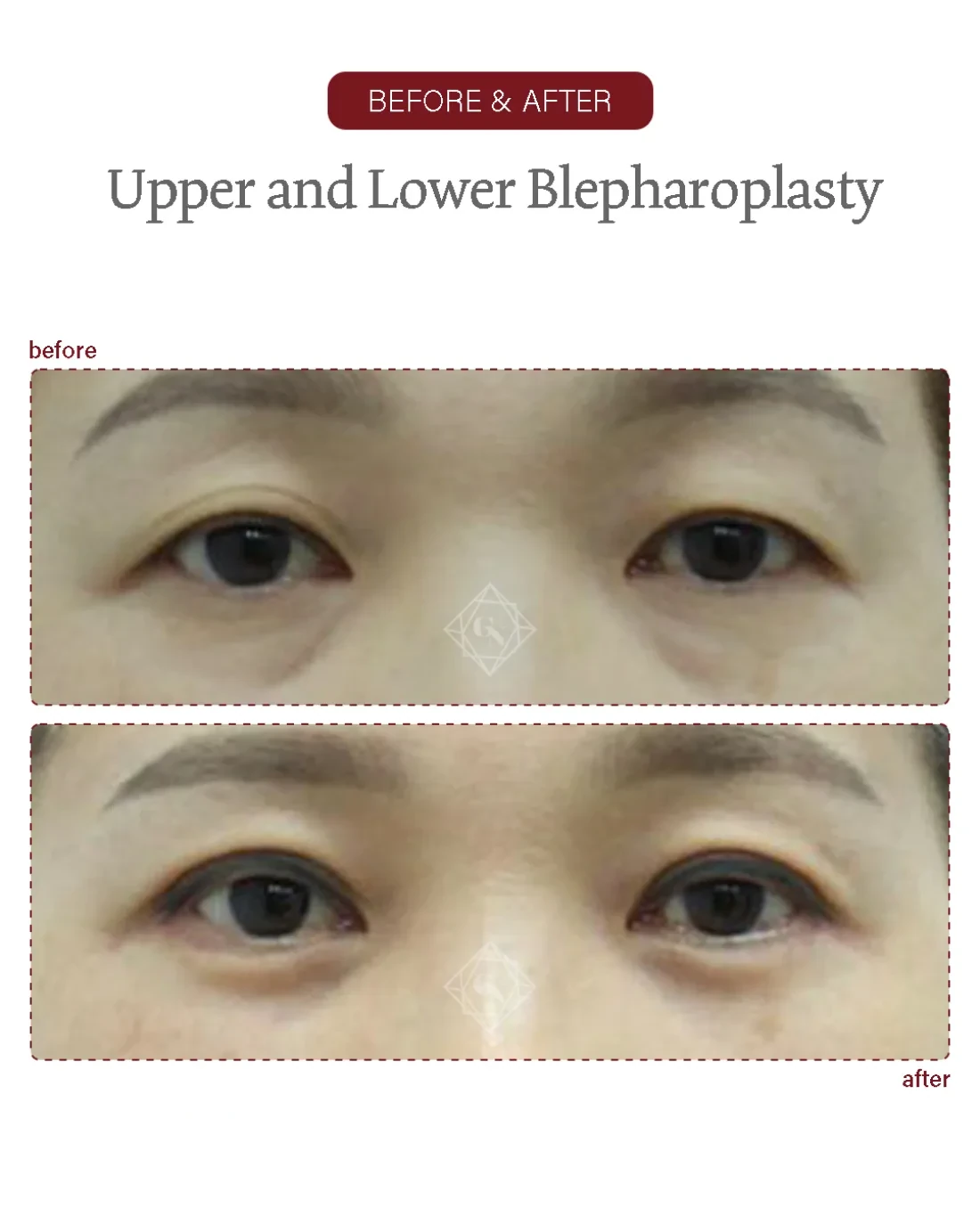
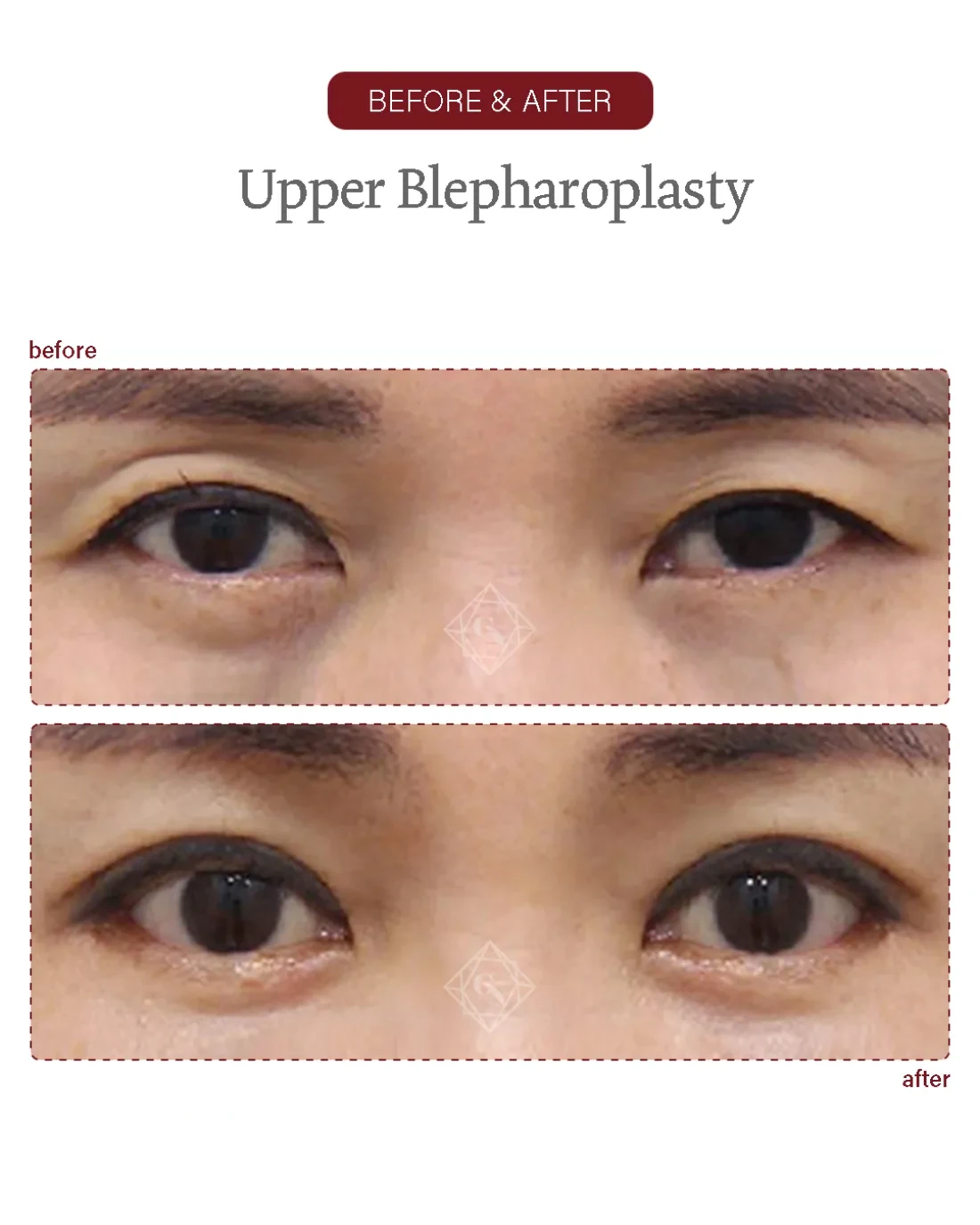
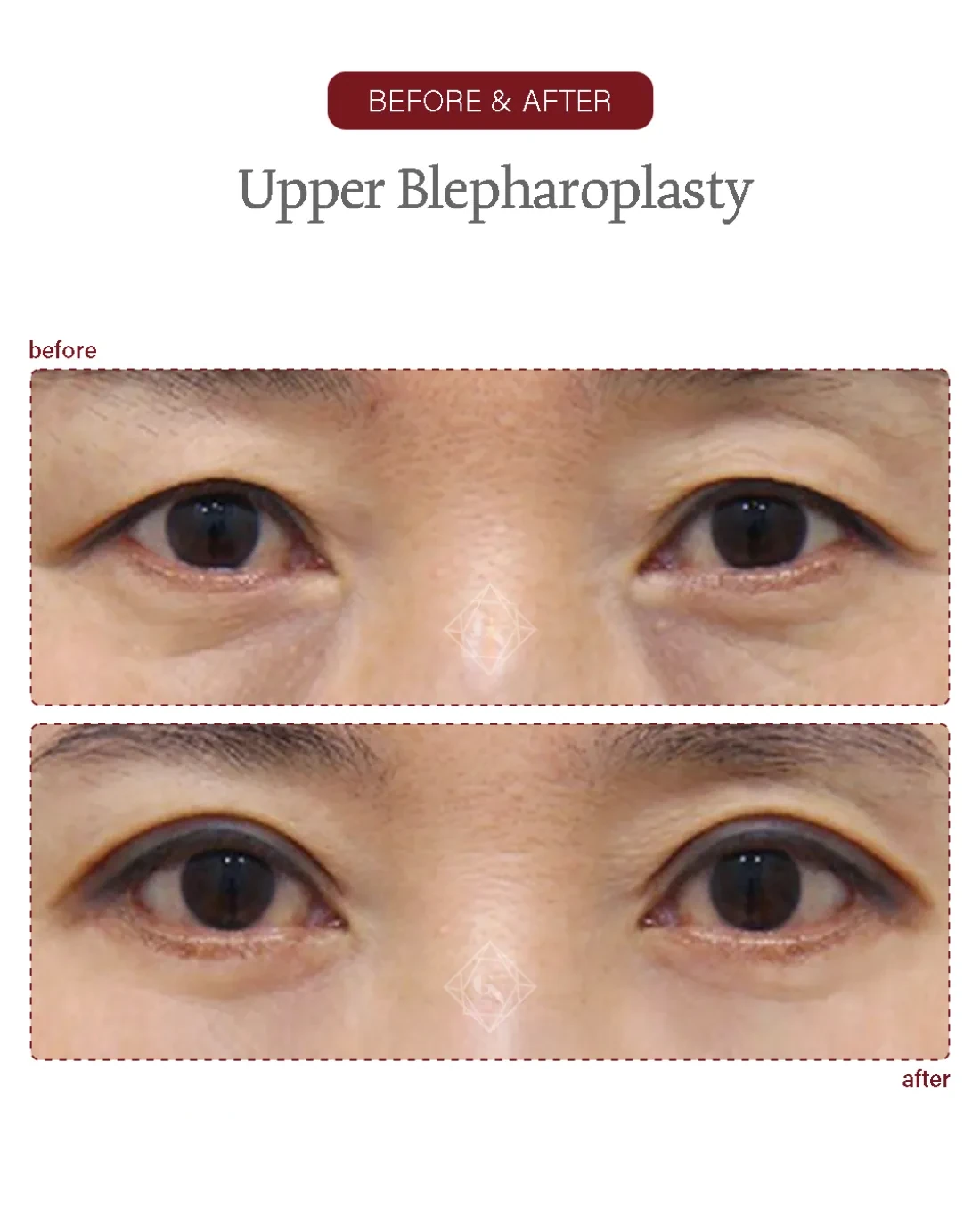
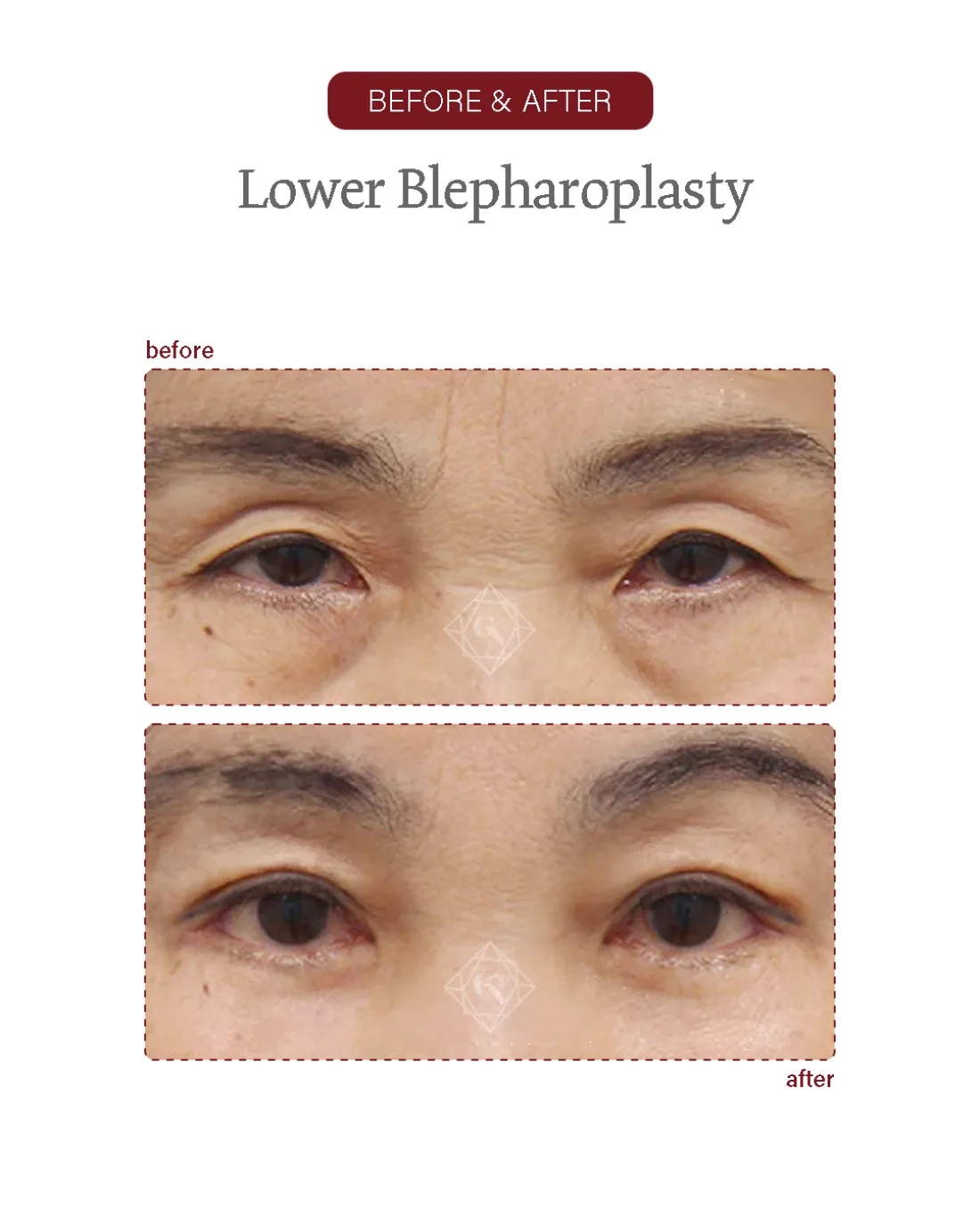
Eyelid before/after examples of actual Garnet patients (published with consent). Results, recovery and suitability vary by individual and are not guaranteed; the right approach is decided at an in-person consultation.
Prices
Price at Garnet
Upper blepharoplasty
From₩3,500,000 + VATExcluding VAT (10% VAT is added at payment)Book now
Same price as Korean patients. Prices shown exclude 10% VAT; your written quote, issued after the in-person consultation, shows the full amount payable.
Dr. In-Soo Baek
Director & sole operating surgeon
Korean medical licence no. 77407
Operate on what you came for. Trained at Korea University Medical Center. Every case planned, performed and reviewed by the same hands.
1Operating surgeon
~2Surgeries per day
7Registered techniques
Board-certified plastic surgeon
Plastic surgery training at Korea University College of Medicine & graduate school
Korean Society of Plastic and Reconstructive Surgeons member, in its facial-contour, eye & rhinoplasty groups
Consults, operates and follows up each case himself
Peer-reviewed papers behind the facts on this page. Each describes findings in its own study group — not results at Garnet — and none predicts your own outcome.
Konishi K et al. Reshaping the eyebrow by follicular unit transplantation from excised eyebrow in extended infrabrow excision blepharoplasty. Clinical Ophthalmology. 2012. doi:10.2147/opth.s28353
Ichinose A. Extended Infrabrow Excision Blepharoplasty for Dermatochalasis in Asians. Archives of Facial Plastic Surgery. 2011. doi:10.1001/archfacial.2011.53
Tyers AG. Brow Lift via the Direct and Trans-Blepharoplasty Approaches. Orbit. 2006. doi:10.1080/01676830600977384
FAQ
Common questions
Where are the scars after a sub-brow lift?
The scar sits along the lower edge of the eyebrow, where the incision is placed just below or along the brow hair. It runs horizontally at the brow border and does not extend down onto the eyelid, so it follows a natural line of the face and is concealed by brow hair and the brow's natural shadow.
Will my sub-brow lift scar be visible?
Every sub-brow lift leaves a scar, so it is not invisible. But because the line is placed at the brow edge and closed without tension over an internal fixation, it typically matures into a fine, pale line that is easy to camouflage and hard to notice once healed. No surgeon can guarantee an invisible result.
How long does the sub-brow lift scar take to heal?
The line is most obvious in the first week, with sutures removed around day 7. It then goes through a pink, sometimes firm phase over the first weeks to months, and gradually fades and flattens over roughly a year. Scar maturation is judged over months, not at the first review.
Why is the incision placed at the eyebrow and not the eyelid?
A sub-brow lift corrects heavy skin and a low brow by lifting from above, which an eyelid incision cannot do. Placing the line at the brow edge tucks the scar into a natural border with hair and shadow, and addresses the real cause of upper-field heaviness in suitable candidates.
How can I help my brow-edge scar heal well?
Keep the line clean and undisturbed until the sutures are out, avoid rubbing or picking, and protect it from the sun once the skin is intact. Sun protection, gentle scar care as your surgeon advises, and avoiding smoking and very early strenuous activity all support a fine, well-faded line.
Is some redness or firmness around the scar normal?
Yes. Mild redness, slight firmness, itching and a pink line in the early weeks are normal parts of scar remodelling and usually soften as the line matures. Spreading redness, increasing pain, warmth, discharge or separating wound edges are different and should be reported to your surgeon promptly.
Can the scar be revised if I am not happy with it?
A small number of people are prone to thicker scars regardless of technique. A mature scar that needs refining can be discussed once it has fully settled, usually after several months, alongside any revision or correction. Judging a scar too early often leads to unnecessary worry.
Can the same surgeon check my scar after I fly home?
At a single-surgeon clinic the operating surgeon manages your recovery, so the doctor who placed the incision can continue to review photos of the line as it matures and advise on scar care after you return home, through Garnet's structured 1, 3 and 6-month follow-ups.
Does Garnet assess scarring risk before surgery?
Yes. At consultation the surgeon reviews your brow and eyelid anatomy and asks about your scarring history, and will tell you plainly if that affects expectations. You can get a pre-assessment in an online consultation before deciding to travel.
My mom recently had a brow lift and lower blepharoplasty with Dr. Baek, and our experience has been wonderful so far. The Garnet team was incredibly kind and welcoming, with Kelly assisting us as our English consultant—she made everything…
I’m so happy I chose this clinic for my lower blepharoplasty. I was traveling from abroad by myself, so I was a little nervous, but from the beginning I felt comfortable and truly cared for. Everyone was kind, patient, and professional…
Came in for an in-person consult and ended up choosing Garnet and Dr.Baek for my non-incisional DES and tiplasty/alarplasty. I communicated with Kelly (English consultant) from the start till now (3 weeks post-op). She really help me feel…
My under-eyes have been sagging and folding for years... I tried to cover it up with makeup, but it actually got stuck in the wrinkles and made it stand out even more. While going for consultations, I noticed that the bigger the hospital…
Worried about a brow scar? Send photos for a no-obligation assessment of whether a sub-brow lift suits your anatomy, and where the line would sit, before you plan a trip.
Send photos and your question before you travel. An English-speaking coordinator reviews every enquiry and replies with guidance on whether surgery is appropriate, the likely plan and timing.
✓ Reviewed by the clinic coordinator, not a bot
✓ Photo-based pre-assessment before you fly
✓ Foreign-patient scheduling & after-care
✓ One surgeon for consultation, surgery and follow-up
Prefer to chat now? Reach the coordinator directly:








 T S7 months ago



