A thread lift is one of the lower-downtime ways to lift the lower face and jawline, which is much of its appeal for people who cannot disappear for weeks. Low downtime still means some downtime: the first days have real swelling and the first weeks have aftercare rules that protect the lift. This is a day-by-day guide to what recovery actually looks like.
The short answer
Thread lift at Garnet uses the Fixpoint™ fixed-point barbed thread method (a trademarked technique) placed through tiny cannula entry points. There are no surgical incisions to suture.
Most patients are socially presentable within a few days and back to desk work quickly, with swelling and tightness easing over the first one to two weeks.
Aftercare for the first few weeks (gentle on the face, no wide mouth movements, sleeping face-up) is what protects the threads while tissue anchors around them.
The same board-certified surgeon who placed the threads reviews your recovery, with structured follow-ups and remote check-ins for international patients.
A thread lift lifts and repositions sagging soft tissue in the lower face and jawline using barbed threads. At Garnet this is the Fixpoint™ fixed-point barbed thread method, a trademarked technique that anchors the lift at fixed points so it does not rely on the thread alone. The threads go in through tiny cannula entry points, with no incisions. Because nothing is cut and stitched, there are no sutures to remove, and the recovery is driven by swelling, tenderness and the threads settling. There is no healing wound to manage.
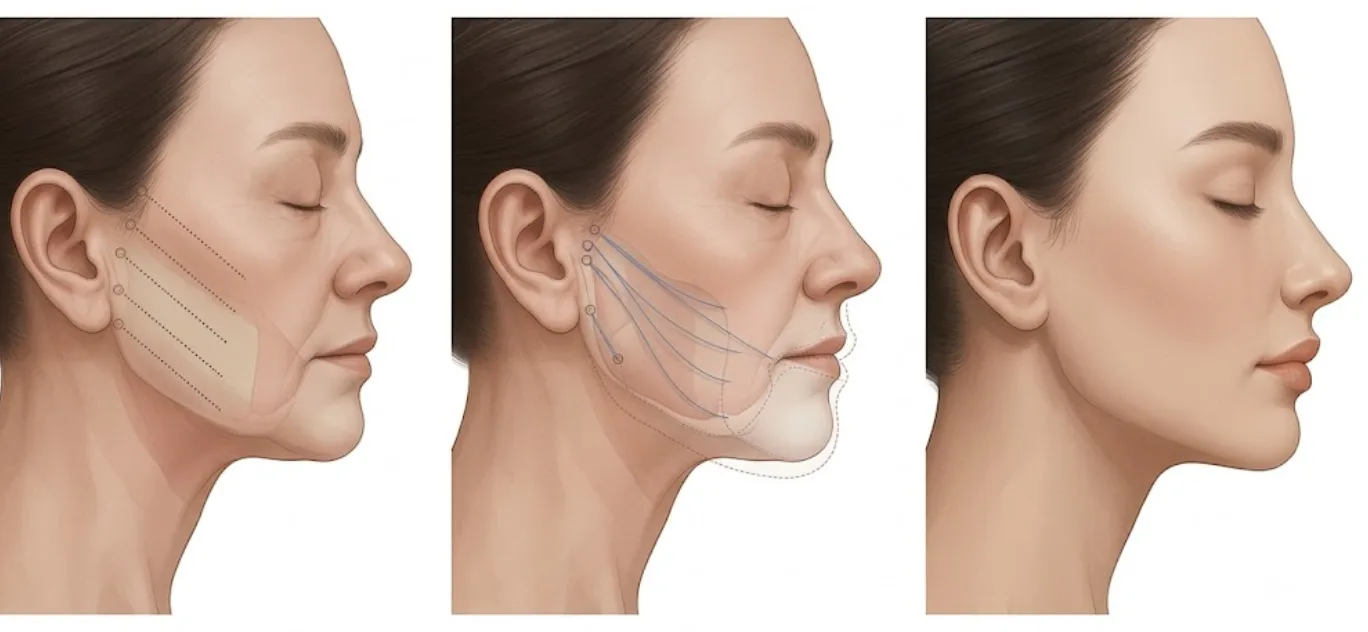
Illustration: barbed threads are placed along the paths shown and anchored at fixed points to lift early laxity of the lower face (Fixpoint Thread Lift™).
That distinction shapes the whole timeline. Your recovery is mostly about giving the threads a calm, stable few weeks to let tissue anchor around the barbs, while swelling and tightness fade. It is a different, shorter kind of recovery than a surgical lift, which is exactly why many people choose it. If you are still deciding between the two, the trade-offs are set out in thread lift vs a facelift.
First 24–72h
The first 24 to 72 hours
Immediately after the procedure you can expect mild swelling, some tenderness along the cheeks and jawline, and occasionally light bruising near the entry points. The lift looks tightest and sometimes slightly over-corrected on day one. This is normal and softens as swelling settles. There may be a pulling or tight sensation when you move your face, which is the threads doing their job; it eases over the first week.
During these first days, keep your head elevated, sleep on your back and not on your side, and avoid pressing on or massaging the treated area. Apply cold as your surgeon advises to manage swelling, eat soft foods, and skip strenuous activity. Most people take it easy for a day or two and find the tenderness very manageable with simple measures; heavy pain relief is rarely needed.
Days 3–14
Days three to fourteen: back to normal life
By around day three the worst of the swelling has eased and most patients feel comfortable being seen. This is why thread lift is popular with people who cannot take long off. Many return to desk work within a few days, while any faint bruising near the entry points fades through the first week. A mild tightness or awareness of the threads when you talk or smile is common and continues to soften day by day.
Through the second week the face looks progressively more natural as residual swelling resolves and the initial over-tightness relaxes into the intended lift. The tiny entry points heal without stitches and are not noticeable once settled. This is also the window where following the aftercare rules matters most. The threads are anchoring, so the gentler you are with your face now, the better the lift holds. For comparison with a surgical neck-and-jaw lift's much longer timeline, see how recovery differs in thread lift vs a facelift.
Weeks 2–6
Weeks two to six: the lift settles
From around two weeks the lift looks natural and the early tightness has largely gone, but recovery is not quite finished beneath the surface. Over the following weeks tissue continues to anchor around the threads, and the final, settled position of the lift becomes clear. Most aftercare restrictions can be relaxed in stages over this period on your surgeon's guidance. Vigorous exercise, facials, dental work and saunas are typically reintroduced gradually, one at a time.
Illustration: the deeper facial layer (SMAS, shown in yellow) is released and repositioned as one unit with the skin, rather than pulling the skin alone.
Sensation usually normalises across these weeks if there was any tightness or mild numbness early on. A thread lift is a non-surgical, temporary lift, so the result it gives is more modest and shorter-lasting than surgery. Knowing that up front keeps expectations realistic during the settling phase. If you find your laxity is more advanced than threads can address, your surgeon will say so plainly and may discuss a surgical option such as a deep plane facelift.
Aftercare
Aftercare that protects the lift
The aftercare is simple but matters because the threads need a stable few weeks. For the first one to two weeks: sleep face-up, avoid sleeping on your side, do not rub, massage or press the treated area, and avoid wide mouth movements (big yawns, loud singing, very chewy foods) that can tug on the threads before they anchor. Keep facial expressions gentle and eat softer foods early on.
For a slightly longer window your surgeon will usually ask you to avoid strenuous exercise, saunas, hot yoga, facials and non-urgent dental procedures, then reintroduce them in stages. Protect entry points from makeup until they have closed, and keep the skin clean. None of this is onerous, but skipping it is the most common avoidable way to compromise an otherwise good lift.
Worth messaging the clinic about: swelling that keeps increasing after the first few days, spreading redness or warmth, a thread end you can feel poking through, persistent dimpling, or pain that worsens instead of easing. These are uncommon, and because the surgeon who placed your threads manages your recovery directly, you reach the person who knows your case.
At Garnet
Recovery with a single-surgeon clinic
Garnet is a single-surgeon clinic in Apgujeong, Seoul. Dr. In-Soo Baek is a board-certified plastic surgeon (Korean medical licence no. 77407) and the only operating doctor; he places the threads himself, gives your aftercare directly and reviews your recovery, so the guidance you follow comes from the person who did the work. The clinic's structured follow-up schedule means your settling lift is checked at set points and not left to chance.
For international patients the short downtime makes a thread lift well suited to a compact trip, and Garnet is registered with Korea's foreign-patient programme to coordinate scheduling and after-care. After you fly home, follow-up continues remotely by messenger, so the few weeks of anchoring are still supervised by the same surgeon. You can begin with a no-obligation online assessment to find out whether a thread lift suits your face and how much downtime to plan for.
Real Results
Before & After
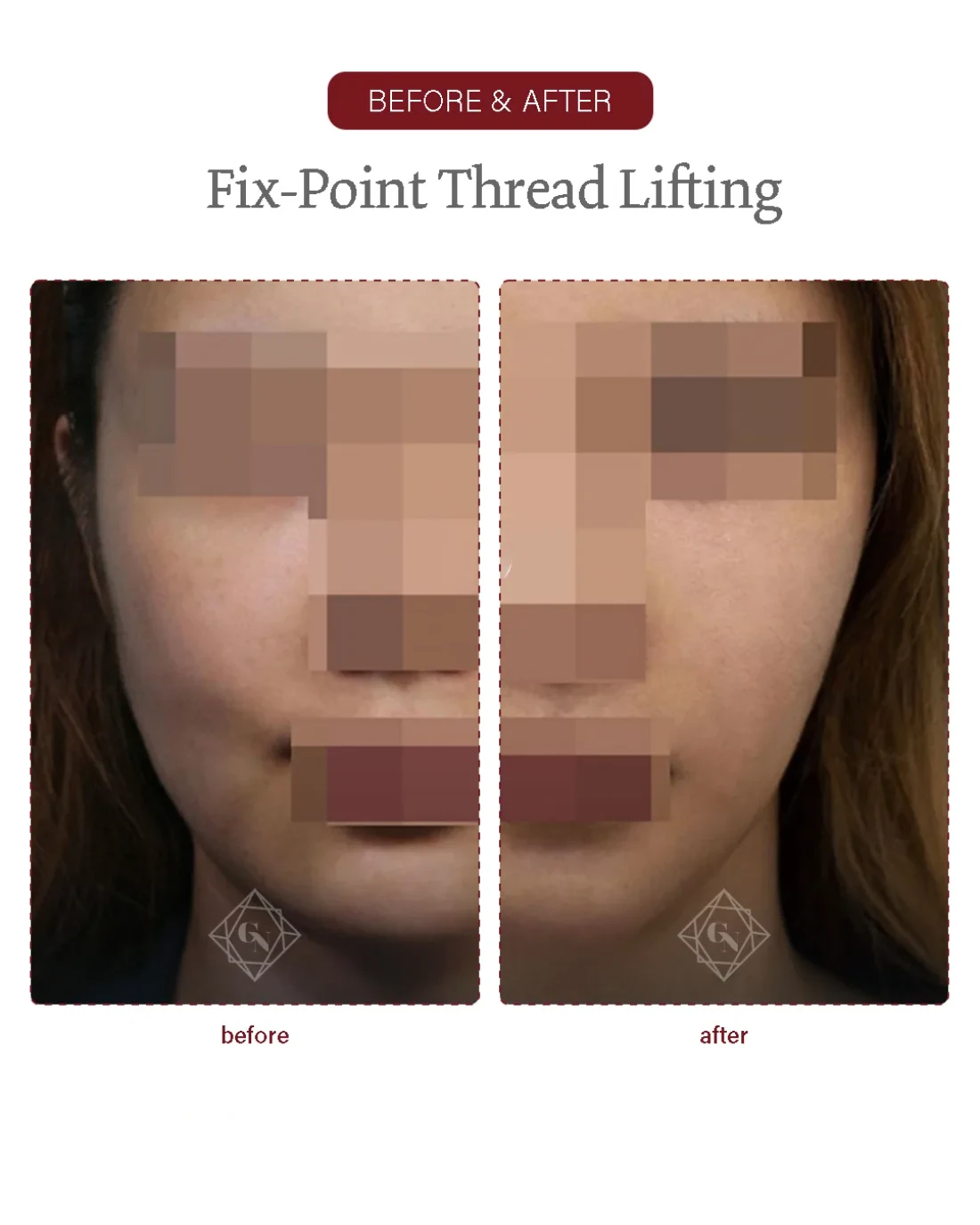
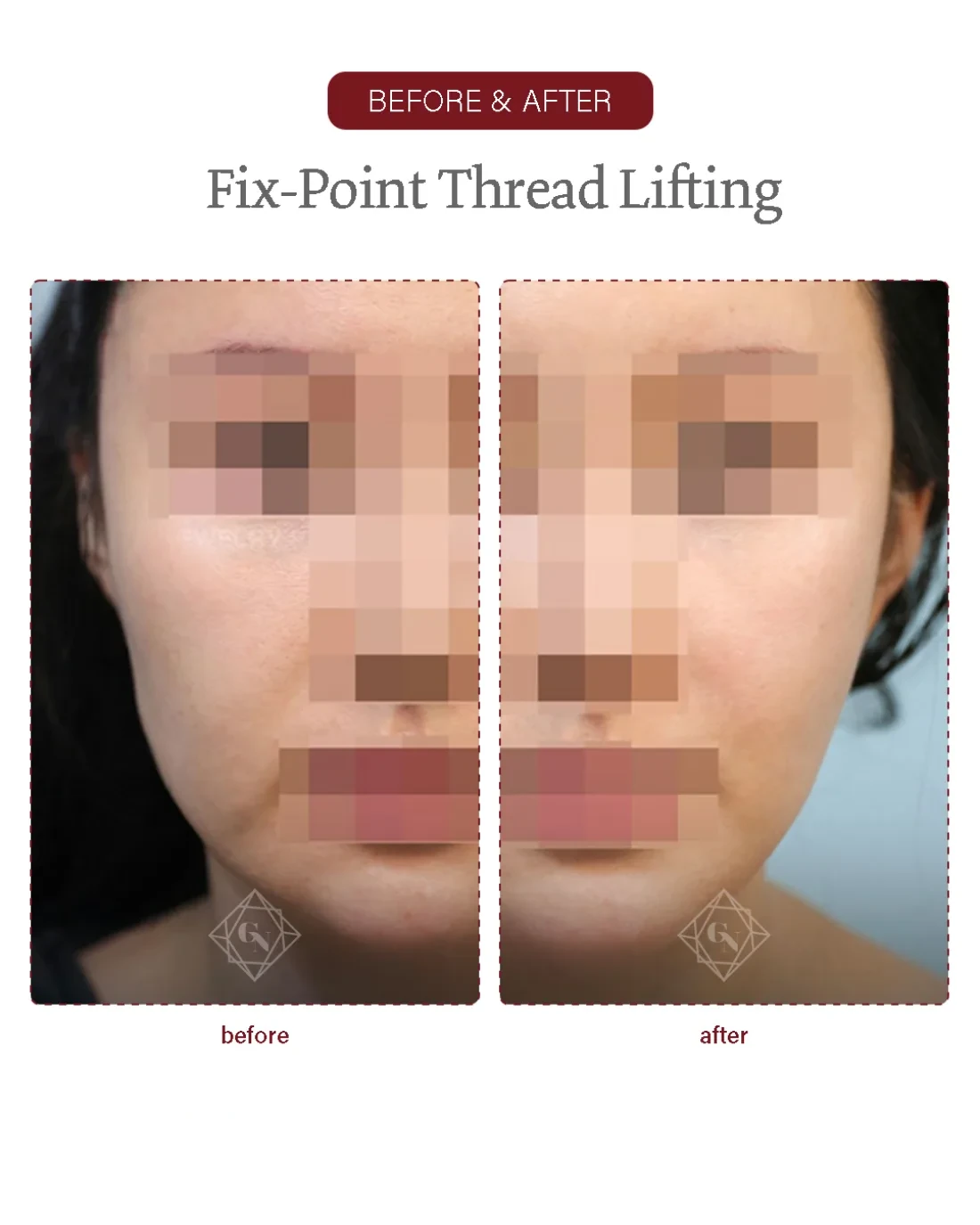
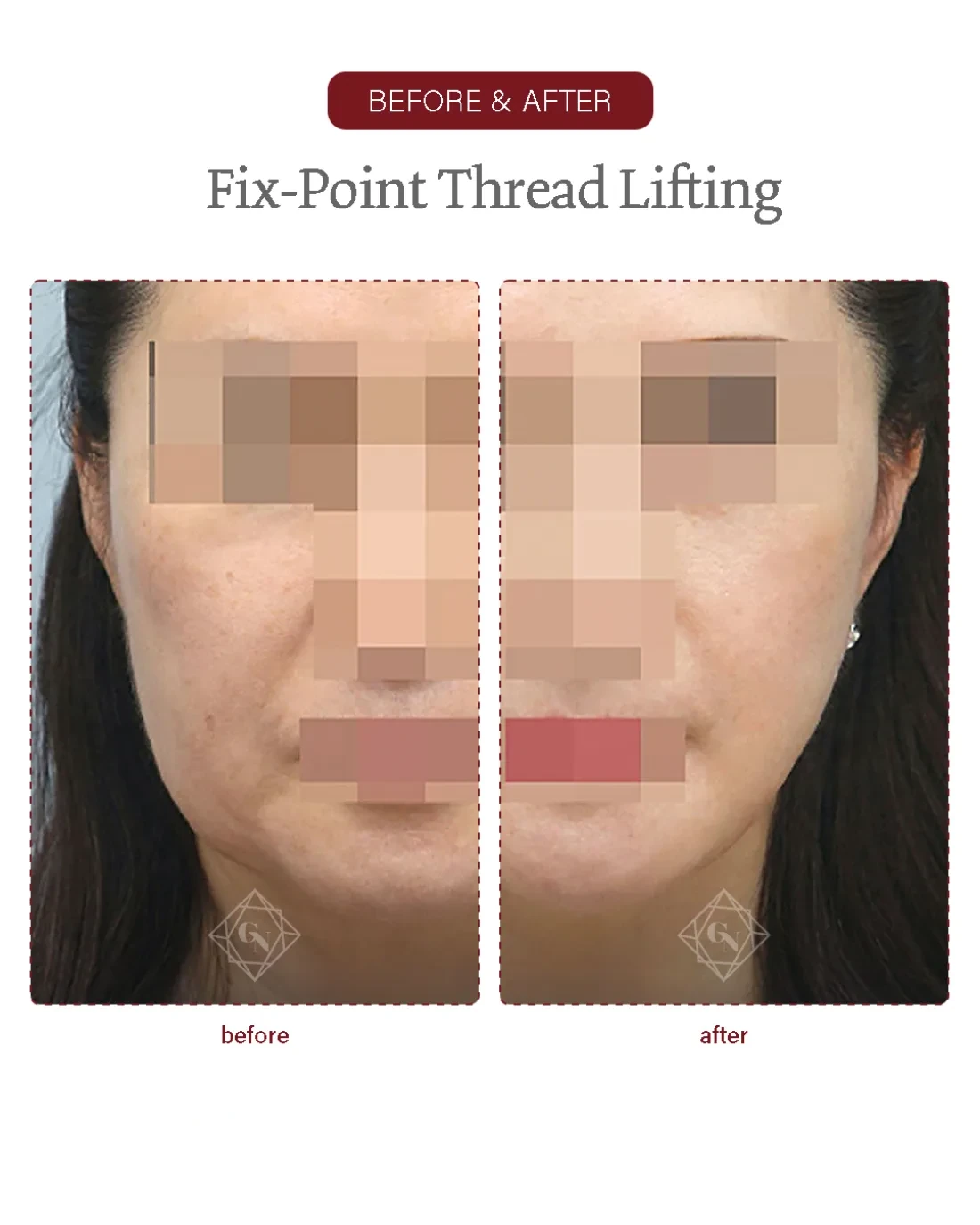
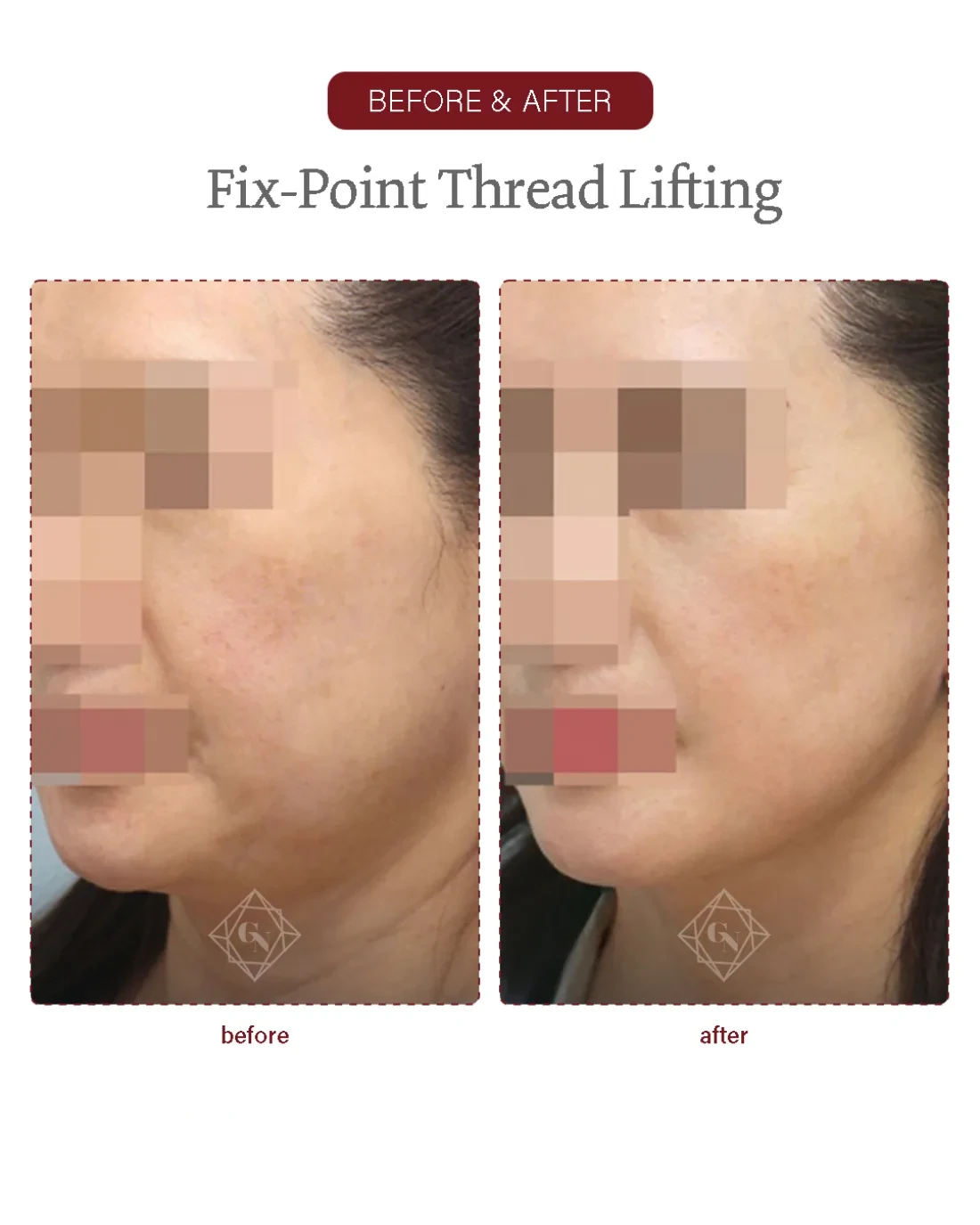
Thread-lift and contouring results of actual Garnet patients (published with consent, with date, procedure and clinic labelled). The lift is temporary and results, recovery and suitability vary by individual and are not guaranteed.
Prices
Price at Garnet
Thread lift
From₩100,000 + VAT per threadExcluding VAT (10% VAT is added at payment)Book now
Same price as Korean patients. Prices shown exclude 10% VAT; your written quote, issued after the in-person consultation, shows the full amount payable.
Dr. In-Soo Baek
Director & sole operating surgeon
Korean medical licence no. 77407
Operate on what you came for. Trained at Korea University Medical Center. Every case planned, performed and reviewed by the same hands.
1Operating surgeon
~2Surgeries per day
7Registered techniques
Board-certified plastic surgeon
Plastic surgery training at Korea University College of Medicine & graduate school
Korean Society of Plastic and Reconstructive Surgeons member, in its facial-contour, eye & rhinoplasty groups
Consults, operates and follows up each case himself
Peer-reviewed papers behind the facts on this page. Each describes findings in its own study group — not results at Garnet — and none predicts your own outcome.
Yi K et al. Facial Thread Lifting Complications. Journal of Cosmetic Dermatology. 2025. doi:10.1111/jocd.16745
Hong GW et al. Anatomic Consideration and Lifting Technique in Mandible Border Line Lifting With Multidirectional Thread. Journal of Craniofacial Surgery. 2025. doi:10.1097/scs.0000000000011114
Hong G et al. Anatomical Consideration for Double Chin Thread Lifting. Journal of Cosmetic Dermatology. 2025. doi:10.1111/jocd.70238
FAQ
Common questions
How long does thread lift recovery take?
Most of the visible recovery is quick: swelling and tenderness ease over the first few days, most patients are socially presentable within about three days, and the lift looks natural by around two weeks. Beneath the surface, tissue keeps anchoring around the threads over the following weeks, so full settling takes roughly a month or more.
When can I return to work after a thread lift?
Many people with desk-based work return within a few days, once the early swelling has eased. If your work is physically demanding or involves strenuous activity, plan for a slightly longer break, as vigorous exertion is usually restricted for a couple of weeks while the threads anchor.
What is thread lift recovery like day by day?
Day one: tightest look, mild swelling and tenderness. Days two to three: swelling eases, most people feel presentable. Days three to fourteen: bruising fades, the lift looks more natural, tightness softens. Weeks two to six: the lift settles into its final position as restrictions are gradually lifted.
Are there stitches to remove after a thread lift?
No. The threads are placed through tiny cannula entry points with no surgical incisions, so there is nothing to suture and no stitch removal. The entry points heal on their own within the first week and are not noticeable once settled.
What aftercare follows a thread lift?
For the first one to two weeks, sleep face-up, avoid pressing or massaging the area, and avoid wide mouth movements like big yawns or very chewy food. For a few weeks, avoid strenuous exercise, saunas, facials and non-urgent dental work, reintroducing them in stages on your surgeon's guidance.
Why does my face feel tight after a thread lift?
A pulling or tight sensation when you move your face is normal in the early days. It is the threads holding the lift. It softens over the first week or two as swelling settles and the tissue relaxes around the threads, and it is not a sign that anything is wrong.
How is thread lift recovery different from a facelift?
A thread lift recovery is much shorter and milder because nothing is cut or stitched, and most people are back to normal life within days. A surgical facelift involves incisions, sutures removed at around 10 to 14 days and weeks of swelling, but delivers a stronger, longer-lasting result. The two are compared in detail on the thread lift vs a facelift page.
When should I contact the clinic during recovery?
Message the clinic if swelling keeps increasing after the first few days, if redness or warmth spreads, if you can feel a thread end poking through, if there is persistent dimpling, or if pain worsens instead of easing. These are uncommon, and the surgeon who placed your threads manages your recovery directly.
Can I recover from a thread lift on a short trip to Korea?
Yes. The low downtime makes a thread lift well suited to a compact trip. Most people only need a few quiet days before being presentable. Garnet is registered with Korea's foreign-patient programme and continues your follow-up remotely by messenger after you return home.
My mom recently had a brow lift and lower blepharoplasty with Dr. Baek, and our experience has been wonderful so far. The Garnet team was incredibly kind and welcoming, with Kelly assisting us as our English consultant—she made everything…
I’m so happy I chose this clinic for my lower blepharoplasty. I was traveling from abroad by myself, so I was a little nervous, but from the beginning I felt comfortable and truly cared for. Everyone was kind, patient, and professional…
Came in for an in-person consult and ended up choosing Garnet and Dr.Baek for my non-incisional DES and tiplasty/alarplasty. I communicated with Kelly (English consultant) from the start till now (3 weeks post-op). She really help me feel…
My under-eyes have been sagging and folding for years... I tried to cover it up with makeup, but it actually got stuck in the wrinkles and made it stand out even more. While going for consultations, I noticed that the bigger the hospital…
Send photos and your question before you travel. An English-speaking coordinator reviews every enquiry and replies with plain guidance on whether a thread lift is appropriate for you, the likely plan and timing.
✓ Reviewed by the clinic coordinator, not a bot
✓ Photo-based pre-assessment before you fly
✓ Foreign-patient scheduling & after-care
✓ One surgeon for consultation, surgery and follow-up
Prefer to chat now? Reach the coordinator directly:









 T S7 months ago



