A thread lift and a facelift both lift a sagging jawline and jowls, yet they work in different ways. One is a non-surgical, temporary lift with minimal downtime; the other is surgery that resets the deeper SMAS structure and lasts for years. Choosing well depends on which matches your degree of laxity, your timeline and your expectations, as set out here.
The short answer
A thread lift (Fixpoint™ fixed-point barbed thread method at Garnet) is non-surgical, with minimal downtime and a modest, temporary lift. It is best for early-to-moderate laxity.
A surgical facelift cuts and repositions the deeper SMAS layer through incisions; it lifts far more and lasts years, but involves real downtime and suture removal at around 10 to 14 days.
The deciding factor is how much laxity you have: threads cannot do a surgeon's job on advanced sagging, and surgery is more than early laxity needs.
The same board-certified surgeon assesses your face and will tell you which is appropriate, including saying neither, or not yet.
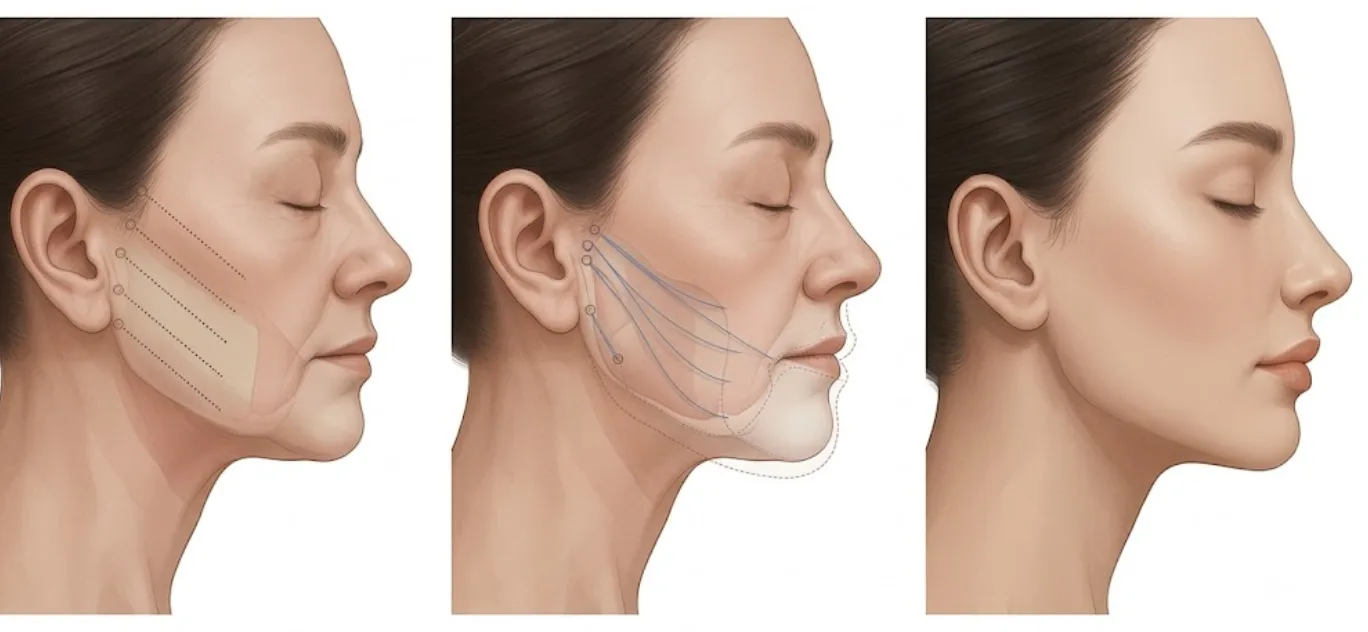
A thread lift lifts sagging soft tissue using barbed threads placed through tiny cannula entry points, with no cutting and no stitches. At Garnet it is the Fixpoint™ fixed-point barbed thread method, a trademarked technique that anchors the lift at fixed points. It is a non-surgical, minimally invasive procedure that repositions tissue and gives a modest, temporary lift.
Illustration: barbed threads are placed along the paths shown and anchored at fixed points to lift early laxity of the lower face (Fixpoint Thread Lift™).
A surgical facelift does something fundamentally different: it makes incisions, then lifts and tightens the deeper structural layer of the face (the SMAS) and removes or re-drapes excess skin. At Garnet the deep plane facelift releases the SMAS to the jawline through incisions along the hairline and in front of the ear, with sutures removed at around 10 to 14 days. Because it resets the deeper anatomy instead of suspending it, it produces a much stronger, longer-lasting change, with a correspondingly longer recovery.
How much lift
How much each one actually lifts
This is the difference that matters most. A thread lift gives a subtle-to-moderate lift. It refreshes a jawline and softens early jowling and the nasolabial fold, but it works within the limits of what threads can suspend. It cannot remove excess skin and it cannot reposition deep, heavy tissue. Pushed beyond its range, it simply will not hold, which is why careful candidacy matters more than the marketing.
A surgical facelift lifts substantially more because it acts on the deeper layer and addresses excess skin directly. For someone with moderate-to-advanced sagging, jowls and clear skin laxity, surgery achieves a result threads physically cannot. The trade-off is that it is a bigger undertaking, so the right question is which one matches the amount of laxity you actually have. If you are unsure where you sit, who a thread lift is for walks through the candidacy in detail.
Longevity
How long each result lasts
A thread lift is temporary. The lift typically holds for a limited span before tissue gradually relaxes back, and the threads themselves are not permanent. It is best thought of as a way to refresh and delay, and it can be repeated. You are trading longevity for a much easier procedure. The specifics are covered in how long thread lift results last.
A surgical facelift lasts for years. It does not stop the natural ageing that continues afterward, but it sets the clock back meaningfully and the result is durable in a way threads are not. So the longevity comparison is stark: convenience now versus durability over years. Neither answer is wrong. They suit different people and different stages of ageing, and calling one universally better would be an overstatement.
Downtime & cost
Downtime, recovery and cost
Downtime is where the two diverge most visibly. A thread lift has minimal downtime: most people are socially presentable within a few days and back to desk work quickly, with no stitches to remove; the full day-by-day picture is in the thread lift recovery timeline. A surgical facelift involves real recovery: swelling and bruising for a couple of weeks, sutures removed at around 10 to 14 days, and a longer settling period before the result matures.
Illustration: the deeper facial layer (SMAS, shown in yellow) is released and repositioned as one unit with the skin, rather than pulling the skin alone.
On cost, surgery is a larger investment than a thread lift, but the useful comparison is cost against longevity. A cheaper, temporary lift repeated over the years can converge with a one-time surgical result, while surgery asks more at once but lasts. The point is to compare like with like: duration and extent as well as the headline price. For how the deeper procedure works, see the deep plane facelift overview.
Which fits you
Which one fits your face
As a general guide: if your laxity is early-to-moderate, you want minimal downtime, and you are comfortable with a temporary, subtler result, a thread lift is a sensible fit. If you have moderate-to-advanced sagging with clear jowls and excess skin, want a strong change, and can accept real recovery, a surgical facelift is the procedure that will actually deliver it. Many people sit somewhere in between, and that is exactly where an in-person assessment of the jawline and skin earns its place.
The wrong reasons to choose are also worth naming: picking threads only to avoid surgery when your laxity genuinely needs a lift leads to disappointment, and choosing surgery for very early laxity is more than the face needs. A good surgeon will sometimes recommend neither yet. You can talk through where you sit in an online consultation before committing to anything.
At Garnet
How Garnet assesses threads versus a facelift
Garnet is a single-surgeon clinic in Apgujeong, Seoul. Dr. In-Soo Baek is a board-certified plastic surgeon (Korean medical licence no. 77407) who performs both thread lifts and surgical facelifts himself. The recommendation you receive is therefore not steered toward whichever procedure a particular doctor happens to offer. Because one surgeon does both, he can assess your laxity and tell you candidly which actually suits your face, including advising against a procedure that will not help you.
That same surgeon consults, operates and reviews every follow-up, with structured checks at 1, 3 and 6 months, and remote follow-up after international patients return home. Garnet is registered with Korea's foreign-patient programme. The most useful next step is a no-obligation online assessment: send photos and get a clear read on whether a thread lift, a facelift, or neither is right for you before you plan a trip.
Real Results
Before & After
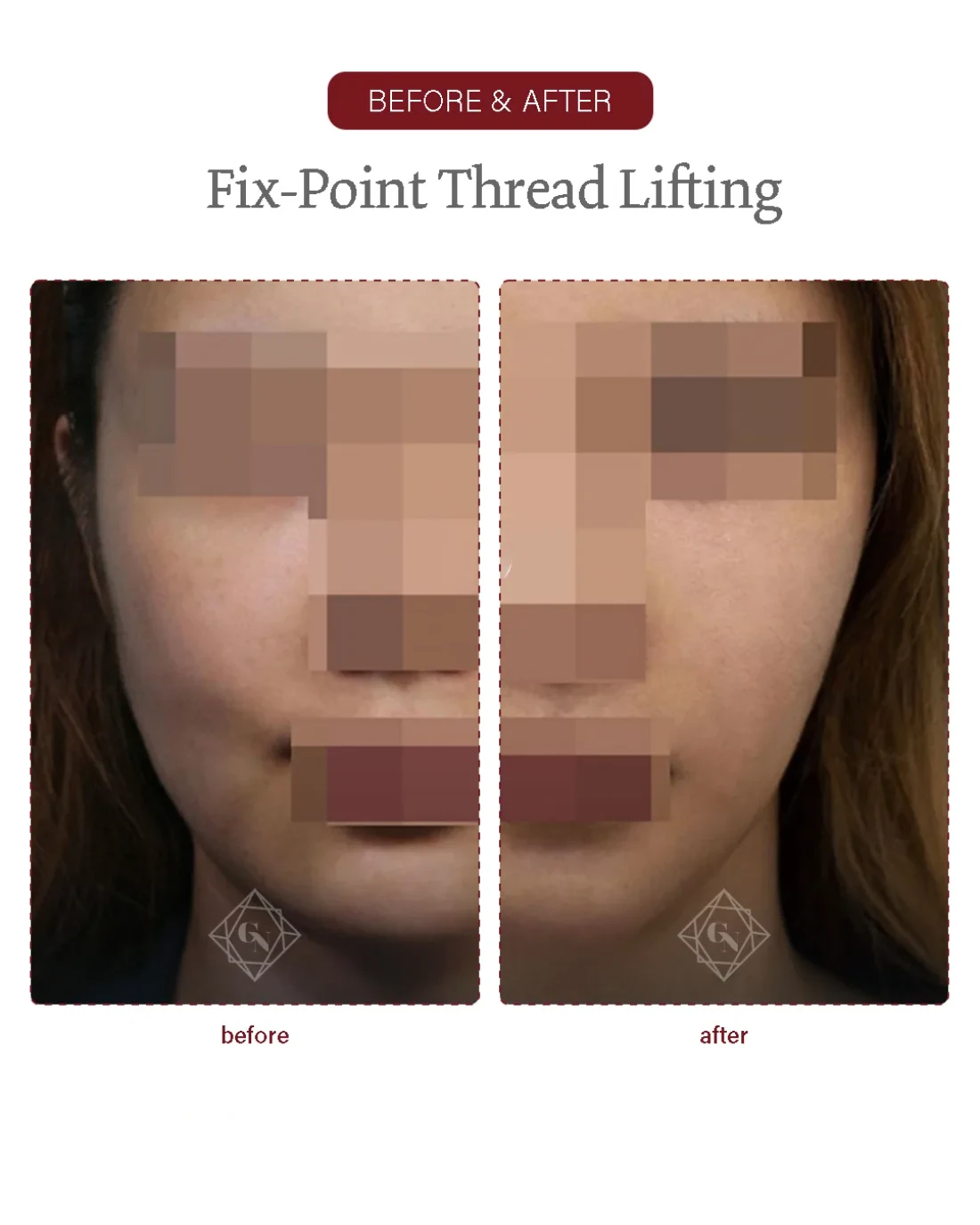
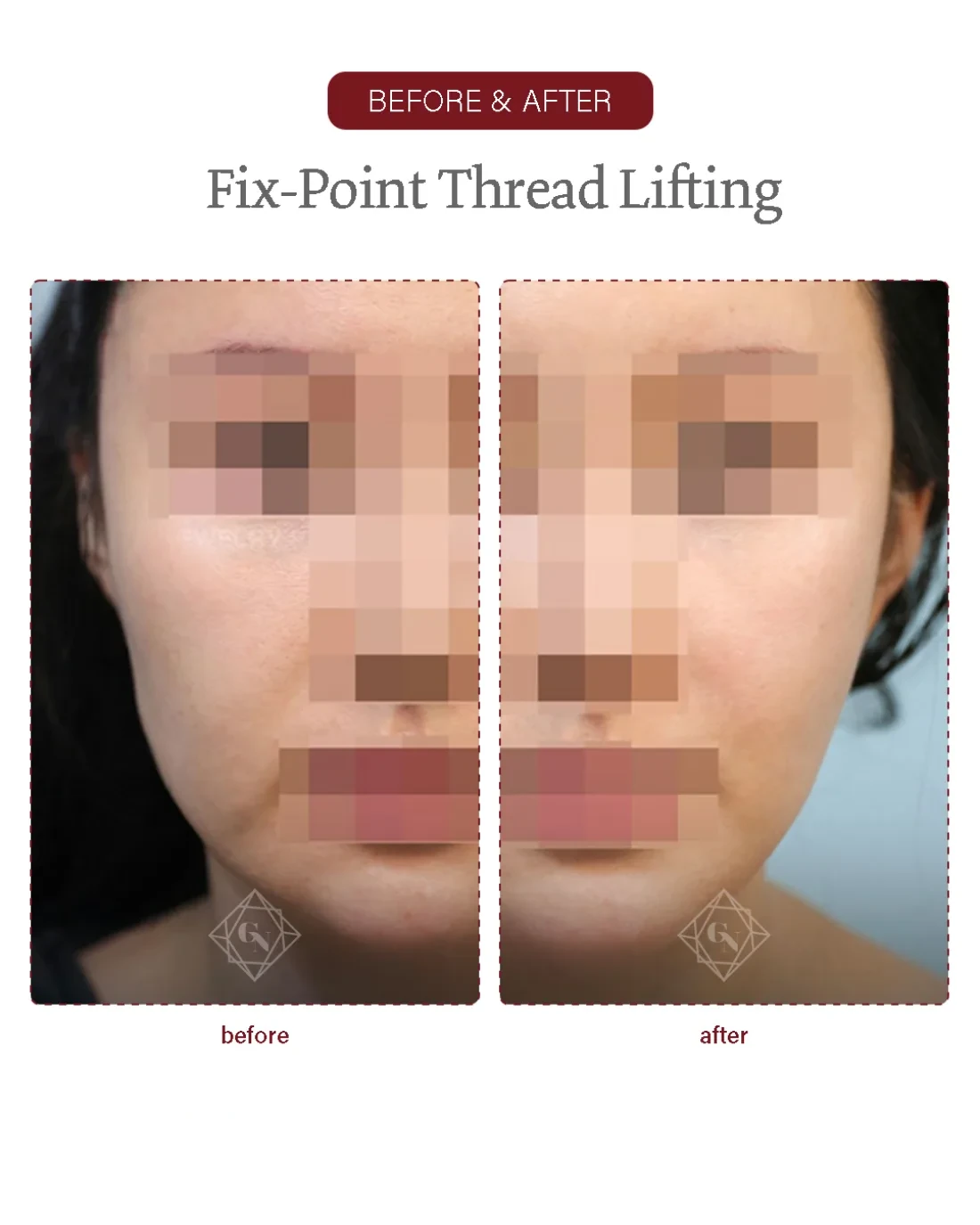
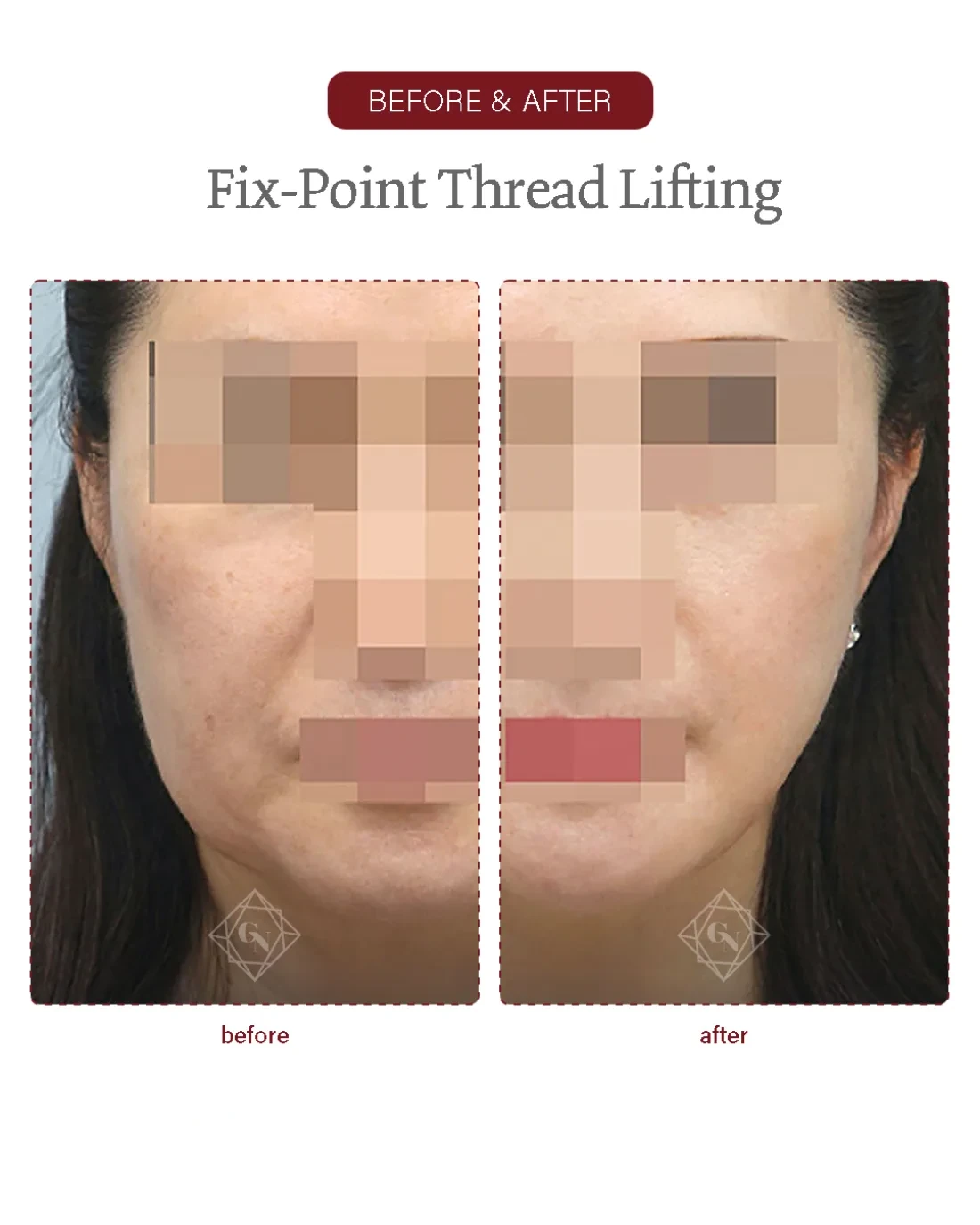
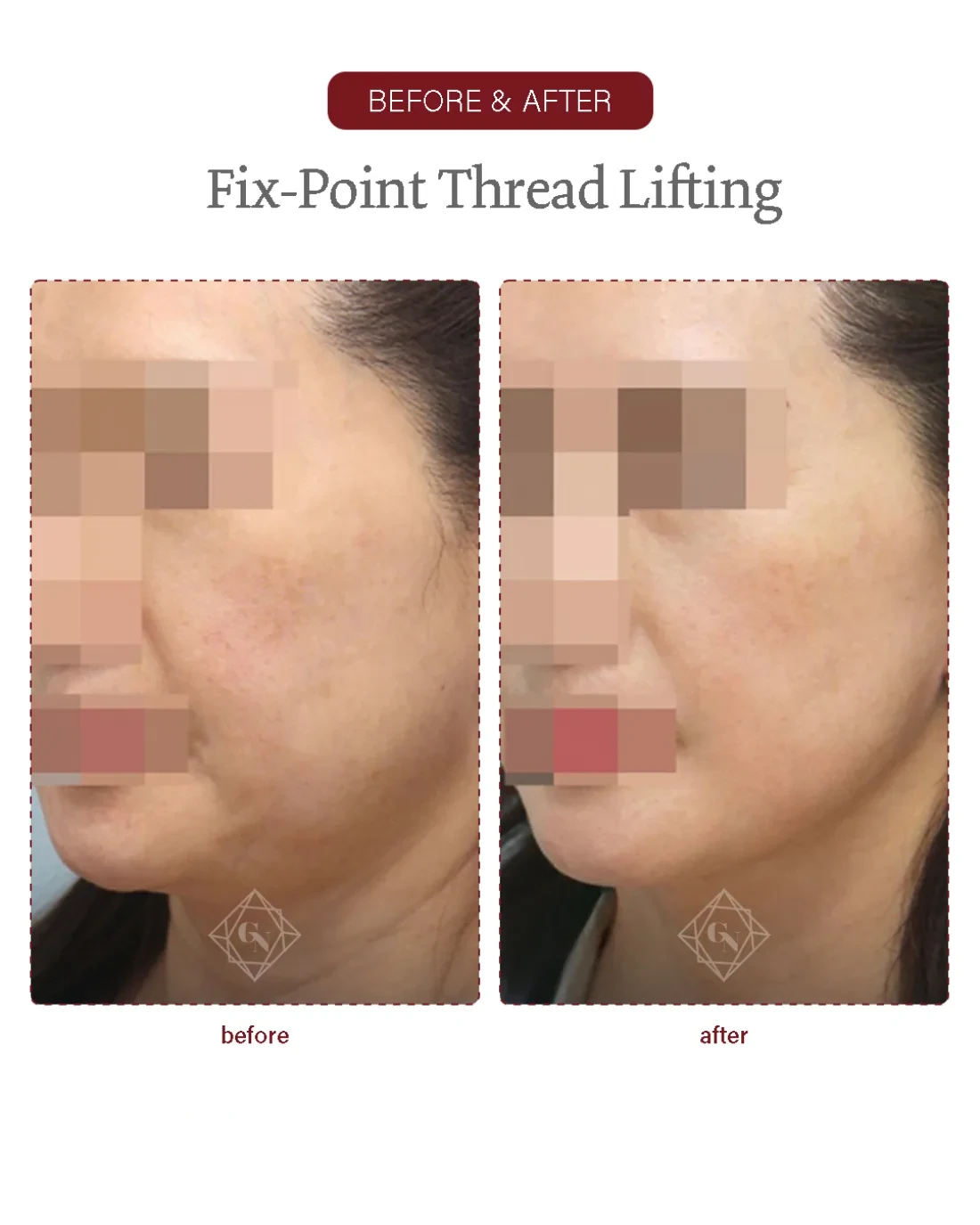
Thread-lift and contouring results of actual Garnet patients (published with consent, with date, procedure and clinic labelled). The lift is temporary and results, recovery and suitability vary by individual and are not guaranteed.
Prices
Price at Garnet
Thread lift
From₩100,000 + VAT per threadExcluding VAT (10% VAT is added at payment)Book now
Same price as Korean patients. Prices shown exclude 10% VAT; your written quote, issued after the in-person consultation, shows the full amount payable.
Dr. In-Soo Baek
Director & sole operating surgeon
Korean medical licence no. 77407
Operate on what you came for. Trained at Korea University Medical Center. Every case planned, performed and reviewed by the same hands.
1Operating surgeon
~2Surgeries per day
7Registered techniques
Board-certified plastic surgeon
Plastic surgery training at Korea University College of Medicine & graduate school
Korean Society of Plastic and Reconstructive Surgeons member, in its facial-contour, eye & rhinoplasty groups
Consults, operates and follows up each case himself
Peer-reviewed papers behind the facts on this page. Each describes findings in its own study group — not results at Garnet — and none predicts your own outcome.
Matarasso A et al. Barbed Sutures in Aesthetic Plastic Surgery: Evolution of Thought and Process. Aesthetic Surgery Journal. 2013. doi:10.1177/1090820x13499343
Mulholland RS et al. Lifting and Wound Closure with Barbed Sutures. Clinics in Plastic Surgery. 2011. doi:10.1016/j.cps.2011.06.002
Atiyeh BS et al. Barbed sutures “lunch time” lifting: evidence‐based efficacy. Journal of Cosmetic Dermatology. 2010. doi:10.1111/j.1473-2165.2010.00495.x
FAQ
Common questions
What is the difference between a thread lift and a facelift?
A thread lift is non-surgical: barbed threads lift sagging tissue through tiny entry points, with minimal downtime and a modest, temporary result. A surgical facelift makes incisions and tightens the deeper SMAS layer, lifting far more and lasting years, but with real recovery and sutures removed at around 10 to 14 days.
Is a thread lift or a facelift better for me?
Neither is universally better; it depends on your laxity. Early-to-moderate sagging with a need for minimal downtime suits a thread lift; moderate-to-advanced sagging with jowls and excess skin needs a surgical facelift. An in-person assessment is the only reliable way to tell which fits your face.
How long does a thread lift last compared with a facelift?
A thread lift is temporary and holds for a limited span before tissue gradually relaxes, though it can be repeated. A surgical facelift lasts for years. The core trade-off is convenience and low downtime now versus durability over the long term.
Does a thread lift lift as much as a facelift?
No. A thread lift gives a subtle-to-moderate lift and cannot remove excess skin or reposition deep, heavy tissue. A surgical facelift lifts substantially more because it acts on the deeper layer. Pushing threads beyond their range simply does not hold, which is why careful candidacy matters.
Is the recovery very different?
Yes. A thread lift has minimal downtime; most people are presentable within a few days with no stitches. A surgical facelift involves a couple of weeks of swelling and bruising, suture removal at around 10 to 14 days, and a longer settling period before the result matures.
Is a thread lift cheaper than a facelift?
A thread lift is a smaller upfront investment than surgery, but the fair comparison is cost against longevity. A temporary lift repeated over the years can converge with the cost of a one-time surgical result, so compare duration and extent as well as the headline price.
Can a thread lift delay the need for a facelift?
For some people with early laxity, a thread lift can refresh the face and delay surgery, though it does not replace it. For more advanced sagging it will not substitute for a facelift. Which is true for you depends on your starting anatomy, in particular how much the jowls and skin have descended.
Who decides which procedure I should have?
You do, after an assessment of your face. At Garnet the same board-certified surgeon performs both procedures, so the recommendation is not steered by what one doctor happens to offer. He assesses your laxity and tells you candidly which suits your face, sometimes including advising against either, or not yet.
Can I get this assessment before travelling to Korea?
Yes. You can send photos and discuss whether a thread lift, a facelift or neither fits your face in an online consultation before you commit to travel. Garnet is registered with Korea's foreign-patient programme and continues follow-up remotely after you return home.
My mom recently had a brow lift and lower blepharoplasty with Dr. Baek, and our experience has been wonderful so far. The Garnet team was incredibly kind and welcoming, with Kelly assisting us as our English consultant—she made everything…
I’m so happy I chose this clinic for my lower blepharoplasty. I was traveling from abroad by myself, so I was a little nervous, but from the beginning I felt comfortable and truly cared for. Everyone was kind, patient, and professional…
Came in for an in-person consult and ended up choosing Garnet and Dr.Baek for my non-incisional DES and tiplasty/alarplasty. I communicated with Kelly (English consultant) from the start till now (3 weeks post-op). She really help me feel…
My under-eyes have been sagging and folding for years... I tried to cover it up with makeup, but it actually got stuck in the wrinkles and made it stand out even more. While going for consultations, I noticed that the bigger the hospital…
Send photos and your question before you travel. An English-speaking coordinator reviews every enquiry and replies with guidance on whether a thread lift or facelift is appropriate for you, the likely plan and timing.
✓ Reviewed by the clinic coordinator, not a bot
✓ Photo-based pre-assessment before you fly
✓ Foreign-patient scheduling & after-care
✓ One surgeon for consultation, surgery and follow-up
Prefer to chat now? Reach the coordinator directly:









 T S7 months ago



