Under-eye fat repositioning moves the bulging fat over the orbital rim to smooth the under-eye, and that correction is durable: the fat that was removed as a bulge does not simply come back. Your face keeps ageing on top of that result, though, and over the years some hollowing or laxity can gradually appear.
The short answer
Under-eye fat repositioning is a durable correction: the herniated fat is moved over the orbital rim and fixed, so the bulge that was smoothed does not simply re-form.
It is a structural change through a scarless inner (transconjunctival) approach, so there is no skin tension to relax and fade in the short term.
No surgery stops ageing. Over the years continued volume loss and skin laxity can bring some hollowing or a return of shadowing, from a much-improved starting point.
When that time comes, the usual step is a lighter refresh, such as fat grafting to the tear trough. Repeating the original surgery is not usually needed.
How long under-eye fat repositioning typically lasts
Under-eye fat repositioning gives a durable correction. No temporary filler is added. The surgeon takes the herniated fat that was creating the under-eye bulge and moves it over the orbital rim, fixing it into the hollow of the tear trough so the area is smoothed. Because the bulge is physically relocated, not masked, that specific correction does not simply reverse: the fat that was repositioned stays repositioned.
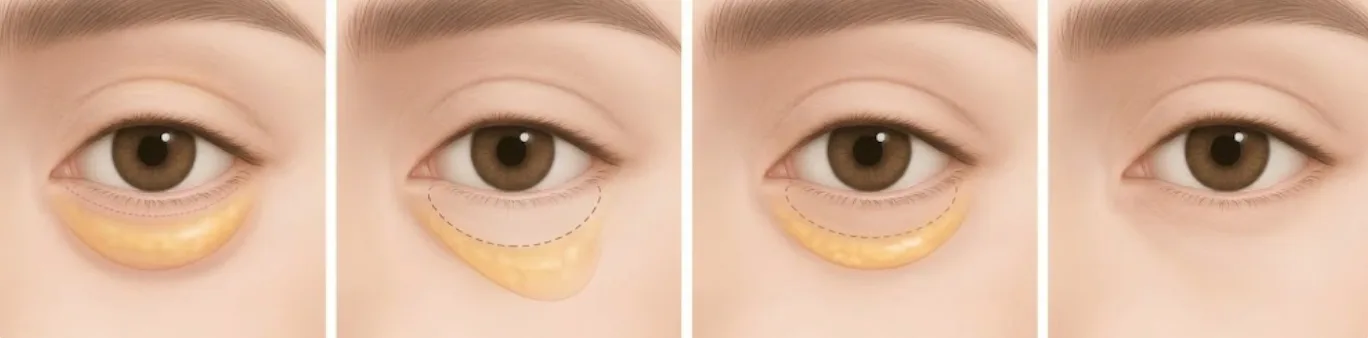
Illustration: working from inside the lower lid, the under-eye fat (yellow) is moved down into the hollow instead of being removed; the dashed line shows where it sat.
So for the correction itself, most people enjoy a long-lasting improvement, often many years of a smoother, less shadowed under-eye. A under-eye fat repositioning is chosen precisely because it addresses the cause structurally, which is why it outlasts non-surgical options that only fill the trough temporarily.
A lasting correction still leaves an under-eye that changes with time. You continue to age from a much-improved starting point, and over a longer horizon that ageing can show. Understanding both halves (a durable correction, plus ongoing natural ageing) is the key to realistic expectations, and it is often discussed alongside candidacy in our who-is-it-for guide.
Why durable
Why the correction itself is durable
The durability comes from the mechanism. The fat causing an under-eye bulge is herniated orbital fat pushing forward; repositioning takes that fat and secures it over the rim with periosteal fixation, filling the adjacent hollow instead of leaving it to bulge. Once healed, that fat is anchored in its new position. It is not a substance the body absorbs, so the corrected contour holds.
At Garnet this is done through a transconjunctival approach (from inside the lower lid), so there is no external skin incision and no visible scar line. Because nothing relies on tightening or pulling skin, there is no tension quietly working to undo the result in the way a skin-tension procedure can relax. The smoothing you get is a structural change to where the fat sits.
This is why the early result, once swelling settles, is a reliable guide to the corrected contour you keep. Procedures whose effect is temporary from the start behave quite differently. What changes over a much longer timescale is not this correction reversing, but the natural ageing of the surrounding area, which is a separate process covered next. Our recovery timeline covers when the true contour becomes visible.
With age
How continued ageing affects the result
Under-eye fat repositioning corrects today's bulge and hollow, but it cannot pause the ageing that continues afterward. Over the years the whole midface keeps changing: overall facial volume slowly declines, the skin of the lower lid loses a little elasticity, and the cheek support beneath the eye descends gently. These are natural processes that carry on from your improved baseline.
For most people this simply means they enjoy a smoother under-eye for a long time and age gracefully from there, years later still looking better than if they had done nothing. But for some, particularly further down the line, that continued volume loss can bring back a degree of tear-trough shadowing or lower-lid laxity. It is not the repositioned fat coming back; it is new, age-related change on top of the correction.
Setting this expectation early prevents disappointment. The right way to picture it is a durable correction that gives a lasting head-start, with the understanding that the under-eye, one of the most ageing-sensitive areas of the face, continues to mature naturally, and can be refreshed later if and when you choose.
Hollowing
Why some hollowing can gradually return
The under-eye is unusually sensitive to volume change, which is why some hollowing can gradually reappear over a long horizon even after a good repositioning. As overall facial and periorbital volume declines with age, the tear-trough region can lose support and cast a shadow again. It is the same ageing pattern that created the concern originally, now acting on an older face.
This is different from the surgery failing. The bulge that was repositioned does not re-herniate into a new bulge; the surrounding area thins over the years instead. The problem that can return with age is typically hollowing from volume loss. The original bagginess does not come back, and the new hollowing responds to a different, lighter solution.
How soon, if ever, this shows depends heavily on the individual: age at surgery, natural rate of volume loss, skin quality and lifestyle all play a part. Many people never find it bothersome; others may notice gentle shadowing years later. Either way, it tends to be addressable without repeating the original operation, as the next section explains.
Refresh
Refreshing an under-eye fat repositioning result later on
When age-related hollowing does eventually appear, the usual step is a lighter refresh, and the surgery itself is rarely repeated. Because the returning issue is typically volume loss, restoring a little volume to the tear trough (for example with careful fat grafting) is often all that is needed to freshen the area again. That is a smaller, gentler procedure than the original repositioning.
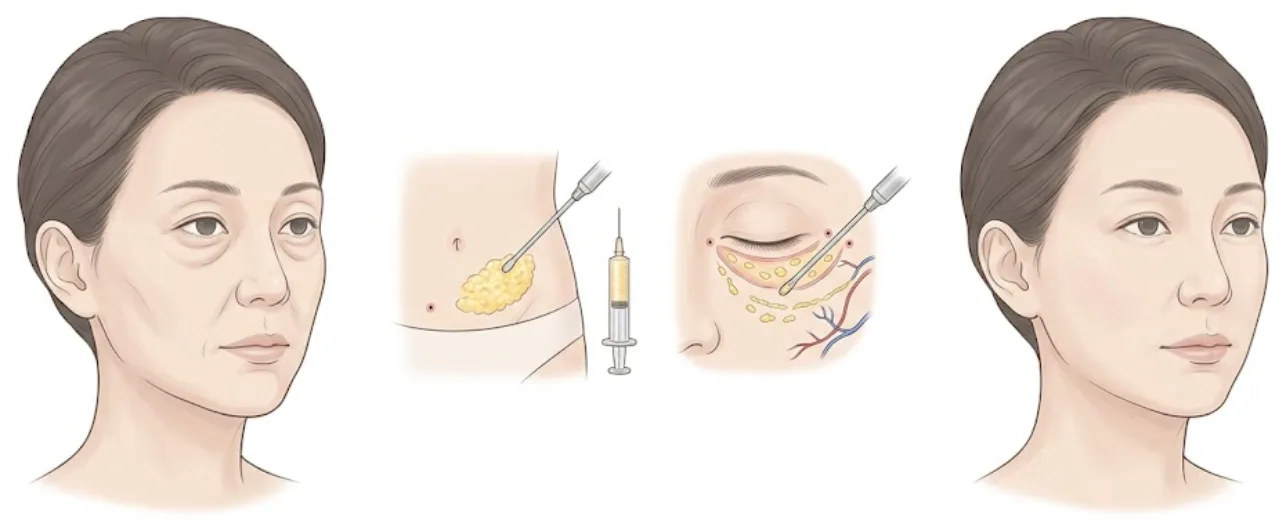
Illustration: the patient's own fat is gently taken from a donor area such as the abdomen, refined, and placed in small amounts where volume has been lost.
There is no set schedule you are obliged to follow. Many people simply enjoy the corrected under-eye for years and revisit the question only if and when they feel the area has changed. If they do, having addressed the structural bulge properly the first time usually leaves the area in a good position for a straightforward top-up.
The realistic framing, then, is a durable correction followed, if desired, by an occasional light refresh as the face continues to age. The result does not expire and need redoing. Planning it this way, with the same surgeon who knows your under-eye, keeps any future step simple.
At Garnet
Garnet's approach to a lasting under-eye result
Garnet is a single-surgeon clinic in Apgujeong, Seoul. Dr. In-Soo Baek is a board-certified plastic surgeon (Korean medical licence no. 77407) and the only operating doctor. He consults, performs the under-eye fat repositioning himself through the scarless transconjunctival approach, and reviews every follow-up. The clinic caps the day at two surgeries so each delicate under-eye case has unhurried, careful time.
Because a durable correction depends on repositioning and fixing the fat precisely, the single-surgeon model is directly relevant to how well the result holds: the same surgeon assesses your fat and hollow, performs the repositioning, and then follows your healing at 1, 3 and 6 months, and by messenger after you fly home, so the contour settles as intended. Where volume loss eventually calls for a light refresh, that same surgeon already knows your lower lids. Visitors from abroad are looked after under Garnet's registration with Korea's foreign-patient programme.
For a realistic view of how long a smoother under-eye could last for your face, and whether repositioning or a combination is right, the ideal first step is a no-obligation online assessment. Send photos of your lower lids and ask how long the smoothing should hold before you plan any travel.
Real Results
Before & After
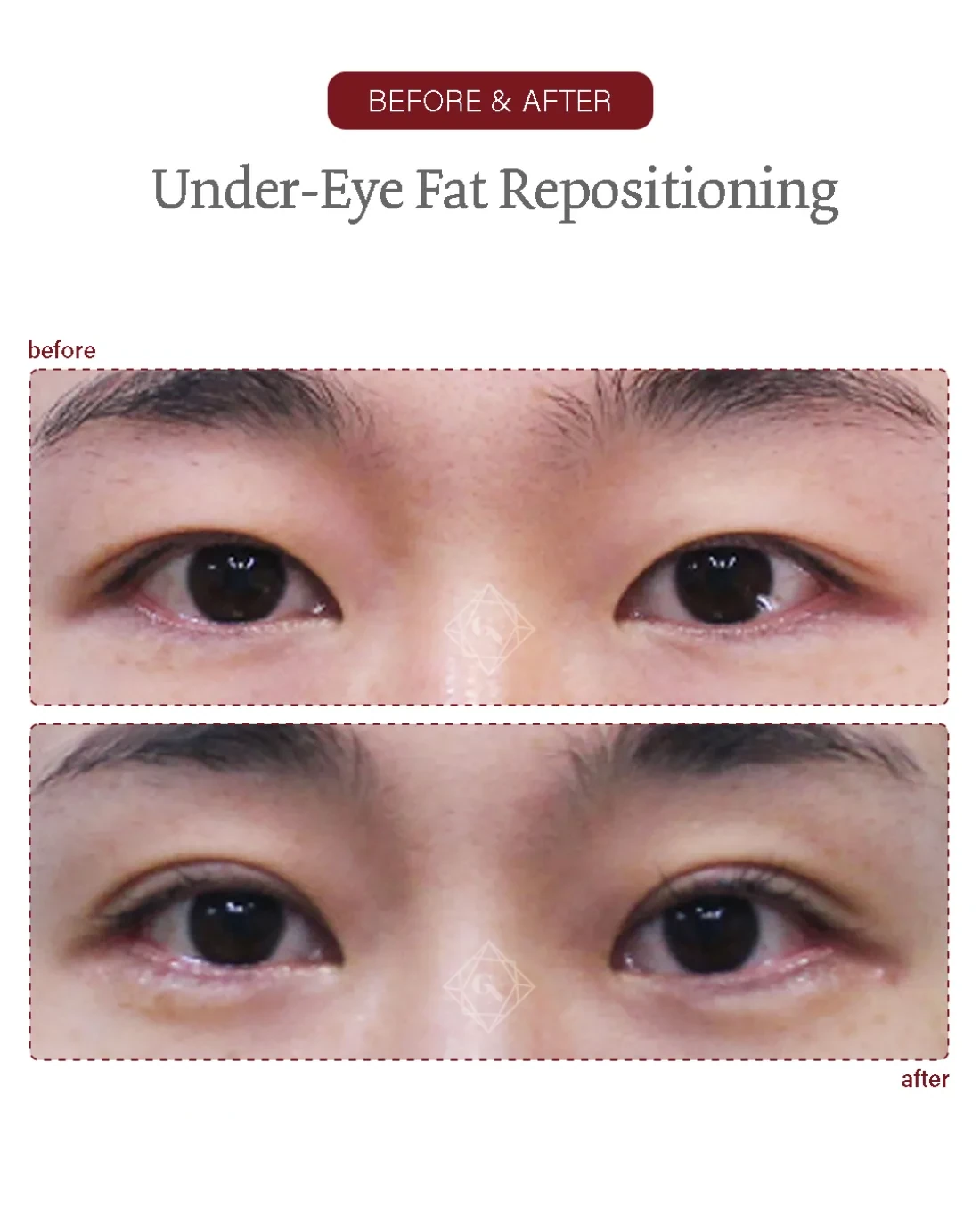
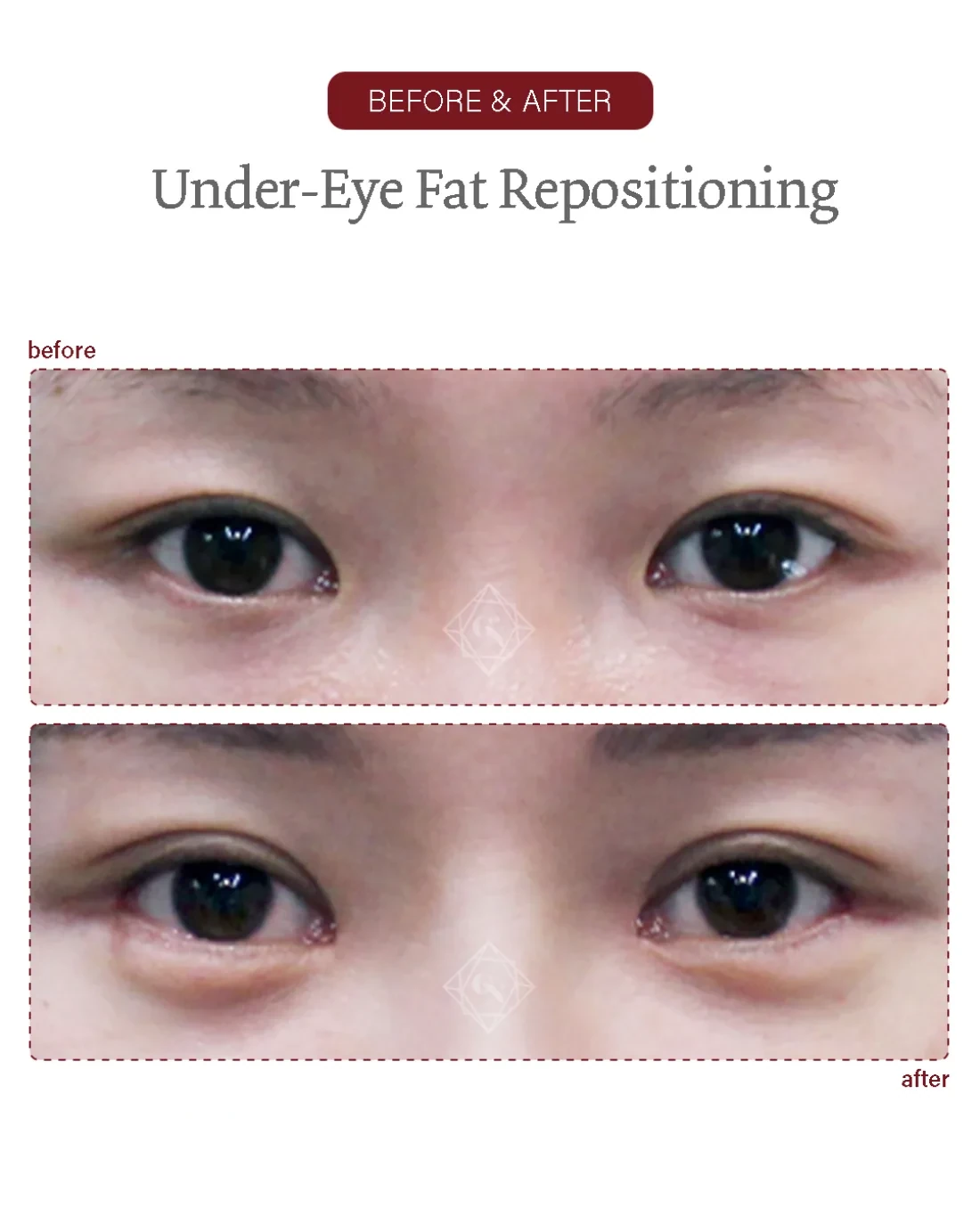
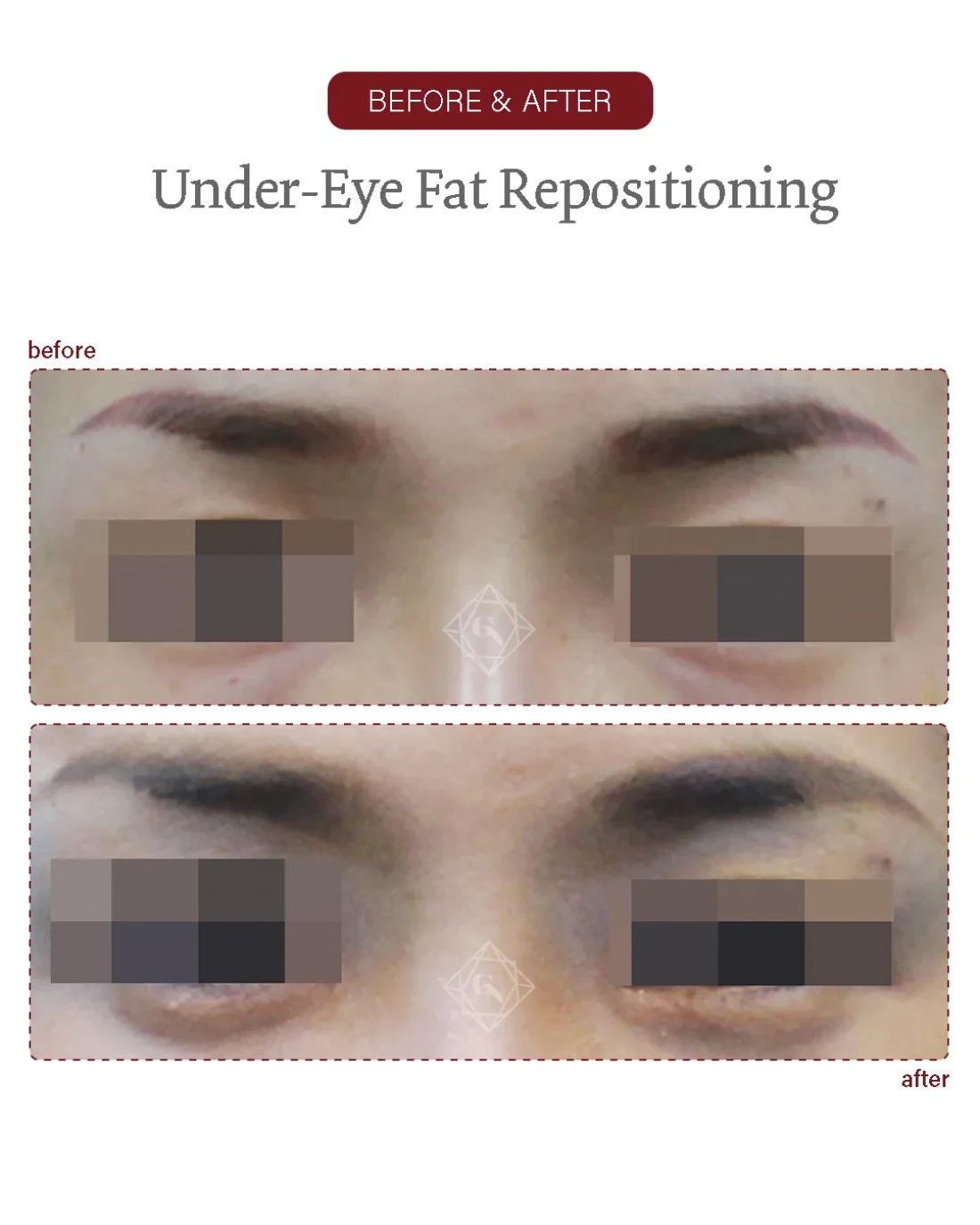
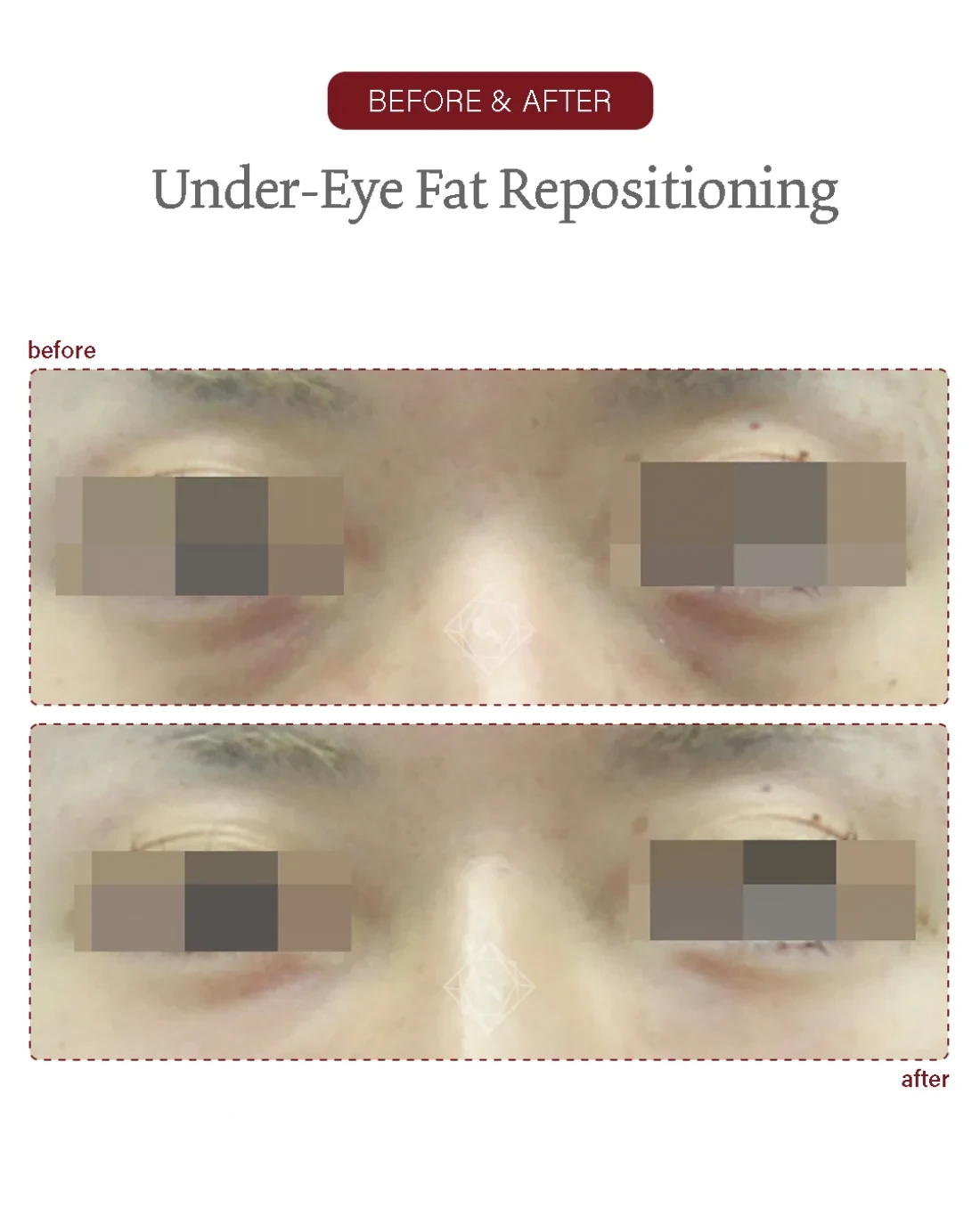
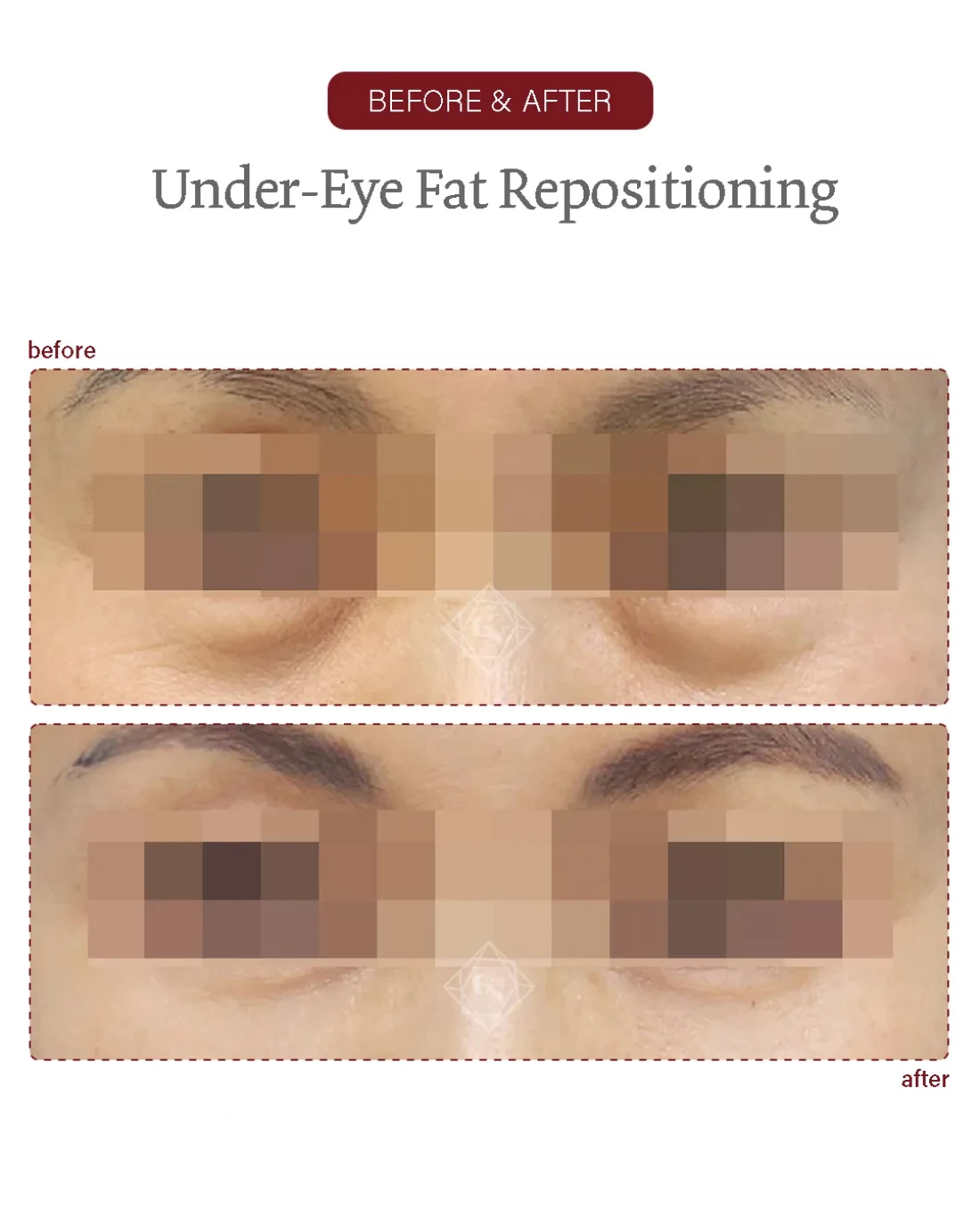
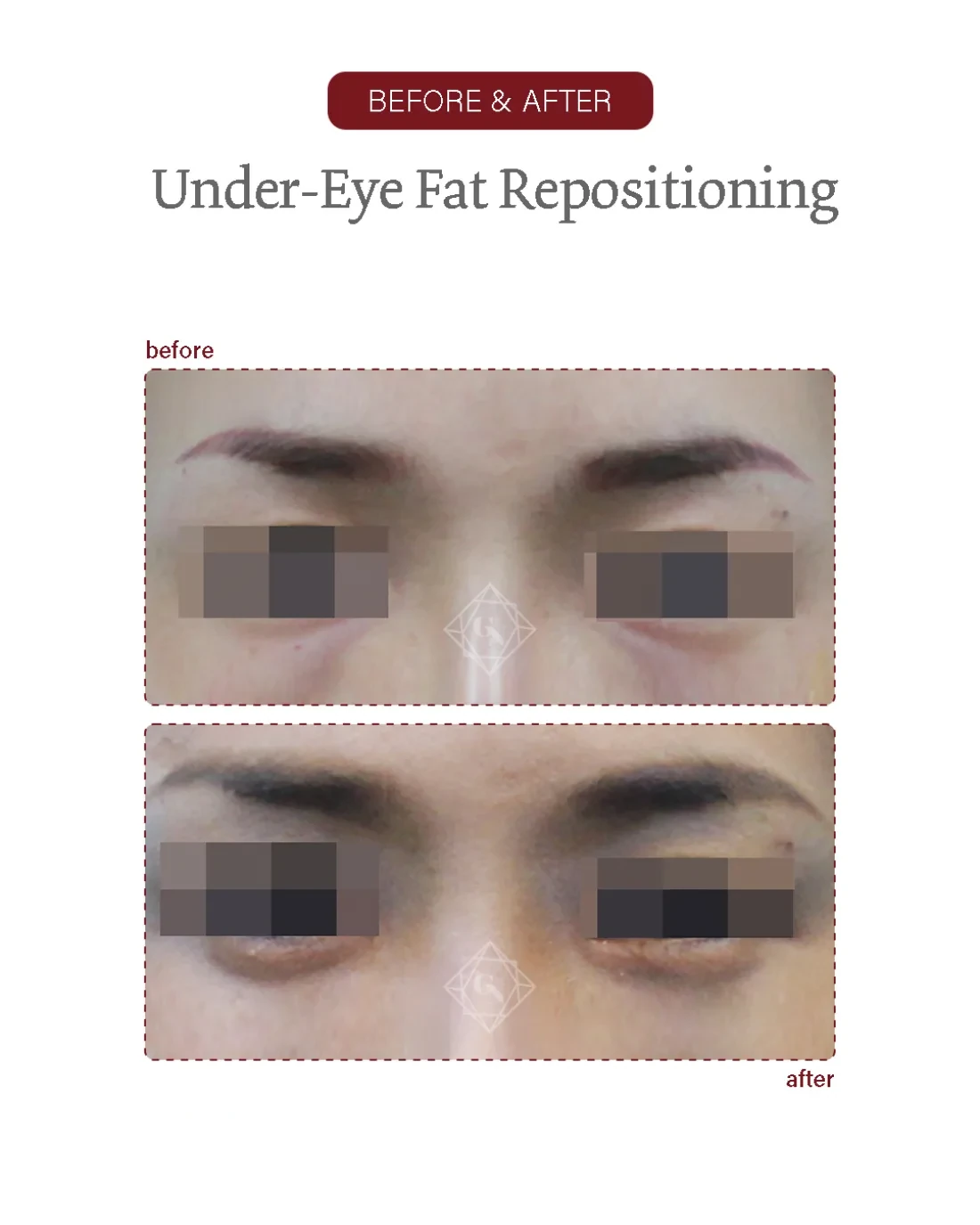
Under-eye fat repositioning before/after of actual Garnet patients (published with consent; each set labelled with date, procedure and clinic). Photographed under comparable conditions. Results, recovery and suitability vary by individual and are not guaranteed.
Prices
Price at Garnet
Under-eye fat repositioning
From₩2,500,000 + VATExcluding VAT (10% VAT is added at payment)Book now
Same price as Korean patients. Prices shown exclude 10% VAT; your written quote, issued after the in-person consultation, shows the full amount payable.
Dr. In-Soo Baek
Director & sole operating surgeon
Korean medical licence no. 77407
Operate on what you came for. Trained at Korea University Medical Center. Every case planned, performed and reviewed by the same hands.
1Operating surgeon
~2Surgeries per day
7Registered techniques
Board-certified plastic surgeon
Plastic surgery training at Korea University College of Medicine & graduate school
Korean Society of Plastic and Reconstructive Surgeons member, in its facial-contour, eye & rhinoplasty groups
Consults, operates and follows up each case himself
Peer-reviewed papers behind the facts on this page. Each describes findings in its own study group — not results at Garnet — and none predicts your own outcome.
Jacono AA. Transcutaneous Blepharoplasty with Volume Preservation. Facial Plastic Surgery Clinics of North America. 2021. doi:10.1016/j.fsc.2021.01.008
Davison SP et al. Transconjunctival Lower Lid Blepharoplasty with and Without Fat Repositioning. Clinics in Plastic Surgery. 2015. doi:10.1016/j.cps.2014.09.001
Stutman RL et al. Tear Trough Deformity: Review of Anatomy and Treatment Options. Aesthetic Surgery Journal. 2012. doi:10.1177/1090820x12442372
FAQ
Common questions
How long does under-eye fat repositioning last?
The correction is durable: the herniated fat is moved over the rim and fixed, so the bulge that was smoothed does not simply re-form, and most people enjoy a smoother under-eye for many years. What continues is natural ageing on top of that result, which over a longer horizon can bring some volume-related hollowing, from a much-improved starting point.
Is under-eye fat repositioning permanent?
The repositioning itself is a lasting structural change; the relocated fat is not a substance the body absorbs, so the corrected contour holds. But no surgery stops ageing. Over the years continued volume loss and lower-lid laxity can appear, so the correction lasts while the surrounding area keeps maturing naturally.
Will the under-eye bags come back?
The specific bulge that was repositioned does not re-herniate into a new bag, because the fat has been moved and fixed over the rim. What can appear over a long horizon is hollowing from age-related volume loss. That is a different mechanism from the original bagginess, and it is usually addressed with a lighter refresh instead of repeat surgery.
Why can hollowing return years later?
The under-eye is very sensitive to volume change. As overall facial and periorbital volume declines with age, the tear trough can lose support and cast a shadow again, the same ageing pattern acting on an older face. It's new age-related change on top of the correction; the repositioned fat is not coming back.
Does under-eye fat repositioning change with age?
Yes, in the sense that the surrounding area keeps ageing. The corrected contour is your improved baseline, but overall volume loss, skin laxity and cheek descent continue over the years. How soon this shows varies widely with age at surgery, tissue quality and lifestyle, and many people never find it bothersome.
What is done if the area changes later?
When age-related hollowing eventually appears, the usual step is a lighter refresh, often restoring a little volume to the tear trough with careful fat grafting. Because the structural bulge was addressed properly the first time, this later top-up tends to be small and straightforward. There's no fixed timetable to follow.
How soon can I judge the true result?
The true corrected contour becomes visible once the early swelling settles over the first weeks, after which it is a reliable guide to what you'll keep, which temporary fillers are not. Your follow-ups at 1, 3 and 6 months are used to confirm the contour has settled as intended.
Does having the same surgeon help the result last?
It helps. When the same board-certified surgeon assesses your fat and hollow, performs the repositioning precisely and follows your healing at one, three and six months, the contour is more likely to settle as intended. It also makes any later refresh easier, because the surgeon already knows your under-eye.
Can I get a longevity estimate for my under-eye before travelling?
Yes. In an online consultation from abroad you can send photos, and the surgeon can give a realistic view of both the likely result and how long it may last for your face, taking your fat, hollow and skin quality into account, before you commit to any travel.
My mom recently had a brow lift and lower blepharoplasty with Dr. Baek, and our experience has been wonderful so far. The Garnet team was incredibly kind and welcoming, with Kelly assisting us as our English consultant—she made everything…
I’m so happy I chose this clinic for my lower blepharoplasty. I was traveling from abroad by myself, so I was a little nervous, but from the beginning I felt comfortable and truly cared for. Everyone was kind, patient, and professional…
Came in for an in-person consult and ended up choosing Garnet and Dr.Baek for my non-incisional DES and tiplasty/alarplasty. I communicated with Kelly (English consultant) from the start till now (3 weeks post-op). She really help me feel…
My under-eyes have been sagging and folding for years... I tried to cover it up with makeup, but it actually got stuck in the wrinkles and made it stand out even more. While going for consultations, I noticed that the bigger the hospital…
Send photos and your question before you travel. An English-speaking coordinator reviews every enquiry and replies with guidance on whether surgery is appropriate, the likely plan and timing.
✓ Reviewed by the clinic coordinator, not a bot
✓ Photo-based pre-assessment before you fly
✓ Foreign-patient scheduling & after-care
✓ One surgeon for consultation, surgery and follow-up
Prefer to chat now? Reach the coordinator directly:








 T S7 months ago



