Under-eye fat repositioning at Garnet is done through the inside of the lower eyelid, a transconjunctival, scarless approach with no skin incision and no stitches to remove. That changes the whole recovery: there is no suture-removal appointment, downtime is minimal, and most of the timeline is simply waiting for swelling and faint bruising to fade.
The short answer
Because the incision is inside the eyelid (transconjunctival, scarless), there are no external stitches and no suture-removal visit. Recovery is largely about swelling settling.
Most visible swelling and any bruising ease over the first 7–14 days; many international patients feel presentable in public within about a week.
There is no fixed downtime number for everyone — healing depends on your tissue, bruising tendency and how closely you follow aftercare.
At Garnet the same board-certified surgeon who operates also reviews your recovery, with structured follow-up at 1, 3 and 6 months.
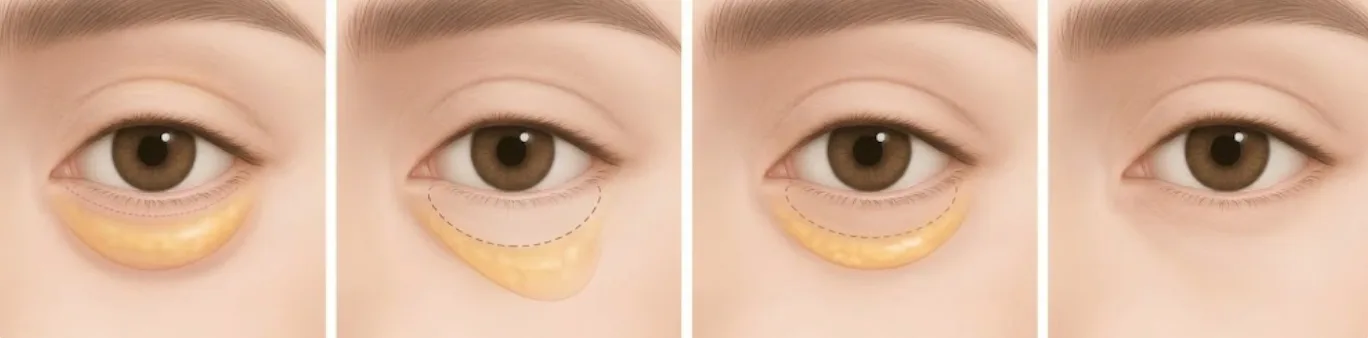
Under-eye fat repositioning treats the puffiness and shadowing caused by herniated fat under the eye. The fat is kept: the surgeon releases it and repositions it over the orbital rim with periosteal fixation, smoothing the transition between the lower lid and the cheek. The key detail for recovery is the route: it is done transconjunctivally, through the inner surface of the lower eyelid, so there is no cut on the skin and no visible scar. You can read the full overview on the under-eye fat repositioning page.
Illustration: working from inside the lower lid, the under-eye fat (yellow) is moved down into the hollow instead of being removed; the dashed line shows where it sat.
Because nothing is closed on the outside, there are usually no external stitches and no suture-removal appointment. The clinic describes the downtime as minimal. That is the main difference from a skin-incision lower eyelid procedure such as lower blepharoplasty, where external sutures are removed after several days. With repositioning, your recovery is mostly swelling and the occasional faint bruise; there is no wound to care for on the skin.
Knowing this in advance helps you plan a realistic trip. The procedure itself is short, you are not managing a visible incision line, and the timeline below is mostly about how quickly your own tissue settles. That varies from person to person, so treat any dates as typical ranges and not as promises.
Day by day
The first week, day by day
Day 0 (surgery day): the procedure is usually done under local anaesthesia with light sedation, so you are comfortable and can leave the same day. The under-eye area feels mildly tight or puffy, and vision may be a little watery or blurred briefly. You will be advised to rest with your head elevated and to apply cold compresses as directed. There is no dressing to manage on the skin.
Days 1–3: this is when swelling tends to peak, and any bruising, if it appears, usually shows now as a faint bluish tinge below the eye. The inner-eyelid entry can feel slightly gritty, and the area may look puffier than you expect on day two before it starts to ease. Cold compresses, head elevation and gentle activity are the priority. Most people are not in significant pain, more aware of tightness.
Days 4–7: swelling begins to come down noticeably and bruising, if present, starts to fade and can be softened with concealer. Many international patients feel comfortable being out in public and meeting people again by around the end of the first week, though a careful eye may still notice mild puffiness. Reading and screen time are usually fine in moderation.
Weeks 2–6
Weeks two to six: the finer settling
By the start of week two, the obvious swelling has largely resolved for most people, and any bruising has typically cleared. What remains is subtle — a little residual puffiness that tends to be most noticeable in the morning and after salty meals, and that continues to refine quietly over the following weeks. This is normal and not a sign that anything is wrong.
Through weeks three to six, the repositioned fat and the tissue around it relax into their new contour. The under-eye area looks progressively smoother and the transition to the cheek softens. You can build back toward your normal routine during this period — light exercise can usually resume within a couple of weeks and more strenuous activity a little later, but always confirm timing with your surgeon, as it depends on your individual healing.
Final settling happens gradually over these weeks. For more on when the look fully matures, see when will I see results, and for a closer look at how swelling and bruising behave, see swelling and bruising.
Aftercare
Aftercare that genuinely speeds things along
The simple measures matter most. For the first few days, keep your head elevated (including sleeping propped up on an extra pillow) and apply cold compresses in the pattern your surgeon recommends to limit swelling and bruising. Avoid rubbing or pressing the eye, and keep the area clean and dry as instructed.
Limit anything that drives blood to the head or raises blood pressure in the early days: vigorous exercise, heavy lifting, bending over, hot saunas and alcohol all tend to prolong swelling. Reduce salt, stay hydrated, and be gentle with eye make-up until your surgeon clears it. If you wear contact lenses, ask when it is safe to resume; glasses are usually the easier choice early on.
Because under-eye fat repositioning is a comfortable, low-pain procedure for most people, aftercare is more about patience than pain management. Following these basics closely is the single biggest thing within your control to keep the timeline on the shorter end.
Normal vs not
What is normal, and what to flag
Normal and expected: puffiness that peaks in the first few days, faint bruising that fades within one to two weeks, mild tightness or a gritty sensation on the inner eyelid, watery eyes or slightly blurred vision in the first day or two, and uneven settling between the two eyes early on, because swelling rarely resolves perfectly symmetrically at first.
Worth contacting your surgeon promptly: sharp or increasing pain where discomfort should be easing, swelling that suddenly worsens after it had improved, significant or rapidly spreading bruising, persistent or worsening vision changes, fever, or any sign of infection. These are uncommon, but they are exactly the things your operating surgeon wants to hear about early.
This is where continuity of care matters. Knowing the same surgeon who performed your operation is the one assessing your recovery removes a lot of the anxiety of guessing whether something is normal. For international patients, having that line open after you fly home is reassuring.
At Garnet
How follow-up works at Garnet
Garnet is a single-surgeon clinic in Apgujeong, Seoul. Dr. In-Soo Baek is a board-certified plastic surgeon (Korean medical licence no. 77407) and the only operating doctor. He consults, performs the procedure himself and reviews your recovery, so the person tracking your healing is the person who did the surgery. Garnet is registered with Korea's foreign-patient programme.
Recovery is supported by structured follow-up at 1, 3 and 6 months, and for international patients the clinic can continue to review your progress by messenger after you return home, with a dedicated coordinator helping coordinate timing. If you are mapping out how long to be in Korea, the how long to stay guide and the when can I fly guide are useful next reads.
Because the timeline depends on your own eyes, the most accurate plan comes from an assessment of your own lower eyelids. You can start with a no-obligation online consultation and send photos before you book any travel.
Real Results
Before & After
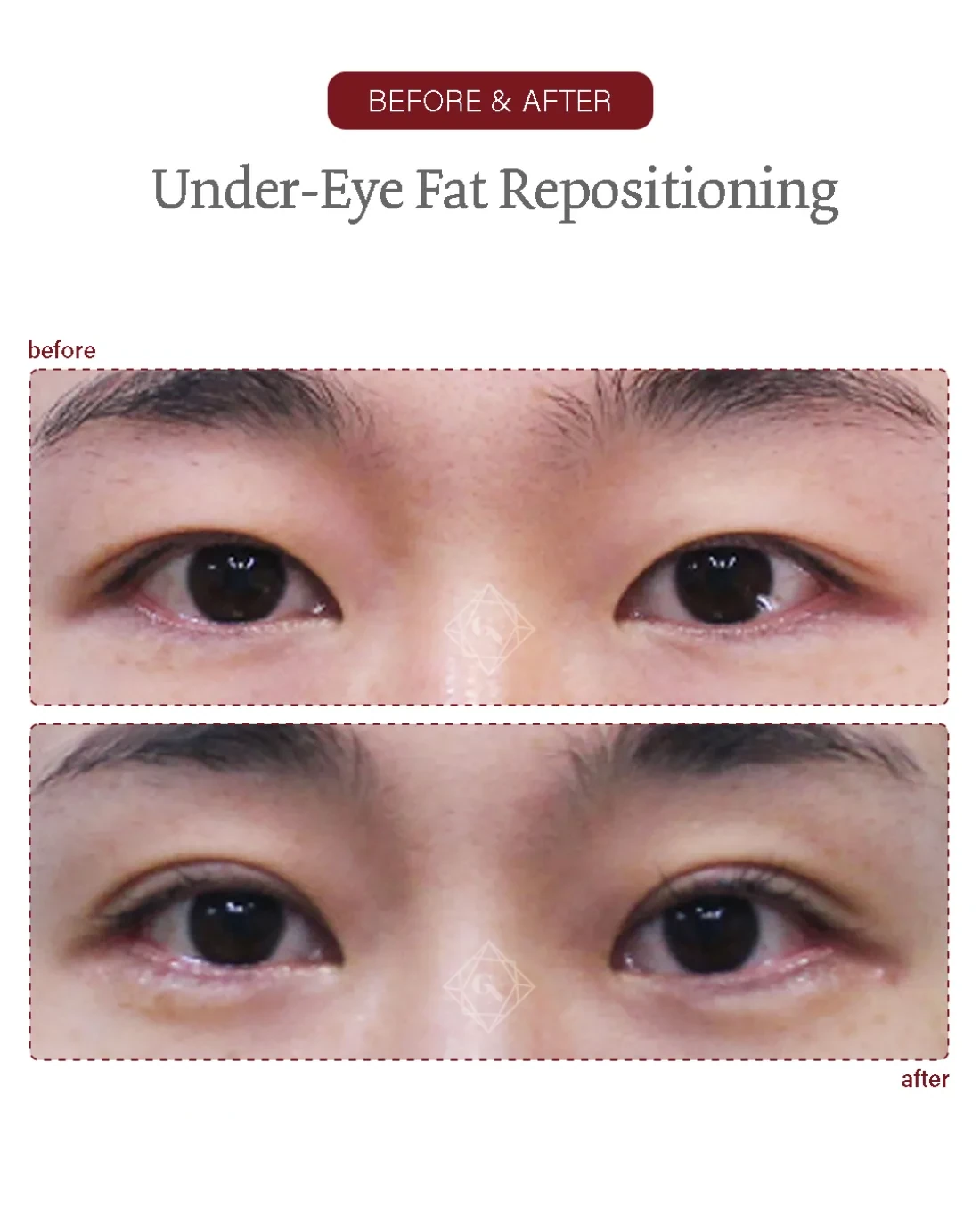
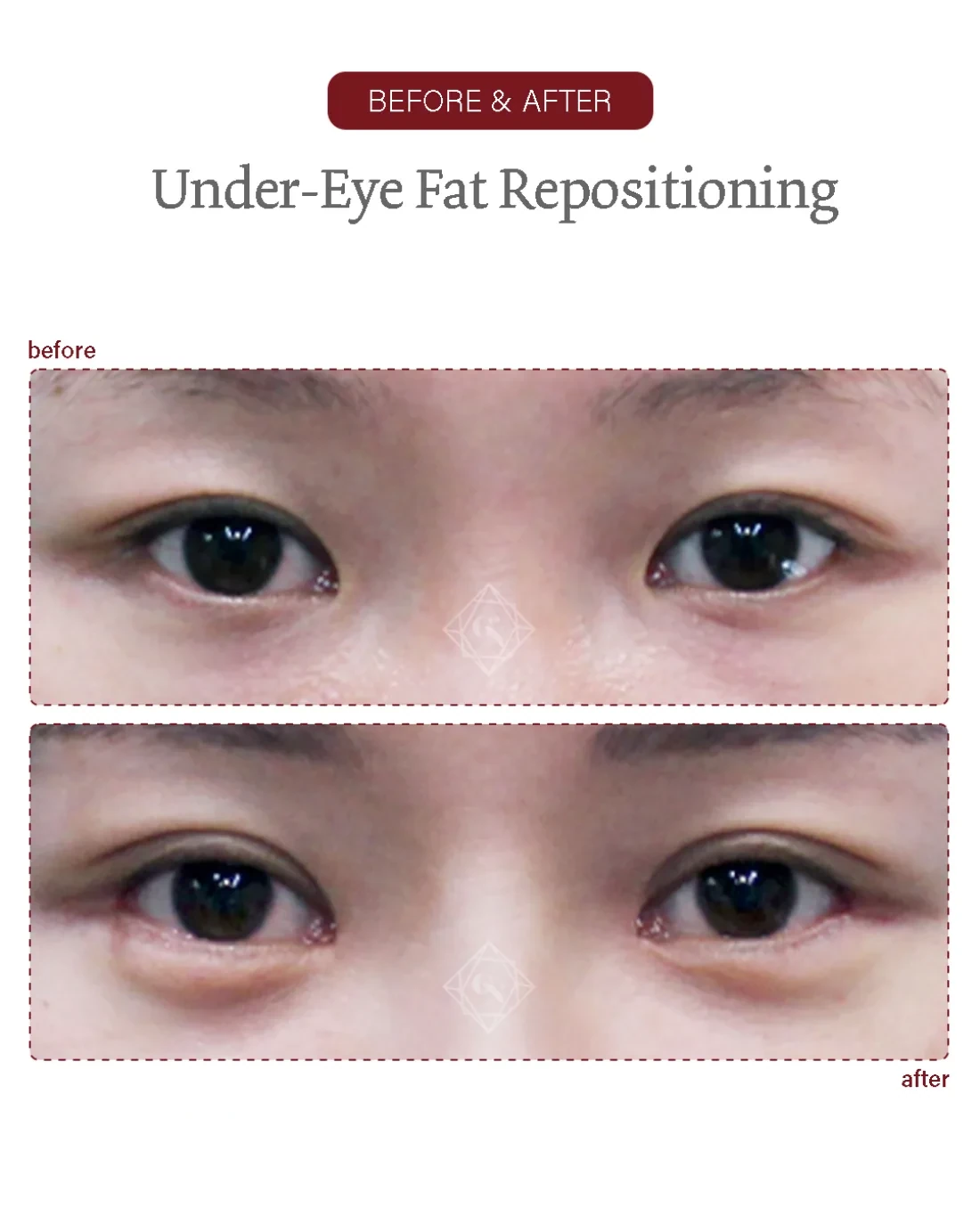
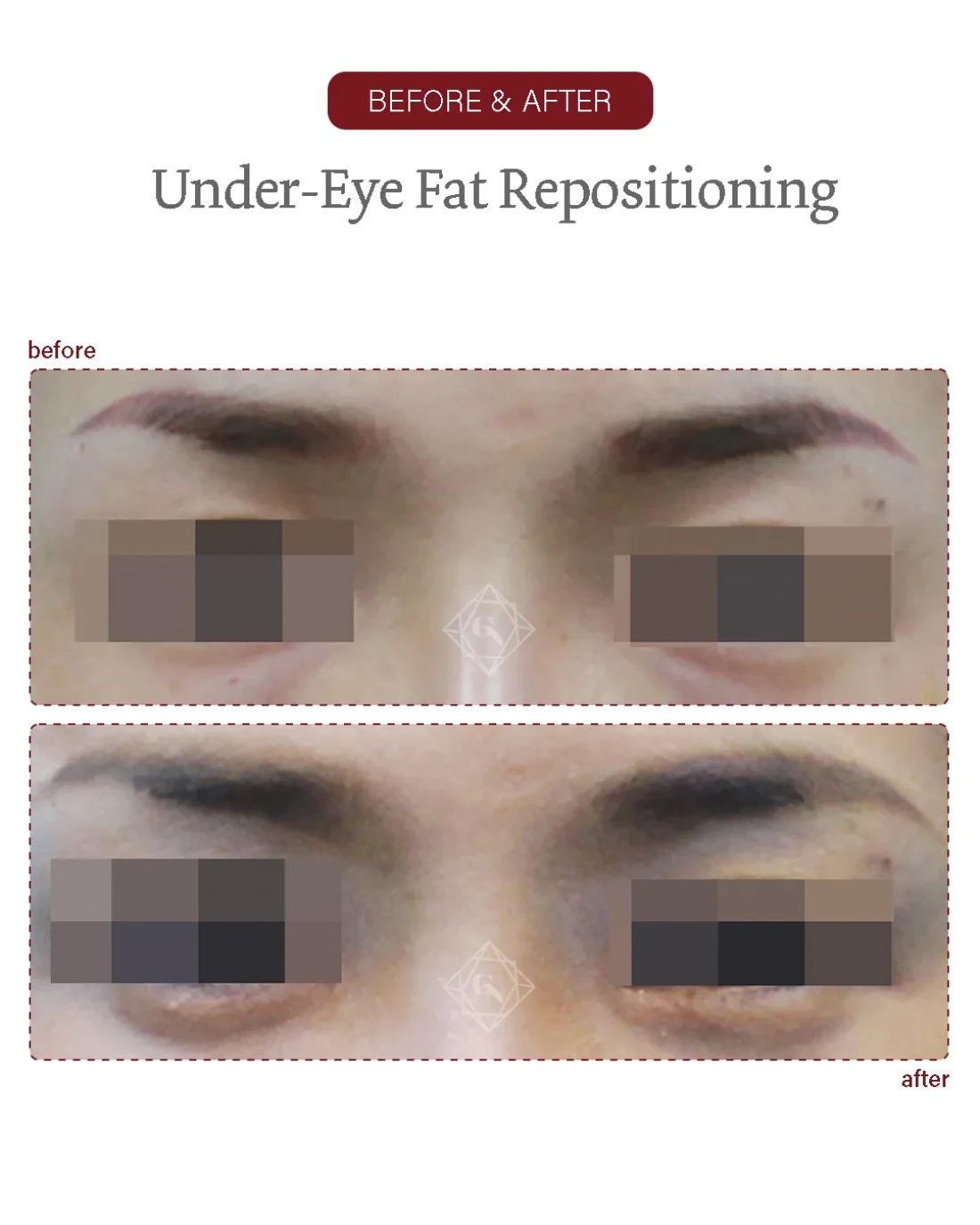
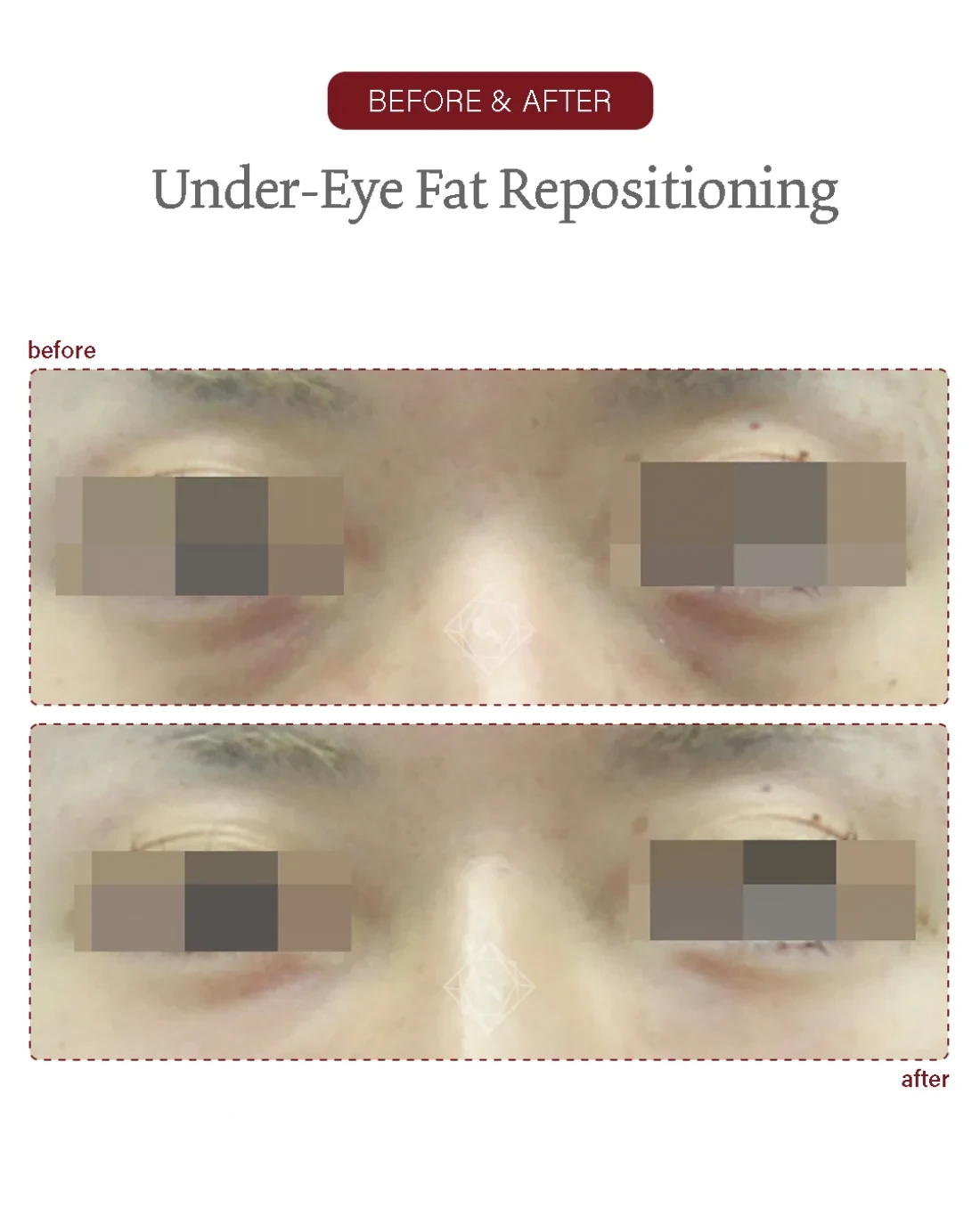
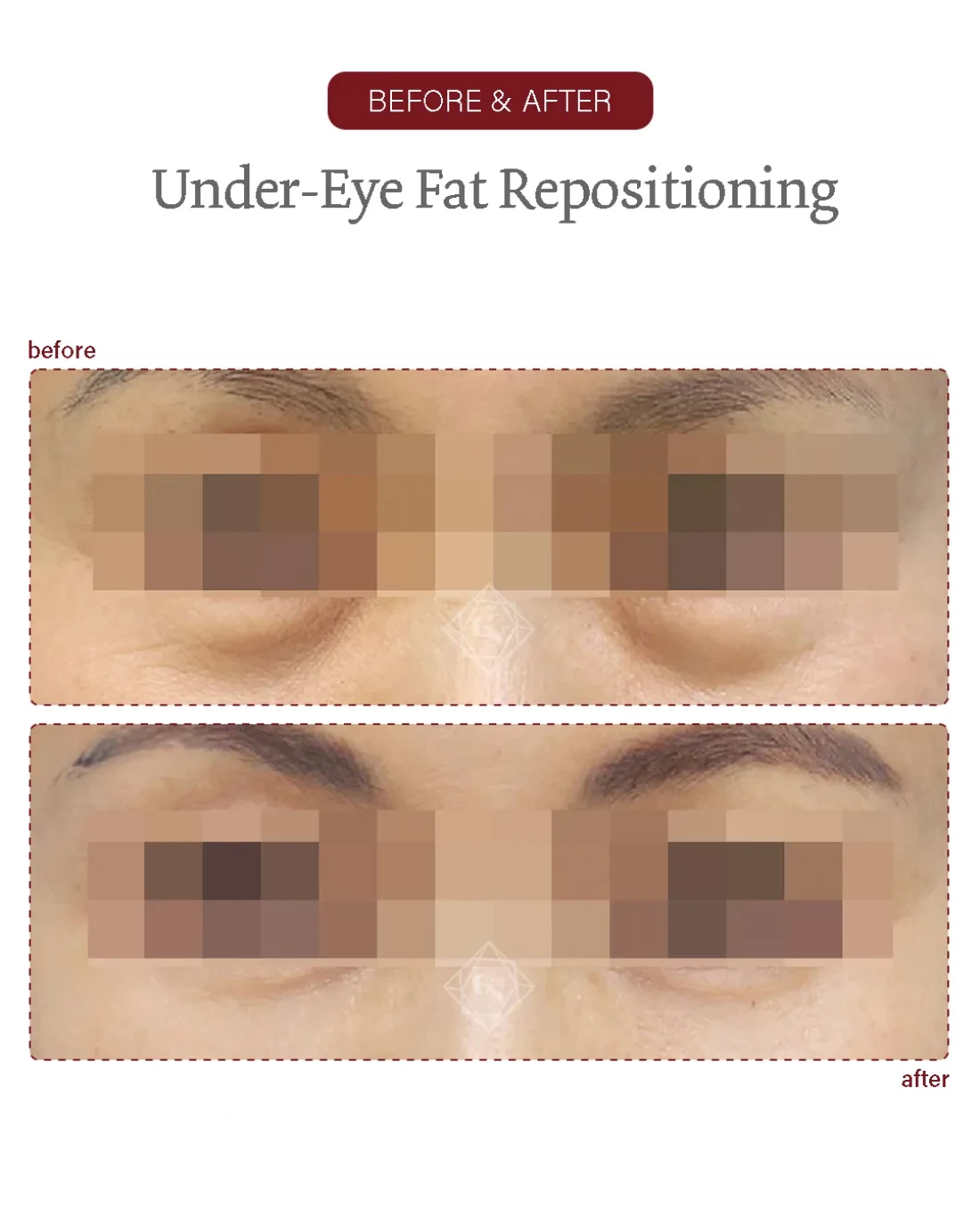
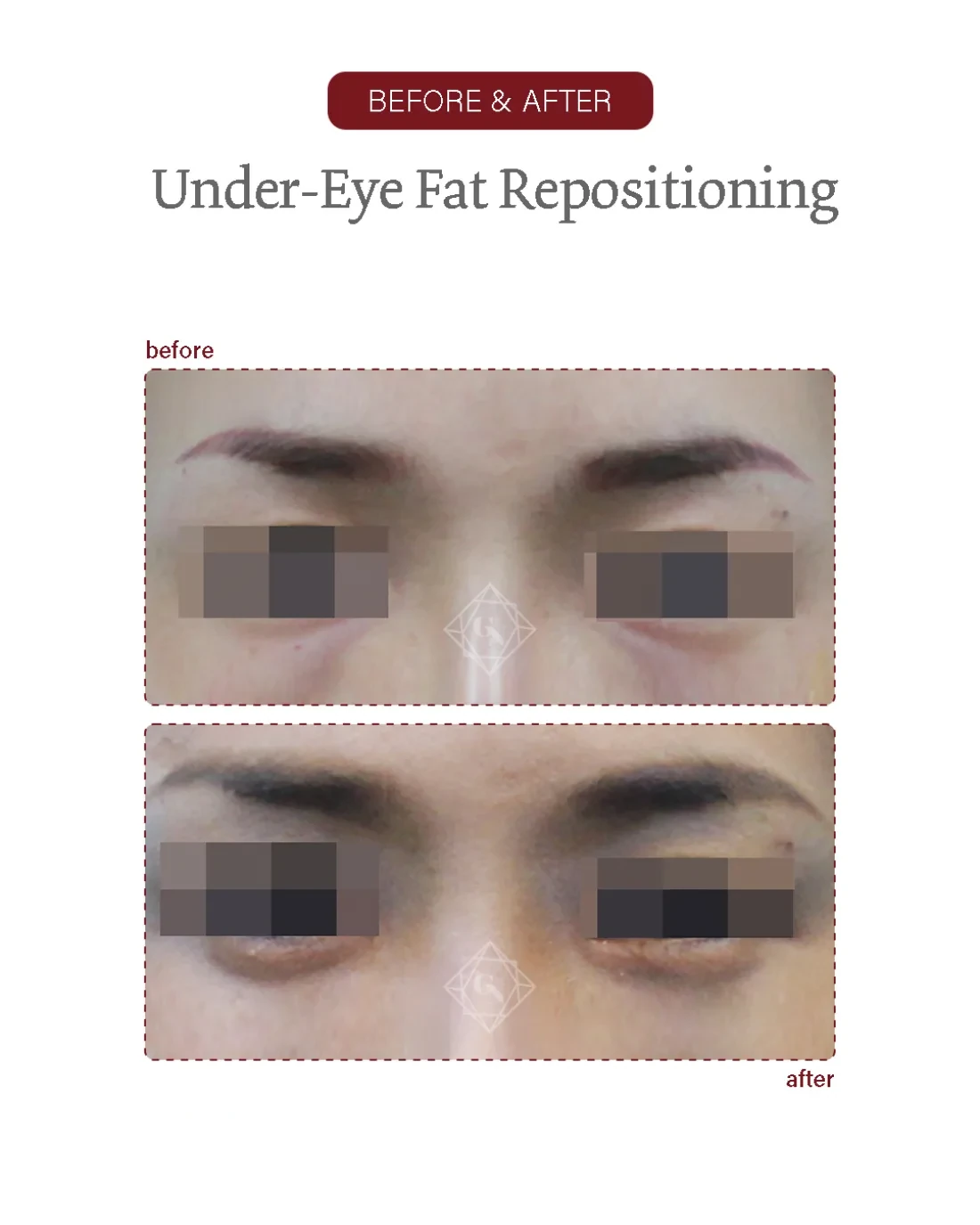
Under-eye fat repositioning before/after of actual Garnet patients (published with consent; each set labelled with date, procedure and clinic). Photographed under comparable conditions. Results, recovery and suitability vary by individual and are not guaranteed.
Prices
Price at Garnet
Under-eye fat repositioning
From₩2,500,000 + VATExcluding VAT (10% VAT is added at payment)Book now
Same price as Korean patients. Prices shown exclude 10% VAT; your written quote, issued after the in-person consultation, shows the full amount payable.
Dr. In-Soo Baek
Director & sole operating surgeon
Korean medical licence no. 77407
Operate on what you came for. Trained at Korea University Medical Center. Every case planned, performed and reviewed by the same hands.
1Operating surgeon
~2Surgeries per day
7Registered techniques
Board-certified plastic surgeon
Plastic surgery training at Korea University College of Medicine & graduate school
Korean Society of Plastic and Reconstructive Surgeons member, in its facial-contour, eye & rhinoplasty groups
Consults, operates and follows up each case himself
Peer-reviewed papers behind the facts on this page. Each describes findings in its own study group — not results at Garnet — and none predicts your own outcome.
Warren RJ. Blending the Lower Lid Cheek Junction. Clinics in Plastic Surgery. 2025. doi:10.1016/j.cps.2024.07.004
Jacono AA. Transcutaneous Blepharoplasty with Volume Preservation. Facial Plastic Surgery Clinics of North America. 2021. doi:10.1016/j.fsc.2021.01.008
Davison SP et al. Transconjunctival Lower Lid Blepharoplasty with and Without Fat Repositioning. Clinics in Plastic Surgery. 2015. doi:10.1016/j.cps.2014.09.001
FAQ
Common questions
How long does under-eye fat repositioning recovery take?
Most visible swelling and any bruising settle over the first 7–14 days, and many international patients feel presentable within about a week. Because the approach is transconjunctival and scarless, there are no external stitches to remove. Finer settling continues quietly over the following weeks, but there is no single recovery number that fits everyone.
Are there stitches to remove after under-eye fat repositioning?
Usually not. The procedure is done through the inside of the lower eyelid (transconjunctival), so there is no skin incision and no external sutures. The clinic describes the downtime as minimal and there is typically no suture-removal appointment. Recovery is mostly about waiting for swelling to ease, with no skin wound to look after.
When can I return to work after under-eye fat repositioning?
Many people with desk-based work feel ready to return within roughly a week, once the most visible swelling has come down and any bruising can be covered. If your work is physically demanding, you may want a little longer. Your surgeon can give you a realistic estimate for your case at your consultation.
How bad is the bruising after under-eye fat repositioning?
Bruising is not guaranteed, and when it does appear it is usually a faint bluish tinge below the eye that fades within one to two weeks and can be softened with concealer. Cold compresses, head elevation and avoiding alcohol and strenuous activity early on all help reduce and shorten it.
When can I fly home after under-eye fat repositioning?
Because downtime is minimal, flying is often possible within a short window, but the exact timing should be confirmed by your surgeon based on your recovery. See our when can I fly guide for general principles, and plan your trip length with the how long to stay guide.
What aftercare follows under-eye fat repositioning?
Keep your head elevated, apply cold compresses as directed for the first few days, avoid rubbing the eye, and limit strenuous activity, heavy lifting, saunas, alcohol and very salty food early on. Be gentle with eye make-up and contact lenses until your surgeon clears them. Following these basics closely keeps the timeline on the shorter end.
Is the recovery painful?
Most people describe more tightness and puffiness than pain, and any discomfort is usually mild and short-lived. For a fuller explanation of anaesthesia and comfort, see our guide on pain and anaesthesia.
Why do my eyes look uneven during recovery?
Early asymmetry is common because swelling rarely resolves at exactly the same rate on both sides. It usually evens out as the puffiness settles over the following weeks. If one side stays markedly different after the swelling has largely gone, raise it with your surgeon at a follow-up.
How long until the final result settles?
The obvious swelling clears within a week or two, but the repositioned fat and surrounding tissue keep refining for several weeks. For a detailed look at how the look matures, see our guide on when will I see results.
Will the same surgeon check my recovery at Garnet?
Yes. Garnet is a single-surgeon clinic, so the board-certified surgeon who performs your procedure also reviews your recovery, with structured follow-up at 1, 3 and 6 months. For international patients, the clinic can continue to review your progress by messenger after you return home.
My mom recently had a brow lift and lower blepharoplasty with Dr. Baek, and our experience has been wonderful so far. The Garnet team was incredibly kind and welcoming, with Kelly assisting us as our English consultant—she made everything…
I’m so happy I chose this clinic for my lower blepharoplasty. I was traveling from abroad by myself, so I was a little nervous, but from the beginning I felt comfortable and truly cared for. Everyone was kind, patient, and professional…
Came in for an in-person consult and ended up choosing Garnet and Dr.Baek for my non-incisional DES and tiplasty/alarplasty. I communicated with Kelly (English consultant) from the start till now (3 weeks post-op). She really help me feel…
My under-eyes have been sagging and folding for years... I tried to cover it up with makeup, but it actually got stuck in the wrinkles and made it stand out even more. While going for consultations, I noticed that the bigger the hospital…
Send photos and your question before you travel. An English-speaking coordinator reviews every enquiry and replies with guidance on whether surgery is appropriate, the likely plan and timing.
✓ Reviewed by the clinic coordinator, not a bot
✓ Photo-based pre-assessment before you fly
✓ Foreign-patient scheduling & after-care
✓ One surgeon for consultation, surgery and follow-up
Prefer to chat now? Reach the coordinator directly:









 T S7 months ago



