Under-eye fat repositioning gives a quick first impression but a gradual final result. The early days are dominated by swelling that hides the effect; over the following weeks the under-eye area smooths out, and the truly final, settled contour appears over a few months.
The short answer
An early hint of the result is visible once the worst swelling eases in the first 1 to 2 weeks, though it is still an early look.
Most of the visible improvement settles over the following several weeks as residual swelling resolves.
The final, settled under-eye contour generally takes a few months as deeper swelling fully clears and tissues relax.
Because fat is repositioned instead of simply removed, the result is a smoother lid-cheek transition with no hollow.
The first week or two after under-eye fat repositioning: mostly swelling
The first days after under-eye fat repositioning are not the time to judge the result. Early swelling and possible bruising under the eyes are at their most noticeable in roughly the first several days and can briefly make the area look fuller or different from your goal. This is expected and temporary; it is the body healing.
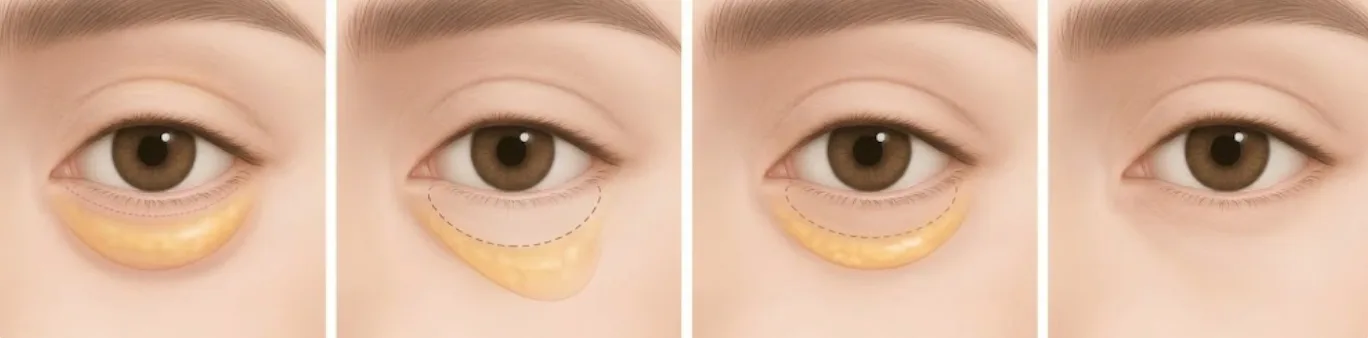
Illustration: working from inside the lower lid, the under-eye fat (yellow) is moved down into the hollow instead of being removed; the dashed line shows where it sat.
As that first wave of swelling eases over the first 1 to 2 weeks, you usually get an early hint of the change: the under-eye bags look flatter and the area looks smoother than before. Take this as encouraging but not final, because a meaningful amount of subtler swelling is still present and will continue to resolve. Many international patients are comfortable being out and about by around this point.
For a day-by-day view of this early phase, the recovery timeline walks through it, and the swelling and bruising guide explains what is normal at each stage.
Settling in
Over the following weeks: the result settles in
The weeks after the first fortnight are where most of the visible improvement consolidates. Residual swelling that you might not even notice as swelling (a faint fullness or slight unevenness) gradually clears, and the under-eye area looks progressively smoother and more rested. It is common for the two sides to settle at slightly different rates for a while; minor asymmetry during healing is normal and usually evens out.
By around the one-month mark, many patients feel the result looks good and natural in everyday situations, even though it is not yet completely final. This is also when the structured follow-up matters: a review with your surgeon confirms that healing is on track and the contour is settling as planned. Patience through this window is worthwhile, because the area continues to refine.
Because the procedure repositions herniated fat over the orbital rim with periosteal fixation, without removing it, what settles in is a smoother lid-cheek transition. The aim is for the under-eye to look naturally rested.
Final result
When the final result appears
The final, fully settled result of under-eye fat repositioning generally takes a few months. By this stage the last of the deeper swelling has cleared and the tissues have relaxed into their healed position, so what you see is a stable picture of the outcome. This is the point at which a true before-and-after comparison is fair.
A few months is a general guide. Individual healing varies with age, skin, how much fat was repositioned and your own biology, so some people settle a little sooner and others take a little longer. Your surgeon's reviews at 1, 3 and 6 months are designed precisely to track this and to confirm when the result can be considered final.
If you are weighing this procedure against skin-cutting lower-eyelid surgery and how their results and recoveries compare, our lower blepharoplasty versus fat repositioning guide sets the two side by side, and the procedure overview gives the full picture.
What changes
What under-eye fat repositioning changes, and what it will not do
It helps to know what the result is and is not. Under-eye fat repositioning is aimed at the bulging fat bags and the shadowed, tired look they create, by smoothing the transition between the lower lid and the cheek. As it settles, the under-eye typically looks flatter, less puffy and more rested. Because the fat is moved and kept, the correction tends to look natural without hollowing.
It is not a treatment for everything around the eyes. Fine skin lines, dark pigmentation that is more about skin colour than shadow, or significant loose skin are separate concerns that this procedure is not designed to address, and your surgeon will say plainly at consultation what it will and will not change for you. Setting that expectation early is part of being happy with the final result.
If your concern is partly skin as well as fat, that is exactly the kind of distinction a careful assessment is for. You can explore whether you are a good fit in the who is it for guide.
Judging progress
How to judge your under-eye progress fairly
The most common mistake is judging the result too early, in front of a mirror, on a day when the eyes are still swollen or you slept poorly. Early swelling fluctuates (it can look worse in the morning or after salt, screens or a long flight), so day-to-day comparisons are misleading. A fairer approach is to take consistent photos in the same light at intervals and compare them week to week.
Give the result the time it needs before drawing conclusions, and bring any concerns to your scheduled follow-ups. Most things that look slightly uneven or imperfect in the early weeks are healing in progress. Genuine concerns are worth raising with your surgeon, who can compare your healing against the expected course.
If something looks markedly different from what you expected once you are well past the early phase, that is a conversation for your follow-up. Review at 1, 3 and 6 months, with remote check-ins for those who have flown home, exists for exactly this.
At Garnet
How follow-up works at Garnet
Garnet is a single-surgeon clinic in Apgujeong, Seoul. Dr. In-Soo Baek is a board-certified plastic surgeon (Korean medical licence no. 77407) and the only operating doctor. He consults, performs the surgery himself and personally reviews each follow-up. That continuity matters for results, because the surgeon judging your healing at 3 months is the same one who planned and performed the operation, and knows exactly what to expect.
The clinic runs structured reviews at 1, 3 and 6 months, which line up with how the result actually settles: early, intermediate and final. International patients can stay in touch remotely after returning home, sending photos so the surgeon can confirm the result is settling as planned. Throughout, you are given a realistic picture of how your under-eyes are settling.
If you are still deciding, start with a no-obligation online consultation: send photos for a pre-assessment of what the procedure can realistically achieve for your under-eyes, and the kind of timeline to expect, before you commit to anything.
Real Results
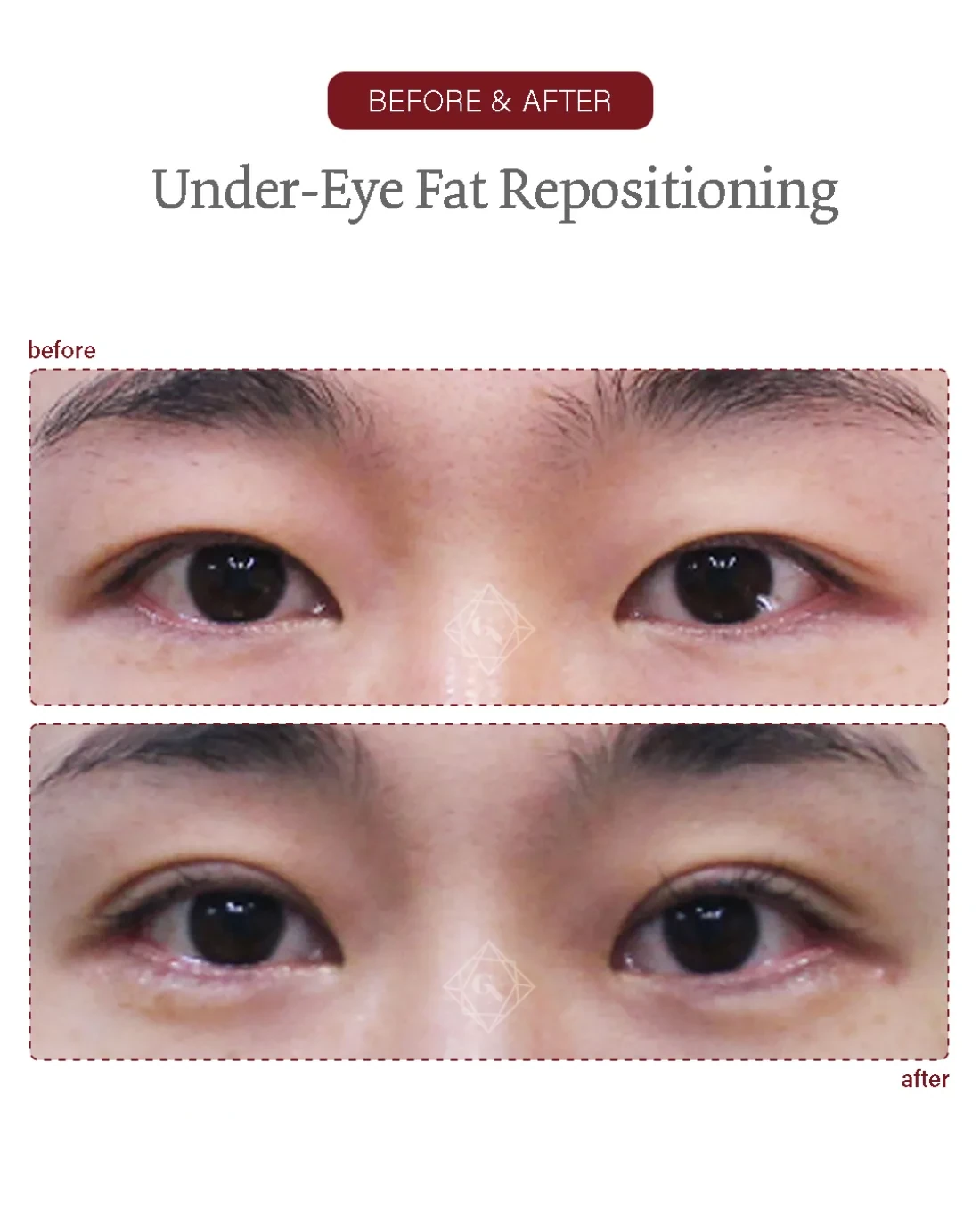
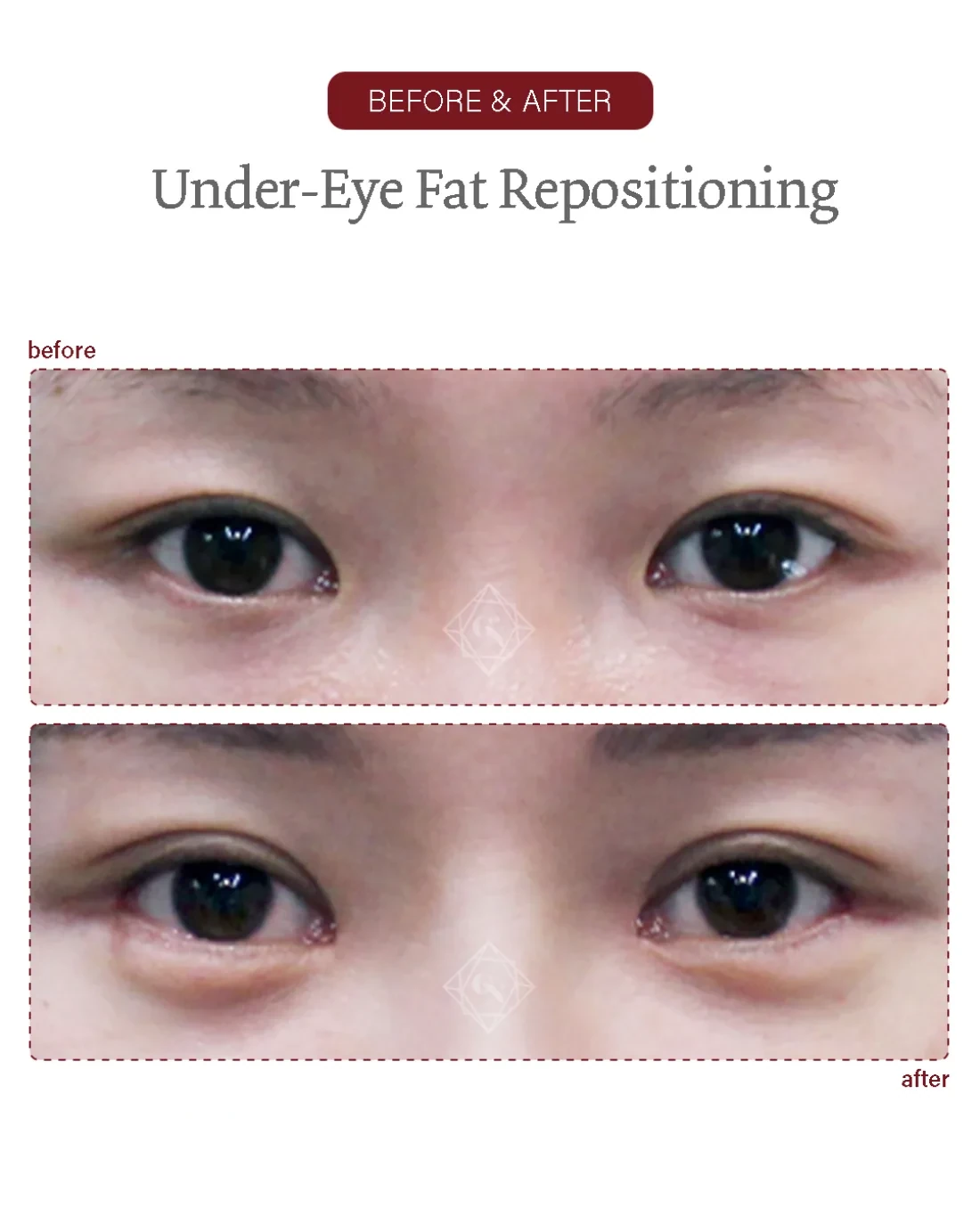
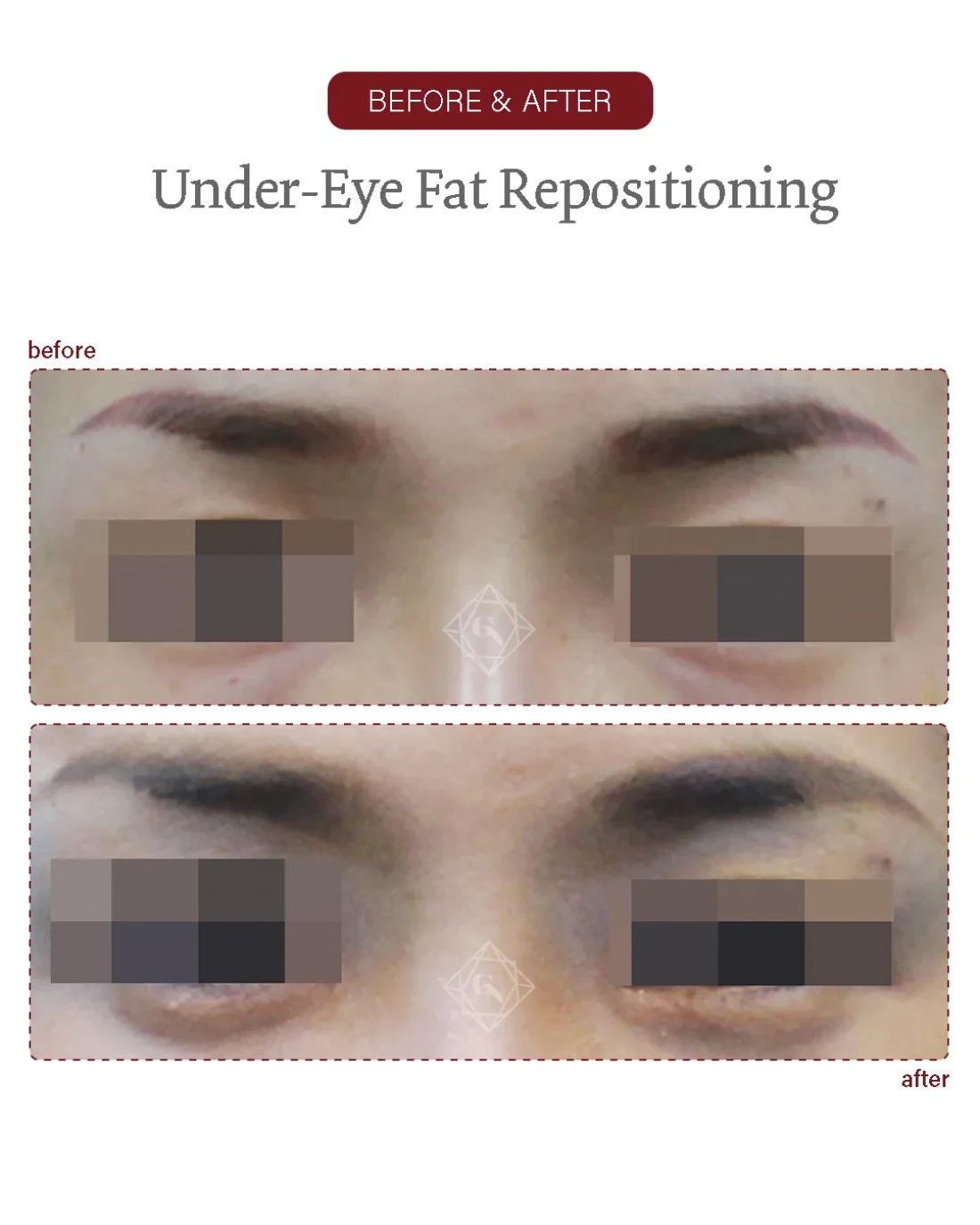
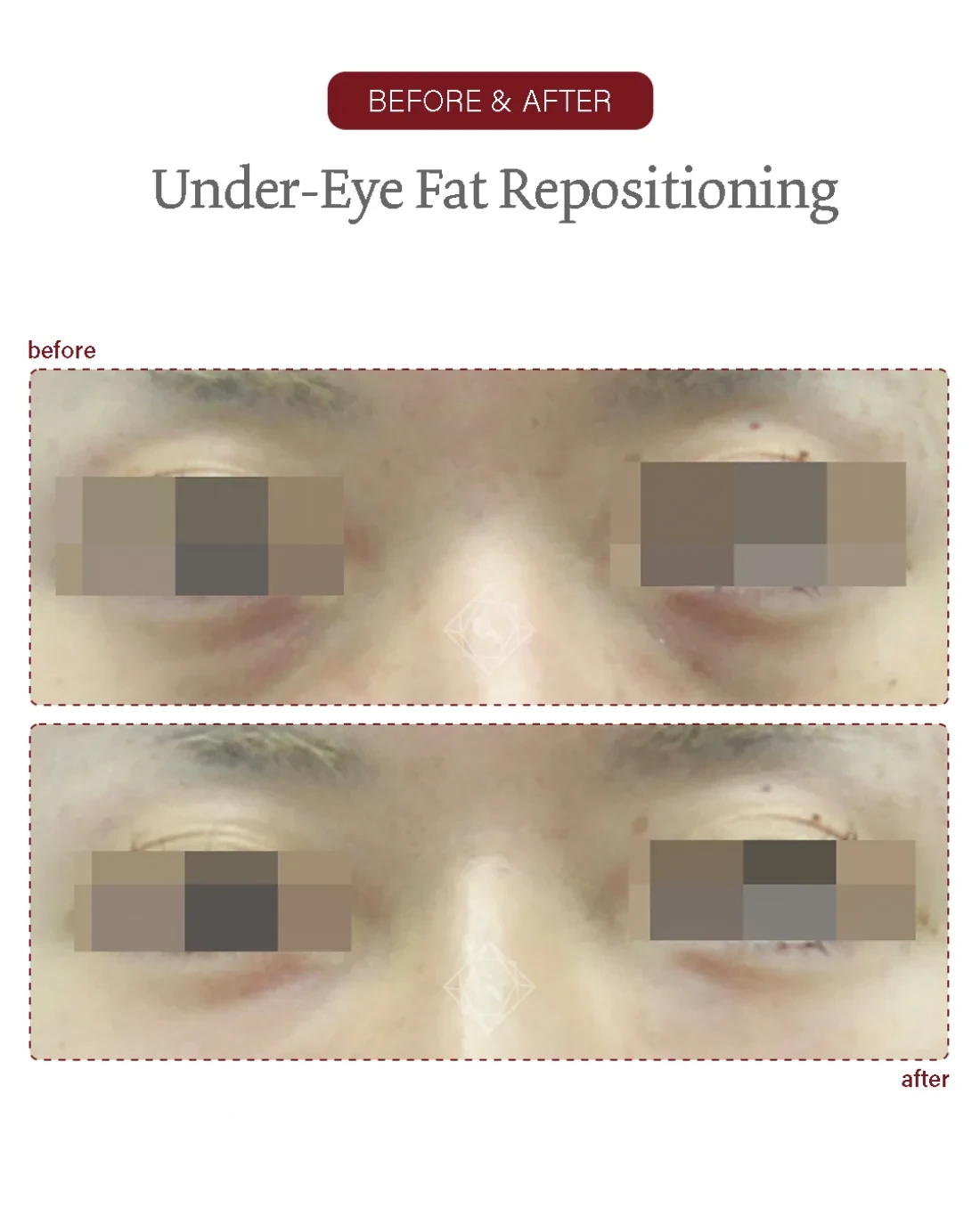
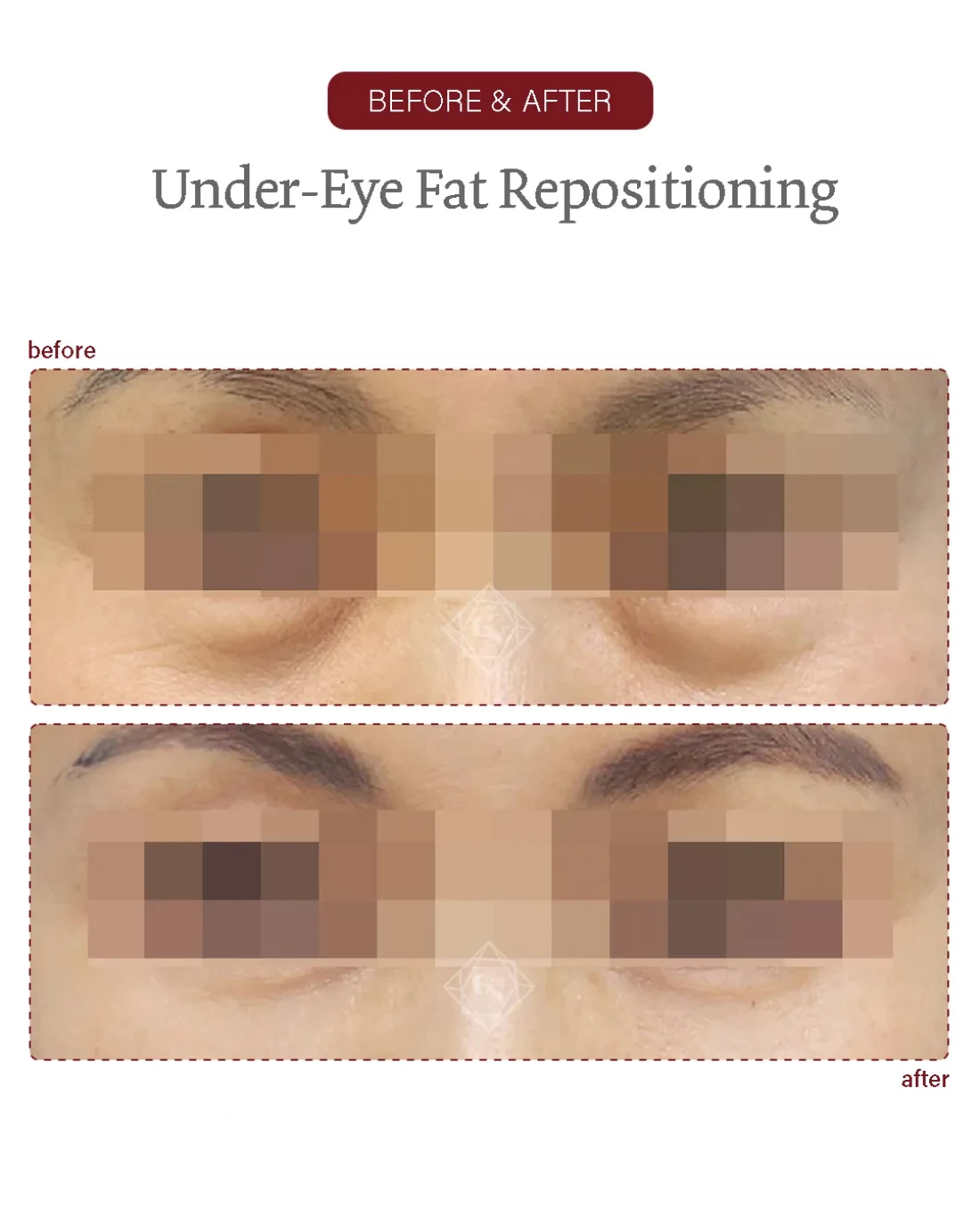
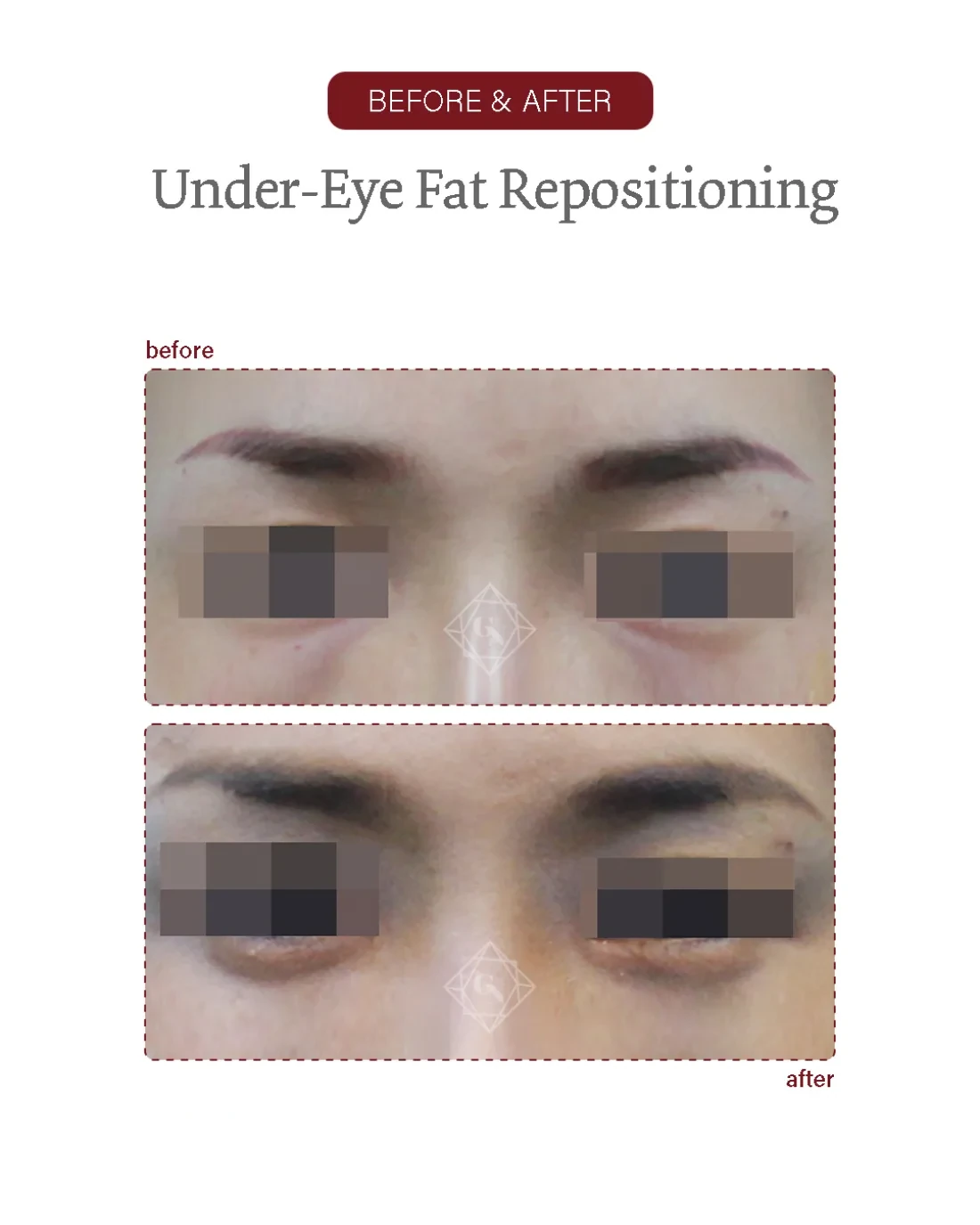
Before & After
Under-eye fat repositioning before/after of actual Garnet patients (published with consent; each set labelled with date, procedure and clinic). Photographed under comparable conditions. Results, recovery and suitability vary by individual and are not guaranteed.
Prices
Price at Garnet
Under-eye fat repositioning
From₩2,500,000 + VATExcluding VAT (10% VAT is added at payment)Book now
Same price as Korean patients. Prices shown exclude 10% VAT; your written quote, issued after the in-person consultation, shows the full amount payable.
Dr. In-Soo Baek
Director & sole operating surgeon
Korean medical licence no. 77407
Operate on what you came for. Trained at Korea University Medical Center. Every case planned, performed and reviewed by the same hands.
1Operating surgeon
~2Surgeries per day
7Registered techniques
Board-certified plastic surgeon
Plastic surgery training at Korea University College of Medicine & graduate school
Korean Society of Plastic and Reconstructive Surgeons member, in its facial-contour, eye & rhinoplasty groups
Consults, operates and follows up each case himself
Peer-reviewed papers behind the facts on this page. Each describes findings in its own study group — not results at Garnet — and none predicts your own outcome.
Stutman RL et al. Tear Trough Deformity: Review of Anatomy and Treatment Options. Aesthetic Surgery Journal. 2012. doi:10.1177/1090820x12442372
Nassif PS. Lower Blepharoplasty: Transconjunctival Fat Repositioning. Facial Plastic Surgery Clinics of North America. 2005. doi:10.1016/j.fsc.2005.06.006
Palmer FR et al. Transconjunctival Blepharoplasty: Complications and Their Avoidance: A Retrospective Analysis and Review of the Literature. Archives of Otolaryngology - Head and Neck Surgery. 1993. doi:10.1001/archotol.1993.01880210083011
FAQ
Common questions
When will I see the final results of under-eye fat repositioning?
An early hint appears in the first 1 to 2 weeks as the worst swelling eases, most of the improvement settles over the following several weeks, and the fully final, settled contour generally takes a few months as deeper swelling clears and tissues relax. Individual healing varies, so this is a general guide only.
How does the result change over time?
It moves from swollen and unclear in the first days, to an encouraging early look by one to two weeks, to a result that looks good in everyday life around a month, to a stable final contour over a few months. The under-eye progressively smooths as residual swelling resolves.
When is the swelling gone after under-eye fat repositioning?
The most visible swelling and any bruising ease over the first one to two weeks. Subtler residual swelling continues to clear over the following weeks, and the last of the deeper swelling resolves over a few months, which is when the result can be judged as final.
Why does the final result take a few months?
Some swelling after eyelid surgery is deep and not obvious to the eye, and it clears slowly. Tissues also need time to relax into their healed position. Until that happens the contour is still settling, so a few months gives a true picture of the settled result.
Why does it look fuller or uneven in the early days?
Early swelling and bruising are at their peak in the first several days and can briefly make the area look fuller or slightly uneven, and the two sides often settle at different rates for a while. This is normal healing, and it typically evens out.
Will the result look hollow under my eyes?
The aim is the opposite. Because the herniated fat is repositioned over the orbital rim and not simply removed, the result is a smoother lid-cheek transition that looks naturally rested, with no emptied-out hollow.
What will under-eye fat repositioning not improve?
It targets the bulging fat bags and the tired shadow they create. It is not designed for fine skin lines, pigment-based dark circles or significant loose skin, which are separate concerns. The consultation will tell you what it will and will not change for you.
How should I judge my own progress?
Avoid judging on a single swollen morning in the mirror. Take consistent photos in the same light and compare across weeks, and raise any concerns at your scheduled follow-ups. Most early imperfections are healing in progress.
When should I be concerned about the result?
If something looks markedly different from what you expected once you are well past the early swelling phase, raise it at your follow-up. Your surgeon can compare your healing against the expected course at the 1, 3 and 6 month reviews, including remotely if you have flown home.
Can I ask about realistic results before I travel to Korea?
Yes. You can send photos for an online pre-assessment of what the procedure can realistically achieve for your under-eyes and the timeline to expect, before you commit to travel or surgery.
My mom recently had a brow lift and lower blepharoplasty with Dr. Baek, and our experience has been wonderful so far. The Garnet team was incredibly kind and welcoming, with Kelly assisting us as our English consultant—she made everything…
I’m so happy I chose this clinic for my lower blepharoplasty. I was traveling from abroad by myself, so I was a little nervous, but from the beginning I felt comfortable and truly cared for. Everyone was kind, patient, and professional…
Came in for an in-person consult and ended up choosing Garnet and Dr.Baek for my non-incisional DES and tiplasty/alarplasty. I communicated with Kelly (English consultant) from the start till now (3 weeks post-op). She really help me feel…
My under-eyes have been sagging and folding for years... I tried to cover it up with makeup, but it actually got stuck in the wrinkles and made it stand out even more. While going for consultations, I noticed that the bigger the hospital…
Send photos and your question before you travel. An English-speaking coordinator reviews every enquiry and replies with guidance on whether surgery is appropriate, the likely plan and timing.
✓ Reviewed by the clinic coordinator, not a bot
✓ Photo-based pre-assessment before you fly
✓ Foreign-patient scheduling & after-care
✓ One surgeon for consultation, surgery and follow-up
Prefer to chat now? Reach the coordinator directly:









 T S7 months ago



