Under-eye fat repositioning is the right answer for a specific problem: puffiness and shadowing caused by herniated fat under the eye. It is an excellent fit for some people and the wrong choice for others, so the most useful thing is to understand which group you are in before you book.
The short answer
The ideal candidates have under-eye puffiness and tear-trough shadowing caused by herniated fat, with reasonably good lower-lid skin quality.
Under-eye bags are not all the same. Fat, a tear-trough hollow, skin laxity and pigment each call for a different answer.
Repositioning, lower blepharoplasty and filler solve different problems; the right one depends on what is actually causing your under-eye look.
Some people are better suited to another option or to waiting. A good assessment should tell you, even if it is not what you came for.
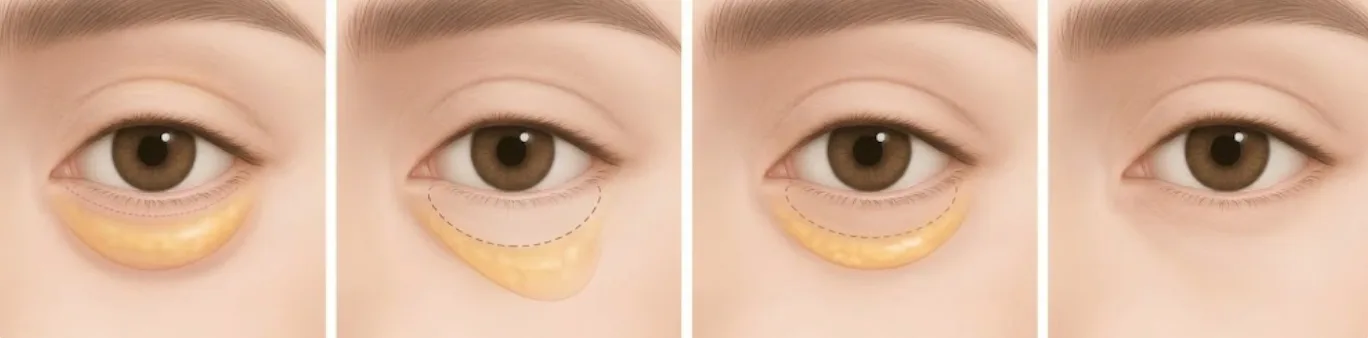
The procedure targets one specific cause of a tired under-eye look: fat that has herniated forward, creating a bulge above a hollow shadow at the tear-trough. Instead of removing that fat, the surgeon releases it and repositions it over the orbital rim with periosteal fixation through a scarless, transconjunctival approach. The hollow is filled with your own tissue, so the area is not left empty or scooped out. The full mechanics are on the under-eye fat repositioning page.
Illustration: working from inside the lower lid, the under-eye fat (yellow) is moved down into the hollow instead of being removed; the dashed line shows where it sat.
Because it relocates fat instead of removing it, the strongest candidates are people whose main complaint is that contrast between a puffy bag and the hollow beneath it, often described as looking permanently tired even when well rested. People with reasonably good lower-lid skin quality and elasticity tend to get the most natural result, because the smoothing relies on the skin draping nicely over the new contour.
Age is less important than anatomy. Some patients in their late twenties and thirties have prominent hereditary under-eye fat and are ideal candidates; some older patients are too, provided skin laxity is not the dominant issue. What matters is the cause of your particular under-eye appearance, which is why an in-person or photo assessment is the real test of candidacy.
Types of bags
Not all under-eye bags are the same
The term "eye bags" covers several different problems that happen to look similar in a mirror, and they do not all respond to the same treatment. Herniated fat creates a true bulge that casts a shadow. This is what fat repositioning is designed for. A tear-trough hollow is a depression with no bulge, often making the area look dark and sunken. Skin laxity is loose, crepey lower-lid skin, sometimes with fine wrinkling. Pigmentation and dark circles are a colour issue in the skin itself and have nothing to do with contour.
Many people have a combination, for instance a fat bulge above a hollow, which is exactly the pattern repositioning addresses so well because it borrows the excess fat to fill the deficit. But if your under-eye darkness is mostly pigment, surgery will not change the colour; and if the dominant problem is loose skin, repositioning alone may not be enough.
Getting this diagnosis right is the whole game. A treatment that is excellent for herniated fat can disappoint someone whose real issue was pigment or laxity. In that case the surgery did what it was designed to do, on the wrong problem. This is why a careful assessment matters more than picking a procedure name in advance.
Vs options
Repositioning, lower blepharoplasty or filler?
Under-eye fat repositioning is usually the most natural choice when you have a fat bulge with a hollow beneath it and good skin quality, because it smooths the bulge and fills the hollow in one step using your own tissue, with no skin scar.
Lower blepharoplasty comes into play when there is significant excess or lax skin as well as fat, since it can address skin through an external incision, which repositioning alone does not do. The choice between the two is a clinical one, and budget does not decide it; our lower blepharoplasty versus fat repositioning comparison and the lower blepharoplasty candidacy guide explain when each fits.
Filler can soften a mild tear-trough hollow without surgery and may suit someone who is not ready for an operation or whose hollow is the only issue. But filler in the under-eye is technique-sensitive and temporary, and it does not remove a true fat bulge. It can even make a bulge look worse if the fat is the real problem. The right answer depends entirely on what is actually causing your under-eye look.
Not suited
Who is not a good candidate
Some people are better served by a different approach or by waiting. If your under-eye darkness is mostly pigmentation and there is no real fat bulge, surgery will not change the colour and you may be disappointed. If the dominant problem is significant skin laxity, repositioning alone may leave loose skin behind, and a different or combined approach may be more appropriate.
Realistic expectations also matter. Repositioning improves the contour and softens the tired look, but it will not erase every line, lighten dark circles, or make you look like a different person, and a careful surgeon should say so plainly. Anyone seeking a dramatic transformation from a subtle, anatomy-led procedure may be looking for the wrong thing.
As with any surgery, general health, certain medical conditions, eye conditions and unmanaged expectations can make it the wrong time or the wrong procedure. A good surgeon will sometimes recommend against operating, and that advice is worth having. You can read more about that mindset in the is plastic surgery in Korea safe guide.
How to know
How to know for sure
You can get a long way toward an answer yourself with a simple observation: gently look up and down in a mirror in good light. A true fat bulge often becomes more pronounced when you look up, while a hollow and pigment behave differently. This is only a hint, and it is easy to misread your own eyes.
The reliable way to know is an assessment by a surgeon who can distinguish fat, hollow, laxity and pigment and tell you which is driving your appearance. This is exactly what an online consultation is for: you send clear photos and get a clear read on whether repositioning fits, before committing to any travel.
The goal of that conversation is not to sell you a procedure but to match the right solution to your actual anatomy, including telling you if the right solution is a different procedure, a non-surgical option, or none at all for now.
At Garnet
Your assessment at Garnet
Garnet is a single-surgeon clinic in Apgujeong, Seoul. Dr. In-Soo Baek is a board-certified plastic surgeon (Korean medical licence no. 77407) and the only operating doctor. He consults, performs the procedure himself and reviews every follow-up. With eye surgery experience built over more than a decade, he assesses whether your under-eye look is driven by fat, hollow, laxity or pigment, and recommends accordingly. Garnet is registered with Korea's foreign-patient programme.
A defining part of the clinic's approach is not over-recommending: only the area you came for is addressed, and there is no pressure to book the same day. That means if repositioning is not the right answer for your eyes, you will be told, including being advised against surgery if that is his conclusion. Structured follow-up at 1, 3 and 6 months supports you afterward if you do proceed.
The simplest first step is a read on your own under-eye case. Start with a no-obligation online consultation, send photos, and find out whether under-eye fat repositioning is genuinely right for you before you plan a trip.
Real Results
Before & After
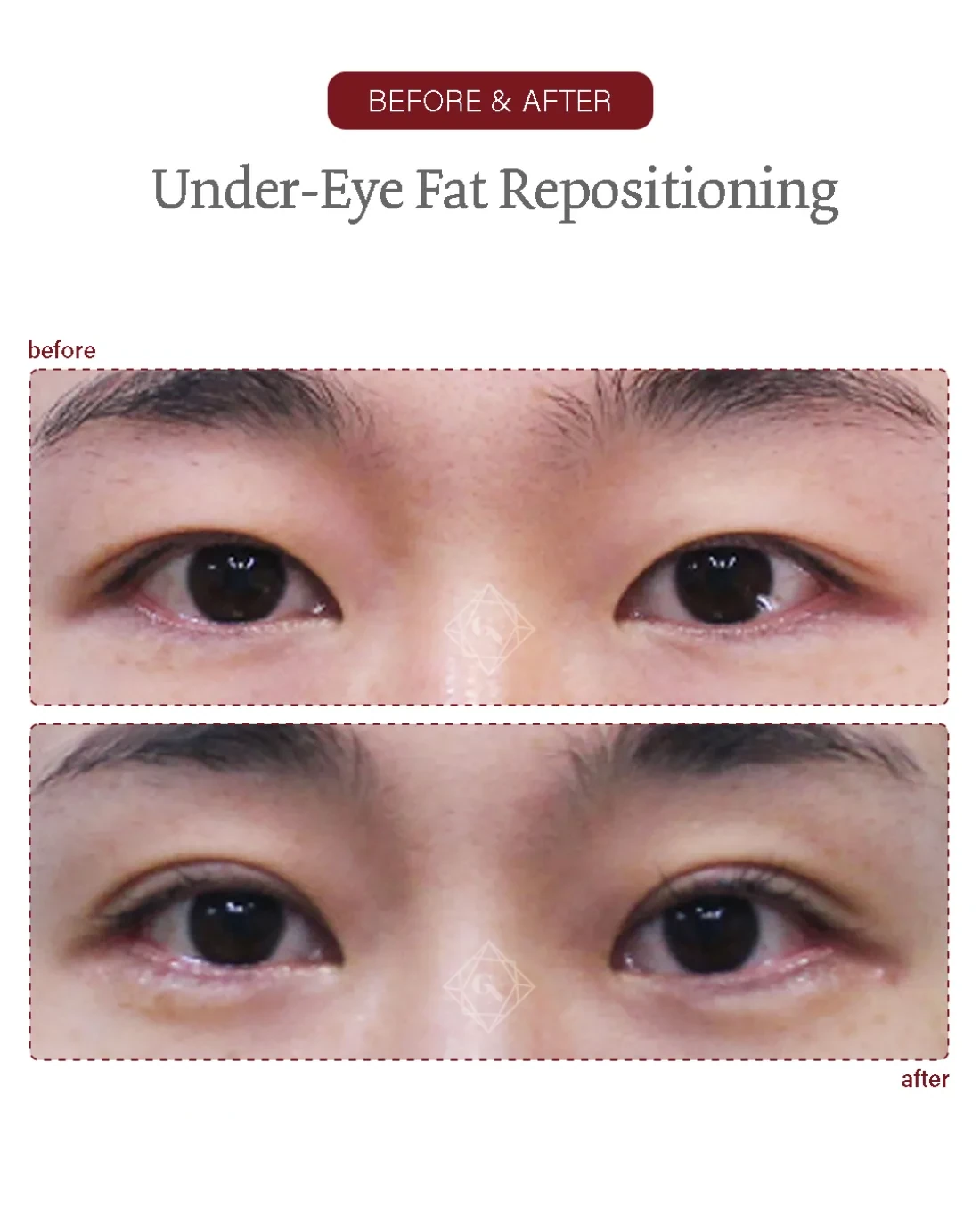
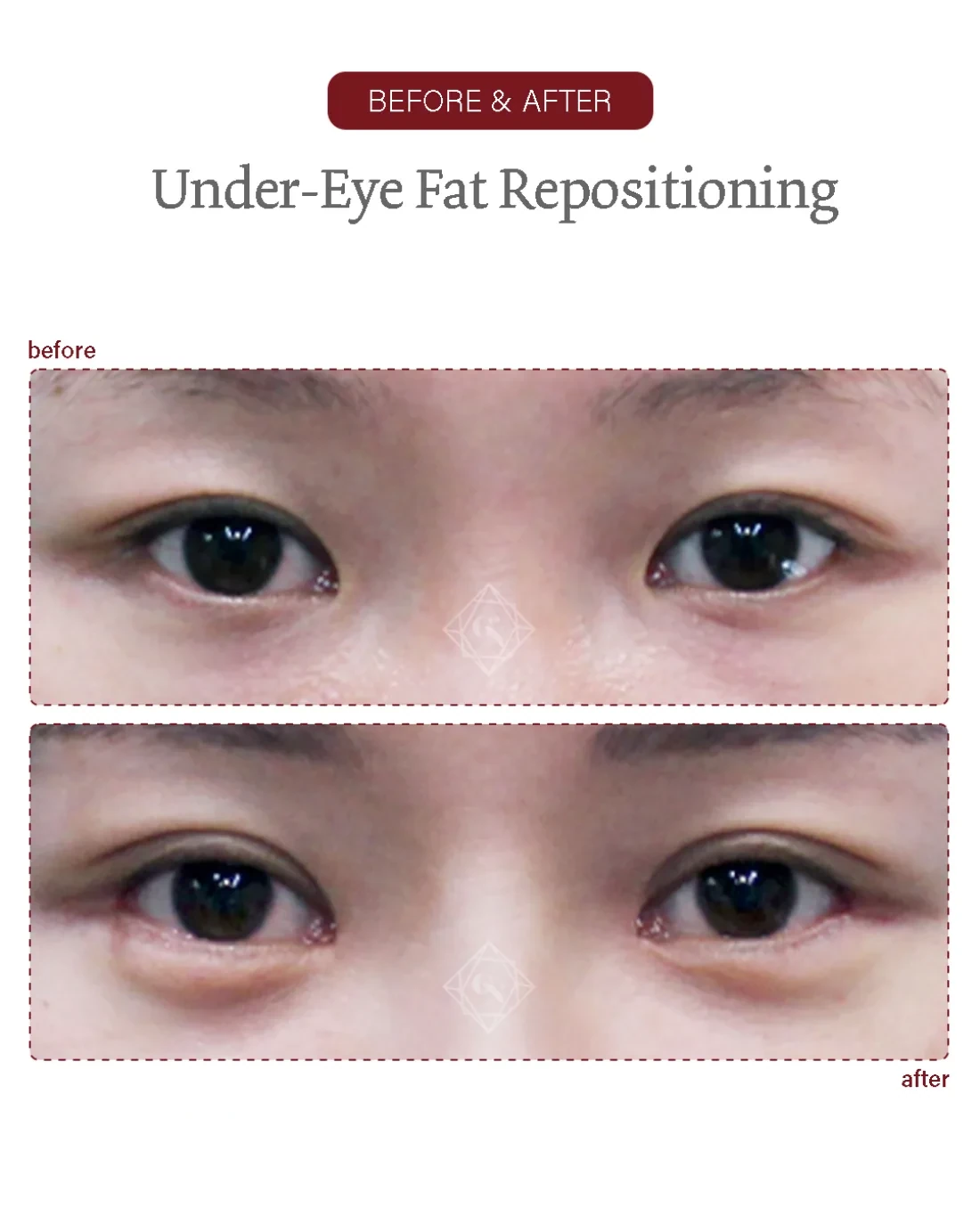
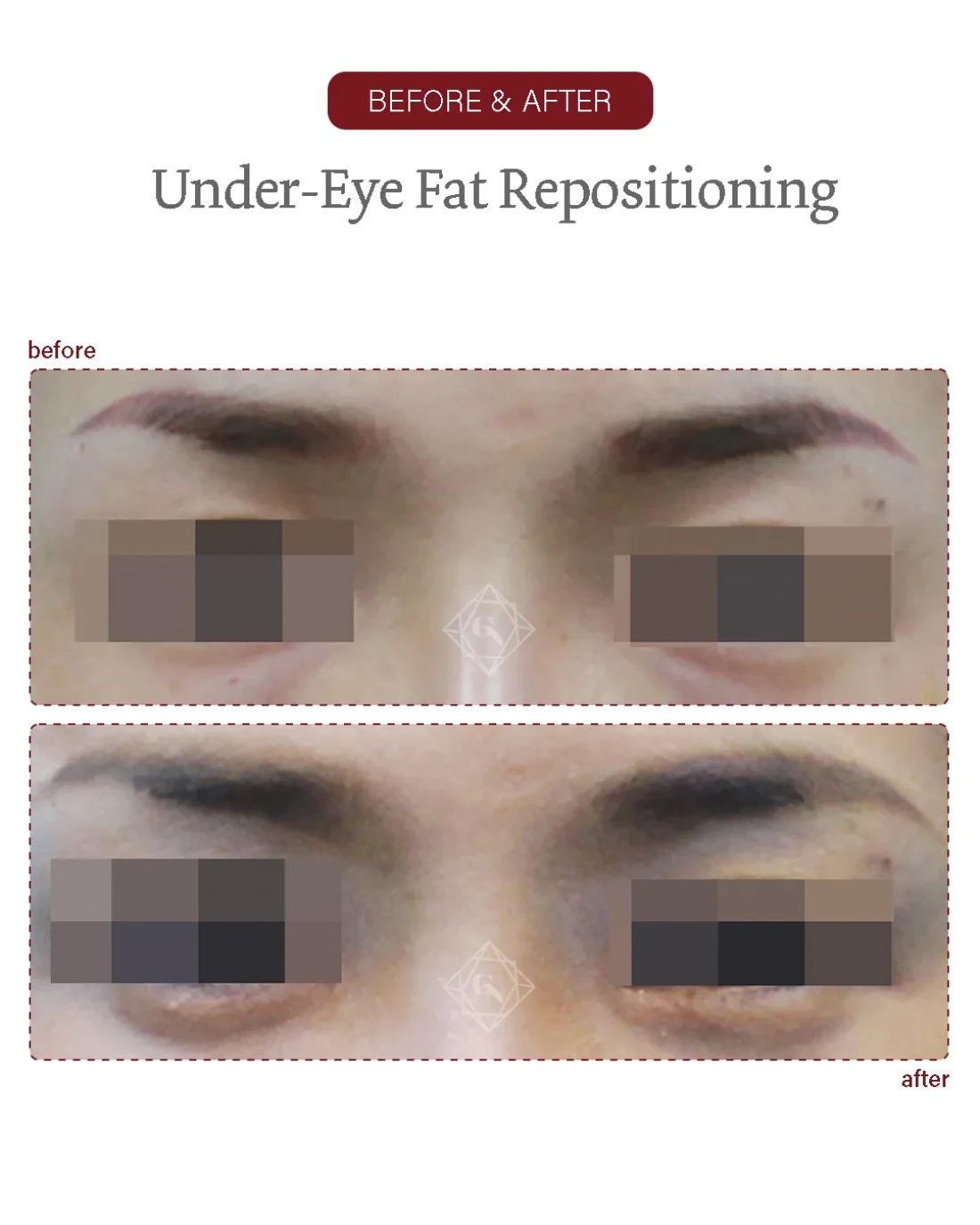
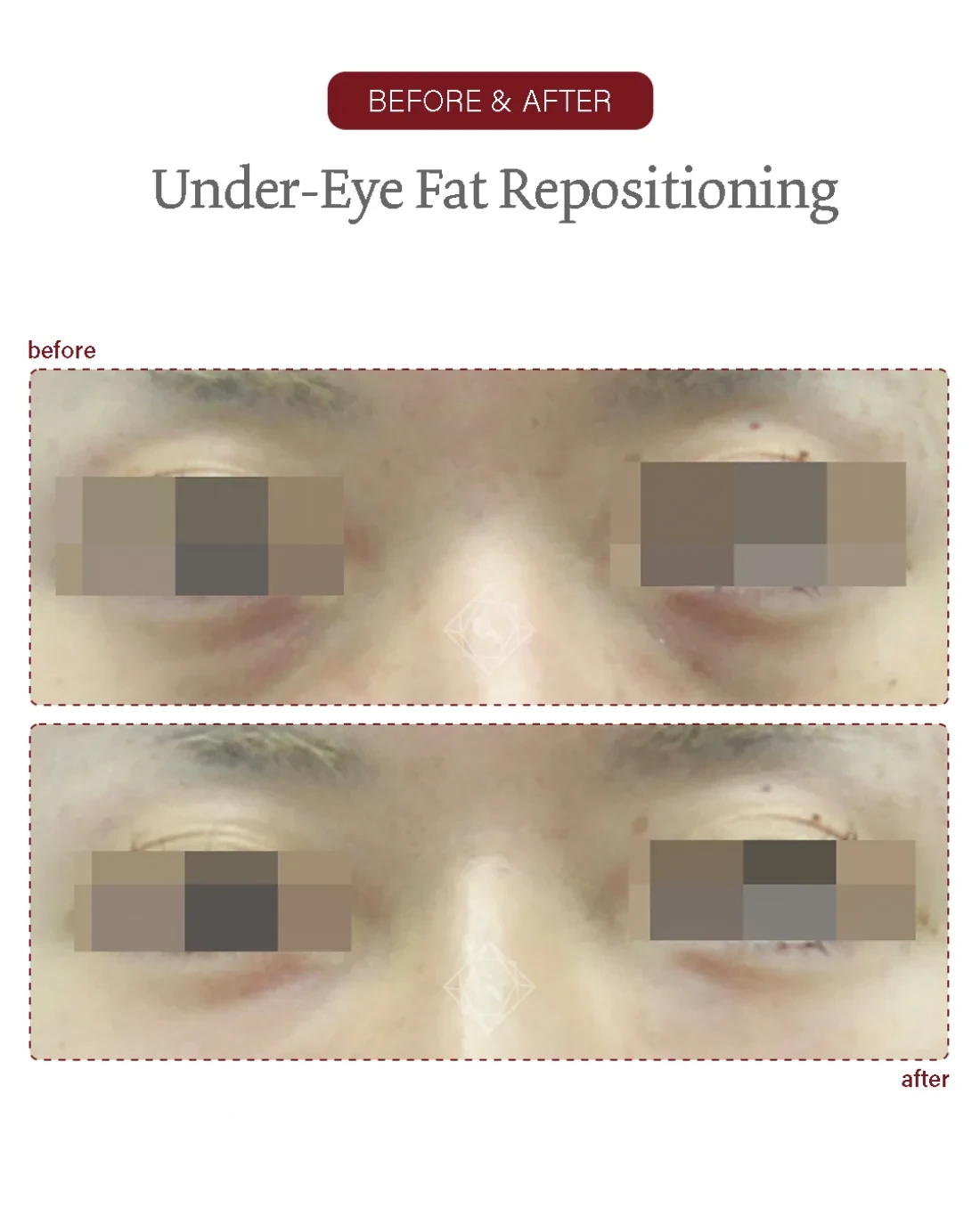
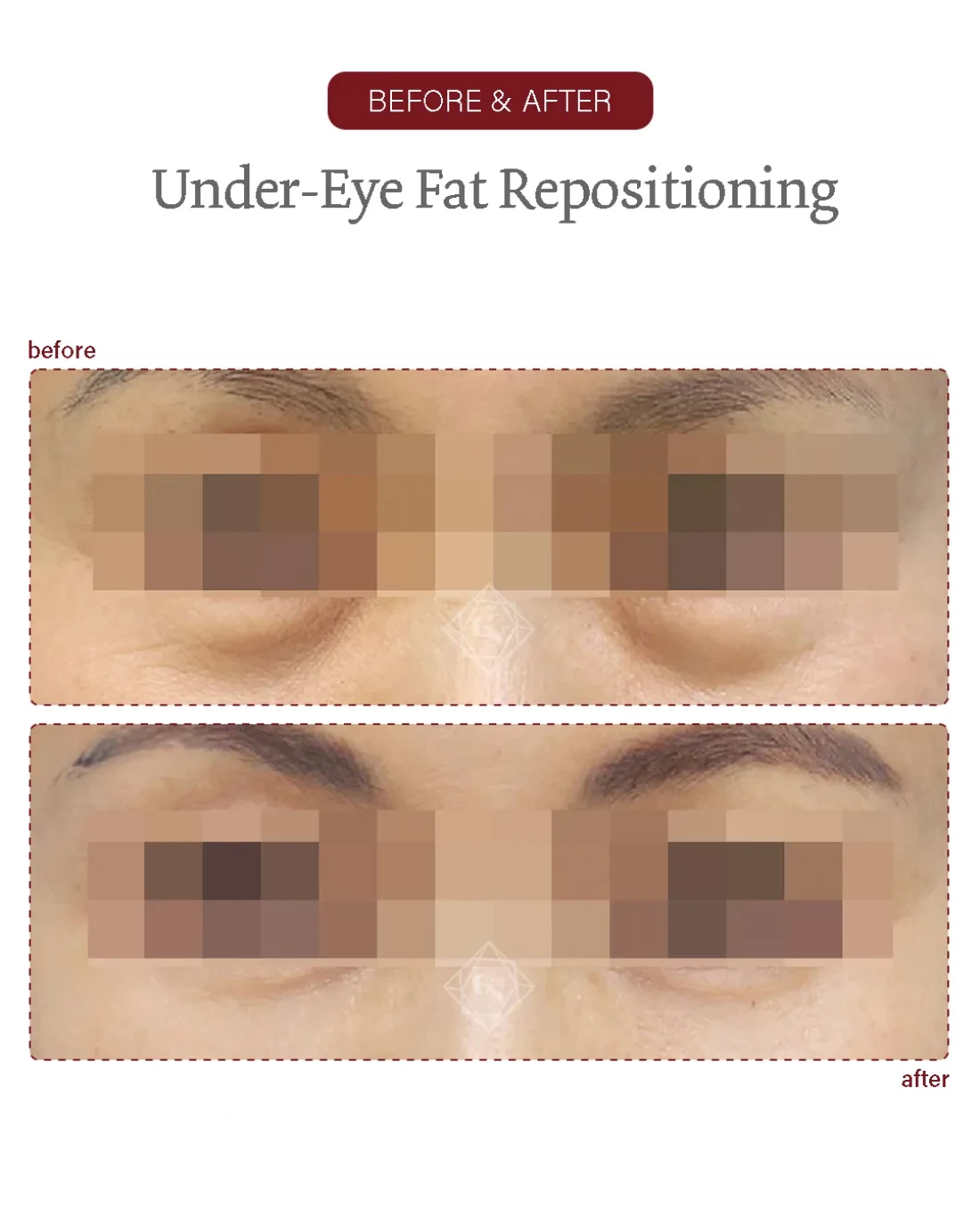
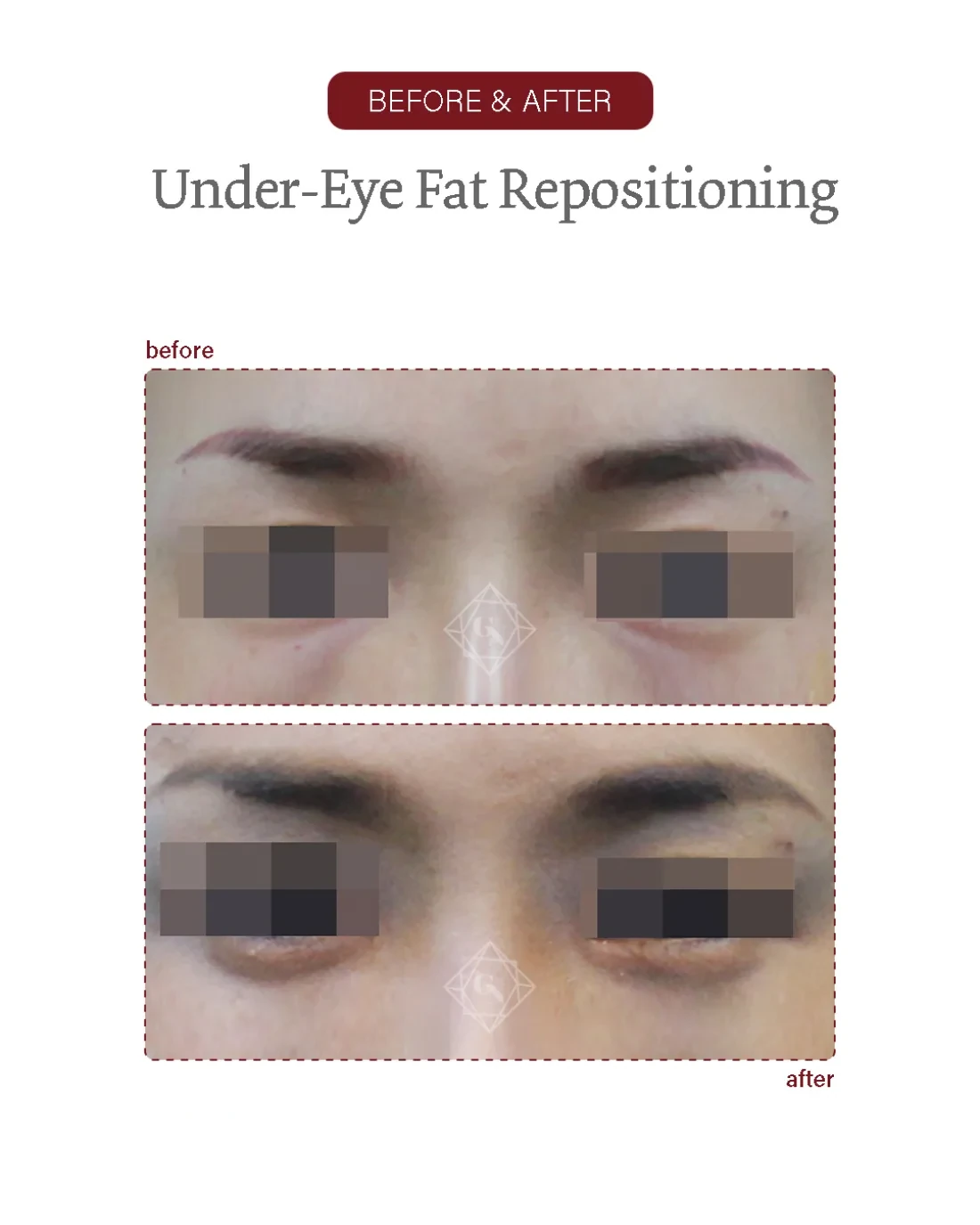
Under-eye fat repositioning before/after of actual Garnet patients (published with consent; each set labelled with date, procedure and clinic). Photographed under comparable conditions. Results, recovery and suitability vary by individual and are not guaranteed.
Prices
Price at Garnet
Under-eye fat repositioning
From₩2,500,000 + VATExcluding VAT (10% VAT is added at payment)Book now
Same price as Korean patients. Prices shown exclude 10% VAT; your written quote, issued after the in-person consultation, shows the full amount payable.
Dr. In-Soo Baek
Director & sole operating surgeon
Korean medical licence no. 77407
Operate on what you came for. Trained at Korea University Medical Center. Every case planned, performed and reviewed by the same hands.
1Operating surgeon
~2Surgeries per day
7Registered techniques
Board-certified plastic surgeon
Plastic surgery training at Korea University College of Medicine & graduate school
Korean Society of Plastic and Reconstructive Surgeons member, in its facial-contour, eye & rhinoplasty groups
Consults, operates and follows up each case himself
Peer-reviewed papers behind the facts on this page. Each describes findings in its own study group — not results at Garnet — and none predicts your own outcome.
Susanna CN et al. Lower Blepharoplasty. Facial Plastic Surgery Clinics of North America. 2026. doi:10.1016/j.fsc.2026.06.012
Termanini KM et al. Tear Trough Deformity: Update on Anatomy and Clinical Management. Aesthetic Surgery Journal. 2026. doi:10.1093/asj/sjag070
Fedok FG. Transconjunctival Lower Blepharoplasty. Facial Plastic Surgery Clinics of North America. 2026. doi:10.1016/j.fsc.2025.08.005
FAQ
Common questions
Who is a good candidate for under-eye fat repositioning?
The ideal candidates have under-eye puffiness and tear-trough shadowing caused by herniated fat, with reasonably good lower-lid skin quality. The procedure moves fat to a new position and does not remove it, so it suits people whose main concern is the contrast between a puffy bag and the hollow beneath it. Age matters less than the cause of your particular under-eye look.
How do I know if my eye bags are from fat?
A true fat bulge creates a bulge that casts a shadow and often looks more pronounced when you look up, whereas a hollow is a depression and dark circles are a colour issue in the skin. These mirror checks are only hints. The reliable way to know is an assessment by a surgeon who can distinguish fat, hollow, laxity and pigment.
Should I get repositioning, lower blepharoplasty or filler?
Repositioning suits a fat bulge with a hollow and good skin; lower blepharoplasty is considered when there is significant excess or lax skin; filler can soften a mild hollow without surgery but is temporary and does not remove a fat bulge. The right choice is clinical and depends on what is actually causing your under-eye look.
When is under-eye fat repositioning not recommended?
It is not the right answer when under-eye darkness is mostly pigmentation, since surgery will not change the colour, or when significant skin laxity is the dominant problem, where repositioning alone may leave loose skin. Unrealistic expectations, certain health or eye conditions can also make it the wrong procedure or the wrong time.
Am I too young or too old for the procedure?
Age is less important than anatomy. Some people in their late twenties and thirties have prominent hereditary under-eye fat and are ideal candidates, while some older patients are too, provided skin laxity is not the dominant issue. What matters is the cause of your under-eye appearance, which a proper assessment determines.
Will it get rid of my dark circles?
Only if the darkness is caused by a shadow from a fat bulge and hollow. Repositioning smooths that contour, which can reduce shadowing. If your dark circles are mostly pigmentation in the skin, surgery will not change the colour, and a different approach would be needed. An assessment can tell which is driving your dark circles.
What if my skin is loose as well as puffy?
If there is significant excess or lax skin alongside the fat, repositioning alone may not be enough, and lower blepharoplasty or a combined approach may fit better. See our comparison guide and the lower blepharoplasty candidacy guide for how the decision is made.
Can I check my candidacy before travelling to Korea?
Yes. You can send clear photos for an online consultation and get a clear read on whether repositioning fits your eyes, before committing to any travel. The aim is to match the right solution to your anatomy, with no particular procedure pushed.
Will the surgeon tell me if I shouldn't have it?
At a single-surgeon clinic that does not over-recommend, yes. Only the area you came for is addressed, and you will be advised against surgery if that is the surgeon's conclusion. A surgeon recommending against operating is a good sign, and that mindset is discussed in our is plastic surgery in Korea safe guide.
What does recovery look like if I do proceed?
Because the approach is transconjunctival and scarless, there are no external stitches and downtime is minimal, with swelling and any bruising settling over the first one to two weeks. Our recovery timeline guide walks through it day by day.
My mom recently had a brow lift and lower blepharoplasty with Dr. Baek, and our experience has been wonderful so far. The Garnet team was incredibly kind and welcoming, with Kelly assisting us as our English consultant—she made everything…
I’m so happy I chose this clinic for my lower blepharoplasty. I was traveling from abroad by myself, so I was a little nervous, but from the beginning I felt comfortable and truly cared for. Everyone was kind, patient, and professional…
Came in for an in-person consult and ended up choosing Garnet and Dr.Baek for my non-incisional DES and tiplasty/alarplasty. I communicated with Kelly (English consultant) from the start till now (3 weeks post-op). She really help me feel…
My under-eyes have been sagging and folding for years... I tried to cover it up with makeup, but it actually got stuck in the wrinkles and made it stand out even more. While going for consultations, I noticed that the bigger the hospital…
Send photos and your question before you travel. An English-speaking coordinator reviews every enquiry and replies with guidance on whether surgery is appropriate, the likely plan and timing.
✓ Reviewed by the clinic coordinator, not a bot
✓ Photo-based pre-assessment before you fly
✓ Foreign-patient scheduling & after-care
✓ One surgeon for consultation, surgery and follow-up
Prefer to chat now? Reach the coordinator directly:









 T S7 months ago



