Under-eye fat repositioning sounds more painful than it usually is. Because it works through the inside of the lower eyelid with no skin cut, most patients describe pressure and tightness more than sharp pain, and the discomfort is generally mild and short-lived.
The short answer
The procedure is done under local anaesthesia, usually with light sedation, so you do not feel the surgery itself.
The transconjunctival (scarless) approach goes through the inside of the eyelid, so there is no external skin incision and no stitches to remove.
Most patients report pressure, tightness and mild soreness, seldom sharp pain, and simple pain relief manages it easily.
Swelling and a bruised, tender feeling around the lower lids are usually what you notice most in the first few days, more than pain.
What anaesthesia is used for under-eye fat repositioning
Under-eye fat repositioning is a delicate but minor procedure, and it does not require general anaesthesia. It is typically performed under local anaesthesia (a numbing injection around the lower eyelid), usually combined with light sedation so that you are relaxed and drowsy but breathing on your own. Your surgeon confirms the exact plan with you at consultation, because the right level of sedation depends on your anxiety, your health and how you tend to respond.
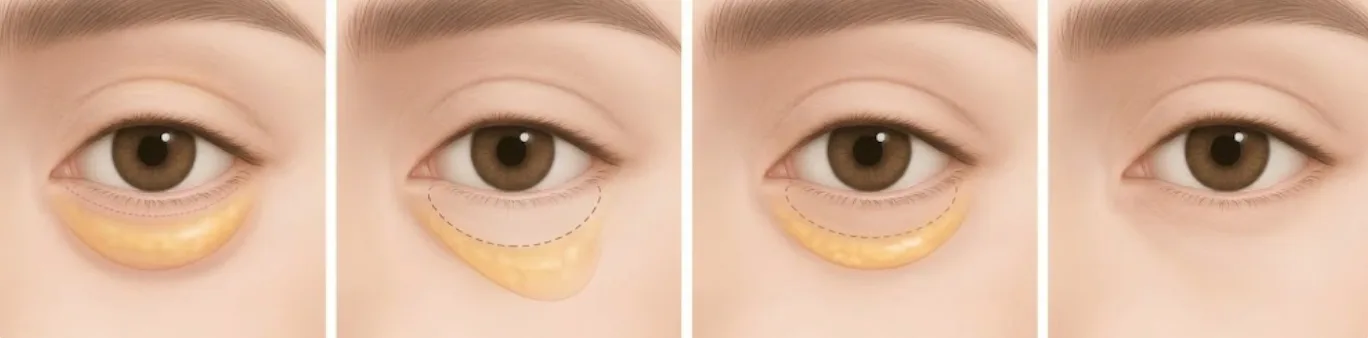
Illustration: working from inside the lower lid, the under-eye fat (yellow) is moved down into the hollow instead of being removed; the dashed line shows where it sat.
The only genuinely uncomfortable moment for most people is the numbing injection itself, which feels like a brief sting and pressure before the area goes numb. Once the local anaesthetic takes effect, the eyelid is fully numb for the operation. Because there is no general anaesthetic and no breathing tube, you avoid the grogginess, sore throat and longer recovery that come with being put fully under.
If you are weighing this against eyelid surgery that cuts the skin, the anaesthesia is similar in kind but the experience is gentler overall: there is no incision to close and no stitch line to settle. You can read how the two approaches differ in our guide to lower blepharoplasty versus fat repositioning, and see the full overview on the under-eye fat repositioning page.
During surgery
What you actually feel during the procedure
During the operation the eyelid is numb, so you do not feel cutting or pain. The technique releases the herniated fat that causes under-eye bags and repositions it smoothly over the orbital rim, securing it with periosteal fixation so the lower-lid contour is flattened and the fat is not simply removed. What you may register, especially with lighter sedation, is a sensation of pressure, gentle tugging or movement around the eye socket. That is normal and is not the same as pain.
The procedure is short and works entirely through the inside surface of the lower lid (the conjunctiva), so there is no external wound being made. With sedation, many patients are drowsy enough that the time passes quickly and they remember little of it. If at any point you feel more than mild pressure, the surgeon can add anaesthetic, and you are not expected to tolerate discomfort.
Because Garnet is a single-surgeon clinic, the same board-certified surgeon who assessed you is the one operating, watching your comfort throughout and adjusting as needed. There is no handover to another doctor partway through.
After surgery
How much it hurts in the days afterwards
Once the local anaesthetic wears off in the first few hours, most patients describe a dull soreness, tightness or a bruised, tender feeling around the lower eyelids, but rarely sharp pain. For the great majority this is mild and well controlled with simple oral pain relief; strong painkillers are rarely needed. The eyes can feel a little gritty or watery for a day or two as the inner-lid surface settles.
What you are likely to notice more than pain is swelling and possible bruising. Some puffiness and discoloration under the eyes is expected in the first several days and then steadily fades. It looks more dramatic than it feels. We cover this in detail in our guide to swelling and bruising, and you can see how the whole settling process unfolds in the recovery timeline.
Sharp, increasing or one-sided pain, pain with significant changes in vision, or pain that worsens after a few days is not the normal pattern. It is uncommon, but if it happens you should contact the clinic promptly so your surgeon can review you.
Scarless approach
Why the scarless approach means less discomfort
The reason under-eye fat repositioning is usually gentler than people expect comes down to how it is done. The incision is transconjunctival, placed on the inside of the lower eyelid, so there is no cut through the outer skin and no visible scar. Because nothing is stitched on the surface, there are no sutures to remove later, which removes one of the more uncomfortable and anxiety-provoking steps of traditional lower-eyelid surgery.
An approach with no external wound also tends to mean less of the pulling, tight stitch-line sensation that patients associate with skin incisions, and a generally quieter healing course. The clinic's note for this procedure is simply: no suture removal, minimal downtime. That does not mean it is effortless, since there is still swelling to wait out, but the pain element specifically is one of the smaller parts of the experience.
If preserving a natural lower-lid contour without a skin scar is your priority, this approach is built around exactly that. The fuller comparison with skin-cutting surgery is in lower blepharoplasty versus fat repositioning.
Managing it
Managing discomfort and swelling at home
Most of what makes the first few days comfortable is straightforward. Cold compresses over the cheekbones and lids in the early period help with both swelling and that tender, full feeling. Keeping your head elevated, including propped up on an extra pillow at night, reduces fluid pooling under the eyes. Simple oral pain relief as advised by your surgeon is generally all that is needed.
It also helps to rest your eyes: limit long stretches of screen time, reading and contact-lens wear in the first days, and avoid strenuous exercise, bending and heavy lifting, which can increase pressure and swelling. Your surgeon will give you specific guidance and aftercare suited to you at the time of surgery.
Because the same surgeon follows your recovery, you have a clear point of contact if anything feels off, and structured reviews at 1, 3 and 6 months. International patients can stay in touch remotely after returning home; we explain how that works in the international patients guide.
At Garnet
How Garnet keeps the procedure comfortable
Garnet is a single-surgeon clinic in Apgujeong, Seoul. Dr. In-Soo Baek is a board-certified plastic surgeon (Korean medical licence no. 77407), and he personally handles your consultation, anaesthesia plan, the surgery itself and your follow-up. The clinic deliberately keeps the schedule light, with a small number of unhurried cases a day, so your procedure is never rushed and your comfort during and after is given proper attention.
At your consultation the surgeon explains the anaesthesia plainly, including the brief discomfort of the numbing injection and the soreness to expect afterwards, so there are no surprises. There is no consultation or CT fee and no pressure to book the same day. If under-eye fat repositioning is not the right answer for your particular under-eye concern, he will tell you.
You can begin with an online consultation from abroad and send photos of your lower eyelids for a pre-assessment, including a realistic picture of what the procedure will feel like for you, before you commit to travel.
Real Results
Before & After
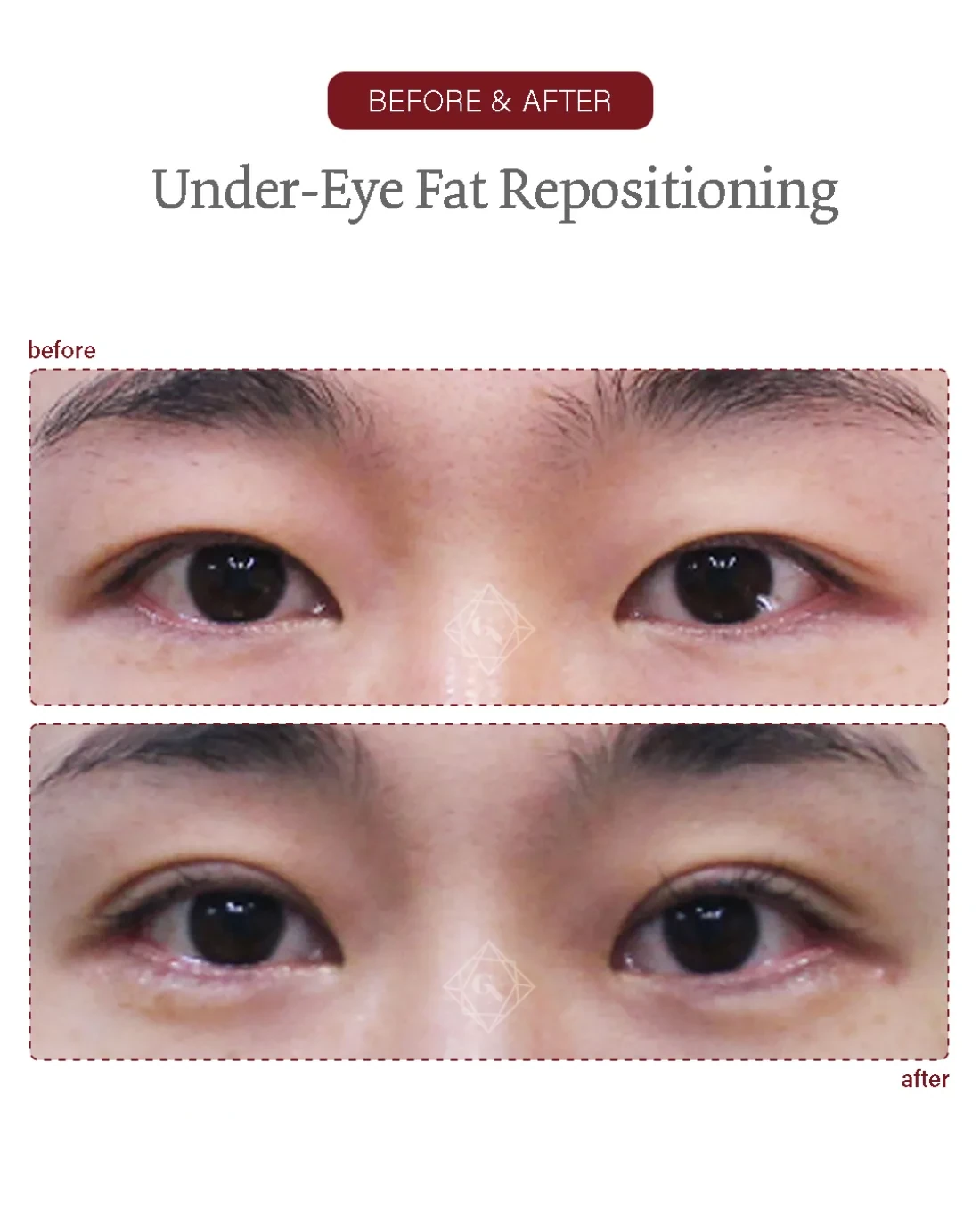
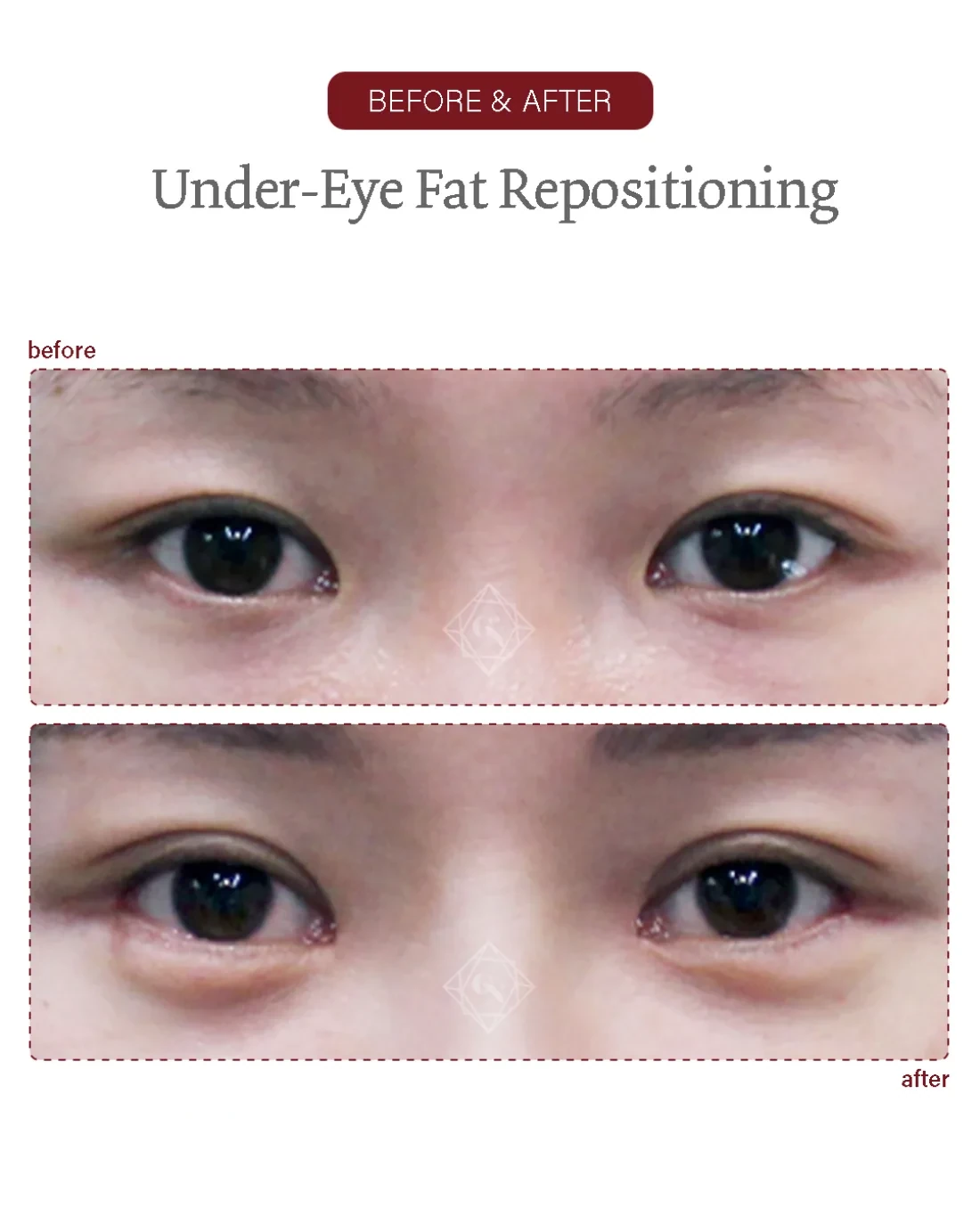
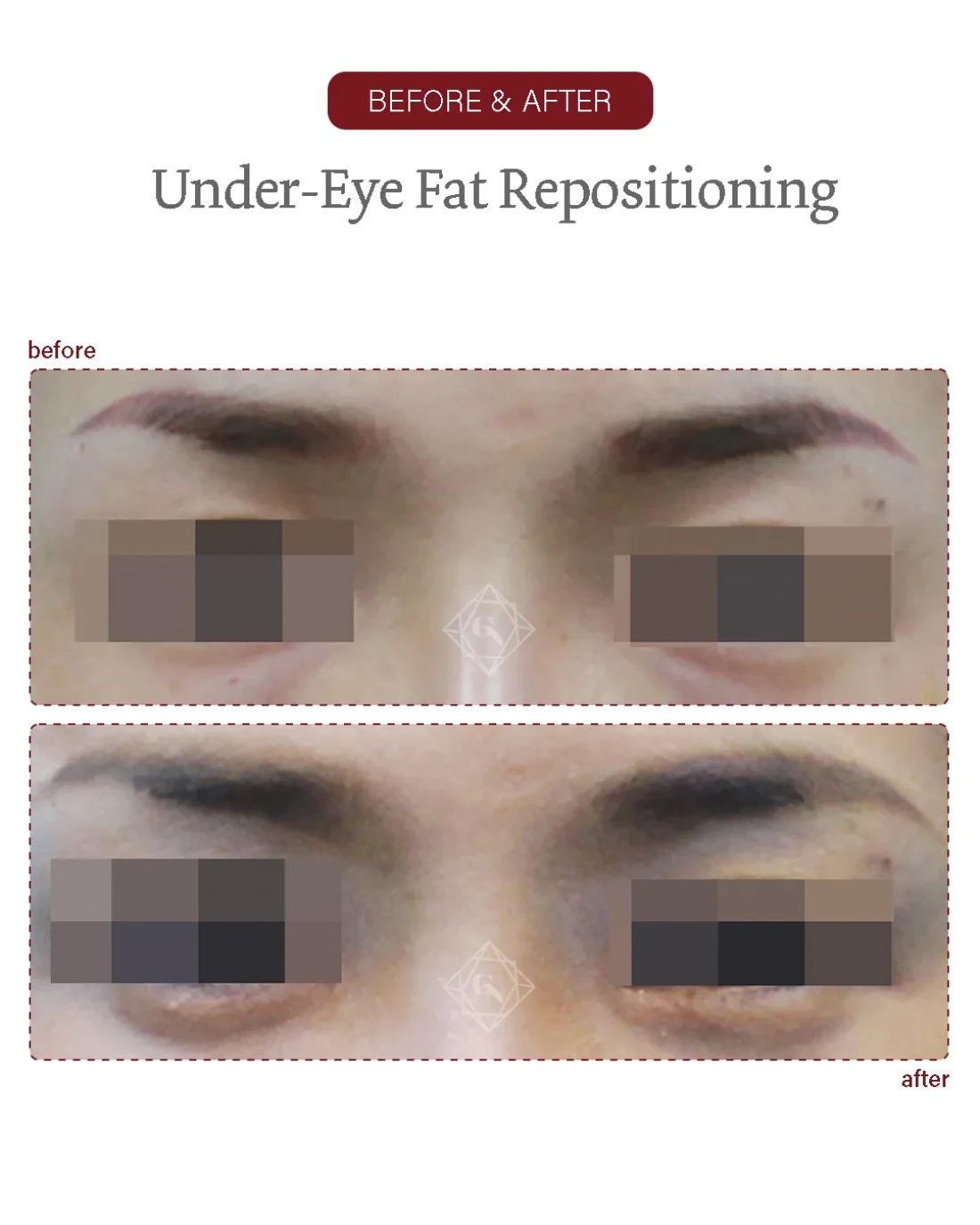
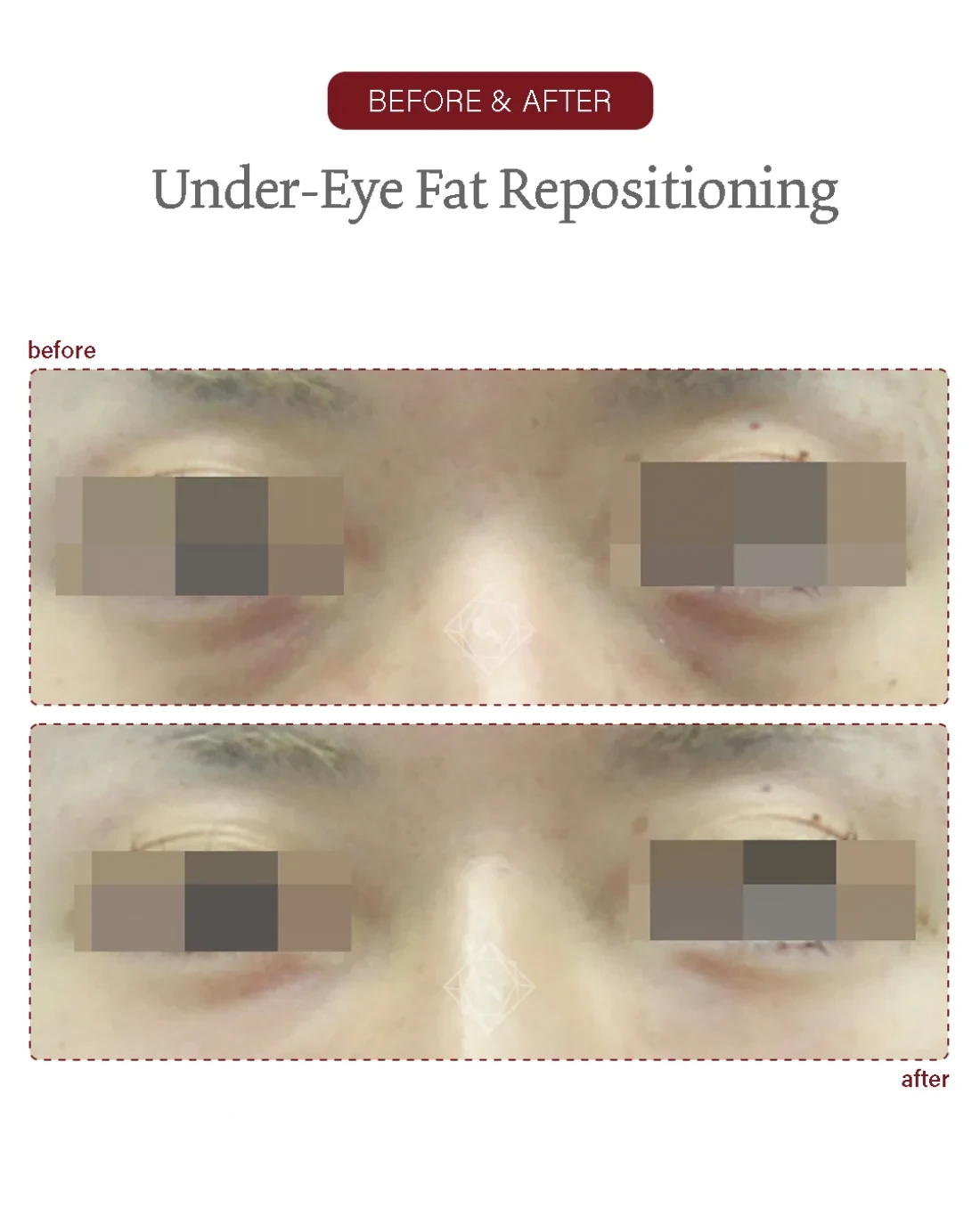
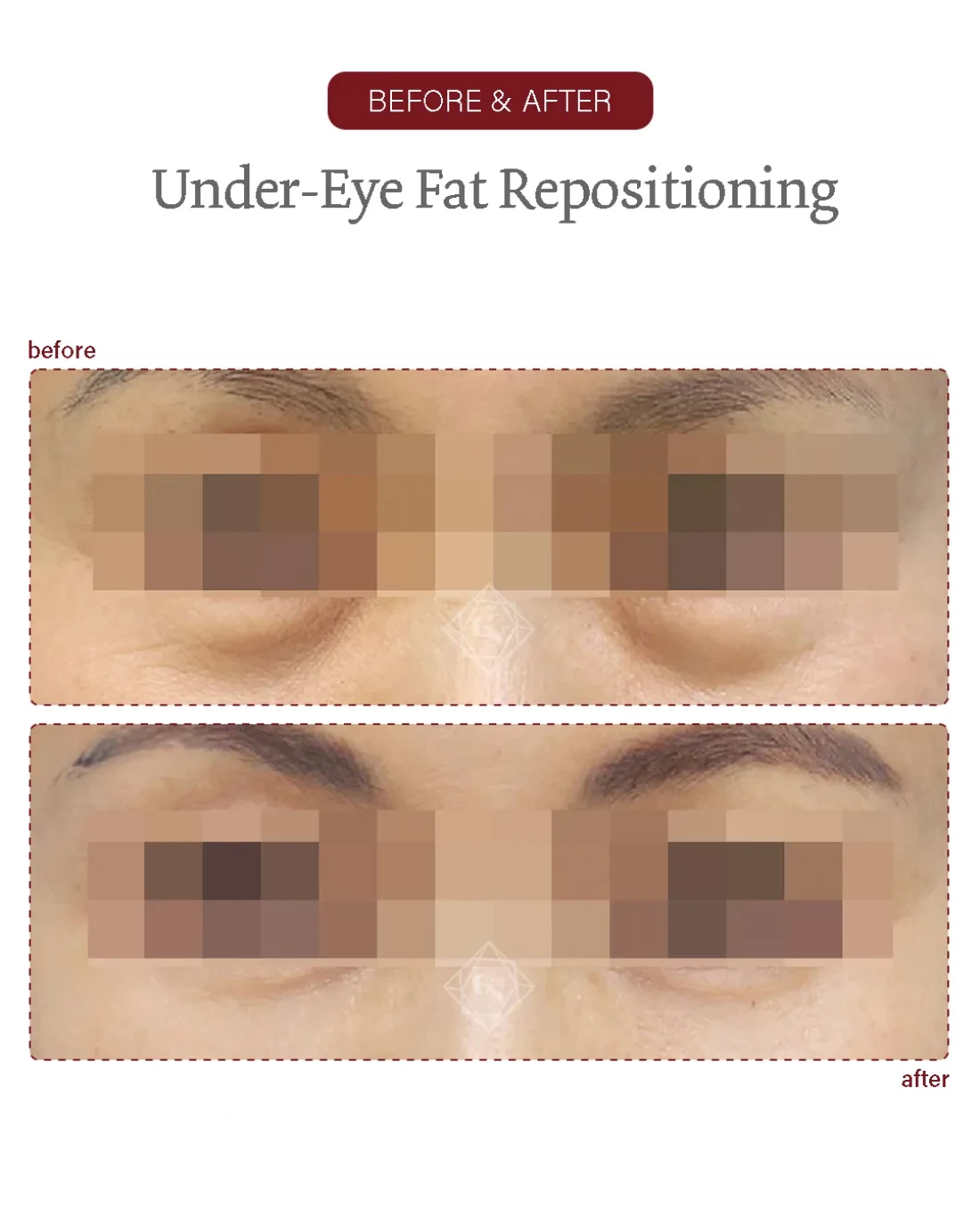
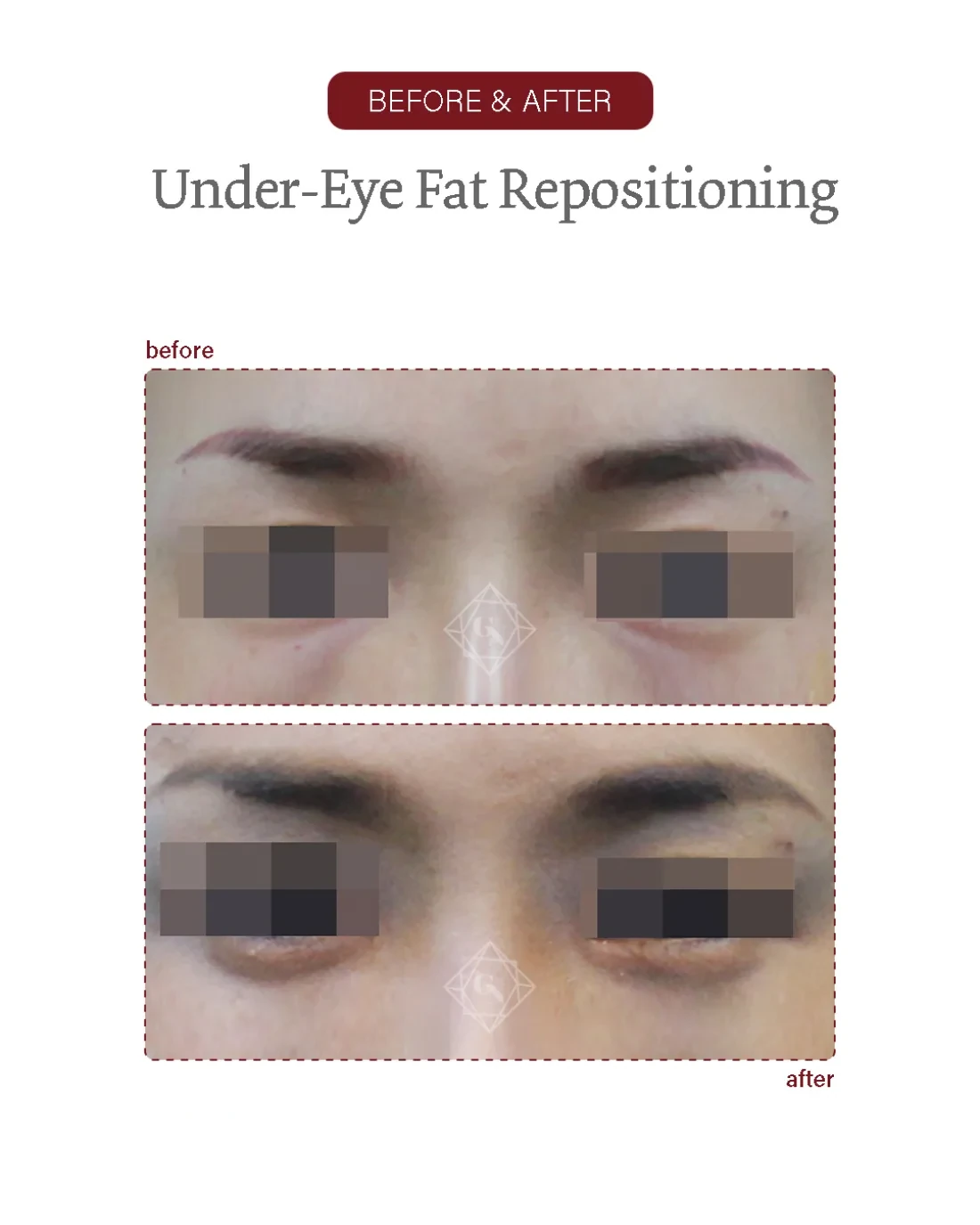
Under-eye fat repositioning before/after of actual Garnet patients (published with consent; each set labelled with date, procedure and clinic). Photographed under comparable conditions. Results, recovery and suitability vary by individual and are not guaranteed.
Prices
Price at Garnet
Under-eye fat repositioning
From₩2,500,000 + VATExcluding VAT (10% VAT is added at payment)Book now
Same price as Korean patients. Prices shown exclude 10% VAT; your written quote, issued after the in-person consultation, shows the full amount payable.
Dr. In-Soo Baek
Director & sole operating surgeon
Korean medical licence no. 77407
Operate on what you came for. Trained at Korea University Medical Center. Every case planned, performed and reviewed by the same hands.
1Operating surgeon
~2Surgeries per day
7Registered techniques
Board-certified plastic surgeon
Plastic surgery training at Korea University College of Medicine & graduate school
Korean Society of Plastic and Reconstructive Surgeons member, in its facial-contour, eye & rhinoplasty groups
Consults, operates and follows up each case himself
Peer-reviewed papers behind the facts on this page. Each describes findings in its own study group — not results at Garnet — and none predicts your own outcome.
Palmer FR et al. Transconjunctival Blepharoplasty: Complications and Their Avoidance: A Retrospective Analysis and Review of the Literature. Archives of Otolaryngology - Head and Neck Surgery. 1993. doi:10.1001/archotol.1993.01880210083011
Susanna CN et al. Lower Blepharoplasty. Facial Plastic Surgery Clinics of North America. 2026. doi:10.1016/j.fsc.2026.06.012
Termanini KM et al. Tear Trough Deformity: Update on Anatomy and Clinical Management. Aesthetic Surgery Journal. 2026. doi:10.1093/asj/sjag070
FAQ
Common questions
Is under-eye fat repositioning painful?
For most patients it is not very painful. The surgery itself is done under local anaesthesia with light sedation, so you do not feel it. Afterwards, people typically describe mild soreness, tightness and a bruised, tender feeling instead of sharp pain, and it is usually well controlled with simple pain relief.
What anaesthesia is used for under-eye fat repositioning?
It is normally performed under local anaesthesia (a numbing injection around the lower eyelid), usually combined with light sedation so you are relaxed and drowsy. General anaesthesia is not required for this procedure. Your surgeon confirms the exact plan with you based on your health and anxiety level.
Does the procedure require cutting the skin?
No. The approach is transconjunctival, meaning the incision is on the inside of the lower eyelid. There is no external skin cut, no visible scar and no stitches to remove, which is one reason the discomfort tends to be milder than traditional lower-eyelid surgery.
Will I feel anything during the surgery?
The eyelid is numb, so you should not feel pain or cutting. With lighter sedation you may sense pressure, gentle tugging or movement around the eye, which is normal. If you feel more than mild pressure, the surgeon can add anaesthetic, and you are not expected to tolerate discomfort.
How long does the discomfort last?
The soreness is usually most noticeable for the first couple of days and then eases steadily over the first week. Swelling and any bruising take longer to settle than the discomfort itself, but those are not painful so much as a tender, full feeling.
Do I need strong painkillers afterwards?
Most patients manage well with simple oral pain relief as advised by their surgeon; strong painkillers are rarely necessary. Cold compresses, keeping your head elevated and resting your eyes in the first days do a lot to keep you comfortable.
What kind of pain is not normal after this procedure?
Sharp, increasing or one-sided pain, pain accompanied by significant changes in vision, or pain that worsens after the first few days is not the usual pattern. It is uncommon, but if it happens you should contact the clinic promptly so your surgeon can review you.
Is it more or less painful than lower blepharoplasty?
Because under-eye fat repositioning works through the inside of the eyelid with no skin incision and no sutures to remove, the discomfort is generally gentler than skin-cutting lower-eyelid surgery. The right choice depends on your anatomy, which a surgeon assesses individually; our comparison guide explains the difference.
Can the same surgeon look after my recovery?
Yes. At a single-surgeon clinic the operating surgeon manages your recovery and reviews you at structured follow-ups at 1, 3 and 6 months. International patients can stay in touch remotely after returning home, with clear guidance on what is normal and what is not.
Can I ask about the pain before I travel to Korea?
Yes. You can ask about anaesthesia, what the procedure feels like and the realistic recovery in an online consultation, and send photos for a pre-assessment before you plan a trip.
My mom recently had a brow lift and lower blepharoplasty with Dr. Baek, and our experience has been wonderful so far. The Garnet team was incredibly kind and welcoming, with Kelly assisting us as our English consultant—she made everything…
I’m so happy I chose this clinic for my lower blepharoplasty. I was traveling from abroad by myself, so I was a little nervous, but from the beginning I felt comfortable and truly cared for. Everyone was kind, patient, and professional…
Came in for an in-person consult and ended up choosing Garnet and Dr.Baek for my non-incisional DES and tiplasty/alarplasty. I communicated with Kelly (English consultant) from the start till now (3 weeks post-op). She really help me feel…
My under-eyes have been sagging and folding for years... I tried to cover it up with makeup, but it actually got stuck in the wrinkles and made it stand out even more. While going for consultations, I noticed that the bigger the hospital…
Nervous about how it will feel? Send photos for a no-obligation pre-assessment and ask the surgeon directly about anaesthesia and recovery before you plan a trip.
Send photos and your question before you travel. An English-speaking coordinator reviews every enquiry and replies with guidance on whether surgery is appropriate, the likely plan and timing.
✓ Reviewed by the clinic coordinator, not a bot
✓ Photo-based pre-assessment before you fly
✓ Foreign-patient scheduling & after-care
✓ One surgeon for consultation, surgery and follow-up
Prefer to chat now? Reach the coordinator directly:









 T S7 months ago



