The first worry before any under-eye surgery is usually the scar: will there be a visible line just below the lashes? For under-eye fat repositioning the answer is reassuring. The work is done through the inside of the lower eyelid, a transconjunctival approach that leaves no external scar to heal. This page explains exactly where that incision sits, why it is different from the skin-side approach some clinics use, and how the hidden wound settles over the weeks.
The short answer
Under-eye fat repositioning at Garnet uses a transconjunctival incision inside the lower eyelid, so there is no cut on the outer skin and no external scar line.
This differs from a subciliary (skin-crease) approach used for some lower-lid procedures, where a fine line runs just below the lashes; the inside route avoids a skin scar altogether.
The hidden conjunctival wound heals quickly and typically needs no suture removal; most of the settling is swelling and mild redness, with no skin scar to mature.
Because the same surgeon who operates also reviews you at 1, 3 and 6 months, the healing of the inner lid is assessed directly at each of those visits.
Where the incision sits for under-eye fat repositioning
Under-eye fat repositioning at Garnet is reached through a transconjunctival incision: a small opening made on the inner surface of the lower eyelid, behind the lashes, against the eyeball side of the lid. Nothing is cut on the outer skin of the eyelid or the cheek, so there is no line on the face that has to knit together and fade. There is one such internal access on each side, mirrored under each eye.
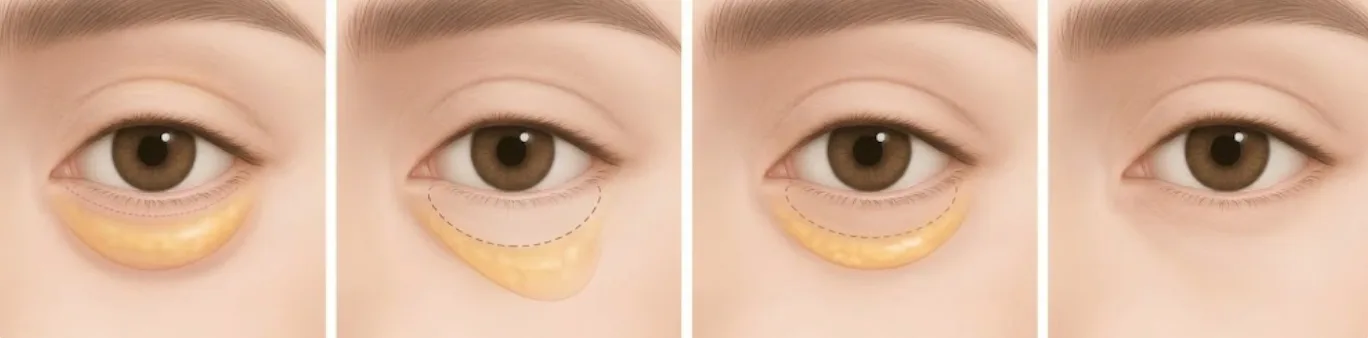
Illustration: working from inside the lower lid, the under-eye fat (yellow) is moved down into the hollow instead of being removed; the dashed line shows where it sat.
Through that hidden opening the surgeon addresses the herniated fat that creates the under-eye bulge. The fat is not removed. It is repositioned over the orbital rim and fixed with a periosteal stitch, smoothing the transition between lid and cheek. Because the whole approach runs through the conjunctiva, no external scar forms. The wound that does exist is on a surface no one sees.
If you want the full picture of how the procedure is planned and performed, the under-eye fat repositioning overview walks through the technique, and this page goes deeper on the one thing most patients ask about: where any scar would be, and how the area heals.
Why there is no visible scar
Why the transconjunctival approach leaves no visible scar
The key is where the cut is placed. In a transconjunctival approach the incision sits on the moist inner lining of the lower lid, so it never breaks the outer skin. Wounds on this mucosal surface heal quickly and are hidden from view by the eyelid itself, which is why patients considering this surgery often read that it leaves no external scar. This differs from a subciliary approach, an incision made in the skin crease just below the lash line, which some lower-lid procedures use and which does leave a fine external line to mature over months.
For under-eye fat repositioning specifically, the inner route is well suited because the target is the herniated fat and the orbital rim behind the lid, both of which are reachable from the inside. The advantage here is that no skin scar is created at all, so there is nothing on the skin that has to heal invisibly. If skin needs to be tightened as well, which is a separate consideration, your surgeon will discuss whether a different approach is appropriate, which you can raise in an online consultation before travelling.
One caveat: 'no external scar' does not mean 'no visible change' in the first weeks. The lower lid and cheek can look swollen, and the white of the eye may show pink or a small bruise for a short time. None of this leaves a lasting line on the skin. It is the settling of a hidden wound inside the lower lid. You can see how the wider timing works on the under-eye fat repositioning recovery timeline.
How the area heals over time
How the inner lid heals, week by week
In the first few days, the inner-lid wound is fresh and the surrounding tissue is swollen. The white of the eye can look pink or show a small area of redness where the conjunctiva was opened, and the lower lid and cheek may be puffy and bruised. This is the area doing exactly what it should: the redness is increased blood flow bringing in the cells that heal it. Because the incision is on the conjunctiva, it usually needs no suture removal; any stitch used dissolves or the mucosal surface closes on its own.
Over the following weeks, the swelling under the eye settles and any pinkness on the white of the eye fades. The lid, which may feel tight or slightly numb early on, softens as the tissue calms down. Because the fat has been repositioned and kept, the smoother contour you see keeps refining as the swelling resolves. The healing of the wound and the settling of the result happen together over the same window.
By a few months, the inner-lid wound is fully healed and there is nothing on the skin to mature, so the story is really one of swelling resolving under the eye. Because the same surgeon at Garnet reviews you at 1, 3 and 6 months, the lid is checked directly at each stage, and any guidance is tailored to how yours is actually settling. The under-eye fat repositioning swelling and bruising page covers that side of recovery in detail.
Caring for the area
How to help the area heal well
Because the wound is inside the lid, aftercare is gentler than for a skin incision, but the eye still needs looking after. Keep the area clean as instructed, avoid rubbing or pressing the eye, and use any prescribed drops or ointment as directed to keep the surface comfortable while it heals. Cool compresses in the early days can ease swelling, and sleeping with the head slightly raised helps the puffiness under the eye settle faster.
Protect the delicate under-eye skin from the sun once you are out and about. There is no scar to darken, but the thin skin here benefits from shade, a hat and sunglasses in the first weeks while it is still recovering. Avoid heavy lifting, straining and vigorous exercise early on, since these raise pressure around the eyes and can prolong swelling or bruising. Contact-lens wear and eye make-up are usually paused for a short period; your surgeon will tell you when it is safe to resume.
Smoking and poorly controlled health conditions slow the healing of the inner lid, so tell your surgeon about them before an under-eye procedure and the plan can work around them. For international patients, this aftercare can be guided remotely: you can keep sending photos of the eyes after you fly home so the area is reviewed at each milestone. How long the settled result lasts is covered separately on the how-long-it-lasts page.
What is normal, what is not
Normal healing versus a reason to check in
Normal, expected findings include swelling and bruising of the lower lid and cheek, a pink patch or small bruise on the white of the eye, mild tightness or numbness of the lid, and watering or a gritty feeling for a short time. These ease week by week as the hidden wound settles and the repositioned fat calms down. Tightness as the tissue recovers is usually a sign of healing.
Reasons to contact the clinic promptly are different: pain that worsens instead of easing, marked or increasing redness of the eye itself, discharge or a fever, a sudden worsening of swelling on one side, changes in vision, or a lower lid that pulls downward or turns outward. None of these are common, but they are worth flagging early because they are easiest to manage when caught quickly, and anything involving vision always deserves prompt attention.
If you have a history of dry eye, prior eyelid surgery or any eye condition, tell your surgeon before surgery, because it can change how the lid is handled and followed. Raise it in an online consultation from abroad, before you book a trip for under-eye surgery.
Under-eye care at Garnet
How under-eye healing is handled at Garnet
Garnet is a single-surgeon clinic in Apgujeong, Seoul. Dr. In-Soo Baek is a board-certified plastic surgeon (Korean medical licence no. 77407) and the only operating surgeon. He plans the approach, performs the transconjunctival repositioning, and reviews the eyes at every follow-up. That continuity matters here: the person who knows exactly how the inner lid was handled is the same person assessing how it settles at 1, 3 and 6 months, which is reassuring for delicate work around the eye.
Because the clinic caps the day at two surgeries and sees one patient per hour, the work is unhurried and meticulous, which suits a fine procedure done through a small internal opening. Garnet is registered with Korea's foreign-patient programme, so international patients are supported through scheduling, recovery and the remote follow-ups that let the eyes be reviewed after you return home.
If your main hesitation is the idea of a scar, the most useful next step is a pre-assessment from photos. You can send photos and ask exactly how the approach would work for your eyes, and whether the transconjunctival route is right for you, in an online consultation before you plan a trip.
Real Results
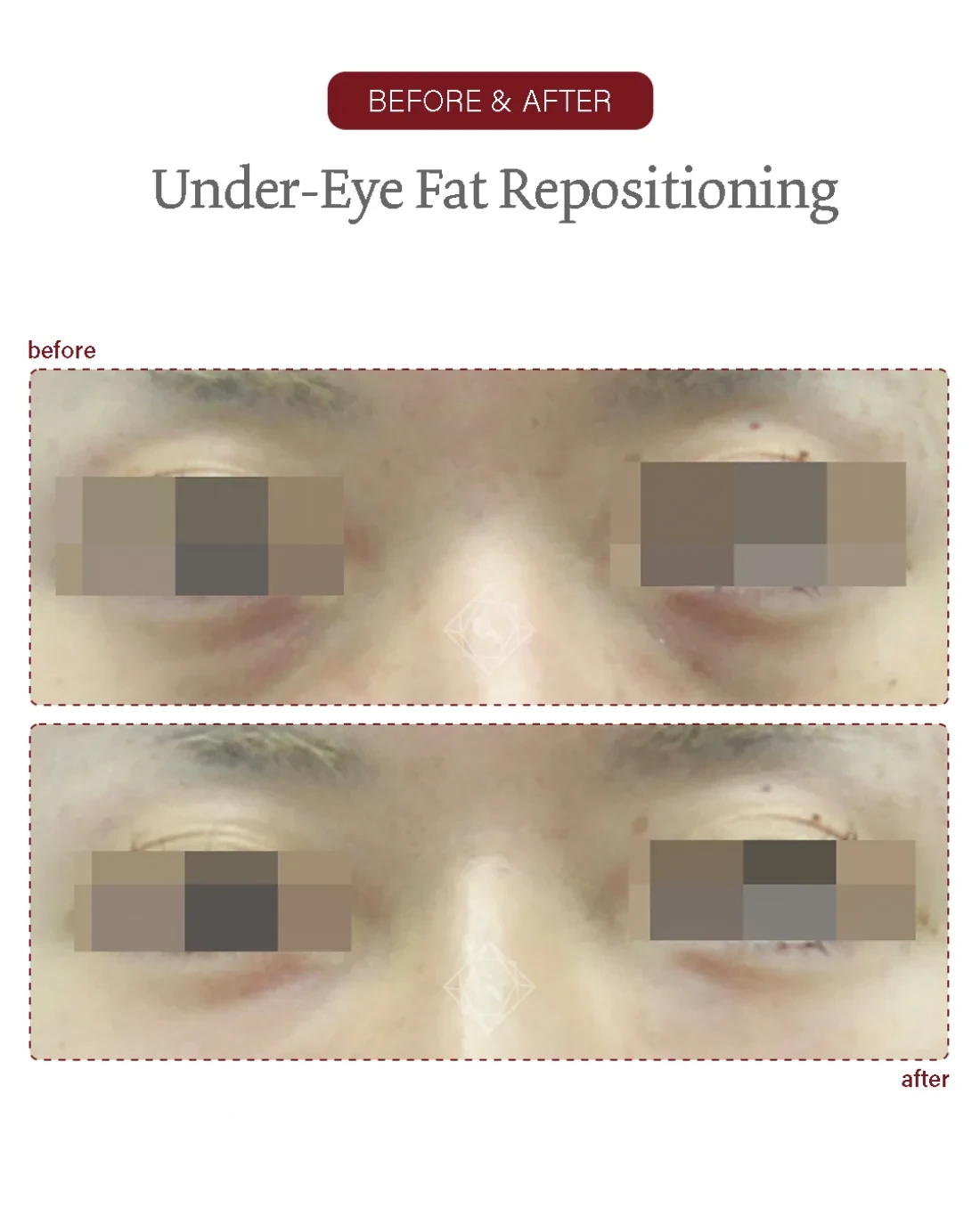
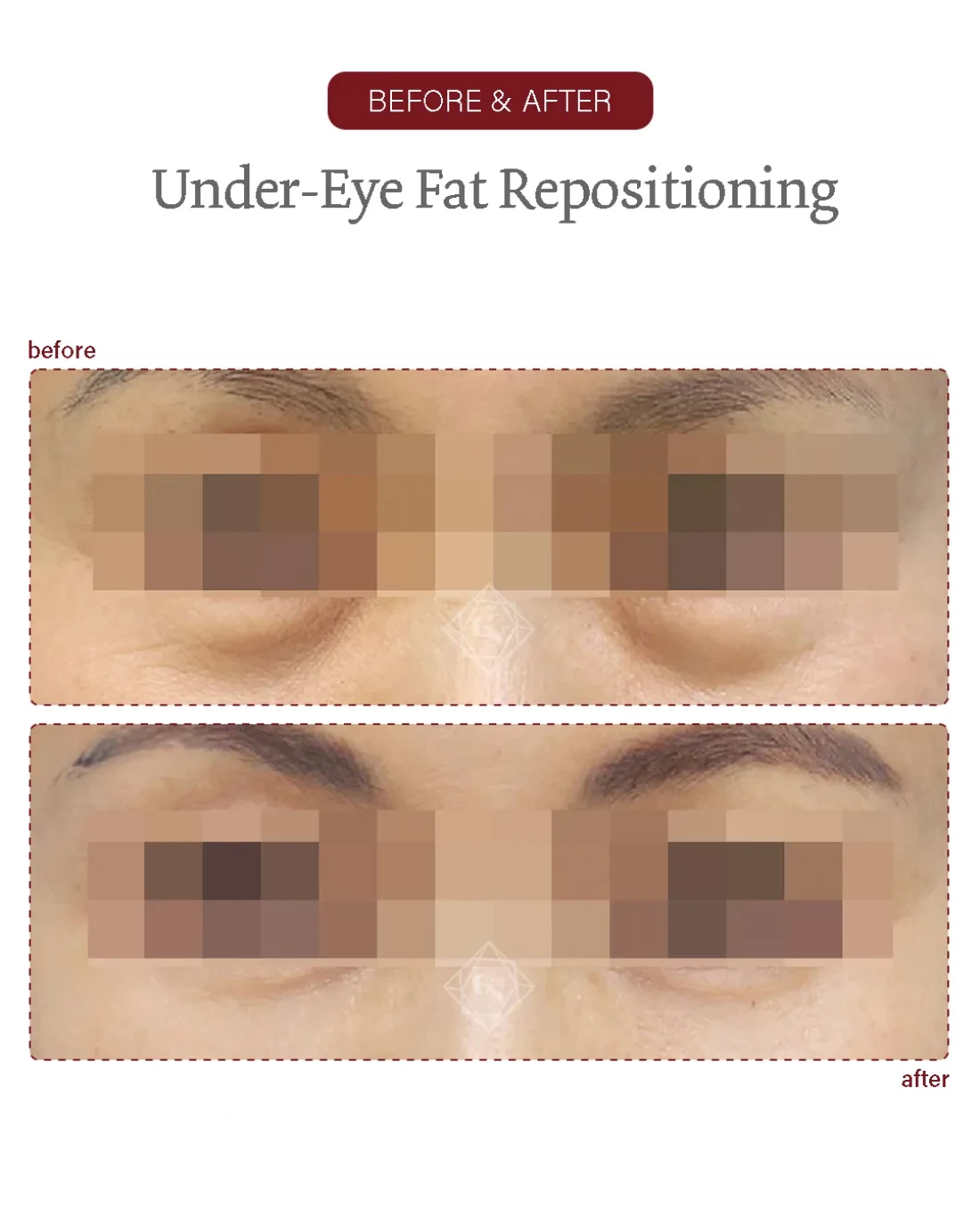
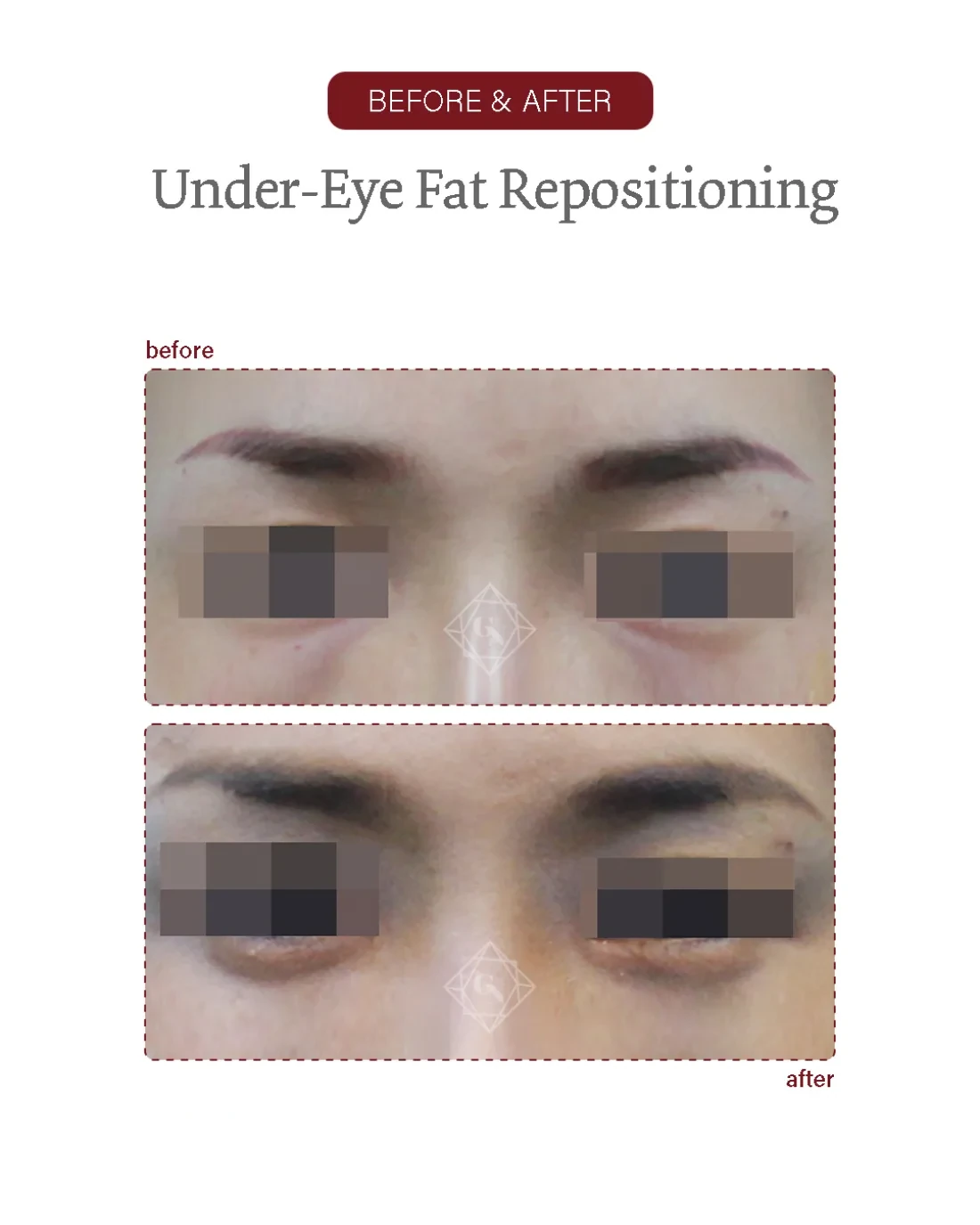
Before & After
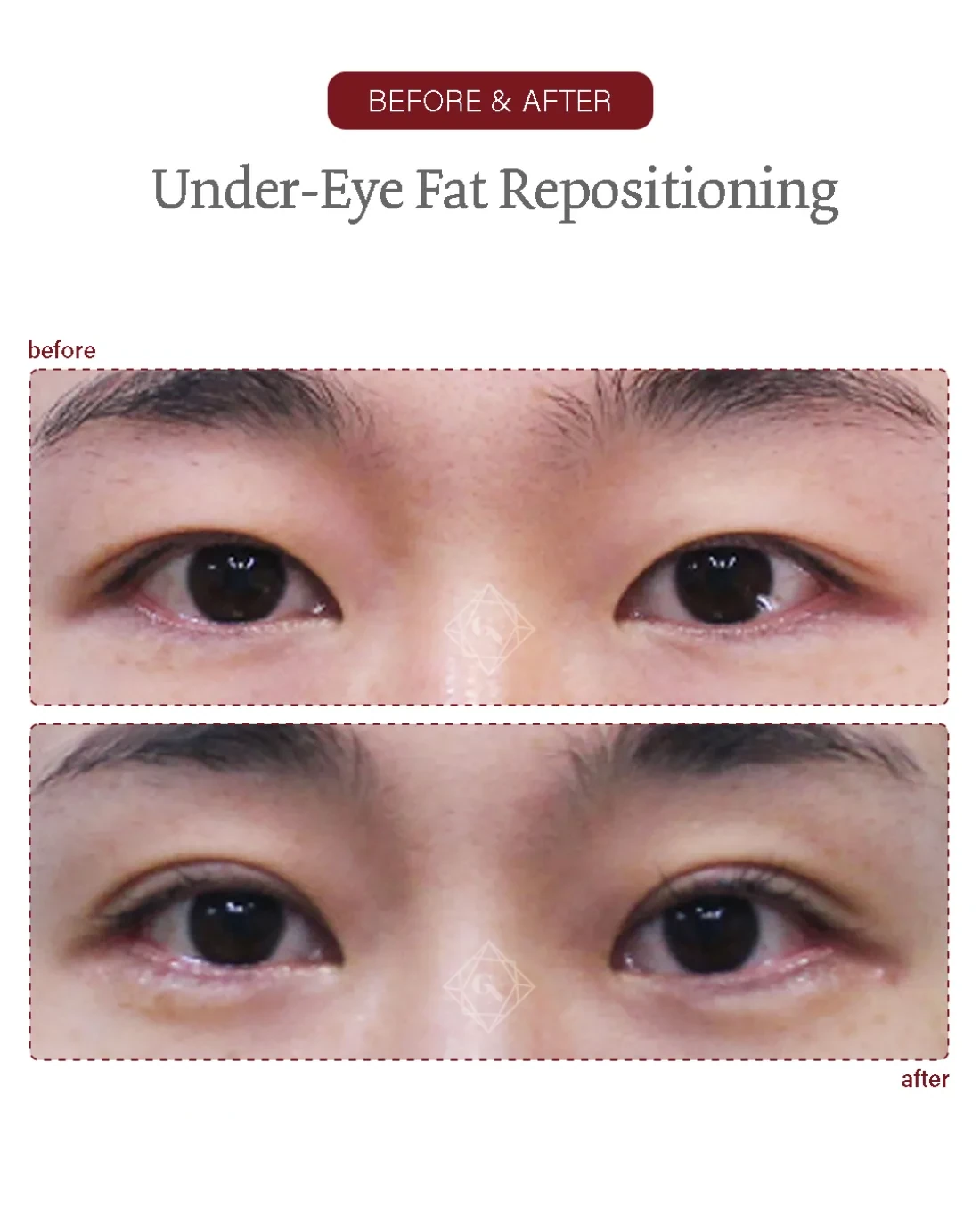
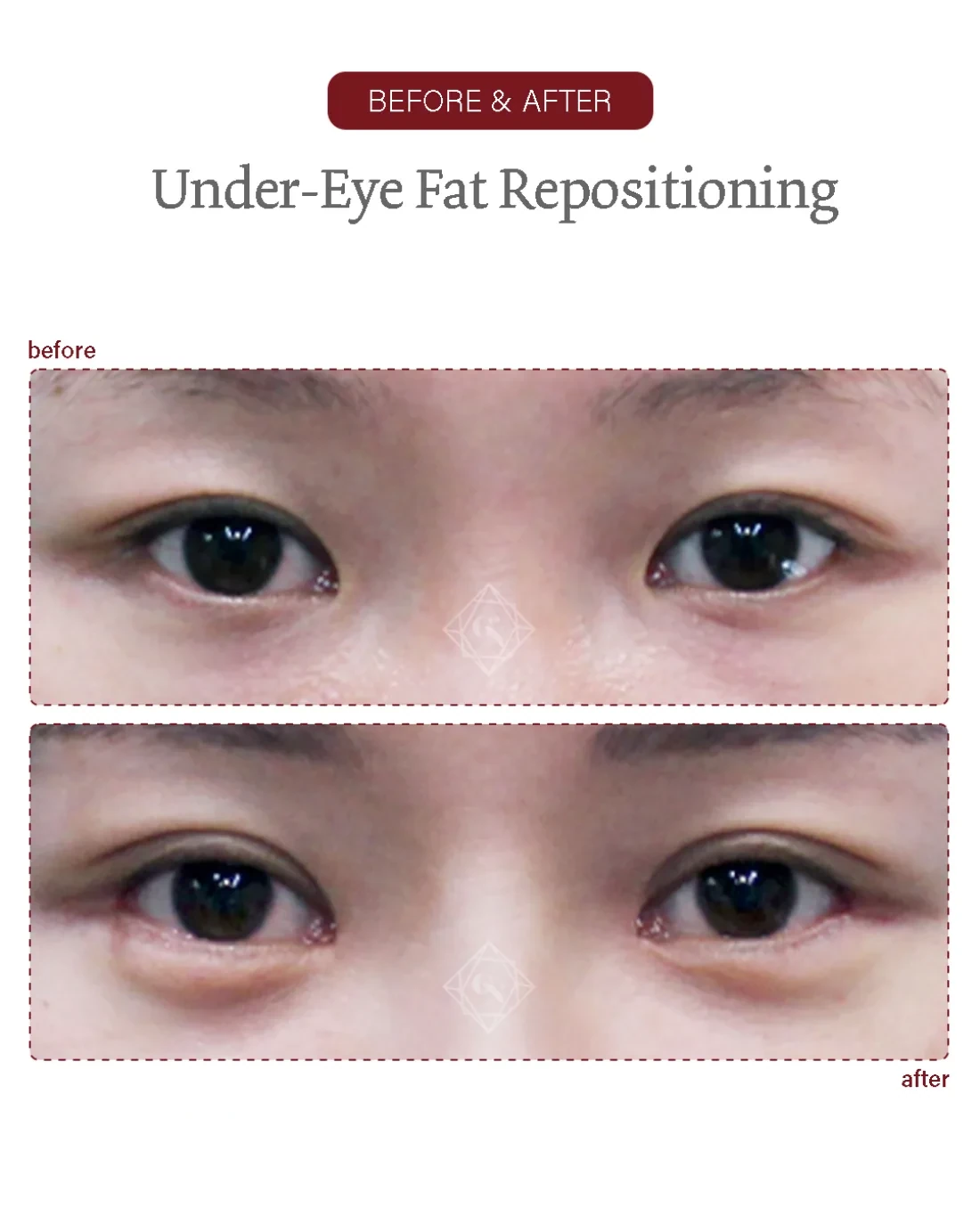
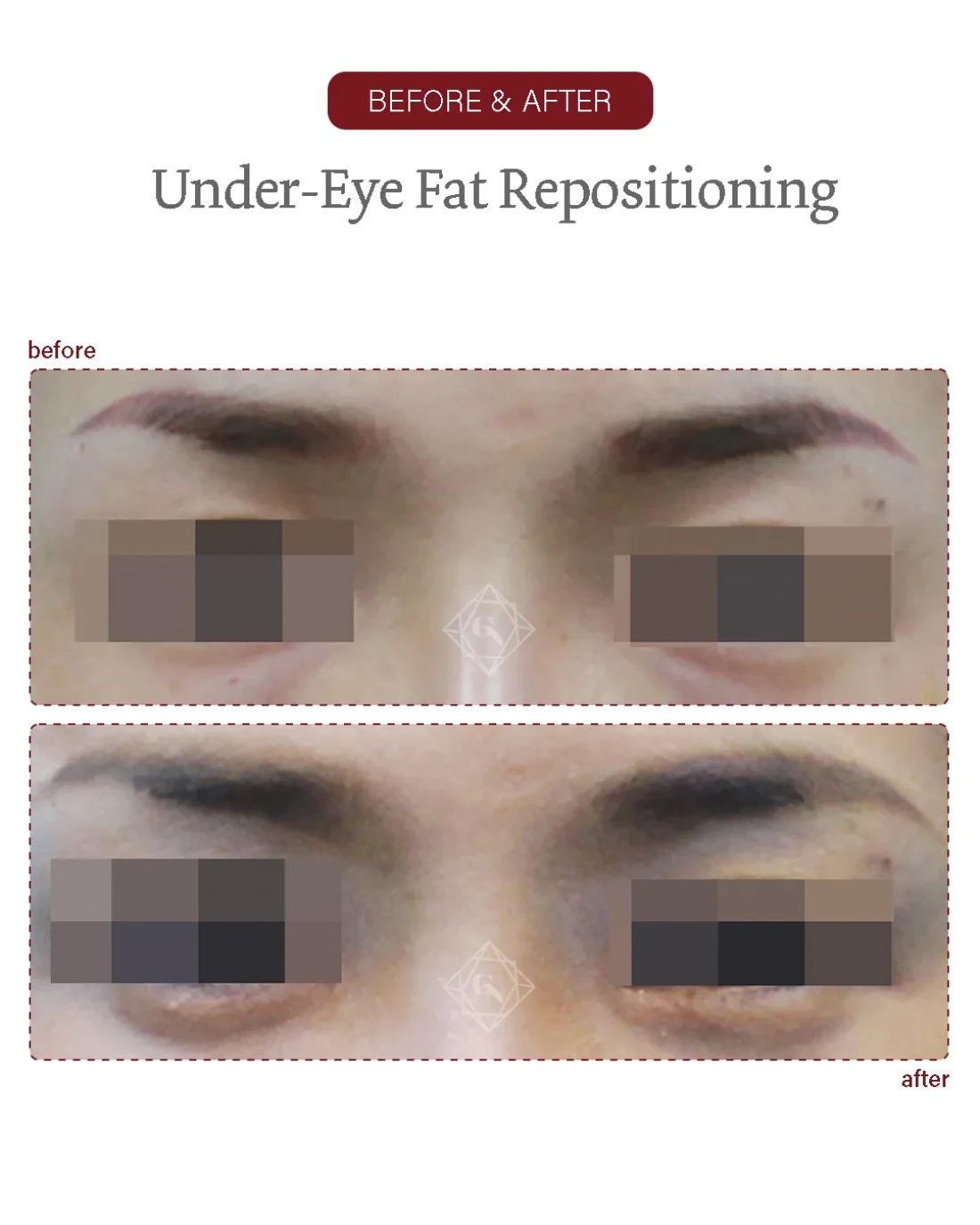
Under-eye fat repositioning before/after of actual Garnet patients (published with consent; each set labelled with date, procedure and clinic). Photographed under comparable conditions. Results, recovery and suitability vary by individual and are not guaranteed.
Prices
Price at Garnet
Under-eye fat repositioning
From₩2,500,000 + VATExcluding VAT (10% VAT is added at payment)Book now
Same price as Korean patients. Prices shown exclude 10% VAT; your written quote, issued after the in-person consultation, shows the full amount payable.
Dr. In-Soo Baek
Director & sole operating surgeon
Korean medical licence no. 77407
Operate on what you came for. Trained at Korea University Medical Center. Every case planned, performed and reviewed by the same hands.
1Operating surgeon
~2Surgeries per day
7Registered techniques
Board-certified plastic surgeon
Plastic surgery training at Korea University College of Medicine & graduate school
Korean Society of Plastic and Reconstructive Surgeons member, in its facial-contour, eye & rhinoplasty groups
Consults, operates and follows up each case himself
Peer-reviewed papers behind the facts on this page. Each describes findings in its own study group — not results at Garnet — and none predicts your own outcome.
Termanini KM et al. Tear Trough Deformity: Update on Anatomy and Clinical Management. Aesthetic Surgery Journal. 2026. doi:10.1093/asj/sjag070
Warren RJ. Blending the Lower Lid Cheek Junction. Clinics in Plastic Surgery. 2025. doi:10.1016/j.cps.2024.07.004
Sarhaddi D et al. Transconjunctival Lower Lid Blepharoplasty with and Without Fat Preservation and Skin Resurfacing. Facial Plastic Surgery Clinics of North America. 2021. doi:10.1016/j.fsc.2021.01.004
FAQ
Common questions
Where are the scars after under-eye fat repositioning?
There is no external scar. The incision is transconjunctival, made on the inner surface of the lower eyelid, so there is no cut on the outer skin of the lid or cheek. Any wound is on a hidden surface behind the lashes that no one sees.
Will under-eye fat repositioning leave a visible mark?
Not a scar. In the first weeks the lower lid and cheek can look swollen and the white of the eye may show pink or a small bruise, but these settle. Because the approach is inside the lid, there is no line on the skin to mature or fade.
Why does under-eye fat repositioning leave no external scar?
Because the incision runs through the conjunctiva, the inner lining of the lower lid, and not through the skin. This transconjunctival approach avoids an external skin cut altogether, which is different from a subciliary approach that leaves a fine line just below the lashes.
What is the difference between transconjunctival and subciliary approaches?
A transconjunctival incision sits inside the lower lid and leaves no external scar. A subciliary incision is made in the skin crease just below the lash line and does leave a fine external line to mature. Garnet uses the inside route for under-eye fat repositioning.
Do the stitches need to be removed?
Usually not. Because the incision is on the conjunctiva, it typically needs no suture removal. Any stitch dissolves or the mucosal surface closes on its own, which is one reason downtime for this procedure is minimal.
How long does the area take to heal?
The hidden wound heals quickly, so recovery is mostly about swelling and bruising settling over the first weeks. Any pinkness on the white of the eye clears in the same window, and the contour keeps refining as swelling resolves over a few months.
How can I help the area heal well?
Keep the eye clean, avoid rubbing it, use any prescribed drops as directed, and rest with your head slightly raised. Cool compresses ease early swelling, and protecting the thin under-eye skin from the sun helps while it recovers. Avoid heavy lifting and straining early on.
What is not normal during healing?
Worsening pain, marked or increasing redness of the eye itself, discharge or fever, sudden one-sided swelling, any change in vision, or a lower lid that pulls down or turns outward are reasons to contact the clinic promptly. None is common after a transconjunctival approach, and each is simpler to treat when the clinic hears about it early.
I have dry eyes — can I still have this surgery?
Tell your surgeon at consultation if you have dry eye, a prior eyelid procedure or any eye condition. It does not automatically rule you out, but it can change how the lid is handled and followed. The lower lid can be assessed from photos in an online consultation before you plan the trip.
Can my recovery be reviewed after I fly home?
Yes. As an international patient you can keep sending photos of the eyes so the area is assessed at each milestone, and the same surgeon who operated guides your aftercare remotely through Korea's foreign-patient programme support.
My mom recently had a brow lift and lower blepharoplasty with Dr. Baek, and our experience has been wonderful so far. The Garnet team was incredibly kind and welcoming, with Kelly assisting us as our English consultant—she made everything…
I’m so happy I chose this clinic for my lower blepharoplasty. I was traveling from abroad by myself, so I was a little nervous, but from the beginning I felt comfortable and truly cared for. Everyone was kind, patient, and professional…
Came in for an in-person consult and ended up choosing Garnet and Dr.Baek for my non-incisional DES and tiplasty/alarplasty. I communicated with Kelly (English consultant) from the start till now (3 weeks post-op). She really help me feel…
My under-eyes have been sagging and folding for years... I tried to cover it up with makeup, but it actually got stuck in the wrinkles and made it stand out even more. While going for consultations, I noticed that the bigger the hospital…
Worried about scarring? Send photos for an honest, no-obligation pre-assessment — we'll explain exactly how the inside-the-lid approach works for your eyes before you plan a trip.
Send photos and your question before you travel. An English-speaking coordinator reviews every enquiry and replies with guidance on whether surgery is appropriate, the likely plan and timing.
✓ Reviewed by the clinic coordinator, not a bot
✓ Photo-based pre-assessment before you fly
✓ Foreign-patient scheduling & after-care
✓ One surgeon for consultation, surgery and follow-up
Prefer to chat now? Reach the coordinator directly:









 T S7 months ago



