Most upper blepharoplasties heal well, but some leave the upper eyelids with residual hooding, an over-resected lid, asymmetry or an uneven crease. Revision is a more nuanced operation than the first surgery, and timing and an accurate diagnosis matter. This page explains what correction involves and who it suits.
The short answer
Common reasons for revision are under-correction with residual hooding, over-correction that leaves the lid looking hollow or unable to close fully, asymmetry between the eyes, and an uneven or poorly placed crease.
Timing is important. Most surgeons wait until tissues have fully settled, usually several months or longer, before revising, because early swelling can mimic a problem that resolves on its own.
Correcting under-correction is generally simpler than correcting over-correction, which may need careful tissue management; a careful assessment decides what is realistic.
The same board-certified surgeon examines, operates and follows up, which matters even more for a revision than for a first-time procedure.
Why an upper blepharoplasty revision may be needed
Upper blepharoplasty removes redundant upper-lid skin through a crease incision, and most people heal to a lighter, more open lid. A minority, though, are unhappy once everything has settled, and the reasons fall into a few recognisable patterns: residual hooding because too little skin was removed, an over-resected lid where too much was taken, asymmetry between the two eyes, or a crease that is uneven, too high, too low or poorly defined.
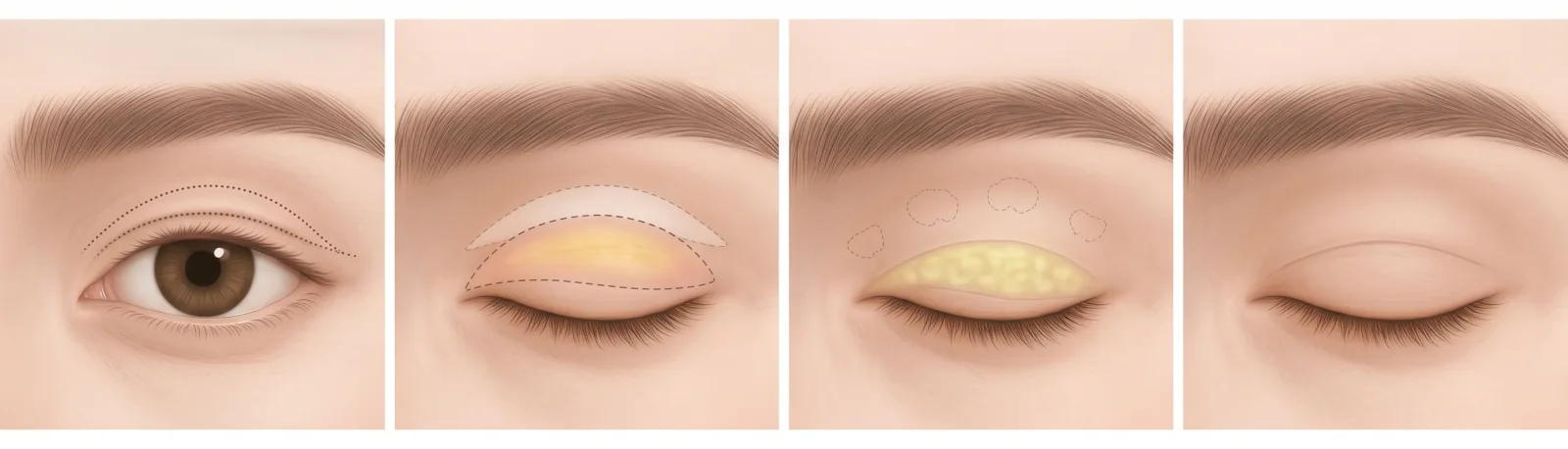
Illustration: the planned crease is marked, the excess upper-lid skin and selected fat pads are addressed through that line.
Sometimes the real issue was the diagnosis, and the technique was fine. If the original heaviness was driven by a low brow or by ptosis (a weak eye-opening muscle) and only lid skin was removed, the eye can still look tired afterwards because the underlying cause was never addressed. Identifying which of these is at play is the first and most important step of any revision plan.
Revision is a different undertaking from a first operation. The tissues have already been altered, scar tissue may be present, and there is often less spare skin to work with, so the surgeon has narrower margins. That is why a careful assessment, including the realistic limits of what correction can achieve, matters more here than almost anywhere else in eye surgery.
Under vs over
Under-correction versus over-correction
These two problems pull in opposite directions and are corrected very differently. Under-correction means too little skin was removed, so a fold of skin still drapes over the lid and the hooding persists. This is generally the more straightforward to revise: once the tissues have settled, a surgeon can remove the remaining redundant skin, much as in a primary procedure, to achieve the lighter lid that was the original goal.
Over-correction is harder. If too much skin was taken, the upper lid can look hollow, the crease can sit too high, or in more significant cases the eye may not close fully, which is both an aesthetic and a functional concern. Correcting this is not simply a matter of removing more tissue; it can require careful tissue management to restore softness and closure, and the realistic outcome may be an improvement short of a complete reset.
Because the two scenarios are so different, a careful surgeon will tell you plainly which one you have and what is genuinely achievable. If your concern is residual heaviness, it helps to first re-confirm the diagnosis by reviewing whether brow position or the eye-opening muscle is contributing as well as skin, as covered in the discussion of who upper blepharoplasty suits.
Asymmetry
Asymmetry and uneven creases
Perfect symmetry between two eyes does not exist even before surgery; most faces are slightly uneven to begin with, and a small difference after upper blepharoplasty is normal and often settles as swelling resolves. Genuine asymmetry that persists once healing is complete, however, is a common and understandable reason patients seek revision: one lid may sit higher, one crease may be deeper, or one side may carry more residual skin than the other.
Crease problems are a related theme. A crease that is set too high can make the eye look surprised or hollow; one that is uneven, broken or poorly defined draws the eye for the wrong reason. Adjusting a crease in revision is delicate work, because the surgeon is correcting within already-operated tissue, and the aim is a natural, even fold with no dramatic redesign.
A careful assessment will distinguish asymmetry that is still settling from asymmetry that is fixed and worth correcting. The goal of any good revision is a balanced, natural result that looks like you. A perfectly mirrored pair of eyes is neither realistic nor natural. Knowing how the lid heals and how scars settle also helps you judge what is still changing.
Timing
Timing: when to wait before revising an upper blepharoplasty
Timing is one of the most important and most overlooked parts of revision. After a primary upper blepharoplasty the lids swell, the crease can sit unevenly, and the result genuinely changes over weeks and months as tissues soften and settle. Operating too early risks correcting a problem that would have resolved on its own, and adds another round of swelling and scarring to tissue that has not yet recovered.
For this reason most surgeons advise waiting until the tissues have fully settled before revising, typically several months at minimum and often longer, unless there is a functional issue such as an inability to close the eye that needs earlier attention. The wait is frustrating when you are unhappy, but it protects you from a hasty second operation and gives the surgeon stable tissue to plan around.
If you had your original surgery elsewhere, a remote review can begin the conversation without committing to anything. Sending photographs in an online consultation lets a surgeon give an early, frank view on whether your result is still settling, whether revision is likely to help, and roughly when it would be sensible to consider it.
At Garnet
How revision is assessed at Garnet
Garnet is a single-surgeon clinic in Apgujeong, Seoul, where the same board-certified plastic surgeon, Dr. In-Soo Baek (Korean medical licence no. 77407), consults, operates and follows you up. For a revision this continuity is especially valuable: the surgeon who examines your existing result is the one who plans and performs the correction and then reviews how it heals, so the judgement does not pass through other hands.
A revision assessment looks at what was originally done, what the current problem actually is (under-correction, over-correction, asymmetry, crease position, or an underlying brow or muscle issue), how much tissue is available to work with, and how fully your lids have settled. From that, the recommendation might be revision, a wait-and-review period, a different procedure altogether, or plain reassurance that your result is within the normal range and better left alone. There is no over-recommendation and no pressure to book the same day.
Garnet sees international patients through Korea's foreign-patient programme, with structured follow-up at 1, 3 and 6 months and remote review after you return home. If you are considering correcting a previous upper blepharoplasty, start with a no-obligation pre-assessment in an online consultation and read what to expect at your first consultation.
Real Results
Before & After
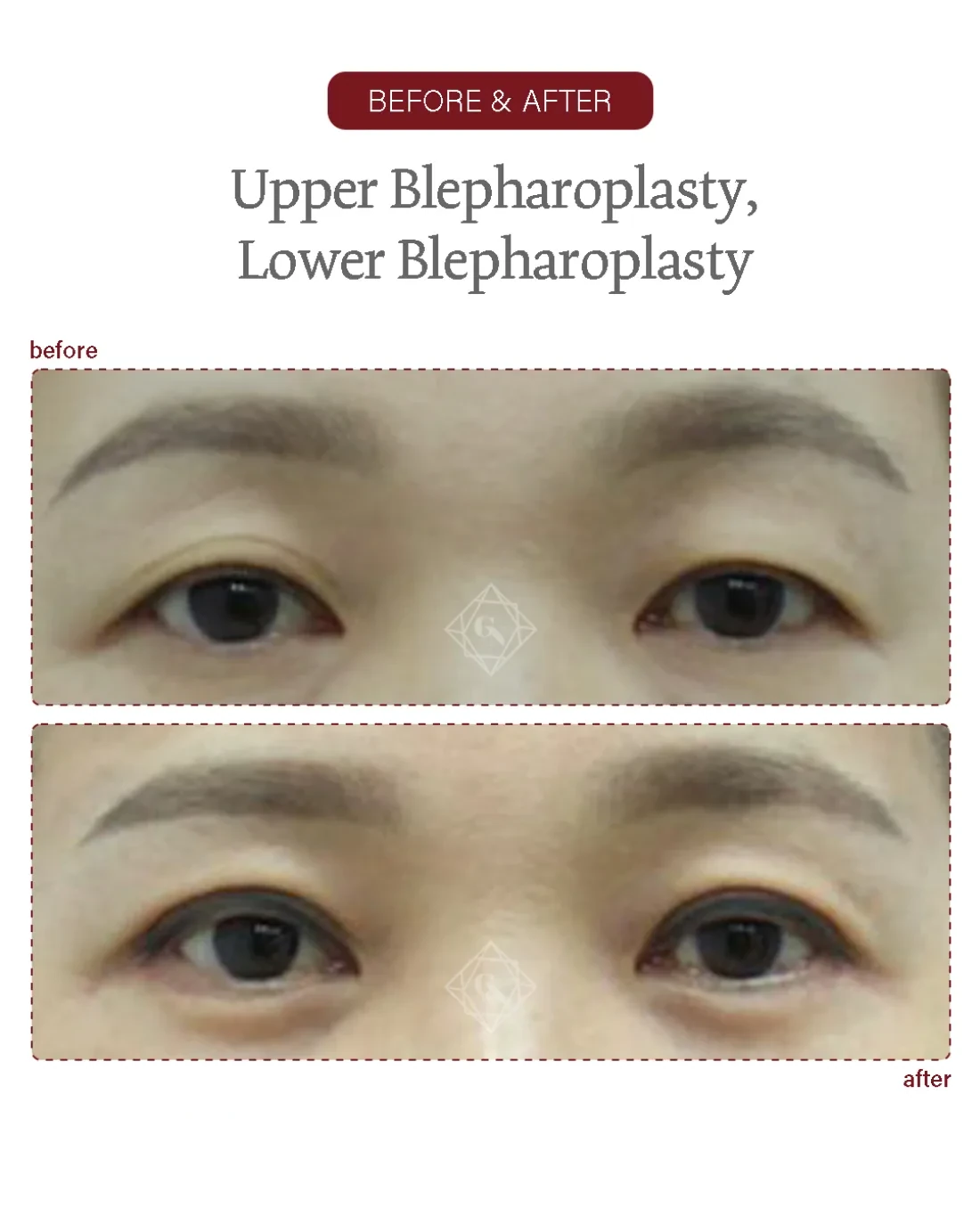
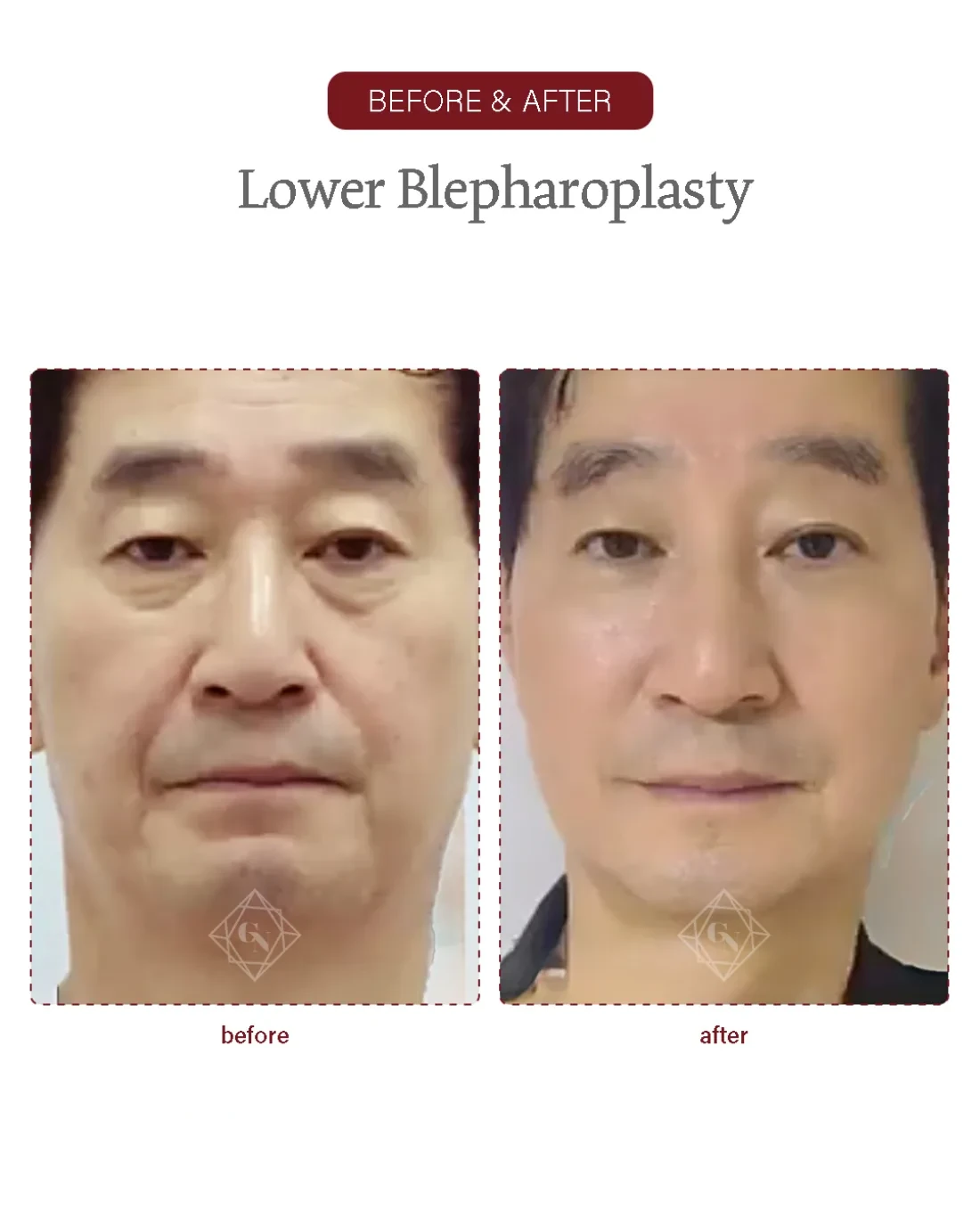
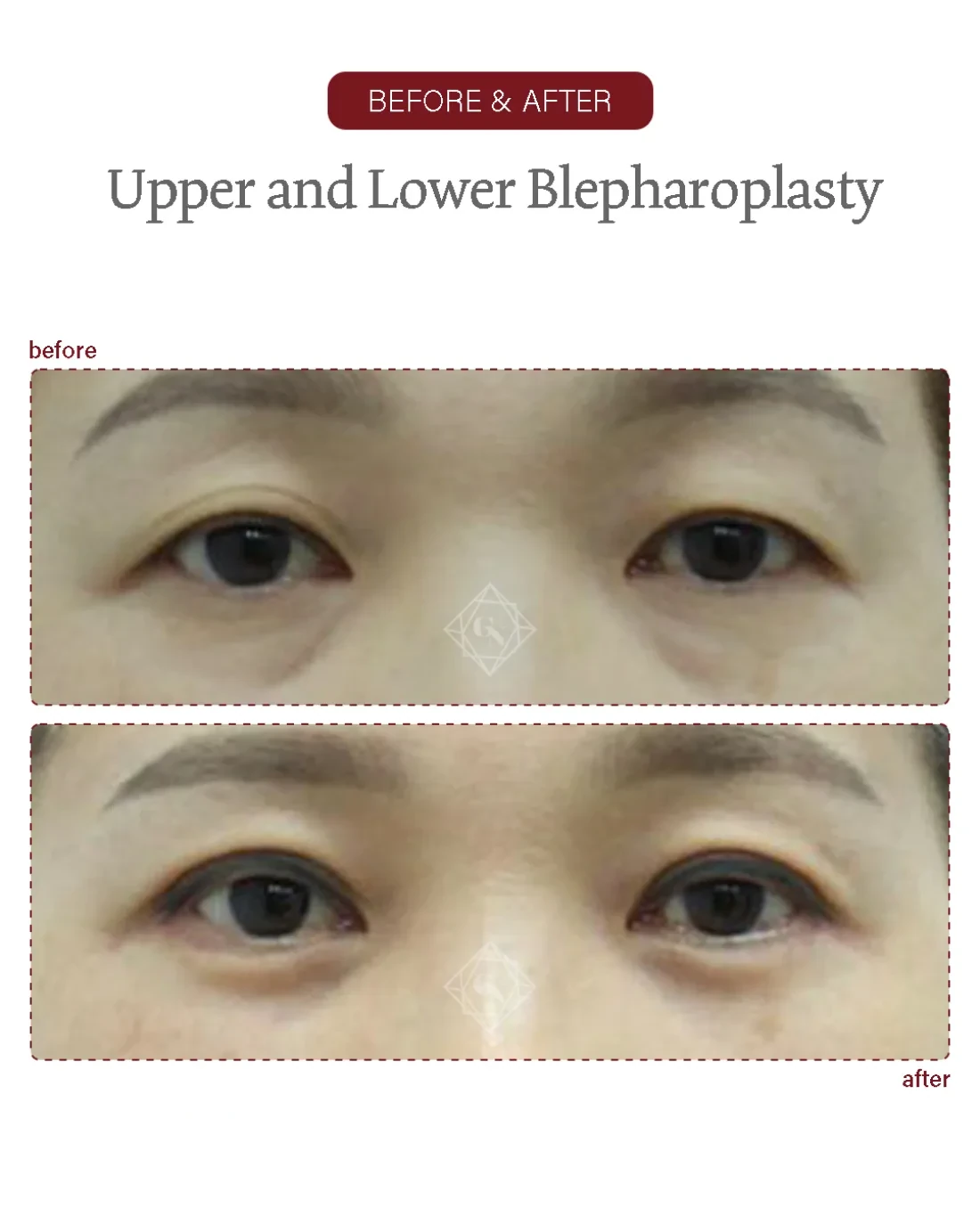
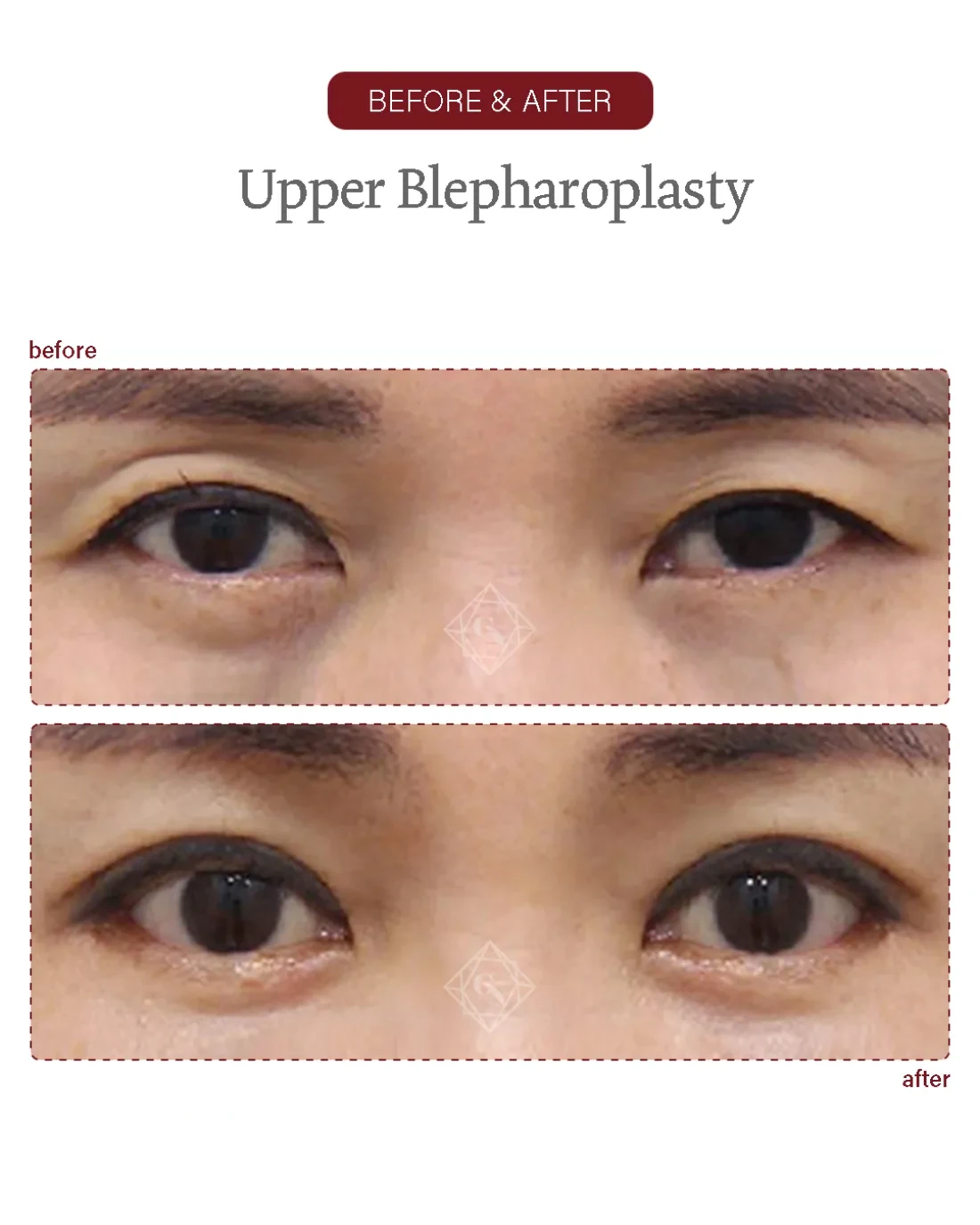
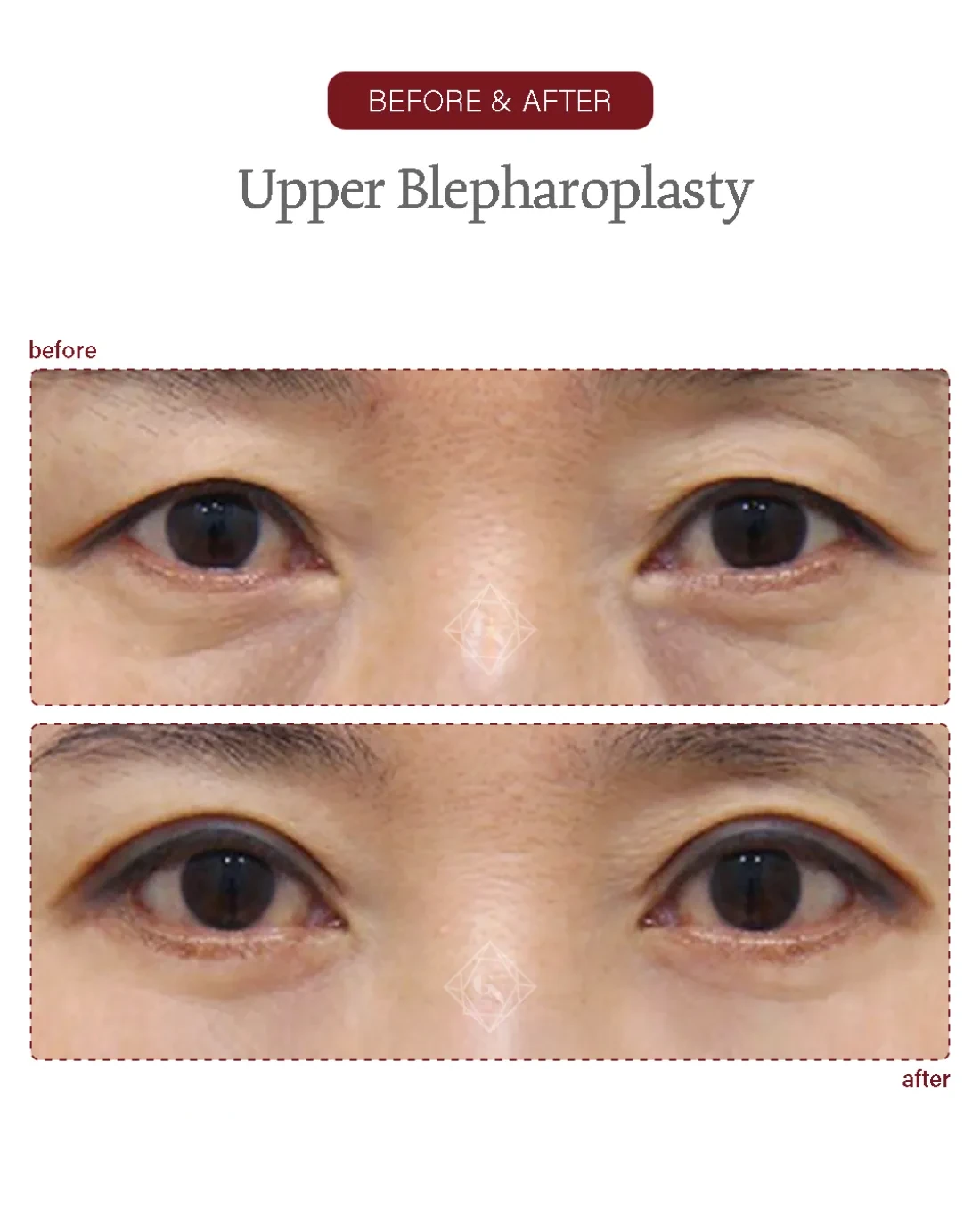
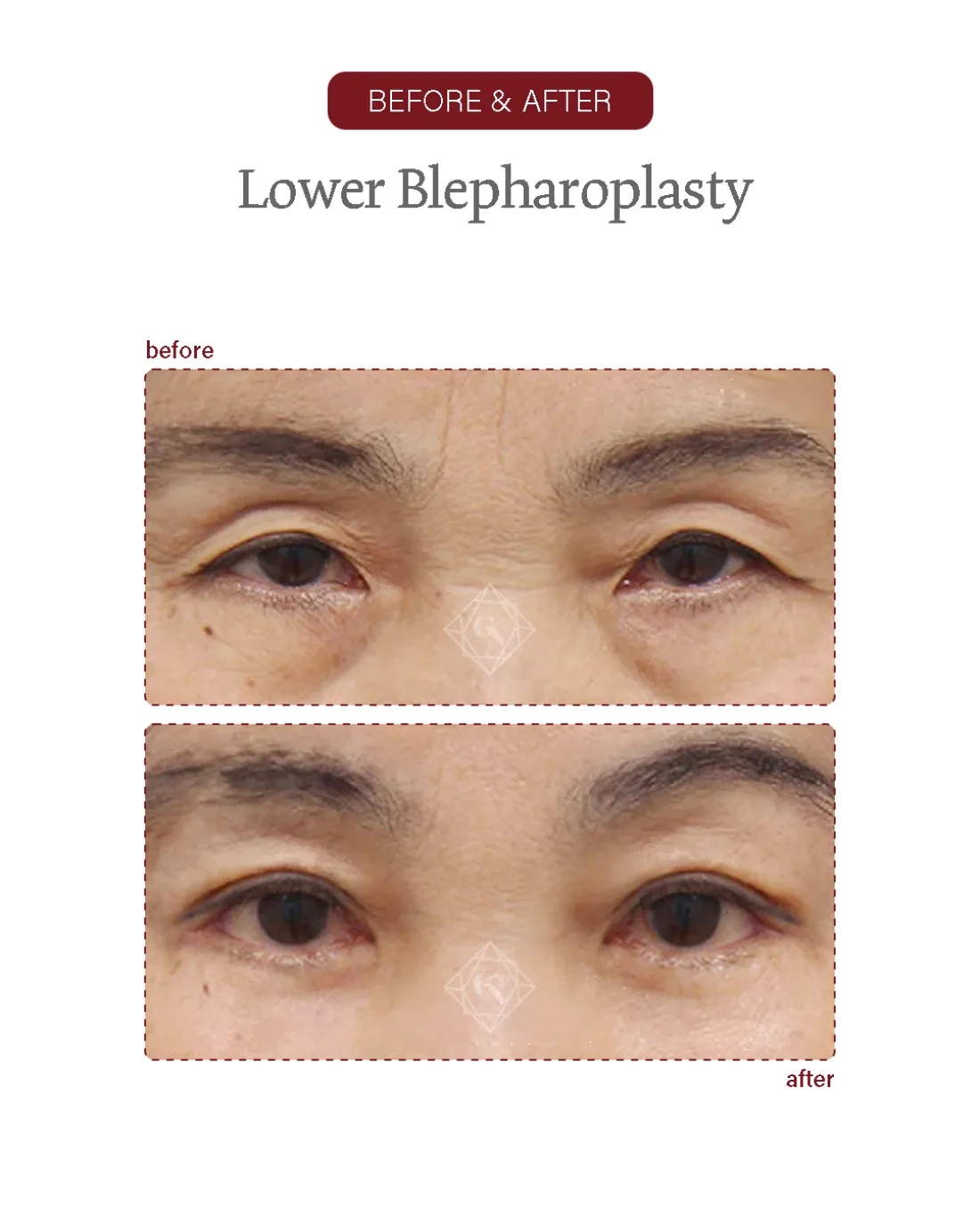
Eyelid before/after examples of actual Garnet patients (published with consent). Results, recovery and suitability vary by individual and are not guaranteed; the right approach is decided at an in-person consultation.
Prices
Price at Garnet
Upper blepharoplasty
From₩3,500,000 + VATExcluding VAT (10% VAT is added at payment)Book now
Same price as Korean patients. Prices shown exclude 10% VAT; your written quote, issued after the in-person consultation, shows the full amount payable.
Dr. In-Soo Baek
Director & sole operating surgeon
Korean medical licence no. 77407
Operate on what you came for. Trained at Korea University Medical Center. Every case planned, performed and reviewed by the same hands.
1Operating surgeon
~2Surgeries per day
7Registered techniques
Board-certified plastic surgeon
Plastic surgery training at Korea University College of Medicine & graduate school
Korean Society of Plastic and Reconstructive Surgeons member, in its facial-contour, eye & rhinoplasty groups
Consults, operates and follows up each case himself
Peer-reviewed papers behind the facts on this page. Each describes findings in its own study group — not results at Garnet — and none predicts your own outcome.
Gentile RD. Upper Lid Blepharoplasty. Facial Plastic Surgery Clinics of North America. 2005. doi:10.1016/j.fsc.2005.06.008
Rodrigues C et al. Upper Eyelid Blepharoplasty: Surgical Techniques and Results—Systematic Review and Meta-analysis. Aesthetic Plastic Surgery. 2023. doi:10.1007/s00266-023-03436-6
Yang CC. Revision of Asian Upper Blepharoplasty. Clinics in Plastic Surgery. 2023. doi:10.1016/j.cps.2022.08.007
FAQ
Common questions
Can a previous upper blepharoplasty be corrected?
Often, yes, though revision is more nuanced than the first operation. Whether and how it can be corrected depends on the specific problem (residual hooding, over-resection, asymmetry or an uneven crease) and on how much tissue is available. A careful assessment is the only way to know what is realistically achievable for your eyes.
What does an upper blepharoplasty revision involve?
It depends on the problem. Under-correction usually means removing the skin that was left, similar to a primary procedure. Over-correction may need careful tissue management to restore softness and full closure. Asymmetry and crease problems involve adjusting within already-operated tissue. The plan is tailored after examining your settled result.
When should I consider upper blepharoplasty revision?
Once your tissues have fully settled (usually several months or longer after the original surgery) and a persistent problem remains, such as residual hooding, an over-hollowed lid, lasting asymmetry or an uneven crease. The exception is a functional issue like an inability to close the eye, which may need earlier attention.
Why do I need to wait before having a revision?
Because the lid keeps changing for months as swelling resolves and tissues soften, early unevenness often corrects itself. Operating too soon risks revising a problem that would have settled, and adds more swelling and scarring to tissue that has not recovered. Waiting gives the surgeon stable tissue to plan around.
Is correcting over-correction harder than under-correction?
Generally yes. Under-correction usually means removing the skin that was left behind, which is relatively straightforward. Over-correction (too much skin removed, a hollow lid, or incomplete closure) can require careful tissue management, and the realistic result may be a meaningful improvement short of a complete reset.
Can asymmetry after upper blepharoplasty be fixed?
Often, once healing is complete. Some asymmetry is normal and settles with swelling, and no two eyes are identical even before surgery. Genuine, persistent asymmetry (a higher lid, a deeper crease or more residual skin on one side) can usually be improved, with the aim of a balanced, natural result.
What if my original surgery did not address the real cause?
Sometimes residual heaviness remains because the true cause was a low brow or ptosis (a weak eye-opening muscle) as well as, or instead of, excess skin. In that case more skin removal will not help; the correct plan addresses the underlying cause. Re-confirming the diagnosis is the first step of any revision assessment.
Can I have my revision reviewed before flying to Korea?
Yes. You can send photographs of your current result in an online consultation, and the same surgeon who would operate gives a frank early view on whether revision is likely to help and roughly when it would be sensible — without obligation to book or travel.
Will a revision give me a ideal result?
The realistic goal is a balanced, natural improvement that looks like you. A perfectly symmetrical pair of eyes is not a realistic target. Revision works within already-altered tissue with narrower margins, so a careful surgeon will set expectations clearly about what correction can and cannot achieve.
Does Garnet treat international patients for revision eye surgery?
Yes. Garnet is registered with Korea's foreign-patient programme, the assessment can begin remotely with photographs, and the same board-certified surgeon examines, operates and reviews your follow-ups at 1, 3 and 6 months, with remote check-ins after you return home.
My mom recently had a brow lift and lower blepharoplasty with Dr. Baek, and our experience has been wonderful so far. The Garnet team was incredibly kind and welcoming, with Kelly assisting us as our English consultant—she made everything…
I’m so happy I chose this clinic for my lower blepharoplasty. I was traveling from abroad by myself, so I was a little nervous, but from the beginning I felt comfortable and truly cared for. Everyone was kind, patient, and professional…
Came in for an in-person consult and ended up choosing Garnet and Dr.Baek for my non-incisional DES and tiplasty/alarplasty. I communicated with Kelly (English consultant) from the start till now (3 weeks post-op). She really help me feel…
My under-eyes have been sagging and folding for years... I tried to cover it up with makeup, but it actually got stuck in the wrinkles and made it stand out even more. While going for consultations, I noticed that the bigger the hospital…
Unhappy with a previous upper blepharoplasty? Send photos for a no-obligation pre-assessment of whether revision is likely to help before you plan a trip.
Send photos and your question before you travel. An English-speaking coordinator reviews every enquiry and replies with guidance on whether surgery is appropriate, the likely plan and timing.
✓ Reviewed by the clinic coordinator, not a bot
✓ Photo-based pre-assessment before you fly
✓ Foreign-patient scheduling & after-care
✓ One surgeon for consultation, surgery and follow-up
Prefer to chat now? Reach the coordinator directly:








 T S7 months ago



