Upper blepharoplasty removes the redundant skin that makes the upper eyelids look heavy and hooded, a change that often appears from the late thirties onward. It helps a specific patient; for other patients a different operation, or none at all, is the better choice. This page goes deeper than the procedure overview on exactly who is suited and who is not.
The short answer
Upper blepharoplasty suits people whose upper lids look heavy or hooded because of excess, lax lid skin — often appearing from the late thirties onward.
If the real problem is a low eyebrow or a low-set fold of skin, a sub-brow lift may suit you better than removing lid skin.
If your eye does not open fully because the lifting muscle is weak, that is ptosis, which needs a different operation, sometimes combined with upper blepharoplasty.
The assessment matters more than a fixed plan: the same board-certified surgeon should examine you and tell you which procedure, if any, actually fits.
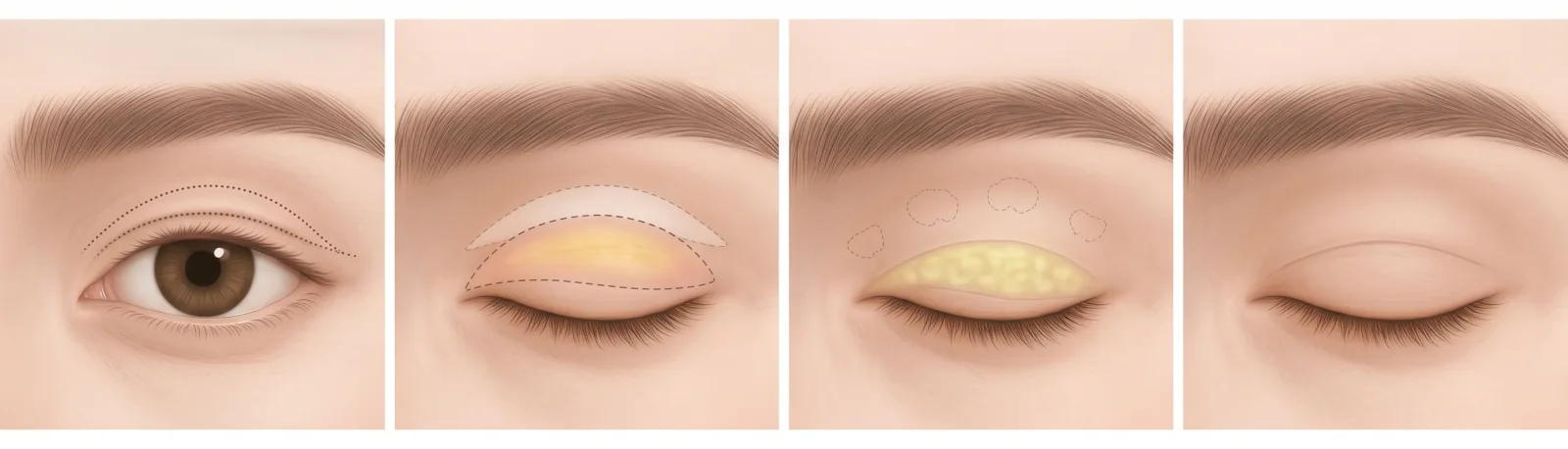
Upper blepharoplasty addresses one core problem: redundant, lax skin on the upper eyelid that makes the eye look heavy, tired or hooded. The surgery is performed through an upper-lid crease incision, where the natural fold hides the scar, and the surgeon excises the excess skin and tidies up the underlying tissue before closing with fine sutures that come out at about seven days.
Illustration: the planned crease is marked, the excess upper-lid skin and selected fat pads are addressed through that line.
Because the work is confined to the lid skin and the immediate tissue beneath it, the result is a lid that sits lighter and more open without changing who you are. It is not a brow lift, a fold-creation operation or a muscle operation. Those distinctions matter a great deal when you are deciding whether this is the right procedure for your particular eyes.
The first step in candidacy, then, is matching the problem to the operation. Heavy lids can come from skin, from the brow position, from the eye-opening muscle, or from a combination, and only one of those is what upper blepharoplasty is designed to correct. If you read nothing else here, read the section on getting the diagnosis right, because a mismatched plan is the most common reason patients end up disappointed.
Good candidate
Who is a good candidate for upper blepharoplasty
The clearest candidate is someone whose upper lids have developed loose, excess skin that drapes over the lash line or buries the natural fold. This typically shows up from the late thirties onward as the skin gradually loses its tone, though some people inherit fuller, heavier lids earlier. If you find yourself lifting your brows to feel like your eyes are open, or your eyeliner disappears under a fold of skin, those are practical signs the lid skin itself is the issue.
Good candidates are in reasonable general health, do not have an active eye condition such as untreated dry eye or an eyelid infection, and have realistic expectations: the aim is a rested, lighter upper lid on the same face. Patients who understand that the goal is to look like themselves on a good day, without a dramatic change, tend to be the most satisfied. You can read what recovery looks like before you commit, on the upper blepharoplasty recovery timeline.
Many international patients are also good candidates simply because the assessment can begin from home. If you are unsure whether your heaviness is skin-driven, you can send photographs for a pre-assessment in an online consultation before deciding whether to travel. There is no obligation, and the answer is sometimes that a different procedure, or none, would serve you better.
Vs brow & ptosis
Upper blepharoplasty vs a sub-brow lift vs ptosis correction
Three different operations can address a heavy upper eye, and choosing between them is the heart of candidacy. Upper blepharoplasty removes excess skin from the lid itself. A sub-brow lift instead lifts and fixes the tissue near the eyebrow, raising a low, heavy brow that is pushing skin down onto the lid — useful when the brow position, and not the lid skin, is the real source of the hooding.
Ptosis correction is different again. Ptosis means the upper lid sits low because the muscle that opens the eye is weak, so the eye itself does not open fully. In that case removing skin alone will not fix the tired look; the surgeon adjusts the strength of the eye-opening muscle. Sometimes ptosis and excess skin coexist, and a surgeon may correct the muscle and remove redundant skin in the same operation. That is exactly why a careful examination decides the plan; self-diagnosis cannot.
There is no single right answer here, only the right answer for your anatomy. A surgeon who concentrates on eye surgery will measure how much skin you have, where your brow sits and how well your lid opens, then recommend the operation that matches the actual problem, even if that means advising against the procedure you first asked about.
Not suited
Who is not suited to upper blepharoplasty
Upper blepharoplasty is not the answer for everyone with a tired-looking eye. If the heaviness comes mainly from a drooping eyebrow, removing lid skin can pull the brow down further and make things look worse. A sub-brow lift or brow procedure suits that pattern. If the eye does not open fully because of a weak lifting muscle, skin removal alone leaves the underlying ptosis untouched.
Some people are not suited for medical reasons, as opposed to anatomical ones: untreated significant dry eye, an active eyelid or eye infection, certain bleeding tendencies, or a recent eye surgery may mean the operation should wait or be reconsidered. Patients who want a dramatic change in eye shape, or who are seeking surgery during a period of unrealistic expectations, are also better served by a frank conversation than by an operation.
Being told "this is not right for you" is a good outcome, and the trip is not wasted. Garnet's approach is to address only the area you came for and not to over-recommend, so if your eyes do not need surgery, or need a different one, you will hear that plainly. If you do proceed, knowing the realistic healing and scar course in advance helps you decide with clear eyes.
Assessment
How candidacy is assessed at Garnet
At Garnet in Apgujeong, Seoul, one board-certified plastic surgeon, Dr. In-Soo Baek (Korean medical licence no. 77407), examines your upper lids, operates and follows you up. That continuity matters for an assessment like this: the surgeon who examines your lids, brow position and eye-opening is the same one who will perform whatever is decided, so nothing is lost in handover.
A candidacy assessment looks at how much excess skin you have, how your brow sits, how fully your lid opens, the state of your tear film and skin tone, and what you are actually hoping to change. From that, the recommendation might be upper blepharoplasty, a sub-brow lift, ptosis correction, a combination, or simply reassurance that you do not need surgery yet. There is no consultation fee and no pressure to book the same day.
For international patients the assessment can start remotely. Send clear photographs through an online consultation for a pre-assessment, and if surgery does fit, the clinic coordinates scheduling and after-care, with structured follow-ups at 1, 3 and 6 months. You can also read how the first consultation at Garnet works before you travel.
Real Results
Before & After
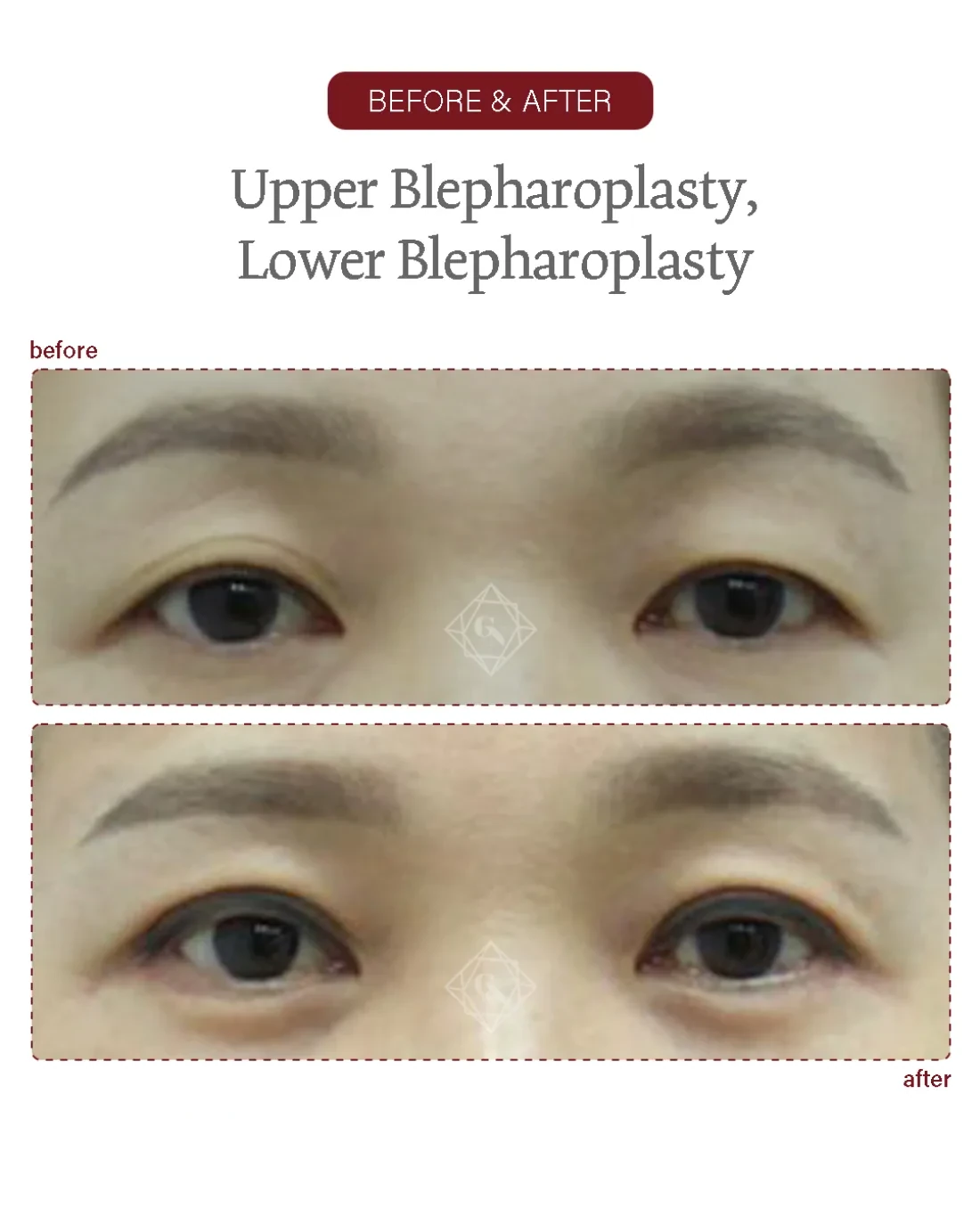
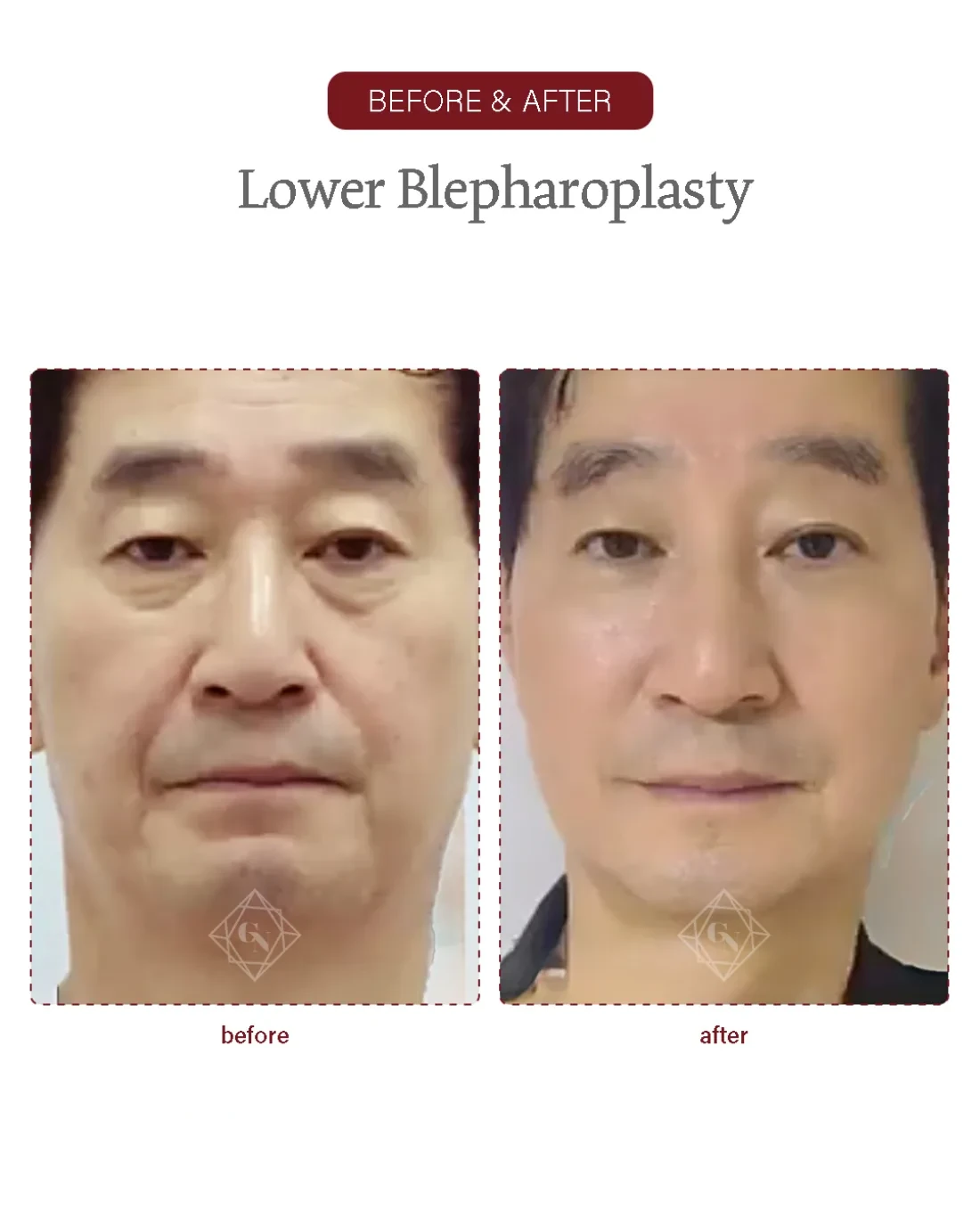
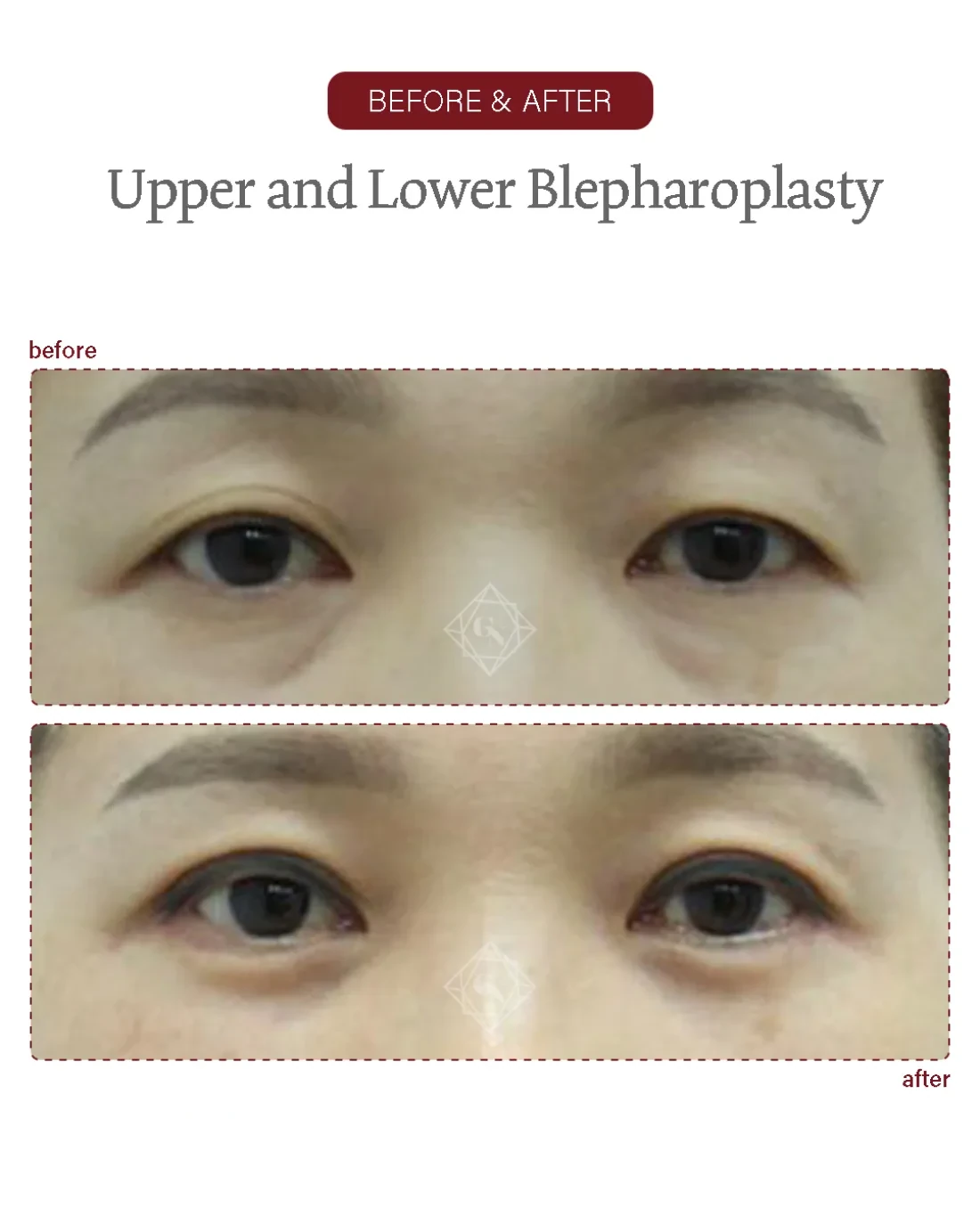
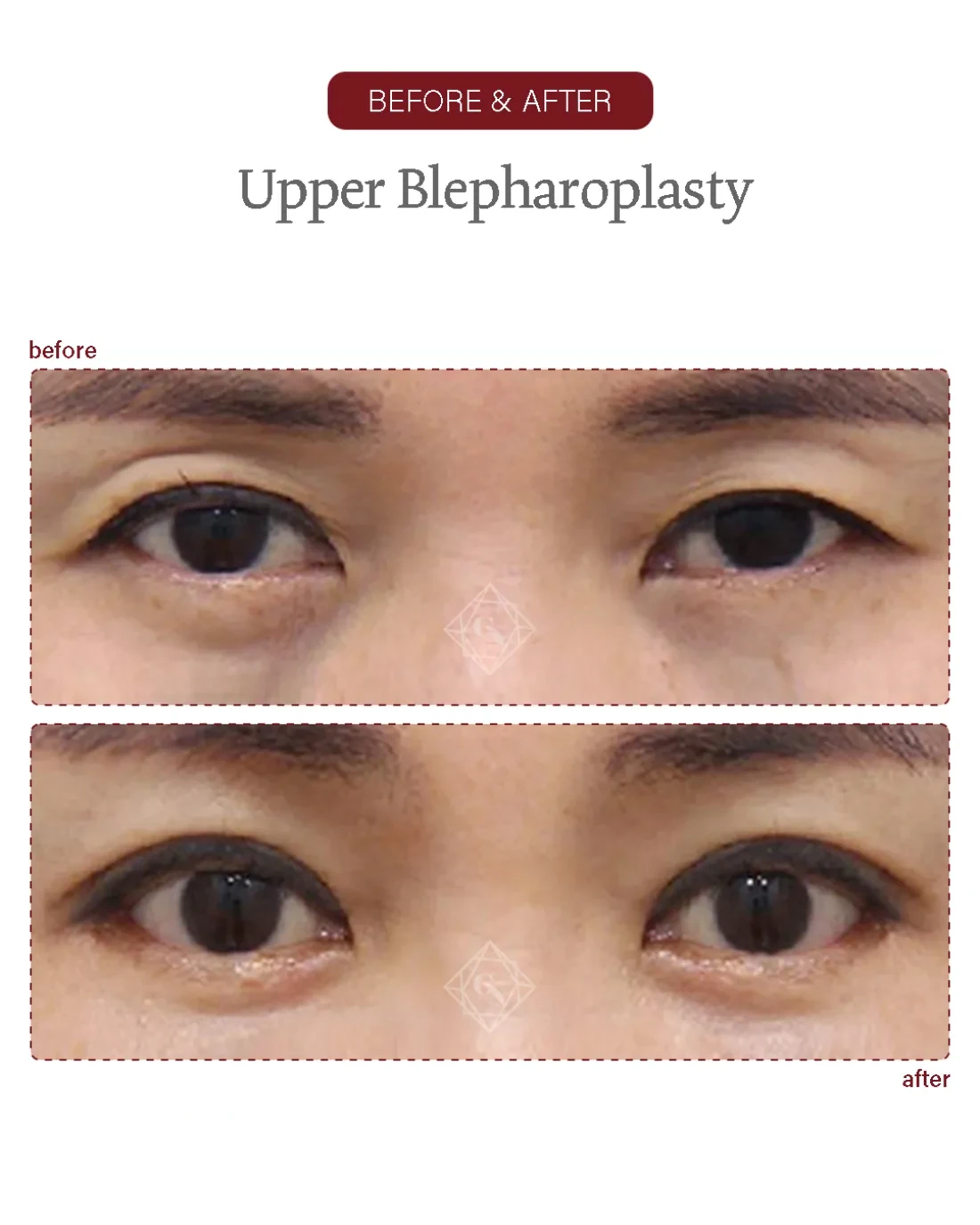
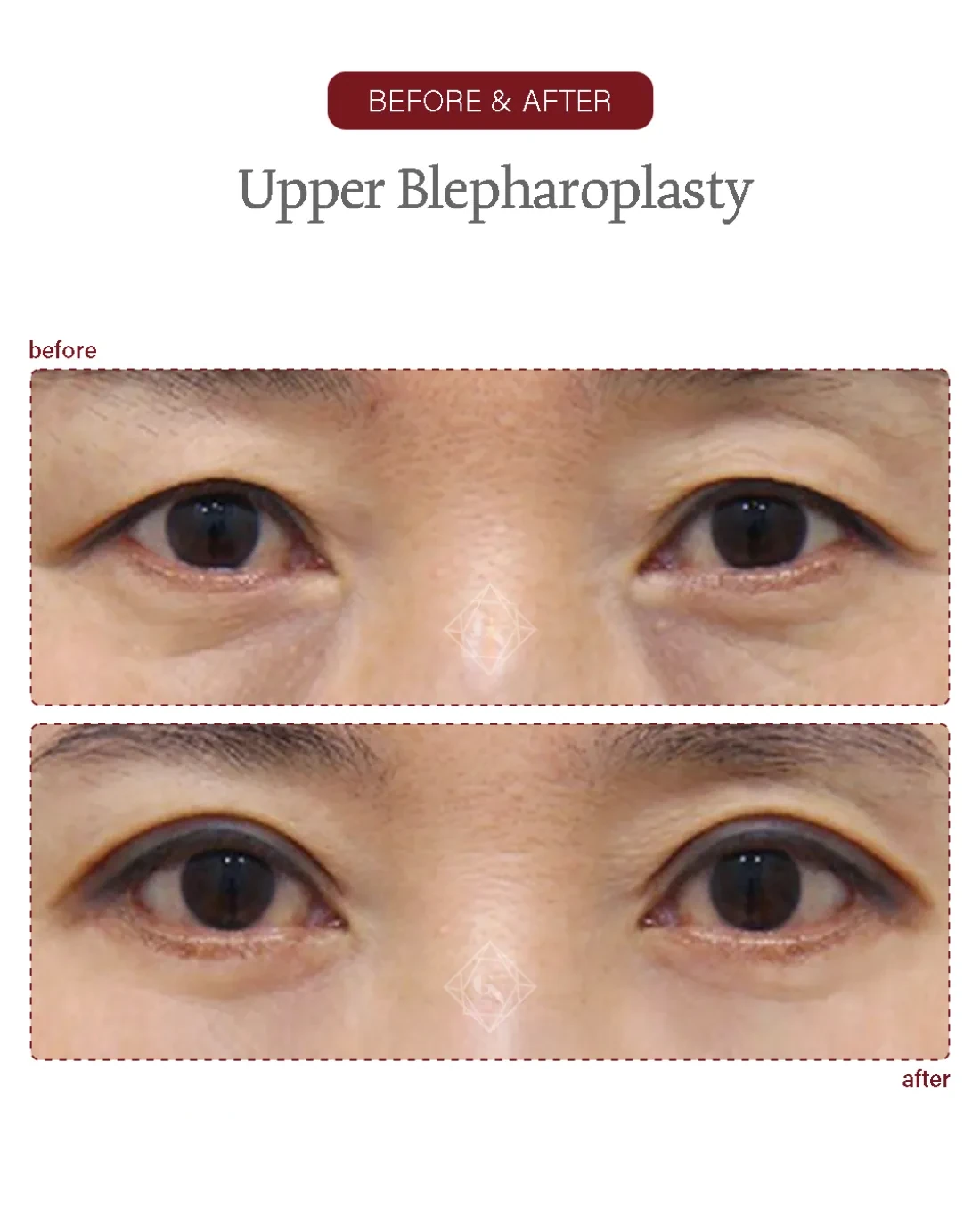
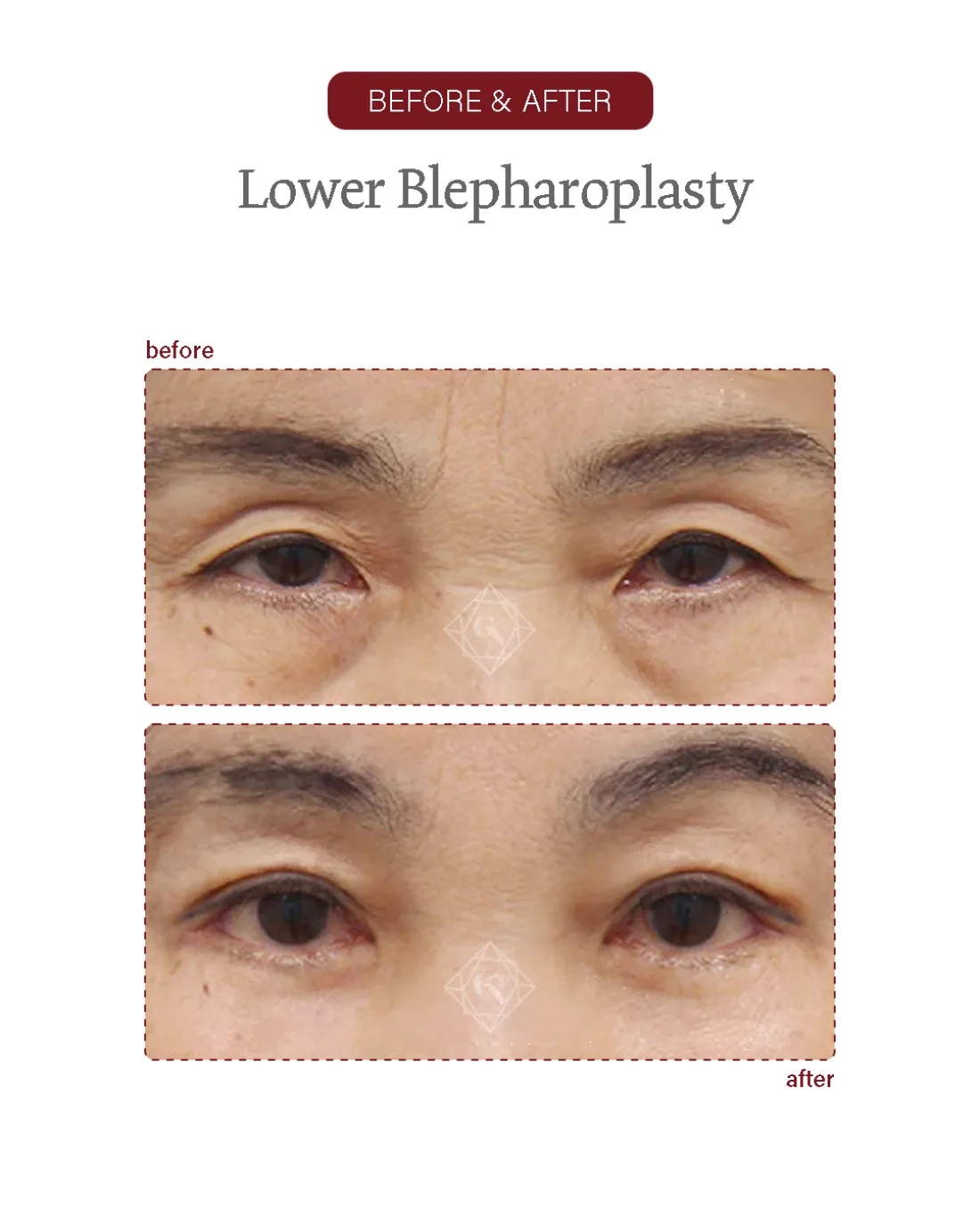
Eyelid before/after examples of actual Garnet patients (published with consent). Results, recovery and suitability vary by individual and are not guaranteed; the right approach is decided at an in-person consultation.
Prices
Price at Garnet
Upper blepharoplasty
From₩3,500,000 + VATExcluding VAT (10% VAT is added at payment)Book now
Same price as Korean patients. Prices shown exclude 10% VAT; your written quote, issued after the in-person consultation, shows the full amount payable.
Dr. In-Soo Baek
Director & sole operating surgeon
Korean medical licence no. 77407
Operate on what you came for. Trained at Korea University Medical Center. Every case planned, performed and reviewed by the same hands.
1Operating surgeon
~2Surgeries per day
7Registered techniques
Board-certified plastic surgeon
Plastic surgery training at Korea University College of Medicine & graduate school
Korean Society of Plastic and Reconstructive Surgeons member, in its facial-contour, eye & rhinoplasty groups
Consults, operates and follows up each case himself
Peer-reviewed papers behind the facts on this page. Each describes findings in its own study group — not results at Garnet — and none predicts your own outcome.
Wang C et al. Asian Upper Blepharoplasty. Clinics in Plastic Surgery. 2023. doi:10.1016/j.cps.2022.07.006
Warren RJ. Upper Blepharoplasty and Brow Rejuvenation in Men. Clinics in Plastic Surgery. 2022. doi:10.1016/j.cps.2021.12.006
Hollander MHJ et al. Functional outcomes of upper eyelid blepharoplasty: A systematic review. Journal of Plastic, Reconstructive & Aesthetic Surgery. 2019. doi:10.1016/j.bjps.2018.11.010
FAQ
Common questions
Who is a good candidate for upper blepharoplasty?
Someone whose upper lids look heavy or hooded because of excess, lax lid skin (often from the late thirties onward), who is in reasonable general health, has no active eye condition, and wants a rested, lighter upper lid without a dramatic change. The clearest sign is skin draping over the lash line or burying the natural fold.
How do I know if I have excess skin or a low brow?
It can be hard to tell from a mirror, because a low, heavy eyebrow pushes skin down onto the lid and mimics excess lid skin. A surgeon measures your skin, brow height and lid opening to separate the two. If a low brow is the real cause, a sub-brow lift usually suits you better than removing lid skin.
How does upper blepharoplasty differ from ptosis correction?
Upper blepharoplasty removes redundant skin from the lid. Ptosis correction adjusts the muscle that opens the eye, when the eye itself does not open fully. They treat different problems and can sometimes be combined in one operation if both excess skin and a weak lifting muscle are present.
When is upper blepharoplasty not recommended?
When the heaviness is driven mainly by a drooping brow, when the lid does not open fully because of ptosis, or for medical reasons such as untreated significant dry eye, an active eye infection or certain bleeding tendencies. It is also not advised for patients seeking a dramatic change in eye shape, which is not what the procedure does.
Is there an ideal age for upper blepharoplasty?
There is no fixed age. Excess lid skin commonly appears from the late thirties as skin tone relaxes, but some people inherit heavier lids earlier and seek it sooner. Candidacy depends on the anatomy and the problem more than on age. The assessment is about how much excess skin you have and what is causing the heaviness.
Can upper blepharoplasty be combined with other eye surgery?
Yes. It is often combined with ptosis correction when both excess skin and a weak eye-opening muscle are present, and the crease incision can also be used to refine the fold. Whether to combine procedures is decided at examination, based on what your eyes actually need.
Can I find out whether my upper lids suit blepharoplasty before flying to Korea?
Yes. You can send clear photographs for a pre-assessment in an online consultation, and the same surgeon who would operate reviews them. Sometimes the answer is that a different procedure, or none, would serve you better, and that is given without pressure to book.
Will I look different or just less tired after upper blepharoplasty?
The aim is a lighter, more open and rested upper lid, so you look like yourself on a good day. Good candidates are those who want that natural refresh and do not want a dramatic reshaping of the eye.
What happens if the wrong procedure is chosen for my eyes?
Choosing the wrong operation is the most common reason patients are disappointed, for example removing lid skin when a low brow or ptosis was the real problem. A careful examination by an eye-focused surgeon, who matches the operation to the cause, is the strongest safeguard against this.
Does Garnet treat international patients for eye surgery?
Yes. Garnet is registered with Korea's foreign-patient programme, the assessment can begin remotely with photographs, and the same board-certified surgeon consults, operates and reviews your follow-ups at one, three and six months.
My mom recently had a brow lift and lower blepharoplasty with Dr. Baek, and our experience has been wonderful so far. The Garnet team was incredibly kind and welcoming, with Kelly assisting us as our English consultant—she made everything…
I’m so happy I chose this clinic for my lower blepharoplasty. I was traveling from abroad by myself, so I was a little nervous, but from the beginning I felt comfortable and truly cared for. Everyone was kind, patient, and professional…
Came in for an in-person consult and ended up choosing Garnet and Dr.Baek for my non-incisional DES and tiplasty/alarplasty. I communicated with Kelly (English consultant) from the start till now (3 weeks post-op). She really help me feel…
My under-eyes have been sagging and folding for years... I tried to cover it up with makeup, but it actually got stuck in the wrinkles and made it stand out even more. While going for consultations, I noticed that the bigger the hospital…
Not sure whether upper blepharoplasty, a sub-brow lift or ptosis correction fits your eyes? Send photos for a no-obligation pre-assessment before you plan a trip.
Send photos and your question before you travel. An English-speaking coordinator reviews every enquiry and replies with plain guidance on whether upper blepharoplasty is appropriate for your eyelids, the likely plan and timing.
✓ Reviewed by the clinic coordinator, not a bot
✓ Photo-based pre-assessment before you fly
✓ Foreign-patient scheduling & after-care
✓ One surgeon for consultation, surgery and follow-up
Prefer to chat now? Reach the coordinator directly:








 T S7 months ago



