Upper blepharoplasty removes redundant upper-eyelid skin and tidies the tissue beneath through a fine incision hidden in the natural lid crease. The surgery itself is short, but most international patients really want to know the recovery: how swollen and bruised they will be, when the stitches come out, and when they can fly home, return to work and look like themselves again. This page lays out a realistic timeline phase by phase.
The short answer
Sutures are typically removed at around 7 days. Most international patients plan their trip length around that milestone.
Swelling and bruising peak in the first few days, ease noticeably through the first week, and refine over the following weeks.
Many people feel presentable for low-key activities by the end of week one, once stitches are out, though fine swelling continues to settle.
At Garnet the same board-certified surgeon performs the operation and reviews recovery, with structured follow-ups at one, three and six months.
Upper blepharoplasty is performed through an incision placed in the natural crease of the upper lid, where the resulting line is designed to hide. The surgeon excises the redundant skin and tidies up the underlying tissue, then closes with fine sutures. Because the incision follows the crease, the visible recovery is mostly about settling swelling and bruising and waiting for the stitches to come out. The full procedure is explained on the upper blepharoplasty page.
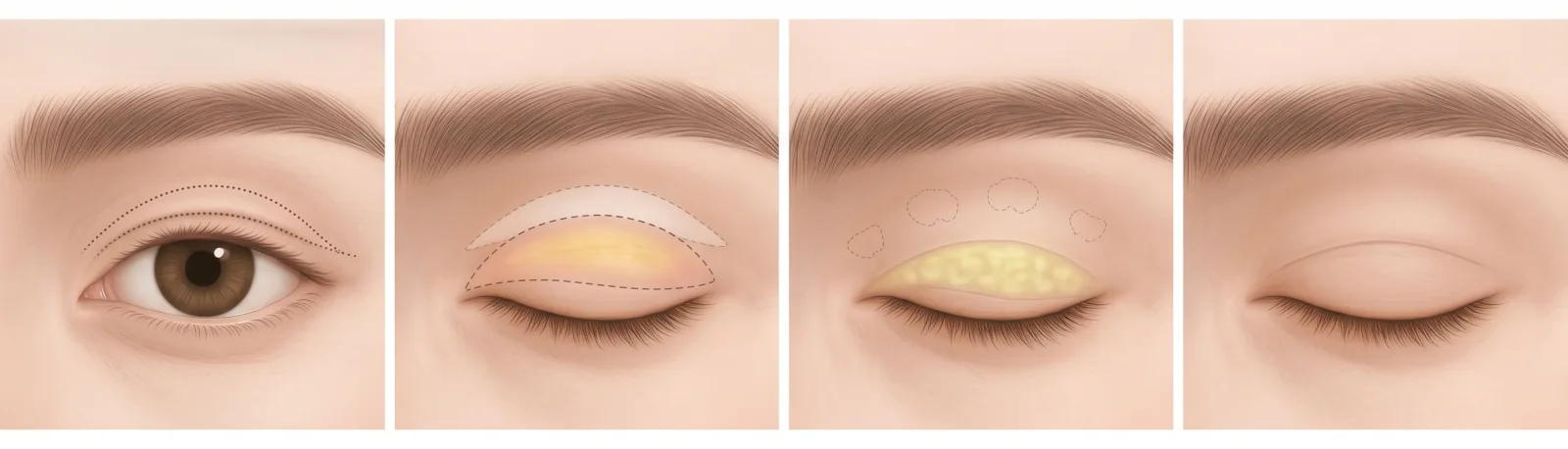
Illustration: the planned crease is marked, the excess upper-lid skin and selected fat pads are addressed through that line.
The defining recovery milestone is suture removal, which at Garnet falls at around seven days. That single date is what most international patients build their trip length around: you generally want to be in Korea, or near enough to return, for that appointment before flying home. Until then the eyelids are healing, and the stitches are doing their job.
As with any eyelid surgery, how fast you recover varies with your skin, your tendency to bruise and how closely you follow aftercare. The timeline below gives realistic ranges, with no guarantees, so you can plan with a sensible buffer instead of an optimistic best case.
Day by day
Upper blepharoplasty recovery day by day
Days 1–2: The eyelids feel tight and look swollen, and bruising begins to appear. You may have a gritty or watery sensation and some light sensitivity. This is the period for cold compresses and keeping your head elevated, including when you sleep, to limit swelling. Vision is normal but the lids feel heavy; resting with screens off helps.
Days 3–4: Swelling and bruising are usually at their most obvious now before they begin to turn the corner. The incision line along the crease is healing with the sutures in place. Discomfort is generally mild and manageable: more tightness and awareness than sharp pain. Many people are comfortable moving around the city gently, wearing sunglasses to shield the eyes and cover bruising. The day-to-day comfort of this phase is covered in more depth on the pain and anaesthesia page.
Days 5–7: Swelling visibly subsides and bruising fades and changes colour. Around day seven the sutures are removed in a quick, low-discomfort appointment. Afterwards the eyelids look and feel markedly less encumbered. The crease line is still pink and a little firm but is now closed. For many international patients, this is the point at which they feel presentable enough for low-key activities and ready to think about flying home.
Weeks & months
From the first weeks to the final result
Weeks 2–4: With stitches out, the remaining swelling is finer and continues to settle. The incision line gradually softens and the redness fades. Some residual puffiness, mild tightness when blinking, or a slightly raised feel along the crease is normal in this phase. Most people look settled enough for everyday life and work, even if the eyes are not yet at their final, fully relaxed appearance.
Weeks 4–12 and beyond: The crease and the overall eyelid shape keep refining as deeper swelling resolves and the scar matures and pales. This is when the natural, rested look people seek from upper blepharoplasty really emerges. Scar maturation continues over months, and protecting the line from sun helps it settle well. The dedicated scars and healing page goes into how the crease line fades over time.
If you want to understand when the eyes look fully 'finished' rather than simply recovered, the when-will-I-see-results page traces how the result matures from the early weeks through the months that follow. Patience in these later stages is rewarded, as the final appearance is softer and more natural than the early post-suture look.
Aftercare
Aftercare and returning to normal
Good aftercare keeps your recovery on the smoother end of the range. Use cold compresses early, sleep with your head raised for the first nights, and keep the incision clean and dry as instructed. Avoid rubbing your eyes, and wait for your surgeon's clearance before resuming eye makeup, contact lenses and eyelash treatments. Sunglasses outdoors protect the healing line from sun and wind.
On work and activity: many people who do desk-based jobs feel able to return after about a week, once the stitches are out, accepting that some residual swelling may still be visible up close. Screen time is fine in moderation but tired, dry eyes are common early on, so take breaks. Hold off on vigorous exercise, heavy lifting, swimming, saunas and anything that raises facial blood pressure until your surgeon clears you, as these can aggravate swelling.
Plan your trip around the roughly seven-day suture milestone with a buffer for the unexpected. If you need help estimating how long to stay in Korea for this surgery specifically, the how long to stay guide and the when can I fly guide are written for international patients making exactly this decision.
At Garnet
How follow-up works at Garnet
Garnet is a single-surgeon clinic in Apgujeong, Seoul. Dr. In-Soo Baek is a board-certified plastic surgeon (Korean medical licence no. 77407) and the only operating doctor. He consults, performs your upper blepharoplasty himself and reviews your recovery, including removing your sutures at around day seven. There is no handover to another doctor for your after-care, which a single-surgeon clinic is built to avoid.
Planned follow-up visits at one, three and six months support your recovery, and one coordinator looks after you from the first consultation until you have healed. For international patients who travel home after their stitches are out but before the eyes have fully settled, the same surgeon can continue to review photos by messenger and advise on what is normal. The practicalities are set out on the international patients page.
If you are still deciding whether the surgery suits your eyelids, the ideal first step is an individual assessment of your eyelids. You can send photos for a no-obligation pre-assessment through an online consultation from abroad before you plan any travel.
Real Results
Before & After
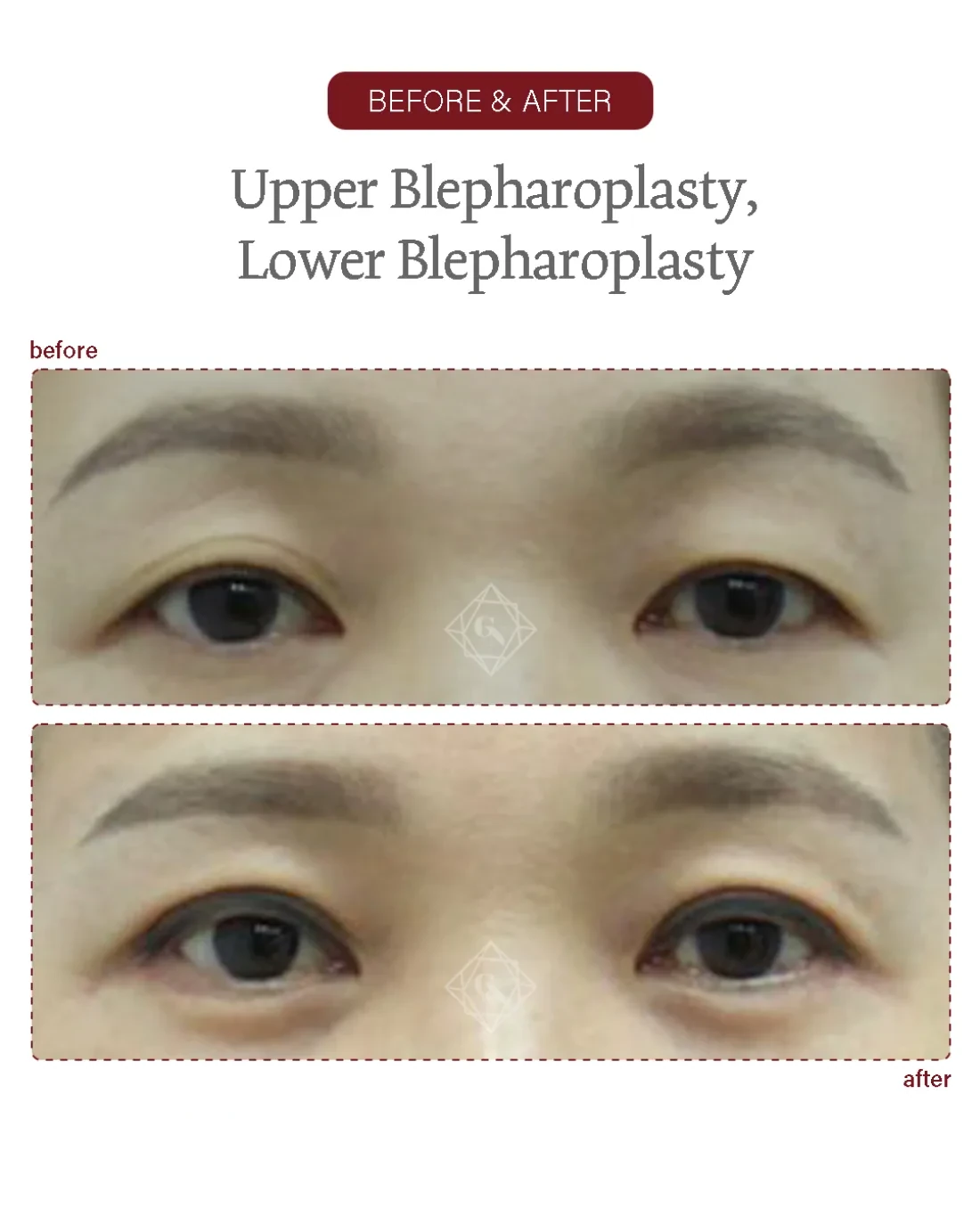
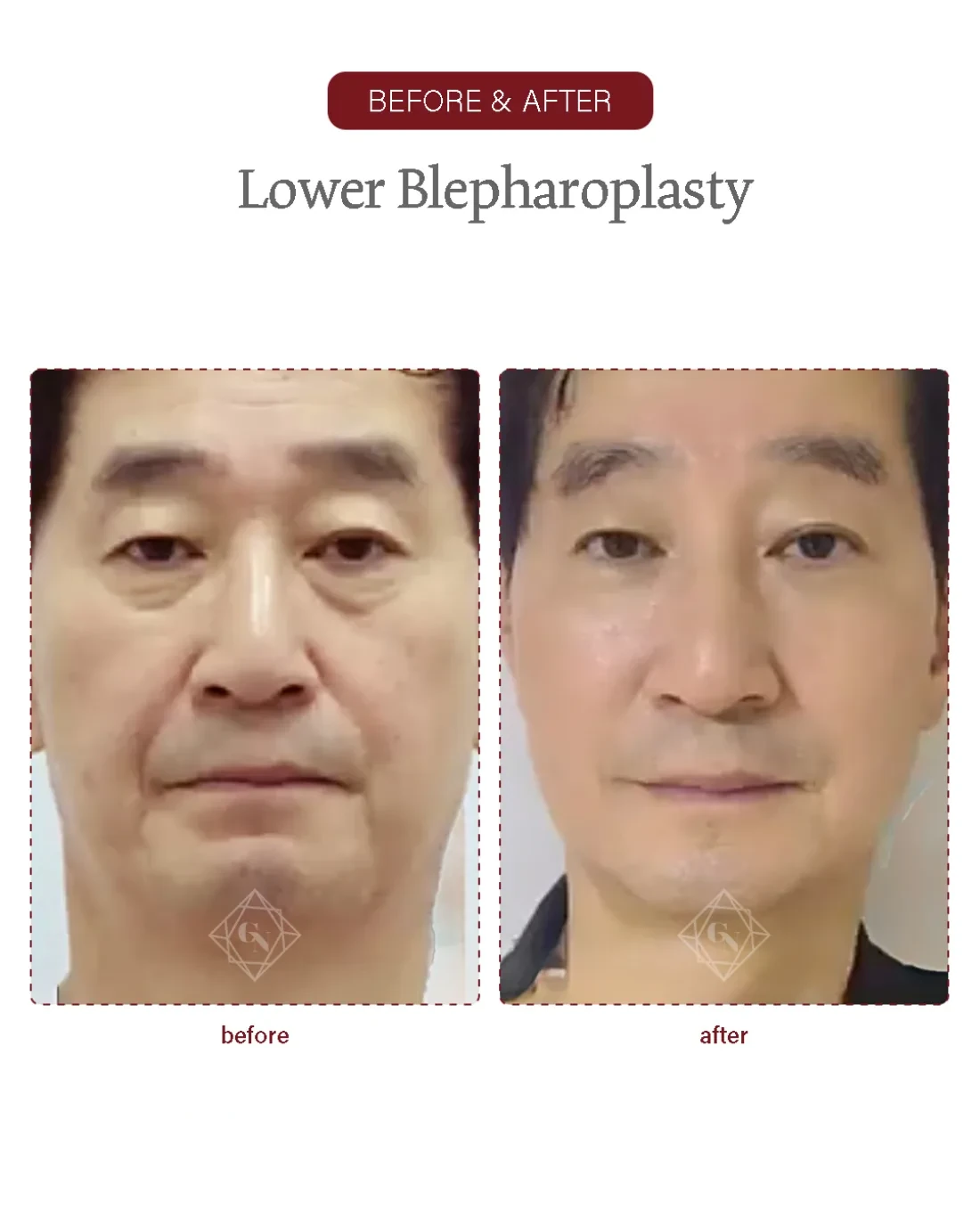
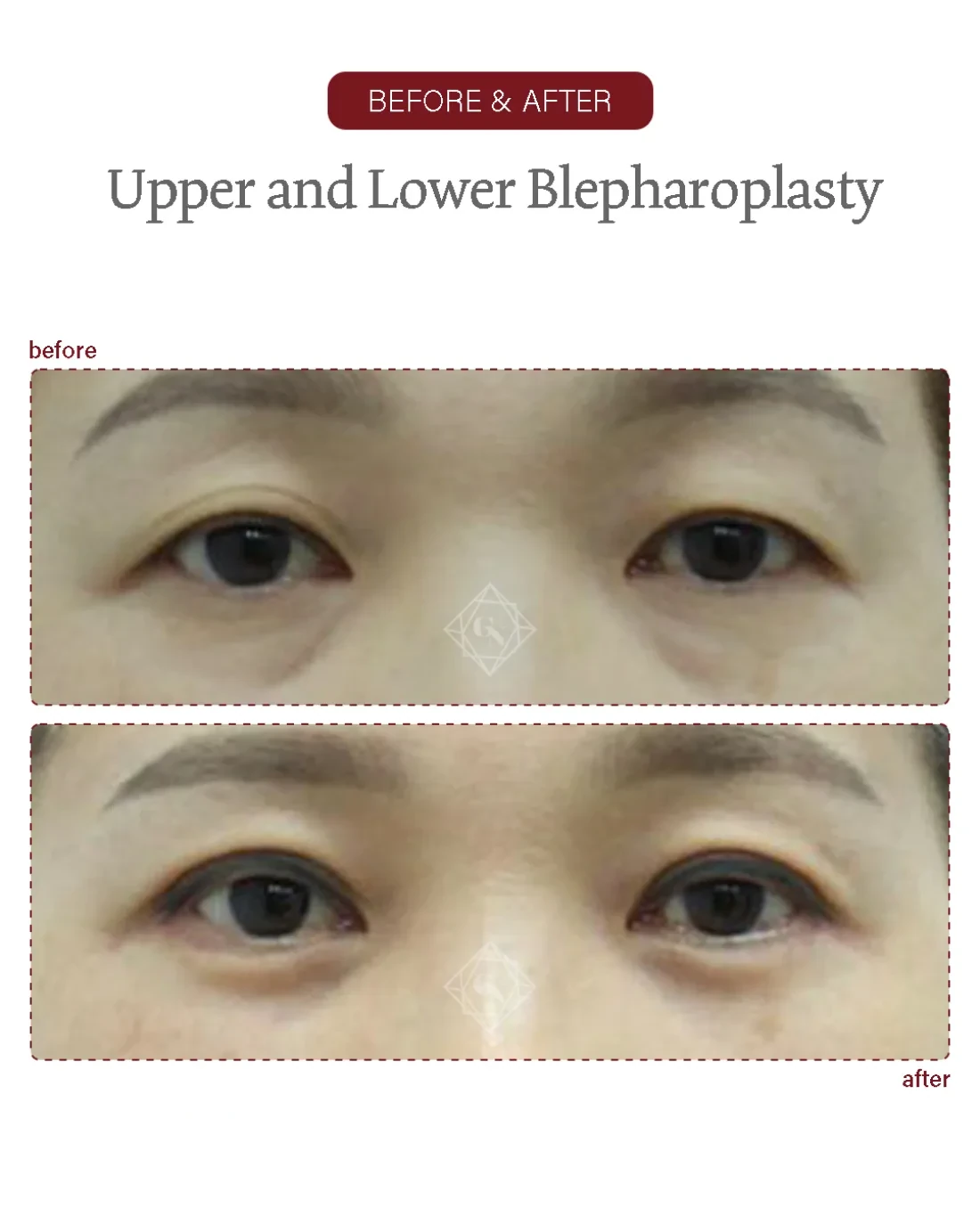
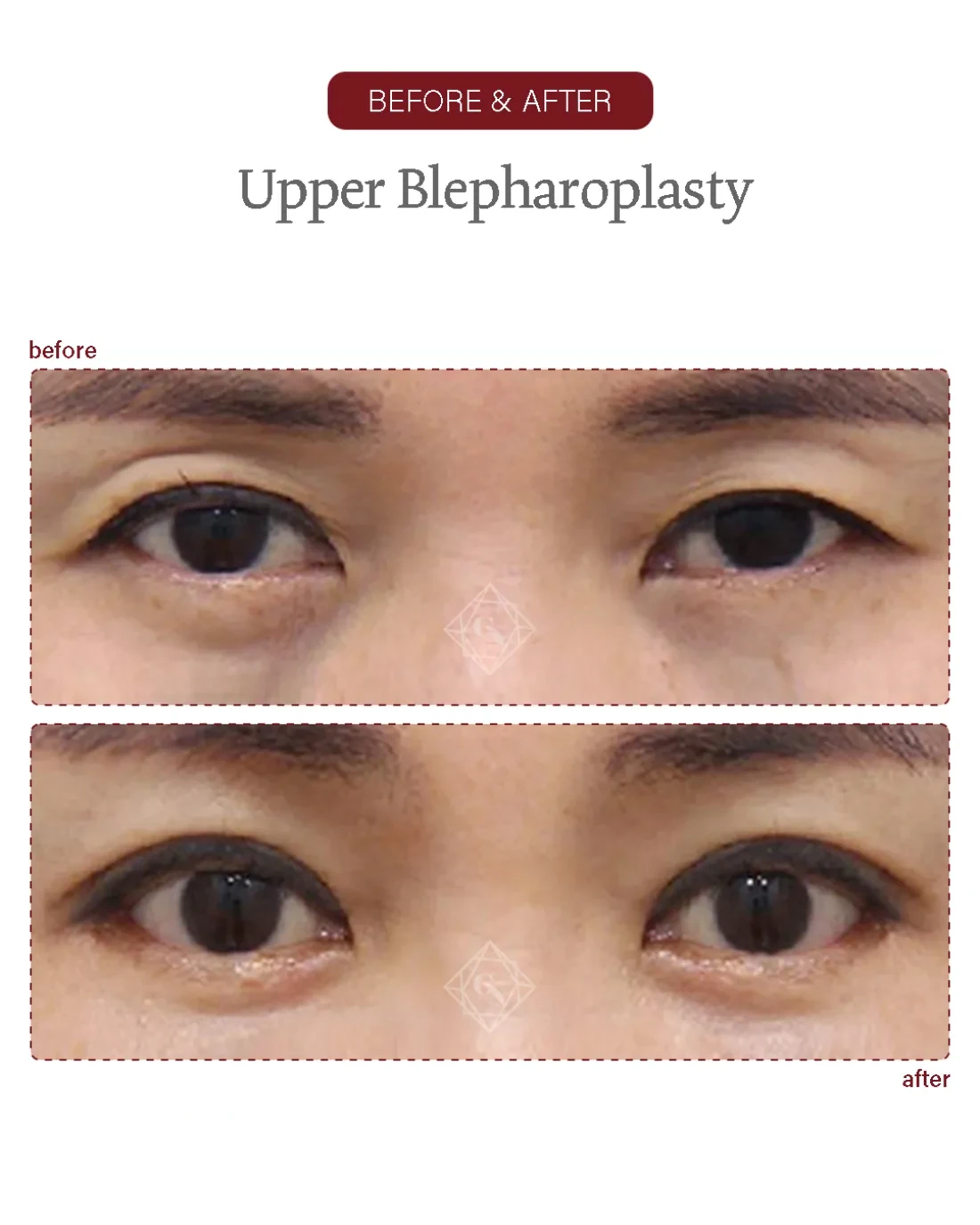
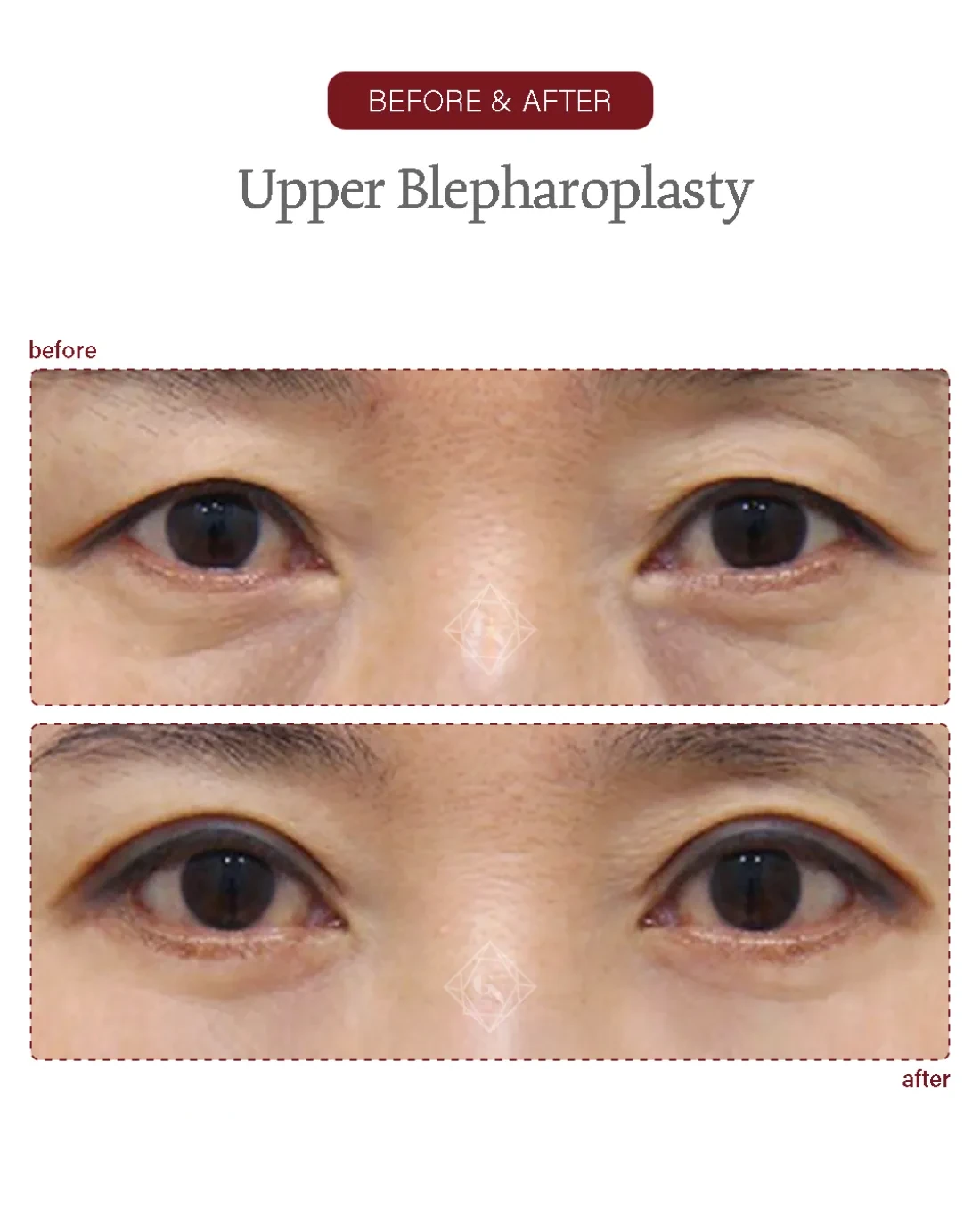
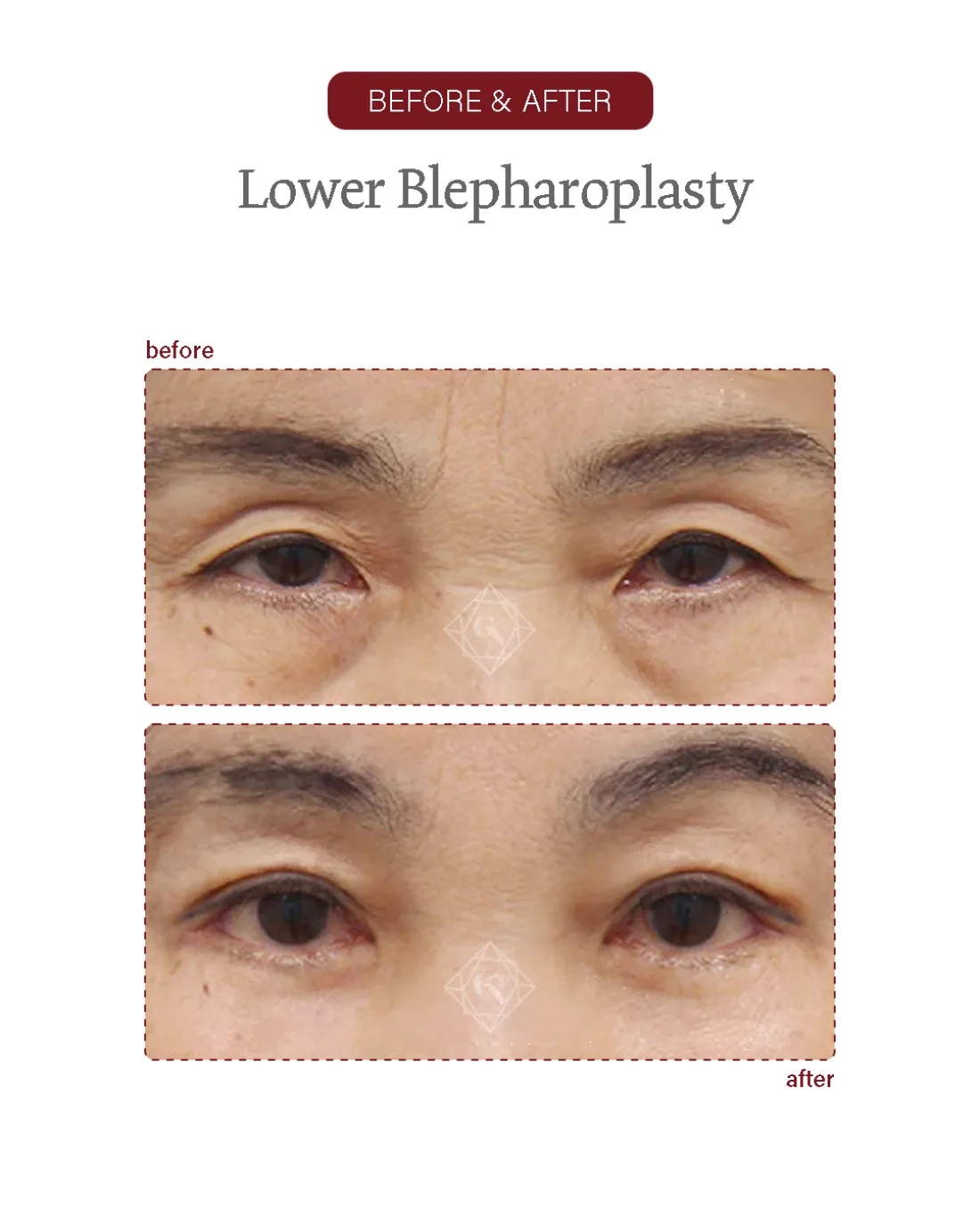
Eyelid before/after examples of actual Garnet patients (published with consent). Results, recovery and suitability vary by individual and are not guaranteed; the right approach is decided at an in-person consultation.
Prices
Price at Garnet
Upper blepharoplasty
From₩3,500,000 + VATExcluding VAT (10% VAT is added at payment)Book now
Same price as Korean patients. Prices shown exclude 10% VAT; your written quote, issued after the in-person consultation, shows the full amount payable.
Dr. In-Soo Baek
Director & sole operating surgeon
Korean medical licence no. 77407
Operate on what you came for. Trained at Korea University Medical Center. Every case planned, performed and reviewed by the same hands.
1Operating surgeon
~2Surgeries per day
7Registered techniques
Board-certified plastic surgeon
Plastic surgery training at Korea University College of Medicine & graduate school
Korean Society of Plastic and Reconstructive Surgeons member, in its facial-contour, eye & rhinoplasty groups
Consults, operates and follows up each case himself
Peer-reviewed papers behind the facts on this page. Each describes findings in its own study group — not results at Garnet — and none predicts your own outcome.
Yang P et al. Upper Eyelid Blepharoplasty: Evaluation, Treatment, and Complication Minimization. Seminars in Plastic Surgery. 2017. doi:10.1055/s-0037-1598628
Hahn S et al. Upper Lid Blepharoplasty. Facial Plastic Surgery Clinics of North America. 2016. doi:10.1016/j.fsc.2016.01.002
Lee CK et al. Asian Upper Lid Blepharoplasty Surgery. Clinics in Plastic Surgery. 2013. doi:10.1016/j.cps.2012.07.004
FAQ
Common questions
How long does upper blepharoplasty recovery take?
The key milestone is suture removal at around seven days, after which the eyelids look and feel much less encumbered. Most visible swelling and bruising eases through the first one to two weeks, while finer swelling and the crease line refine over the following weeks. The fully settled, natural result continues to mature over a few months.
When are the stitches removed after upper blepharoplasty?
At Garnet, sutures are typically removed at around seven days. It is a quick, low-discomfort appointment. International patients usually plan to stay in Korea, or be able to return, for this date before flying home, since it is the recovery milestone the trip is built around.
What is upper blepharoplasty recovery like day by day?
Swelling and bruising are worst in the first two to four days, then begin to subside; by days five to seven the swelling visibly eases and the sutures come out. Through weeks two to four the eyes look increasingly settled, and the crease and final shape keep refining over the following months.
When can I return to work after upper blepharoplasty?
Many people with desk-based jobs return after about a week, once the stitches are out, accepting that some residual swelling may still show up close. Jobs that are physically demanding or very public-facing may warrant a little longer. Follow your surgeon's advice based on your healing and your role.
When can I look at screens again after surgery?
Screen use in moderation is generally fine, but tired, dry, light-sensitive eyes are common in the first days, so take frequent breaks and rest the eyes early on. Comfort improves steadily through the first week as swelling settles.
How long until I can wear makeup or contact lenses?
Wait for your surgeon's clearance before resuming eye makeup, contact lenses and eyelash treatments, since the incision needs to heal first. Light makeup to cover fading bruising elsewhere is usually possible sooner, but timing around the eyelids depends on your individual healing.
When will the upper eyelid scar fade?
The incision sits in the natural lid crease and is closed by suture removal at around seven days. It is pink and slightly firm at first, then softens and pales as it matures over the months that follow. Protecting it from sun helps it settle well, and the scars and healing page covers this in detail.
When will I see the final result of upper blepharoplasty?
The eyes look much improved within the first couple of weeks, but the final, fully relaxed and natural appearance emerges over the following months as deeper swelling resolves and the crease matures. Early post-suture results look a little fuller than the settled outcome.
Can I fly home after suture removal?
Many international patients do, once the stitches are out at around day seven and the surgeon is satisfied with healing. Follow your surgeon's specific guidance on timing. The same surgeon can continue to review your recovery by messenger after you return home.
Does Garnet handle recovery and follow-up for international patients?
Yes. Garnet is registered with Korea's foreign-patient programme, with a dedicated coordinator from consultation through healing. Dr. In-Soo Baek removes your sutures, reviews follow-ups at one, three and six months, and can continue to assess photos by messenger after you travel home.
My mom recently had a brow lift and lower blepharoplasty with Dr. Baek, and our experience has been wonderful so far. The Garnet team was incredibly kind and welcoming, with Kelly assisting us as our English consultant—she made everything…
I’m so happy I chose this clinic for my lower blepharoplasty. I was traveling from abroad by myself, so I was a little nervous, but from the beginning I felt comfortable and truly cared for. Everyone was kind, patient, and professional…
Came in for an in-person consult and ended up choosing Garnet and Dr.Baek for my non-incisional DES and tiplasty/alarplasty. I communicated with Kelly (English consultant) from the start till now (3 weeks post-op). She really help me feel…
My under-eyes have been sagging and folding for years... I tried to cover it up with makeup, but it actually got stuck in the wrinkles and made it stand out even more. While going for consultations, I noticed that the bigger the hospital…
Wondering if upper blepharoplasty suits your eyelids and how long you would need in Korea? Send photos for a no-obligation pre-assessment before you plan a trip.
Send photos and your question before you travel. An English-speaking coordinator reviews every enquiry and replies with guidance on whether surgery is appropriate, the likely plan and timing.
✓ Reviewed by the clinic coordinator, not a bot
✓ Photo-based pre-assessment before you fly
✓ Foreign-patient scheduling & after-care
✓ One surgeon for consultation, surgery and follow-up
Prefer to chat now? Reach the coordinator directly:








 T S7 months ago



