Upper blepharoplasty sutures come out at about 7 days, and with local anaesthetic and an incision hidden in the upper-lid crease, that makes it one of the more travel-friendly operations to have in Korea. For an international patient the practical questions are how to start from abroad, how long to stay, and who looks after you once you are home. This page answers each one specifically.
The short answer
You can begin entirely from abroad with an online consultation: send photographs and get a pre-assessment before you book any flights.
Upper blepharoplasty is done under local anaesthetic and the sutures are removed at around day 7, so most international patients plan a stay built around that single milestone.
It is often combined in one operation with double-eyelid surgery or a brow-area procedure, which is worth deciding at consultation because it shapes your stay.
Because the same surgeon operates and follows up, your recovery can be reviewed remotely by photographs at one, three and six months after you fly home.
The first step for an international patient is a conversation; the flight comes later. Before committing to travel, you can send clear photographs of your eyes, open and closed, and describe what bothers you: heavy upper lids, a tired look, or skin that rests on the lashes. From that the surgeon can give a clear read on whether upper blepharoplasty is the right operation for you, whether your concern is skin, a weak lid muscle, or the eyelid crease, and what a realistic result would look like. You can do all of this in an online consultation from abroad.
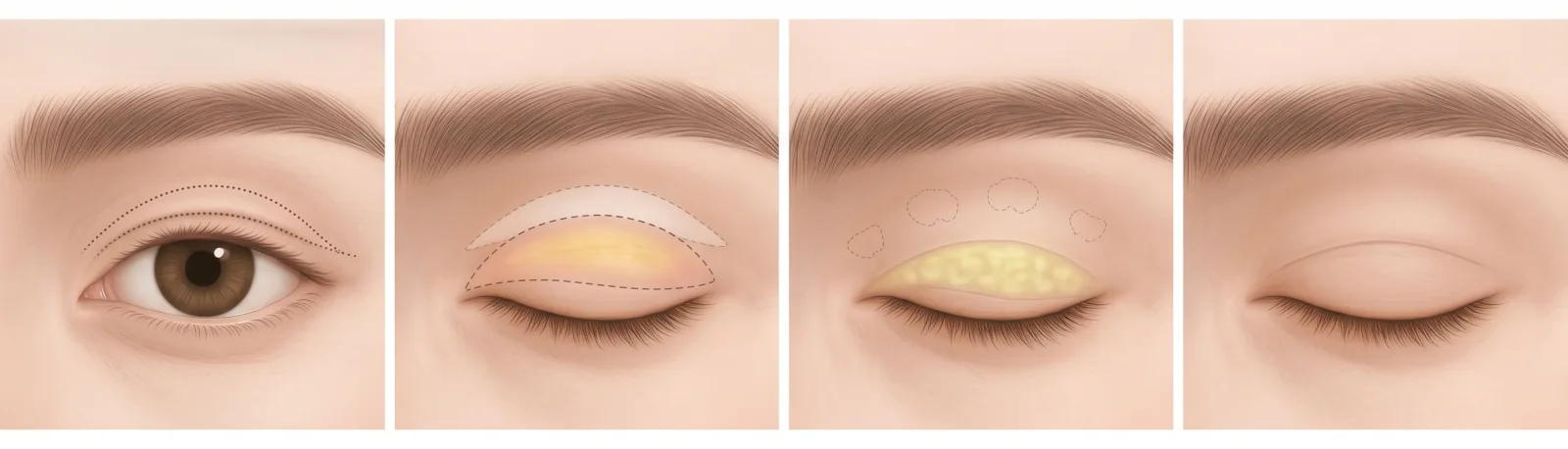
Illustration: the planned crease is marked, the excess upper-lid skin and selected fat pads are addressed through that line.
This matters more for eye surgery than people expect. A heavy upper lid can come from excess skin, from a low brow, or from a droop in the lid-lifting muscle, and each calls for a different operation. A pre-assessment from abroad means you arrive knowing roughly what is planned, so you do not discover on the day that the procedure you booked is not the one you need. It also means the answer can be that surgery is not warranted, which is a useful thing to learn before you buy a ticket.
A final in-person consultation still happens once you arrive, where the surgeon examines your lids directly and confirms the plan. The online step does not replace that; it makes the trip worth taking. For a full picture of the procedure itself, the upper blepharoplasty cell page is the place to start.
How long to stay
How long to stay in Korea for upper blepharoplasty
Upper blepharoplasty is closed with fine sutures that are removed at around day 7, and that single milestone usually anchors the stay. Many international patients plan to be in Korea for roughly 7 to 10 days: a day or two before surgery for the in-person consultation and the operation itself, the healing days in between, then suture removal before they fly. This keeps the whole episode (consult, surgery, suture removal) inside one trip.
It is sometimes possible to have the sutures removed by a clinician closer to home instead of staying the full week, but it is worth discussing openly at consultation, because staying for your own surgeon to remove them and check the early healing is the cleaner option. The surgery is done under local anaesthetic and you are not admitted overnight, so the stay is about recovery time; no hospital stay is involved. There is more on this in the guide to how long to stay in Korea for surgery.
Two practical notes shape the calendar. Visible swelling and bruising around the eyes are normal in the first days and settle over the following weeks, so the line you leave with is not your final result. And if your case is combined with another procedure — double-eyelid surgery, for instance — the stay is broadly similar, but the combined plan can change it, so do not assume the same dates.
Your visit
Your visit to Garnet, step by step
The in-person part of the trip is more straightforward than most people imagine. On arrival you have a final consultation where the surgeon examines your upper lids, confirms whether the issue is excess skin, the crease, or the lid muscle, and agrees the plan with you. A dedicated coordinator stays with you through this, helping with the practical details so language is not a barrier to understanding what is happening.
The surgery itself is performed through an incision hidden in the natural upper-lid crease; the surgeon removes the redundant skin and tidies the underlying tissue, then closes the crease line with fine sutures. It is done under local anaesthetic, so you are awake and comfortable without general anaesthesia, and you go home (or back to your accommodation) the same day. You then rest through the healing days and return for suture removal at about day 7.
Garnet is in Apgujeong, a central and well-connected part of Seoul, which makes the back-and-forth for consultation, surgery and suture removal easy to manage during a short stay. The clinic is registered with Korea's foreign-patient programme, so the coordination of scheduling and records around your visit is already set up for international patients.
Combined surgery
Why it is often combined in one operation
For many international patients, upper blepharoplasty is not done in isolation. It is commonly combined in a single operation with double-eyelid surgery, since both work on the upper lid and a heavy, hooded lid often sits alongside a poorly defined crease. Combining them means one anaesthetic, one incision area to heal, and one recovery period in a single trip, which is a real advantage when you are travelling from abroad.
Whether combining is right for you is a clinical judgement, not a default. If your concern is genuinely just excess upper-lid skin, upper blepharoplasty alone may be all you need. If a low brow is the real driver of the heaviness, a brow-area procedure may be the better partner, or the better operation entirely. The task at consultation is to match the operation to your anatomy, and at a clinic that does not over-recommend, the answer can be that one procedure is enough.
Deciding this early matters because it shapes your stay and your expectations. A combined plan is worth settling in the online consultation so that you arrive with a clear understanding of what will be done; a larger operation should never be negotiated on the day of surgery.
Remote follow-up
Eyelid follow-up after you fly home
The part international patients worry about most is what happens after they leave Korea, and this is where a single-surgeon clinic has a clear advantage. Because the surgeon who operated on you is also the one who manages your recovery, follow-up does not stop at the airport. After suture removal you fly home, and the structured follow-up at one, three and six months continues remotely: you send photographs and the same surgeon reviews how the crease is settling and the swelling is fading.
This continuity is the point. Eye-surgery results evolve over weeks and months as swelling resolves and the crease softens into its final shape, so being reviewed by the surgeon who did the operation gives a clear, informed read on whether you are healing as expected. If you have a question between those points, you can raise it straight away. The same continuity is covered in the guide to consulting from abroad.
It also means you are not left guessing about what is normal. Mild asymmetry in early swelling, a crease that looks higher than it will finally sit, a little tightness: these are common early stages, and having the operating surgeon confirm they are settling normally is reassuring in a way that searching online is not.
At Garnet
How Garnet looks after eyelid patients from abroad
Garnet, in Apgujeong, Seoul, is a one-surgeon clinic holding foreign-patient programme registration. Dr. In-Soo Baek, a board-certified plastic surgeon (Korean medical licence no. 77407), is the only operating doctor; he assesses you, performs your upper blepharoplasty himself, and reviews every follow-up, with the day capped at two surgeries and one patient per hour. A dedicated coordinator stays with you from the first message to the final remote check, so the practical side of travelling for surgery is handled.
If you are weighing a trip, the most useful next step is a pre-assessment of whether the procedure suits you and how to plan the stay around suture removal at day 7. You can start with a no-obligation online assessment, read what to expect in the recovery timeline, or see the full overview on the upper blepharoplasty cell page.
Real Results
Before & After
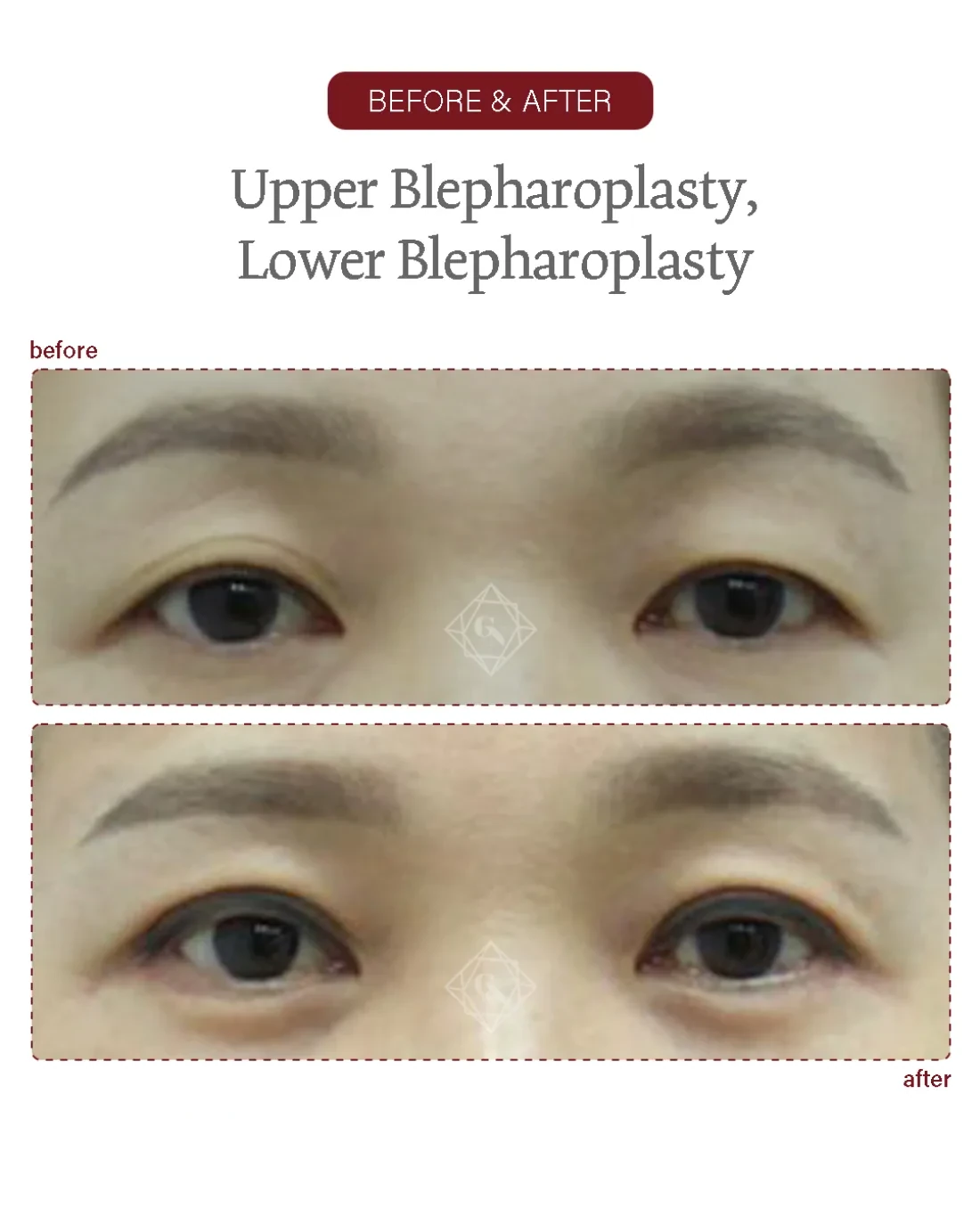
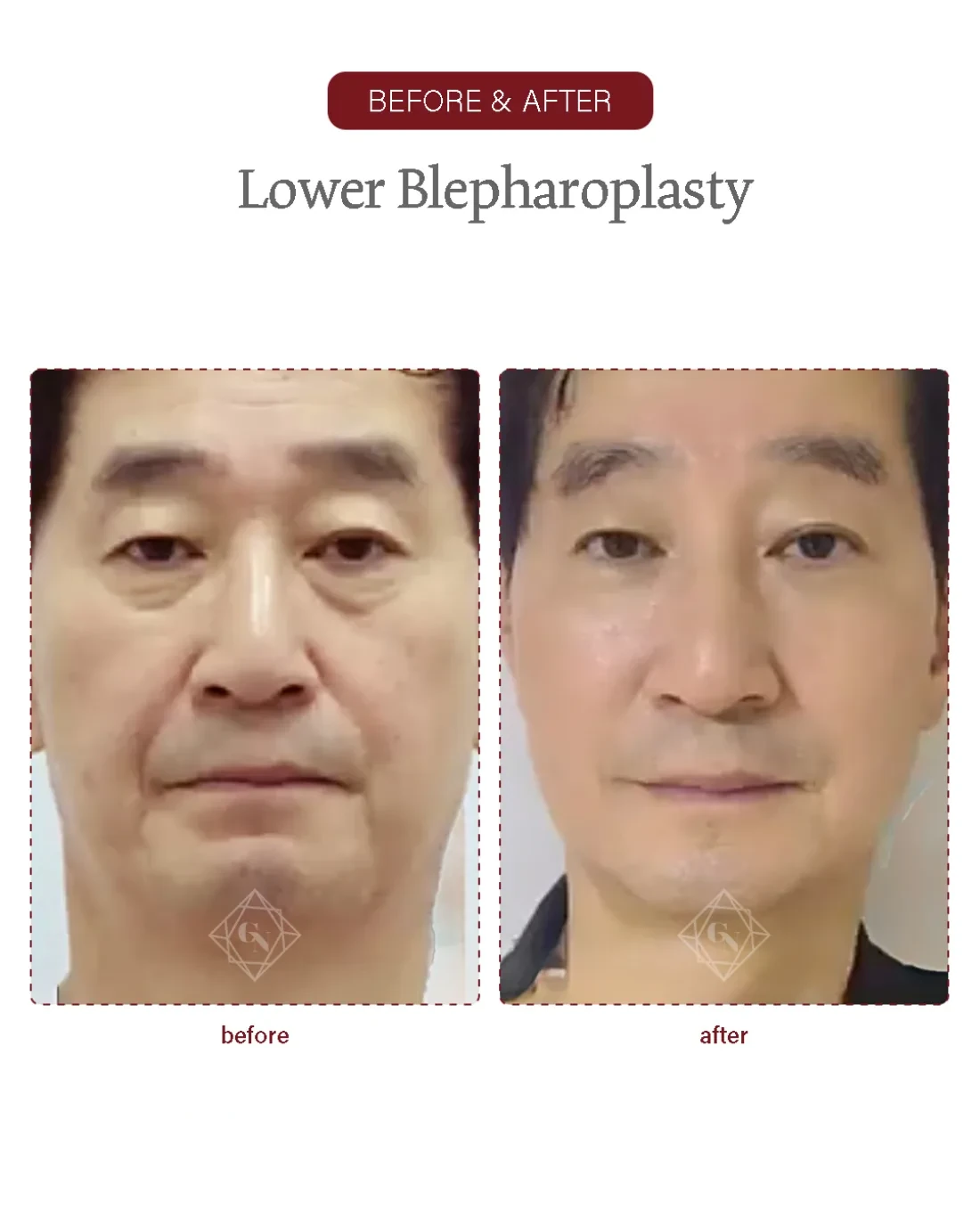
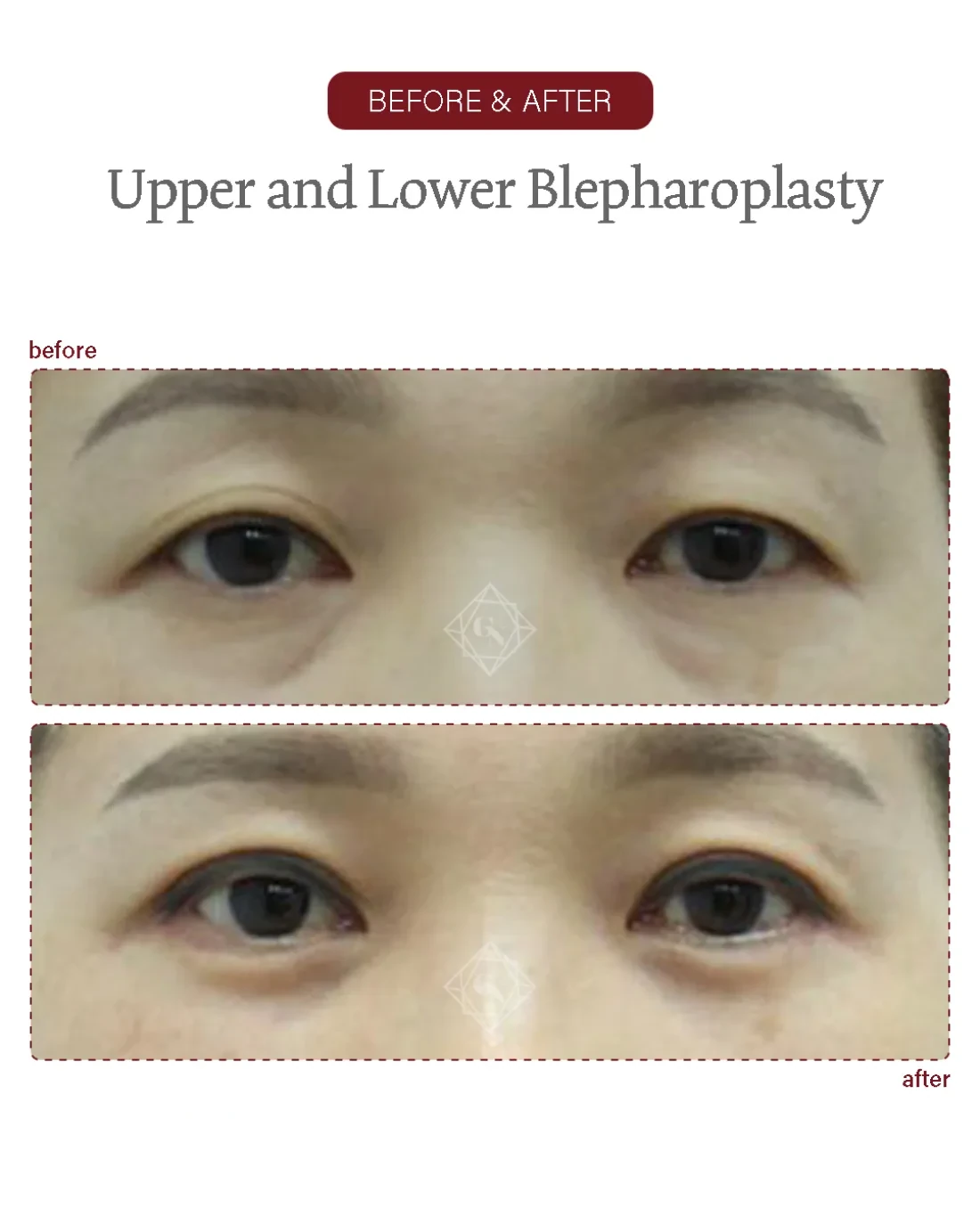
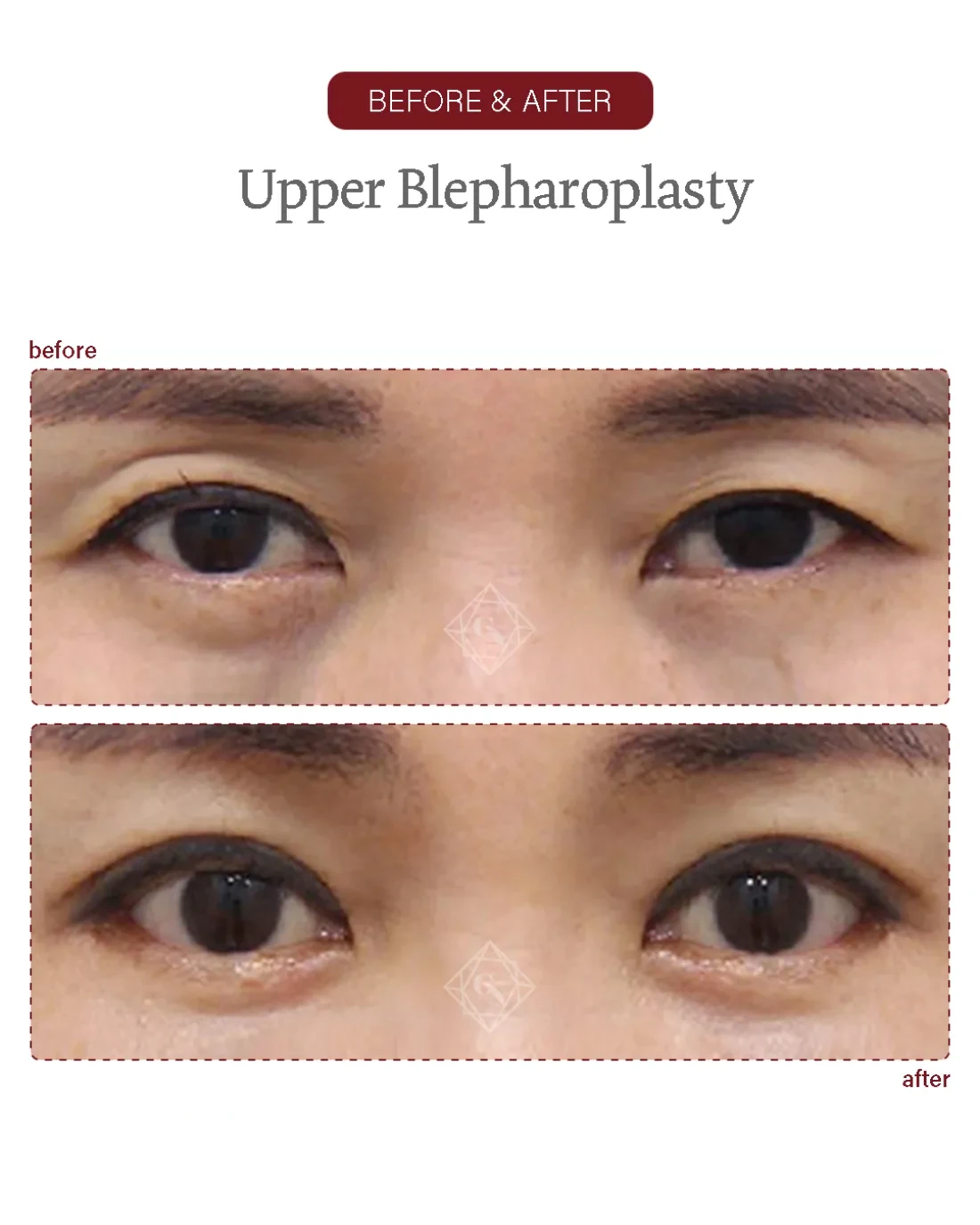
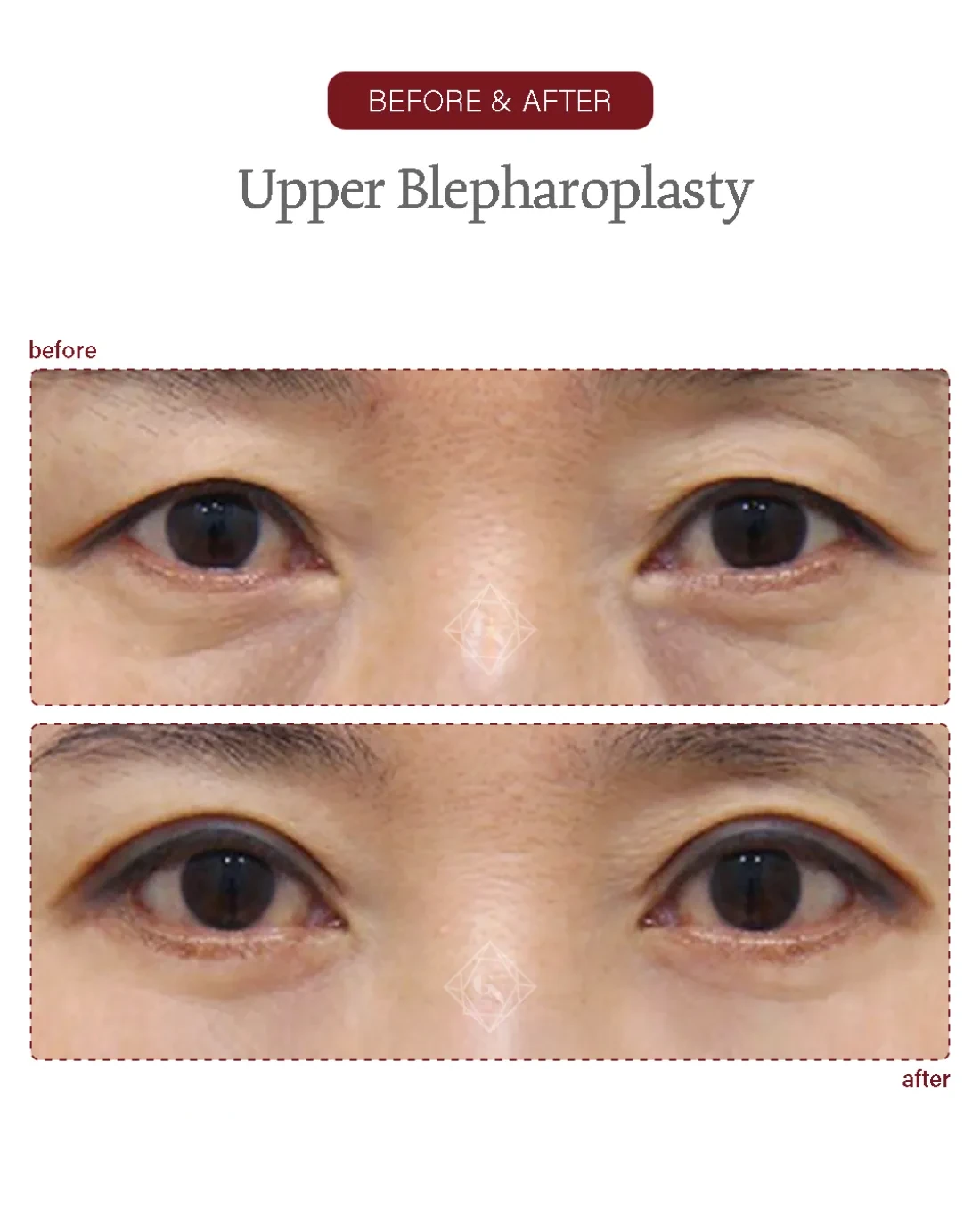
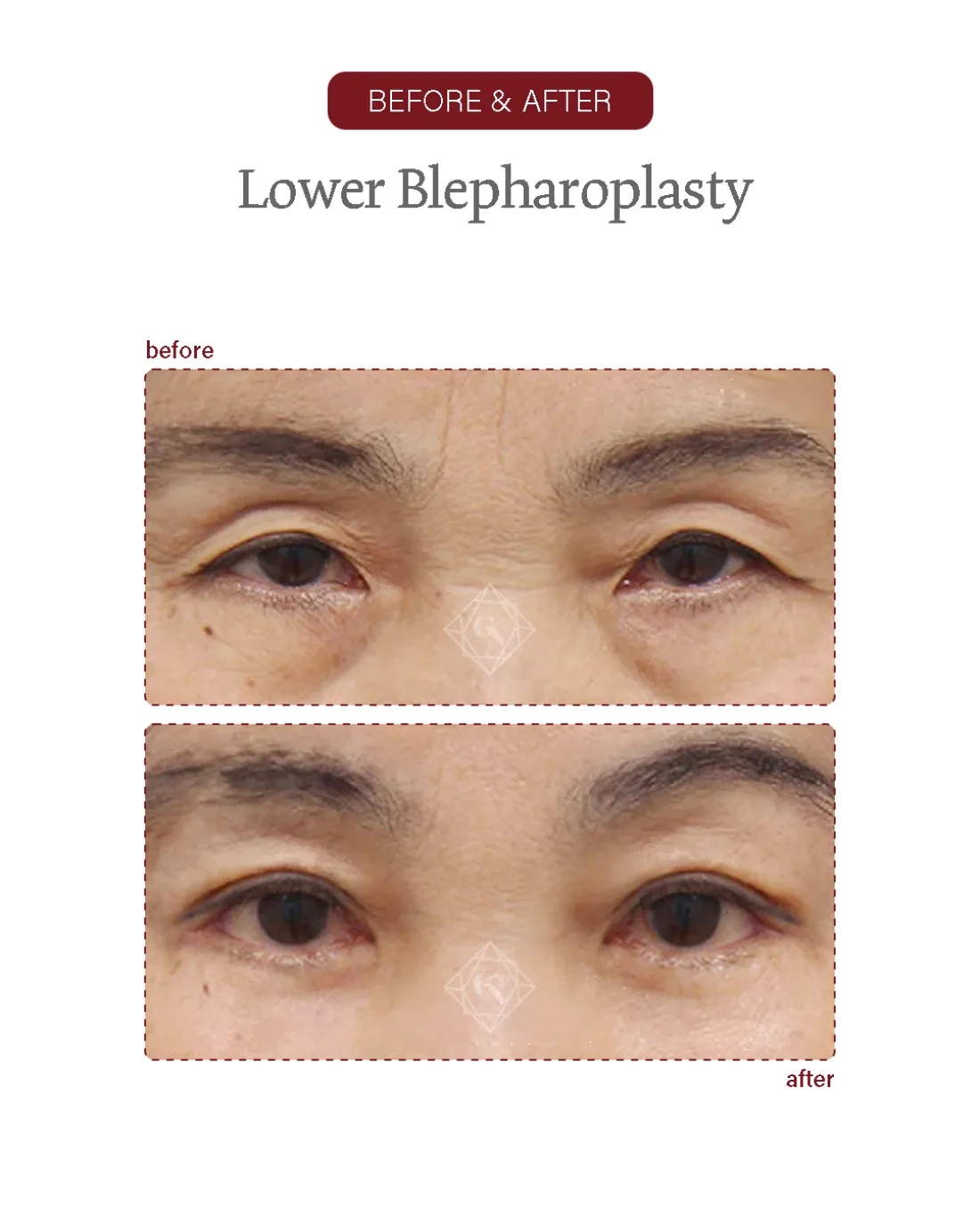
Eyelid before/after examples of actual Garnet patients (published with consent). Results, recovery and suitability vary by individual and are not guaranteed; the right approach is decided at an in-person consultation.
Prices
Price at Garnet
Upper blepharoplasty
From₩3,500,000 + VATExcluding VAT (10% VAT is added at payment)Book now
Same price as Korean patients. Prices shown exclude 10% VAT; your written quote, issued after the in-person consultation, shows the full amount payable.
Dr. In-Soo Baek
Director & sole operating surgeon
Korean medical licence no. 77407
Operate on what you came for. Trained at Korea University Medical Center. Every case planned, performed and reviewed by the same hands.
1Operating surgeon
~2Surgeries per day
7Registered techniques
Board-certified plastic surgeon
Plastic surgery training at Korea University College of Medicine & graduate school
Korean Society of Plastic and Reconstructive Surgeons member, in its facial-contour, eye & rhinoplasty groups
Consults, operates and follows up each case himself
Peer-reviewed papers behind the facts on this page. Each describes findings in its own study group — not results at Garnet — and none predicts your own outcome.
Rodrigues C et al. Upper Eyelid Blepharoplasty: Surgical Techniques and Results—Systematic Review and Meta-analysis. Aesthetic Plastic Surgery. 2023. doi:10.1007/s00266-023-03436-6
Alkaelani MT et al. Complications of Medical Tourism in Aesthetic Surgery. Annals of Plastic Surgery. 2023. doi:10.1097/sap.0000000000003683
Yang CC. Revision of Asian Upper Blepharoplasty. Clinics in Plastic Surgery. 2023. doi:10.1016/j.cps.2022.08.007
Vaccari S et al. Literature Review: Venous Thromboembolism Prophylaxis in Plastic Surgery. Aesthetic Plastic Surgery. 2023. doi:10.1007/s00266-023-03508-7
FAQ
Common questions
How do international patients get upper blepharoplasty in Korea?
Most start with an online consultation from abroad, sending photographs for a pre-assessment. If the procedure suits you, you travel for a short stay that includes a final in-person consultation, the surgery under local anaesthetic, and suture removal at about day 7, then fly home with remote follow-up by the same surgeon.
How long should I stay in Korea for upper blepharoplasty?
Many international patients plan roughly 7 to 10 days, built around suture removal at about day 7. That allows a day or two for the in-person consultation and surgery, the healing days in between, and suture removal before you fly. Confirm the exact plan at consultation, especially if your case is combined with another procedure.
Can I start with an online consultation for upper blepharoplasty?
Yes. You can send clear photographs of your eyes, open and closed, and describe your concern, and the surgeon will give a clear read on whether upper blepharoplasty is the right operation and what a realistic result would be. A final in-person consultation still confirms the plan once you arrive.
Is upper blepharoplasty done under general anaesthesia?
No. Upper blepharoplasty is typically performed under local anaesthetic, so you are awake and comfortable, and you are not admitted overnight. This is part of what makes it a travel-friendly operation for international patients.
Can upper blepharoplasty be combined with double-eyelid surgery?
Often, yes. Because both work on the upper lid, they are commonly combined in one operation, meaning a single anaesthetic and one recovery period in one trip. Whether it suits you is a clinical judgement made at consultation; if excess skin alone is the issue, upper blepharoplasty by itself may be all you need.
Who looks after my recovery once I return home?
The same surgeon who operated. Because Garnet is a single-surgeon clinic, the structured follow-up at one, three and six months continues remotely after you fly home: you send photographs and the operating surgeon reviews how the crease and swelling are settling, and you can raise questions between those points.
Will swelling have settled before I fly home?
Not entirely. Visible swelling and some bruising around the eyes are normal in the first days and settle over the following weeks, so the appearance you leave with is not your final result. The crease continues to refine over weeks to months, which is exactly why remote follow-up at one, three and six months exists.
Does Garnet coordinate care for international patients?
Yes. Garnet is registered with Korea's foreign-patient programme, and a dedicated coordinator stays with you from the first message through consultation, surgery, suture removal and remote follow-up, so scheduling, records and communication around your visit are already set up for international patients.
Where is Garnet, and is it easy to reach during a short stay?
Garnet is in Apgujeong, a central, well-connected part of Seoul near Apgujeong Station on Subway Line 3. Its central location makes the back-and-forth between consultation, surgery and suture removal straightforward to manage within a short trip.
My mom recently had a brow lift and lower blepharoplasty with Dr. Baek, and our experience has been wonderful so far. The Garnet team was incredibly kind and welcoming, with Kelly assisting us as our English consultant—she made everything…
I’m so happy I chose this clinic for my lower blepharoplasty. I was traveling from abroad by myself, so I was a little nervous, but from the beginning I felt comfortable and truly cared for. Everyone was kind, patient, and professional…
Came in for an in-person consult and ended up choosing Garnet and Dr.Baek for my non-incisional DES and tiplasty/alarplasty. I communicated with Kelly (English consultant) from the start till now (3 weeks post-op). She really help me feel…
My under-eyes have been sagging and folding for years... I tried to cover it up with makeup, but it actually got stuck in the wrinkles and made it stand out even more. While going for consultations, I noticed that the bigger the hospital…
Thinking about upper blepharoplasty in Korea? Send photos for a no-obligation pre-assessment before you plan a trip, including whether it suits you and how to build your stay around suture removal at day 7.
Send photos and your question before you travel. An English-speaking coordinator reviews every enquiry and replies with guidance on whether surgery is appropriate, the likely plan and timing.
✓ Reviewed by the clinic coordinator, not a bot
✓ Photo-based pre-assessment before you fly
✓ Foreign-patient scheduling & after-care
✓ One surgeon for consultation, surgery and follow-up
Prefer to chat now? Reach the coordinator directly:









 T S7 months ago



