A forehead lift is the right answer to a specific problem: a brow that has descended and is weighing down the upper face and eyes. Many tired or heavy-eyed looks have a different cause. This guide explains who genuinely benefits, who is better served by a sub-brow lift or eyelid surgery, and how a careful assessment tells the difference.
The short answer
A forehead lift suits people whose brow has descended over time, creating a heavy, tired look, deep horizontal forehead lines, frown lines between the brows, or hooding of the upper eyelids caused by the brow pressing down.
If the heaviness is in the upper eyelid skin itself and the brow sits well, upper eyelid surgery may be the better operation, and the two are sometimes combined.
A sub-brow lift addresses the area just above the eyebrow and suits different anatomy and goals, so part of candidacy is choosing the right lift as well as confirming you want one.
The most reliable way to know is an individual assessment; at Garnet the same board-certified surgeon who would operate examines you and will say plainly if a forehead lift is not the procedure you need.
A forehead lift treats a descended brow. Over time the brow and forehead drift downward, and that descent does several things at once: it crowds the upper eyelids, makes the eyes look smaller and more tired, deepens the horizontal lines that form as you unconsciously lift the brow with your forehead muscles, and can leave a permanently serious or weary expression even when you feel rested. Garnet's forehead lift repositions the brow and forehead as a unit and holds them there with internal fixation, so the upper face opens up.
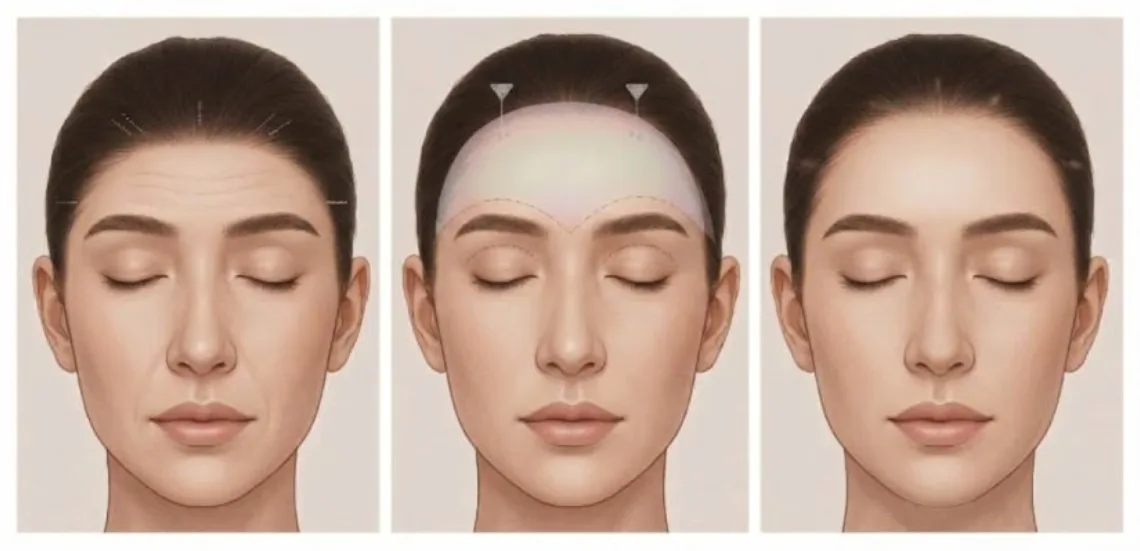
Illustration: the forehead and brow are lifted from within and held at fixation points behind the hairline (Pentafix™), rather than pulled at the skin.
The crucial idea is that a forehead lift fixes a brow-position problem. If your concern truly comes from the brow sitting too low, this is the operation that addresses the cause. If your concern comes from something else (loose eyelid skin, under-eye changes, or general facial sagging lower down), then lifting the brow is the wrong tool, however heavy your upper face feels.
This is why candidacy is really a diagnostic question. Knowing which structure is actually causing the look you dislike is what separates a result that delights you from one that misses the point. A careful surgeon starts there.
Good candidate
Signs a forehead lift is right for you
You are likely to be a good candidate if, looking in the mirror, you can see that your eyebrows sit lower than they used to and that gently lifting them with your fingers restores a more open, rested look you recognise as yourself. That simple test of lifting the brow and liking what you see is one of the most telling signs that brow position is the source of the heaviness, more than eyelid skin alone.
Other typical signs include deep horizontal lines across the forehead that come from constantly raising the brow to keep the eyes open, frown lines between the brows, a tired or stern resting expression, and upper-eyelid hooding that is being caused by the brow pressing down from above, with little excess lid skin. People who notice they are always lifting their forehead to see comfortably are often carrying a descended brow without realising it.
Good candidates are also in reasonable health, have realistic expectations, and want a natural rejuvenation without a dramatic or surprised look. Garnet's approach is "younger, but still yourself." A forehead lift suits someone who wants to look less tired and heavy; it does not suit someone chasing an unnaturally high or pulled brow. If that description fits, the next step is confirming it with an examination.
Vs other options
Forehead lift, sub-brow lift or eyelid surgery?
Part of being a good candidate is having the right operation chosen for you, and there are three commonly confused options. A forehead lift repositions the whole brow and forehead from above and suits a genuinely descended brow with forehead-line involvement. A sub-brow lift works just above the eyebrow, removing a strip of skin to lift and define the brow area; it suits different anatomy and goals and leaves a fine scar at the upper border of the brow. The two are not interchangeable.
Upper eyelid surgery is the third option, and the distinction matters most here. If the heaviness over your eyes comes from excess or lax skin of the upper eyelid itself, an upper blepharoplasty directly addresses that, whereas a forehead lift would lift the brow without solving lid-skin laxity. A common mistake is having eyelid surgery when the real problem is the brow, or vice versa. Sometimes the right plan is both, done thoughtfully together, when brow descent and lid skin are each contributing.
Because these procedures overlap in how they look but differ in what they fix, no one should self-diagnose from photos online. The right choice depends on which structure is driving your particular look, and that is exactly what a careful in-person assessment determines. Choosing the correct operation is the single most important decision in getting the result you actually want.
Not recommended
When a forehead lift is not the answer
A forehead lift is not recommended when the brow is not actually the problem. If your heaviness is purely lid-skin laxity, eyelid surgery is the better operation. If your concerns are lower in the face — jowls, mid-face sagging or neck laxity — a brow procedure will not address them, and a different lift entirely may be appropriate. Sound candidacy advice means sometimes hearing that the procedure you came asking about is not the one that will help you.
It is also not the right time if your expectations are for a dramatic, pulled or permanently surprised look (that is neither the aim nor a natural result), or if you would not be comfortable with the early weeks while a brow settles from a slightly high early position into its natural place. Certain health conditions, smoking, and unmanaged medical issues can also make any elective surgery inadvisable until addressed, which a thorough consultation will screen for.
A clinic that recommends a forehead lift to everyone who walks in with a tired-looking upper face is selling instead of assessing. Garnet's stated approach is no over-recommendation: only the area you came for is addressed, and you will be told plainly if surgery is not necessary or if a different procedure suits you better. Being told "you don't need this" is a sign of a careful assessment, as discussed in is plastic surgery in Korea safe.
Good outcome
What a good outcome looks like for a candidate
When a forehead lift is the right operation for the right person, the result is a brow and forehead that sit in a more youthful position, eyes that look more open and rested, and softened forehead and frown lines, without changing who you are. The goal is for friends to think you look well rested and not to notice you have had surgery. A natural, settled brow position is the marker of a good outcome; the highest possible lift is not.
It helps to have a realistic picture of the journey as well as the destination. The brow can look slightly high in the early weeks and then softens as swelling resolves and the lift settles, and sensation across the scalp normalises over the following months. Knowing this in advance is part of being a well-prepared candidate. You can read the full arc in our forehead lift recovery timeline.
Cost is reasonably part of deciding whether to proceed too, and it depends on your individual case and the technique your anatomy needs. Our guide to forehead lift cost in Korea gives no fixed figure; it explains what affects the price and what a complete quote should include, which is useful context once an assessment has confirmed the procedure is right for you.
How it's decided
How candidacy is properly decided
The only reliable way to know whether you are a good candidate is an individual assessment by the surgeon who would actually operate. They examine how your brow sits, how much it has descended, the condition of your forehead and eyelid tissues, and how your brow and lids interact, then advise whether a forehead lift, a sub-brow lift, eyelid surgery, a combination, or nothing surgical is the right answer for you specifically.
At Garnet that assessment is done by the board-certified plastic surgeon himself, because it is a single-surgeon clinic where the same surgeon consults, operates and follows up. There is no consultation or CT fee and no pressure to book the same day, so the assessment can say plainly whether you need surgery at all, and which procedure, if so.
You do not have to travel to find out. You can begin with an online consultation from abroad, sending photos and describing what bothers you, and receive a candid read on whether a forehead lift fits your case before you plan any trip. That early answer is the most useful thing you can get, long before any decision about surgery.
Real Results
Before & After
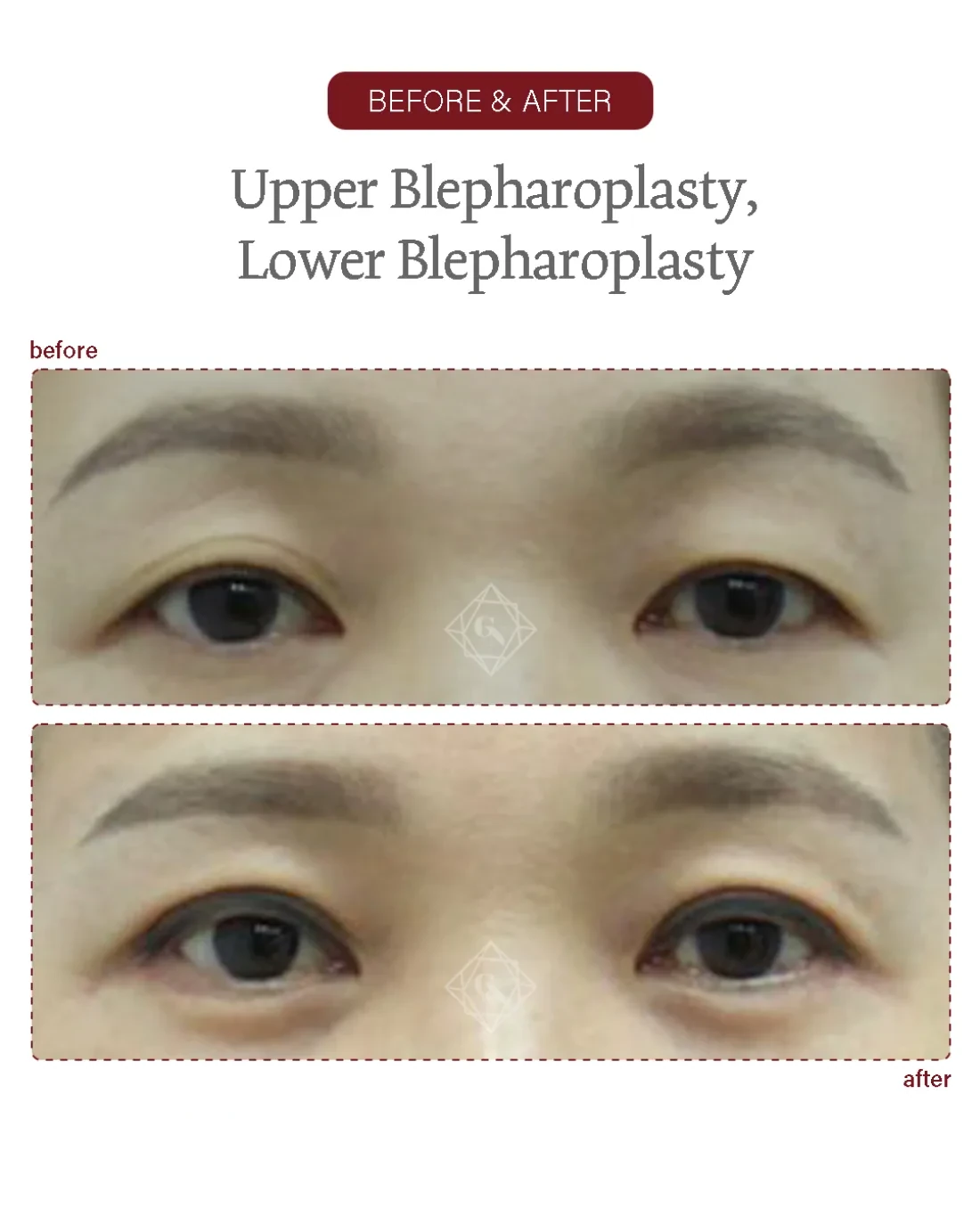
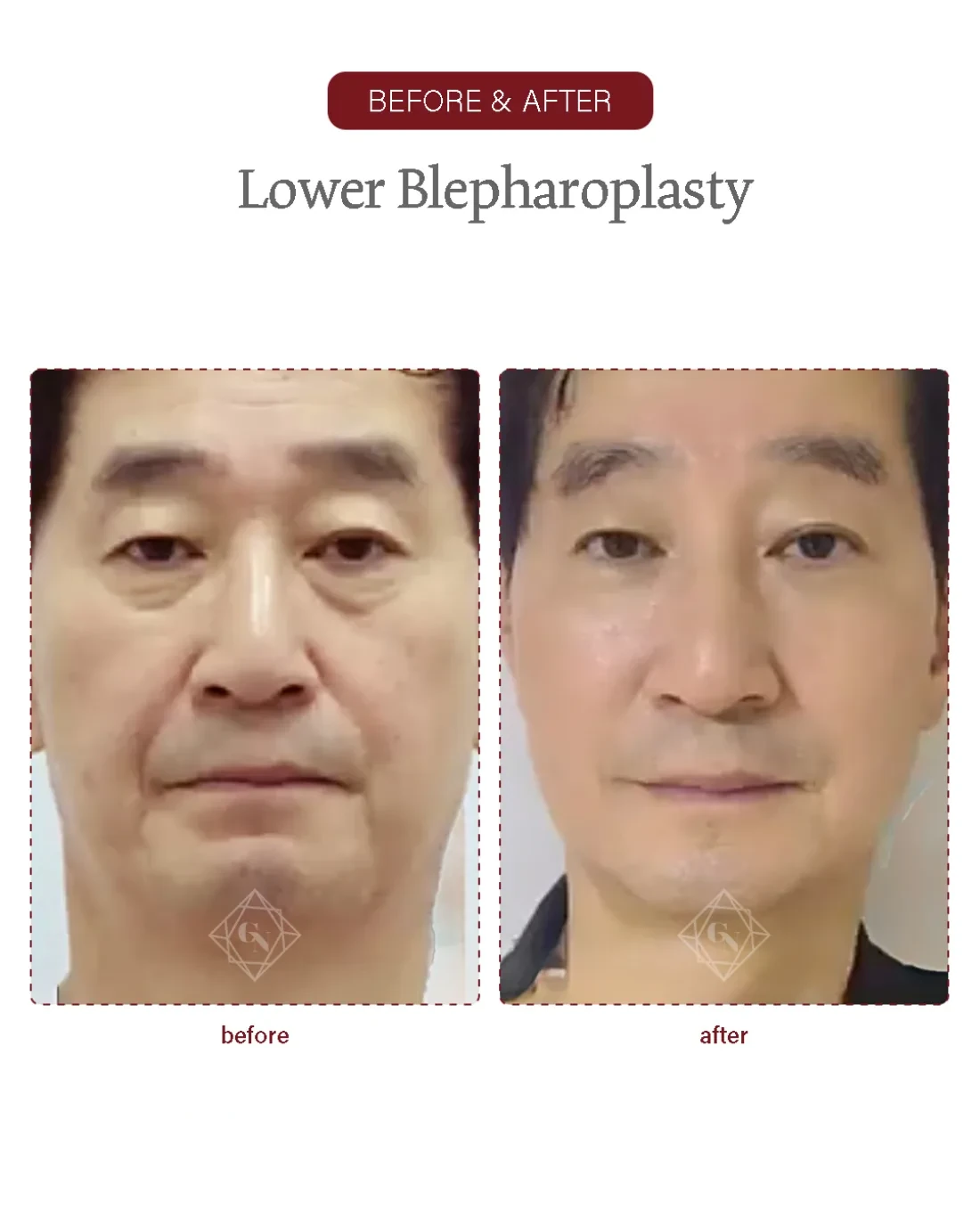
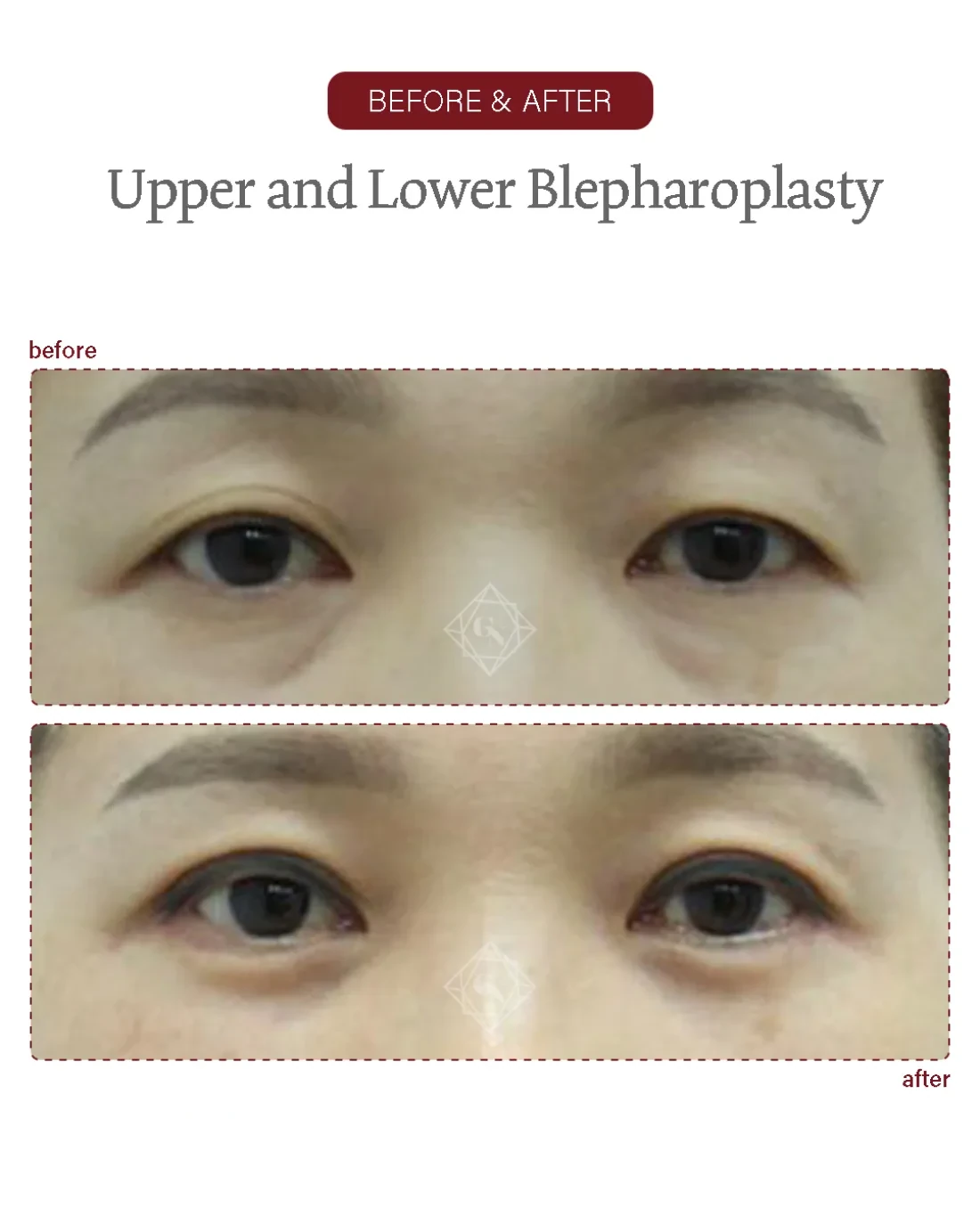
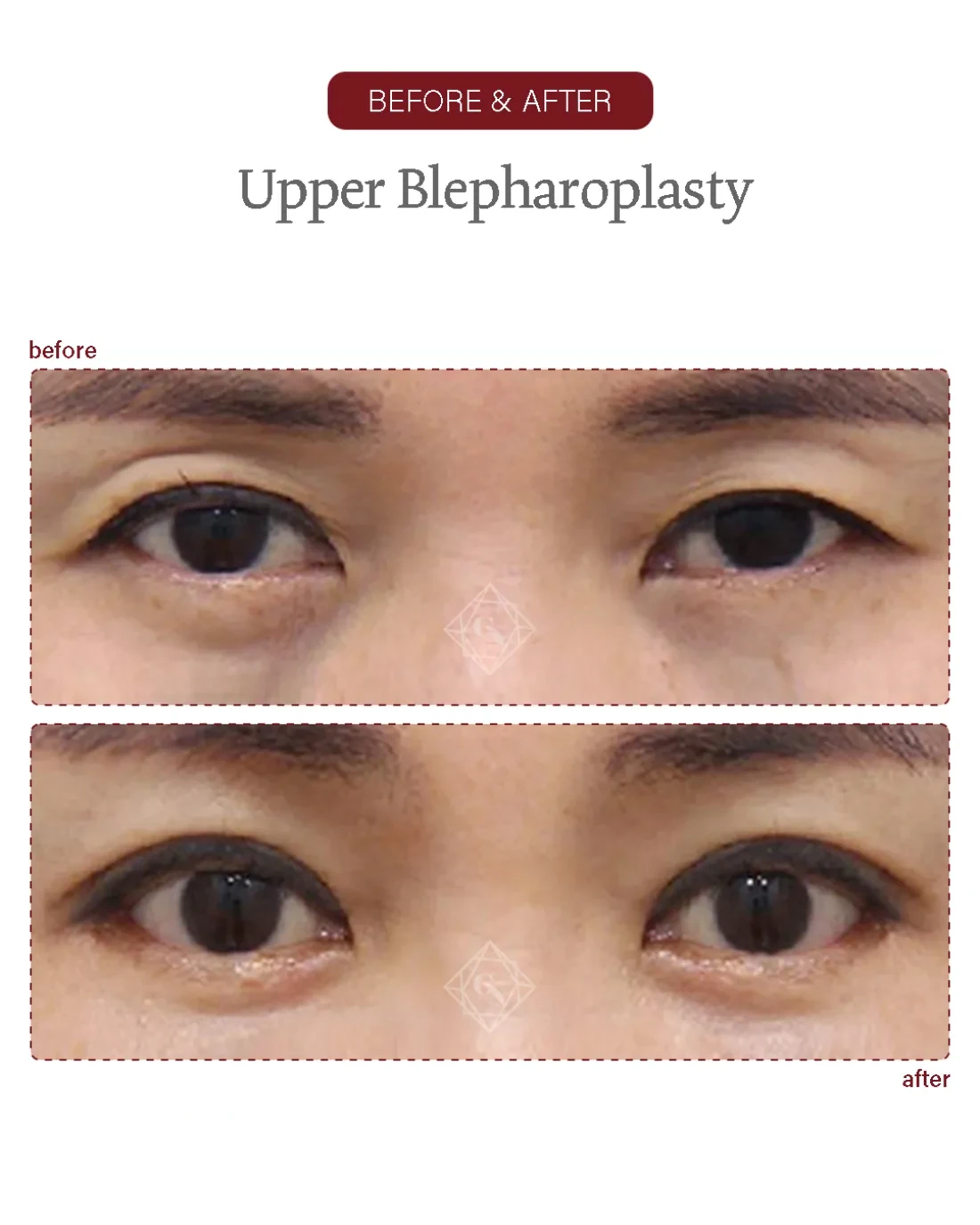
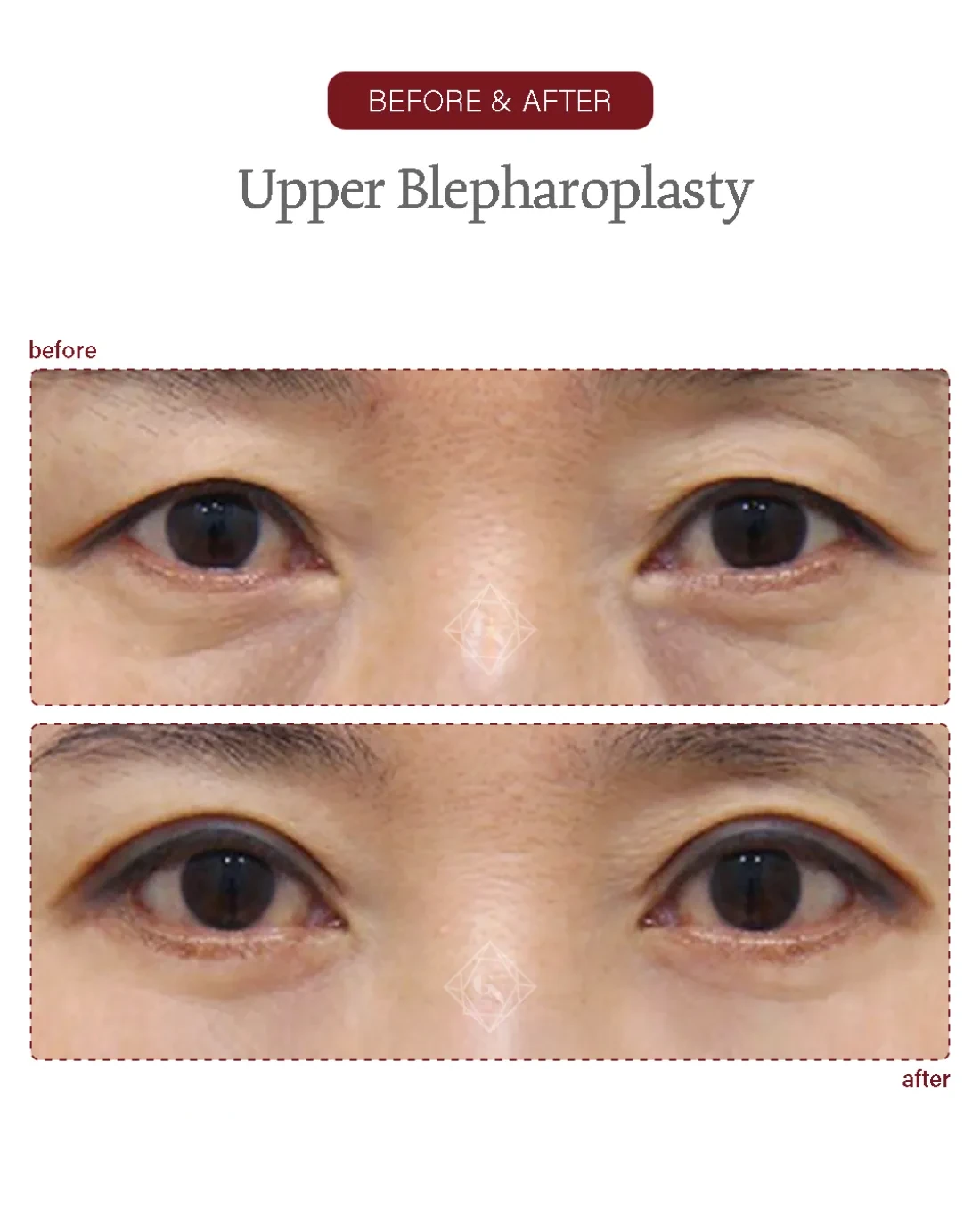
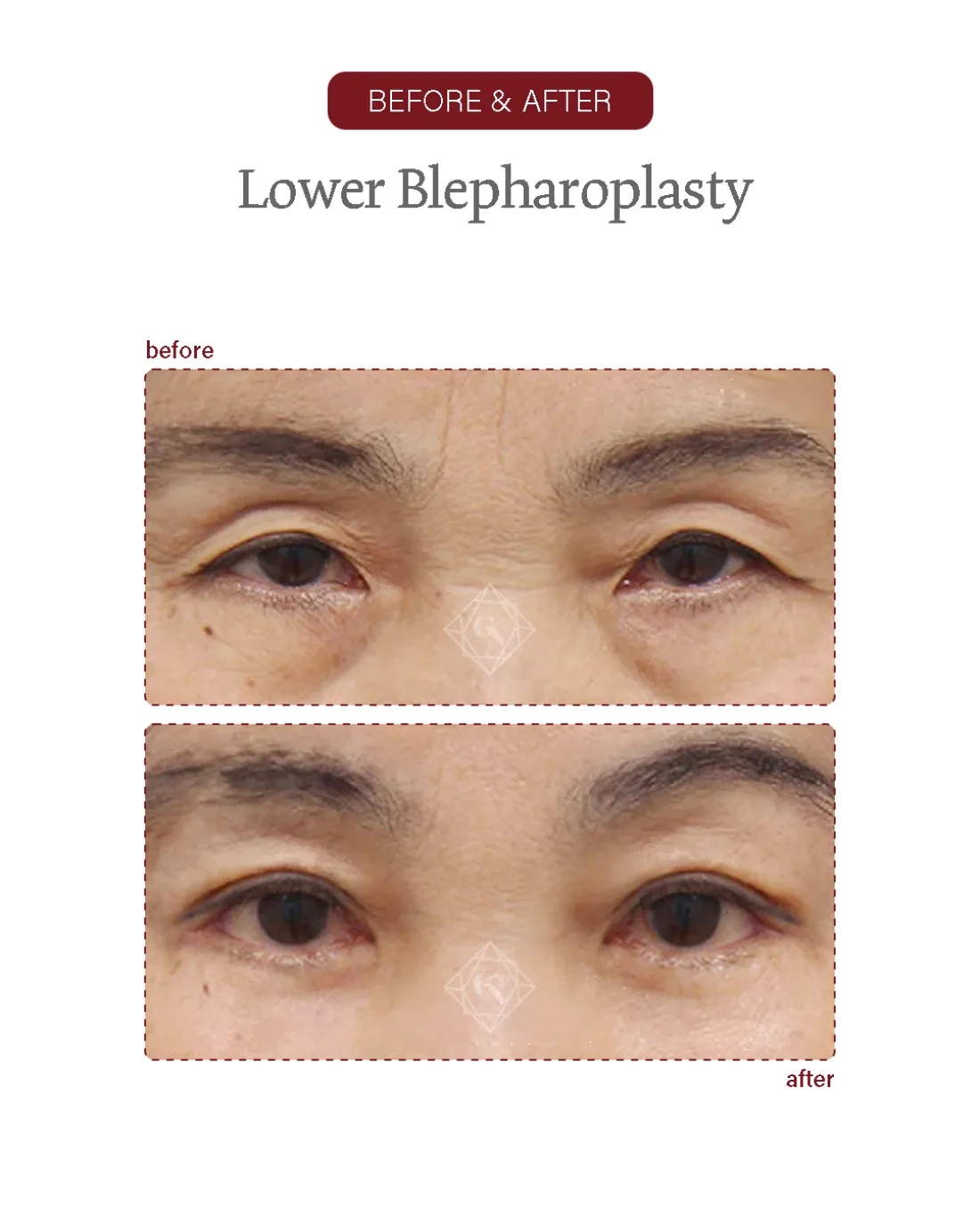
Eyelid before/after examples of actual Garnet patients (published with consent). Results, recovery and suitability vary by individual and are not guaranteed; the right approach is decided at an in-person consultation.
Prices
Price at Garnet
Upper blepharoplasty
From₩3,500,000 + VATExcluding VAT (10% VAT is added at payment)Book now
Same price as Korean patients. Prices shown exclude 10% VAT; your written quote, issued after the in-person consultation, shows the full amount payable.
Dr. In-Soo Baek
Director & sole operating surgeon
Korean medical licence no. 77407
Operate on what you came for. Trained at Korea University Medical Center. Every case planned, performed and reviewed by the same hands.
1Operating surgeon
~2Surgeries per day
7Registered techniques
Board-certified plastic surgeon
Plastic surgery training at Korea University College of Medicine & graduate school
Korean Society of Plastic and Reconstructive Surgeons member, in its facial-contour, eye & rhinoplasty groups
Consults, operates and follows up each case himself
Peer-reviewed papers behind the facts on this page. Each describes findings in its own study group — not results at Garnet — and none predicts your own outcome.
Saltz R et al. My Evolution with Endoscopic Brow-Lift Surgery. Facial Plastic Surgery Clinics of North America. 2021. doi:10.1016/j.fsc.2021.02.007
Starkman SJ et al. Association of Corrugator Supercilii and Procerus Myectomy With Endoscopic Browlift Outcomes. JAMA Facial Plastic Surgery. 2019. doi:10.1001/jamafacial.2018.2084
Terella AM et al. Technical Considerations in Endoscopic Brow Lift. Clinics in Plastic Surgery. 2013. doi:10.1016/j.cps.2012.06.004
FAQ
Common questions
Who is a good candidate for a forehead lift?
Someone whose brow has descended over time, creating a heavy, tired look, deep horizontal forehead lines, frown lines, or upper-eyelid hooding caused by the brow pressing down. A simple sign is that gently lifting your brow with your fingers restores a more open, rested look you recognise as yourself. Good candidates are in reasonable health and want natural rejuvenation.
How do I know if my problem is the brow or my eyelids?
Lift your brow gently with your fingers in the mirror. If that opens up your eyes and removes the heaviness, brow descent is likely the source and a forehead lift may help. If heaviness remains because the upper-eyelid skin itself is loose, upper eyelid surgery may be the better operation. An in-person assessment confirms which structure is driving the look.
Should I have a forehead lift or a sub-brow lift?
They suit different anatomy and goals. A forehead lift repositions the whole brow and forehead from above for genuine brow descent with forehead-line involvement; a sub-brow lift works just above the eyebrow to lift and define that area, leaving a fine scar at the brow's upper border. The right choice depends on your individual anatomy and is decided at assessment.
Should I have a forehead lift or upper eyelid surgery?
If the heaviness over your eyes comes from a descended brow, a forehead lift addresses the cause; if it comes from excess or lax upper-eyelid skin, an upper blepharoplasty is more direct. When both brow descent and lid-skin laxity contribute, the two are sometimes combined. The distinction is determined by examination; photos alone cannot settle it.
When is a forehead lift not recommended?
When the brow is not actually the problem, for example if heaviness is purely lid-skin laxity, or your concerns are lower in the face such as jowls or neck laxity. It is also not advisable if you want a dramatic, pulled look, or if health conditions, smoking or unmanaged medical issues make elective surgery inadvisable until addressed.
Can a forehead lift and eyelid surgery be done together?
Yes, when both brow descent and excess eyelid skin are contributing to the heaviness, they can be planned thoughtfully in the same session. Whether that is right for you depends on your individual anatomy and goals, which the surgeon assesses in person before recommending a combined or single procedure.
Will a forehead lift make me look surprised or pulled?
It should not. A natural, settled brow position is the marker of a good outcome. Garnet's approach is to look younger but still like yourself. The brow can look slightly high in the early weeks and then softens into a natural position as swelling resolves and the lift settles.
Am I too young or too old for a forehead lift?
Suitability depends on your anatomy and the cause of your concern; there is no fixed age. The procedure suits people with genuine brow descent and realistic goals who are in reasonable health. Whether it is right for you at any age is most reliably confirmed by an individual assessment with the surgeon.
What if the surgeon says I don't need a forehead lift?
That candour is a good sign. Garnet's stated approach is no over-recommendation: you are told plainly if a forehead lift is unnecessary or if a different procedure, or none, suits you better. Being advised against surgery you don't need is part of a careful assessment.
Can I find out if I'm a candidate before travelling?
Yes. You can begin with a free online consultation from abroad, sending photos and describing what bothers you, and receive a candid read on whether a forehead lift fits your case before planning a trip. A final decision still follows an in-person examination by the surgeon who would operate.
My mom recently had a brow lift and lower blepharoplasty with Dr. Baek, and our experience has been wonderful so far. The Garnet team was incredibly kind and welcoming, with Kelly assisting us as our English consultant—she made everything…
I’m so happy I chose this clinic for my lower blepharoplasty. I was traveling from abroad by myself, so I was a little nervous, but from the beginning I felt comfortable and truly cared for. Everyone was kind, patient, and professional…
Came in for an in-person consult and ended up choosing Garnet and Dr.Baek for my non-incisional DES and tiplasty/alarplasty. I communicated with Kelly (English consultant) from the start till now (3 weeks post-op). She really help me feel…
My under-eyes have been sagging and folding for years... I tried to cover it up with makeup, but it actually got stuck in the wrinkles and made it stand out even more. While going for consultations, I noticed that the bigger the hospital…
If you are not sure whether a forehead lift, a sub-brow lift or eyelid surgery is right for you, send photos for a no-obligation pre-assessment before you plan a trip.
Send photos and your question before you travel. An English-speaking coordinator reviews every forehead lift enquiry and replies with guidance on whether surgery is appropriate, the likely plan and timing.
✓ Reviewed by the clinic coordinator, not a bot
✓ Photo-based pre-assessment before you fly
✓ Foreign-patient scheduling & after-care
✓ One surgeon for consultation, surgery and follow-up
Prefer to chat now? Reach the coordinator directly:









 T S7 months ago



