Forehead reduction advances the hairline and removes a strip of forehead skin, and patients more often describe it as tight, heavy and numb than sharply painful. Pain is still one of the first worries people raise about it. To understand why the feeling is mostly tightness, it helps to know how the anaesthesia works and what the scalp actually feels during healing.
The short answer
Forehead reduction is done under anaesthesia, so you feel nothing during the surgery itself — the question that matters is comfort during recovery.
Most patients describe the early days as tightness, pressure and a heavy, numb sensation across the scalp. Sharp pain is uncommon, and oral pain relief usually manages it well.
Temporary numbness behind the hairline incision is normal. Small sensory nerves are interrupted and recover gradually over weeks to months. Numbness is not the same as pain.
A single surgeon planning and performing the operation, with structured follow-up, means your comfort and nerve recovery are tracked by the person who knows exactly what was done.
Forehead reduction is a hairline-advancement procedure: the surgeon makes an incision along the hairline, advances the scalp forward and removes a strip of forehead skin to shorten the forehead. Because this involves the scalp and forehead, a larger field than a small superficial area, it is performed under anaesthesia chosen for your case. That is typically local anaesthetic to numb the operative field plus sedation, or general anaesthesia, depending on the extent of advancement and your overall plan. The right approach is decided with the surgeon and the anaesthetic team at consultation, never improvised.
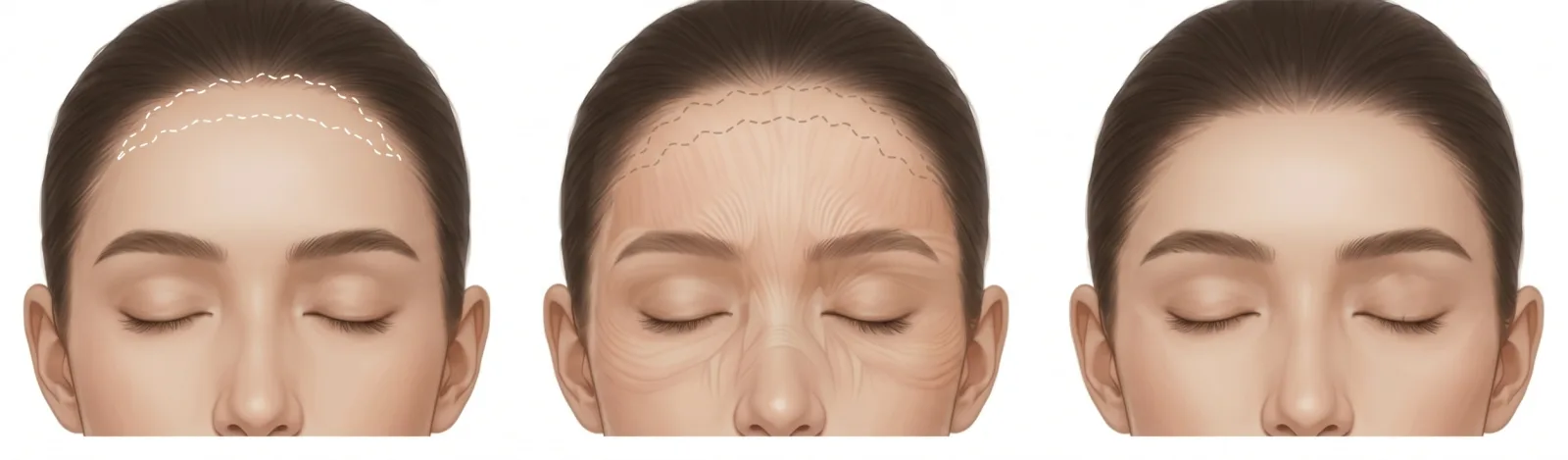
Illustration: through a fine line along the hairline (dotted), the hairline is brought forward to shorten a tall forehead.
Whichever route is used, the principle is the same: you do not feel the surgery. Local anaesthetic blocks sensation across the forehead and hairline so the surgeon can work, while sedation or general anaesthesia keeps you comfortable and unaware throughout. This is also part of why the procedure is best done in a properly equipped clinic with the surgeon directing your care. The overview is on the forehead reduction page.
No responsible clinic will call any surgery comfortable. What we can say accurately is that the operation itself is not something you experience as pain. Recovery discomfort, the part you will actually feel, is generally mild and manageable, as the sections below explain.
During surgery
What you feel during the operation
During the surgery you feel nothing of the incision, advancement or skin removal. That is the entire purpose of the anaesthesia. With sedation you are in a relaxed, drowsy state and typically have little or no memory of the procedure; under general anaesthesia you are fully asleep. Either way, the sharp, cutting sensations that people imagine when they picture surgery are not part of the experience.
Some patients are anxious about being aware of pressure or movement. Even when local anaesthetic and sedation are used without general anaesthesia, the operative field is fully numbed, so any sensation is at most a vague awareness of pressure. If you are someone who would feel calmer being fully asleep, that is a reasonable preference to raise at consultation, and it is taken into account when the anaesthetic plan is made.
Because anaesthesia is individual, the most careful plan depends on a full medical history: medications, prior reactions, general health. This is exactly the kind of detail covered in an online consultation beforehand, so nothing about your comfort or safety is left to the day of surgery.
After surgery
Pain in the first days after forehead reduction
The discomfort patients actually report is mostly in the first few days, and it is more often described as tightness and pressure than as sharp pain. Advancing the hairline puts the scalp under tension, so a sensation of tightness across the forehead and a feeling of heaviness are normal and expected. There may be a dull ache and some throbbing, especially in the first 24 to 48 hours, which settles steadily after that.
For most people, this level of discomfort is controlled well with the oral pain relief prescribed after surgery, and it eases noticeably within the first week. Swelling and a degree of bruising around the forehead and eyes can add to the sense of fullness in the early days, but again this is part of normal healing and no sign of a problem. The broader curve is mapped on the recovery timeline.
Everyone's pain threshold differs, so the fair framing is a range: most patients find it very manageable, a minority find the first day or two more uncomfortable, and prescribed medication covers both. If pain ever feels sharp, worsening or out of step with normal healing, that is a reason to contact the clinic straight away. This is why continuous access to the operating surgeon matters.
Numbness
Scalp numbness is not the same as pain
One of the most common, and most misunderstood, sensations after forehead reduction is numbness behind the hairline incision. When the scalp is advanced, small sensory nerves are inevitably interrupted, so the area above and behind the scar can feel numb, tingly or strangely sensitive for a while. This is expected, and importantly it is not pain. Numbness means reduced sensation.
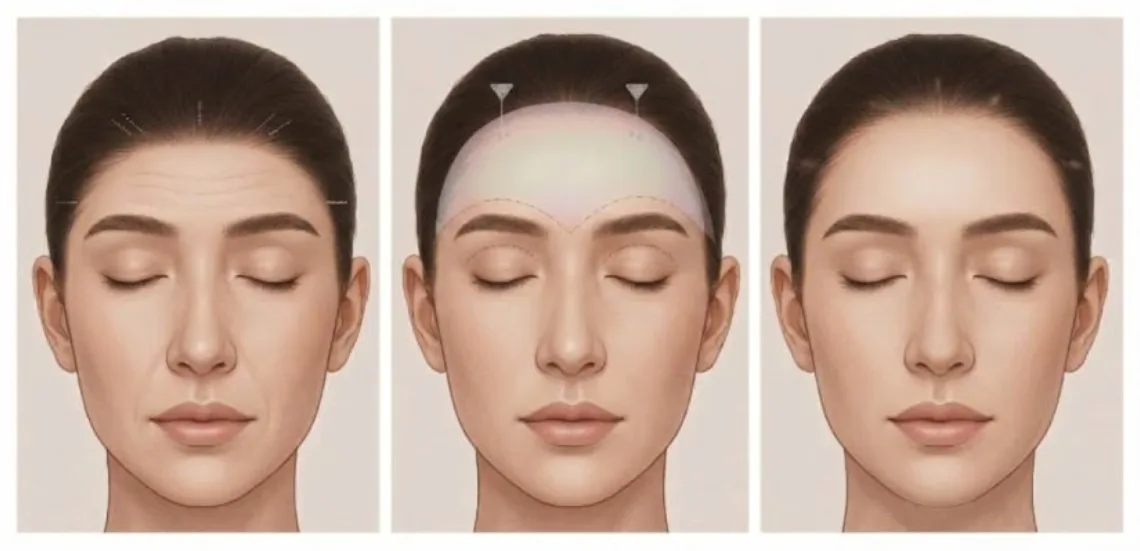
Illustration: the forehead and brow are lifted from within and held at fixation points behind the hairline (Pentafix™), rather than pulled at the skin.
This altered feeling typically improves gradually over weeks to months as the nerves recover, often working forward from the back of the scalp. Some patients notice odd itching or pins-and-needles as sensation returns, which is usually a sign of recovery. A small area of long-lasting reduced sensation near the scar is possible, and a careful surgeon will mention this beforehand as a normal trade-off of the technique. It is not a complication, much as with the related forehead lift, which also works near scalp nerves.
Distinguishing numbness from pain matters because patients sometimes alarm themselves over a completely normal sensation. Numbness that is slowly improving is part of healing. Genuine, increasing pain, particularly with spreading redness, heat or discharge, is different and should be reviewed promptly. Knowing which is which is part of what your follow-up reviews are for.
Managing it
How discomfort is managed through recovery
Comfort after forehead reduction is managed in layers. The prescribed oral pain relief covers the early ache and throbbing; keeping the head elevated, especially when sleeping, reduces swelling and the tight, heavy feeling that comes with it; and following the clinic's aftercare (gentle handling of the incision, avoiding strain and heavy lifting) keeps discomfort from being aggravated. Most patients step down off pain relief within the first several days as the tightness eases.
Practical comfort also comes from knowing what is normal, so you are not bracing against every sensation. Tightness, heaviness, numbness behind the scar and mild swelling are all expected; sharp or escalating pain is not. Clear, specific guidance on what to expect, and on what would warrant a call, removes a lot of the anxiety that makes recovery feel worse than it is. The day-by-day version of this is on the recovery timeline.
For international patients, the reassurance that matters most is access. Being able to message the surgeon who actually performed your operation, instead of a call centre, means any question about discomfort gets an informed answer quickly, including after you fly home. That continuity is the practical core of comfortable recovery.
At Garnet
How Garnet keeps forehead reduction comfortable
Garnet is a single-surgeon clinic in Apgujeong, Seoul. Dr. In-Soo Baek is a board-certified plastic surgeon (Korean medical licence no. 77407) and the only operating doctor. He consults, performs the hairline advancement himself and reviews every follow-up. Because the day is capped and unhurried, the anaesthetic plan and your comfort are planned around you, without a packed schedule, and the surgeon who numbs and operates is the one who later judges your nerve recovery.
That continuity is what makes pain and numbness easier to manage. The surgeon knows exactly how much the scalp was advanced and where the nerves were, so when you describe a sensation during follow-up, the answer is based on your own operation. Structured reviews at 1, 3 and 6 months track comfort and sensation, with the same surgeon reachable by messenger after you return home. Garnet is registered with Korea's foreign-patient programme.
If pain or anaesthesia is your main concern, the ideal first step is to talk it through directly. You can raise every question about comfort, sedation and recovery in a no-obligation online consultation before you commit to any travel.
Real Results
Before & After
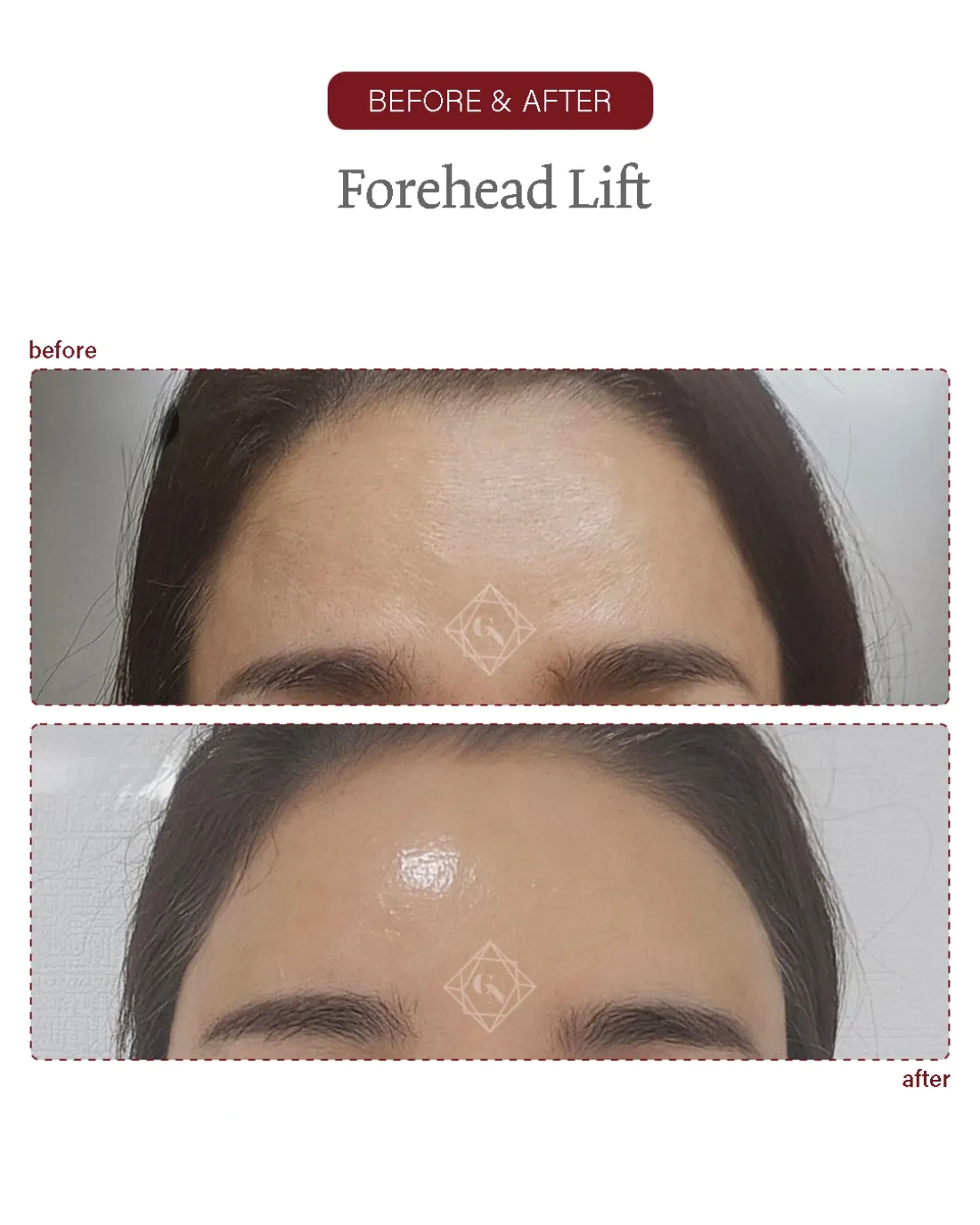
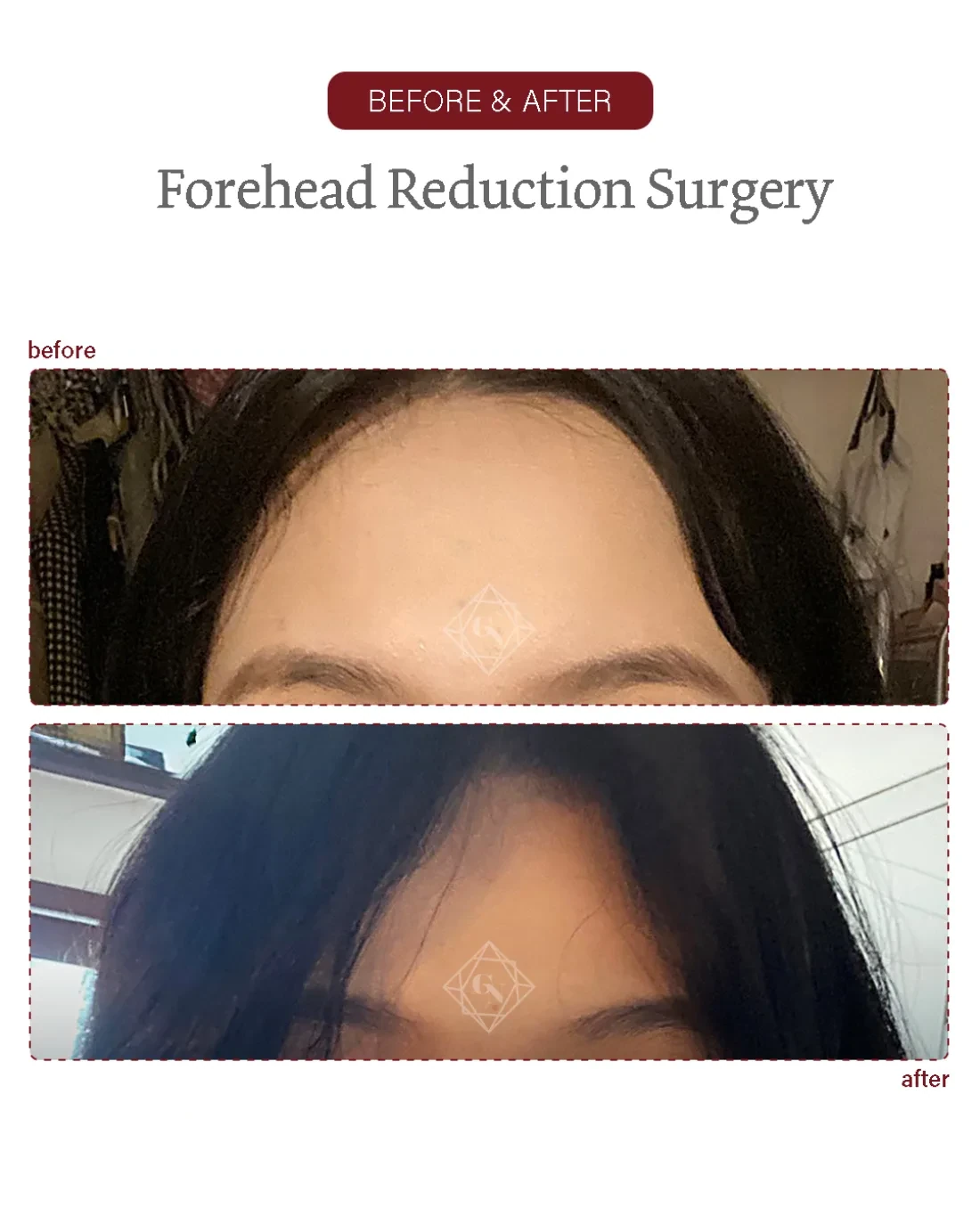
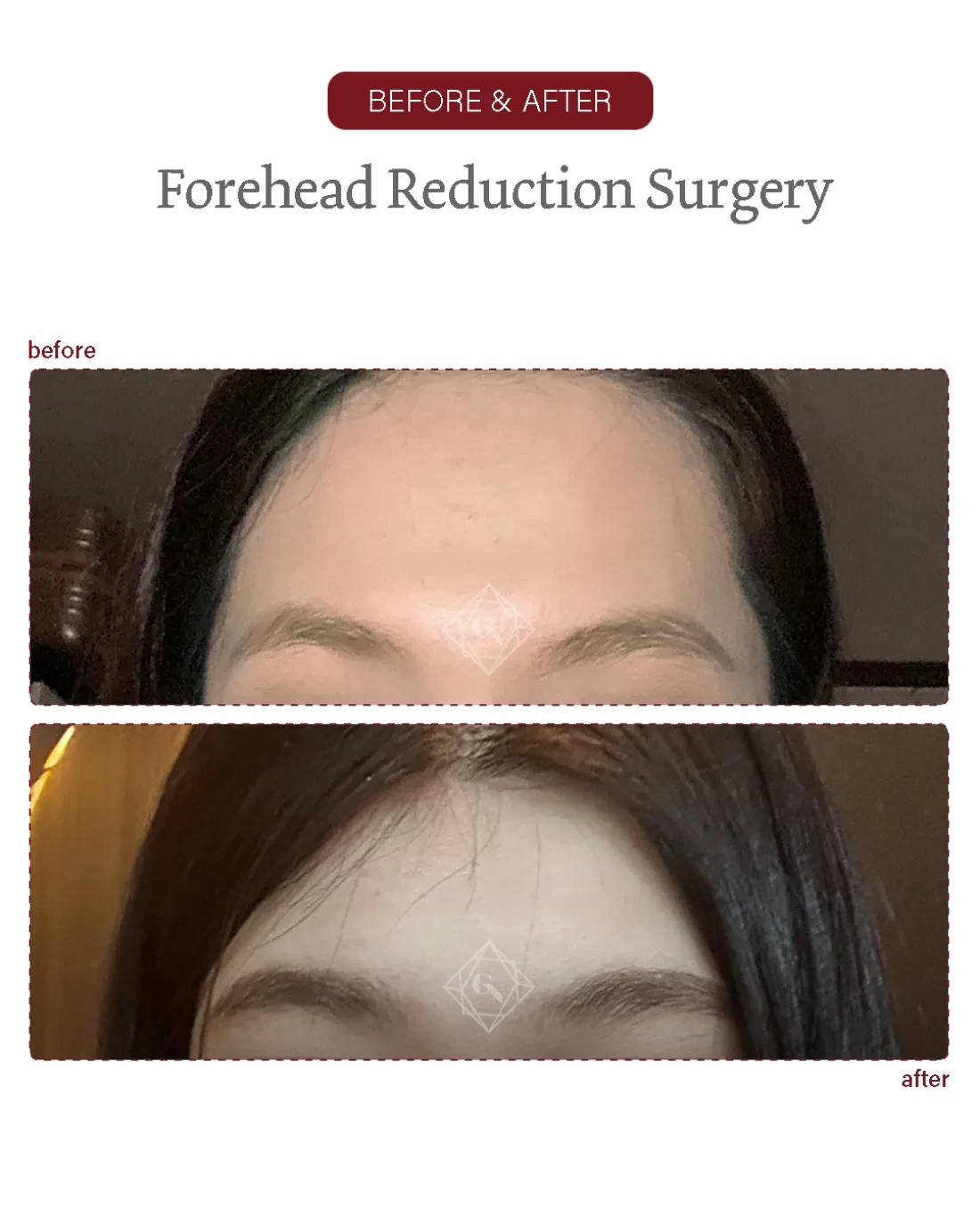
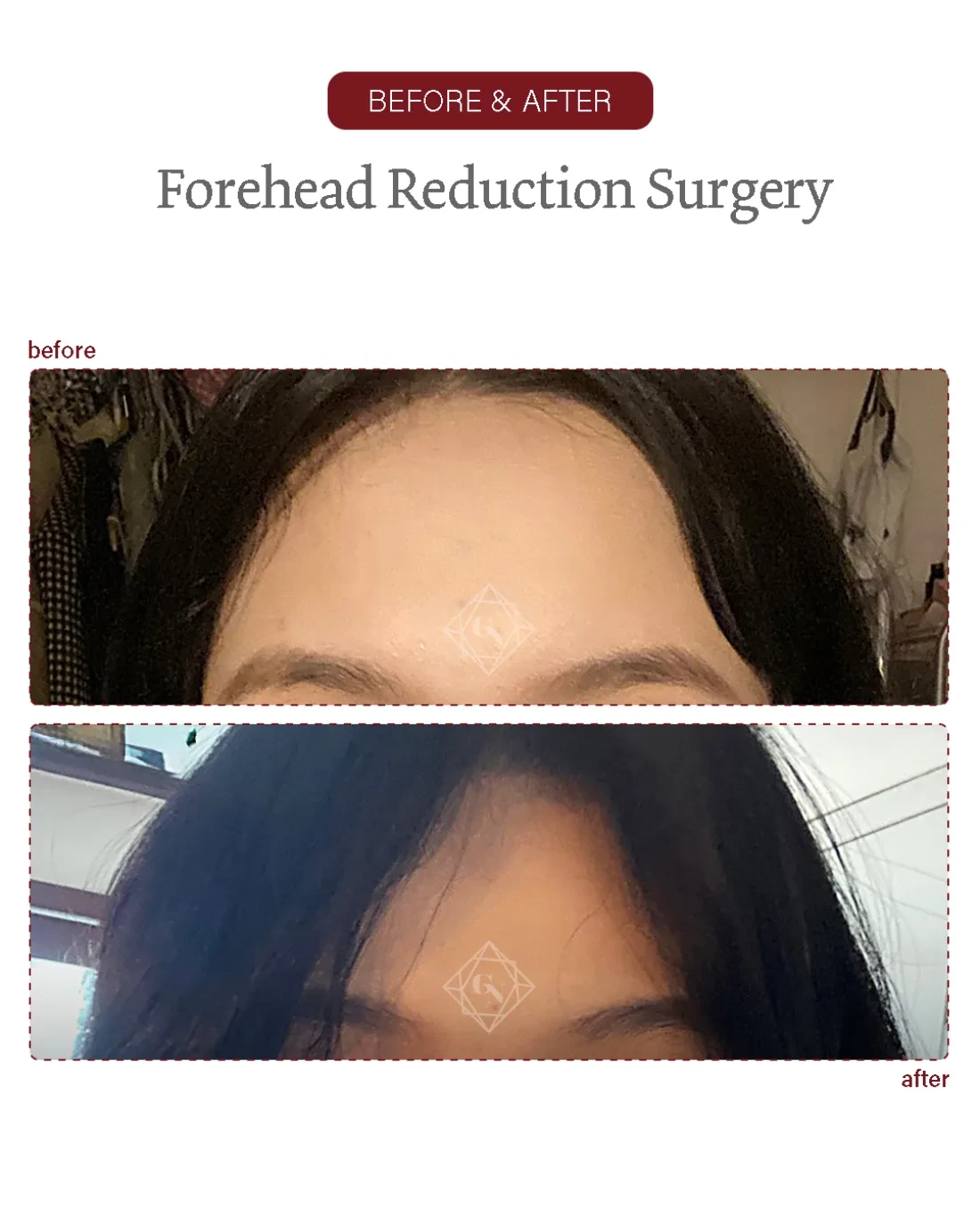
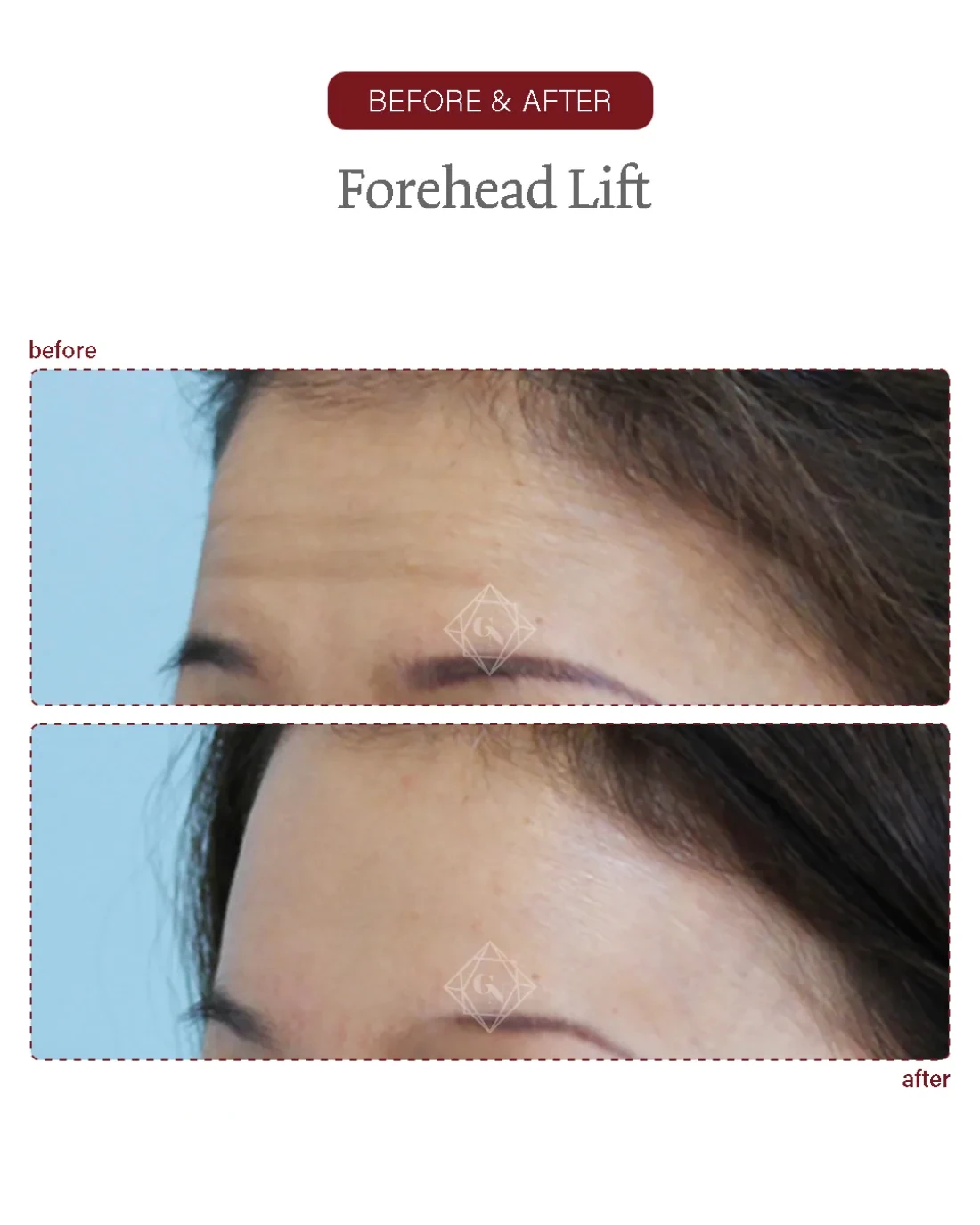
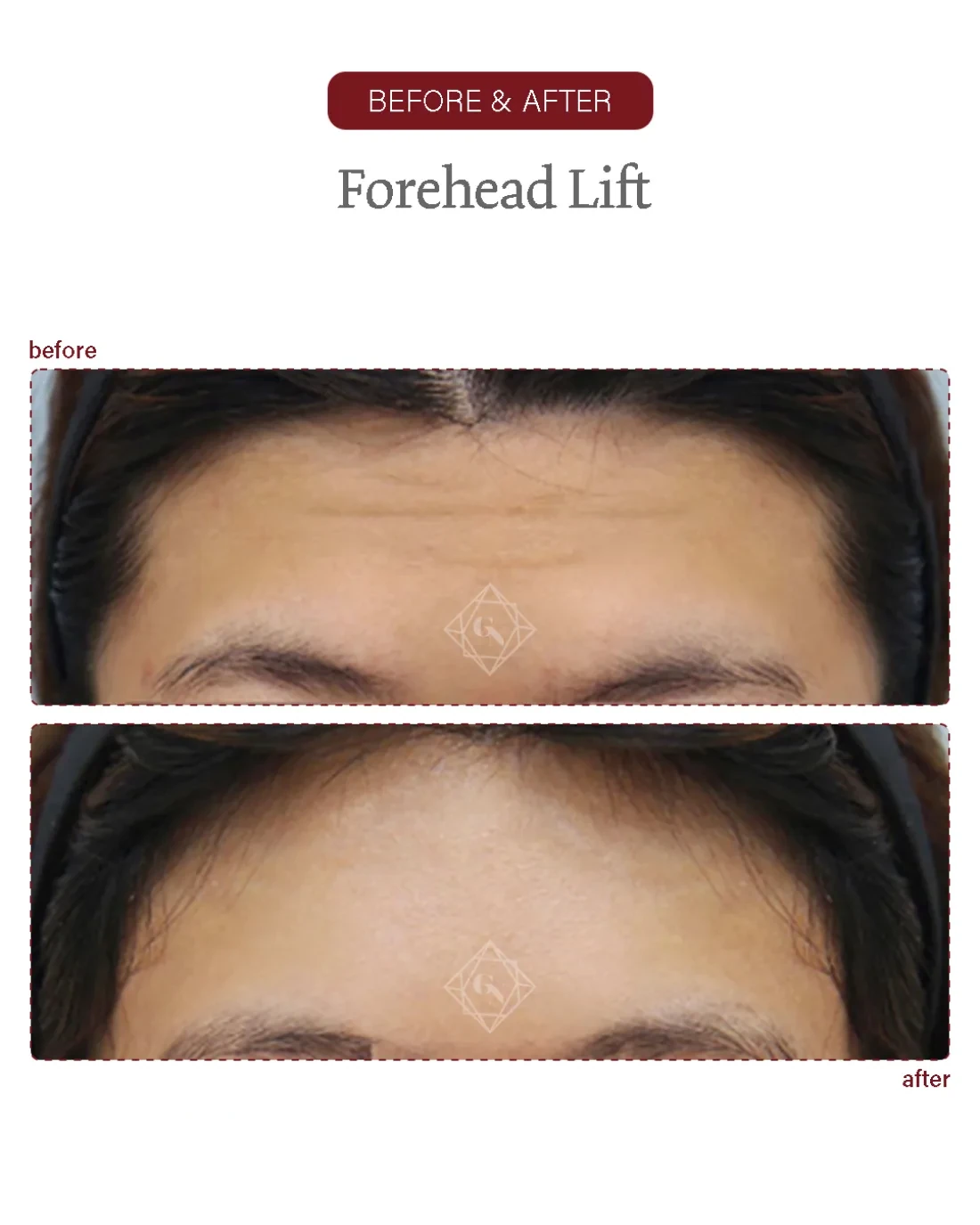
Forehead reduction before/after sets of actual Garnet patients (published with consent). Results, recovery and scar appearance vary by individual, depend on scalp laxity and hair density, and are not guaranteed.
Prices
Price at Garnet
Forehead reduction
₩7,000,000 + VATExcluding VAT (10% VAT is added at payment)Book now
Same price as Korean patients. Prices shown exclude 10% VAT; your written quote, issued after the in-person consultation, shows the full amount payable.
Dr. In-Soo Baek
Director & sole operating surgeon
Korean medical licence no. 77407
Operate on what you came for. Trained at Korea University Medical Center. Every case planned, performed and reviewed by the same hands.
1Operating surgeon
~2Surgeries per day
7Registered techniques
Board-certified plastic surgeon
Plastic surgery training at Korea University College of Medicine & graduate school
Korean Society of Plastic and Reconstructive Surgeons member, in its facial-contour, eye & rhinoplasty groups
Consults, operates and follows up each case himself
Peer-reviewed papers behind the facts on this page. Each describes findings in its own study group — not results at Garnet — and none predicts your own outcome.
Sturm A et al. Hairline Restoration: Difference in Men and Woman—Length and Shape. Facial Plastic Surgery. 2018. doi:10.1055/s-0038-1636905
Nusbaum BP et al. Naturally Occurring Female Hairline Patterns. Dermatologic Surgery. 2009. doi:10.1111/j.1524-4725.2009.01154.x
Alabdulkarim A et al. Forehead Length Reduction Surgery: Quantifying Complications and Outcomes Through Systematic Review and Meta-Analysis. Aesthetic Plastic Surgery. 2026. doi:10.1007/s00266-026-05691-9
FAQ
Common questions
Is forehead reduction painful?
During the operation you feel nothing, because it is done under anaesthesia. Afterwards, most patients describe tightness, pressure and a heavy, numb feeling across the scalp more than sharp pain, and prescribed oral pain relief usually manages it well. It is generally considered very manageable, though pain thresholds vary.
What anaesthesia is used for forehead reduction?
Forehead reduction is performed under anaesthesia chosen for your case, typically local anaesthetic to numb the operative field combined with sedation, or general anaesthesia, depending on the extent of advancement and your plan. The approach is decided with the surgeon and anaesthetic team at consultation based on your medical history.
Will I feel anything during the surgery?
No. The operative field is fully numbed and you are either sedated or fully asleep, so you do not feel the incision, the hairline advancement or the skin removal. At most some patients have a vague awareness of pressure, never the sharp sensations people imagine when picturing surgery.
How much does it hurt afterwards?
The first 24 to 48 hours bring the most tightness and a dull, throbbing ache, which then eases steadily. For most people prescribed pain relief controls this comfortably, and they step down off it within the first several days. A minority find the first day or two more uncomfortable, which the medication still covers.
Why does my scalp feel numb after forehead reduction?
Advancing the scalp interrupts small sensory nerves near the incision, so the area behind the hairline can feel numb, tingly or oddly sensitive. This is expected and is not pain; numbness means reduced sensation. It typically improves over weeks to months as the nerves recover.
Is numbness the same as a complication?
No. Temporary numbness behind the scar is a normal, expected trade-off of hairline advancement and usually resolves gradually. A complication looks different: increasing, sharp pain with spreading redness, heat or discharge. Knowing the difference is part of what your follow-up reviews are for.
When does the numbness go away?
Sensation usually returns gradually over several weeks to a few months, often improving from the back of the scalp forward. Itching or pins-and-needles during this time tends to signal recovery. A small area of long-lasting reduced sensation near the scar is possible and is a normal trade-off the surgeon will mention beforehand.
How is the discomfort managed during recovery?
Through prescribed oral pain relief, keeping the head elevated to limit swelling and tightness, and following aftercare that protects the incision and avoids strain. Most patients come off pain relief within the first several days. Clear guidance on what is normal also removes a lot of the anxiety that makes recovery feel worse.
Can I get pain relief that works for me as an international patient?
Yes. Your medication is prescribed after surgery and your medical history, including any sensitivities, is reviewed beforehand. Because the operating surgeon stays reachable by messenger after you fly home, any concern about pain or sensation gets an informed answer.
Can I discuss pain and anaesthesia before travelling?
Yes. Every question about comfort, the anaesthetic plan, sedation versus general anaesthesia and recovery can be raised in an online consultation before you commit to a trip, so your medical history shapes the plan well in advance of the day of surgery.
My mom recently had a brow lift and lower blepharoplasty with Dr. Baek, and our experience has been wonderful so far. The Garnet team was incredibly kind and welcoming, with Kelly assisting us as our English consultant—she made everything…
I’m so happy I chose this clinic for my lower blepharoplasty. I was traveling from abroad by myself, so I was a little nervous, but from the beginning I felt comfortable and truly cared for. Everyone was kind, patient, and professional…
Came in for an in-person consult and ended up choosing Garnet and Dr.Baek for my non-incisional DES and tiplasty/alarplasty. I communicated with Kelly (English consultant) from the start till now (3 weeks post-op). She really help me feel…
My under-eyes have been sagging and folding for years... I tried to cover it up with makeup, but it actually got stuck in the wrinkles and made it stand out even more. While going for consultations, I noticed that the bigger the hospital…
Send photos and your question before you travel. An English-speaking coordinator reviews every enquiry and replies with guidance on whether surgery is appropriate, the likely plan and timing.
✓ Reviewed by the clinic coordinator, not a bot
✓ Photo-based pre-assessment before you fly
✓ Foreign-patient scheduling & after-care
✓ One surgeon for consultation, surgery and follow-up
Prefer to chat now? Reach the coordinator directly:








 T S7 months ago



