Most forehead reductions heal well, but sometimes the hairline heals uneven, the scar shows, or the forehead is still taller than hoped. Often this can be put right. Revision of the hairline and scalp is more demanding than the first operation, so a careful, in-person assessment matters more here than almost anywhere.
The short answer
Common reasons for revision are hairline asymmetry, a scar that is visible or widened, a hairline still set too high, or an irregular hairline edge after a previous reduction.
Correction options range from scar revision and refinement, to a further careful hairline advancement, to hair transplant across or in front of the scar to soften and camouflage it.
Revision is technically more demanding than a first forehead reduction. Scar tissue, prior tension and altered blood supply all reduce flexibility, so realistic, conservative planning is essential.
A careful assessment may conclude that a scar-camouflage approach suits you better than re-advancing the hairline; the right answer depends on your scalp, hair pattern and what concerns you most.
Forehead reduction works by advancing the hairline forward and removing a strip of forehead skin, so the things that disappoint patients tend to cluster around the hairline itself. The most common are a hairline that healed asymmetrically (slightly higher on one side than the other) or an edge that looks too straight, too sharp or unnaturally regular. A natural hairline is softly irregular. Others feel the forehead is still taller than they hoped, because a single safe advancement could only move the scalp so far.
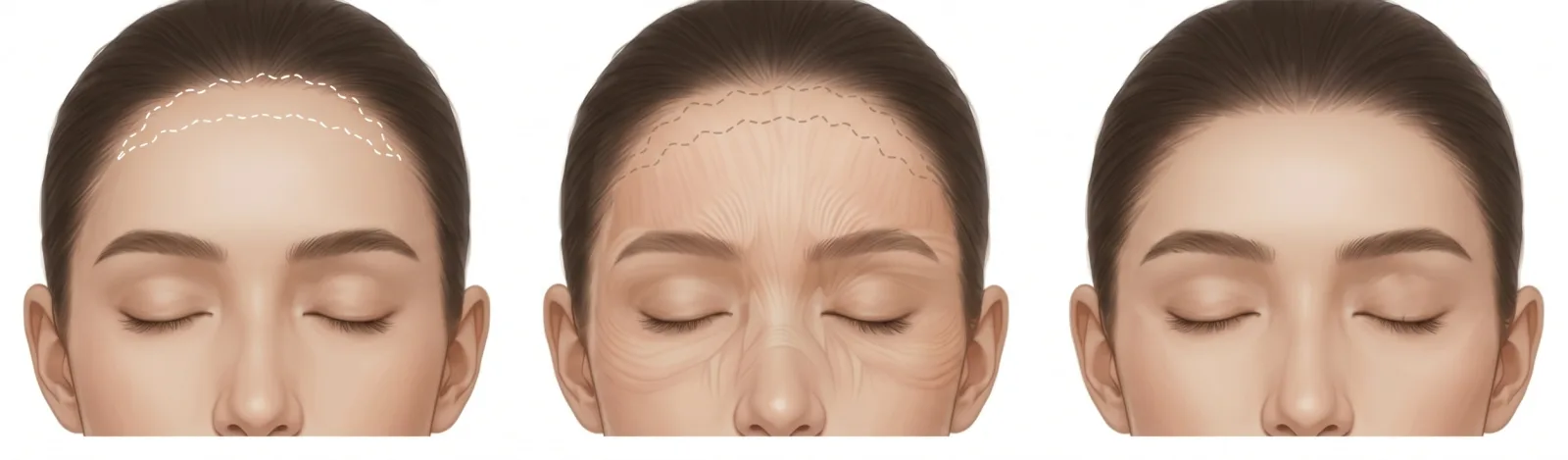
Illustration: through a fine line along the hairline (dotted), the hairline is brought forward to shorten a tall forehead.
The scar is the other frequent concern. A hairline scar that healed wide, raised or visible, or that sits slightly in front of the hairline where hair cannot hide it, can undermine an otherwise good result. None of these necessarily reflect a poor surgery; some come down to how an individual's tissue healed, how much tension the scalp was under, or how conservatively the first operation was planned. Understanding the original technique, covered on the forehead reduction page, helps frame what went on.
It is worth separating disappointment from normal healing. A scar still maturing in the first year, or early tightness, is not a failed result. These settle, as the scars and healing page explains. Genuine revision questions are best raised once the forehead has fully settled, typically after a year, when the true result is clear.
What's possible
What can actually be corrected
Several things can be improved, though what is realistic depends entirely on your individual scalp and hair. Hairline asymmetry can sometimes be evened out by adjusting the higher side. A hairline still set too high may be lowered further with an additional, carefully judged advancement. This is often more feasible once the scalp has relaxed in the months and years after the first surgery, regaining some flexibility. An over-straight or harsh hairline edge can frequently be softened so it reads more naturally.
A visible scar is usually the most addressable concern, through scar revision, refinement, or hair-based camouflage, covered in the next section. Revision is about improvement and cannot guarantee a perfect reset. The aim is a meaningfully better, more natural result; it cannot undo everything that came before.
Which combination suits you is a judgement call made in person. Sometimes the ideal plan is a single targeted change, such as refining the scar alone, with no re-operation on the whole hairline. A careful surgeon will steer you toward the least aggressive option that genuinely solves the concern that brought you in, which often starts from the same questions covered on the who is it for page.
Scar & transplant
Scar revision and hair transplant over the scar
When the scar is the main problem, two broad routes exist. The first is scar revision: re-excising and meticulously re-closing the scar to produce a finer, flatter line. This is useful when a scar healed wide or raised. This works best once the original scar has fully matured, and it is approached conservatively because each revision still leaves a scar, just a better one.
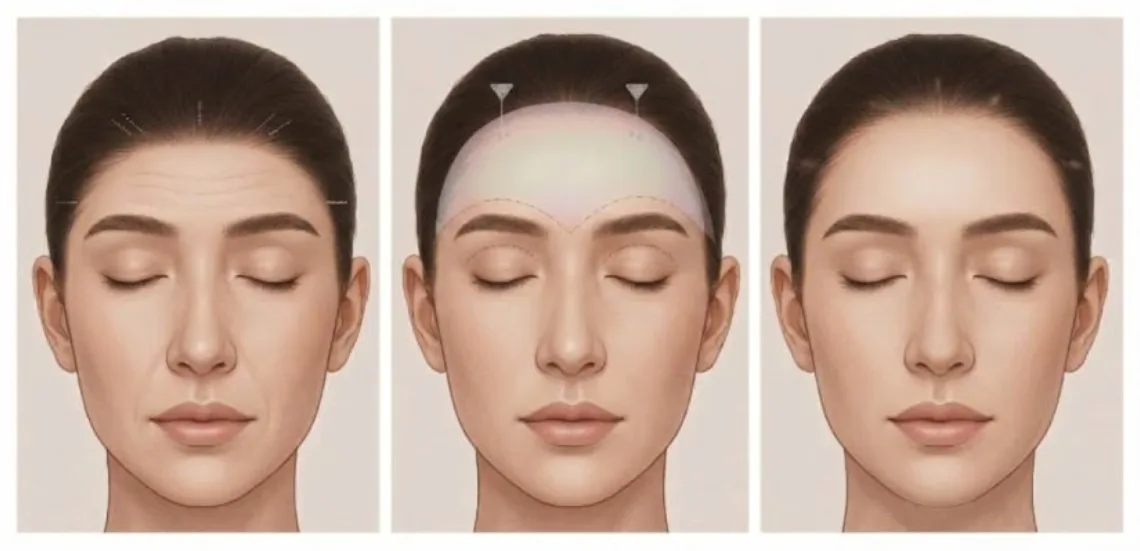
Illustration: the forehead and brow are lifted from within and held at fixation points behind the hairline (Pentafix™), rather than pulled at the skin.
The second route is hair-based camouflage. A hair transplant placing follicles into and just in front of the scar can break up its visibility, so hair grows through and across the line and disguises it. This is particularly valuable when a scar sits slightly forward of the hairline or where the hairline edge looks too defined. The two approaches are not mutually exclusive: refining the scar first and then transplanting hair through it can give the most discreet result, and the sequence and timing are planned individually.
Both options require realistic expectations. Transplanted hair takes months to grow in, and graft behaviour through scar tissue is less predictable than in normal scalp, so results are improvements and cannot be certainties. This kind of case-specific plan benefits from seeing the surgeon who would carry it out, and from the same continuity that the related forehead procedures rely on for predictable healing.
Why harder
Why revision is more demanding than the first surgery
A revision forehead reduction is rarely a simple repeat of the original. The first operation leaves scar tissue, alters the scalp's blood supply and uses up some of the natural flexibility that made the initial advancement possible. Tissue that has already been advanced and held under tension is stiffer and less forgiving, which limits how far a surgeon can safely move it a second time and raises the premium on conservative, well-planned surgery.
These constraints are why revision demands particular care. Pushing a previously operated scalp too aggressively risks tension on the closure, which can in turn widen a scar, the very thing the patient came to fix. A thoughtful surgeon therefore plans for what the tissue will genuinely allow, sometimes staging changes over time instead of attempting everything at once, and is candid when the most careful improvement is smaller than the patient first imagined.
For an international patient, this makes surgeon selection and candour especially important. Revision rewards an unhurried, single-surgeon approach where the same doctor assesses, plans and operates with realistic goals, and is willing to say when a more modest correction, or a scar-camouflage route, is the wiser choice. You can begin that conversation in an online consultation with photos before travelling.
Assessment
Why assessment comes first in forehead reduction revision
Revision planning begins with understanding exactly what was done before and how your tissue responded. The surgeon needs to see the current hairline, the scar, the scalp's flexibility and your hair pattern, because all of these shape what is realistic. Two patients with the same complaint can need quite different plans: one suited to a further advancement, another better served by scar camouflage alone.
A good assessment also means being told when surgery is not the answer, or when waiting is. If a scar is still maturing, the right advice may be to let it settle before deciding. If the scalp has little flexibility left, re-advancing the hairline may not be safe, and a hair-transplant approach becomes the sensible route instead. Hearing 'this is what we can safely improve, and this is what we cannot' is a sign of good care. It does not mean you are out of options.
Because so much depends on examining your specific anatomy, a generic promise made before anyone has seen your scalp should be treated with caution. The reliable path is a candid, in-person-quality assessment. For international patients it can begin remotely with good photographs and full history, then be confirmed in Seoul.
At Garnet
How Garnet approaches forehead reduction revision
Garnet is a single-surgeon clinic in Apgujeong, Seoul. Dr. In-Soo Baek is a board-certified plastic surgeon (Korean medical licence no. 77407) and the only operating doctor. For a forehead reduction revision he examines your earlier hairline result, plans the correction, performs it himself and sees you at every review. That continuity matters on a previously operated scalp, where goals are kept realistic and conservative and nothing is over-promised.
The clinic's unhurried model suits this kind of careful work. The day is capped, the assessment states plainly what can and cannot be safely improved, and structured reviews at 1, 3 and 6 months track how a revision settles, with the same surgeon reachable by messenger after you fly home. Garnet is registered with Korea's foreign-patient programme, so coordination for a revision trip is handled end to end.
If a previous forehead reduction has left you unhappy, the most useful first step is a pre-assessment of your hairline, scar and scalp. You can send photographs and your surgical history for a no-obligation online consultation before deciding whether to travel.
Real Results
Before & After
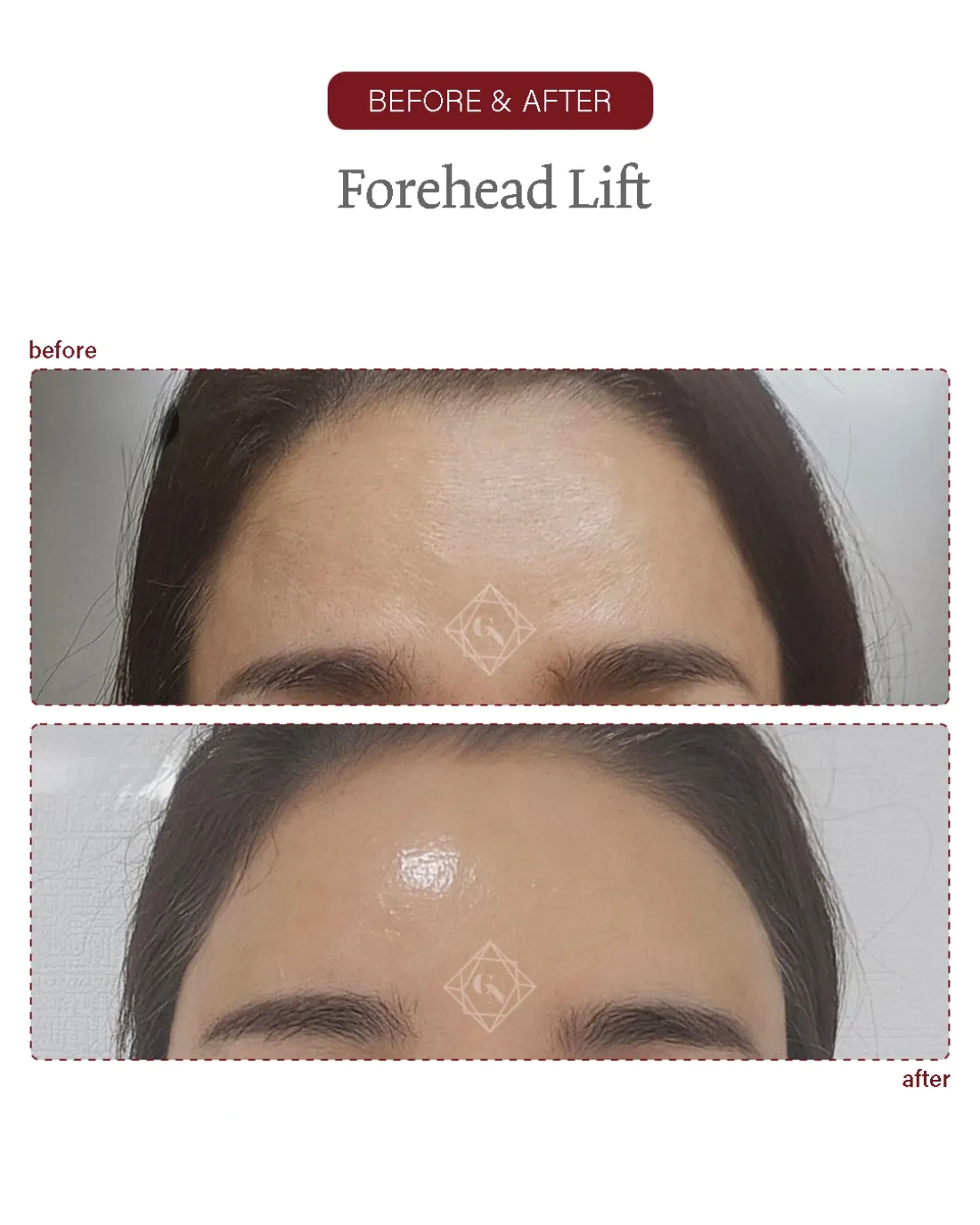
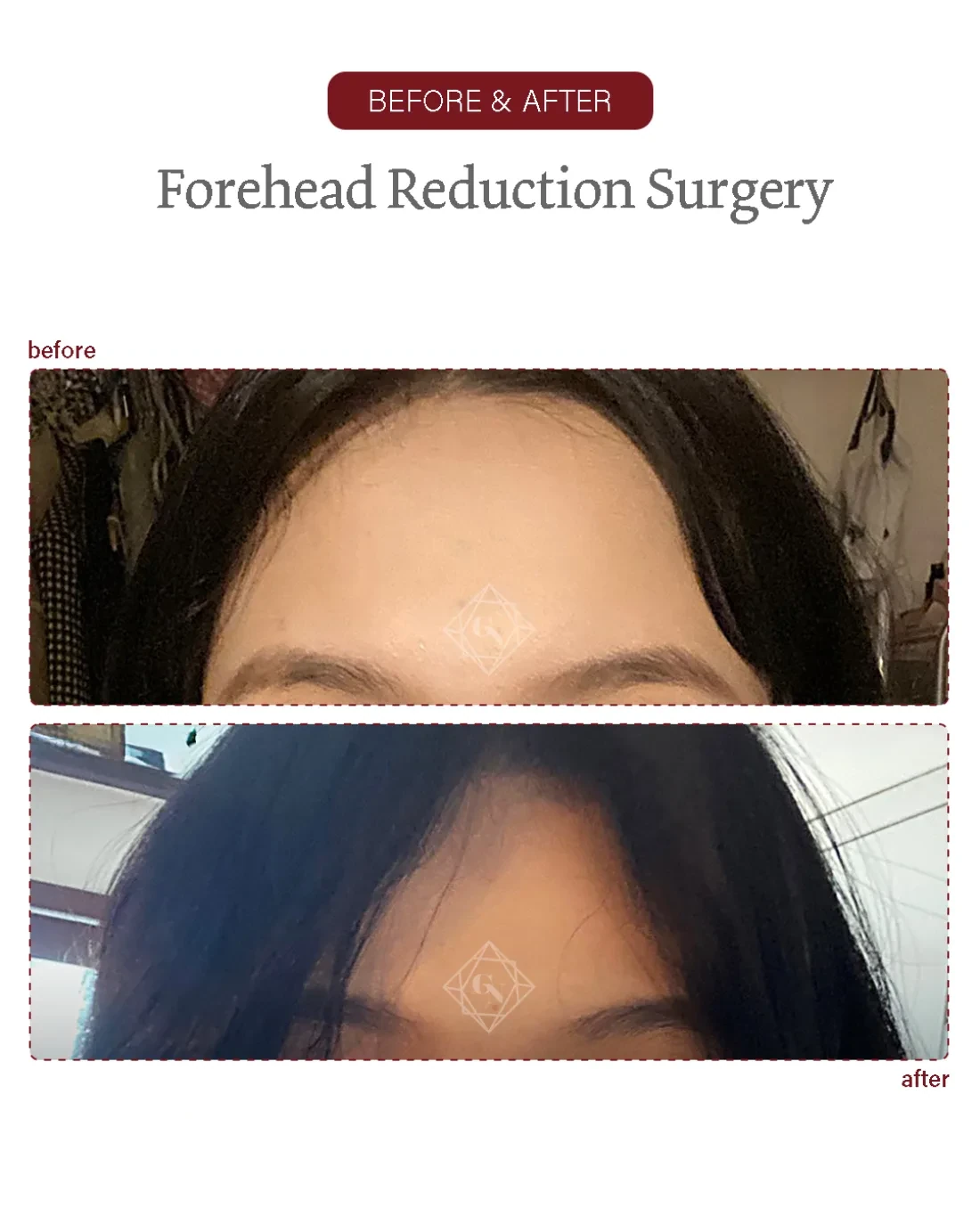
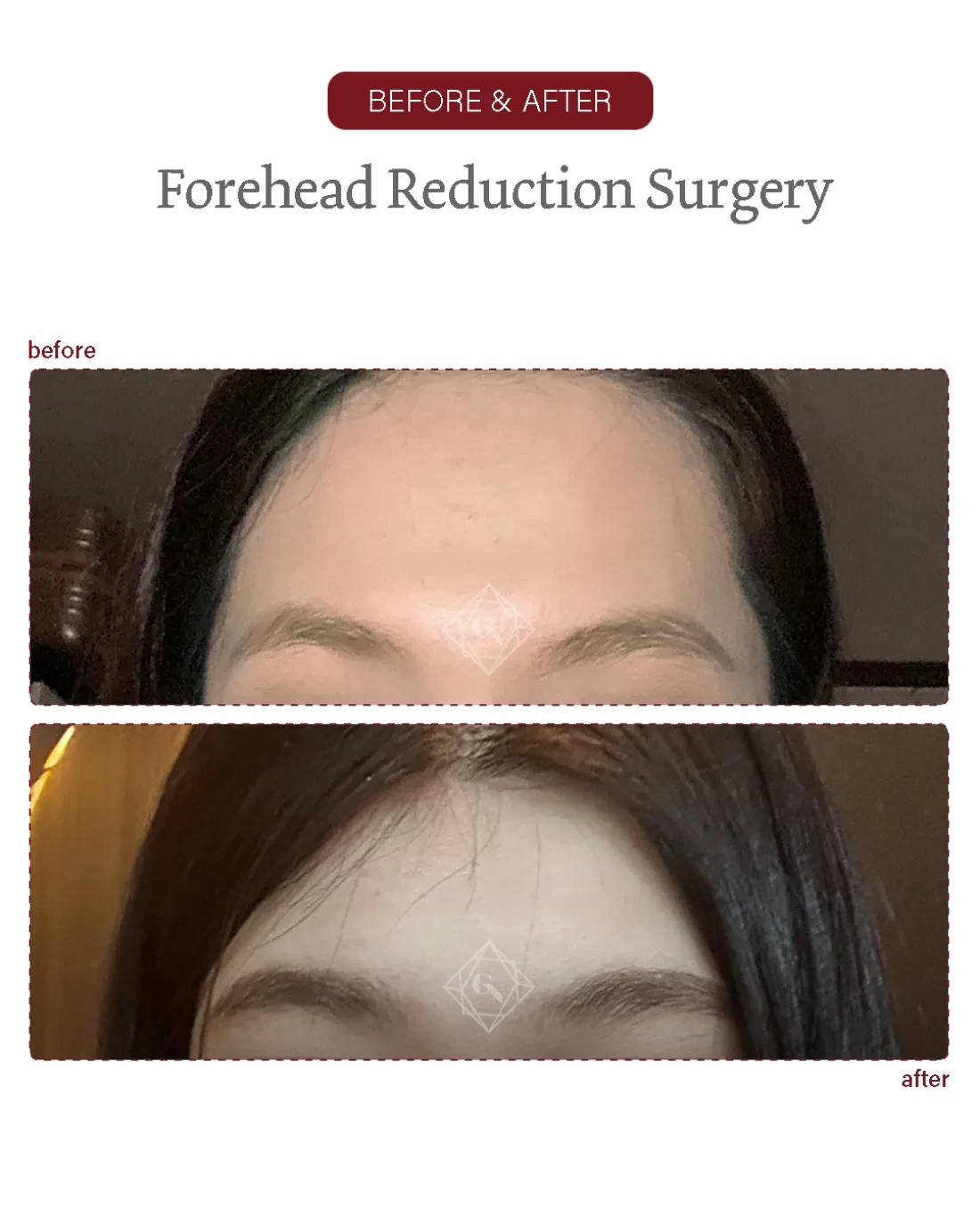
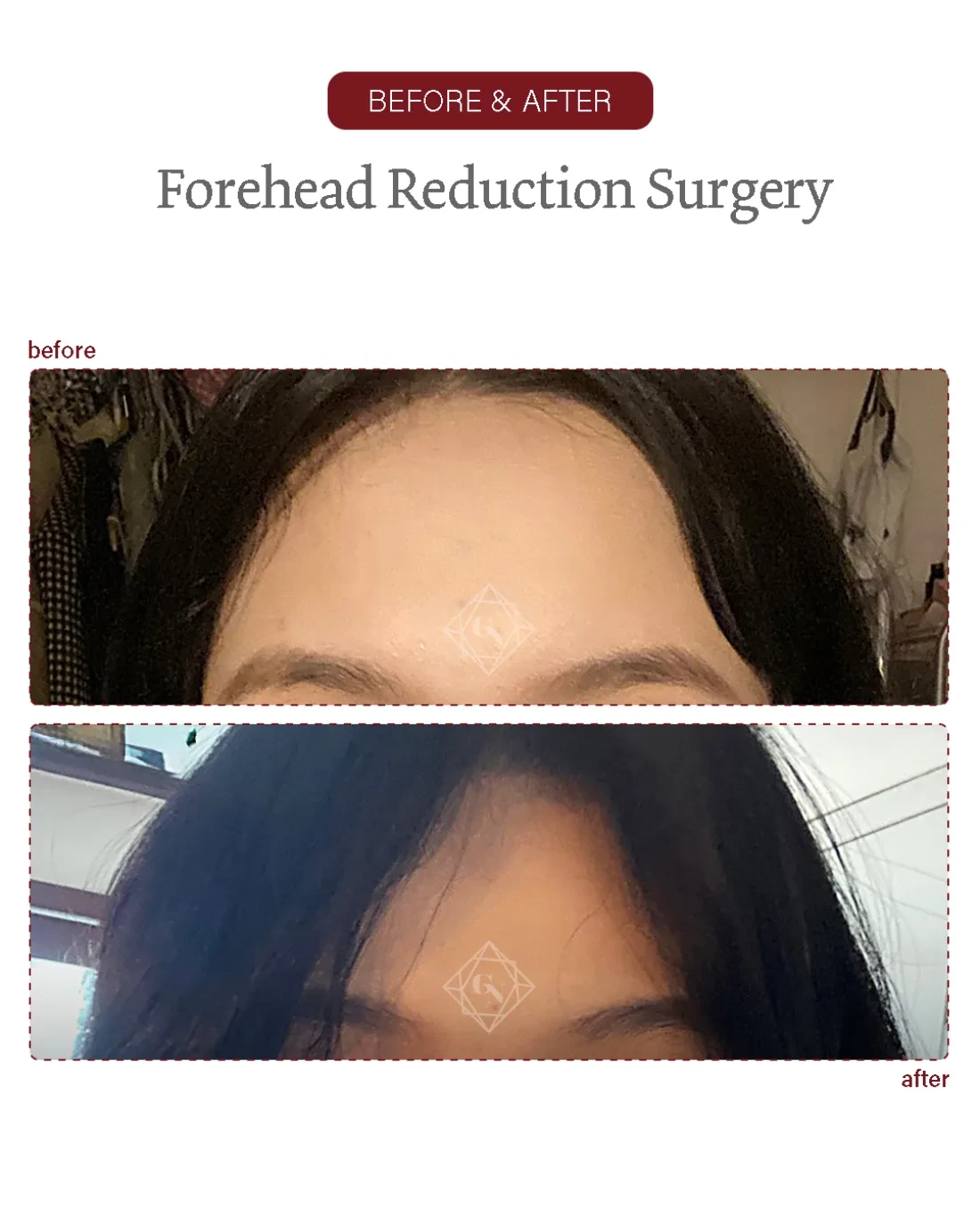
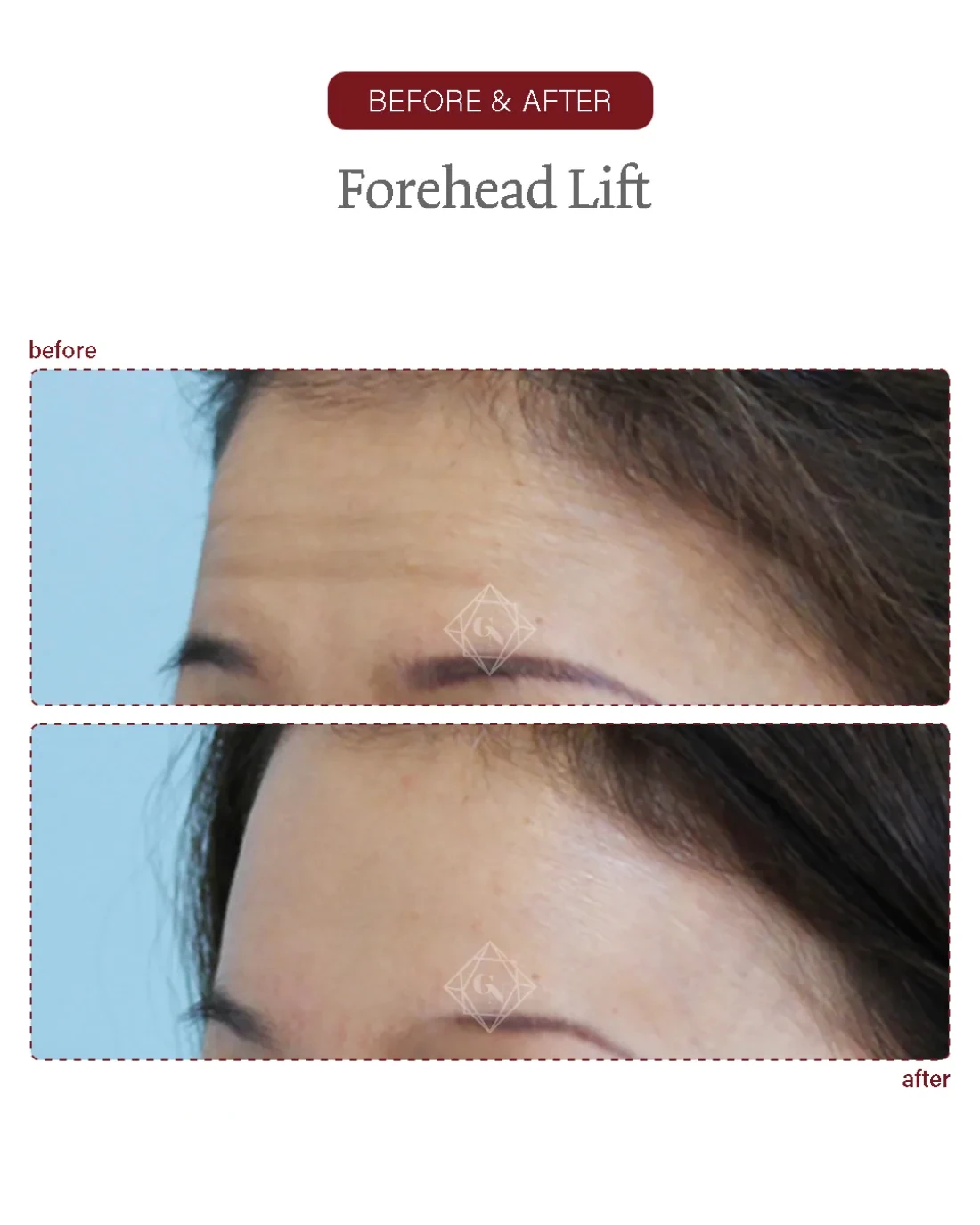
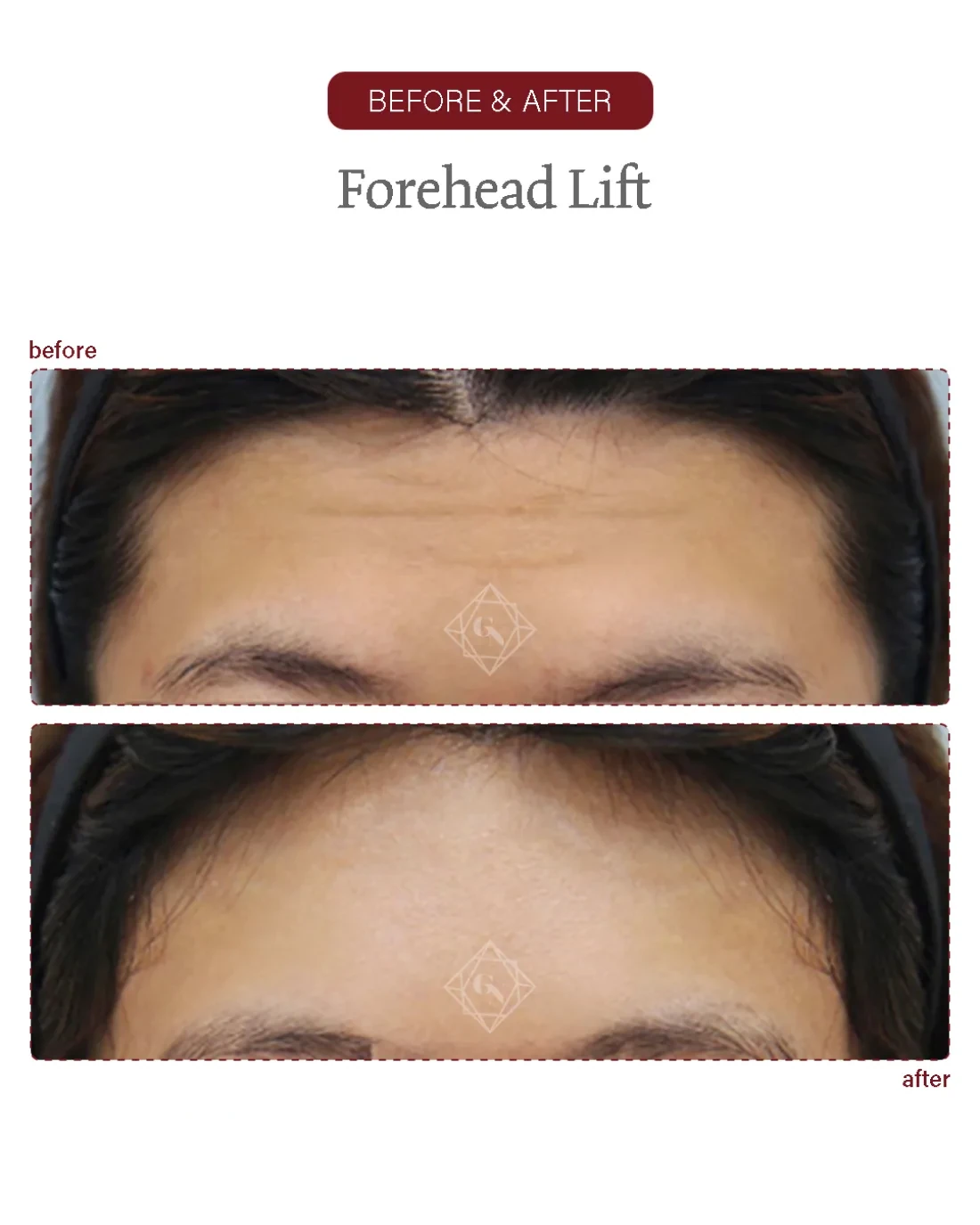
Forehead reduction before/after sets of actual Garnet patients (published with consent). Results, recovery and scar appearance vary by individual, depend on scalp laxity and hair density, and are not guaranteed.
Prices
Price at Garnet
Forehead reduction
₩7,000,000 + VATExcluding VAT (10% VAT is added at payment)Book now
Same price as Korean patients. Prices shown exclude 10% VAT; your written quote, issued after the in-person consultation, shows the full amount payable.
Dr. In-Soo Baek
Director & sole operating surgeon
Korean medical licence no. 77407
Operate on what you came for. Trained at Korea University Medical Center. Every case planned, performed and reviewed by the same hands.
1Operating surgeon
~2Surgeries per day
7Registered techniques
Board-certified plastic surgeon
Plastic surgery training at Korea University College of Medicine & graduate school
Korean Society of Plastic and Reconstructive Surgeons member, in its facial-contour, eye & rhinoplasty groups
Consults, operates and follows up each case himself
Peer-reviewed papers behind the facts on this page. Each describes findings in its own study group — not results at Garnet — and none predicts your own outcome.
Vila PM et al. Forehead Reduction: A Systematic Review and Meta-Analysis of Outcomes. Facial Plastic Surgery & Aesthetic Medicine. 2022. doi:10.1089/fpsam.2020.0474
Lee SH et al. Forehead Reduction Surgery via an Anterior Hairline Pretrichial Incision in Asians: A Review of 641 Cases. Aesthetic Plastic Surgery. 2021. doi:10.1007/s00266-020-02103-4
Epstein J et al. Hairline-Lowering Surgery. Facial Plastic Surgery Clinics of North America. 2020. doi:10.1016/j.fsc.2020.01.002
FAQ
Common questions
Can a previous forehead reduction be corrected?
Often, yes, though revision is more demanding than the first surgery. Common corrections include evening out an asymmetric hairline, lowering a hairline still set too high with a further careful advancement, softening an over-straight edge, and improving a visible scar through scar revision or hair transplant. What is realistic depends on your scalp, scar and hair pattern.
What does forehead reduction revision involve?
It depends on the concern. It may mean adjusting a higher side to correct asymmetry, a further conservative hairline advancement, refining an unnatural hairline edge, scar revision, hair transplant across the scar to camouflage it, or a combination. The plan is individual and decided after assessing your specific anatomy.
When should I consider forehead reduction revision?
Once the original result has fully settled, usually after about a year, when the scar has matured and the true result is clear. Early tightness or a still-maturing scar is normal healing and does not mean the result failed, so genuine revision questions are best raised after the forehead has settled.
Can a visible or wide forehead reduction scar be improved?
Usually it can. Options include scar revision (re-excising and meticulously re-closing the scar for a finer line) and hair transplant, placing follicles into and in front of the scar so hair grows through and disguises it. Combining the two can give the most discreet result, though improvements are realistic goals and cannot be guaranteed.
Can a hair transplant hide a forehead reduction scar?
Yes, in many cases. Transplanting hair into and just in front of the scar breaks up its visibility so it blends with the hairline, which is especially useful when the scar sits slightly forward of the hairline. Transplanted hair takes months to grow in, and grafts through scar tissue behave less predictably than in normal scalp.
Can my hairline be lowered further if it is still too high?
Sometimes. A further careful advancement may be possible, often more feasible once the scalp has relaxed and regained some flexibility in the months or years after the first surgery. How far it can safely move depends on the remaining scalp flexibility, which is assessed in person. Conservative planning protects against widening the scar.
Why is revision harder than the first forehead reduction?
The first operation leaves scar tissue, alters the scalp's blood supply and uses up some natural flexibility, so previously advanced tissue is stiffer and less forgiving. This limits how far it can safely be moved again and raises the importance of conservative, well-planned surgery to avoid tension that could widen a scar.
Will revision give me a ideal result?
Revision aims for a meaningfully better, more natural result, and a perfect reset cannot be guaranteed. A careful surgeon plans for what your tissue genuinely allows and is candid when the most careful improvement is more modest than hoped. Sometimes a single targeted change, such as scar camouflage alone, is the wiser route.
What if surgery is not the right answer for me?
A good assessment includes being told when not to operate, for instance if a scar is still maturing and should settle first, or if the scalp has too little flexibility left to re-advance safely, in which case a hair-transplant approach may suit better. Hearing what cannot be safely improved is a sign of careful care.
Can I be assessed for revision before travelling to Korea?
Yes. You can send photographs of your hairline and scar along with your surgical history for an online pre-assessment, where the surgeon can outline what is realistically correctable for your case before you decide whether to travel to Seoul.
My mom recently had a brow lift and lower blepharoplasty with Dr. Baek, and our experience has been wonderful so far. The Garnet team was incredibly kind and welcoming, with Kelly assisting us as our English consultant—she made everything…
I’m so happy I chose this clinic for my lower blepharoplasty. I was traveling from abroad by myself, so I was a little nervous, but from the beginning I felt comfortable and truly cared for. Everyone was kind, patient, and professional…
Came in for an in-person consult and ended up choosing Garnet and Dr.Baek for my non-incisional DES and tiplasty/alarplasty. I communicated with Kelly (English consultant) from the start till now (3 weeks post-op). She really help me feel…
My under-eyes have been sagging and folding for years... I tried to cover it up with makeup, but it actually got stuck in the wrinkles and made it stand out even more. While going for consultations, I noticed that the bigger the hospital…
Unhappy with a previous forehead reduction? Send photos and your surgical history for a no-obligation pre-assessment of what can realistically be corrected.
Send photos and your question before you travel. An English-speaking coordinator reviews every enquiry and replies with guidance on whether surgery is appropriate, the likely plan and timing.
✓ Reviewed by the clinic coordinator, not a bot
✓ Photo-based pre-assessment before you fly
✓ Foreign-patient scheduling & after-care
✓ One surgeon for consultation, surgery and follow-up
Prefer to chat now? Reach the coordinator directly:








 T S7 months ago



