Lateral canthoplasty is a small, precise operation at the outer corner of the eye, and the question almost everyone asks first is whether it hurts. The surgery itself is done under anaesthesia so you do not feel the cutting. For most people the days afterwards bring tightness and soreness at the outer corner, and sharp pain is uncommon.
The short answer
Lateral canthoplasty is usually performed under local anaesthesia with the option of light sedation, so you do not feel the surgery itself.
The most common post-operative feeling is tightness, mild soreness and a pulling sensation at the outer corner. Severe pain is not typical.
Discomfort peaks in the first two to three days and eases steadily; sutures come out at around seven days.
Because the same board-certified surgeon plans and performs the operation, your anaesthesia and comfort are managed by the person who knows your case.
Lateral canthoplasty is an eye-corner procedure, so it does not require general anaesthesia in most cases. It is typically performed under local anaesthesia (numbing medicine injected around the outer corner of the eye), often combined with light sedation so you stay relaxed and drowsy while remaining able to follow simple instructions. This is the same approach used for related eye procedures such as epicanthoplasty, and the two are often performed in the same sitting.
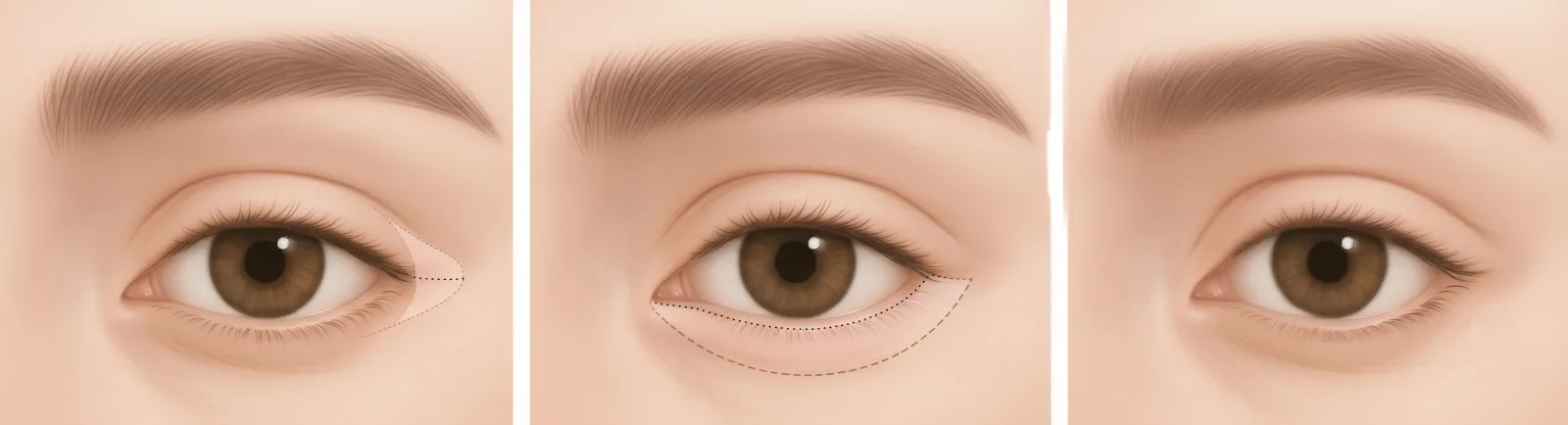
Illustration: the outer corner is extended and the lower-lid line gently lowered along the dotted lines, softening the angle of the eye.
The only genuinely sharp sensation is the local anaesthetic injection itself, which lasts seconds and is over before the surgery begins. Many patients describe a brief sting followed by numbness. From that point on, the area is fully numbed and you should feel pressure or movement but not pain. Because lateral canthoplasty at Garnet uses a conjunctival incision on the inside of the lid with an accompanying lower-canthal opening, the work is fine and contained, and the anaesthesia is planned around that exact technique.
If you are anxious about being awake, raise it at consultation. The level of sedation can be discussed in advance with the surgeon who will actually operate, so that the plan suits your comfort.
During surgery
What the surgery itself feels like
Once the area is numb, lateral canthoplasty is a short procedure. You may sense gentle tugging, pressure or movement at the outer corner of the eye, and you will likely hear the surgical team, but the sharp sensation of cutting is removed by the anaesthesia. With light sedation, most patients feel calm and detached and remember little of it.
This is delicate corner-of-the-eye work, so the surgeon needs you still and comfortable. Tightness or a stretching feeling at the corner is normal as the canthal angle is repositioned and secured. If at any point you feel actual pain, the numbing can be topped up, so tell the team straight away.
If lateral canthoplasty is combined with another eye procedure, the overall time in the operating room is longer, but the anaesthesia covers the whole session. Planning the combination in one sitting means a single recovery, which many international patients prefer. This is covered further on the international-patient page.
After surgery
How much discomfort is there after lateral canthoplasty
As the local anaesthetic wears off over the first few hours, you will start to feel the operated corner. For most people this is soreness, tightness and a pulling or stretched sensation. The eye feels tight when you blink, smile or look sideways, and the outer corner may feel taut. Mild throbbing in the first evening is common and usually settles with simple pain relief and cold compresses.
Swelling and some bruising at the outer corner are expected and are often what bothers patients more than pain itself. Discomfort generally peaks in the first two to three days and then eases steadily. By the time your sutures come out at around day seven, most people describe the area as tight or slightly tender. A gritty or foreign-body sensation, watering and light sensitivity are also normal early on because the surgery is so close to the eye surface.
Pain tolerance varies, so these are general patterns and cannot be promised. Some patients barely need pain relief; others are more sensitive in the first days. What is consistent is the trajectory: the trend is downward from the first couple of days, and ongoing or worsening pain is not the expected course.
Managing pain
How lateral canthoplasty discomfort is managed
Pain after lateral canthoplasty is usually well controlled with the simple measures your surgeon advises: prescribed or over-the-counter pain relief taken as directed, cold compresses in the first day or two to limit swelling, keeping your head elevated including while sleeping, and resting your eyes from screens and strain. Avoiding alcohol, salty food and vigorous activity in the early days helps keep swelling, and the tightness that comes with it, down.
Because the area is near the eye, follow the eye-care instructions carefully: keep the incision clean and dry as directed, do not rub or pull at the corner, and use any prescribed ointment or drops on schedule. Much of what feels like discomfort in the first week comes from swelling and dryness at the eye surface, so managing those makes the whole experience more comfortable.
Knowing what is normal removes a lot of the worry. A clear, written after-care plan, and a way to reach the clinic with questions, matters as much as any medication. International patients can have follow-up reviewed remotely after they fly home, which is set out in the guide for patients travelling from abroad.
Red flags
When pain is a reason to seek help
Most discomfort after lateral canthoplasty is expected and self-limiting. But some signs deserve prompt attention: pain that worsens after the first few days instead of improving, severe pain not relieved by your medication, rapidly increasing swelling or redness, spreading warmth, discharge that looks like pus, fever, or any sudden change in vision. These are uncommon, but they are worth contacting your clinic about quickly.
This is one practical reason the structure of after-care matters. If the surgeon who operated on you also manages your recovery, an unusual symptom is assessed by someone who knows exactly what was done at the corner of your eye, without second-hand relaying. For international patients, agreeing before you travel how you will reach the clinic with concerns is part of good planning, especially if you have had previous eye surgery.
If you are in Korea and have an urgent concern outside clinic hours, seek local medical care first and inform your surgeon. Treating worrying pain as information is always the safer instinct; do not push through it.
At Garnet
How Garnet manages comfort and anaesthesia
Garnet is a single-surgeon clinic in Apgujeong, Seoul. Dr. In-Soo Baek is a board-certified plastic surgeon (Korean medical licence no. 77407) and the only operating doctor; he assesses you, plans the anaesthesia, performs the lateral canthoplasty himself and reviews your recovery. Because the day is capped at two surgeries, your case is unhurried, which matters for delicate corner-of-the-eye work where a calm, steady operation makes for a smoother recovery.
That continuity is the point: the person who chooses your anaesthesia and comfort plan is the same person who knows precisely how your corner was repositioned, and the same person you see at structured follow-ups at one, three and six months. Garnet is registered with Korea's foreign-patient programme, so anaesthesia, pain expectations and after-care can all be discussed in advance. Read more on the lateral canthoplasty overview.
If pain is your main worry, you can ask about it directly before committing to anything. An online consultation lets you raise anaesthesia, sedation and recovery, and get a pre-assessment, before you plan a trip.
Dr. In-Soo Baek
Director & sole operating surgeon
Korean medical licence no. 77407
Operate on what you came for. Trained at Korea University Medical Center. Every case planned, performed and reviewed by the same hands.
1Operating surgeon
~2Surgeries per day
7Registered techniques
Board-certified plastic surgeon
Plastic surgery training at Korea University College of Medicine & graduate school
Korean Society of Plastic and Reconstructive Surgeons member, in its facial-contour, eye & rhinoplasty groups
Consults, operates and follows up each case himself
Peer-reviewed papers behind the facts on this page. Each describes findings in its own study group — not results at Garnet — and none predicts your own outcome.
Georgescu D. Surgical preferences for lateral canthoplasty and canthopexy. Current Opinion in Ophthalmology. 2014. doi:10.1097/icu.0000000000000094
Chong K et al. Lateral Canthal Surgery. Facial Plastic Surgery. 2010. doi:10.1055/s-0030-1254329
Taban M et al. Aesthetic Lateral Canthoplasty. Ophthalmic Plastic & Reconstructive Surgery. 2010. doi:10.1097/iop.0b013e3181baa23f
FAQ
Common questions
Is lateral canthoplasty painful during surgery?
No. The procedure is performed under local anaesthesia, usually with the option of light sedation, so the outer corner of the eye is fully numbed. The only sharp sensation is the brief numbing injection at the start. During the operation you may feel pressure, tugging or movement, but not the pain of cutting.
What anaesthesia is used for lateral canthoplasty?
Lateral canthoplasty is typically done under local anaesthesia injected around the outer eye corner, often combined with light sedation to keep you relaxed. It usually does not require general anaesthesia. The exact plan, including how much sedation, can be discussed in advance with the surgeon who will operate.
How much does it hurt after lateral canthoplasty?
Most people describe soreness, tightness and a pulling sensation at the outer corner; severe pain is unusual. The eye feels taut when you blink or look sideways, and there is swelling and sometimes bruising at the corner. Discomfort usually peaks in the first two to three days and then eases steadily.
How long does the pain last?
Discomfort is generally strongest in the first two to three days and improves from there. By the time the sutures come out at around day seven, most patients feel only tightness or mild tenderness. Pain tolerance varies, so this is a general pattern, not a guarantee.
Will I be awake during the procedure?
Often yes, but relaxed. With local anaesthesia and light sedation you stay drowsy and calm and can follow simple instructions, while feeling no sharp pain. If being awake makes you anxious, discuss the sedation level beforehand so the plan suits your comfort.
How do I manage the discomfort at home?
Use pain relief as directed, apply cold compresses in the first day or two, keep your head elevated including while sleeping, rest your eyes, and avoid alcohol, salty food and strenuous activity early on. Much of the early discomfort is swelling and dryness, so managing those helps a great deal.
When should I be worried about pain after lateral canthoplasty?
Contact your clinic if pain worsens after the first few days instead of improving, is severe and not relieved by medication, or comes with rapidly increasing swelling, spreading redness, pus-like discharge, fever or any change in vision. These are uncommon but should be checked promptly.
Is it more painful if combined with epicanthoplasty?
Combining lateral canthoplasty with epicanthoplasty means a slightly longer operation and a bit more overall swelling, but it is covered by the same anaesthesia and a single recovery. The combined recovery is still generally tightness and soreness at the eye corners, and severe pain is unusual.
Can I ask about pain before I travel to Korea?
Yes. You can raise anaesthesia, sedation and realistic recovery in an online consultation before committing to travel, and get a pre-assessment from the surgeon who would perform the operation.
My mom recently had a brow lift and lower blepharoplasty with Dr. Baek, and our experience has been wonderful so far. The Garnet team was incredibly kind and welcoming, with Kelly assisting us as our English consultant—she made everything…
I’m so happy I chose this clinic for my lower blepharoplasty. I was traveling from abroad by myself, so I was a little nervous, but from the beginning I felt comfortable and truly cared for. Everyone was kind, patient, and professional…
Came in for an in-person consult and ended up choosing Garnet and Dr.Baek for my non-incisional DES and tiplasty/alarplasty. I communicated with Kelly (English consultant) from the start till now (3 weeks post-op). She really help me feel…
My under-eyes have been sagging and folding for years... I tried to cover it up with makeup, but it actually got stuck in the wrinkles and made it stand out even more. While going for consultations, I noticed that the bigger the hospital…
Send photos and your question before you travel. An English-speaking coordinator reviews every enquiry and replies with guidance on whether surgery is appropriate, the likely plan and timing.
✓ Reviewed by the clinic coordinator, not a bot
✓ Photo-based pre-assessment before you fly
✓ Foreign-patient scheduling & after-care
✓ One surgeon for consultation, surgery and follow-up
Prefer to chat now? Reach the coordinator directly:









 T S7 months ago



