In lower blepharoplasty the incision runs along the lower eyelid just under the lashes, where it is naturally camouflaged. It is closed with fine sutures removed at about 7 days, and over the following months it typically settles into a line that is difficult to see. Where it is placed and how you care for it both affect how it ends up.
The short answer
Lower blepharoplasty at Garnet uses an external sub-ciliary incision, placed just below the lash line, where the eyelid's thin skin and natural shadow camouflage it well.
The sutures are removed at around day seven; the visible line is closed long before the scar finishes maturing.
Scar maturation takes months. A fresh line looks pink and firm, then gradually fades and softens; patience and sun protection do most of the work.
If avoiding any external incision is the priority, a scarless transconjunctival fat-repositioning approach may suit you better, and the surgeon will tell you if it does.
Lower blepharoplasty at Garnet uses an external, or transcutaneous, sub-ciliary incision. In plain terms, the incision runs along the lower lid just beneath the lash line, in the sub-ciliary position. This is a deliberate choice: that strip of skin is the thinnest on the body, it lies in a natural crease and shadow, and the lashes themselves help conceal the line. The external approach is what allows the surgeon to redrape loose skin, so it is the right route when lower-lid skin laxity is part of the problem as well as fat.
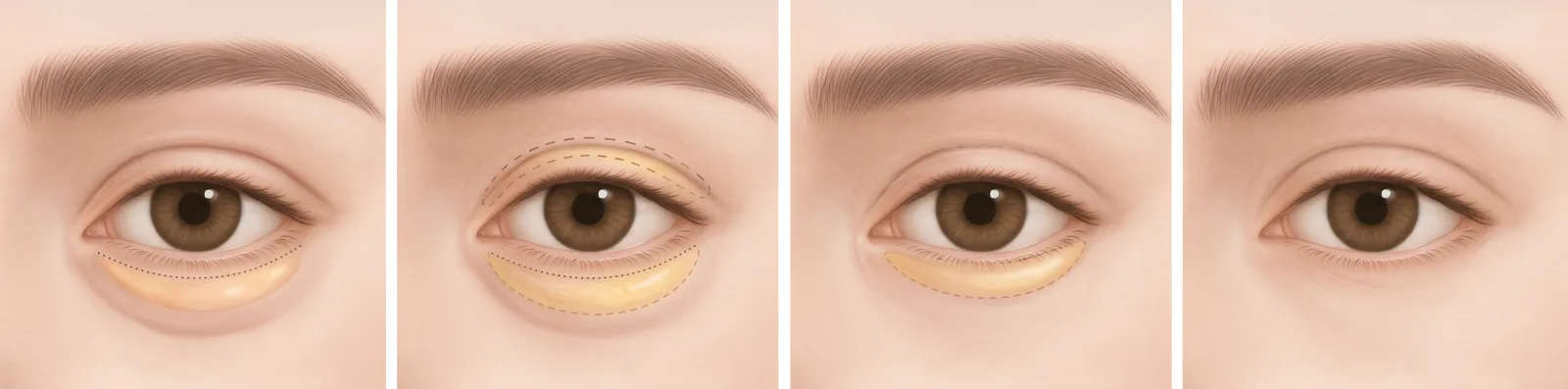
Illustration: through a fine line just below the lashes, the under-eye fat (yellow) is repositioned over the bony rim to fill the groove rather than removed.
Through that single incision the surgeon performs the four-step lift the technique is built on: repositioning fat, lifting the SOOF, supporting the orbicularis muscle and redraping the skin. Everything happens behind one fine line, which is then closed with fine sutures. Because the incision follows the lid's natural contour and does not cut across it, the resulting scar tends to fall into the eye's existing lines as it heals.
The sub-ciliary line does not cross the cheek and does not sit where it catches the light. It is a shallow incision at the lash line, in skin that heals well. For most patients that makes lower blepharoplasty scarring far less dramatic than they fear.
Why hidden
Why a healed lash-line scar is hard to spot
Several things work together to make a healed sub-ciliary scar difficult to spot. The first is location: a line tucked under the lashes sits in natural shadow, and the lashes physically break up the view of it. The second is the skin itself. Lower-lid skin is fine and supple, and fine skin generally produces a fine scar when it is closed carefully and not put under tension.
The third factor is technique. Closing the incision so the skin edges meet cleanly, without tension or overlap, gives the scar a strong chance of fading flat and pale. This is one of the quiet advantages of a single-surgeon, low-volume clinic: with the day capped and one patient per hour, the closure is unhurried, and the same surgeon who made the incision is the one who reviews how it heals at each follow-up.
None of this makes the lower-lid scar literally invisible. For the great majority of patients, though, the mature line is faint, sits in a naturally concealed position, and is not something other people notice in normal conversation.
Healing timeline
How the scar heals over time
A lash-line scar heals in stages over months, and knowing them saves you from worrying about normal changes. Week 1 is about the incision sealing neatly. The stitches come out at around day seven, when the edges of the lower-lid skin have joined. At this stage there is still swelling and often some bruising, so the area looks more active than the scar itself will be.
Months 1 to 3 are when the new line under the lashes shows most: a little pink or red, and slightly firm under a fingertip. That is collagen remodelling and is expected. From roughly three to six months the colour fades, the firmness softens, and the line begins to flatten and pale. Full maturation continues beyond that, with the scar usually reaching its final, faded appearance over the months that follow. For how this fits the wider recovery, see the lower blepharoplasty recovery timeline.
Maturing takes months, and the visits at 1, 3 and 6 months are timed to follow it. At each one Dr. Baek looks at how the lower-lid line is fading and talks you through the pink, firm stage, which tends to worry patients most and nearly always settles without treatment.
Aftercare
What helps a lower blepharoplasty scar settle
Keeping the lower-lid line out of the sun helps it more than anything else you can do. Ultraviolet light can darken a young scar and slow its fading. Sunglasses, plus sunscreen once Dr. Baek allows it, are the habit that pays off most in the first months. Gentle handling matters too: avoid rubbing or stretching the area while it is healing, and follow the clinic's guidance on when normal skincare can resume.
After sun protection, time does the rest. A lash-line scar that is still pink and firm at 6 weeks is simply mid-way through healing. Dr. Baek may suggest simple steps to help it mature, and he will tell you plainly whether it is healing normally or needs a closer look. Stick to the aftercare you are given and attend the follow-ups; home remedies you improvise can set the scar back.
Patients who fly home keep their aftercare by messenger. Send Dr. Baek photos of your lower lids at the 1-, 3- and 6-month points and he will tell you if the line is maturing as it should. The guide for international patients explains this continuity in more detail.
Scarless option
When a scarless approach is the better choice
Not everyone who dislikes their under-eye needs an external incision. Where the issue is purely herniated fat creating a bag or shadow, with little or no excess skin, a scarless transconjunctival approach, operating through the inside of the lower lid, can reposition the fat with no external incision and no visible scar at all. This is under-eye fat repositioning, and for the right candidate it is the cleaner answer.
The trade-off is straightforward: a transconjunctival approach cannot remove or tighten loose skin, so when skin laxity is part of the picture, the external sub-ciliary route is needed to redrape it. The consultation matches the approach to your actual anatomy, even when you would prefer 'no scar'. A scarless operation that leaves the real problem untouched is not a good outcome.
This is exactly the kind of judgement a single-surgeon clinic is built to give. The surgeon who assesses you, including in an online consultation from abroad, will tell you which approach fits, and will say so even when the answer is the scarless one or no surgery at all.
At Garnet
How Garnet approaches the incision and scar
Garnet is a single-surgeon clinic in Apgujeong, Seoul. Its only operating doctor, Dr. In-Soo Baek, is a board-certified plastic surgeon (Korean medical licence no. 77407). He examines your lower lids, chooses between the external sub-ciliary and the scarless transconjunctival route from your anatomy, operates himself and checks the scar at every follow-up. Two surgeries a day at most, and one patient an hour, leave time to make and close the lash-line incision without rushing.
If you are weighing lower blepharoplasty, the most useful next step is an assessment of which approach suits you and what your scar would realistically look like. You can start with a no-obligation online assessment, or read the full overview on the lower blepharoplasty cell page.
Real Results
Before & After
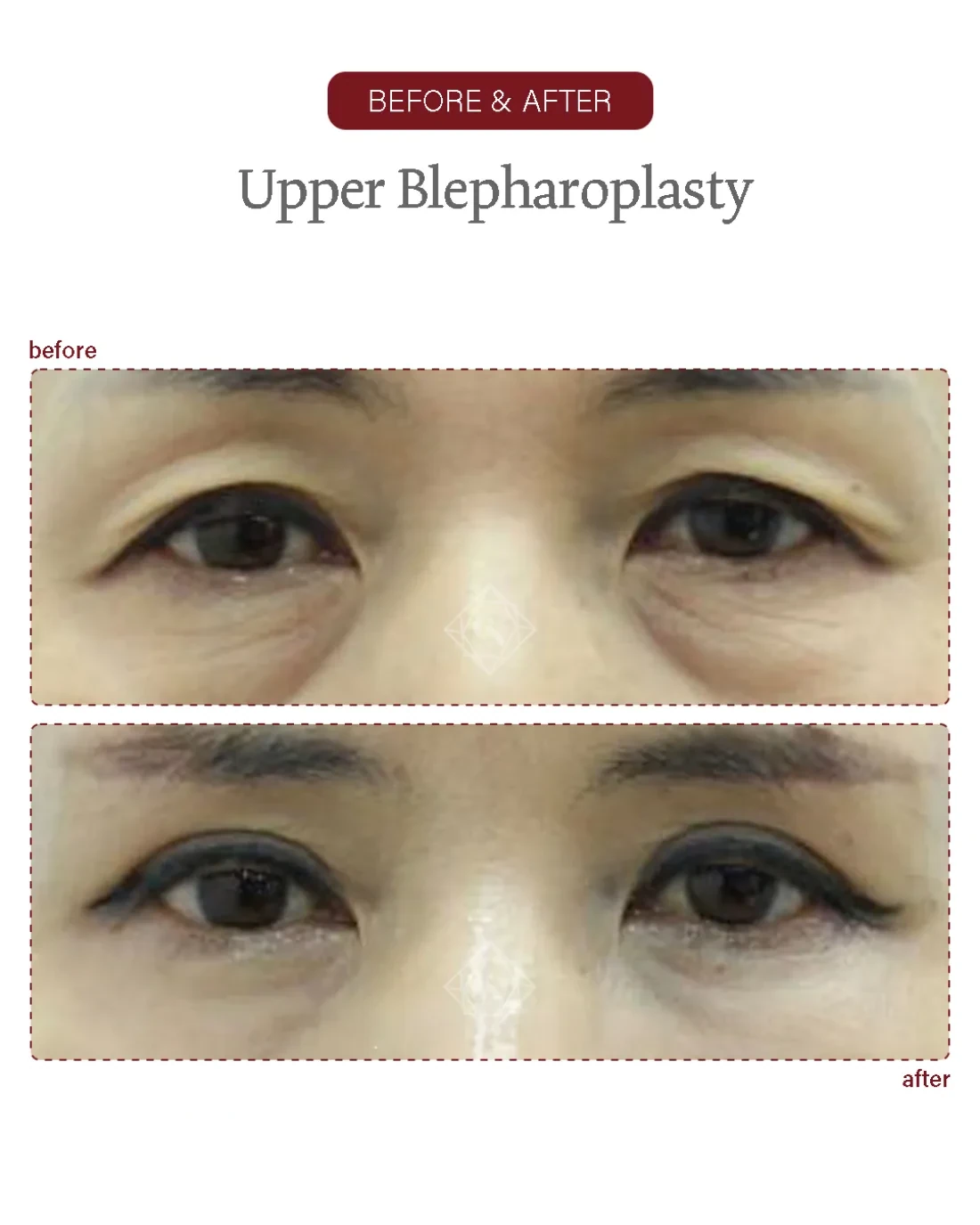
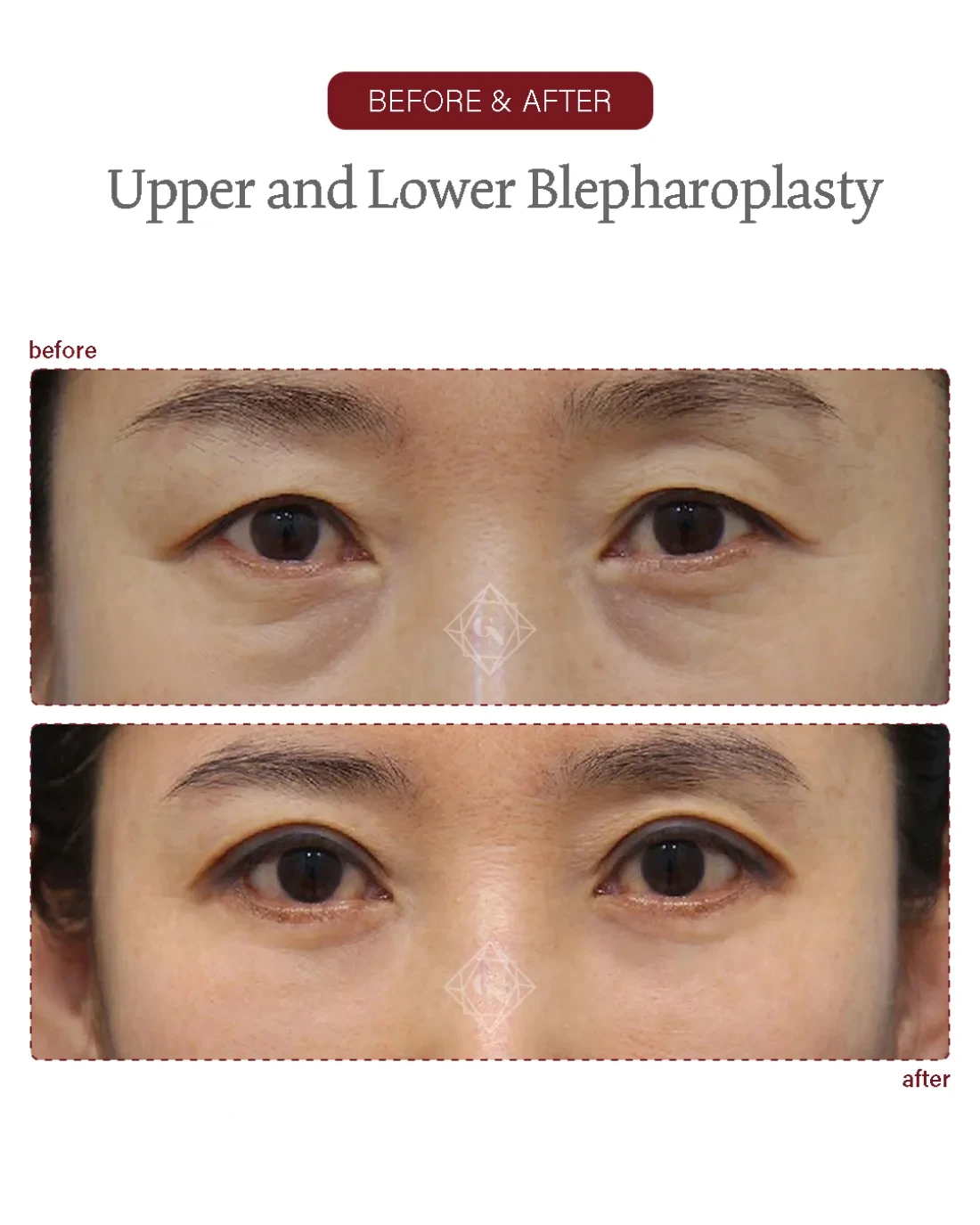
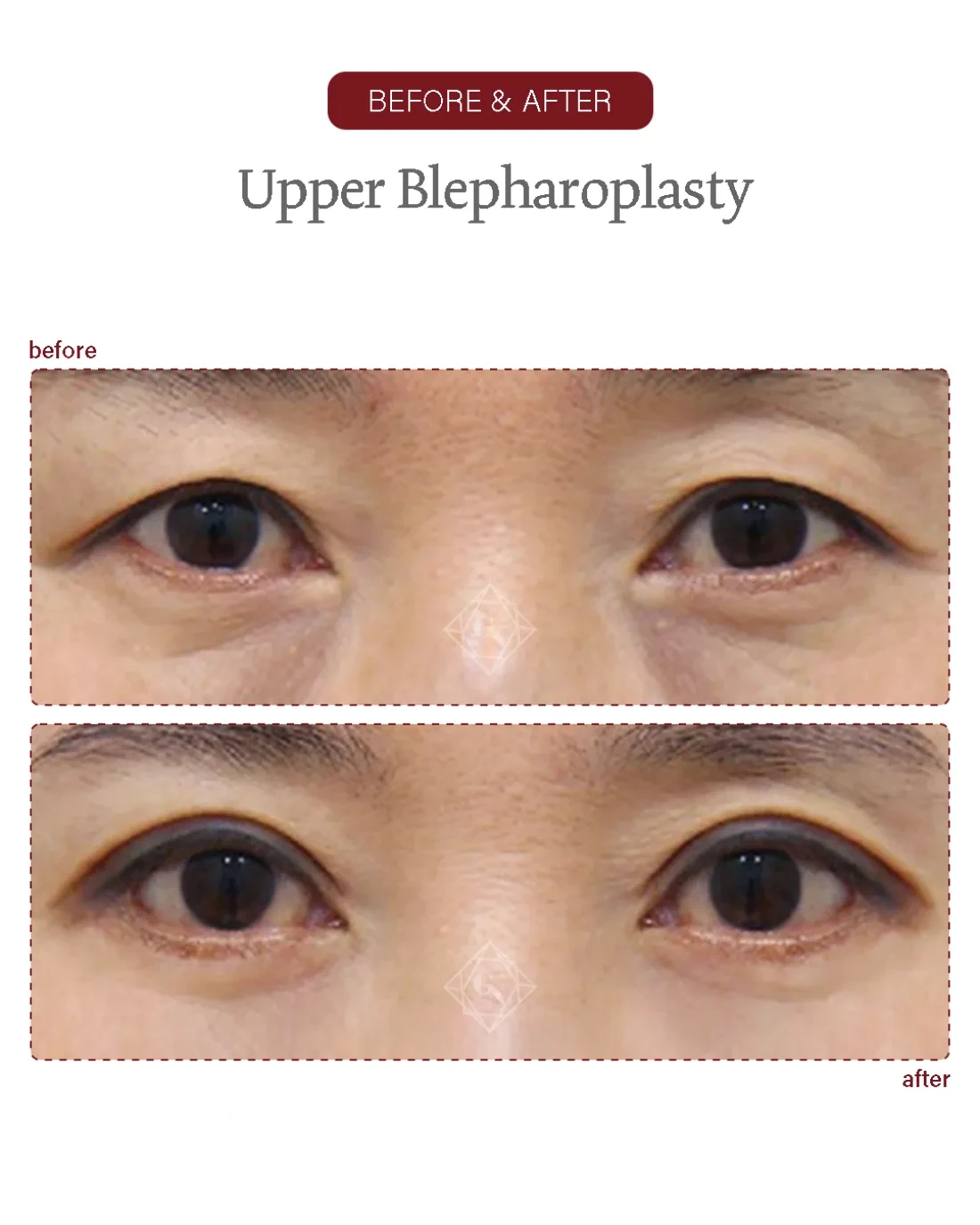
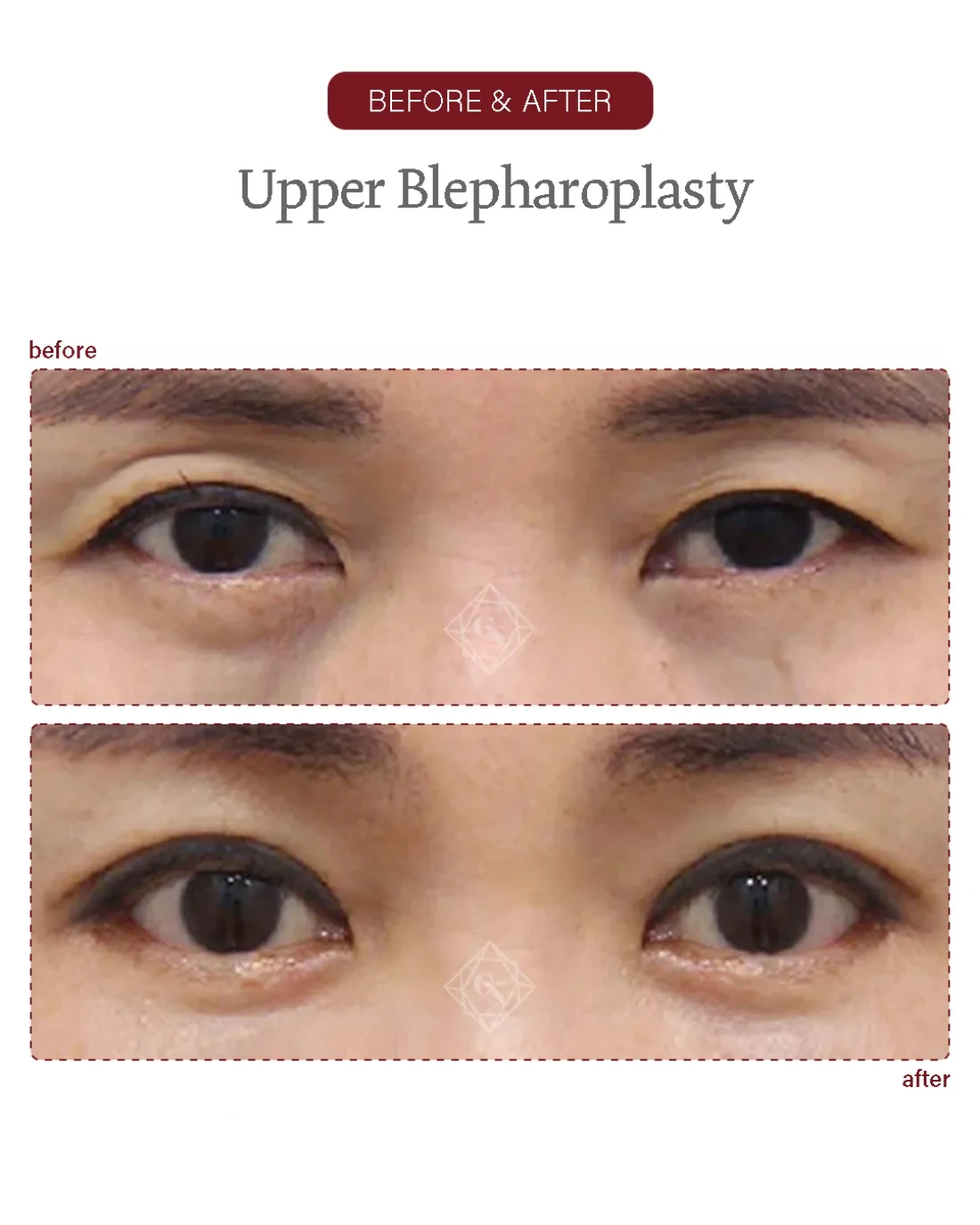
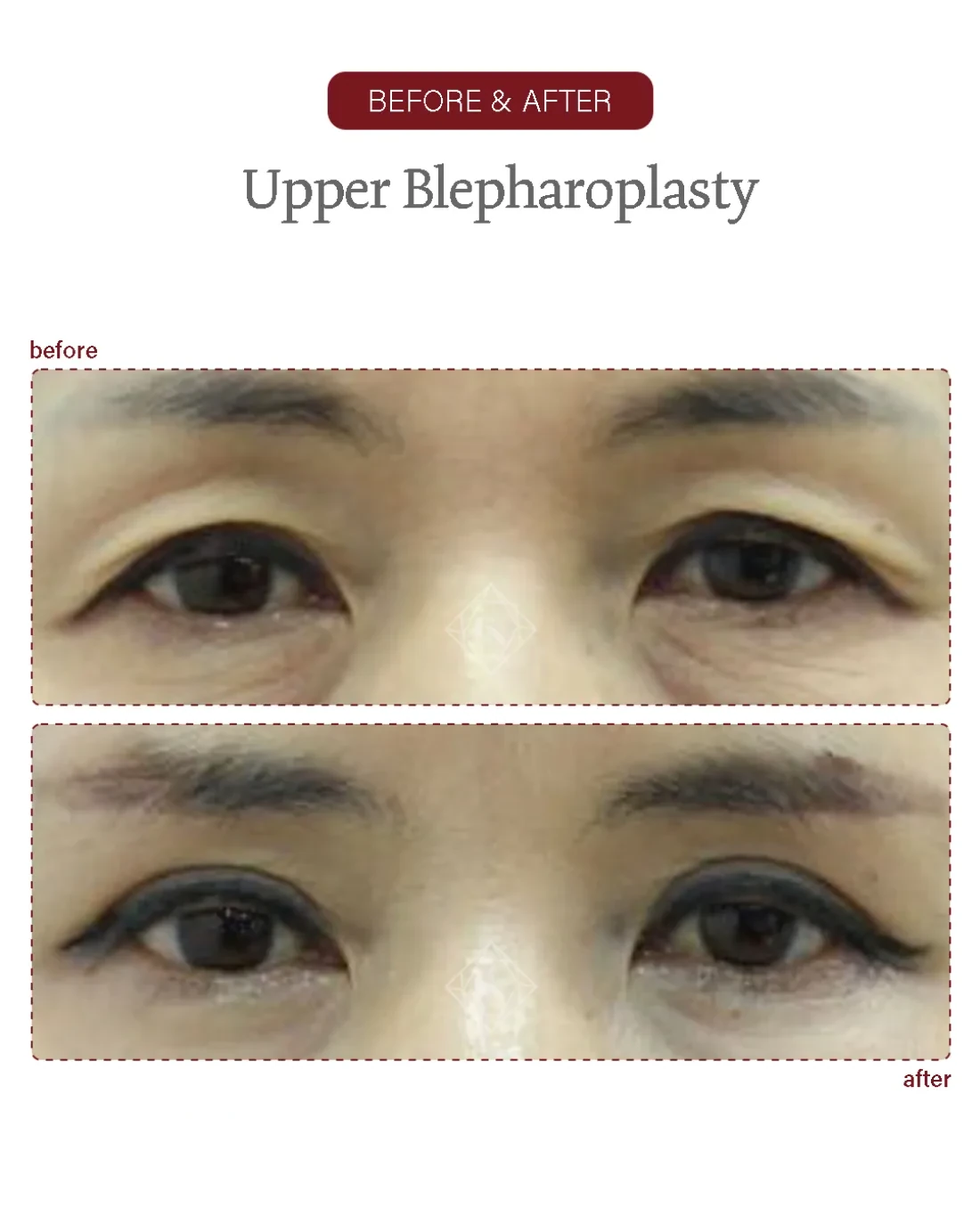
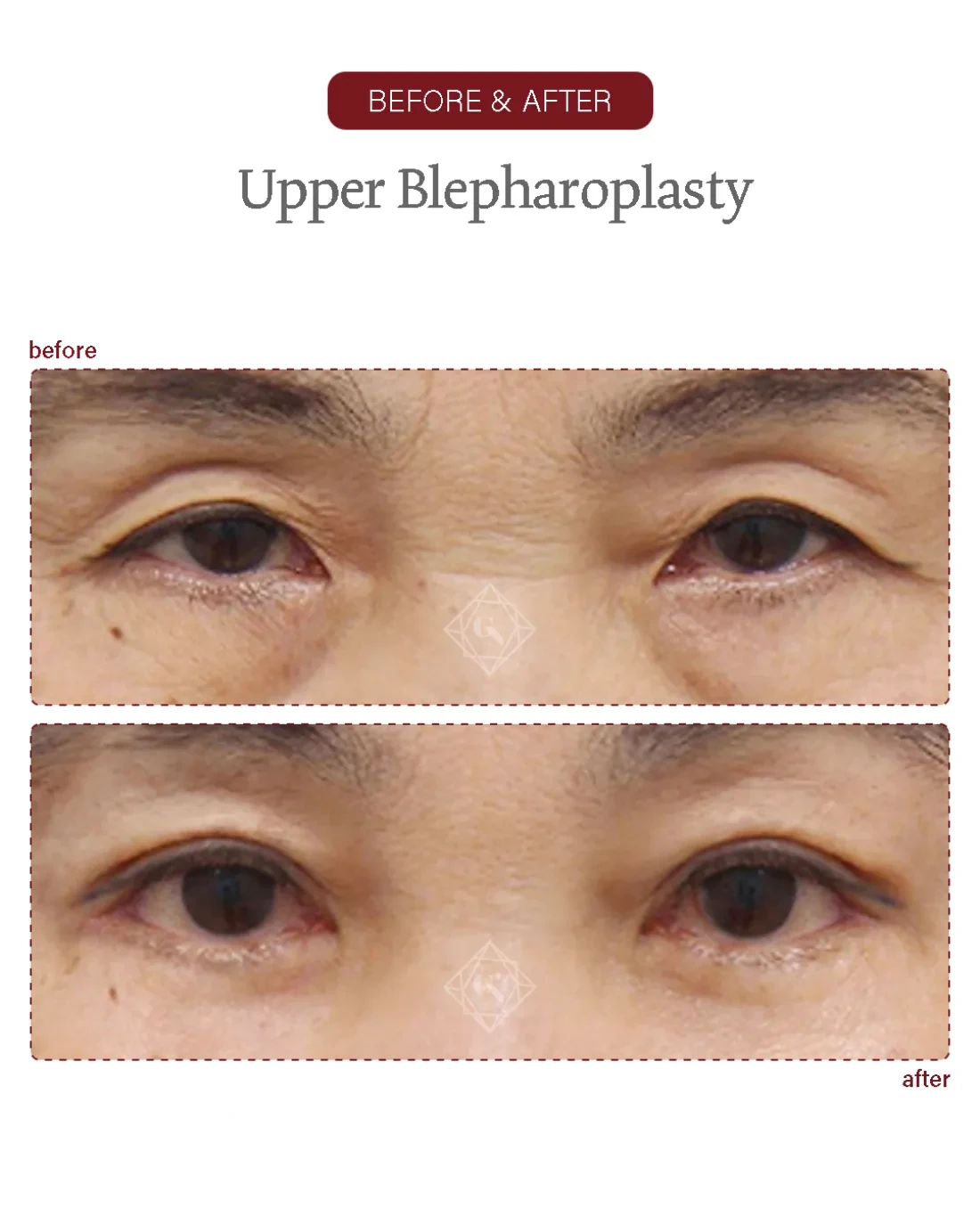
Eyelid before/after examples of actual Garnet patients (published with consent). Results, recovery and suitability vary by individual and are not guaranteed; the right approach depends on an in-person examination.
Prices
Price at Garnet
Lower blepharoplasty
From₩3,500,000 + VATExcluding VAT (10% VAT is added at payment)Book now
Same price as Korean patients. Prices shown exclude 10% VAT; your written quote, issued after the in-person consultation, shows the full amount payable.
Dr. In-Soo Baek
Director & sole operating surgeon
Korean medical licence no. 77407
Operate on what you came for. Trained at Korea University Medical Center. Every case planned, performed and reviewed by the same hands.
1Operating surgeon
~2Surgeries per day
7Registered techniques
Board-certified plastic surgeon
Plastic surgery training at Korea University College of Medicine & graduate school
Korean Society of Plastic and Reconstructive Surgeons member, in its facial-contour, eye & rhinoplasty groups
Consults, operates and follows up each case himself
Peer-reviewed papers behind the facts on this page. Each describes findings in its own study group — not results at Garnet — and none predicts your own outcome.
Fedok FG. Transconjunctival Lower Blepharoplasty. Facial Plastic Surgery Clinics of North America. 2026. doi:10.1016/j.fsc.2025.08.005
Fakih-Gomez N. Lower Blepharoplasty. Facial Plastic Surgery Clinics of North America. 2026. doi:10.1016/j.fsc.2026.06.011
Chen CF et al. Carbon Dioxide Laser Transconjunctival Lower Blepharoplasty: An Objective and Quantitative Comparison to Monopolar Electrosurgery. Plastic & Reconstructive Surgery. 2023. doi:10.1097/prs.0000000000010255
FAQ
Common questions
Where are the scars after lower blepharoplasty?
When an external approach is used, the incision sits just below the lash line on the lower lid, in the sub-ciliary position. It runs along the lid's natural contour where the lashes and the eye's existing shadow help conceal it. When a scarless transconjunctival approach suits the case, the work is done through the inside of the lid with no external scar at all.
Will lower blepharoplasty scars be visible?
For most patients the healed line is faint and difficult to notice in normal conversation, because it sits in a naturally concealed lash-line position in fine skin. It is not literally invisible, but it is usually far less noticeable than people fear.
How do lower blepharoplasty scars heal over time?
Stitches are taken out at about day 7. For months 1 to 3 the line looks pink and feels a little firm; between about months 3 and 6 it fades and softens, then keeps maturing toward its final pale look. That pink, firm stage is expected.
Can I avoid a scar with lower blepharoplasty?
If your concern is purely herniated fat with little excess skin, a scarless transconjunctival fat-repositioning approach can avoid an external incision entirely. If loose skin needs redraping, an external sub-ciliary incision is needed. The right choice depends on how much loose skin and fat your lower lids have.
What helps a lower blepharoplasty scar fade faster?
Sun protection matters most, because UV light can darken a young scar; handle the area gently and follow the clinic's aftercare. After that it is mainly time. The line under the lashes fades at its own pace over months, and the follow-ups let Dr. Baek check it is on track.
How long until the scar is fully mature?
The wound is sealed by day 7, yet the scar goes on maturing for months. It usually shows most in months 1 to 3, fades and softens between months 3 and 6, and reaches its final pale look in the months after. Follow-ups at 1, 3 and 6 months track each stage.
My lower-lid scar is still pink and firm after several weeks. Is that normal?
Yes. In the first months a pink, slightly firm lash-line scar is collagen remodelling and is expected. It nearly always fades and softens without treatment. The follow-ups are there to reassure you through it and to catch the rare scar that needs a closer look.
I live outside Korea. Can Dr. Baek still review my scar?
Yes. Dr. Baek operated and he manages your recovery, so after you return home you send photos of your lower lids at 1, 3 and 6 months. He looks at how the line is settling and tells you if it is healing as expected.
Does makeup help hide the scar while it heals?
Once the surgeon clears the area for makeup, normal concealer can cover any residual pinkness, and the lash-line position means it is easy to camouflage. Until then, wait for the clinic's go-ahead before restarting skincare and makeup around the eyes, so the healing line is left alone.
My mom recently had a brow lift and lower blepharoplasty with Dr. Baek, and our experience has been wonderful so far. The Garnet team was incredibly kind and welcoming, with Kelly assisting us as our English consultant—she made everything…
I’m so happy I chose this clinic for my lower blepharoplasty. I was traveling from abroad by myself, so I was a little nervous, but from the beginning I felt comfortable and truly cared for. Everyone was kind, patient, and professional…
Came in for an in-person consult and ended up choosing Garnet and Dr.Baek for my non-incisional DES and tiplasty/alarplasty. I communicated with Kelly (English consultant) from the start till now (3 weeks post-op). She really help me feel…
My under-eyes have been sagging and folding for years... I tried to cover it up with makeup, but it actually got stuck in the wrinkles and made it stand out even more. While going for consultations, I noticed that the bigger the hospital…
If a scar under your eye worries you, send photos for a no-obligation assessment of which approach suits you (external or scarless) and what your healing would realistically look like.
Send photos and your question before you travel. An English-speaking coordinator reviews every enquiry and replies with guidance on whether lower blepharoplasty is appropriate for you, the likely plan and timing.
✓ Reviewed by the clinic coordinator, not a bot
✓ Photo-based pre-assessment before you fly
✓ Foreign-patient scheduling & after-care
✓ One surgeon for consultation, surgery and follow-up
Prefer to chat now? Reach the coordinator directly:









 T S7 months ago



