Lower blepharoplasty is one of the more travel-friendly eye procedures for international patients, but it still needs a plan. The technique places an external sub-ciliary incision and the sutures come out at about 7 days. That single fact shapes how long you stay, when you can fly, and how the rest of your care happens from your home country.
The short answer
Lower blepharoplasty at Garnet uses an external (transcutaneous) sub-ciliary incision, with sutures removed at around day seven. Plan your stay around that window.
Most of the planning can be done before you travel: an online consultation with photos lets the surgeon assess your lower lids and say whether the surgery suits you.
A practical stay is roughly seven to ten days, so the same surgeon who operates can also remove your sutures and check early healing in person.
As a single-surgeon clinic registered with Korea's foreign-patient programme, Garnet keeps consultation, surgery and follow-up with one board-certified surgeon, including review by messenger after you return home.
Start with an online consultation before you book a flight
For an international patient, the trip should begin long before you land. The most useful first step is an online consultation: you send clear photographs of your eyes (looking straight ahead, looking up, and a relaxed side view), and the surgeon assesses what is actually driving the look that bothers you. Lower-lid concerns can come from herniated fat, from loose skin and a weakened muscle, or from a combination, and the right operation depends on which it is. A remote assessment lets the surgeon tell you which it is before you commit money to a flight.
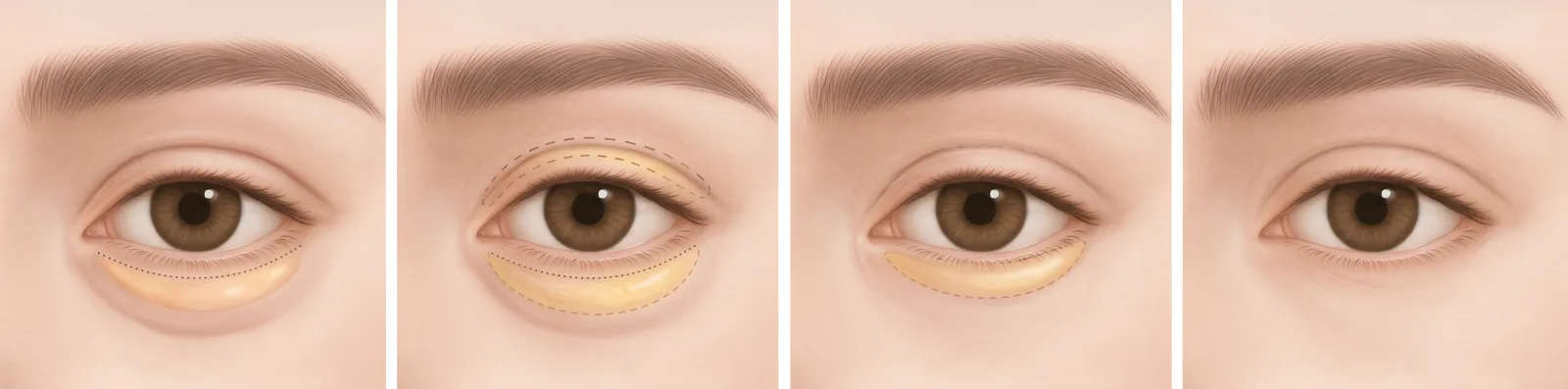
Illustration: through a fine line just below the lashes, the under-eye fat (yellow) is repositioned over the bony rim to fill the groove rather than removed.
This is also where a straight opinion matters most. Some patients who write in are better suited to under-eye fat repositioning, a scarless, transconjunctival approach, than to a full lower blepharoplasty, and a surgeon who tells you that up front is doing you a service. At a single-surgeon clinic the doctor who reviews your photos is the same one who will operate, so the plan you discuss online is the plan that gets carried out.
Use the online stage to settle the practical questions too: roughly how long you should stay, what the recovery will realistically look like for your skin and age, and what the procedure does and does not change. Going in with those answers means the in-person consultation confirms a plan you already know.
Stay length
How long to stay in Korea for lower blepharoplasty
The length of your stay is driven by one fact: the Quad Plus lower blepharoplasty uses an external sub-ciliary skin incision, and the fine sutures along the lash line are removed at around day seven. To have the same surgeon remove those sutures and check your early healing in person, plan to be in Seoul for roughly seven to ten days in total.
A sensible shape for the trip is: arrive a day or two before surgery for your in-person consultation and any pre-operative checks, have the operation, then spend the following week with the swelling settling before sutures come out at about day seven. Building in a buffer day or two after suture removal lets the surgeon confirm you are healing cleanly before you fly. For a fuller view of trip length across procedures, see the guide on how long to stay in Korea for surgery.
If your schedule simply cannot stretch to suture removal in Seoul, discuss it in the online consultation. In some cases sutures can be removed by a clinician at home with written guidance, but having it done by the operating surgeon is the cleaner option and the reason most patients plan the slightly longer stay.
In Seoul
Your days in Seoul, step by step
On the day of your in-person consultation, the surgeon re-examines your lower lids in person, confirms the plan from your online assessment, and answers anything still open. Because Garnet caps the day at two surgeries, this consultation is unhurried. There is time to talk through the incision, the four-step lift the technique uses, and what your specific recovery is likely to look like.
On surgery day the operation itself is focused on the lower lid: fat is repositioned, the SOOF is lifted, the orbicularis muscle is supported and the skin is redraped, all through the sub-ciliary incision. You will leave with the lid taped or dressed and clear aftercare instructions. The first two to three days bring the most swelling and bruising, so plan a quiet stay nearby with cold compresses, head elevation when resting, and no strenuous activity.
Through the middle of the week the bruising begins to turn and the swelling eases. Around day seven you return for suture removal, a quick in-clinic step, and the surgeon checks that the incision is healing along the lash line as expected. Staying close to Apgujeong keeps these visits short; the guide on recovering in Seoul after surgery covers where to base yourself and how to pace the days.
Flying home
Flying home and following up from abroad
Most international patients fly home shortly after suture removal, once the surgeon is satisfied with early healing. By that point the lid is closed and the heaviest swelling has passed, though some residual puffiness and faint discolouration are normal and continue to settle over the following weeks. Read the guide on when you can fly after plastic surgery before you book the return leg, and keep your flight flexible if you can.
Healing does not end at the airport. The fine sub-ciliary line keeps maturing for months, and there is sensible aftercare: sun protection, gentle handling of the area, and patience while the final softening happens. For a deeper look at how the scar settles, see lower blepharoplasty scars and healing, and for the broader timeline see the lower blepharoplasty recovery timeline.
Because the same board-certified surgeon who operated also manages your recovery, follow-up can continue by messenger once you are home: you send photographs at the structured one, three and six-month points, and the surgeon reviews your progress and tells you what is normal and what, if anything, needs attention. That continuity is the main reason a single-surgeon clinic suits patients travelling from abroad.
Practical checklist
Practical planning checklist for international patients
A few practical points make the trip smoother. Build your stay around the seven-day suture window as well as the surgery date, and add a buffer day or two so a flight delay or slower-than-average healing does not force a rushed departure. Arrange accommodation within easy reach of Apgujeong so the consultation, surgery and suture-removal visits are short trips across the neighbourhood.
Sort the administrative side early. Garnet is registered with Korea's foreign-patient programme, and a dedicated coordinator helps with scheduling and stays with you from consultation through recovery, which removes much of the language and logistics worry. Confirm payment arrangements before you arrive (the guide on paying as a foreign patient walks through how that typically works), and ask any remaining questions in your online consultation so nothing is left to the day of surgery.
Finally, plan light. The first days after surgery are for rest, so keep the early part of the trip free and save any activities for after the swelling has eased. Going in with realistic expectations about the pace of recovery is one of the most helpful things you can do for both your result and your peace of mind.
At Garnet
How Garnet handles international patients
Garnet, a single-surgeon clinic in Apgujeong registered with Korea's foreign-patient programme, handles your lower lids from the first photo to the last review. Dr. In-Soo Baek is a board-certified plastic surgeon (Korean medical licence no. 77407) and the only operating doctor. He reviews your online consultation, performs the lower blepharoplasty himself, removes your sutures and conducts every follow-up. For an international patient, that means the person who assessed your photos from abroad is the same person in the operating room and the same person checking your healing.
The clinic caps the day at two surgeries and runs one patient per hour, so consultations and after-care are unhurried, and a dedicated coordinator helps with scheduling, language and logistics across your stay. Structured follow-up continues at one, three and six months, by messenger once you return home. You can begin with a no-obligation online assessment, or read the overview on the lower blepharoplasty cell page first.
Real Results
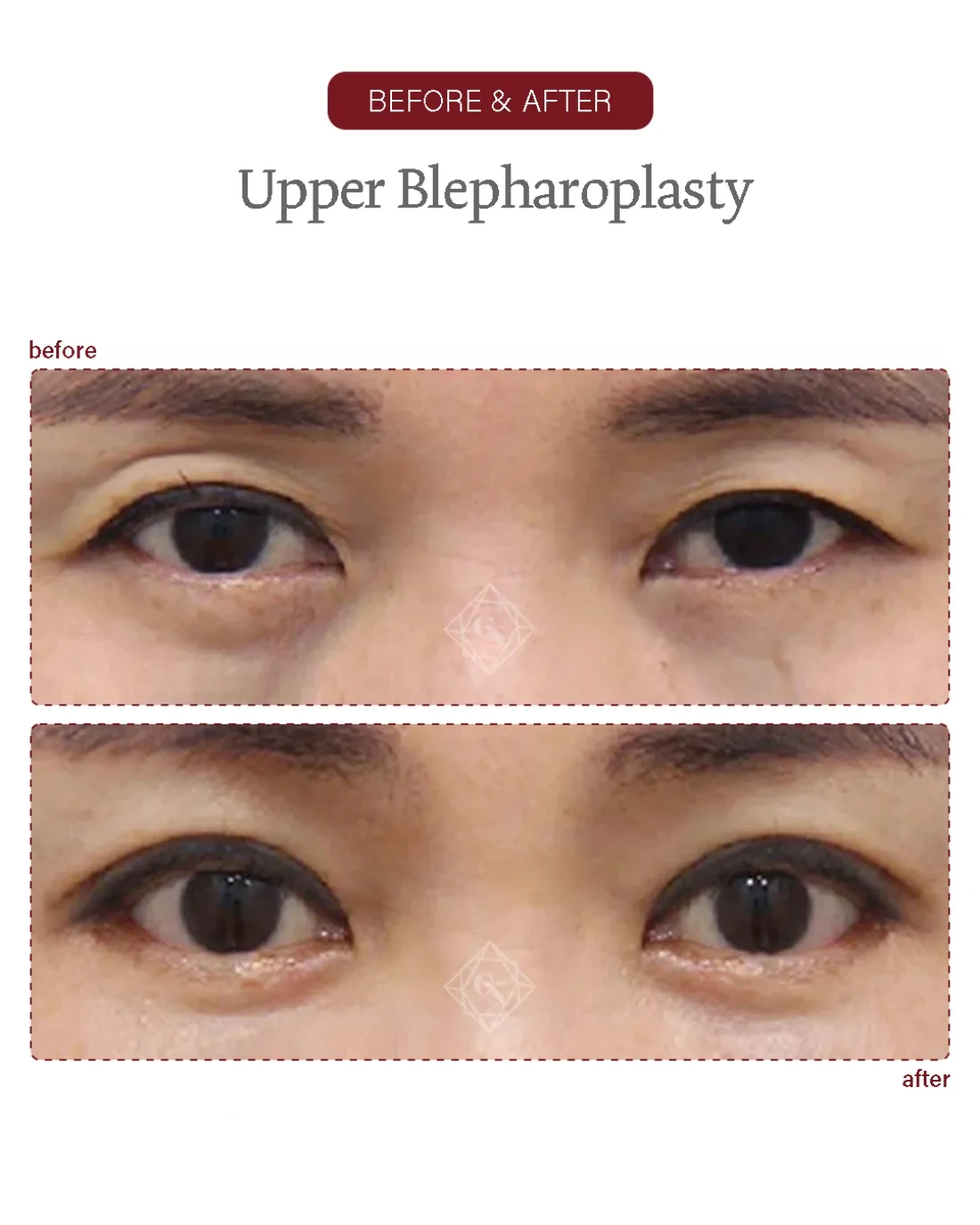
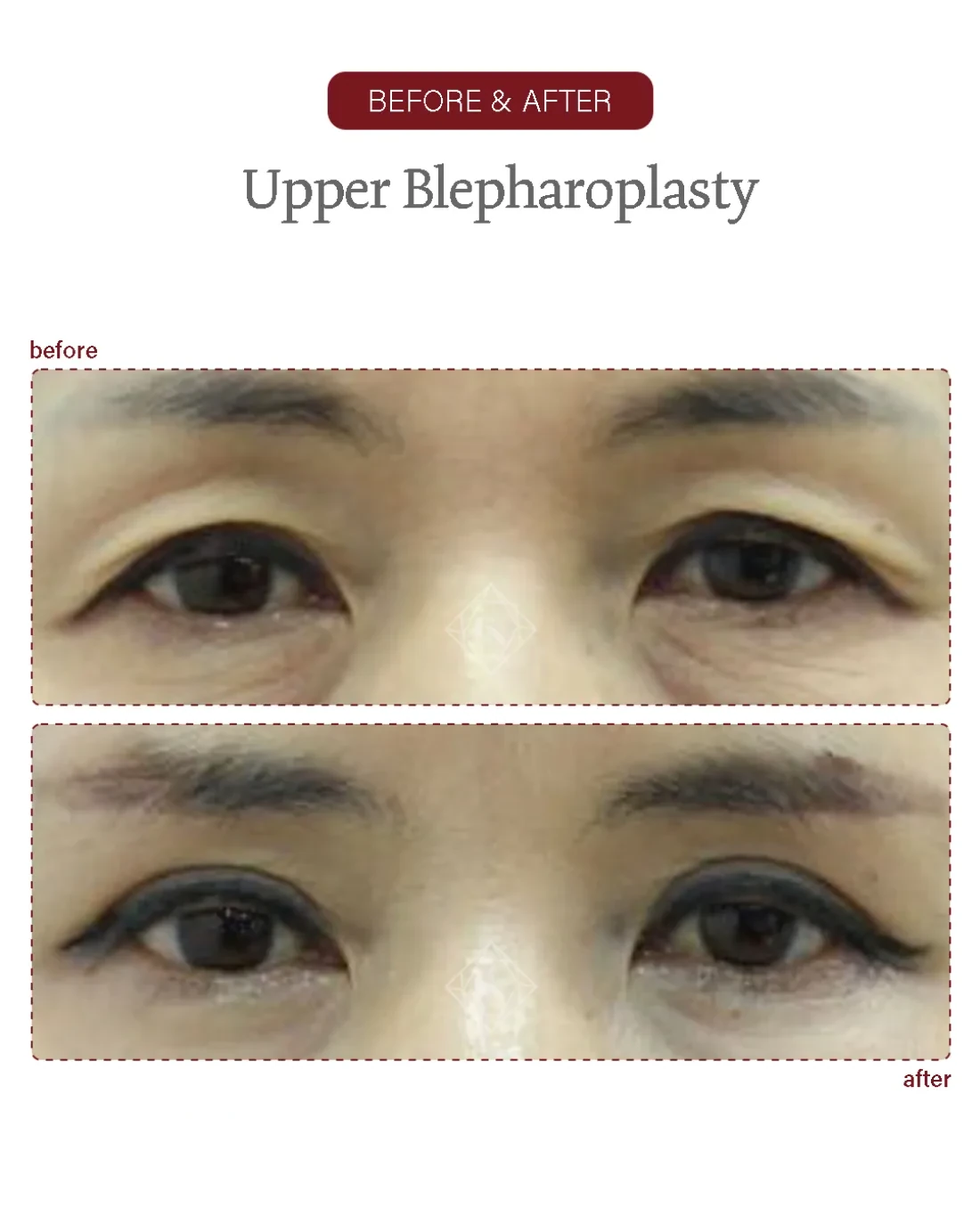
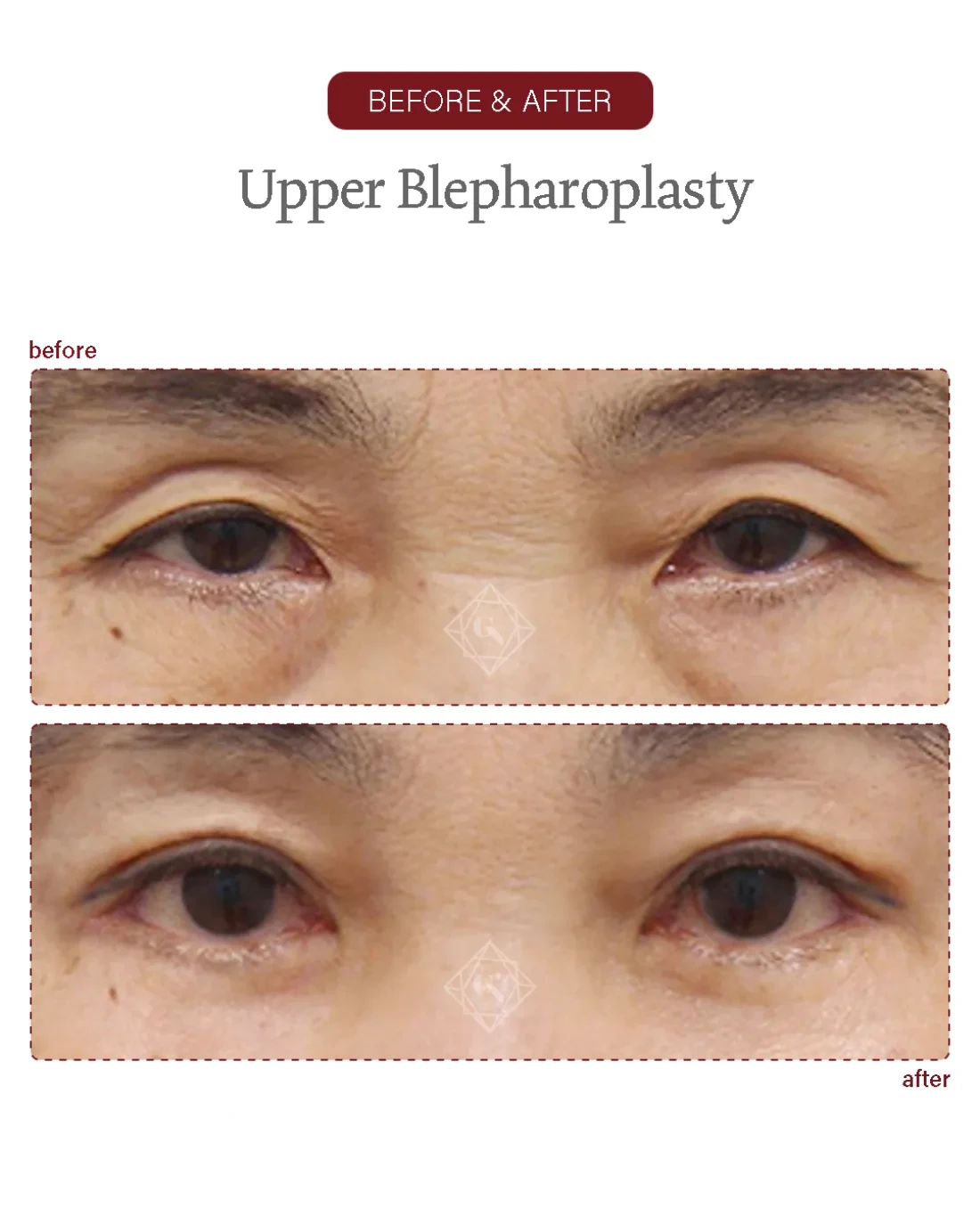
Before & After
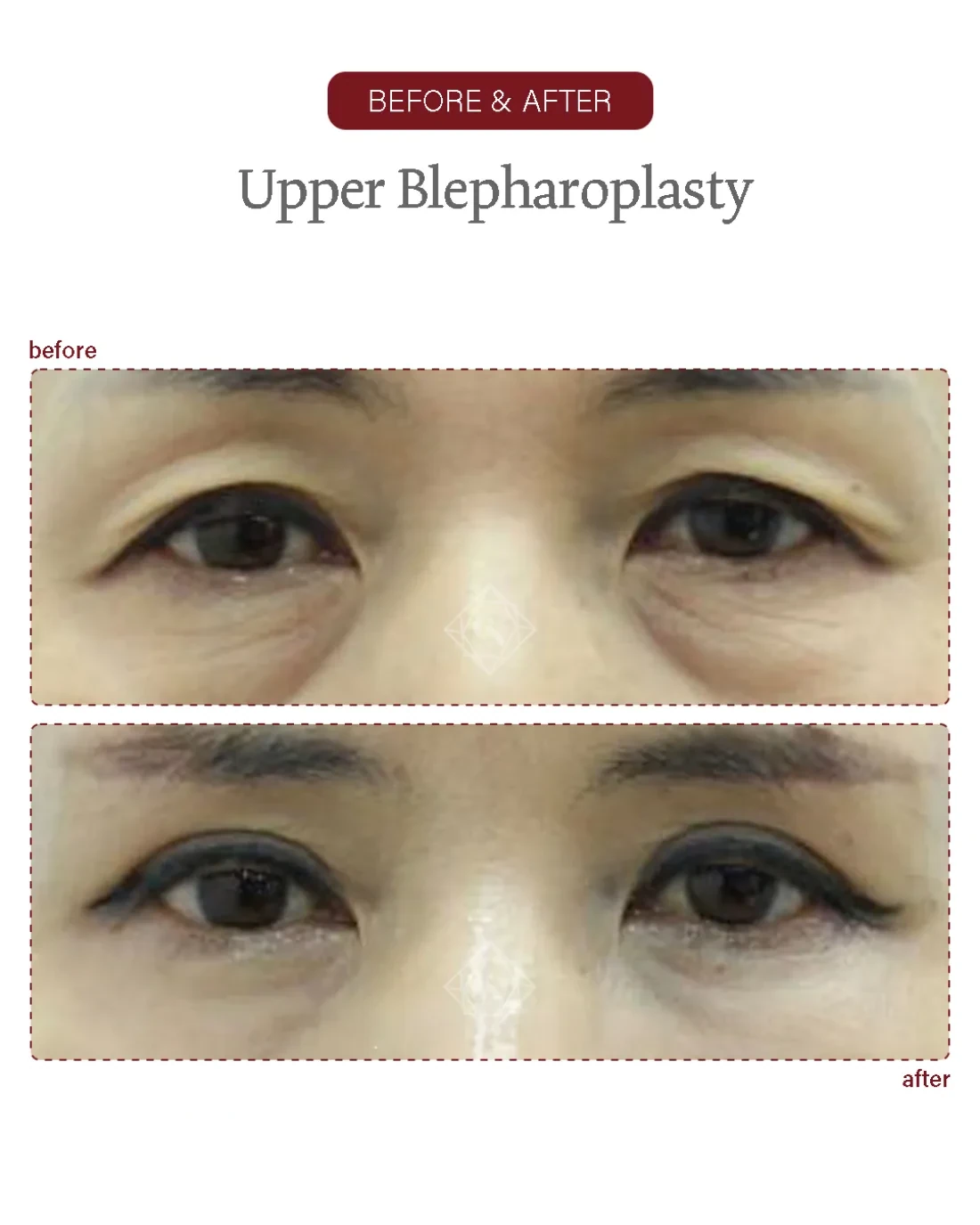
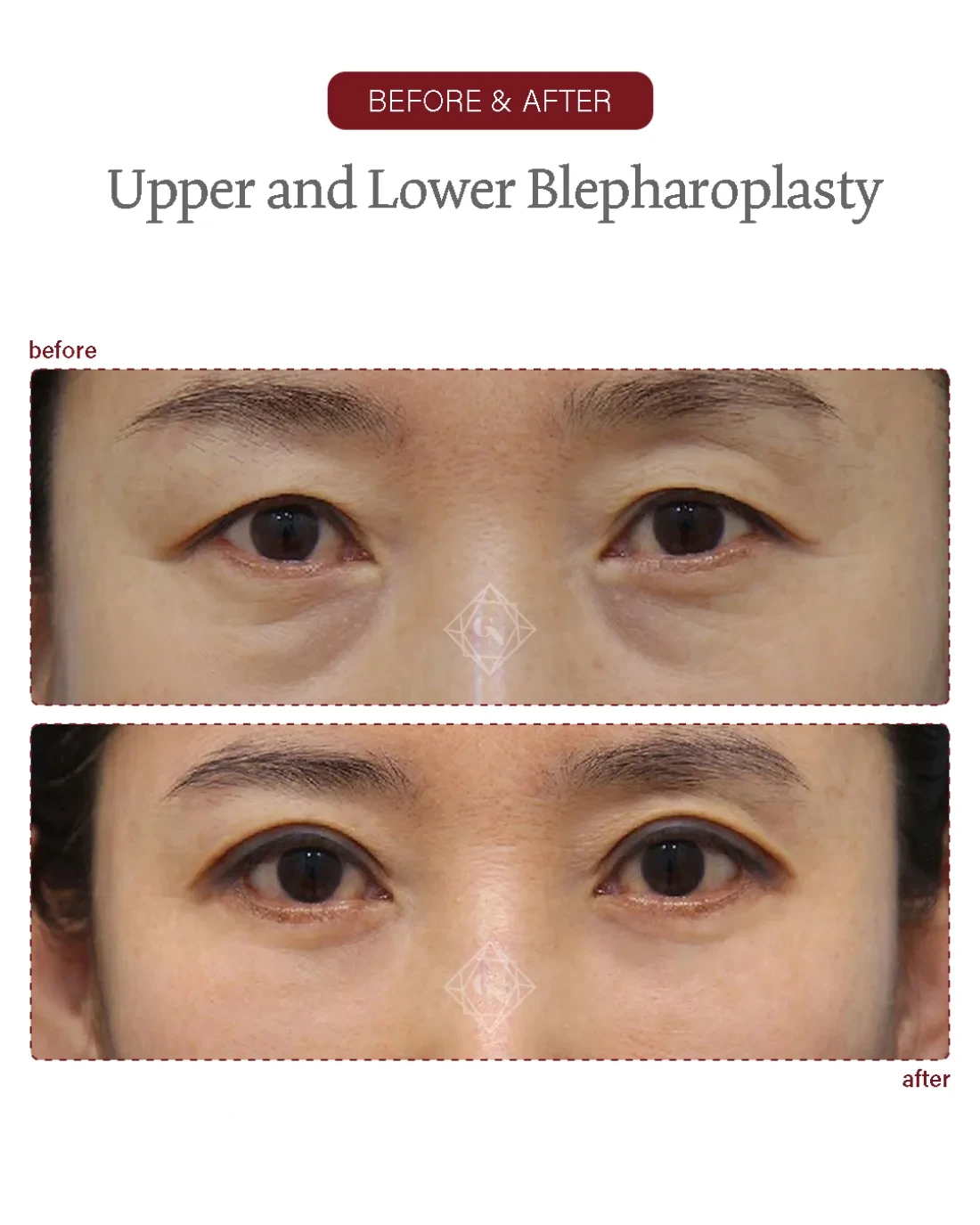
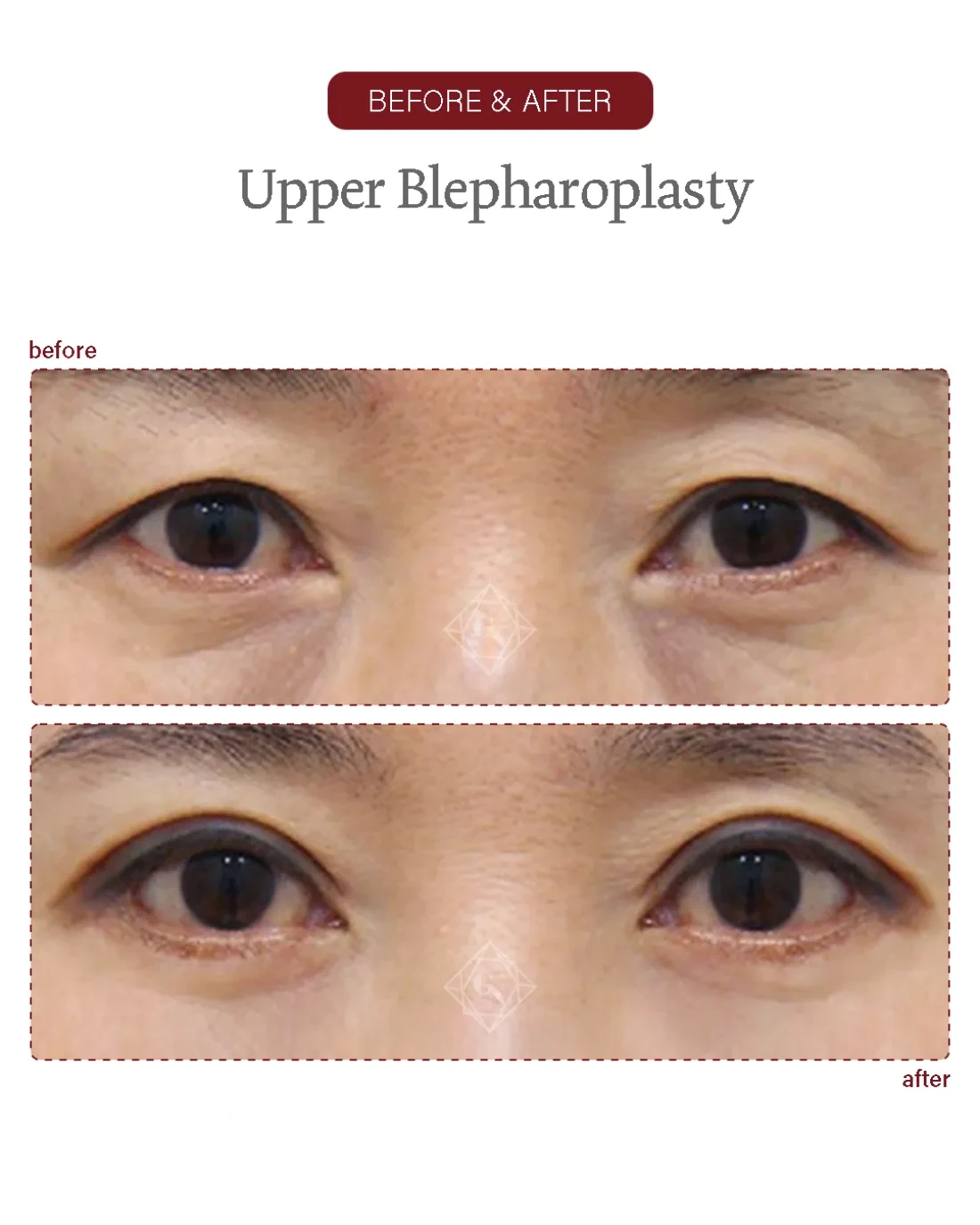
Eyelid before/after examples of actual Garnet patients (published with consent). Results, recovery and suitability vary by individual and are not guaranteed; the right approach depends on an in-person examination.
Prices
Price at Garnet
Lower blepharoplasty
From₩3,500,000 + VATExcluding VAT (10% VAT is added at payment)Book now
Same price as Korean patients. Prices shown exclude 10% VAT; your written quote, issued after the in-person consultation, shows the full amount payable.
Dr. In-Soo Baek
Director & sole operating surgeon
Korean medical licence no. 77407
Operate on what you came for. Trained at Korea University Medical Center. Every case planned, performed and reviewed by the same hands.
1Operating surgeon
~2Surgeries per day
7Registered techniques
Board-certified plastic surgeon
Plastic surgery training at Korea University College of Medicine & graduate school
Korean Society of Plastic and Reconstructive Surgeons member, in its facial-contour, eye & rhinoplasty groups
Consults, operates and follows up each case himself
Peer-reviewed papers behind the facts on this page. Each describes findings in its own study group — not results at Garnet — and none predicts your own outcome.
Branham GH. Lower Eyelid Blepharoplasty. Facial Plastic Surgery Clinics of North America. 2016. doi:10.1016/j.fsc.2015.12.004
Pannucci CJ. Venous Thromboembolism in Aesthetic Surgery: Risk Optimization in the Preoperative, Intraoperative, and Postoperative Settings. Aesthetic Surgery Journal. 2018. doi:10.1093/asj/sjy138
Nassif PS. Lower Blepharoplasty: Transconjunctival Fat Repositioning. Facial Plastic Surgery Clinics of North America. 2005. doi:10.1016/j.fsc.2005.06.006
Melendez MM et al. Complications From International Surgery Tourism. Aesthetic Surgery Journal. 2011. doi:10.1177/1090820x11415977
FAQ
Common questions
How do international patients get lower blepharoplasty in Korea?
Most start with an online consultation, sending photographs of their eyes so the surgeon can assess the concern and advise on whether lower blepharoplasty suits them. If it is a good fit, you travel to Seoul, have the in-person consultation and surgery, stay for suture removal at around day seven, then continue follow-up by messenger after you return home.
How long should I stay in Korea for lower blepharoplasty?
Plan for roughly seven to ten days. The technique uses an external sub-ciliary incision and the sutures come out at about day seven, so staying through that window lets the same surgeon remove them and check your early healing in person before you fly home. A buffer day or two after suture removal is sensible.
Can I start with an online consultation for lower blepharoplasty?
Yes. You send clear photographs (straight ahead, looking up, and a side view), and the surgeon assesses what is driving your lower-lid concern and whether lower blepharoplasty, fat repositioning or no surgery is the better answer. At a single-surgeon clinic the doctor who reviews your photos is the one who will operate.
When can I fly home after lower blepharoplasty?
Most international patients fly home shortly after suture removal at around day seven, once the surgeon is satisfied with early healing. Some swelling and faint discolouration are still normal at that point and continue to settle over the following weeks. Keep your return flight flexible if you can, and confirm timing with your surgeon.
How does follow-up work once I return to my country?
Because the same surgeon who operated also manages your recovery, follow-up continues by messenger after you travel home. You send photographs at structured one, three and six-month points, and the surgeon reviews your progress and tells you what is normal and whether anything needs attention.
Will the scar be a problem when I travel home so soon?
The sub-ciliary incision sits along the lash line and is closed by suture-removal day, so it is well past the open stage before you fly. It continues to mature and soften over the following months, with sun protection and gentle handling helping it settle. The lower blepharoplasty scars and healing guide explains the full timeline.
Is it better to fly in early or close to the surgery date?
Arriving a day or two before surgery is sensible. It gives time for the in-person consultation, any pre-operative checks, and to rest after travel before the operation. Booking accommodation within easy reach of Apgujeong keeps the consultation, surgery and suture-removal visits short.
Does Garnet help with the logistics for foreign patients?
Yes. Garnet is registered with Korea's foreign-patient programme, and a dedicated coordinator helps with scheduling and stays with you from consultation through recovery. The same board-certified surgeon handles your consultation, surgery and follow-up throughout.
What if I cannot stay until day seven for suture removal?
Discuss it in the online consultation. In some cases sutures can be removed by a clinician at home with written guidance, but having the operating surgeon remove them and check your healing in person is the cleaner option, which is why most patients plan the slightly longer stay.
My mom recently had a brow lift and lower blepharoplasty with Dr. Baek, and our experience has been wonderful so far. The Garnet team was incredibly kind and welcoming, with Kelly assisting us as our English consultant—she made everything…
I’m so happy I chose this clinic for my lower blepharoplasty. I was traveling from abroad by myself, so I was a little nervous, but from the beginning I felt comfortable and truly cared for. Everyone was kind, patient, and professional…
Came in for an in-person consult and ended up choosing Garnet and Dr.Baek for my non-incisional DES and tiplasty/alarplasty. I communicated with Kelly (English consultant) from the start till now (3 weeks post-op). She really help me feel…
My under-eyes have been sagging and folding for years... I tried to cover it up with makeup, but it actually got stuck in the wrinkles and made it stand out even more. While going for consultations, I noticed that the bigger the hospital…
Planning lower blepharoplasty from abroad? Send photos for a no-obligation online assessment and we'll help you plan the stay and follow-up before you book a flight.
Send photos and your question before you travel. An English-speaking coordinator reviews every enquiry and replies with guidance on whether surgery is appropriate, the likely plan and timing.
✓ Reviewed by the clinic coordinator, not a bot
✓ Photo-based pre-assessment before you fly
✓ Foreign-patient scheduling & after-care
✓ One surgeon for consultation, surgery and follow-up
Prefer to chat now? Reach the coordinator directly:









 T S7 months ago



