A mini facelift lifts the lower cheek through a short incision around the ear and is a smaller operation than a full lift, so recovery is quicker. "Quicker" still means weeks, and it helps to know what each stage feels like. This is a day-by-day timeline for a mini facelift, from the first 72 hours through suture removal around day 10 and back to normal life, with the difference between normal healing and a red flag spelled out.
The short answer
Recovery is faster than a full facelift because a mini facelift uses a short pre- and post-auricular incision and a more superficial dissection targeting the nasolabial fold.
Sutures come out around day 10; most people aim to be back at a desk job and out socially in roughly the second week, once bruising fades and dressings are off.
Swelling, tightness, mild bruising and numbness near the incisions are normal early; sudden one-sided swelling, severe pain or fever are warning signs to act on.
At Garnet the operating surgeon, board-certified Dr. In-Soo Baek, reviews your healing himself, with structured follow-up at 1, 3 and 6 months.
Why mini facelift recovery is faster than a full lift
A mini facelift recovers more quickly than a full facelift for a structural reason: it does less. At Garnet the technique uses a short pre- and post-auricular incision, concentrated around the ear without running far into the temporal hairline or down the neck, and a more superficial dissection that targets the nasolabial fold and the lower cheek. Less tissue is lifted over a smaller area, so there is less swelling, less bruising and a shorter healing curve.
Illustration: through a shorter incision in front of the ear (dotted line), the lower face and jawline (shaded) are lifted.
That smaller footprint is why suture removal comes around day 10 and why most people are back to ordinary life inside a couple of weeks. A full deep plane lift has a two-stage, day-10-and-day-14 schedule. If you are weighing the two operations, the trade-off is real: a mini facelift addresses early-to-moderate lower-face laxity with an easier recovery, while a full lift does more for advanced sagging at the cost of a longer downtime. Our mini facelift versus thread lift comparison covers where it sits among lighter options.
Knowing why recovery is faster also sets expectations correctly. A mini facelift is not a no-downtime procedure. There is real swelling and bruising in the first week and tightness and numbness for longer, but the day-by-day arc below is genuinely gentler than a full lift, and the milestones arrive sooner.
Days 1–3
Days 1 to 3: the first 72 hours
The first three days are the peak of swelling and the most cautious window. You leave with a supportive dressing around the lower face and jaw, and the priority is rest with your head elevated (propped up on pillows day and night) and gentle cold application as advised, which limits swelling and bruising. Expect tightness across the cheeks and jaw, a feeling of pressure around the ears, and mild bruising beginning to show; this is the operation behaving exactly as it should.
Numbness in front of and below the ears is normal and comes from the dissection near the incisions; it does not mean anything is wrong and recovers gradually over the following weeks. Discomfort in these first days is usually manageable with the pain relief you are given. A mini facelift is generally a tightness-and-pressure recovery, and severe pain is unusual. Eat soft foods, avoid bending, straining and lifting, and keep talking and chewing gentle so you are not pulling on the healing tissue.
Sleep on your back with your head raised, do not sleep on your side onto the incisions, and keep the dressing dry and undisturbed unless told otherwise. This is the stretch where doing less genuinely speeds you up: the calmer and more elevated you stay, the faster the early swelling settles.
Days 4–10
Days 4 to 10: settling down to suture removal
By days four and five the worst of the swelling usually starts to ease and bruising shifts colour as it fades, often moving down toward the jaw and neck as gravity does its work, which can look alarming but is normal. Tightness remains, and that pulled, firm sensation is partly the lift itself and partly swelling; it relaxes over the coming weeks. Many people feel meaningfully more themselves by the end of the first week even though they would not yet want to be photographed.
Sutures are removed around day 10. This is a quick appointment and a milestone: with the stitches out and dressings simplified, you can usually return to gentle daily routines, light walking and normal eating, and start covering any residual bruising with makeup as the incisions allow. The short pre- and post-auricular placement means the scars sit in natural creases and behind the ear where they settle discreetly over the months that follow.
Through this week, follow the do-nothing-strenuous rule: no exercise, heavy lifting, hot saunas or anything that raises blood pressure to the face, as these can worsen swelling or bruising. If you are an international patient, this is also the window that determines your stay: most mini facelift patients can be cleared to fly once sutures are out and the surgeon is satisfied, which our guide on flying after surgery explains in general terms.
Weeks 2–4
Weeks 2 to 4: back to work and social life
The second week is when most people return to a desk job and to seeing friends. Residual swelling and faint bruising are usually concealable by now, the dressings are gone, and you look presentable even if you can still feel tightness that others cannot see. Exactly when you go back depends on your work and how visible the bruising is. A non-physical, low-contact job is realistic in the second week, while anyone wanting to look fully unremarkable may prefer to wait a few extra days.
Through weeks two to four, the firm, tight feeling steadily relaxes and the face starts to look natural instead of freshly operated. You can ease back toward light exercise as the surgeon clears you, usually building up gradually before any high-intensity training, which can still aggravate swelling. Numbness near the ears continues to recover slowly; small zones can take longer, and that is expected.
By around the one-month mark most people are comfortable in normal social and work life, with the understanding that the result is still settling underneath. The lower face looks tighter and the nasolabial area softer, but the final, fully relaxed result keeps refining over the following months as the last swelling resolves.
Normal vs red flag
What's normal after a mini facelift, and the red flags to act on
Normal recovery covers a lot of things that can feel worrying: swelling that peaks in the first 72 hours, bruising that spreads and changes colour as it fades, tightness and pulling, numbness around the ears, mild discomfort eased by simple pain relief, and a face that looks asymmetrically swollen for a while because the two sides settle at slightly different speeds. None of these mean something has gone wrong. They are the ordinary texture of healing.
Red flags are different and worth knowing precisely. Sudden, rapidly increasing swelling on one side, especially with tightness, pain and a tense, shiny look, can signal bleeding under the skin and needs prompt assessment. Severe or escalating pain that is not controlled by your medication, a fever, spreading redness, warmth, increasing discharge or a bad smell from a wound, or any sudden change in vision are all reasons to contact the clinic without waiting. When in doubt, ask; do not worry alone.
This is where having the operating surgeon directly reachable matters. At Garnet you are not navigating an after-hours call centre. The surgeon who performed your mini facelift reviews concerns himself, and a returning international patient can send photos for a remote check. Knowing the line between normal and not-normal, and having a clear person to ask, takes most of the anxiety out of the first weeks.
Follow-up
Follow-up and how the final result settles
Healing does not stop when you feel normal. Swelling continues to resolve, the last tightness relaxes, numbness recovers and the scars mature and fade over the months after surgery. Garnet structures follow-up at one, three and six months precisely because that is the arc over which a mini facelift settles into its final result, and each review checks that healing is on track and answers what is normal at that stage.
The same board-certified surgeon who operated, Dr. In-Soo Baek, reviews each of those follow-ups himself. For an international patient, the 1-, 3- and 6-month reviews can be handled remotely with photos and messaging once you are home, with the surgeon advising whether anything needs local care or can wait for a planned return.
By six months the result is essentially settled: the lower face holds a tighter, cleaner line, the nasolabial area is softer, and the scars have faded into their natural creases. If you are planning the operation from abroad, pairing this timeline with our online consultation guide lets you map the whole journey (assessment, stay, recovery and follow-up) before you travel.
Real Results
Before & After
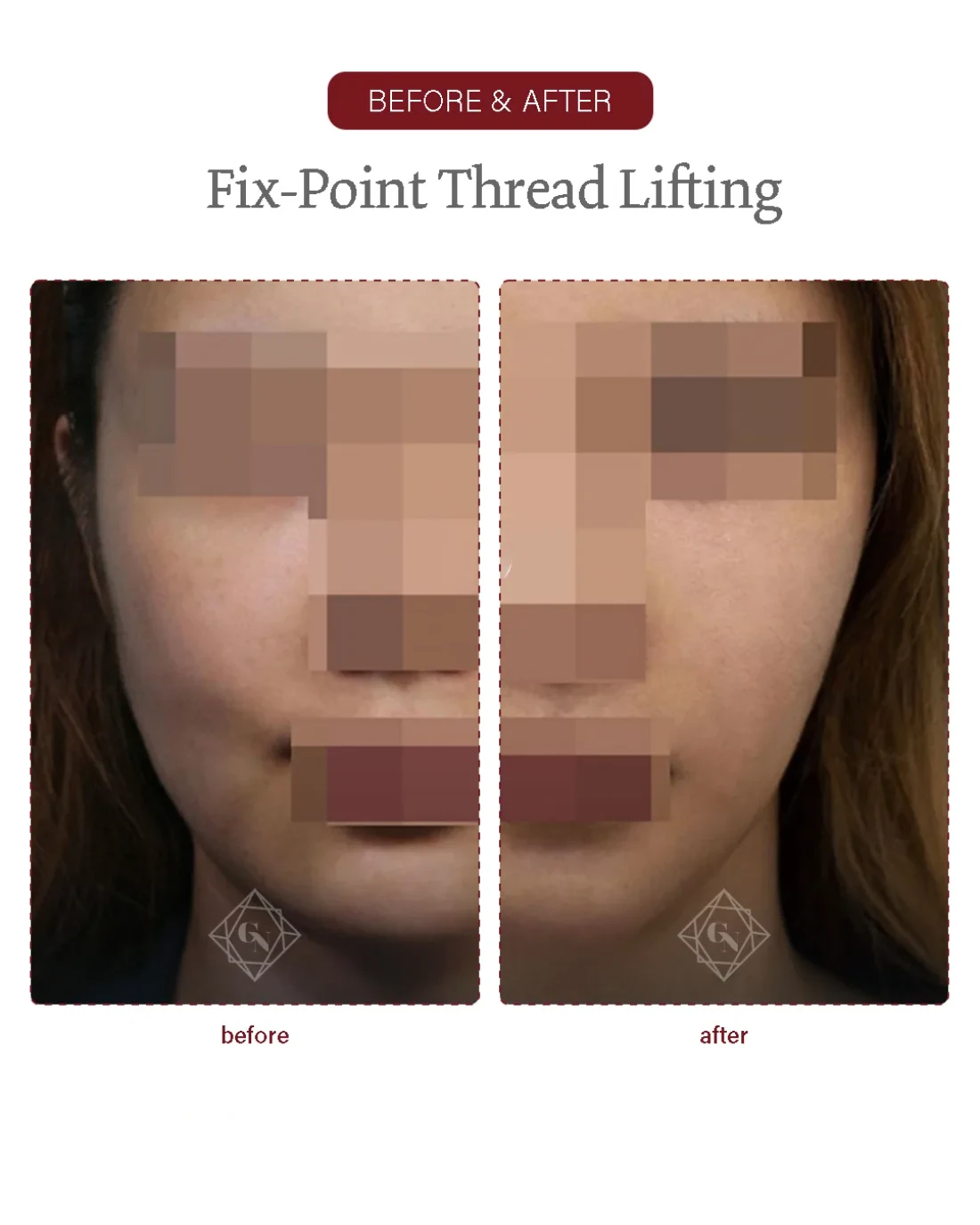
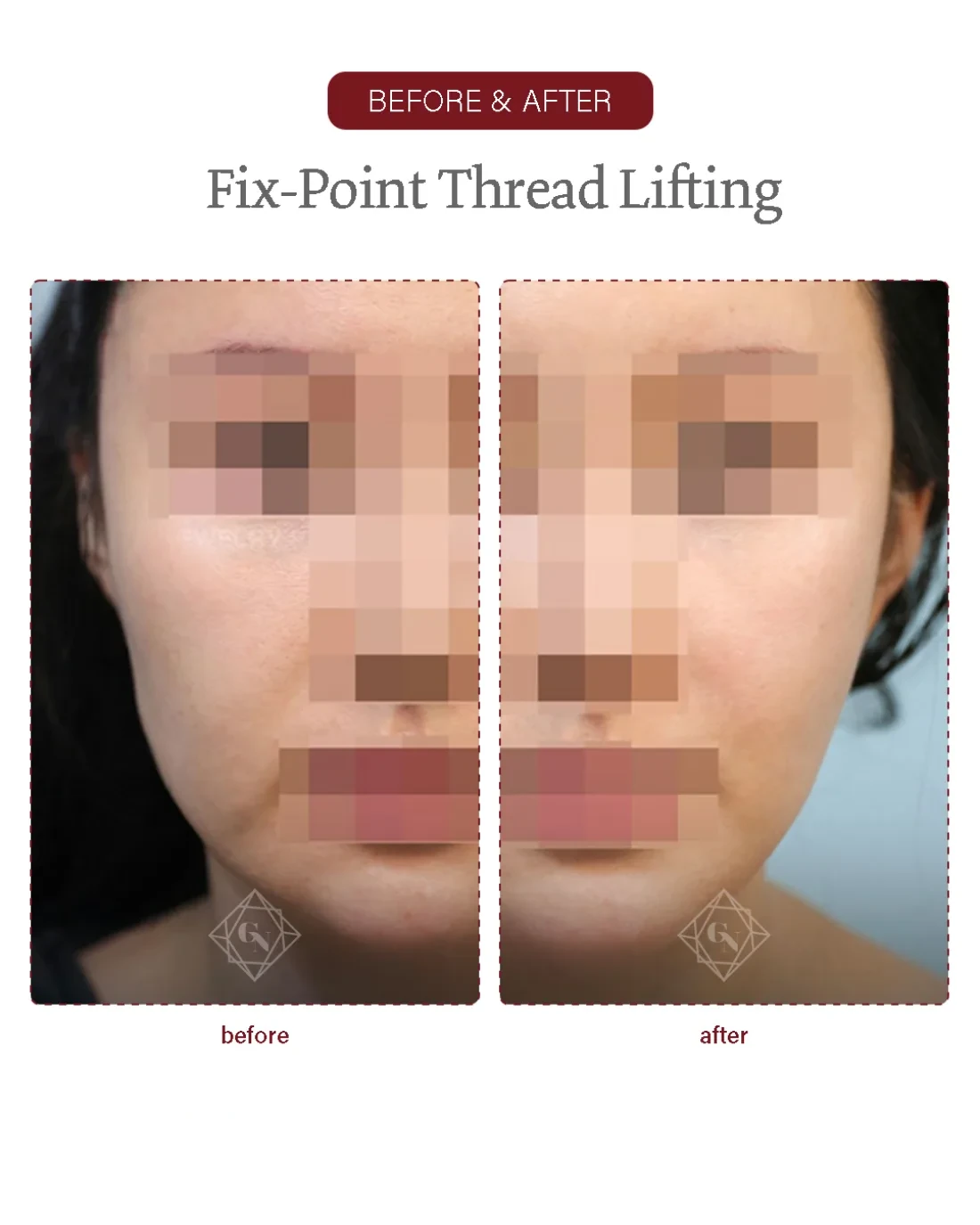
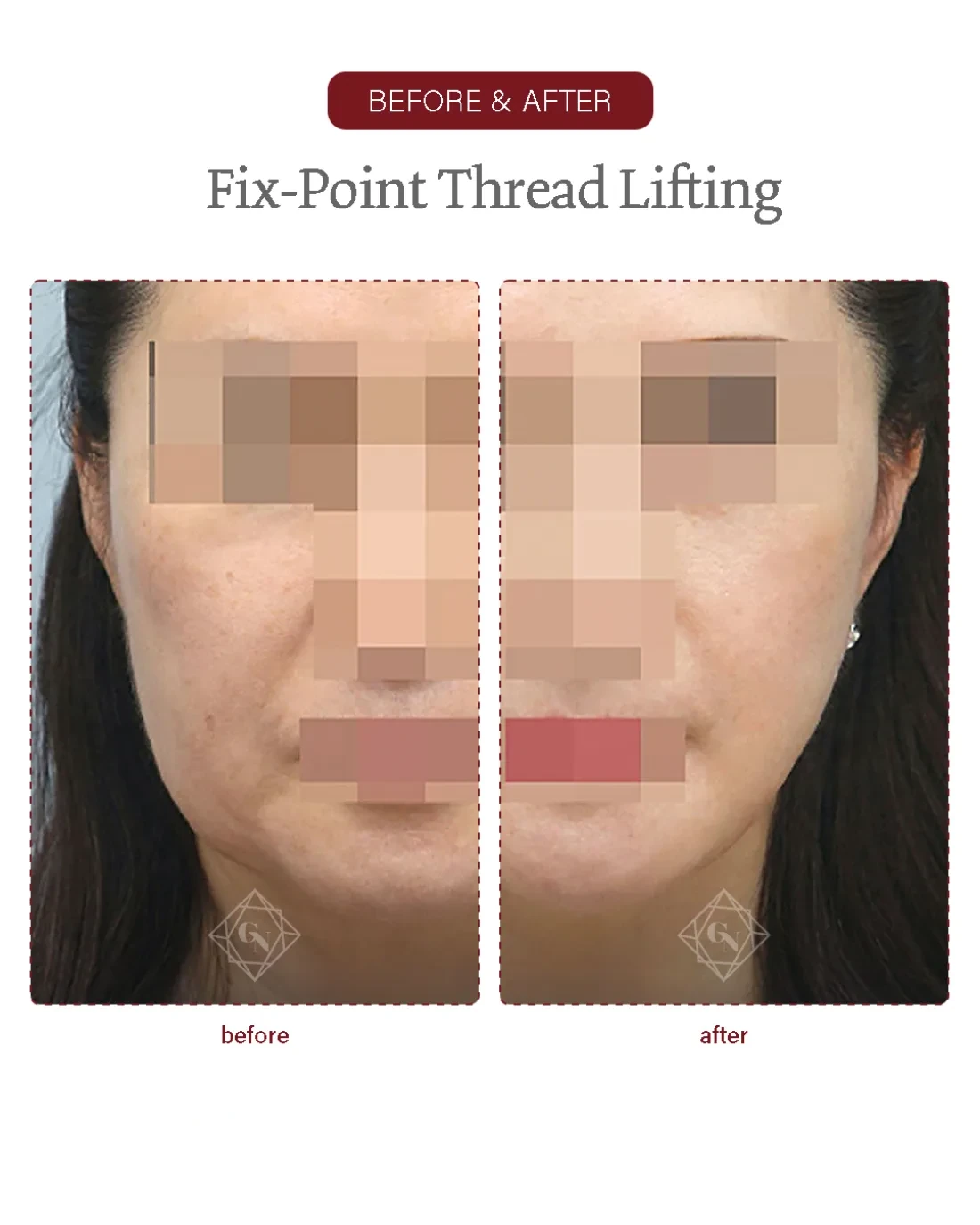
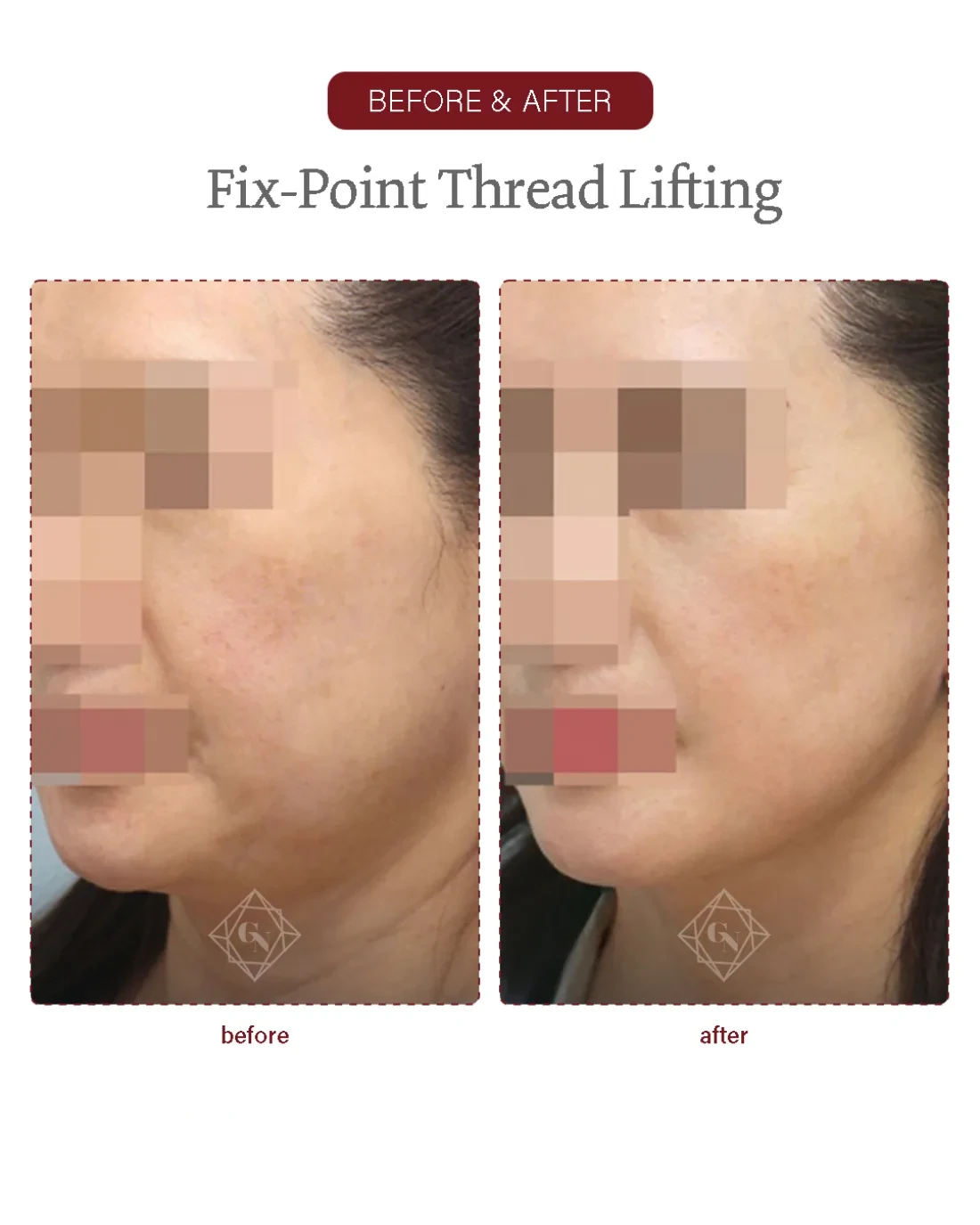
Thread-lift and contouring results of actual Garnet patients (published with consent, with date, procedure and clinic labelled). The lift is temporary and results, recovery and suitability vary by individual and are not guaranteed.
Prices
Price at Garnet
Thread lift
From₩100,000 + VAT per threadExcluding VAT (10% VAT is added at payment)Book now
Same price as Korean patients. Prices shown exclude 10% VAT; your written quote, issued after the in-person consultation, shows the full amount payable.
Dr. In-Soo Baek
Director & sole operating surgeon
Korean medical licence no. 77407
Operate on what you came for. Trained at Korea University Medical Center. Every case planned, performed and reviewed by the same hands.
1Operating surgeon
~2Surgeries per day
7Registered techniques
Board-certified plastic surgeon
Plastic surgery training at Korea University College of Medicine & graduate school
Korean Society of Plastic and Reconstructive Surgeons member, in its facial-contour, eye & rhinoplasty groups
Consults, operates and follows up each case himself
Peer-reviewed papers behind the facts on this page. Each describes findings in its own study group — not results at Garnet — and none predicts your own outcome.
Mohammadi S et al. A Comparison Between Two Methods of Face-Lift Surgery in Nine Cadavers: SMAS (Superficial Musculo-Aponeurotic System) Versus MACS (Minimal Access Cranial Suspension). Aesthetic Plastic Surgery. 2015. doi:10.1007/s00266-015-0543-3
Huq NS et al. Cosmetic Face, Neck, and Brow Lifts with Local Anesthesia. Clinics in Plastic Surgery. 2013. doi:10.1016/j.cps.2013.08.007
Citarella ER et al. Endoscopically assisted limited-incision rhytidectomy: A 10-year prospective study. Journal of Plastic, Reconstructive & Aesthetic Surgery. 2010. doi:10.1016/j.bjps.2009.11.021
FAQ
Common questions
How long does mini facelift recovery take?
The early, visible recovery takes about two weeks: swelling and bruising peak in the first 72 hours, ease over the first week, and sutures come out around day 10. Most people are back at a desk job and out socially in the second week. The deeper recovery (tightness relaxing, numbness recovering and scars maturing) continues for months, with the final result settling by around 6 months.
What is mini facelift recovery like day by day?
Days 1 to 3 are the peak of swelling: rest with your head elevated, expect tightness, pressure around the ears and mild bruising. Days 4 to 10 the swelling eases, bruising fades and shifts downward, and sutures come out around day 10. Weeks 2 to 4 you return to work and social life as bruising becomes concealable and tightness steadily relaxes. By about one month you are comfortable in normal life, with the result still refining underneath.
When can I return to work after a mini facelift?
Many people with a non-physical, low-contact job return in the second week, once dressings are off and bruising is concealable, often around the time sutures come out at day 10. If you want to look completely unremarkable, a few extra days helps. Physically demanding work, or anything that raises blood pressure to the face, should wait longer and be reintroduced gradually as the surgeon clears you.
What aftercare follows a mini facelift?
Rest with your head elevated and apply cold as advised in the first days; keep the dressing dry, sleep on your back and off the incisions, and eat soft foods while keeping chewing and talking gentle. Avoid exercise, heavy lifting, bending, straining and hot saunas until the surgeon clears you. Attend suture removal around day 10 and the structured follow-ups at 1, 3 and 6 months, and contact the clinic promptly if a red-flag symptom appears.
Why does a mini facelift recover faster than a full facelift?
Because it does less. A mini facelift uses a short pre- and post-auricular incision around the ear and a more superficial dissection targeting the nasolabial fold. A full lift uses a longer incision and a deeper SMAS release. Less tissue is lifted over a smaller area, so there is less swelling and bruising and a shorter healing curve, with sutures out around day 10. A full deep plane lift has a two-stage day-10-and-day-14 schedule.
When are the sutures removed after a mini facelift?
Around day 10. It is a quick appointment and a clear milestone: with the stitches out and dressings simplified you can usually return to gentle daily routines, light walking and normal eating, and start covering any residual bruising. The short incisions sit in natural creases in front of and behind the ear, so the scars settle discreetly over the following months.
Is a mini facelift painful during recovery?
It is generally more a tightness-and-pressure recovery than a painful one. Early discomfort (a firm, pulled feeling across the cheeks and jaw and pressure around the ears) is usually manageable with the pain relief you are given. Severe or escalating pain that your medication does not control is not expected and is a reason to contact the clinic.
How long does the swelling and numbness last?
Swelling peaks in the first 72 hours and the bulk of it eases over the first one to two weeks, with the last residual swelling resolving gradually over the following months. Numbness near the incisions in front of and below the ears is normal and recovers slowly over weeks; small zones can take longer, which is expected and not a sign of a problem.
What red-flag symptoms should I watch for after a mini facelift?
Contact the clinic promptly for sudden, rapidly increasing swelling on one side, especially with tightness, pain and a tense, shiny look, which can signal bleeding under the skin. The same applies to severe or escalating pain not controlled by medication, fever, spreading redness or warmth, increasing or foul-smelling discharge from a wound, or any sudden change in vision. Ordinary swelling, fading bruising, tightness and numbness are normal; these specific signs need attention.
How does follow-up work, especially if I'm abroad?
Garnet structures follow-up at 1, 3 and 6 months, the arc over which a mini facelift settles, and the operating surgeon, board-certified Dr. In-Soo Baek, reviews each one himself. International patients can handle these remotely with photos and messaging once home, with the surgeon advising whether anything needs local care or can wait for a planned return. The same surgeon who operated stays reachable for concerns in between.
My mom recently had a brow lift and lower blepharoplasty with Dr. Baek, and our experience has been wonderful so far. The Garnet team was incredibly kind and welcoming, with Kelly assisting us as our English consultant—she made everything…
I’m so happy I chose this clinic for my lower blepharoplasty. I was traveling from abroad by myself, so I was a little nervous, but from the beginning I felt comfortable and truly cared for. Everyone was kind, patient, and professional…
Came in for an in-person consult and ended up choosing Garnet and Dr.Baek for my non-incisional DES and tiplasty/alarplasty. I communicated with Kelly (English consultant) from the start till now (3 weeks post-op). She really help me feel…
My under-eyes have been sagging and folding for years... I tried to cover it up with makeup, but it actually got stuck in the wrinkles and made it stand out even more. While going for consultations, I noticed that the bigger the hospital…
To see how your own recovery would go, send photos for a no-obligation pre-assessment, and we'll map your mini facelift timeline (stay, suture removal and follow-up) before you plan a trip.
Send photos and your question before you travel. An English-speaking coordinator reviews every enquiry and replies with guidance on whether surgery is appropriate, the likely plan and timing.
✓ Reviewed by the clinic coordinator, not a bot
✓ Photo-based pre-assessment before you fly
✓ Foreign-patient scheduling & after-care
✓ One surgeon for consultation, surgery and follow-up
Prefer to chat now? Reach the coordinator directly:










 T S7 months ago



