A mini facelift is a focused operation for early sagging of the lower face: a softening jawline, a forming jowl and a deepening nasolabial fold. That precision is its strength and its limit. Done for the right face it gives a natural, lasting improvement; done for the wrong one it either over-treats someone who is too early or under-treats someone who needs more. This guide helps you work out which of those describes your face.
The short answer
A mini facelift fits early lower-face sagging (a softening jawline, a forming jowl and a deepening nasolabial fold) where there is real laxity to address.
It is too much for very mild, early softening that a non-surgical option can manage, and too little for advanced sagging that reaches the neck or mid-face.
Good general health and realistic expectations matter as much as the anatomy itself.
The decision should follow an assessment of your tissue. A fixed wish for the smaller operation is a poor guide.
The ideal candidate for a mini facelift is someone in the early stage of lower-face ageing: the jawline is beginning to soften, an early jowl is forming where the jaw used to be crisp, and the nasolabial folds either side of the mouth are deepening. There is genuine laxity, with skin and soft tissue that no longer sit where they once did, but it is still concentrated in the lower third of the face and has not spread into the neck or the mid-face.
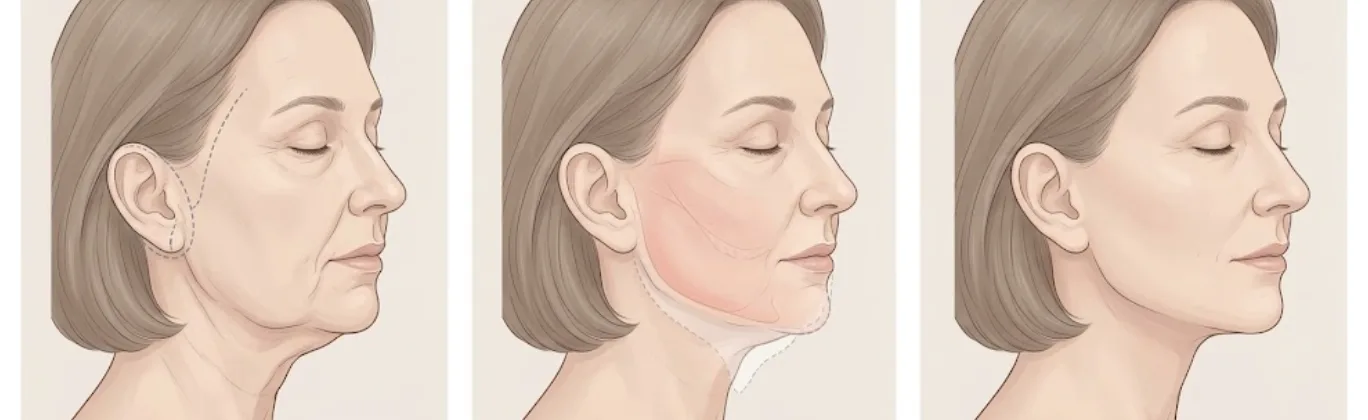
Illustration: through a shorter incision in front of the ear (dotted line), the lower face and jawline (shaded) are lifted.
Anatomically, a mini facelift is built for exactly this. Through a short incision in front of and behind the ear, the surgeon works on the superficial layer and repositions tissue toward the nasolabial fold and jawline, removing a small amount of slack skin, with sutures out at around ten days. That focused design means it does its best work when the problem matches its scope: real, but limited, lower-face sagging. People in roughly their forties and fifties often sit in this window, though the tissue decides more than the birthday does.
Skin that still has reasonable elasticity helps the result settle well, and a candidate who wants a natural refresh of the lower face tends to be happiest. A dramatic change, or a lift of areas the operation does not reach, is outside its scope. If that description sounds like your face, a mini facelift is likely to be in the conversation; the next sections are about ruling in or out the cases on either side of it.
Too early
When a mini facelift is more than you need
Surgery is not the first answer to every early change. If your concern is mainly skin quality (fine laxity, a slightly tired look, very early softening that you notice but others may not), a mini facelift is probably more than you need. At that stage the laxity may be too subtle for the operation to justify itself, and the sound recommendation can be to wait, to look after the skin, or to consider a less invasive route first.
A thread lift is the usual non-surgical step for this earlier stage: it suspends tissue without removing it, gives a gentler and temporary lift, and asks almost nothing in downtime. For a mild, early jowl it can be exactly enough, and it leaves a mini facelift available later, when there is more to address. The mistake is reaching for surgery before there is a surgical problem to solve.
There is no prize for having an operation sooner than you need one. A good clinic will sometimes tell an early patient that the kindest answer is to do less for now, and to reassess in time. Being told you are not yet a candidate is the assessment working the way it should.
Mini, full or thread
Mini facelift, full facelift or a thread lift
A mini facelift sits deliberately between two neighbours, and knowing where you fall between them is most of the decision. Below it is the thread lift, for early and mild laxity. Above it is the full or deep-plane facelift, for sagging that is more advanced or more widespread. The mini occupies the middle: genuine lower-face laxity that threads can no longer hold, but not so much that the lower third no longer contains it.
The clearest signal that you may need more than a mini facelift is the extent of the sagging. If laxity has reached the neck (loose skin or banding below the jaw), or if the mid-face and cheeks have descended as well, a mini facelift will under-deliver, because it focuses on the lower face and will not lift areas it does not reach. In that case a fuller lift is the better recommendation, and it is worth understanding the difference before settling on the smaller option; the comparison of a deep-mini versus full facelift covers that ground.
The reverse error is just as real: choosing a full facelift when a mini would have matched your laxity, and accepting more surgery, scarring and downtime than your face actually called for. Neither over- nor under-treating serves you. The right operation is the one scaled to the sagging you have, which is why the assessment of your jawline and neck should choose it.
Health & expectations
Health and expectations that make a good candidate
Suitability is not only about anatomy. A good candidate is in reasonable general health and able to undergo a planned surgical procedure safely. Conditions that affect healing or anaesthesia, certain medications, and smoking all matter to a facelift and need to be discussed openly at consultation. They do not automatically rule you out, but they shape the plan, the timing and the safety of proceeding. A truthful medical history is part of being a good candidate.
Expectations matter just as much. A mini facelift refreshes the lower face and softens early ageing; it does not stop ageing, and it does not turn one face into another. The patients who do best want to look like a rested, younger version of themselves (“younger, but still yourself”) and are not chasing a dramatic transformation or a result the procedure was never designed to give. A candidate who understands what the operation can and cannot do is, in practice, a better candidate than one with perfect anatomy and unrealistic hopes.
If you are an international patient, being a good candidate also means being able to give the recovery the time it needs: a stay long enough for early swelling to settle and for suture removal at around ten days before you fly home. Planning for that window is part of being ready, and the guide on how long to stay in Korea for surgery sets out what to expect.
Not recommended
When a mini facelift is not recommended
A mini facelift is not recommended when the sagging has outgrown it. Advanced lower-face laxity, loose skin and banding in the neck, or a descended mid-face all point to a fuller lift; performing a mini facelift in those cases risks a result that looks under-corrected and fades sooner, because the operation cannot reach what is actually sagging. The better answer there is a larger procedure, or a frank conversation about whether the timing and extent suit you at all.
It is equally not recommended when the change is too early to warrant surgery, when health factors make an elective operation unwise until they are addressed, or when expectations cannot be met by what a mini facelift realistically does. A clinic that will operate regardless of these is not doing you a favour. You can find out where you fall (too early, well-matched, or in need of more) in an online consultation before you commit to anything.
At Garnet
How Garnet decides if you are a candidate
Garnet is a single-surgeon clinic in Apgujeong, Seoul. Dr. In-Soo Baek is a board-certified plastic surgeon (Korean medical licence no. 77407) and the only operating doctor. He consults, performs the mini facelift himself and reviews every follow-up at one, three and six months. Because the surgeon who assesses you is the surgeon who would operate, the answer you receive about your suitability is the one he is prepared to stand behind personally.
In practice that means a straight reading of your lower face: you may be told a mini facelift fits your face well, that you are too early and would do better to wait or consider a lighter option, or that your sagging calls for a fuller lift than a mini can give. Garnet does not over-recommend, and only addresses the area you came for. You can start by sending photos for a no-obligation online assessment and find out if a mini facelift suits your jawline before planning any trip to Korea.
Real Results
Before & After
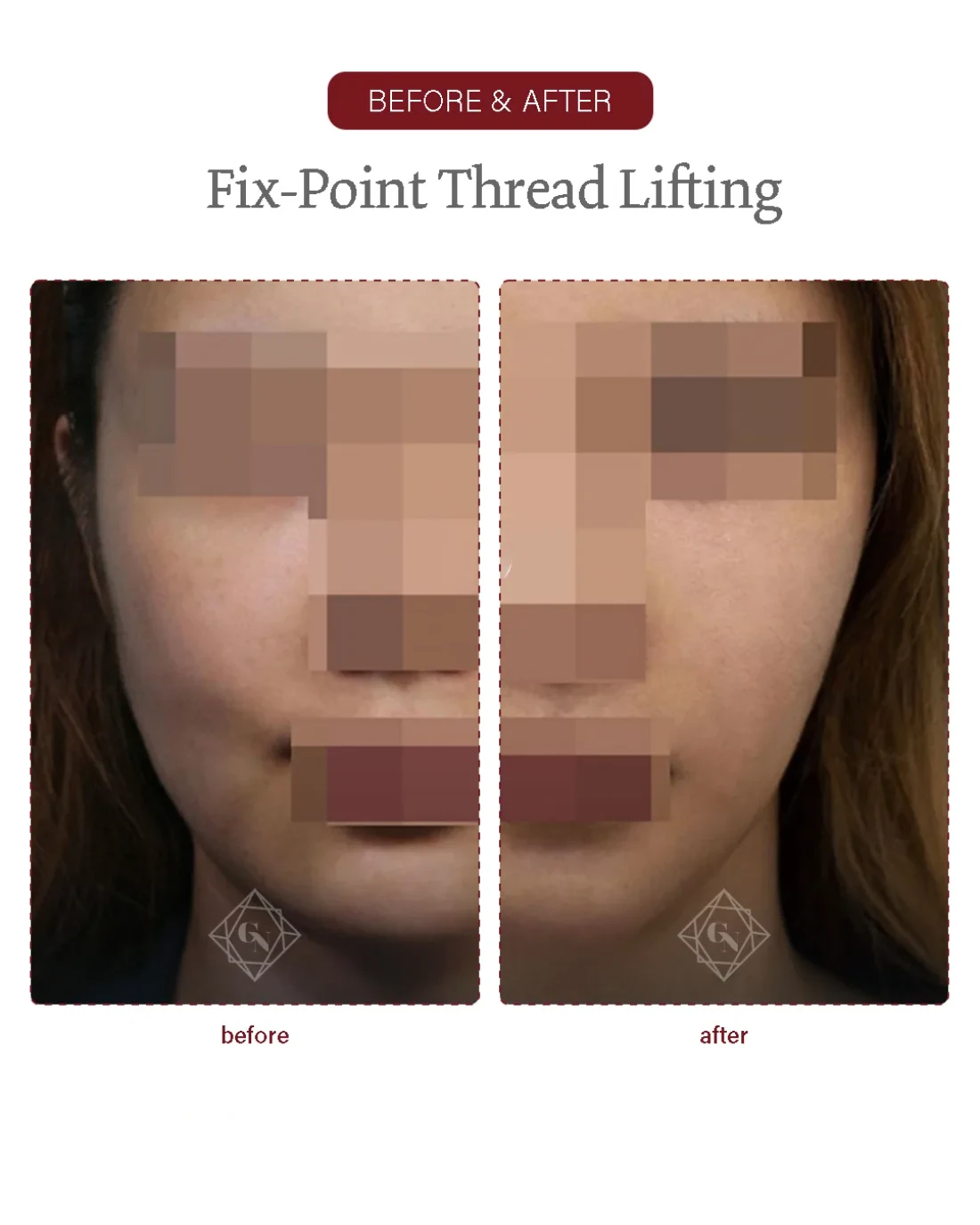
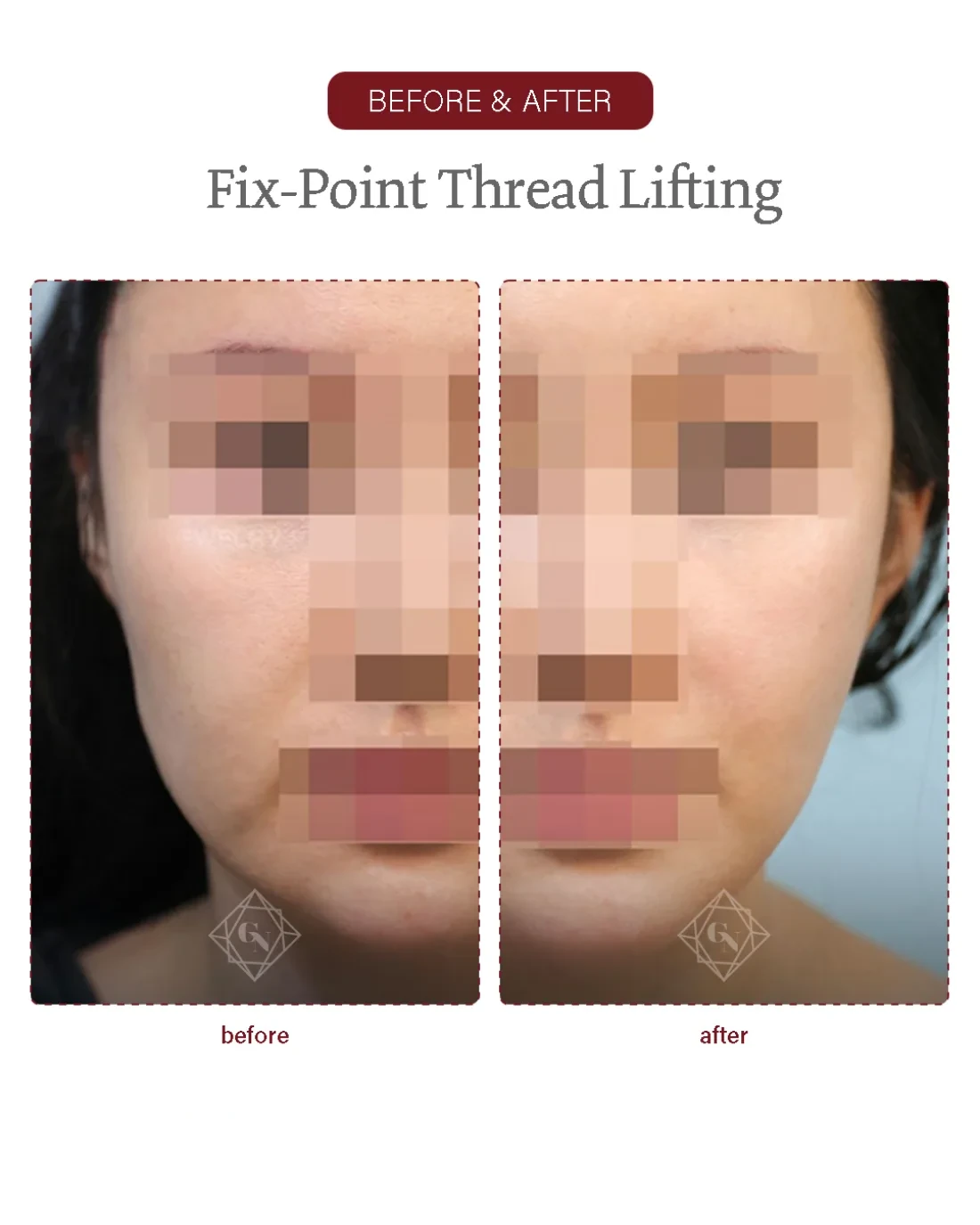
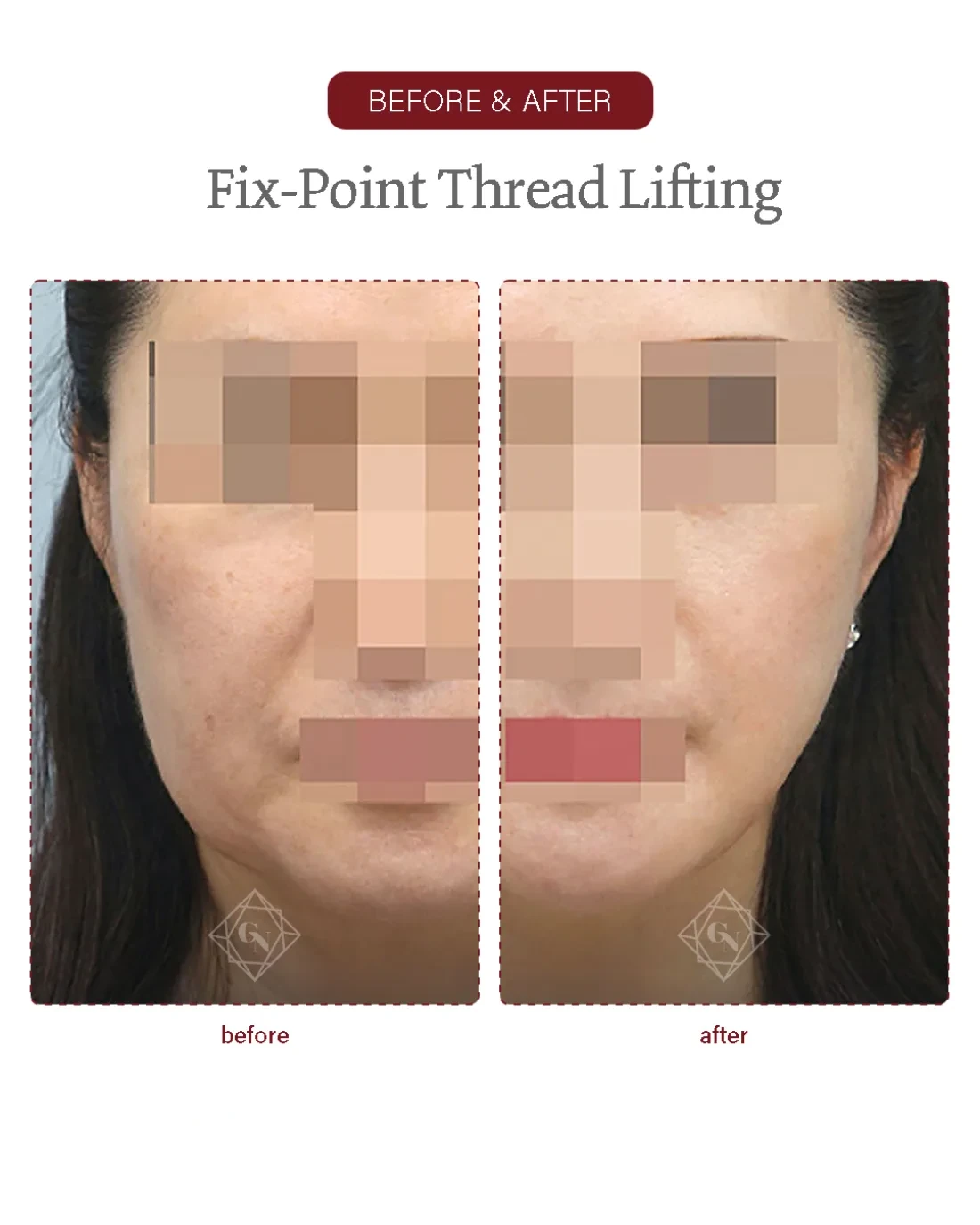
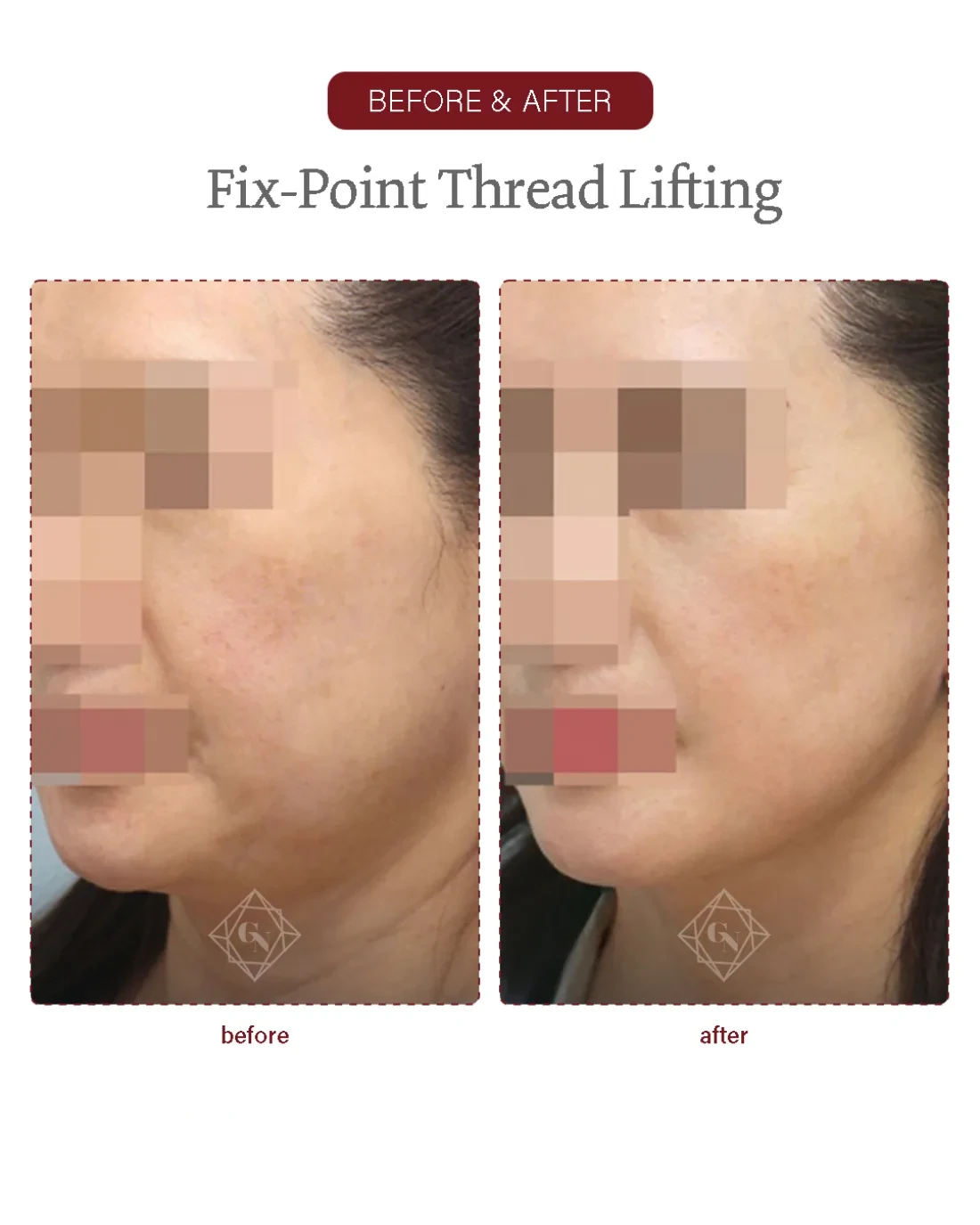
Thread-lift and contouring results of actual Garnet patients (published with consent, with date, procedure and clinic labelled). The lift is temporary and results, recovery and suitability vary by individual and are not guaranteed.
Prices
Price at Garnet
Thread lift
From₩100,000 + VAT per threadExcluding VAT (10% VAT is added at payment)Book now
Same price as Korean patients. Prices shown exclude 10% VAT; your written quote, issued after the in-person consultation, shows the full amount payable.
Dr. In-Soo Baek
Director & sole operating surgeon
Korean medical licence no. 77407
Operate on what you came for. Trained at Korea University Medical Center. Every case planned, performed and reviewed by the same hands.
1Operating surgeon
~2Surgeries per day
7Registered techniques
Board-certified plastic surgeon
Plastic surgery training at Korea University College of Medicine & graduate school
Korean Society of Plastic and Reconstructive Surgeons member, in its facial-contour, eye & rhinoplasty groups
Consults, operates and follows up each case himself
Peer-reviewed papers behind the facts on this page. Each describes findings in its own study group — not results at Garnet — and none predicts your own outcome.
Hijkoop LF et al. The minimal access cranial suspension (MACS) lift: A systematic review of literature 18 years after its introduction. Journal of Plastic, Reconstructive & Aesthetic Surgery. 2022. doi:10.1016/j.bjps.2021.11.051
DeJoseph LM et al. Local Anesthetic Facelift. Facial Plastic Surgery Clinics of North America. 2020. doi:10.1016/j.fsc.2020.03.012
Chopan M et al. The Minimal Access Cranial Suspension Lift. Clinics in Plastic Surgery. 2019. doi:10.1016/j.cps.2019.06.005
FAQ
Common questions
Who is a good candidate for a mini facelift?
Someone in the early stage of lower-face ageing (a softening jawline, an early jowl and deepening nasolabial folds) where there is genuine laxity that is still concentrated in the lower face and has not spread into the neck or mid-face. Reasonable general health, decent skin elasticity and realistic expectations round out a good candidate.
Am I suitable for a mini facelift?
It depends on the stage of your sagging. If your lower face has real but limited laxity, you may be well matched; if the change is very early, a less invasive option may suit you better; if it has reached the neck or mid-face, a fuller lift is likely needed. An assessment of your tissue is the only reliable way to know.
When is a mini facelift not recommended?
When the sagging is too advanced for it (loose neck skin, banding or a descended mid-face that a mini cannot reach), and when the change is too early to justify surgery. It is also not recommended if health factors make an elective operation unwise until addressed, or if expectations cannot be met by what the procedure realistically does.
What age is right for a mini facelift?
There is no fixed age; the tissue decides. Many candidates are in their forties or fifties, but someone younger with early laxity or someone older with well-preserved skin can fall inside or outside the window. The right question is the stage of your sagging.
Should I have a thread lift or a mini facelift?
A thread lift suits early, mild laxity and gives a gentle, temporary lift with little downtime; a mini facelift suits genuine lower-face sagging that threads can no longer hold and gives a lasting result. If you are between the two, an assessment of how much laxity you have should decide.
How do I know if I need a full facelift instead?
The clearest sign is the extent of the sagging. If laxity has reached the neck or the mid-face and cheeks have descended, a mini facelift will under-deliver because it focuses on the lower face. In that case a full or deep-plane lift is the better recommendation, which is best confirmed in a personal assessment.
Does my health affect whether I'm a candidate?
Yes. General health, certain medications, conditions that affect healing or anaesthesia, and smoking all matter to a facelift and should be discussed openly. They do not automatically rule you out, but they shape the plan, the timing and the safety of proceeding, and a truthful medical history is part of being a good candidate.
Can a mini facelift give me a dramatic change?
No, and it is not meant to. A mini facelift refreshes the lower face and softens early ageing, giving a rested, younger version of yourself. Candidates who want a natural improvement are the happiest; those seeking a dramatic transformation are usually better matched to a different plan, or to realistic expectations first.
Can I find out if I'm a candidate without travelling to Korea?
Yes. In an online consultation you can send photos and describe your concern, and receive a pre-assessment of whether your sagging is too early for surgery, well-matched to a mini facelift, or in need of a fuller lift, before committing to any travel.
My mom recently had a brow lift and lower blepharoplasty with Dr. Baek, and our experience has been wonderful so far. The Garnet team was incredibly kind and welcoming, with Kelly assisting us as our English consultant—she made everything…
I’m so happy I chose this clinic for my lower blepharoplasty. I was traveling from abroad by myself, so I was a little nervous, but from the beginning I felt comfortable and truly cared for. Everyone was kind, patient, and professional…
Came in for an in-person consult and ended up choosing Garnet and Dr.Baek for my non-incisional DES and tiplasty/alarplasty. I communicated with Kelly (English consultant) from the start till now (3 weeks post-op). She really help me feel…
My under-eyes have been sagging and folding for years... I tried to cover it up with makeup, but it actually got stuck in the wrinkles and made it stand out even more. While going for consultations, I noticed that the bigger the hospital…
Send photos and your question before you travel. An English-speaking coordinator reviews every enquiry and replies with guidance on whether surgery is appropriate, the likely plan and timing.
✓ Reviewed by the clinic coordinator, not a bot
✓ Photo-based pre-assessment before you fly
✓ Foreign-patient scheduling & after-care
✓ One surgeon for consultation, surgery and follow-up
Prefer to chat now? Reach the coordinator directly:









 T S7 months ago



