A mini facelift lifts the more superficial tissue of the jowl and nasolabial fold, while a full, deep-plane facelift releases the deeper SMAS layer down to the jawline. They are two different operations, and they differ in how deep they go, how much they lift, how long they last and what they ask of your recovery. Comparing them is about matching the operation to your actual degree of ageing, and a careful assessment is how that match is made.
The short answer
A mini facelift uses a short incision and a more superficial lift aimed at early jowl and the nasolabial fold; a full facelift releases the deeper SMAS layer through a longer incision and lifts the whole lower face and jawline.
Choice is driven by the degree of sagging. A mini facelift suits mild-to-moderate laxity, while a full facelift addresses moderate-to-advanced sagging that a mini lift cannot reach.
A deeper, more complete lift generally lasts longer; a mini facelift is a smaller correction with a shorter recovery, but doing too little for advanced ageing is its own disappointment.
Both place incisions in and behind the natural creases at the ear so scars settle discreetly; the full facelift's incision is simply longer. The right call is best made on your photos and examination.
What actually differs between a mini and a full facelift
The clearest way to understand the two operations is by depth and reach. A mini facelift is performed through a short pre- and post-auricular incision (in front of and behind the ear) with a more superficial dissection that targets the nasolabial fold and the early jowl. It is a contained operation that refreshes the lower face and tightens a softening jawline without disturbing the deeper structures. A full, deep-plane facelift works through a longer incision that runs from the temporal hairline, in front of the ear and back toward the jawline, and releases the deeper SMAS layer in a deep-plane and dual-plane plane down to the jaw. That deeper release is what lets it reposition the whole lower face and neck as well as the surface.
Illustration: through a shorter incision in front of the ear (dotted line), the lower face and jawline (shaded) are lifted.
Put simply, a mini facelift moves the more superficial tissue, while a full facelift releases and re-drapes the deeper supporting layer. This is why they are best thought of as two different operations. They are not two sizes of one. The mini lift trades reach for a smaller incision and a quicker recovery; the full lift trades a longer incision and recovery for a more complete, longer-lasting correction that reaches structures a mini lift simply cannot.
Between these two sits a middle option some clinics offer: a deeper but still shorter-incision lift. At Garnet this is the deep mini facelift, which uses a short incision but releases the deeper sub-SMAS layer, bridging the gap for patients whose laxity is more than a mini lift can handle but who do not yet need a full deep-plane procedure. Which of the three fits you is a judgement made on your skin and the pattern of your sagging.
Who suits which
Which one suits whom: your degree of ageing
The single most important factor is how much, and how deeply, your face has aged. How daunting an operation sounds should not decide it. A mini facelift suits mild-to-moderate laxity: an early jowl beginning to blur the jawline, a deepening nasolabial fold, and skin that still has reasonable elasticity. For this stage, a fuller lift would be doing more than the face needs. A full deep-plane facelift suits moderate-to-advanced sagging: a clearly fallen lower face, jowling that a superficial lift would not hold, loose tissue along the jawline and often the upper neck. For this stage, a mini lift would under-treat the problem and leave you disappointed.
Age is only a rough guide. Many patients in their forties to early fifties with early changes are well served by a mini lift, while those in their later fifties and sixties, or anyone with more advanced descent at any age, usually need the deeper operation. But two people of the same age can need different procedures, because skin quality, bone structure, prior surgery and how the face has fallen all differ. This is why the choice is made on examination and photographs. You can read more about candidacy for each in the parent guides on who a mini facelift is for and who a deep-plane facelift is for.
It is also worth knowing what neither operation is. Both are surgical lifts for genuine soft-tissue descent; neither is a treatment for skin texture, pigment or fine lines, and neither is a substitute for the other. If your changes are very early, a non-surgical approach such as a thread lift may be discussed first. A frank version of this conversation sometimes ends with “you do not need surgery yet,” which is a legitimate and useful answer.
Longevity
How long does each one last?
As a general principle, a deeper and more complete lift lasts longer, because it repositions the supporting structures beneath the surface. A full deep-plane facelift addresses the underlying SMAS layer, so the correction tends to hold for many years before the face continues its natural ageing from a younger-looking baseline. A mini facelift is a smaller, more superficial correction; it gives a genuine refreshment of the lower face, but because it does less and works at a shallower level, its effect is more modest in scale and generally does not hold as long as a full lift.
That difference is not a reason to default to the bigger operation. If your ageing is mild-to-moderate, a mini facelift can be exactly the right amount of surgery now, and the question of longevity needs a fair framing: a well-chosen mini lift on the right candidate ages gracefully, whereas a full lift performed on a face that did not need it is over-treatment. Conversely, choosing a mini lift to avoid a longer recovery when your sagging is genuinely advanced usually means a shorter-lived, less satisfying result, and paying twice in the end. For the procedure-specific detail, see how long a mini facelift lasts and how long a deep-plane facelift lasts.
No facelift stops ageing. Both reset the clock, and your face continues to change naturally afterward. Longevity also depends on factors outside the operation: your skin quality, sun exposure, weight stability and general health all influence how long any lift looks its best. The fairest way to think about it is that the right operation, matched to your stage of ageing, gives you the longest sensible result for that stage.
Downtime & scars
Downtime and scars compared
Recovery scales with the extent of the surgery. After a mini facelift, the short pre- and post-auricular sutures typically come out at around day 10, and most of the visible swelling and bruising settles over the first week or two. A full deep-plane facelift involves a longer incision and a deeper release, so swelling and tightness are more pronounced early on and the staged suture removal runs to about day 10 and then day 14, with the longer incision lines taking a little more time to fully quieten. In both cases the deeper, settled result keeps refining for weeks to months after the obvious swelling has gone. The detailed day-by-day for each is in the mini facelift recovery timeline and the deep-plane facelift recovery timeline.
Scarring follows the same logic. Both operations place their incisions in and behind the natural creases at the ear, and the temporal portion of the full lift sits within the hairline, so well-placed and well-healed incisions settle discreetly in both. The practical difference is length: the mini lift's incision is short, while the full lift's is longer because it has to reach far enough to release and re-drape the deeper layer. Length is not the same as visibility, since a longer incision placed and cared for properly can heal just as quietly. It is still a real difference between the two, and a reason the full lift asks a little more of your scar-care in the months afterward.
For an international patient, the downtime difference also shapes the trip. A mini facelift is usually planned around a stay built on the day-10 suture removal, while a full facelift is planned around the later day-14 removal, so the in-Korea stay tends to be a little longer. Either way, the flying date is set individually at your final review. The general principle is covered in when you can fly after surgery, and the broader trip-planning in how long to stay in Korea for surgery.
Deciding
How to decide which is right for your face
Neither an article nor a clinic price list should make this decision for you. It is made on your photographs and, ideally, an in-person examination: the degree and pattern of your sagging, the elasticity and thickness of your skin, your jawline and neck, any previous surgery, and what specifically bothers you. From that, a board-certified plastic surgeon can tell you which operation will actually achieve what you are after and, just as importantly, which one would be too little or too much.
A useful way to frame your own thinking is by the question you are really asking. If you mainly want to soften an early jowl and a deepening fold while your skin still has good tone, you are likely in mini-facelift territory. If your lower face has genuinely fallen, your jawline has lost definition and the neck is involved, you are likely in full-facelift territory, and a mini lift would leave you wanting more. If you sit somewhere in between, that is exactly where a middle option like the deep mini facelift is considered. The assessment exists to place you accurately, with no upselling.
Be wary of any advice that pushes you toward the most extensive operation by default, or toward the cheapest one regardless of fit. The right answer is the operation matched to your stage of ageing: sometimes the smaller one, sometimes the larger, and occasionally the answer is to wait. You can get this assessment before you ever book a flight through an online consultation, sending photos for a pre-assessment of which lift, if any, your face actually needs.
At Garnet
How Garnet approaches the mini-versus-full choice
Garnet is a single-surgeon plastic surgery clinic in Apgujeong, Seoul. Dr. In-Soo Baek is a board-certified plastic surgeon (Korean medical licence no. 77407) and the only operating doctor. He carries out the consultation, performs the surgery himself, and reviews every follow-up. The mini-versus-full decision is therefore made by the surgeon who will lift your jawline, and the clinic caps the day at two surgeries so each case has unhurried time. Garnet performs the mini lift, the deep mini lift and the full deep-plane lift, so the recommendation is about fit, whatever operation it points to.
Garnet's approach is to address only the area you came for and to recommend the smallest operation that will genuinely achieve your goal, with no push toward a bigger lift than your face needs. That principle is the whole point of comparing the two procedures properly: the aim is the right amount of surgery for your stage of ageing, with a result that looks younger but still like you. Structured follow-ups at 1, 3 and 6 months, including remote check-ins by messenger after you fly home, mean the same surgeon sees the result settle whichever operation you have.
If you are weighing a mini against a full facelift from abroad, the sensible first step is the online consultation: send clear photos for a pre-assessment of which lift suits your degree of ageing, and a realistic picture of the recovery and stay each one involves, before you commit to anything.
Real Results
Before & After
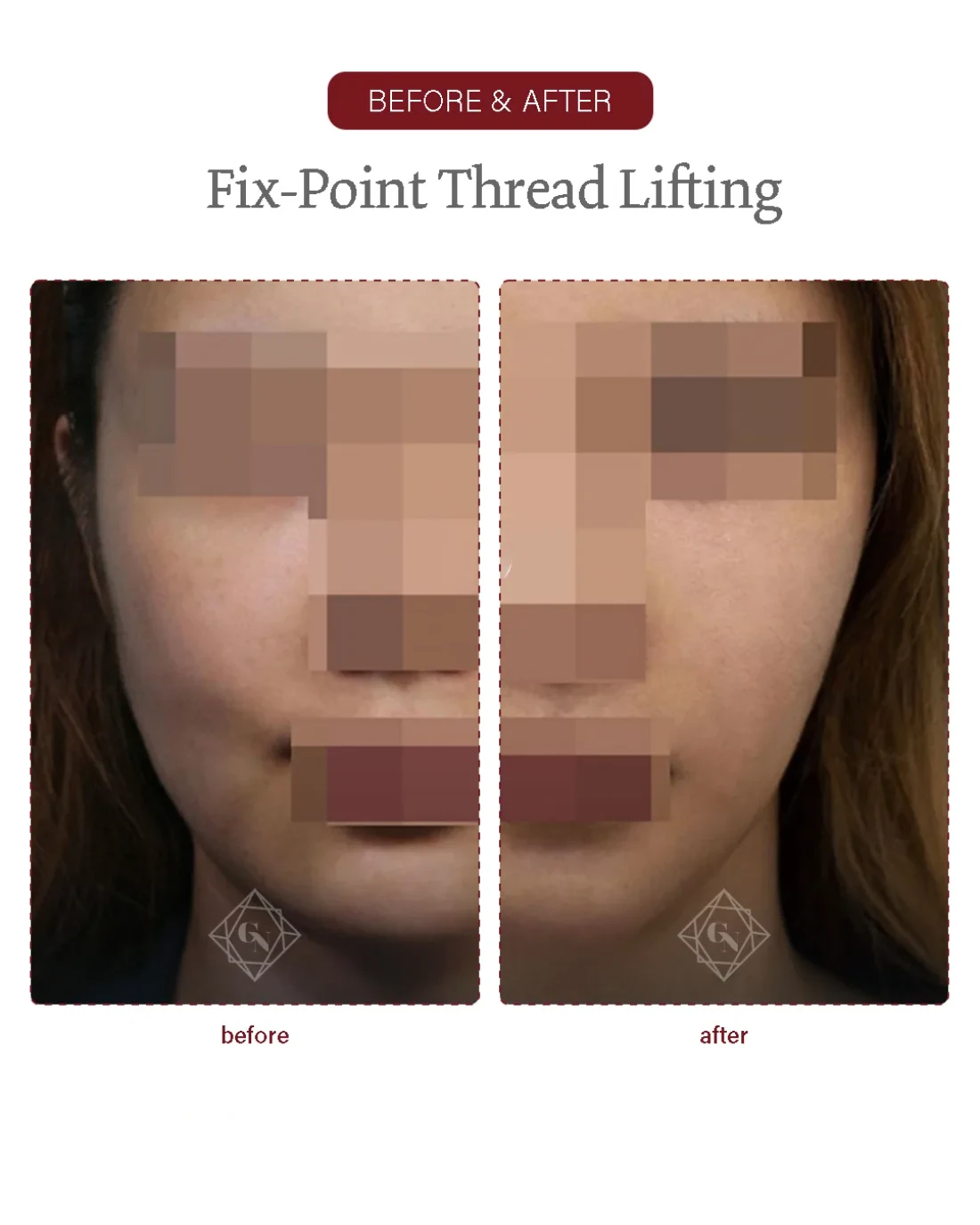
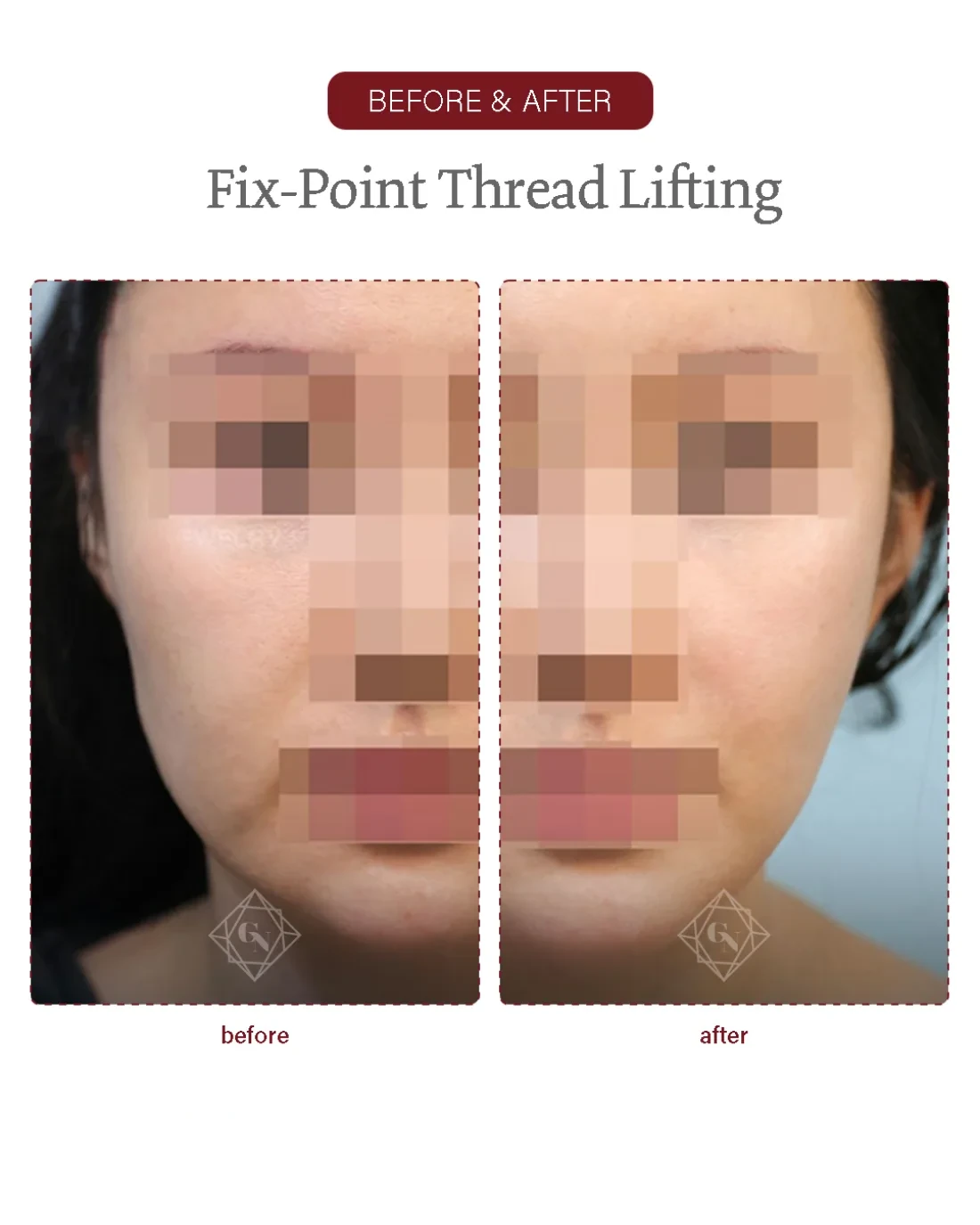
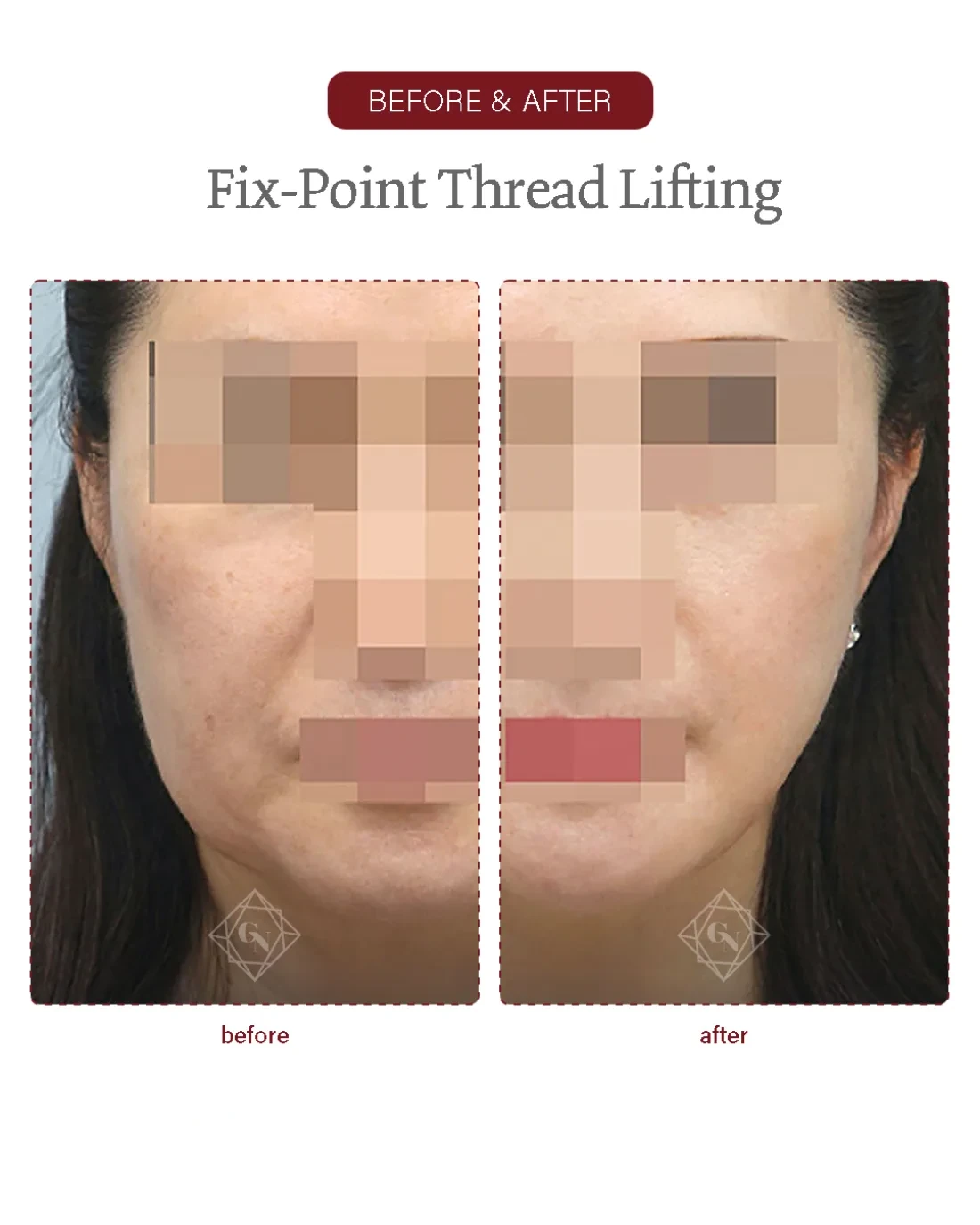
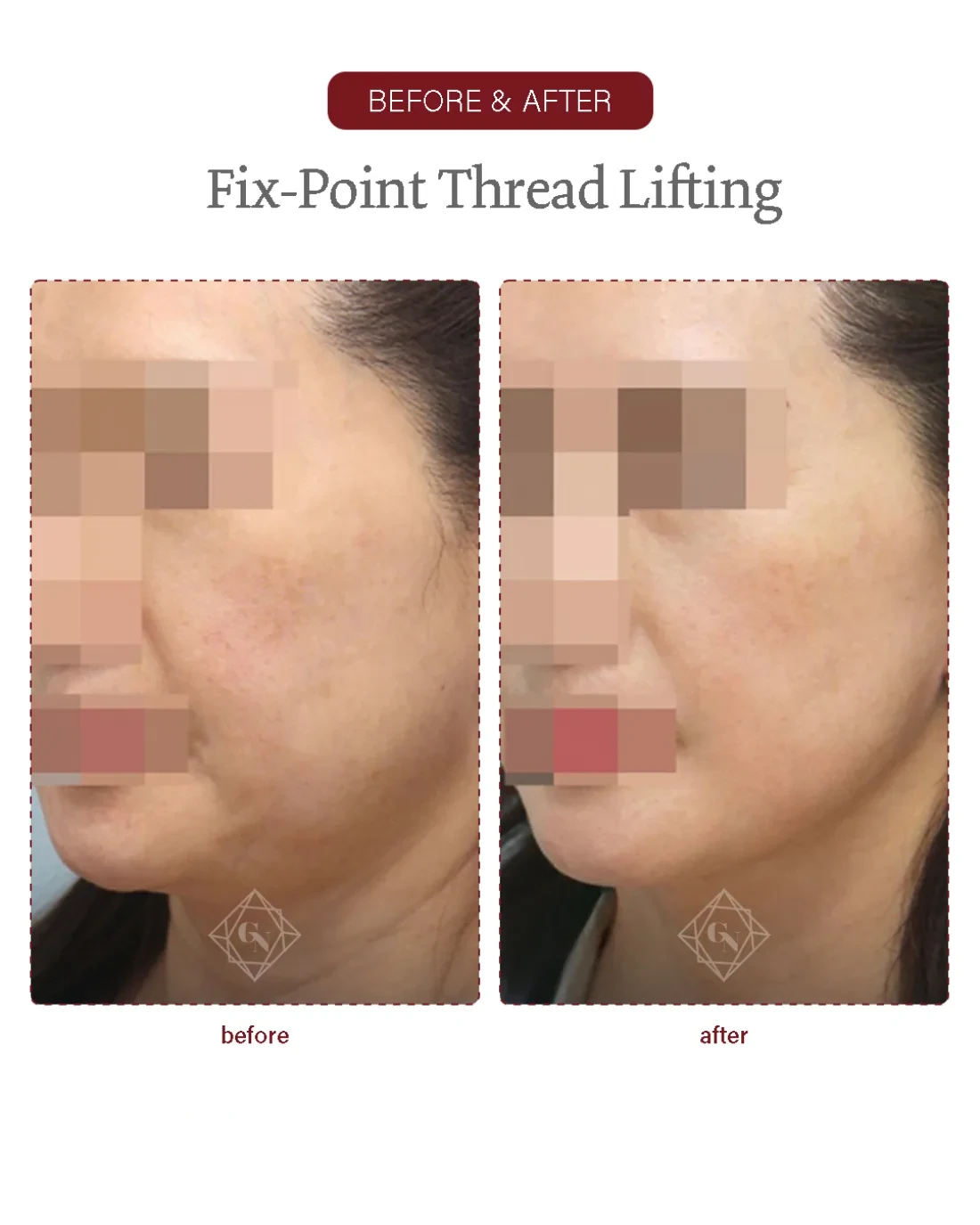
Thread-lift and contouring results of actual Garnet patients (published with consent, with date, procedure and clinic labelled). The lift is temporary and results, recovery and suitability vary by individual and are not guaranteed.
Prices
Price at Garnet
Thread lift
From₩100,000 + VAT per threadExcluding VAT (10% VAT is added at payment)Book now
Same price as Korean patients. Prices shown exclude 10% VAT; your written quote, issued after the in-person consultation, shows the full amount payable.
Dr. In-Soo Baek
Director & sole operating surgeon
Korean medical licence no. 77407
Operate on what you came for. Trained at Korea University Medical Center. Every case planned, performed and reviewed by the same hands.
1Operating surgeon
~2Surgeries per day
7Registered techniques
Board-certified plastic surgeon
Plastic surgery training at Korea University College of Medicine & graduate school
Korean Society of Plastic and Reconstructive Surgeons member, in its facial-contour, eye & rhinoplasty groups
Consults, operates and follows up each case himself
Peer-reviewed papers behind the facts on this page. Each describes findings in its own study group — not results at Garnet — and none predicts your own outcome.
Citarella ER et al. Endoscopically assisted limited-incision rhytidectomy: A 10-year prospective study. Journal of Plastic, Reconstructive & Aesthetic Surgery. 2010. doi:10.1016/j.bjps.2009.11.021
Jacono AA et al. The Minimal Access Deep Plane Extended Vertical Facelift. Aesthetic Surgery Journal. 2011. doi:10.1177/1090820x11424146
Verpaele A et al. The third suture in MACS-lifting: making midface-lifting simple and safe. Journal of Plastic, Reconstructive & Aesthetic Surgery. 2007. doi:10.1016/j.bjps.2006.12.012
Coleman J. Short Incision, Short Flap Face-Lift Surgery versus Deep Plane Face-Lift Surgery. Facial Plastic Surgery. 2007. doi:10.1055/s-2007-970132
FAQ
Common questions
What is the difference between a mini facelift and a full facelift?
A mini facelift uses a short incision in front of and behind the ear with a more superficial lift aimed at the early jowl and nasolabial fold. A full, deep-plane facelift uses a longer incision from the temporal hairline to the jawline and releases the deeper SMAS layer, repositioning the whole lower face and neck. They are two different operations for two different stages of ageing.
Is a mini facelift or a full facelift better for me?
Neither is universally better; it depends on your degree of sagging. A mini facelift suits mild-to-moderate laxity with reasonable skin tone, while a full facelift suits moderate-to-advanced descent that a superficial lift cannot hold. The right choice is made on your photographs and an in-person examination.
How long does a mini facelift last compared with a full facelift?
As a general rule a deeper, more complete lift lasts longer because it repositions the supporting structures, so a full deep-plane facelift tends to hold longer than a more superficial mini facelift. That said, a well-chosen mini lift on the right candidate ages gracefully, and a full lift performed on a face that did not need it is over-treatment. No facelift stops ageing; both reset the clock from a younger baseline.
Who is a candidate for a mini facelift instead of a full facelift?
A mini facelift suits someone with mild-to-moderate ageing (an early jowl, a deepening nasolabial fold and skin that still has reasonable elasticity), where a fuller lift would do more than the face needs. Someone with a clearly fallen lower face, lost jawline definition and neck involvement is usually better served by a full lift, because a mini lift would under-treat them. Age is only a rough guide; the decision is made on examination.
Is a mini facelift enough for my sagging?
It depends entirely on how advanced your sagging is. A mini facelift is enough for mild-to-moderate laxity. With advanced descent it falls short, where it would leave you wanting more and effectively paying twice. The online consultation exists to answer this for your specific face before you travel, including the option of a deep mini lift if you fall in between.
What is the recovery difference between the two?
Recovery scales with the extent of the surgery. After a mini facelift the short sutures typically come out around day 10 with swelling settling over a week or two. A full facelift involves a longer incision and deeper release, with staged suture removal at roughly day 10 and day 14 and more pronounced early swelling. Both keep refining for weeks to months afterward.
Are the scars worse with a full facelift?
Both operations place incisions in and behind the natural creases at the ear, with the temporal part of the full lift hidden in the hairline, so well-placed and well-healed scars settle discreetly in both. The full lift's incision is longer because it must reach far enough to release the deeper layer, but length is not the same as visibility: a longer incision cared for properly can heal just as quietly.
Can I have a mini facelift now and a full facelift later?
It is possible, but it is usually better to have the operation matched to your current stage of ageing. Choosing a smaller one to defer a bigger one tends to backfire. If your sagging genuinely needs a full lift, a mini lift now tends to give a shorter-lived, less satisfying result. The assessment aims at the right amount of surgery, done once.
Is there an option between a mini and a full facelift?
Yes. At Garnet the deep mini facelift uses a short incision but releases the deeper sub-SMAS layer, bridging the gap for patients whose laxity is more than a mini lift can hold but who do not yet need a full deep-plane procedure. Which of the three fits you is a judgement made on your skin and the pattern of your sagging at consultation.
How do I find out which facelift I need before flying to Korea?
Start with an online consultation: send clear, well-lit photos and a short history, and a board-certified plastic surgeon gives a pre-assessment of which lift, if any, suits your degree of ageing, along with a realistic picture of the recovery and the length of stay each one involves, before you book a flight.
My mom recently had a brow lift and lower blepharoplasty with Dr. Baek, and our experience has been wonderful so far. The Garnet team was incredibly kind and welcoming, with Kelly assisting us as our English consultant—she made everything…
I’m so happy I chose this clinic for my lower blepharoplasty. I was traveling from abroad by myself, so I was a little nervous, but from the beginning I felt comfortable and truly cared for. Everyone was kind, patient, and professional…
Came in for an in-person consult and ended up choosing Garnet and Dr.Baek for my non-incisional DES and tiplasty/alarplasty. I communicated with Kelly (English consultant) from the start till now (3 weeks post-op). She really help me feel…
My under-eyes have been sagging and folding for years... I tried to cover it up with makeup, but it actually got stuck in the wrinkles and made it stand out even more. While going for consultations, I noticed that the bigger the hospital…
Not sure whether you need a mini or a full facelift? Send photos for a no-obligation pre-assessment, and we'll tell you which lift, if any, actually suits your degree of ageing.
Send photos and your question before you travel. An English-speaking coordinator reviews every enquiry and replies with guidance on whether surgery is appropriate, the likely plan and timing.
✓ Reviewed by the clinic coordinator, not a bot
✓ Photo-based pre-assessment before you fly
✓ Foreign-patient scheduling & after-care
✓ One surgeon for consultation, surgery and follow-up
Prefer to chat now? Reach the coordinator directly:










 T S7 months ago



