Ptosis correction adjusts the eye-opening (levator) muscle, a lasting structural change that does not simply reverse. Because it works on a living muscle, though, some droop can partially return over the years as that muscle naturally ages. Both sides matter when you ask "How long will it last?" Understanding both is the key to realistic expectations.
The short answer
Ptosis correction is a lasting change. The eye-opening (levator) muscle is adjusted so the lid lifts higher, and that structural adjustment does not simply undo itself.
The change itself does not reverse, but it works on a living muscle: over the years the levator can weaken again with age, so a degree of droop can partially recur. That is a realistic expectation and does not mean the surgery failed.
How long it holds is individual: the type and severity of ptosis, the tissue and how precisely the muscle was set all matter, and congenital or age-related cases can behave differently.
If droop does return, a small re-adjustment can usually restore the lift; many people keep a stable result for many years without needing anything further.
Ptosis correction is a lasting procedure, and most people who have it enjoy a higher, more open, less tired-looking eye for many years. Because a ptosis correction adjusts the strength of the levator (the muscle that lifts the eyelid) through a fine lid-crease incision, it makes a real structural change. The improvement does not fade on a schedule like a non-surgical treatment. That said, a single exact number of years would be misleading, because how long it holds is individual.
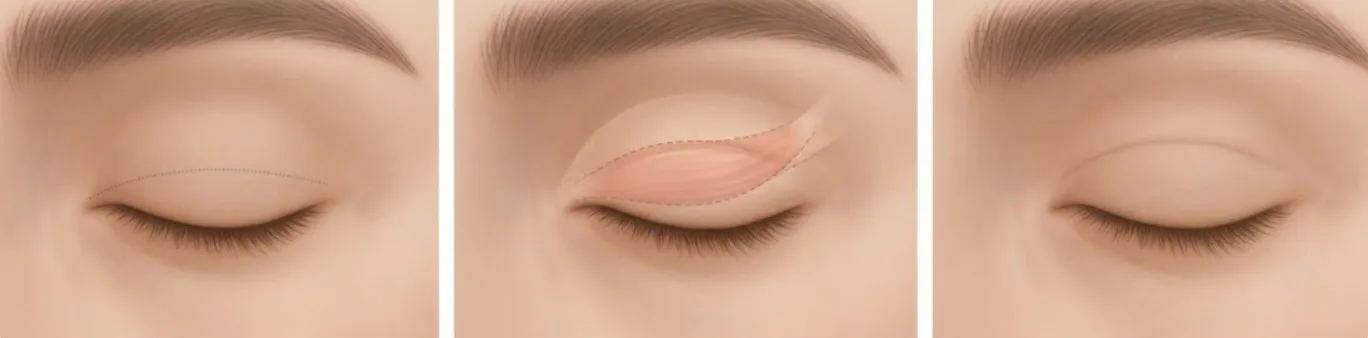
Illustration: through the crease line, the muscle that opens the eye (shown beneath the lid) is tightened so the lid rests higher.
Ptosis correction works on a living muscle, which makes its longevity a little different from procedures that simply remove skin. The muscle is set to lift the lid more effectively, and that setting is durable. A muscle can still change over a lifetime in a way that removed skin cannot. So the result is best pictured as a lasting adjustment that you then age forward from.
This is also why ptosis is sometimes confused with a simple heavy lid. If your concern is actually excess skin and the muscle is fine, a different procedure is needed. Our guide comparing ptosis correction and double-eyelid surgery explains which problem each one solves, because that distinction matters a great deal for what 'lasting' means.
Why lasting
Why the muscle adjustment does not simply reverse
The durability comes from the fact that ptosis correction is a structural adjustment of the levator. Through a fine incision in the lid crease, the levator or eye-opening mechanism is tightened or shortened so the lid opens higher. Once that adjustment heals into place, it does not spring back. There is no filler to dissolve and no external device holding the lid up. This is the sense in which the change lasts: the corrected muscle strength is built into the healed lid.
That is quite different from anything non-surgical, which cannot durably change how a weak muscle lifts the lid. By re-setting the muscle that actually causes the droop, a well-performed ptosis correction addresses the underlying cause instead of masking it. A cause that has been corrected does not quietly return the way a temporary treatment fades.
Because the result depends entirely on setting the muscle at exactly the right tension, precise, unhurried surgery matters enormously for how long it holds and how symmetrical it looks. Over- or under-correcting affects both the appearance and the durability, which is one reason careful planning and the surgeon's judgement are so central. It is also part of what the cost of the procedure reflects.
Recurrence
Why some droop can partially return over time
Clear expectations matter here more than with most eye procedures. The adjustment itself does not reverse, but because it works on a living muscle, a degree of droop can partially recur over the years. The levator naturally weakens with age, just as it does in people who never had surgery, so a lid that was lifted well can, much later, begin to sit a little lower again. This is ordinary muscle ageing continuing; the correction has not 'failed'.
The likelihood and timing depend a lot on the type of ptosis. Age-related (involutional) ptosis is caused by the very stretching and weakening that continues after surgery, so some gradual regression over a long span is understandable. Congenital or muscle-related ptosis can behave differently again. A frank surgeon will explain which pattern applies to you, because it directly shapes how durable the result is likely to be.
The right way to picture it is comparative. Even if a little droop returns years later, your eye will still tend to sit higher and look less tired than it would have without the correction, because you aged forward from a lifted lid. The correction does not have to be permanent to be worthwhile. A lasting lift that ages naturally, with the option of a small re-adjustment later, is exactly what this procedure is designed to give.
What affects it
What affects how long your result lasts
The biggest factor is the type and severity of your ptosis and the underlying strength of the levator muscle. A muscle with reasonable baseline strength that is precisely adjusted tends to hold longer, while a very weak muscle or advanced age-related laxity can regress sooner. Age at surgery and tissue quality matter, and, as with any eyelid procedure, the whole area keeps ageing gently around the result.
Lifestyle plays a smaller but real role. General skin and tissue ageing is accelerated by heavy sun exposure and smoking, and habitual hard eye-rubbing puts strain on a lid that has been finely adjusted, so being gentle with your eyes and protecting your skin can help the result hold. These are within your control in a way that muscle biology is not.
The surgery itself is decisive. Setting the muscle at precisely the right tension, neither over- nor under-correcting, is what gives both a natural look and lasting hold, which is why an experienced, unhurried approach matters. If you would like to know how the lift settles in the first weeks before thinking long-term, our guide to when you will see results covers that early timeline.
Re-adjustment
Re-adjustment later on
If droop does partially return over the years, the reassuring part is that it is usually correctable with a small re-adjustment, without a major operation. Because the mechanism is understood and accessible through the same lid crease, the muscle can often be re-set to restore the lift. It is a considered step taken when there is a clear reason. Many people keep a stable result for many years without needing it at all.
Having had a clean, well-planned initial correction tends to make any later re-adjustment more straightforward, because the anatomy has already been addressed carefully. This is one quiet advantage of a precise, measured first operation over an over-corrected one: it holds better and leaves you in a better position if a refinement is ever wanted.
There is no schedule you are obliged to follow. Most people simply enjoy the more open eye and revisit the question years later, if at all. If and when droop returns, having the same surgeon who set the muscle originally, and who knows how your lid responded, makes judging exactly how much re-adjustment is needed much safer and more predictable.
At Garnet
Garnet's approach to a lasting, natural lift
Garnet is a single-surgeon clinic in Apgujeong, Seoul. Dr. In-Soo Baek is a board-certified plastic surgeon (Korean medical licence no. 77407) and the only operating doctor. He consults, performs the ptosis correction himself and reviews every follow-up, and the clinic keeps the day to two surgeries so each case has the unhurried time that setting muscle tension precisely needs. Because so much rests on judging the exact tension and on identifying which type of ptosis you have, that single-surgeon assessment is central to a lasting, symmetrical result.
That model is directly relevant to how long your result holds: the same surgeon diagnoses the ptosis, sets the muscle, and then follows your healing at 1, 3 and 6 months, and by messenger after you fly home, so the lift settles as intended and any early asymmetry is caught while it is easiest to address. Ptosis correction can also be combined with double-eyelid surgery where the crease needs setting too. If you travel in for a levator adjustment, Garnet's registration with Korea's foreign-patient programme covers the visit.
If you would like a realistic view of how long a ptosis correction could last for your eyes specifically, including which type of ptosis you have and how it tends to age, the ideal first step is a no-obligation online assessment. Photos of both eyes open and relaxed let the surgeon judge your levator before you book a flight.
Real Results
Before & After
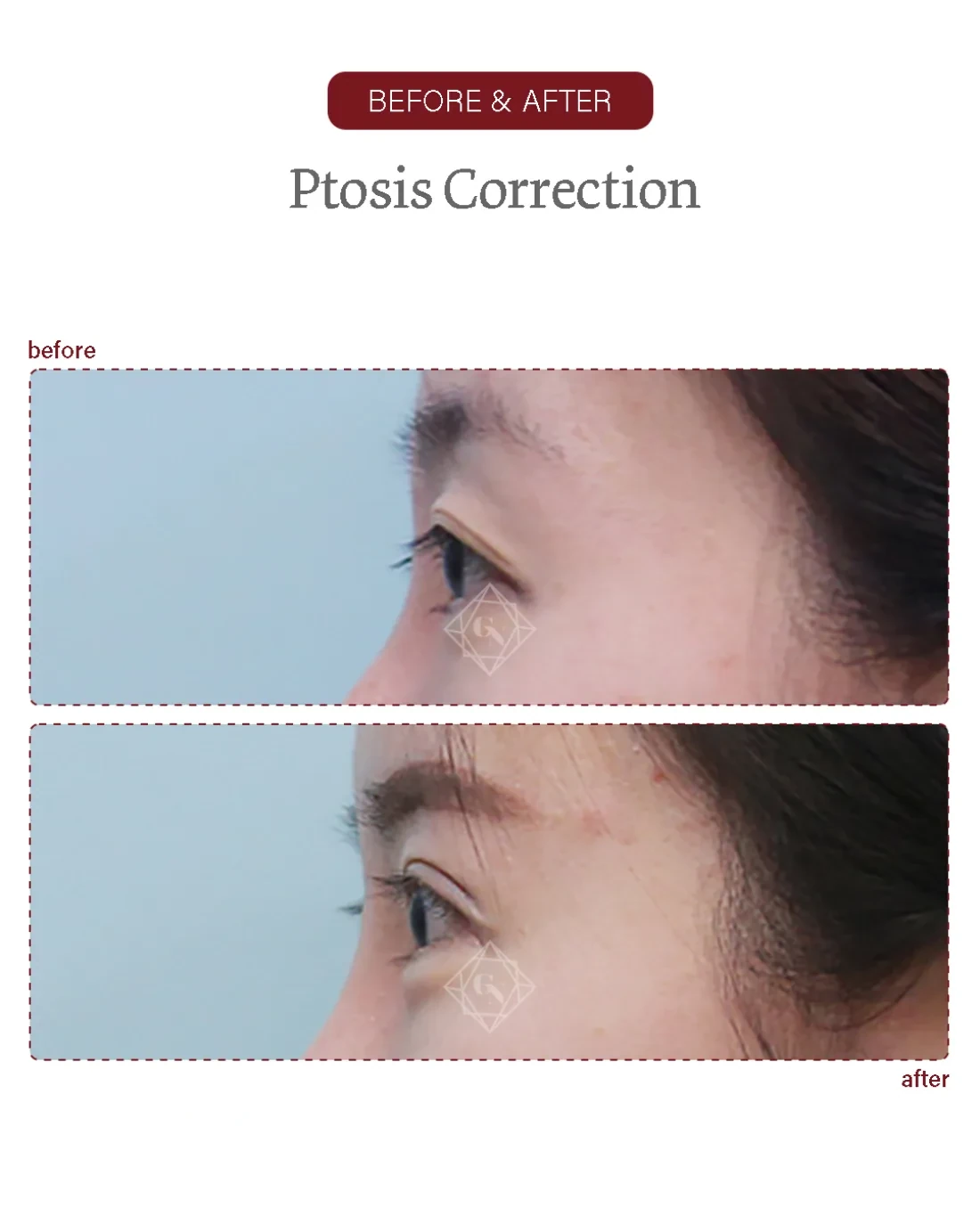
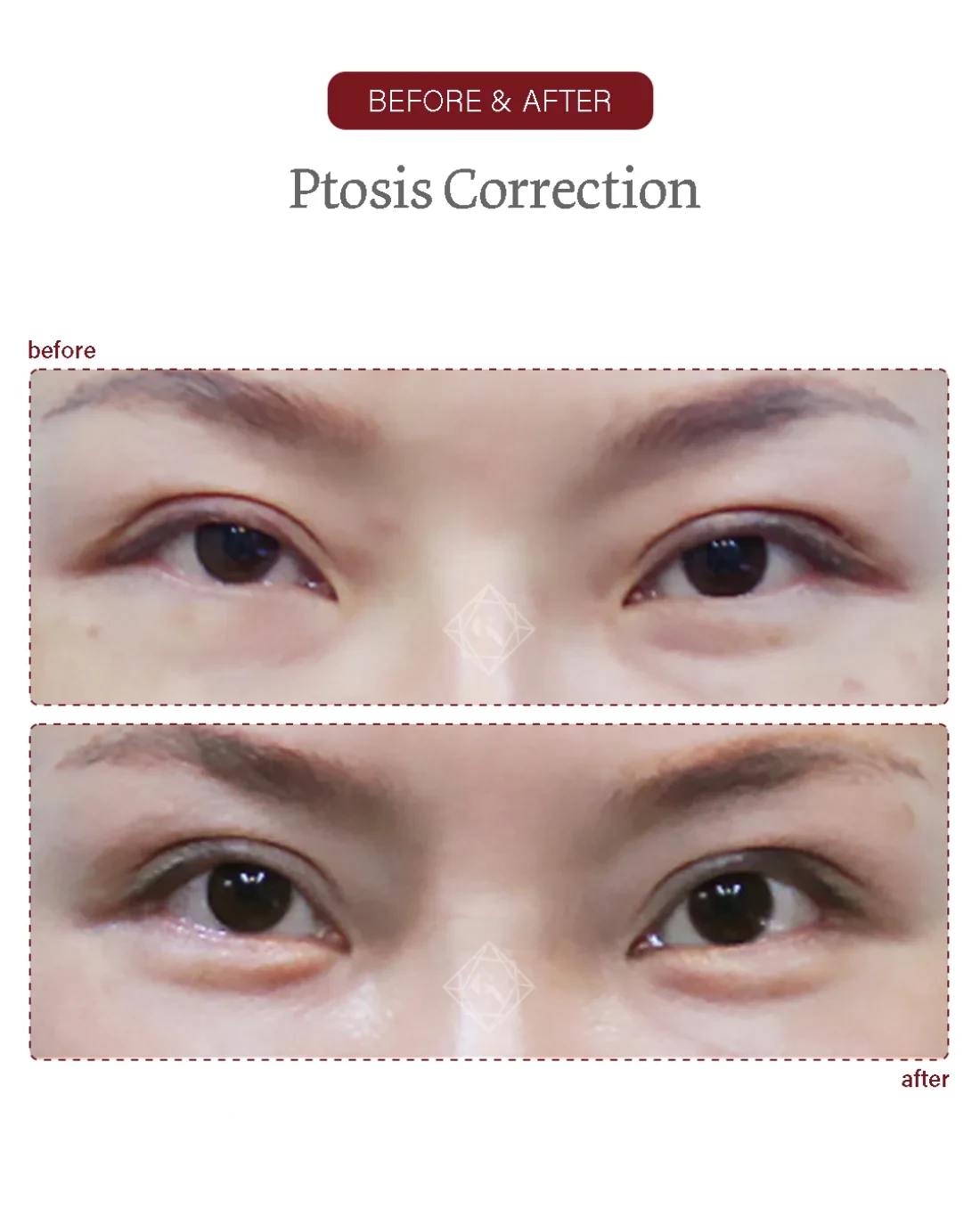
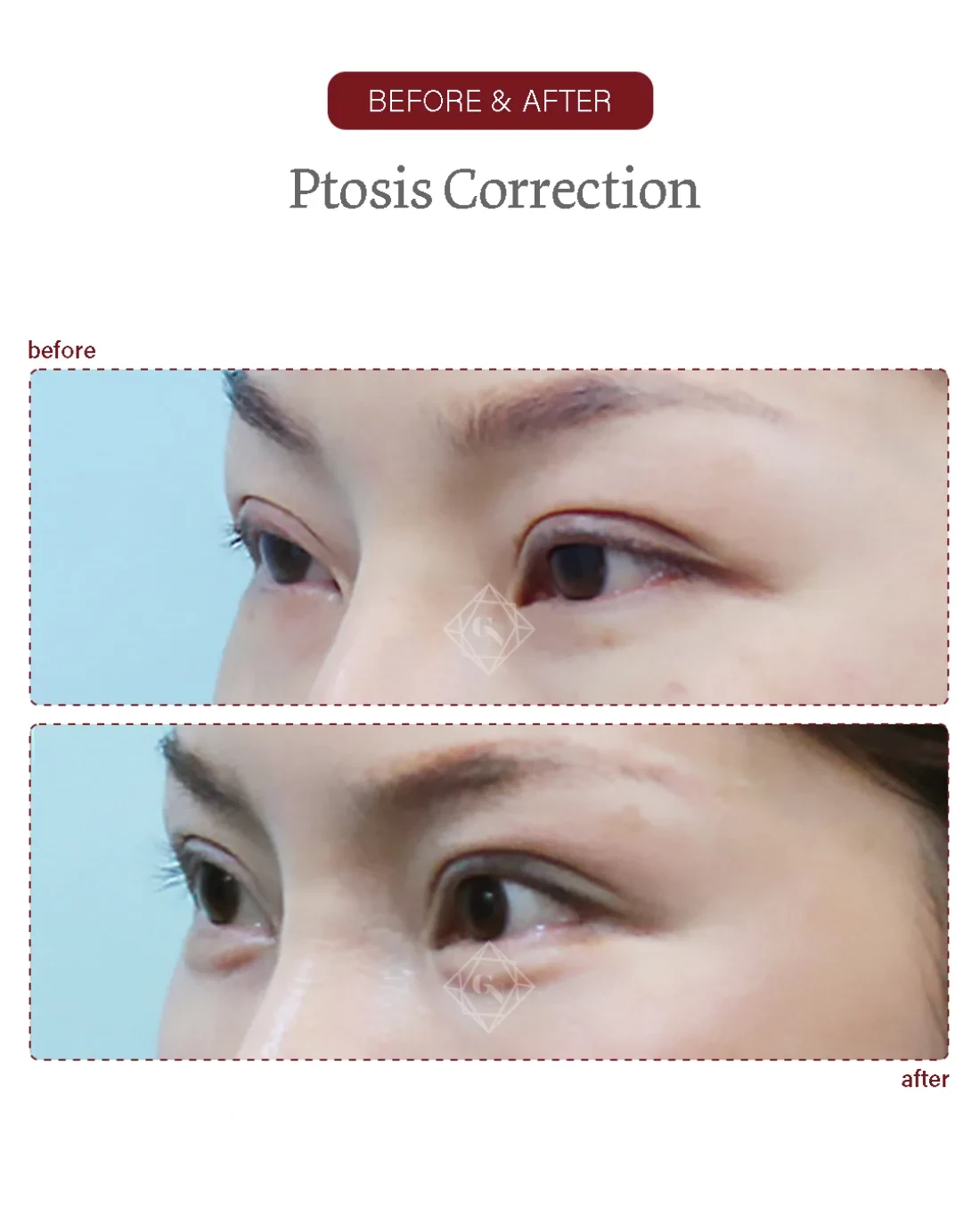
Ptosis-correction before/after examples of actual Garnet patients (published with consent). Results, recovery and suitability vary by individual and are not guaranteed; the right approach is decided at an in-person consultation.
Dr. In-Soo Baek
Director & sole operating surgeon
Korean medical licence no. 77407
Operate on what you came for. Trained at Korea University Medical Center. Every case planned, performed and reviewed by the same hands.
1Operating surgeon
~2Surgeries per day
7Registered techniques
Board-certified plastic surgeon
Plastic surgery training at Korea University College of Medicine & graduate school
Korean Society of Plastic and Reconstructive Surgeons member, in its facial-contour, eye & rhinoplasty groups
Consults, operates and follows up each case himself
Peer-reviewed papers behind the facts on this page. Each describes findings in its own study group — not results at Garnet — and none predicts your own outcome.
Liu CY et al. Blepharoptosis repair. Current Opinion in Otolaryngology & Head & Neck Surgery. 2018. doi:10.1097/moo.0000000000000463
Huggins A et al. Clinical Evaluation of Blepharoptosis: Distinguishing Age-Related Ptosis from Masquerade Conditions. Seminars in Plastic Surgery. 2017. doi:10.1055/s-0037-1598188
Kim CY et al. Distinct Features in Koreans with Involutional Blepharoptosis. Plastic and Reconstructive Surgery. 2015. doi:10.1097/prs.0000000000001280
FAQ
Common questions
How long does ptosis correction last?
It is a lasting procedure, and most people enjoy a higher, more open eye for many years. Adjusting the eye-opening muscle is a structural change, so it does not fade on a schedule like a non-surgical treatment. An exact figure would be misleading, though, because it works on a living muscle. How long it holds depends on the type of ptosis, your tissue and how precisely the muscle was set.
Is ptosis correction permanent?
The adjustment itself does not reverse: the corrected muscle strength is built into the healed lid. But because it works on a living muscle, nothing stops that muscle ageing, so it is best described as lasting, with no guarantee of forever. Some droop can partially return over many years as the muscle naturally weakens, from a much better starting point than before surgery.
Can ptosis come back after correction?
A degree of droop can partially recur over the years, because the levator muscle continues to weaken with age just as it would without surgery. This is ordinary muscle ageing continuing, and the correction has not failed. Even so, your eye will still tend to sit higher than it would have without the correction, and a small re-adjustment can usually restore the lift if needed.
Does ptosis correction change with age?
Yes. The corrected muscle strength holds, but the levator can weaken further with age and the surrounding lid keeps ageing, so the eye can gradually sit a little lower over a long span. It changes slowly and naturally, and you still age forward from a lifted, more open eye instead of the original droop.
What makes ptosis correction last longer or shorter for one person?
The type and severity of ptosis and the baseline strength of the levator muscle matter most. A reasonably strong muscle precisely adjusted holds longer, while a very weak muscle or advanced age-related laxity can regress sooner. Age and tissue quality play a part, and precise surgical tension is decisive for both the look and the durability.
Does the type of ptosis affect how long it lasts?
Yes, quite a lot. Age-related (involutional) ptosis is caused by the muscle stretching and weakening, and that process continues after surgery, so some gradual regression over a long span is understandable. Congenital or muscle-related ptosis can behave differently. Knowing which type you have is key to realistic expectations, which is why an accurate diagnosis matters.
What happens if my eyelid droops again later?
If droop partially returns after years, it is usually correctable with a small re-adjustment, without a major operation. The muscle can often be re-set through the same lid crease to restore the lift. It is a considered step taken when there is a clear reason, and many people keep a stable result for many years without ever needing it.
Can I do anything to help it last?
To a degree. General skin and tissue ageing is sped up by heavy sun exposure and smoking, and habitual hard eye-rubbing strains a finely adjusted lid, so being gentle with your eyes and protecting your skin can help. These won't override the muscle's natural ageing, but they support how long the result looks its best.
Does having the same surgeon help with long-term results?
It helps. Because the result depends on setting the muscle at exactly the right tension and on diagnosing the type of ptosis, having the same board-certified surgeon assess, correct and follow up at one, three and six months means the muscle is set for your anatomy and early asymmetry is caught while it is easiest to address. It also makes any later re-adjustment safer, because the surgeon already knows how your lid responded.
Can my levator be assessed for longevity before I travel?
Yes. In an online consultation from abroad you can send photos, and the surgeon can give a realistic view of how long a ptosis correction is likely to hold for your eyes specifically, including which type of ptosis you have and how it tends to age, before you commit to any travel.
My mom recently had a brow lift and lower blepharoplasty with Dr. Baek, and our experience has been wonderful so far. The Garnet team was incredibly kind and welcoming, with Kelly assisting us as our English consultant—she made everything…
I’m so happy I chose this clinic for my lower blepharoplasty. I was traveling from abroad by myself, so I was a little nervous, but from the beginning I felt comfortable and truly cared for. Everyone was kind, patient, and professional…
Came in for an in-person consult and ended up choosing Garnet and Dr.Baek for my non-incisional DES and tiplasty/alarplasty. I communicated with Kelly (English consultant) from the start till now (3 weeks post-op). She really help me feel…
My under-eyes have been sagging and folding for years... I tried to cover it up with makeup, but it actually got stuck in the wrinkles and made it stand out even more. While going for consultations, I noticed that the bigger the hospital…
Want an honest view of how long a ptosis correction could last for your eyes? Send photos for a no-obligation pre-assessment of both the result and its longevity before you plan a trip.
Send photos and your question before you travel. An English-speaking coordinator reviews every enquiry and replies with guidance on whether surgery is appropriate, the likely plan and timing.
✓ Reviewed by the clinic coordinator, not a bot
✓ Photo-based pre-assessment before you fly
✓ Foreign-patient scheduling & after-care
✓ One surgeon for consultation, surgery and follow-up
Prefer to chat now? Reach the coordinator directly:









 T S7 months ago



