Knowing the recovery timeline before nose surgery takes most of the worry out of it. The first week is the part you plan your trip around: a splint on the nose, two dressing changes, and stitches out at about a week. After that, recovery becomes largely invisible to others while the nose quietly settles into its final shape over the months that follow.
The short answer
The first week is the structured part: an external splint on the nose, dressing changes on days one and three, and the nose sutures out at around seven days.
Visible bruising and swelling are usually presentable enough for everyday life by around one to two weeks, which is when most people feel comfortable in public.
Plan to stay in Korea until at least the splint and sutures are out, roughly 7 to 10 days, before flying home.
The nose keeps refining for months: a natural everyday look by about three months and the final, settled shape at around a year, with the tip the last part to define.
Rhinoplasty at Garnet builds the bridge with a silicone dorsal implant and refines the tip with your own cartilage taken from the septum or ear, and the recovery begins the moment surgery ends. On the day of the operation you will have an external splint or cast protecting the new shape of the nose, and there may be light internal support or packing depending on what was done. It is normal to breathe through your mouth at first, to feel congested, and to have some oozing. This is expected.
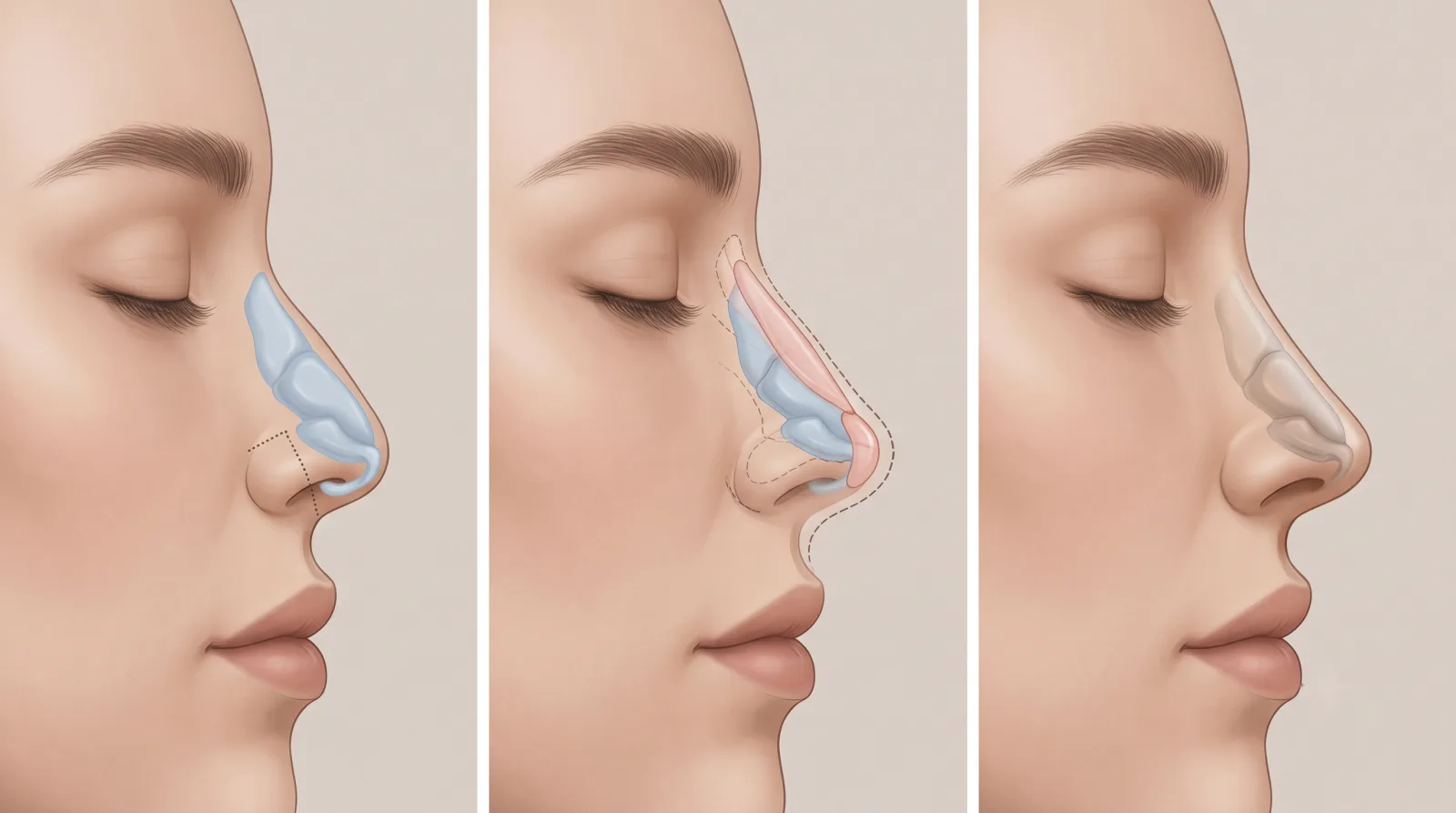
Illustration: the nasal framework (blue) is reshaped to raise the bridge and refine the tip. The dashed outline shows the original contour.
The first dressing change happens on day one, and a second on day three, when the surgeon checks healing and refreshes the support. Most swelling and any bruising around the eyes peak in these first two to three days and then begin to ease. Sleeping propped up on a couple of pillows, keeping cold compresses near the eyes and off the nose, and avoiding bending over all help the swelling settle faster.
Pain after rhinoplasty is usually milder than people fear. It is more a feeling of pressure, blockage and tightness than sharp pain, and is well controlled with the medication provided. The main job in these first days is rest, gentle care and letting the swelling crest and turn the corner.
First week
The first week — splint and sutures
The first week is the structured core of recovery, and it is the part you build your trip around. The external splint stays on to protect and hold the new shape, and the nose sutures generally come out at around seven days, at the same kind of visit the splint is removed. Taking the splint off is the moment you get your first real look at the new nose, though it will still be swollen and fuller than the final result.
Bruising, if you had any, is usually fading by the end of the first week, and the puffiness around the eyes settles noticeably. By days five to seven many patients already feel they could go out with a little concealment, even with the splint still on. Through this week it is important to avoid knocking the nose, to skip glasses that rest on the bridge, and to keep your face out of very hot water and steam.
By the end of week one the most acute phase is behind you: splint off, stitches out, breathing improving as the internal swelling recedes. The nose will look swollen and slightly upturned at this stage. That is normal and temporary, and the shape keeps changing.
Weeks 2–4
Weeks two to four — back to normal life
Once the splint is off, recovery becomes mostly invisible to other people. Over the second and third weeks the residual swelling continues to recede, the nose looks steadily more natural, and most patients feel comfortable in everyday situations and back at desk-based work. Any lingering bruising is typically gone, and the bridge starts to look cleaner and more defined.
This is the window where you can ease back toward normal activity, with sensible limits. Light routines are fine, but strenuous exercise, heavy lifting and anything that raises blood pressure in the face are best held off for several weeks, since they can worsen swelling. Glasses still need care so they do not press on the healing bridge, and sun protection becomes important to keep the skin and any healing settling evenly.
By around the four-week mark the nose looks natural enough for normal social life, photographs from a normal distance, and most day-to-day activities. Close inspection still shows some fullness, especially at the tip, but the dramatic part of the change, from swollen-and-splinted to natural-looking, has happened.
Work & flying
Returning to work and flying home
For desk-based work, many patients are comfortable returning after about one to two weeks, once the splint and sutures are out and any bruising has settled. Physically demanding jobs warrant a longer wait, in line with the same caution that applies to exercise. There is no single rule. It depends on your work, how visible you are happy to be, and how you heal.
For international patients the more important question is when to fly home, and the practical answer is to stay until at least the splint and sutures are out, roughly seven to ten days, so the surgeon can confirm healing is on track and the most acute swelling has settled before a flight. Flying with a very fresh surgical wound and peak swelling is most safely avoided, and a short buffer after the splint comes off is wise.
Garnet helps you plan this window so your stay covers the dressing changes, suture removal and a check before departure. You can talk through exactly how many days to budget, and how follow-up will continue after you leave, in an online consultation before you travel.
Months to a year
Months to a year — the nose settling
After the first month, recovery is no longer something other people notice. It is the slow internal process of swelling resolving and the skin re-draping onto the new framework. By around three months the nose looks natural and settled in everyday life, even though it has not finished refining. This is a reassuring checkpoint, but it is not the finish line.
The tip is the last part to define, because its thicker soft tissue holds swelling longer than the bridge. It can stay slightly firm or full for months after the rest of the nose looks settled, which is completely normal. The genuinely final, refined shape, and with it a fair before-and-after comparison, typically arrives at around 12 months, when the deep swelling has fully resolved and the contour is stable.
Knowing this long tail in advance is the ideal protection against early worry. The nose you see at a week is swollen, the nose at three months is natural, and the nose at a year is final. That gradual, predictable progression is how a healthy recovery is supposed to look.
At Garnet
How Garnet manages your recovery
Garnet is a single-surgeon clinic in Apgujeong, Seoul, where Dr. In-Soo Baek, a board-certified plastic surgeon (Korean medical licence no. 77407), consults, performs the operation himself and reviews every follow-up. Through recovery that continuity matters: the same surgeon who shaped the nose is the one doing your dressing changes, removing the sutures and assessing each stage of healing, so nothing is handed between doctors.
Recovery is structured into follow-ups at one, three and six months, which line up with the timeline above: the early settling, the natural three-month look, and the longer refinement of the tip. The clinic caps the day at two surgeries, so each visit is unhurried and you are not rushed through. A dedicated coordinator stays with you from consultation through recovery to help manage appointments and aftercare.
Garnet is registered with Korea's foreign-patient programme, and for international patients the follow-ups continue remotely after you fly home, with photos shared so the surgeon can keep tracking your healing from a distance. If you want to map out exactly how long to stay and what recovery would look like for you, you can start with a no-obligation online assessment before you plan a trip.
Real Results
Before & After
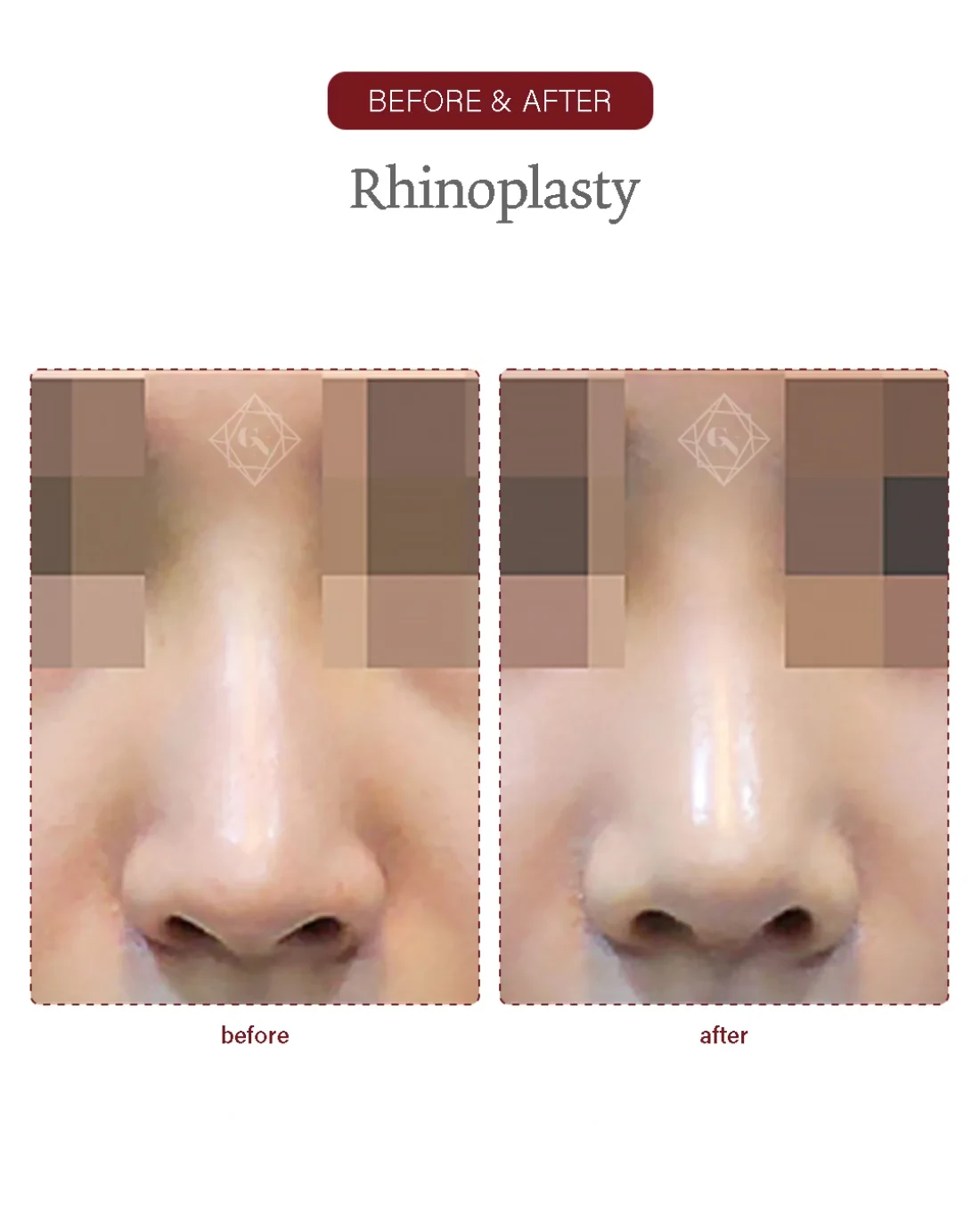
Rhinoplasty result of an actual Garnet patient (published with consent). Date, procedure and clinic (Garnet Plastic Surgery, Apgujeong) are labelled on the image, with the usual same-condition disclaimer. Results, recovery and suitability vary by individual and are not guaranteed.
Dr. In-Soo Baek
Director & sole operating surgeon
Korean medical licence no. 77407
Operate on what you came for. Trained at Korea University Medical Center. Every case planned, performed and reviewed by the same hands.
1Operating surgeon
~2Surgeries per day
7Registered techniques
Board-certified plastic surgeon
Plastic surgery training at Korea University College of Medicine & graduate school
Korean Society of Plastic and Reconstructive Surgeons member, in its facial-contour, eye & rhinoplasty groups
Consults, operates and follows up each case himself
Peer-reviewed papers behind the facts on this page. Each describes findings in its own study group — not results at Garnet — and none predicts your own outcome.
Hwang NH et al. Septal Extension Graft in Asian Rhinoplasty. Facial Plastic Surgery Clinics of North America. 2018. doi:10.1016/j.fsc.2018.03.007
Yap EC. Rhinoplasty for South East Asian Nose. Facial Plastic Surgery Clinics of North America. 2018. doi:10.1016/j.fsc.2018.03.012
Jin HR et al. Rhinoplasty in the Asian Patient. Clinics in Plastic Surgery. 2016. doi:10.1016/j.cps.2015.09.015
FAQ
Common questions
How long does rhinoplasty recovery take?
The structured first week covers the splint, two dressing changes and sutures out at around seven days. Bruising and swelling are usually presentable by one to two weeks. The nose then looks natural in everyday life by about three months and reaches its final, settled shape at around a year, with the tip the last part to refine.
What is rhinoplasty recovery like day by day?
Day one and day three are dressing changes, with swelling peaking early and then easing. Around day seven the splint and nose sutures come out, giving your first look at the new shape. Through the first week you avoid knocking the nose and wearing glasses. Weeks two to four bring a return to normal life as swelling recedes.
When can I return to work after rhinoplasty?
Many people return to desk-based work after about one to two weeks, once the splint and sutures are out and bruising has settled. Physically demanding jobs warrant a longer wait, alongside the same caution that applies to strenuous exercise. It depends on your work and how visible you are comfortable being.
When is it safe to fly home after rhinoplasty?
Plan to stay until at least the splint and sutures are out, roughly seven to ten days, so the surgeon can confirm healing is on track and the most acute swelling has settled before you fly. Flying with a very fresh wound and peak swelling is most safely avoided, and a short buffer after the splint comes off is sensible.
How long does the splint stay on?
The external splint or cast generally stays on for about a week and is removed at around the same visit the nose sutures come out, usually about seven days after surgery. Taking it off is your first real look at the new nose, though it will still be swollen at that point.
When do the stitches come out?
The nose sutures generally come out at around seven days, at the same kind of visit the splint is removed. Garnet schedules the dressing changes on days one and three and the suture removal so your stay in Korea covers them with a check before departure.
Is rhinoplasty recovery painful?
Most people find it milder than they feared. It is more a sense of pressure, congestion and tightness than sharp pain, and it is well controlled with the medication provided. The bigger early adjustment is breathing through your mouth and feeling blocked while internal swelling settles in the first days.
When will the swelling be completely gone?
Most obvious swelling lifts over the first one to two months, and the nose looks natural by around three months. Deeper swelling, especially in the thicker-skinned tip, resolves slowly toward the one-year mark, which is when the final shape and a fair before-and-after comparison are reached.
What aftercare follows rhinoplasty?
Keep the nose protected, sleep propped up early on, avoid glasses on the bridge, hot water, steam and strenuous activity for several weeks, and protect the skin from sun. Garnet's structured follow-ups at one, three and six months guide aftercare at each stage, continuing remotely with shared photos after you return home.
Can the same surgeon follow my recovery after I go home?
Yes. At a single-surgeon clinic the operating surgeon manages your recovery, and Garnet's follow-ups at one, three and six months continue remotely after you fly home, with photos shared so the surgeon can track your healing from a distance.
My mom recently had a brow lift and lower blepharoplasty with Dr. Baek, and our experience has been wonderful so far. The Garnet team was incredibly kind and welcoming, with Kelly assisting us as our English consultant—she made everything…
I’m so happy I chose this clinic for my lower blepharoplasty. I was traveling from abroad by myself, so I was a little nervous, but from the beginning I felt comfortable and truly cared for. Everyone was kind, patient, and professional…
Came in for an in-person consult and ended up choosing Garnet and Dr.Baek for my non-incisional DES and tiplasty/alarplasty. I communicated with Kelly (English consultant) from the start till now (3 weeks post-op). She really help me feel…
My under-eyes have been sagging and folding for years... I tried to cover it up with makeup, but it actually got stuck in the wrinkles and made it stand out even more. While going for consultations, I noticed that the bigger the hospital…
Send photos and your question before you travel. An English-speaking coordinator reviews every enquiry and replies with guidance on whether surgery is appropriate, the likely plan and timing.
✓ Reviewed by the clinic coordinator, not a bot
✓ Photo-based pre-assessment before you fly
✓ Foreign-patient scheduling & after-care
✓ One surgeon for consultation, surgery and follow-up
Prefer to chat now? Reach the coordinator directly:









 T S7 months ago



