Round eye correction addresses a rounded, pulled-down lower lid and the scleral show (the strip of white below the iris) that makes the eye look startled or tired, by re-supporting and re-shaping the lower lid and its outer corner. Because the lower lid is delicate and its position depends on healing and support, results can fall short or over: the show can remain or return, the corner can stay rounded, or the lid can be pulled too tight. Revision here is a careful decision on an unforgiving structure. This page sets out what round eye correction revision really involves and why waiting for a fully settled lid matters so much.
The short answer
The most common reasons to revise are scleral show or a rounded, pulled-down lower lid that remains or returns because the correction did not fully hold, and an overcorrected result where the lid is pulled too tight or up.
Others include a persistently rounded outer corner, a change in eye shape that does not match the other side, tightness or difficulty closing, or watering and irritation from lid position.
The fix is matched to the fault: re-supporting or re-tightening a lid that has drifted back, releasing and softening an overcorrected lid, and re-shaping the outer corner or matching asymmetry. The techniques focus on support more than on simply tightening skin.
This is a delicate lower-lid revision, so the assessment often concludes the lid must fully settle first, that only one side needs adjusting, or that a small residual show is better accepted than chased on already-operated tissue.
Round eye correction treats a rounded, downward-slanting lower lid and the scleral show it creates, that visible band of white beneath the iris, by re-supporting the lid, adjusting its outer corner and re-shaping the eye so it looks calmer and less startled. Because it works on the lower lid, which is thin, mobile and dependent on good support to sit against the eye, the final position is decided as much by how the lid heals and holds as by the surgery itself, which is why some results need refining.
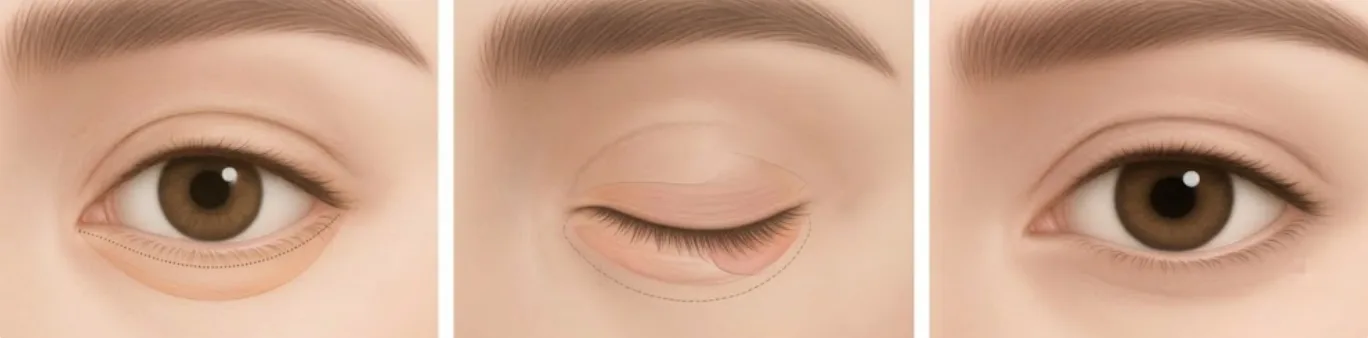
Illustration: the rounded, open lower-lid line is outlined and gently brought back toward a calmer, more natural eye shape.
The concerns fall into two broad camps. On the undercorrection side, the scleral show or the rounded, pulled-down shape can remain after surgery, or it can return over the following months if the lid's new support gradually relaxes; the tired or startled look people wanted resolved is still there. On the overcorrection side, the lid can be tightened or lifted too far, giving a pulled, over-tight or unnaturally narrowed look, and occasionally a lid that does not close as easily as it should.
A third group is about shape and symmetry: an outer corner that stays rounded when a sharper or more almond shape was intended, a change that leaves the two eyes looking different, or functional complaints such as watering, dryness or irritation because the lid sits slightly off. Separating these matters, because a lid that has drifted back, one that has been pulled too tight, and a corner that simply needs re-shaping each lead to a very different plan. This is delicate lower-lid work, where over-eager correction can create the opposite problem.
What settles
What settles on its own after round eye correction, and what does not
The lower lid is slow and dramatic in how it settles, and much of what alarms people early is normal. Swelling can make the lid look tight, high or oddly shaped, while at the same time some early droop or show can appear as the tissues relax before the support fully takes, so both an over-tight look and a residual show can be temporary. Firmness at the outer corner and a tugging or tight sensation on blinking are expected as the lid heals into its new position.
Early asymmetry is especially misleading here, because the two lids swell, bruise and settle at different rates and the outer corner takes time to soften and define. A difference in shape or show at a couple of weeks frequently evens out over the following weeks to a couple of months. Watering, mild irritation and a slightly tight feeling in the first weeks are also common as the lid adapts, and usually ease as swelling resolves. The recovery timeline sets out what is expected and over what timeframe.
What does not reliably settle on its own is scleral show or a rounded, pulled-down lid that clearly persists or returns once everything has calmed down, an overcorrected lid that stays pulled too tight or will not close comfortably after the early phase, a corner that remains rounded when it should have sharpened, or a genuine mismatch between the eyes at the end of settling. These are the concerns where revision is reasonably considered, after telling them apart from the slow, normal settling above, which on this lid can take a couple of months or more.
Under or over
Undercorrection versus overcorrection
Revision here is a spectrum, and the two ends need opposite corrections. When the correction has undercorrected (the show or the rounded shape remains, or the lid has gradually drifted back as its support relaxed), the fix is to re-support and re-tighten the lid so it sits properly against the eye again. The emphasis is on durable support of the lid margin and outer corner, with skin removal secondary, because a lower lid that lacks support is pulled down by gravity and tension no matter how much skin is trimmed.
When the correction has overcorrected (the lid is pulled too tight, sits too high, looks unnaturally narrowed, or does not close easily), the fix is the opposite: releasing the tension, softening the lid and, where too much was removed or the lid was over-tightened, restoring a more relaxed, natural position. Overcorrection is generally the harder problem, because releasing and re-balancing a tight lid, and sometimes replacing lost support or lining, is more demanding than tightening a loose one; this is a large part of why careful surgeons correct conservatively the first time.
Shape and symmetry sit alongside these: a rounded outer corner can be re-shaped toward the intended contour, and a mismatched eye is usually adjusted toward the other, leaving the matched side alone. What rarely helps is repeating the same operation as if the first had not happened. Matching the response to whether the lid is undercorrected, overcorrected or simply mis-shaped is the whole skill. Where the real issue is weak lid support or laxity, that is named plainly, because the durable answer is support. More tightening does not supply it. The method-explained page covers why support drives the result.
Timing
When to wait and when to act
Timing is the most important decision in this revision, and because the lower lid settles slowly and can shift in both directions during healing, the right answer for most concerns is to wait. In the first weeks and months the lid is still de-swelling, its new support is still maturing, and both an over-tight look and a residual show can still change on their own. Operating into a lid that is still settling, especially to loosen a tightness or chase a show that would have resolved, makes a clean correction harder and, on this unforgiving structure, risks converting one problem into its opposite.
As a general principle, a surgeon prefers to let a round eye correction settle for a couple of months at least before judging whether show or rounding truly persists, whether an overcorrection is fixed, and whether the two sides match, assessing a calm lid instead of a swollen one. Because scar and support continue to mature beyond that, revising a still-remodelling lower lid can restart the very tightening or contracture being corrected, so a careful surgeon will often ask for more time before committing to a redo.
There is a clear exception that is reviewed promptly: a lid that cannot close and leaves the eye exposed, persistent watering or dryness that threatens the surface, or signs of infection such as spreading redness, discharge or worsening pain, and any change in vision. Those are seen early because they affect the eye itself. For the far more common cosmetic concerns of residual show, a pulled look, a rounded corner or asymmetry, patience is the ally, and rushing a redo is the most common avoidable mistake.
Technique
What a careful redo involves
A careful revision begins with reading the first surgery and the current lid: what was done, whether the problem is undercorrection, overcorrection or shape, how much support the lid margin has, whether there is scarring or contracture pulling it, and how the lid moves and closes. Examining the lid in different gazes and testing how it snaps back reveals whether it lacks support and has drifted, or is over-tight and tethered, because the same-looking show or pull can have opposite causes needing opposite treatments.
For undercorrection, the surgeon re-supports and re-tightens the lid margin and outer corner so it sits against the eye durably, prioritising support over skin removal. For overcorrection, the work is to release the tension and scar that hold the lid too tight or too high, soften the contracture, and where support or lining was lost, restore enough for the lid to close and rest naturally. That is the more demanding of the two. A rounded corner is re-shaped toward the intended contour, and the two sides are balanced against each other. The recovery resembles a primary correction: swelling, bruising, tightness and a lid that settles over weeks to a couple of months, as covered in the recovery timeline.
Revision on the lower lid is more demanding than the first procedure: support is what matters most, overcorrection is hard to reverse, and scarring from the first operation is present. It is best done on a fully settled lid by an experienced surgeon working conservatively. Because a small amount of residual show or a slightly less-than-perfect corner is common and often better accepted than repeatedly operated on, the realistic goal is to improve the specific fault safely and protect how the eye closes. Chasing an idealised shape on already-operated tissue is not the aim.
At Garnet
How Garnet approaches round eye revision
Garnet is a single-surgeon clinic in Apgujeong, Seoul. Dr. In-Soo Baek is a board-certified plastic surgeon (Korean medical licence no. 77407) and the only operating doctor. He assesses each round eye revision, plans and performs it, and reviews every follow-up himself, with structured reviews at 1, 3 and 6 months. For a round eye revision, where telling undercorrection from overcorrection and protecting how the lid closes is so much of the judgement, that continuity matters: the surgeon who examines your lid is the one accountable for whether to wait, re-support, or release.
Revision assessment at Garnet is deliberately unhurried. That includes being willing to say that a slowly settling lower lid needs more time before any redo, that only one side needs adjusting, or that a small amount of residual show is better accepted than chased on a lid that has already been operated on. Protecting the eye's closure and comfort comes before chasing an idealised shape. There is no consultation fee and no pressure to book, because a sound lower-lid revision decision should never be rushed.
If you are considering correcting an earlier round eye correction from abroad, you can begin without travelling. Send your history and clear photos of the eyes in different gazes, plus how the lids close, for a pre-assessment, and read the guide for international patients for how stay length and remote follow-up are handled.
Real Results
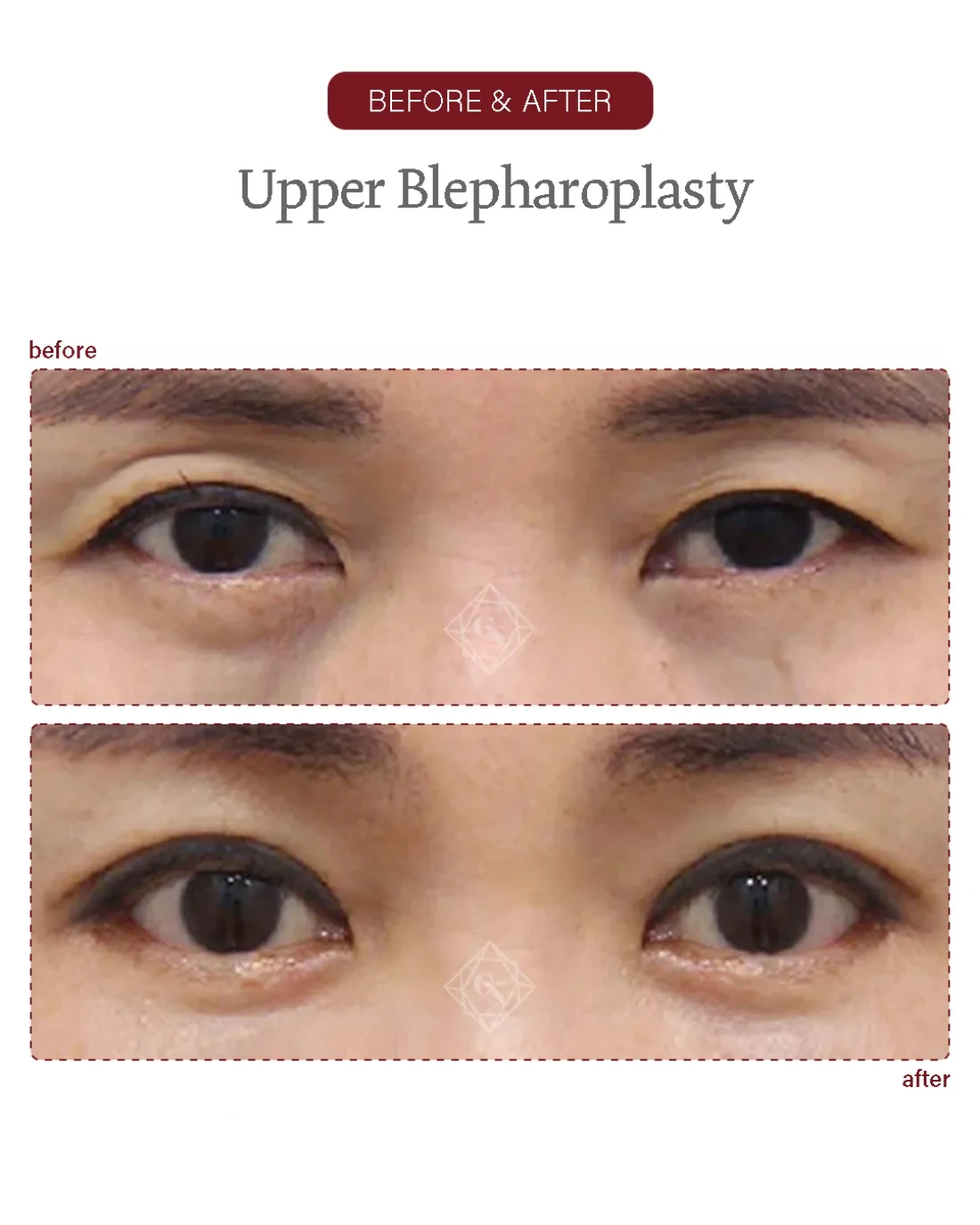
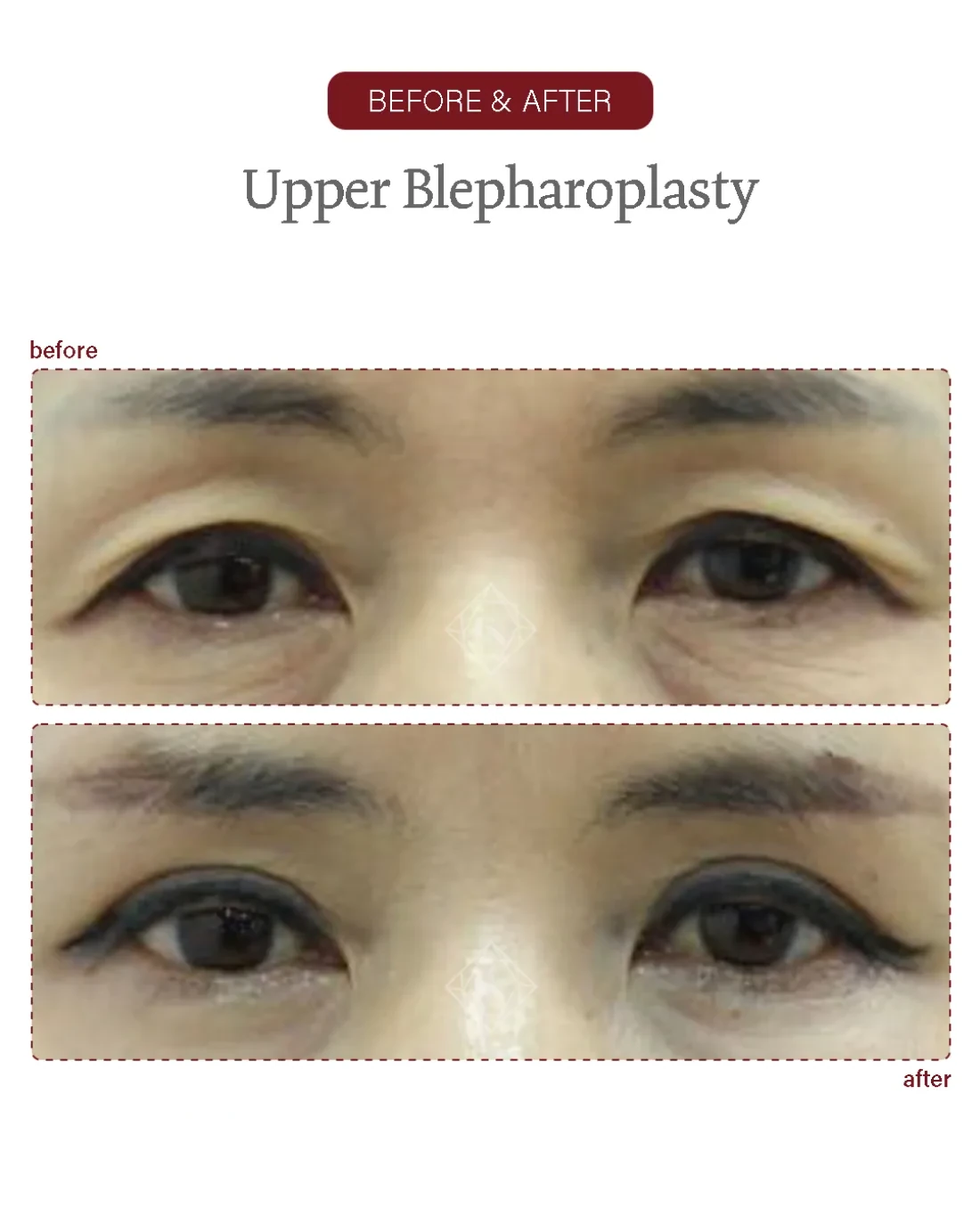
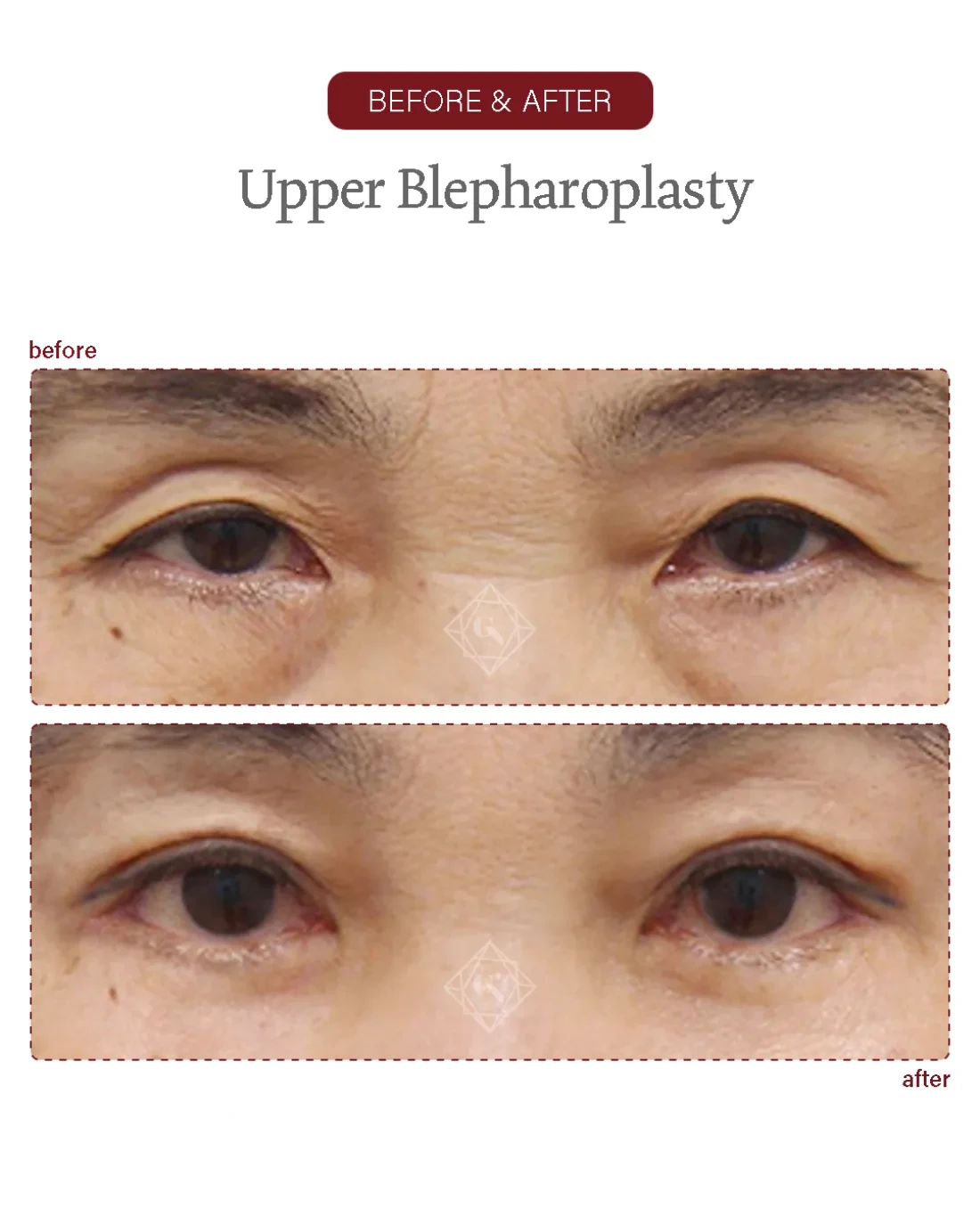
Before & After
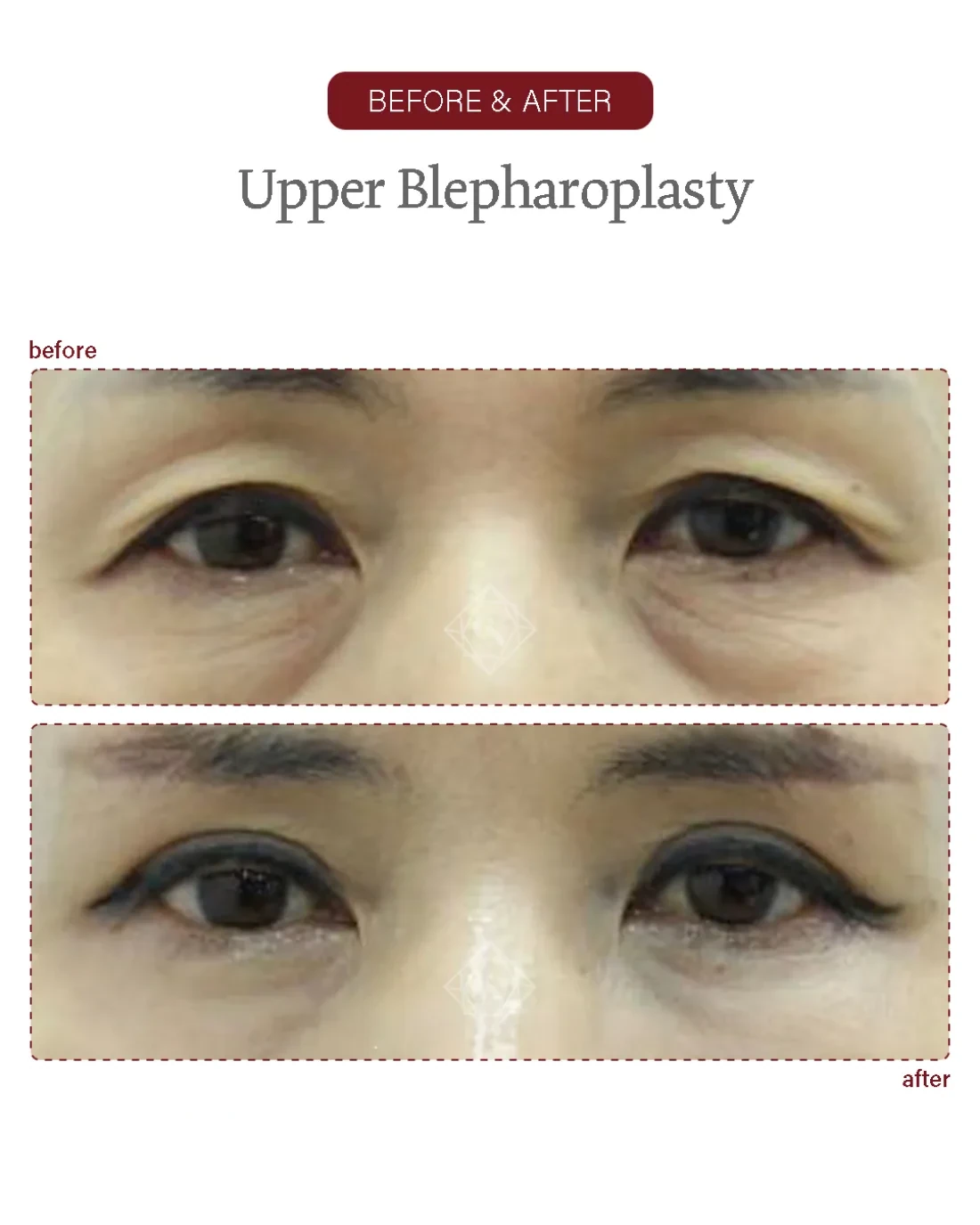
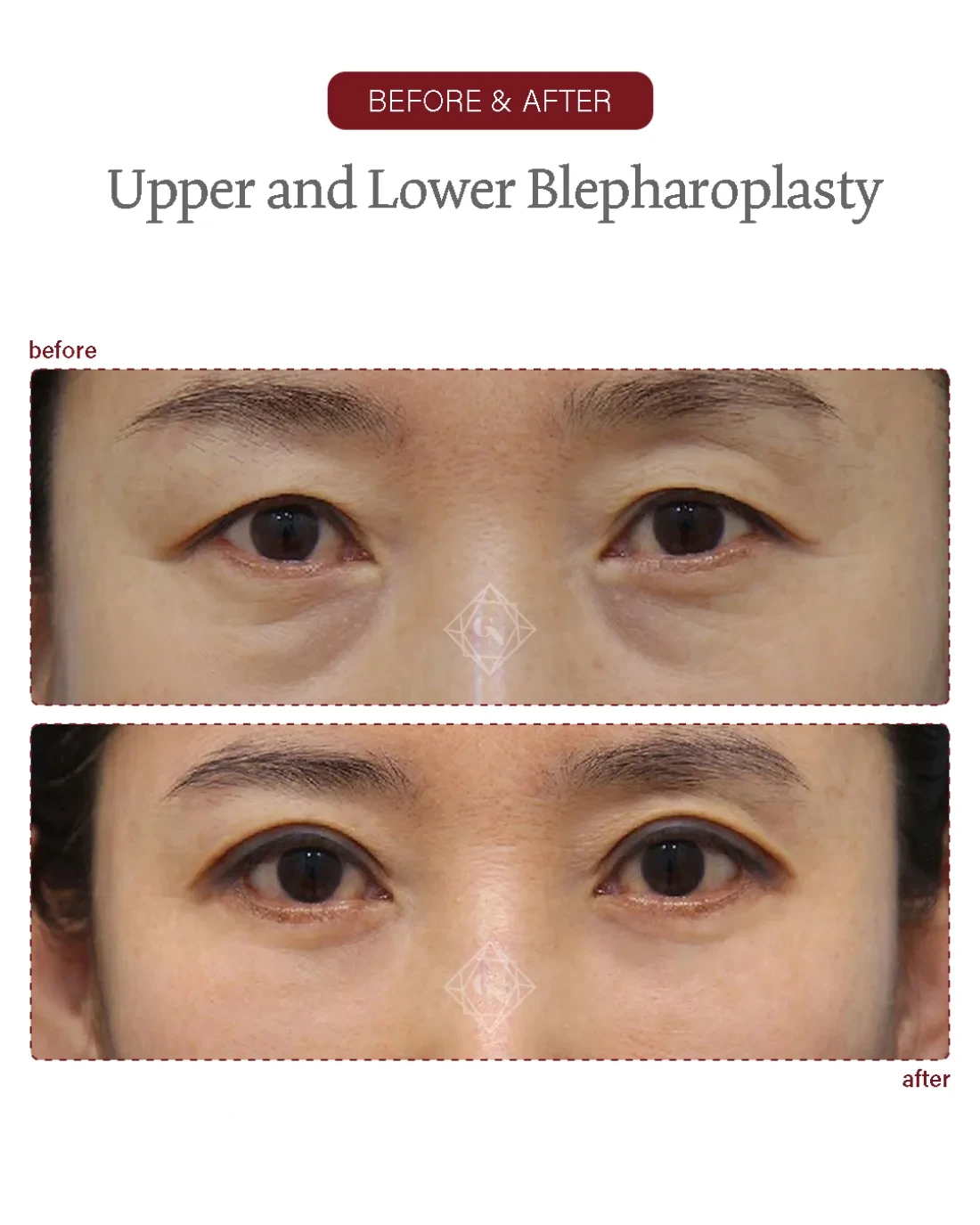
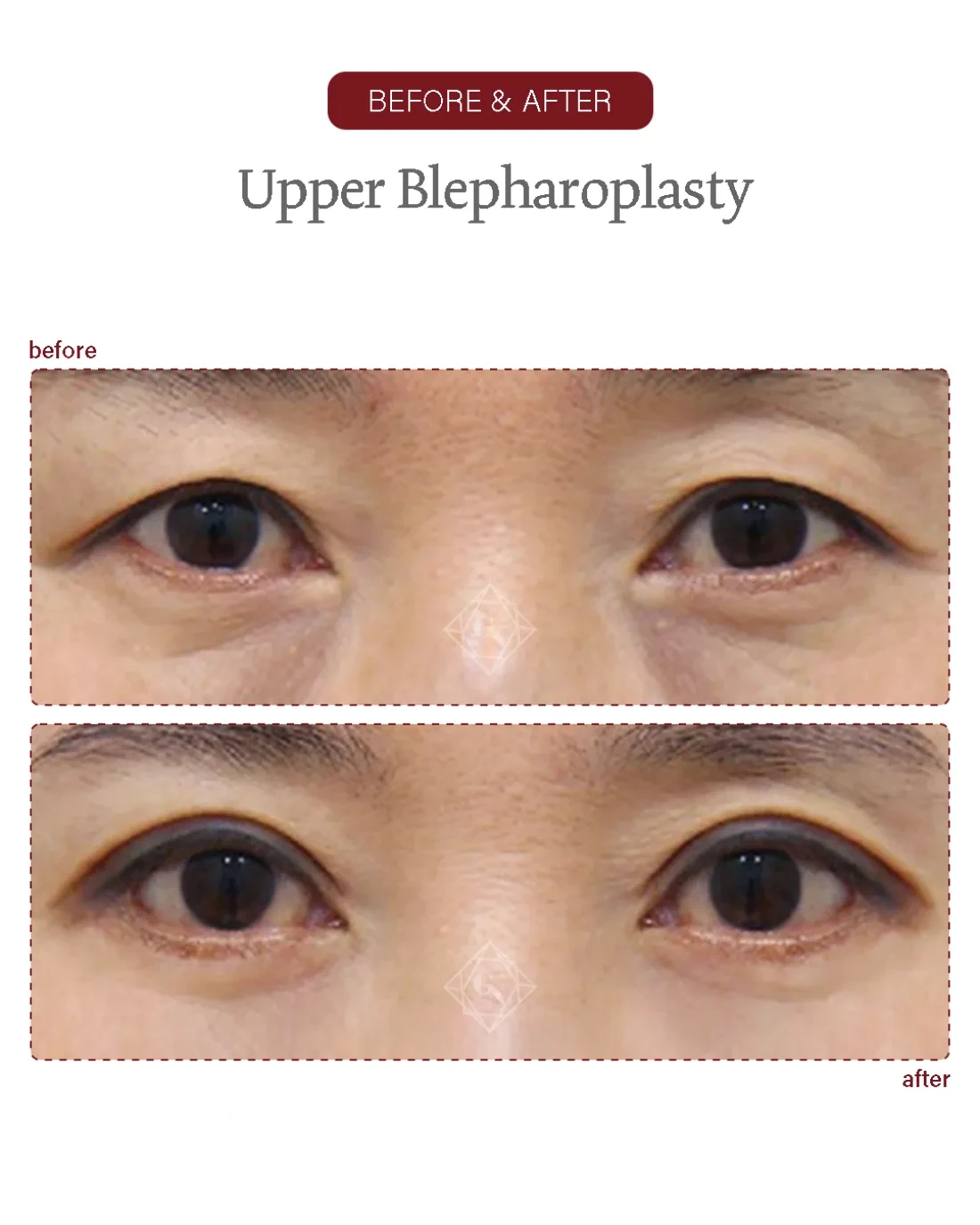
Eyelid before/after examples of actual Garnet patients (published with consent). Results, recovery and suitability vary by individual and are not guaranteed; the right approach depends on an in-person examination.
Prices
Price at Garnet
Lower blepharoplasty
From₩3,500,000 + VATExcluding VAT (10% VAT is added at payment)Book now
Same price as Korean patients. Prices shown exclude 10% VAT; your written quote, issued after the in-person consultation, shows the full amount payable.
Dr. In-Soo Baek
Director & sole operating surgeon
Korean medical licence no. 77407
Operate on what you came for. Trained at Korea University Medical Center. Every case planned, performed and reviewed by the same hands.
1Operating surgeon
~2Surgeries per day
7Registered techniques
Board-certified plastic surgeon
Plastic surgery training at Korea University College of Medicine & graduate school
Korean Society of Plastic and Reconstructive Surgeons member, in its facial-contour, eye & rhinoplasty groups
Consults, operates and follows up each case himself
Peer-reviewed papers behind the facts on this page. Each describes findings in its own study group — not results at Garnet — and none predicts your own outcome.
McCord CD et al. The Correction of Lower Lid Malposition Following Lower Lid Blepharoplasty. Plastic and Reconstructive Surgery. 1993. doi:10.1097/00006534-199311000-00011
Loeb R. Scleral show. Aesthetic Plastic Surgery. 1988. doi:10.1007/bf01570927
McCollough EG et al. Blepharoplasty: Avoiding Plastic Eyelids. Archives of Otolaryngology - Head and Neck Surgery. 1988. doi:10.1001/archotol.1988.01860180059030
FAQ
Common questions
Can a round eye correction be revised or corrected?
Often, yes, but it is delicate lower-lid work matched to the fault. An undercorrected lid with remaining or returning scleral show can be re-supported and re-tightened; an overcorrected, pulled-too-tight lid is released and softened; a rounded corner is re-shaped; and asymmetry is balanced. Because the lid is thin and its position depends on support and healing, revision should follow a careful assessment on a fully settled lid.
I still have scleral show after round eye correction — do I need revision?
Not necessarily yet. Some show can appear or persist early as the lid relaxes before its support fully takes, and it often improves as swelling resolves over weeks to a couple of months. Show that clearly persists or returns once the lid has settled may mean the correction did not hold, and the lid can be re-supported and re-tightened. But this is judged on a fully settled lid, because operating too early risks chasing a show that would have resolved.
My eye looks pulled too tight or won't close after round eye correction — can that be fixed?
This is reviewed carefully and, if the eye cannot close properly, promptly, because it affects the eye surface. Early tightness often eases as swelling resolves, but a genuinely overcorrected lid that stays pulled too tight or does not close is corrected by releasing the tension and scar, softening the lid, and restoring support or lining where needed. Overcorrection is harder to fix than a residual show, so it is assessed and planned conservatively.
What does round eye correction revision involve?
It depends on the fault. Undercorrection is corrected by re-supporting and re-tightening the lid margin and outer corner so it sits against the eye durably. Overcorrection is corrected by releasing tension and scar, softening the lid and restoring support or lining where lost. A rounded corner is re-shaped, and asymmetry is balanced toward the other side. Support of the lid, more than skin tightening, drives a lasting result.
When is round eye correction revision needed?
For early tightness, swelling and minor show or asymmetry, revision is rarely needed because these settle over weeks to a couple of months. Genuine reasons include show or rounding that clearly persists or returns, a lid pulled too tight or that will not close comfortably after the early phase, a corner that stays rounded, or a real mismatch. A lid that cannot close, or signs of infection or any vision change, are reviewed promptly.
How long should I wait before revising a round eye correction?
Usually a couple of months at least, because the lower lid settles slowly and can shift in both directions while its support matures, so both an over-tight look and a residual show can still change on their own. Revising a still-remodelling lid can restart tightening or contracture. The exception is a lid that cannot close, threatens the eye surface, or shows signs of infection, or any change in vision, which are reviewed promptly.
My outer eye corner is still rounded after surgery — can it be re-shaped?
Often, yes, once the lid has fully settled. The outer corner takes time to soften and define, so a corner that looks rounded at a few weeks may sharpen as swelling resolves. A corner that clearly remains rounded when a sharper contour was intended can be re-shaped toward the intended form during revision, judged on a calm lid and balanced against the other eye.
Is undercorrection or overcorrection harder to fix?
Overcorrection is generally harder. Undercorrection, a lid that has drifted back with remaining show, can often be improved by re-supporting and re-tightening it. Overcorrection means releasing tension and scar that hold the lid too tight, softening a contracture, and sometimes restoring support or lining that was lost, which is more demanding and less predictable. This is a large part of why careful surgeons correct conservatively the first time.
Will round eye revision affect how my eye closes?
Protecting lid closure is a priority in this revision from the start. Because the lower lid's job is to sit against and protect the eye, a careful surgeon prioritises support and comfortable closure over chasing an idealised shape, and would rather accept a small amount of residual show than over-tighten a lid so it cannot close. If closure is already impaired after an earlier surgery, restoring it takes precedence in the plan.
Can I get a round eye revision assessment from abroad before travelling?
Yes. You can send the history of your first surgery and clear photos of the eyes in different gazes, plus how the lids close, for a pre-assessment online before committing to travel, so you have a realistic view of whether the concern is undercorrection, overcorrection or shape, and whether waiting for the lid to fully settle serves you better first — before planning a trip.
My mom recently had a brow lift and lower blepharoplasty with Dr. Baek, and our experience has been wonderful so far. The Garnet team was incredibly kind and welcoming, with Kelly assisting us as our English consultant—she made everything…
I’m so happy I chose this clinic for my lower blepharoplasty. I was traveling from abroad by myself, so I was a little nervous, but from the beginning I felt comfortable and truly cared for. Everyone was kind, patient, and professional…
Came in for an in-person consult and ended up choosing Garnet and Dr.Baek for my non-incisional DES and tiplasty/alarplasty. I communicated with Kelly (English consultant) from the start till now (3 weeks post-op). She really help me feel…
My under-eyes have been sagging and folding for years... I tried to cover it up with makeup, but it actually got stuck in the wrinkles and made it stand out even more. While going for consultations, I noticed that the bigger the hospital…
If you are considering correcting or refining an earlier round eye correction, send your history and photos, including how the lids close, for a no-obligation pre-assessment with a frank view on whether the concern is undercorrection, overcorrection or shape, and whether waiting for the lower lid to settle serves you better.
Send photos and your question before you travel. An English-speaking coordinator reviews every enquiry and replies with guidance on whether surgery is appropriate, the likely plan and timing.
✓ Reviewed by the clinic coordinator, not a bot
✓ Photo-based pre-assessment before you fly
✓ Foreign-patient scheduling & after-care
✓ One surgeon for consultation, surgery and follow-up
Prefer to chat now? Reach the coordinator directly:









 T S7 months ago



