Round eye correction reshapes the lower-lid position to soften a rounded, scleral-show look, and recovery follows a familiar curve: swollen and bruised at first, presentable within a couple of weeks, and settling over months. Knowing each stage keeps your expectations realistic and your worry low.
The short answer
Round eye correction (lower-lid retraction correction) addresses a rounded outer eye and downward-pulled lower lid; recovery follows the same broad pattern as other lower-lid surgery.
Swelling and bruising are heaviest in the first days and ease over the first one to two weeks, with most people presentable for normal life within roughly two weeks.
The lower-lid position keeps refining over months; the settled result is fairer to judge at around three to six months.
Garnet's single board-certified surgeon reviews recovery at structured 1, 3 and 6-month follow-ups, with messenger check-ins after you fly home.
What round eye correction recovery is actually from
Round eye correction is a lower-lid retraction correction: it raises and reshapes a lower lid that sits too low, reducing the rounded, "scleral-show" appearance where white shows beneath the iris and the outer corner looks pulled down. Because the work is on the lower lid, the recovery course resembles other lower-lid surgery — swelling and bruising in the eyelid skin, a tight feeling at first, and a lower lid that needs time to settle into its new, higher position.
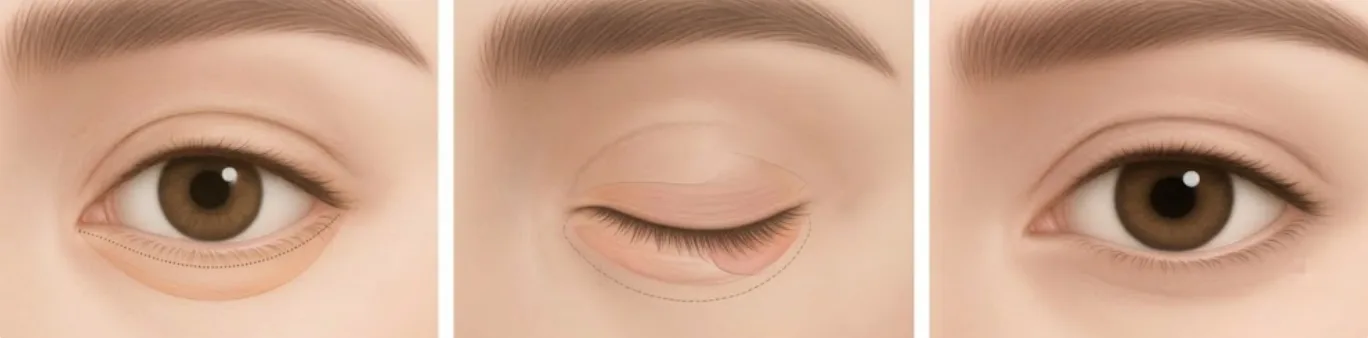
Illustration: the rounded, open lower-lid line is outlined and gently brought back toward a calmer, more natural eye shape.
Exact day counts are less useful here than knowing what kind of recovery this is, because the precise downtime depends on the extent of your correction and how your tissue heals. Round eye correction can range from a focused adjustment to a more involved reshaping, and the more that is done, the longer the early swelling lingers. Your surgeon gives you a realistic, personalised timeline at consultation — see online consultation from abroad.
This page stays on the recovery experience. For who the procedure suits and how the lid is reshaped, see the round eye correction page and the method explained. If you are weighing it against general lower-lid surgery, compare with lower blepharoplasty recovery.
First week
The first week: swelling, bruising and tightness
The first day or two are the peak of swelling. The lower lids feel tight and full, the eye may water or feel slightly gritty, and bruising develops in the eyelid skin and can spread toward the cheek before it fades. Cold compresses as directed, sleeping with your head elevated, and resting your eyes all help in this window. This stage looks the most dramatic and improves fastest, so it is the least representative of where you are heading.
Across the rest of the first week the swelling begins to come down and the bruising shifts colour as it resolves. If your correction involved external stitches, suture removal is typically scheduled within the early days to about a week depending on the technique your surgeon used — they will tell you the exact day, as it varies with the approach. It is normal in this week for the lower lid to feel stiff and for the eye to look puffier than the other if both were not treated identically.
Practical comfort matters now: keep the area clean as instructed, do not rub or pull at the lower lid, use any prescribed drops or ointment, and avoid bending, heavy lifting and strenuous activity that raise pressure around the eyes. Most people are not yet ready for work or social events in this first week, and that is expected.
Weeks 2-6
Weeks two to six: presentable, then refining
By around the end of the second week most people look presentable for normal life — the obvious bruising has faded or become easy to cover, and the heaviest swelling has receded. The lower lid still carries some puffiness and may feel firm, and close inspection shows the area is not finished, but you can usually function socially and return to non-strenuous routines around this point. Many international patients plan their stay so they pass this milestone before travelling home; see how long to stay in Korea.
From two to six weeks the lower-lid position keeps refining. Residual swelling settles, firmness softens, and the lid begins to sit where it was reshaped to sit. Temporary asymmetry between the two eyes is common at this stage if they healed at slightly different rates, and it usually evens out. You can ease back into light exercise as your surgeon clears you, while still protecting the eyes from knocks and from the sun.
This is also when patients start to see the change they came for — a less rounded outer eye and a lower lid that no longer looks pulled down — even though it is not yet the final result. Sun protection with sunglasses matters here for any external healing line; for where incisions sit and how marks fade, see lower blepharoplasty scars and healing, which covers the same lower-lid region.
Settling
The following months: the lid reaches its final position
Lower-lid tissue settles slowly, so the months after the early weeks are when the result truly declares itself. Deep residual swelling resolves, any firmness softens fully, and the lower lid reaches its stable, final position. For most people the settled result is fair to judge at around three to six months — earlier than that, you are still looking at a lower lid in transition.
Judging early can be misleading in both directions. A lid that looks slightly over-corrected or uneven at three weeks frequently looks balanced by three months once swelling clears. Equally, genuine concerns about lid position or symmetry are best assessed at the later follow-ups, when what you are seeing is settled tissue. Garnet's structured follow-ups at 1, 3 and 6 months are timed to these stages so the surgeon reviews the lid at the right moments.
Set your expectation as a curve: dramatic-then-improving in the first week, presentable by about two weeks, visibly better through the first weeks, and settled by three to six months. If a refinement is ever warranted, that conversation belongs at the mature stage, not in the swollen early weeks.
Aftercare
Aftercare and returning to work
The aftercare that matters most is simple and front-loaded into the first weeks. Keep the lower lid clean as instructed, use prescribed drops or ointment, sleep with your head elevated early on, apply cold compresses as directed in the first days, and avoid rubbing, stretching or pressing on the lid. Protect your eyes from the sun, wear sunglasses outdoors, and hold off on eye makeup until the surgeon confirms the surface is fully closed.
When you can return to work depends on the work. Desk-based or non-strenuous jobs are often manageable around the two-week mark once bruising is coverable and swelling has eased, while roles involving heavy lifting, dust, or strain warrant longer. Avoid swimming, saunas, intense exercise and anything that spikes pressure around the eyes until your surgeon clears you. Because the exact timing varies with how much correction you had, confirm your own return-to-work window with the surgeon; a fixed number would mislead.
If you are travelling home before the lid has fully settled, continuity of care closes the gap. The same operating surgeon can review your progress photos by messenger after you fly, with clear guidance on what is normal and what to flag. You can set that up through an online consultation, and plan timing with how long to stay in Korea.
At Garnet
How Garnet supports your recovery
Garnet is a single-surgeon clinic in Apgujeong, Seoul. Dr. In-Soo Baek is a board-certified plastic surgeon (Korean medical licence no. 77407) and the only operating doctor — he consults, performs the surgery himself and reviews every follow-up. For a procedure whose result depends on how the lower lid settles, that continuity matters: the surgeon who reshaped the lid is the one judging its recovery.
Follow-ups are structured at 1, 3 and 6 months, mapping onto the presentable, refining and settled stages of lower-lid healing. The clinic caps the day at two surgeries so each case has unhurried time, and is registered with Korea's foreign-patient programme, so consultation, scheduling and after-care are coordinated for international visitors. After you return home, the same surgeon can continue to review your recovery by messenger.
Because the precise downtime and return-to-work timing depend on your specific correction, the most useful step is to get a personalised timeline before you travel. You can send photos for a no-obligation pre-assessment through an online assessment, or read how the procedure works in the method explained.
Real Results
Before & After
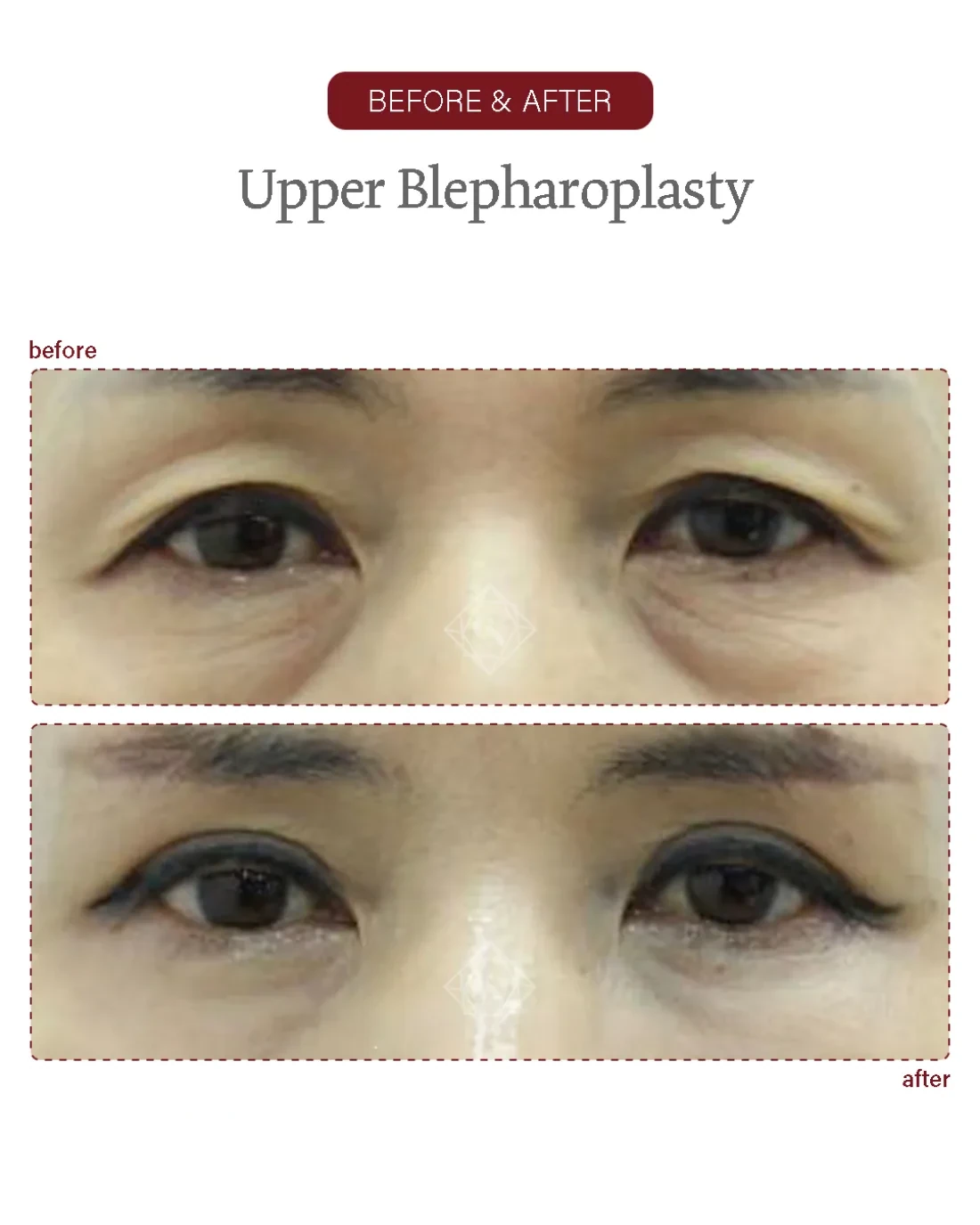
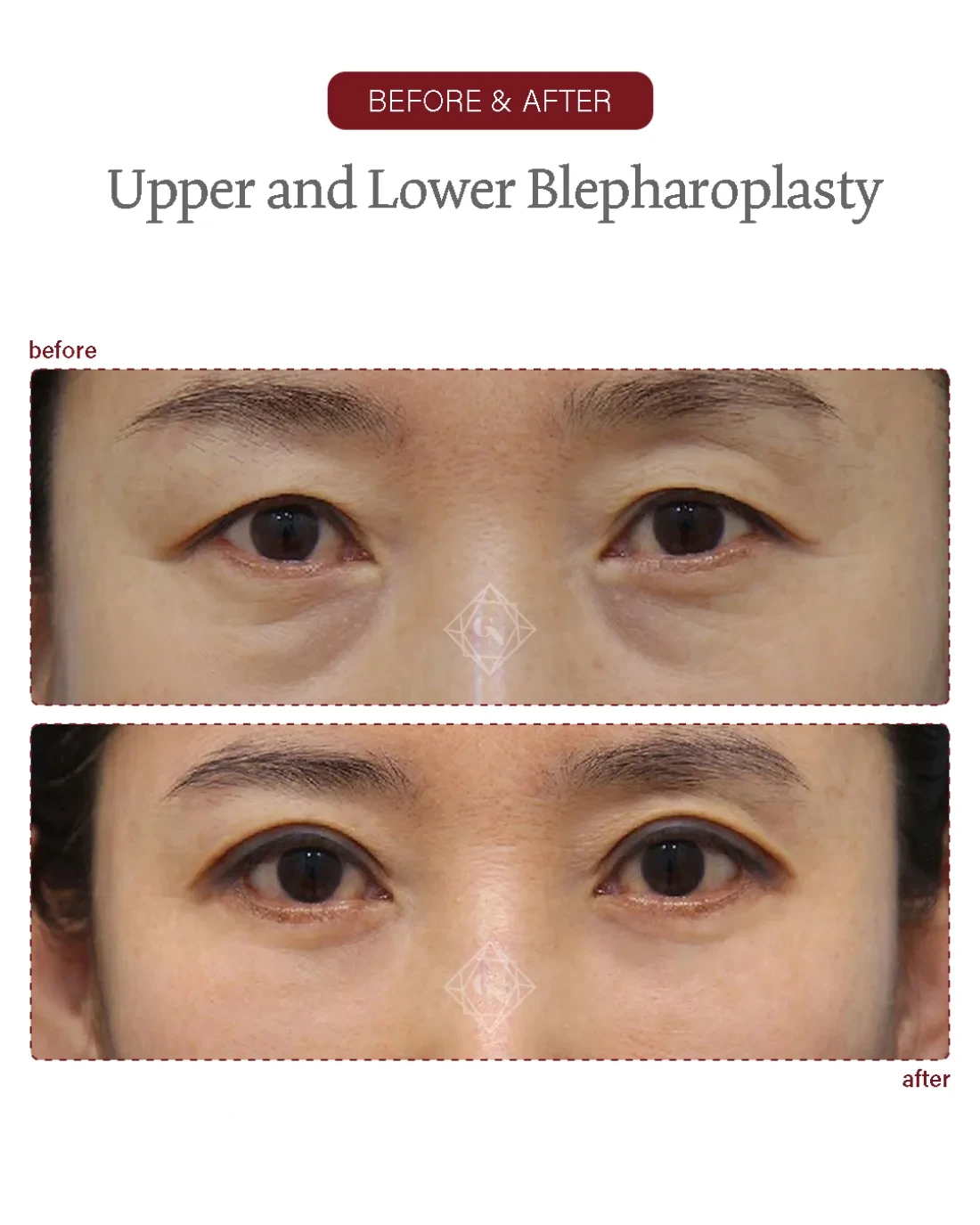
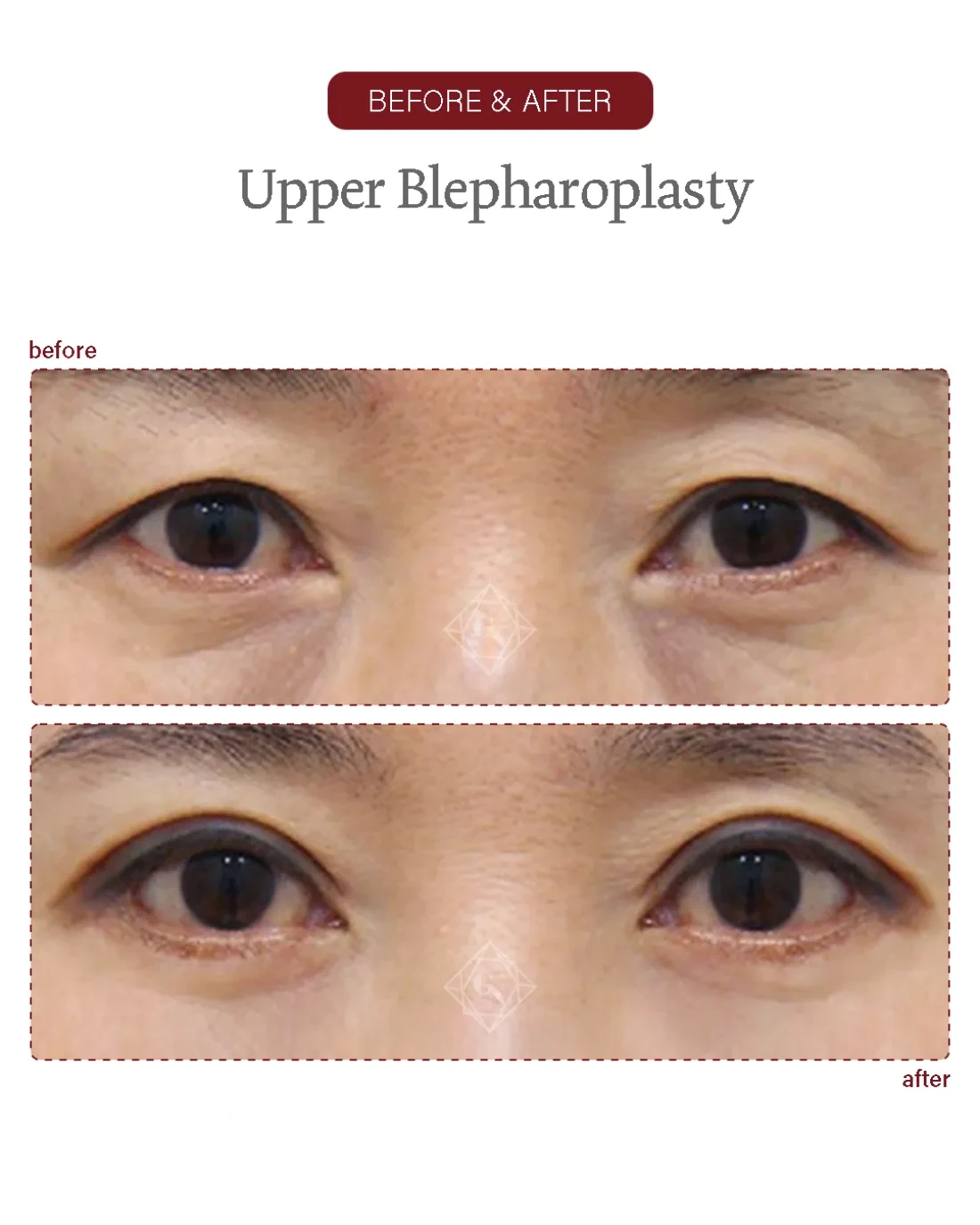
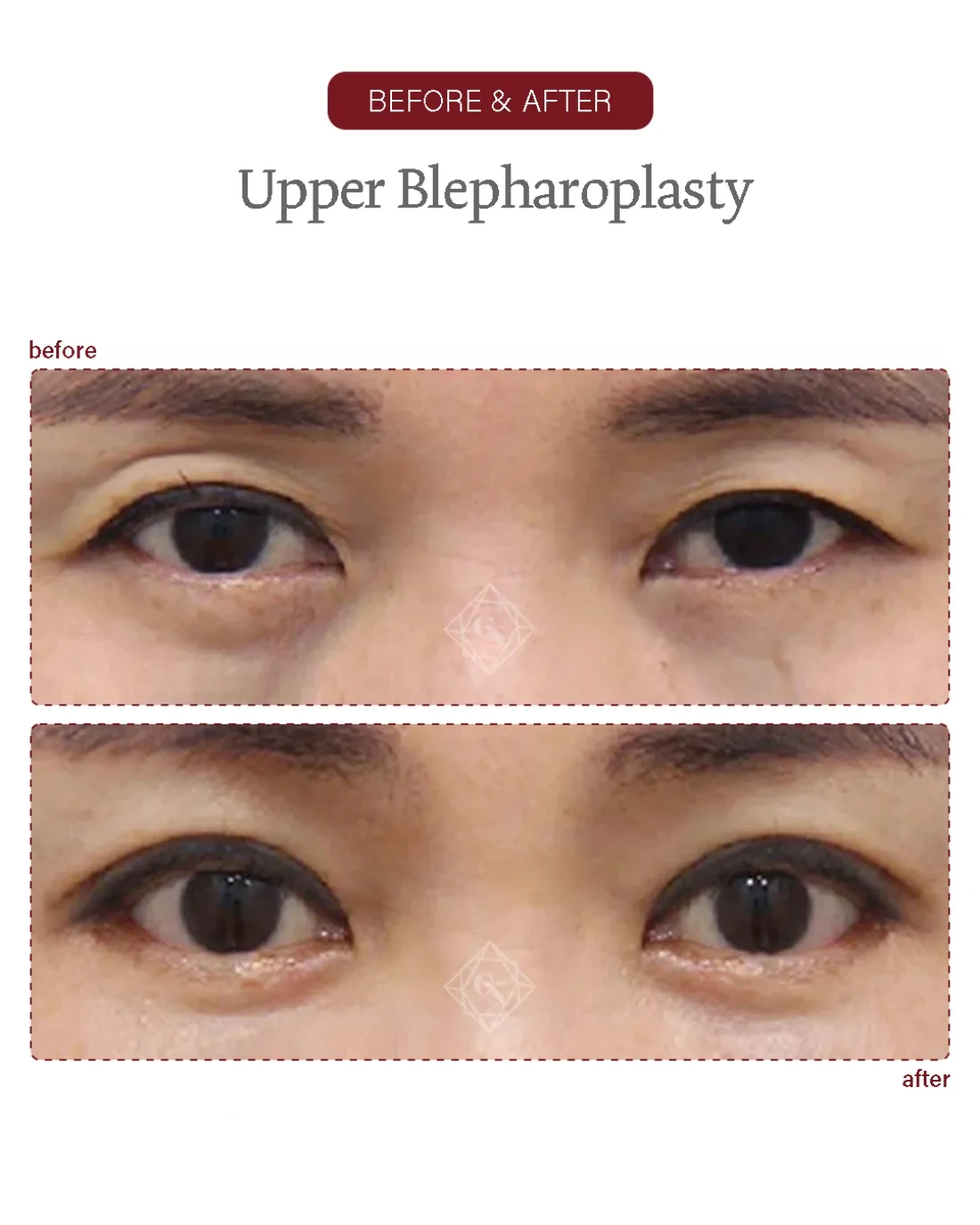
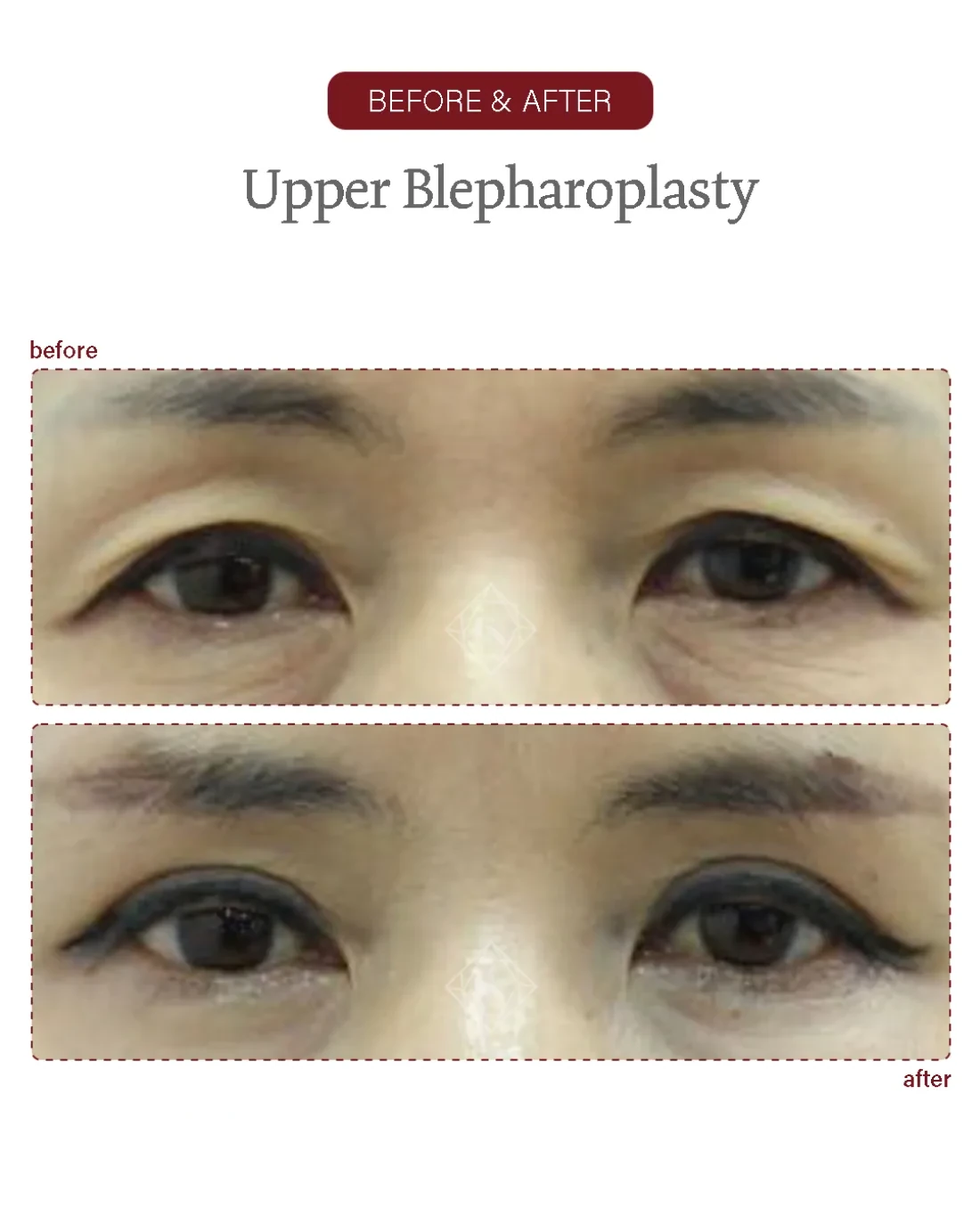
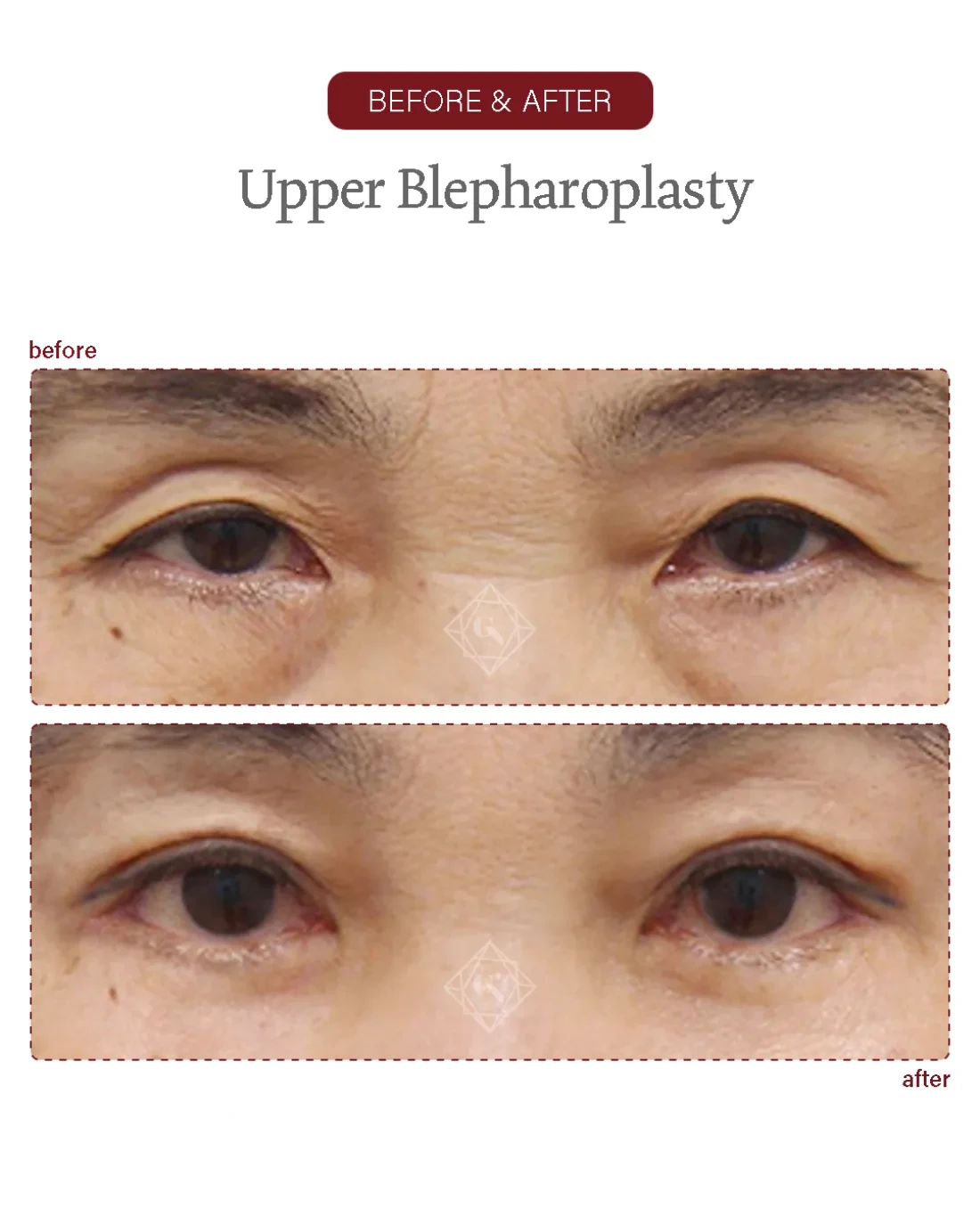
Eyelid before/after examples of actual Garnet patients (published with consent). Results, recovery and suitability vary by individual and are not guaranteed; the right approach depends on an in-person examination.
Prices
Price at Garnet
Lower blepharoplasty
From₩3,500,000 + VATExcluding VAT (10% VAT is added at payment)Book now
Same price as Korean patients. Prices shown exclude 10% VAT; your written quote, issued after the in-person consultation, shows the full amount payable.
Dr. In-Soo Baek
Director & sole operating surgeon
Korean medical licence no. 77407
Operate on what you came for. Trained at Korea University Medical Center. Every case planned, performed and reviewed by the same hands.
1Operating surgeon
~2Surgeries per day
7Registered techniques
Board-certified plastic surgeon
Plastic surgery training at Korea University College of Medicine & graduate school
Korean Society of Plastic and Reconstructive Surgeons member, in its facial-contour, eye & rhinoplasty groups
Consults, operates and follows up each case himself
Peer-reviewed papers behind the facts on this page. Each describes findings in its own study group — not results at Garnet — and none predicts your own outcome.
Pascali M et al. Tarsal Sling: An Essential Stitch to Prevent Scleral Show in Lower Blepharoplasty. Aesthetic Surgery Journal. 2015. doi:10.1093/asj/sju018
Stanciu NA et al. Revision Blepharoplasty. Clinics in Plastic Surgery. 2013. doi:10.1016/j.cps.2012.06.006
Lassus C. An easy canthoplasty. Aesthetic Plastic Surgery. 1996. doi:10.1007/bf02275533
FAQ
Common questions
How long does round eye correction recovery take?
Recovery follows a curve: swelling and bruising are heaviest in the first few days and ease over the first one to two weeks, with most people presentable for normal life by around two weeks. The lower lid keeps refining over months, and the settled, final result is fair to judge at around three to six months. Exact downtime depends on the extent of your correction.
What is round eye correction recovery like day by day?
Day one to two is peak swelling, tightness and developing bruising. Across the first week swelling comes down and bruising fades; stitches, if external, are usually removed within the early days to about a week depending on technique. By the second week most people look presentable, and from two to six weeks the lid refines, with full settling over the following months.
When can I return to work after round eye correction?
Desk-based or non-strenuous work is often manageable around the two-week mark, once bruising is coverable and swelling has eased. Jobs involving heavy lifting, dust or strain warrant longer. Because timing varies with how much correction you had, ask your surgeon for your own return-to-work window instead of assuming a fixed number.
What aftercare follows round eye correction?
Keep the lower lid clean as instructed, use prescribed drops or ointment, sleep with your head elevated early on, use cold compresses as directed in the first days, and avoid rubbing or pressing the lid. Protect your eyes from the sun, wear sunglasses, and hold off on eye makeup until the surgeon confirms the surface is fully closed.
How long does bruising and swelling last?
Bruising and the heaviest swelling are worst in the first few days and largely fade or become coverable over the first one to two weeks. Some puffiness and firmness in the lower lid persist longer, with deeper residual swelling settling over the following months as the lid reaches its final position.
When will I see the final result of round eye correction?
An improvement is visible through the first weeks, but the lower lid keeps settling over months. The final, stable result is fair to judge at around three to six months, once residual swelling has resolved and any temporary asymmetry has evened out. Judging earlier can be misleading because the lid is still in transition.
Is it normal for one eye to heal faster than the other?
Yes. The two lower lids can heal at slightly different rates, so temporary asymmetry in the first weeks is common and usually evens out over the following months. Symmetry and final lid position are best assessed at the later follow-ups rather than in the early swollen stage.
When are the stitches removed after round eye correction?
If your correction involved external stitches, suture removal is typically scheduled within the early days to about a week, depending on the technique your surgeon used. Your surgeon confirms the exact day for your case, as it varies with the approach taken.
How long should I stay in Korea after round eye correction?
Many international patients stay long enough to pass the early swelling and any suture removal, often around the two-week mark when they look presentable, before travelling home. The lid continues to settle at home, with later follow-ups handled by messenger. See our how long to stay in Korea guide for planning.
Who reviews my recovery if I have flown home?
At Garnet the same board-certified surgeon who operated reviews your recovery at structured 1, 3 and 6-month follow-ups and can continue to check your progress photos by messenger after you return home, so the person who reshaped the lid is the one guiding your recovery.
My mom recently had a brow lift and lower blepharoplasty with Dr. Baek, and our experience has been wonderful so far. The Garnet team was incredibly kind and welcoming, with Kelly assisting us as our English consultant—she made everything…
I’m so happy I chose this clinic for my lower blepharoplasty. I was traveling from abroad by myself, so I was a little nervous, but from the beginning I felt comfortable and truly cared for. Everyone was kind, patient, and professional…
Came in for an in-person consult and ended up choosing Garnet and Dr.Baek for my non-incisional DES and tiplasty/alarplasty. I communicated with Kelly (English consultant) from the start till now (3 weeks post-op). She really help me feel…
My under-eyes have been sagging and folding for years... I tried to cover it up with makeup, but it actually got stuck in the wrinkles and made it stand out even more. While going for consultations, I noticed that the bigger the hospital…
Want a recovery timeline tailored to your eyes? Send photos for an honest, no-obligation pre-assessment of round eye correction before you plan a trip.
Send photos and your question before you travel. An English-speaking coordinator reviews every enquiry and replies with guidance on whether surgery is appropriate, the likely plan and timing.
✓ Reviewed by the clinic coordinator, not a bot
✓ Photo-based pre-assessment before you fly
✓ Foreign-patient scheduling & after-care
✓ One surgeon for consultation, surgery and follow-up
Prefer to chat now? Reach the coordinator directly:









 T S7 months ago



