A thread lift is done under local anaesthesia, and the soreness afterwards is mild, most noticeable on day 1 or 2 and short-lived. That makes it one of the more comfortable lifting options. “Is it going to hurt?” is still the first thing most people ask, and it is a fair question; during the procedure itself, what you feel is mostly pressure. This page explains exactly what to expect, step by step.
The short answer
A thread lift is performed under local anaesthesia. You are awake and comfortable throughout.
Most of what you feel during the procedure is pressure and tugging as the threads are placed.
Afterwards, expect mild tightness, tenderness and a pulling sensation for a few days, controlled with simple over-the-counter pain relief.
At Garnet the same board-certified surgeon places every thread and reviews your comfort at follow-up, so nothing about your pain is handed off.
A thread lift is a minimally invasive procedure, and it is performed under local anaesthesia. General anaesthesia is used for a surgical facelift. The areas where the threads will pass are numbed with a local anaesthetic, often combined with a topical numbing cream applied first to take the edge off the initial injections. You stay awake and aware the whole time, and you can talk to the surgeon during the procedure.
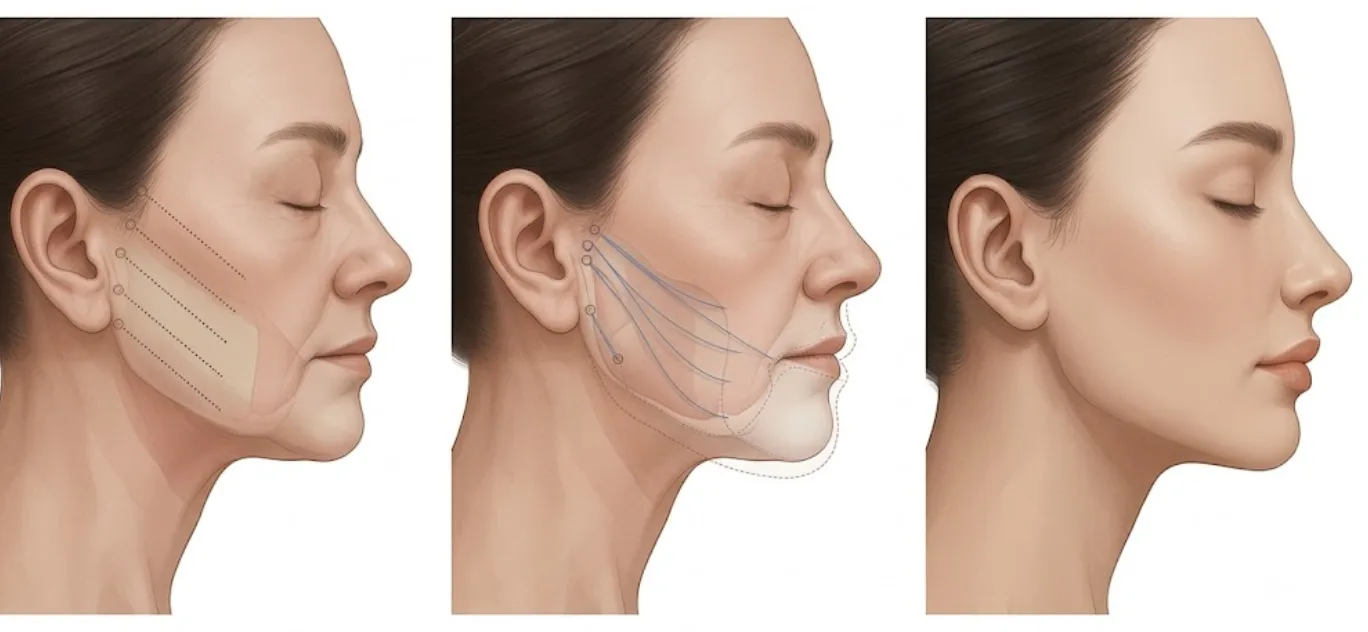
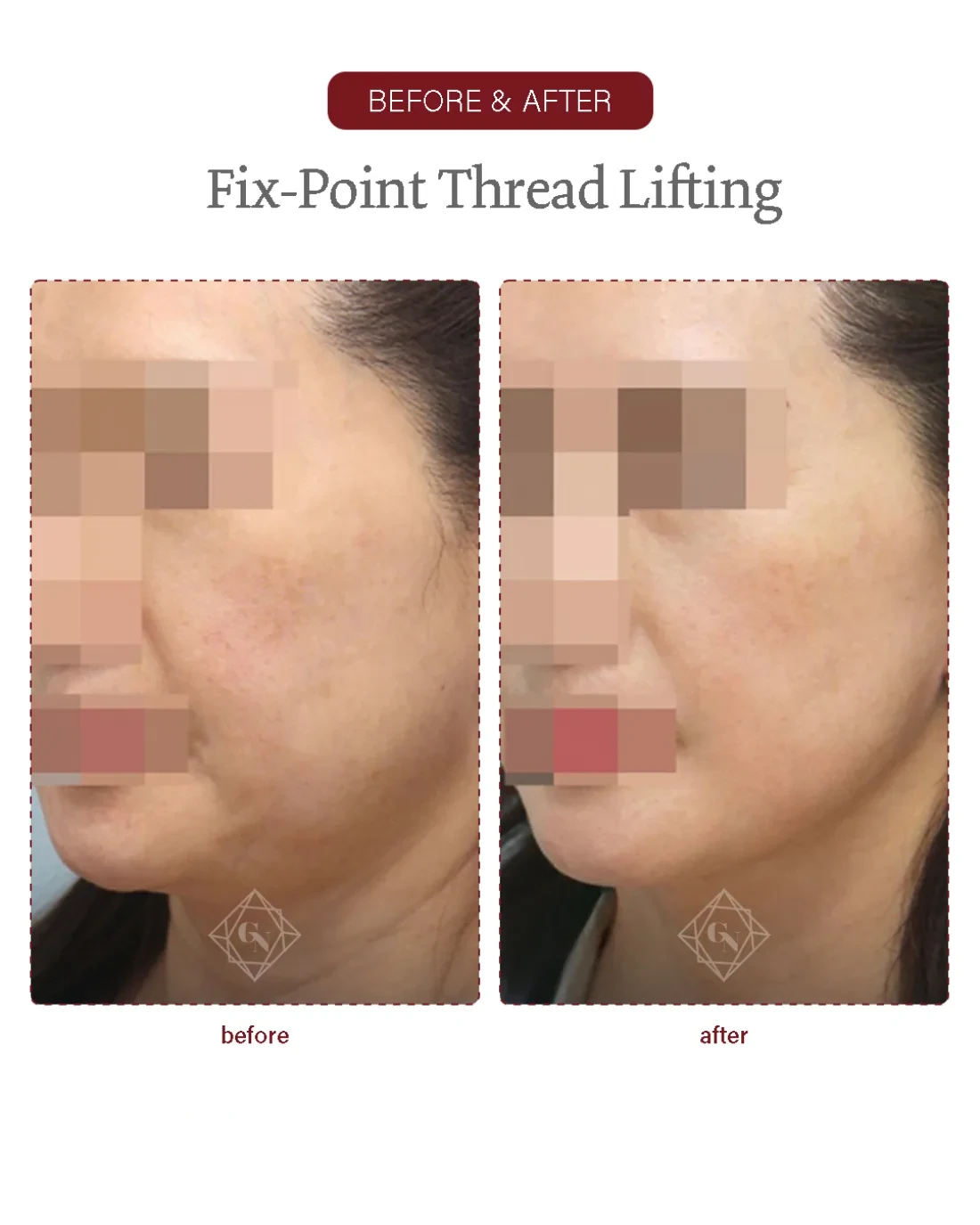
Illustration: barbed threads are placed along the paths shown and anchored at fixed points to lift early laxity of the lower face (Fixpoint Thread Lift™).
Because there is no general anaesthesia, you avoid the grogginess, nausea and longer monitoring that come with being put fully to sleep, and you can usually walk out and go back to your accommodation the same day. The numbing injections themselves are the part most people notice; once the area is numb, the placement of the threads is felt as movement and pressure.
If you are anxious about needles, that is worth raising at your consultation. The surgeon can explain the sequence in advance and work at a pace that suits you. A thread lift is an unhurried, single-session procedure.
During
What does a thread lift actually feel like?
Garnet uses a Fixpoint™ fixed-point barbed thread suspension technique, where the threads are introduced through small cannula entry points, with no open incisions. Once the area is numbed, a fine cannula is passed under the skin and the barbed thread is anchored and drawn upward to suspend the tissue. What you feel at this stage is mostly pressure, tugging and a sensation of movement as the thread is positioned and tightened. It is milder than the sharp pain people often imagine.
Some people describe a brief pulling or “stretching” feeling as each thread is set and the lift is dialled in. It can feel slightly odd because you are aware of it, but it is well tolerated under local anaesthesia. The cannula entry points are tiny, so there is no long incision being made and no stitching of a wound in the way a cut-and-lift surgery requires.
The whole procedure is typically completed in well under an hour, depending on how many threads are placed and which areas are being treated. Because you are awake, the surgeon can ask you to make small movements or check symmetry as they work. That is not possible under general anaesthesia.
Afterwards
How much does it hurt afterwards?
Once the local anaesthetic wears off over the first few hours, most people feel mild tightness, tenderness and a pulling sensation, and few feel significant pain. The face can feel “tight” or slightly bruised to the touch, and you may notice the pulling most when you open your mouth wide, chew firmer food, or smile broadly. This is the threads doing their job: holding the tissue in its new position.
There is usually some swelling and occasionally a little bruising around the cannula entry points and along the line of the threads, and small dimples or puckering of the skin can appear in the first days as everything settles. The discomfort is generally at its most noticeable on the first day or two and then eases steadily. By the end of the first week most people describe the feeling as awareness rather than pain.
Everyone’s threshold and healing are different, so no clinic can promise a precise day count in advance. What is consistent is the pattern: a comfortable procedure, mild soreness for a few days, then a gradual return to normal sensation. The detailed week-by-week picture is covered in our thread lift recovery timeline.
Managing it
Managing the soreness day to day
The soreness after a thread lift is usually controlled with simple over-the-counter pain relief; strong prescription medication is rarely needed. Your surgeon will advise on what to take and what to avoid. Some clinics prefer you steer clear of medicines and supplements that thin the blood in the first days, as these can add to bruising. A cold compress used gently (not pressed hard onto the threads) can help with swelling early on.
A few simple habits reduce discomfort: sleep with your head slightly raised for the first nights, avoid wide mouth movements and very chewy or hard foods for a week or so, skip vigorous exercise and saunas while you settle, and avoid massaging, rubbing or sleeping face-down on the treated area so the threads can anchor. Avoiding wide facial expressions also helps the pulling sensation fade faster.
Because a thread lift is felt mostly as tightness, the goal is to let the tissue rest in its lifted position. Most people are comfortable returning to desk work and normal daily activity within a couple of days, with the residual tight feeling fading over the following week or two. If you are an international patient timing a trip, build in a few quiet days; see our guide for international patients.
Normal vs not
What is normal discomfort — and what is not
Mild tightness, tenderness, a pulling sensation, light swelling and small bruises around the entry points are all expected and settle on their own. Slight asymmetry or minor skin dimpling in the first days is also common as the lift beds in. None of this should alarm you; it is part of normal healing after the threads are placed.
What is not expected is pain that steadily worsens after the first couple of days instead of improving, spreading redness or heat, discharge from an entry point, a fever, or a thread becoming visible or extruding through the skin. These are uncommon, but they are reasons to contact the clinic promptly. Good after-care means knowing the difference and having someone to ask.
This is where continuity matters. Because Garnet is a single-surgeon clinic, the surgeon who placed your threads is the one who answers these questions: in person if you are still in Seoul, or by messenger after you have flown home, with clear guidance on what to watch for and when to seek local care.
At Garnet
How Garnet keeps a thread lift comfortable
Garnet is a single-surgeon clinic in Apgujeong, Seoul. Dr. In-Soo Baek is a board-certified plastic surgeon (Korean medical licence no. 77407) and the only operating doctor. He consults, places every thread himself using the Fixpoint™ fixed-point technique, and reviews your comfort and healing at structured follow-ups at 1, 3 and 6 months. The clinic deliberately keeps the day unhurried, so your procedure is not rushed and there is time to numb the area properly and work gently.
Comfort is partly about the technique and partly about not being handed between people. Because the same surgeon plans, performs and follows up, your anaesthesia, your thread placement and your after-care advice all come from one person who knows your face. There is no uncertainty about who is in the room. If anything feels off in the first weeks, you contact the surgeon who treated you directly.
If you are weighing a thread lift against a surgical option, it is worth understanding the trade-off in both comfort and longevity; compare with a mini facelift. You can ask about pain, anaesthesia and recovery in a no-obligation online consultation before you travel.
Real Results
Before & After
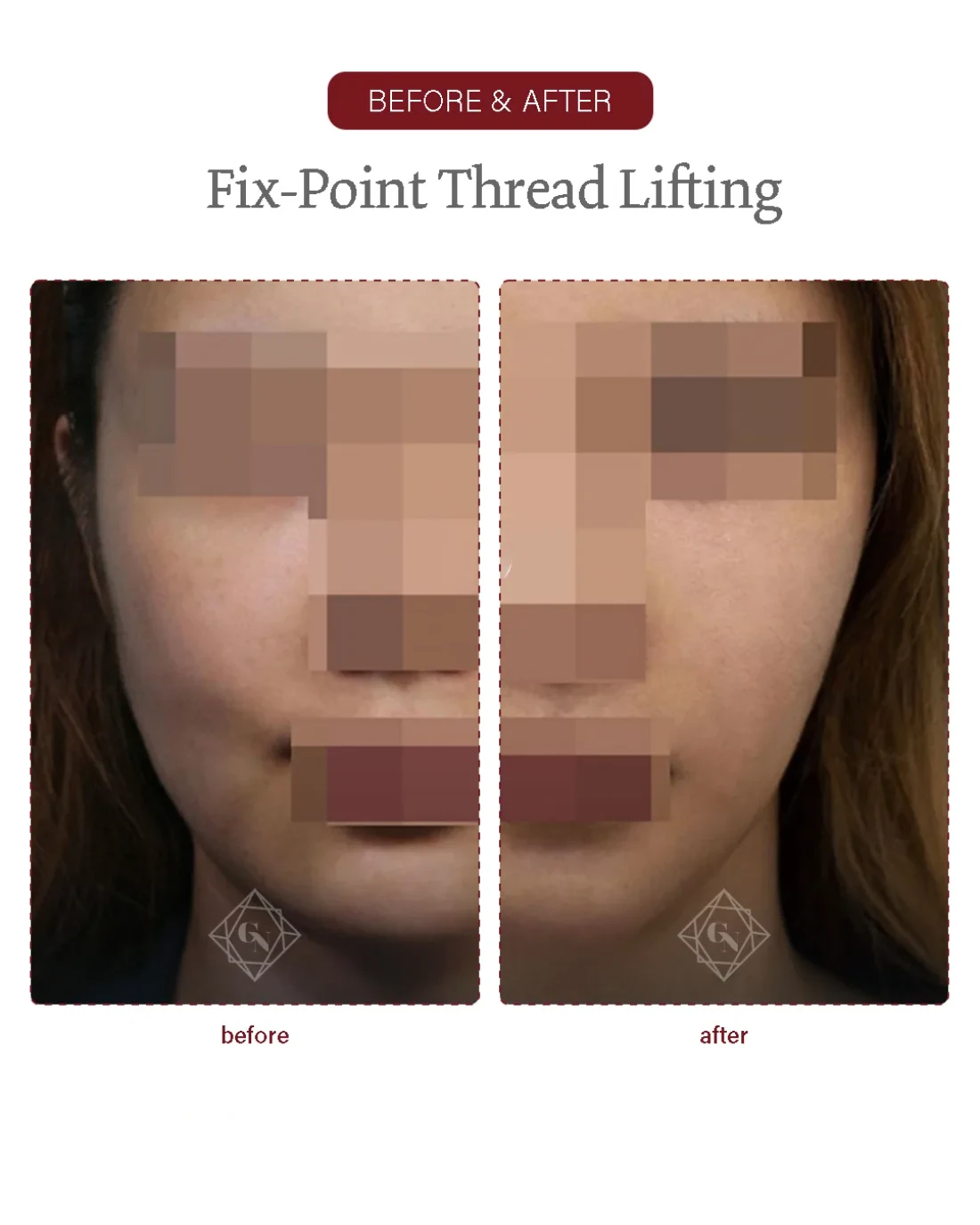
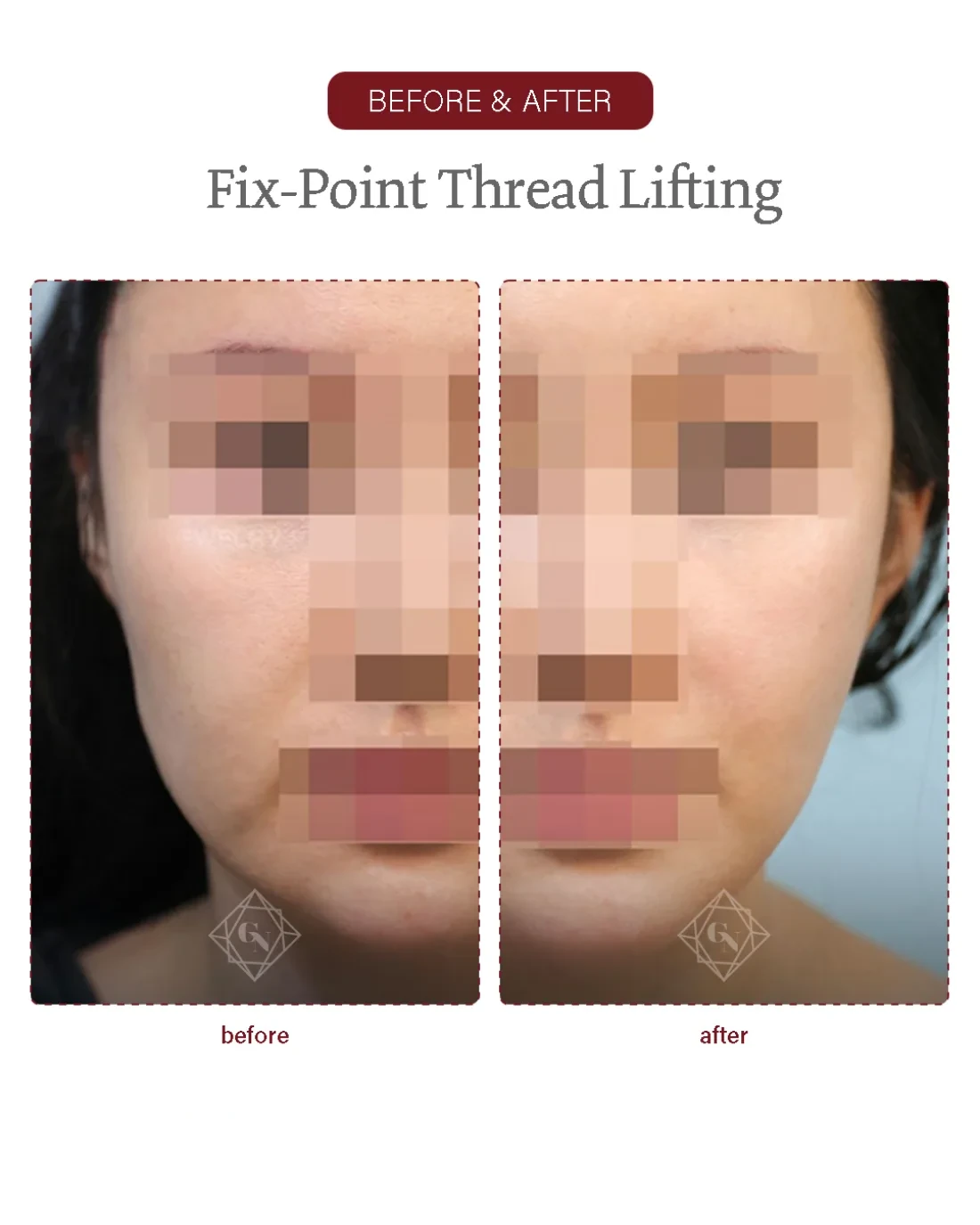
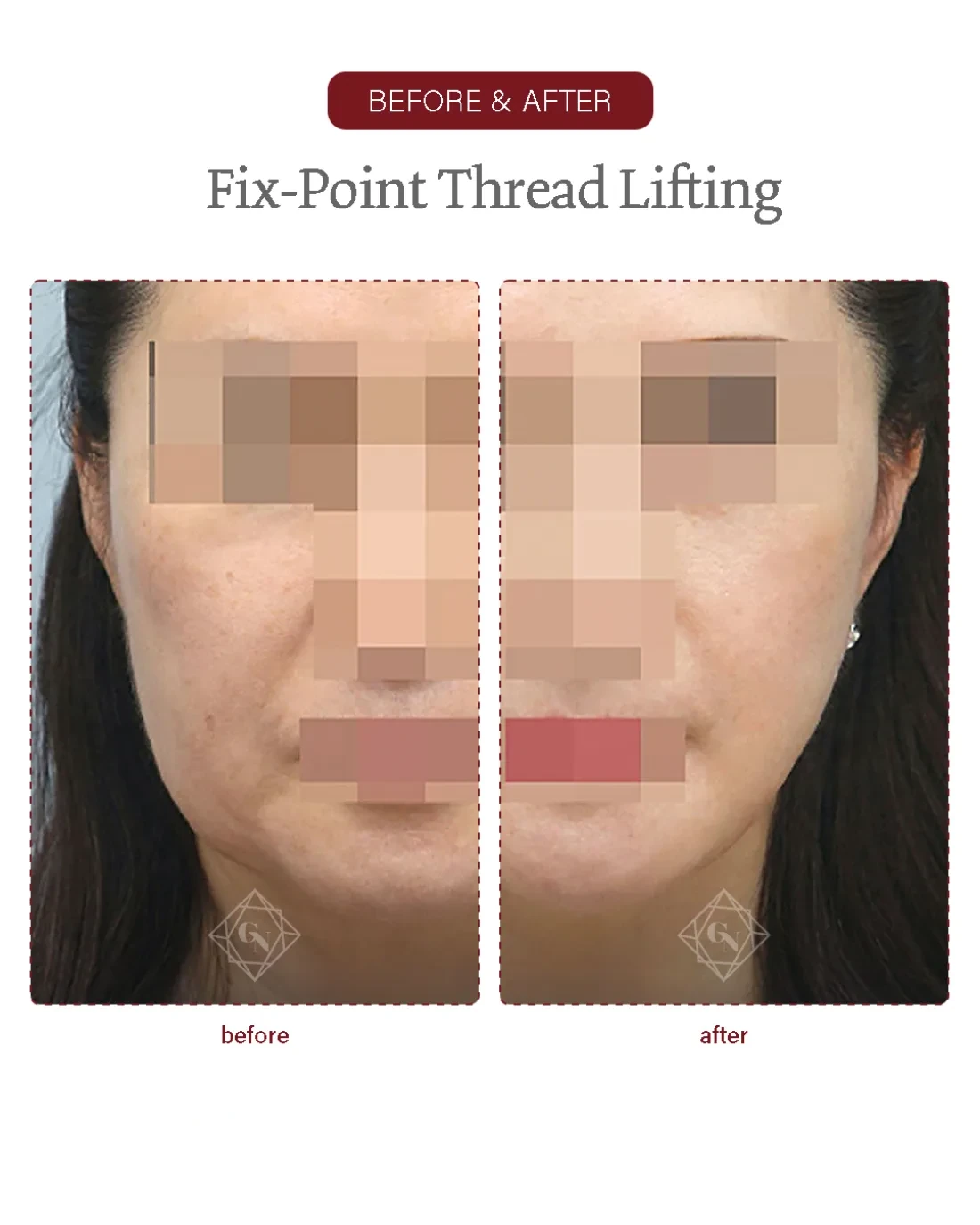
Thread-lift and contouring results of actual Garnet patients (published with consent, with date, procedure and clinic labelled). The lift is temporary and results, recovery and suitability vary by individual and are not guaranteed.
Prices
Price at Garnet
Thread lift
From₩100,000 + VAT per threadExcluding VAT (10% VAT is added at payment)Book now
Same price as Korean patients. Prices shown exclude 10% VAT; your written quote, issued after the in-person consultation, shows the full amount payable.
Dr. In-Soo Baek
Director & sole operating surgeon
Korean medical licence no. 77407
Operate on what you came for. Trained at Korea University Medical Center. Every case planned, performed and reviewed by the same hands.
1Operating surgeon
~2Surgeries per day
7Registered techniques
Board-certified plastic surgeon
Plastic surgery training at Korea University College of Medicine & graduate school
Korean Society of Plastic and Reconstructive Surgeons member, in its facial-contour, eye & rhinoplasty groups
Consults, operates and follows up each case himself
Peer-reviewed papers behind the facts on this page. Each describes findings in its own study group — not results at Garnet — and none predicts your own outcome.
Mulholland RS et al. Lifting and Wound Closure with Barbed Sutures. Clinics in Plastic Surgery. 2011. doi:10.1016/j.cps.2011.06.002
Atiyeh BS et al. Barbed sutures “lunch time” lifting: evidence‐based efficacy. Journal of Cosmetic Dermatology. 2010. doi:10.1111/j.1473-2165.2010.00495.x
Villa MT et al. Barbed Sutures: A Review of the Literature. Plastic and Reconstructive Surgery. 2008. doi:10.1097/01.prs.0000299452.24743.65
FAQ
Common questions
Is a thread lift painful?
A thread lift is one of the more comfortable lifting procedures. It is done under local anaesthesia, so you are awake but the treated area is numb. During the procedure you mostly feel pressure and a tugging or pulling sensation. Afterwards there is usually mild tightness and tenderness for a few days.
What anaesthesia is used for a thread lift?
A thread lift is performed under local anaesthesia. The areas the threads pass through are numbed with local anaesthetic, often after a topical numbing cream. You stay awake and can talk to the surgeon, and you avoid the grogginess and longer recovery that come with being put fully to sleep.
Does the numbing injection hurt?
The numbing injections are usually the part people notice most, felt as a brief sting or pressure. A topical numbing cream is often applied first to reduce this. Once the area is numb, the placement of the threads is felt as movement and pressure.
How long does the discomfort last after a thread lift?
Discomfort is generally most noticeable on the first day or two and then eases steadily. Mild tightness and a pulling sensation can linger for one to two weeks as the tissue settles. Healing varies between individuals, so an exact day count cannot be promised, but the typical pattern is a few sore days followed by a gradual return to normal sensation.
What does a thread lift feel like during the procedure?
Once you are numbed, you feel mostly pressure, tugging and a sense of movement as a fine cannula passes the barbed threads under the skin and the tissue is drawn upward. Some people notice a brief stretching feeling as each thread is set. It can feel slightly unusual because you are awake and aware, but it is well tolerated.
How do I manage soreness after a thread lift?
Soreness is usually controlled with simple over-the-counter pain relief on your surgeon’s advice. Sleeping with your head slightly raised, using a gentle cold compress early on, avoiding wide mouth movements, chewy foods, vigorous exercise and saunas, and not rubbing or sleeping on the treated area all help the tightness fade faster.
Will I be able to talk and eat after a thread lift?
Yes. You can talk and eat soon after, though you may feel a pulling sensation when you open your mouth wide or chew firmer food in the first days. Sticking to softer foods and avoiding very wide facial movements for about a week keeps you more comfortable while the threads anchor.
When should I contact the clinic about pain after a thread lift?
Mild, improving soreness is normal. Contact the clinic if pain steadily worsens after the first couple of days, or if you notice spreading redness or heat, discharge from an entry point, a fever, or a thread becoming visible. These are uncommon but worth checking promptly. At a single-surgeon clinic the surgeon who treated you answers these questions directly, including by messenger after you fly home.
Is a thread lift less painful than a facelift?
A thread lift is generally more comfortable in the short term because it is minimally invasive and done under local anaesthesia, with no long incisions and a shorter, milder recovery. A surgical facelift addresses more and lasts longer but involves general anaesthesia and a more significant recovery. The right choice depends on your goals, and a consultation can help you compare.
Can I have a thread lift if I am nervous about pain?
Yes, and it is worth telling your surgeon at the consultation. Because a thread lift is done under local anaesthesia in an unhurried single session, the surgeon can explain each step in advance and work at a pace that suits you. At Garnet the same surgeon who consults you performs the procedure, so the person reassuring you is the one placing the threads.
My mom recently had a brow lift and lower blepharoplasty with Dr. Baek, and our experience has been wonderful so far. The Garnet team was incredibly kind and welcoming, with Kelly assisting us as our English consultant—she made everything…
I’m so happy I chose this clinic for my lower blepharoplasty. I was traveling from abroad by myself, so I was a little nervous, but from the beginning I felt comfortable and truly cared for. Everyone was kind, patient, and professional…
Came in for an in-person consult and ended up choosing Garnet and Dr.Baek for my non-incisional DES and tiplasty/alarplasty. I communicated with Kelly (English consultant) from the start till now (3 weeks post-op). She really help me feel…
My under-eyes have been sagging and folding for years... I tried to cover it up with makeup, but it actually got stuck in the wrinkles and made it stand out even more. While going for consultations, I noticed that the bigger the hospital…
Worried a thread lift might hurt? Send photos for an honest, no-obligation pre-assessment and ask about anaesthesia and comfort before you plan a trip.
Send photos and your question before you travel. An English-speaking coordinator reviews every enquiry and replies with guidance on whether surgery is appropriate, the likely plan and timing.
✓ Reviewed by the clinic coordinator, not a bot
✓ Photo-based pre-assessment before you fly
✓ Foreign-patient scheduling & after-care
✓ One surgeon for consultation, surgery and follow-up
Prefer to chat now? Reach the coordinator directly:









 T S7 months ago



