The main worry with epicanthoplasty is a scar in the inner corner of the eye, where it sits in plain view and cannot hide in a crease. It is a fair concern. The incision is small and placed inside the inner-corner area, but it can look pink or firm in the early weeks before it settles, and it matures over months. How it is cut, how it is closed, and how you care for it all shape the final line, and this page goes through each in turn.
The short answer
Epicanthoplasty at Garnet uses a fine inner-canthal incision as part of a Two-way™ medial-and-upper release of the Mongolian-fold band. The line sits in the inner corner itself.
It is normal for the line to look pink, slightly raised or firm in the first few weeks; this is early healing, and the final line comes later.
Scar maturation takes months as the line gradually flattens and fades, and gentle sun protection and not disturbing the corner do most of the work.
A conservative, well-placed release and meticulous closure are what keep the corner discreet, which is why a careful technique matters more than any single scar product.
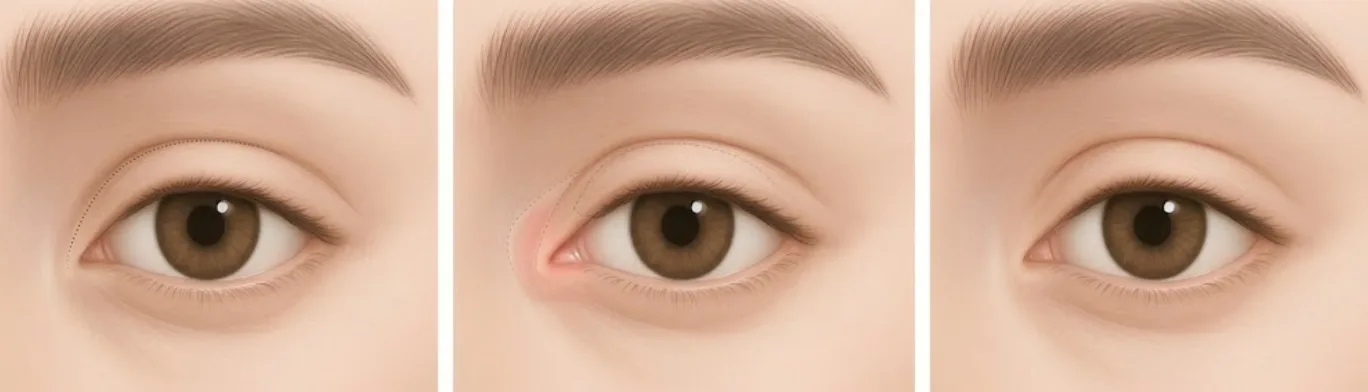
Epicanthoplasty changes the inner corner of the eye, so the incision lives there, in the inner-canthal region, and is not tucked into an upper-lid crease. At Garnet the procedure is a Two-way™ release: a combined medial and upper release of the Mongolian-fold band, worked through a fine inner-canthal incision instead of a single, more aggressive cut. The aim of that two-direction approach is to redistribute the fold so the corner opens naturally, with as little tension on the skin as possible. Tension is one of the things that influences how a scar settles.
Illustration: the skin fold covering the inner corner is released along the dotted line so the inner corner opens slightly while the eye keeps its own shape.
Because the line sits in the inner corner, it is more exposed than, say, a double-eyelid incision that hides in the new crease. That is the downside. The reassuring part is that the inner corner has its own natural contours and shadows, the incision is small, and a well-designed release keeps the skin edges meeting cleanly. Where exactly the line falls depends on your anatomy and the amount of opening planned, which is one reason the surgeon assesses your specific corner before deciding how much to release.
It is worth understanding this is a different scar question from procedures with hidden incisions. If you are weighing several eye procedures together, our pages on ptosis-correction scars and healing and lower-blepharoplasty scars and healing explain how incision placement differs across the eye, so you can compare them fairly.
The early weeks
Why the line can look noticeable in the first weeks
In the first weeks after epicanthoplasty the inner corner often looks redder, slightly raised or firmer than you might expect, and many patients find this the most anxious phase. This is ordinary early healing and does not predict a bad scar. A fresh incision is pink because new blood vessels are forming as the tissue knits together; it can feel firm because the body lays down collagen in an unorganised way at first, before remodelling it over the following months. The sutures themselves come out at around day seven, but the visible line is closed long before the scar has finished maturing.
Swelling adds to the early impression. The inner corner is delicate tissue, and a little puffiness in the first week or two can make the line look more prominent than it eventually will. As the swelling resolves the corner relaxes and the line usually starts to look less obvious. The change is gradual, measured in weeks and months, so judging the scar in the first fortnight is judging it far too early.
Because this early appearance can be unsettling, knowing the expected arc in advance helps a great deal. For how the corner's shape (separate from the scar) settles over the same period, our page on when you will see epicanthoplasty results walks through the full timeline.
Maturation
How an epicanthoplasty scar matures over time
Scar maturation follows a fairly predictable arc, even though the exact pace varies between people. In the first few weeks the line is at its pinkest and firmest. Over the following one to three months it typically begins to flatten and the redness starts to fade. From around three to six months the colour continues to settle, often passing through a lighter or slightly pink phase before it calms, and the line gradually becomes harder to notice. Full maturation can take six months to a year, by which point most inner-corner lines have settled into something far more discreet than they looked early on.
How visible the mature scar is depends on several things you cannot fully control: your skin type, your individual healing and how your particular corner was shaped. Some people's scars fade to almost nothing; others keep a faint line that is noticeable only on close inspection. No incision heals to literally invisible, and a careful surgeon will say so while explaining that a small, well-placed inner-corner line in delicate tissue usually settles well.
This is exactly why follow-up over months matters more than a single check at suture removal. At Garnet the same surgeon reviews your healing at structured follow-ups at 1, 3 and 6 months, so the scar can be tracked as it matures. That continuity is the practical benefit of a single-surgeon clinic.
Scar care
What actually helps an epicanthoplasty scar settle
Most of what helps a scar mature well is unglamorous. The single most useful habit is sun protection: a fresh scar pigments easily, and sunlight can leave a healing line darker for longer, so shielding the inner corner from direct sun once the wound has closed genuinely matters. Beyond that, keeping the area clean as instructed in the first days, not rubbing or stretching the corner while it is healing, and following the clinic's specific guidance on when ointments or silicone-based products are appropriate do the rest.
Patience is the other half of the work, because the body remodels the scar on its own schedule. It is tempting to intervene heavily on a line that still looks pink at a few weeks, but disturbing the corner or chasing products too early can do more harm than good. The right approach is to follow the surgeon's aftercare instructions, protect the area, and give the line the months it needs, checking in at follow-up instead of reacting to every stage.
If you are travelling from abroad, ask at your consultation exactly how scar review will work once you are home, since the maturation happens long after you fly back. Our guide on the online consultation from abroad explains how the surgeon can review healing remotely and tell you whether any extra scar care is worth it for your specific line.
Technique
Why a careful release matters more than any scar product
The biggest single influence on how an epicanthoplasty scar looks is how the release is planned and closed. Creams come a long way behind. Over-opening the inner corner puts more tension on the skin and asks more of the healing, while a conservative, well-judged release keeps the change natural and the line under less strain. The Two-way™ approach used at Garnet works in two directions specifically to redistribute the fold, so it does not rely on a single, larger cut, and meticulous closure of the small incision gives the line the ideal chance to settle cleanly.
This is also where a careful assessment protects you. Not everyone needs a large amount of inner-corner opening to get the result they are after, and a surgeon who does not over-recommend will plan the smallest release that achieves your goal. That is good both for the natural look and for the scar. A consultation that says "a conservative opening is right for your eyes" is doing your future scar a favour.
It also means the scar question is bound up with who performs the operation. The same board-certified surgeon planning a measured release, closing it carefully and then reviewing the line over months is what keeps the inner corner discreet, far more than any product applied afterwards.
At Garnet
How Garnet approaches the inner-corner incision
Garnet is a single-surgeon plastic surgery clinic in Apgujeong, Seoul. Dr. In-Soo Baek is a board-certified plastic surgeon (Korean medical licence no. 77407) and the only operating doctor, and he plans the epicanthoplasty, performs the Two-way™ release and closure himself, and reviews the healing line at every follow-up. The clinic caps the day so each case has unhurried time, which is exactly the kind of meticulous, low-tension work a discreet inner-corner line depends on.
Because the same surgeon sees you through, the scar is tracked as it matures. Garnet runs structured follow-ups at 1, 3 and 6 months, the window over which an epicanthoplasty line does most of its settling, and for international patients much of that review is handled remotely through photos, with clear guidance on scar care at each stage.
If a visible inner-corner line is your main worry, the sensible first step is a no-obligation online assessment: send clear photos of your eyes and you will get a realistic view of where the incision would sit, how much release your corner actually needs, and what the line is likely to look like as it heals.
Real Results
Before & After
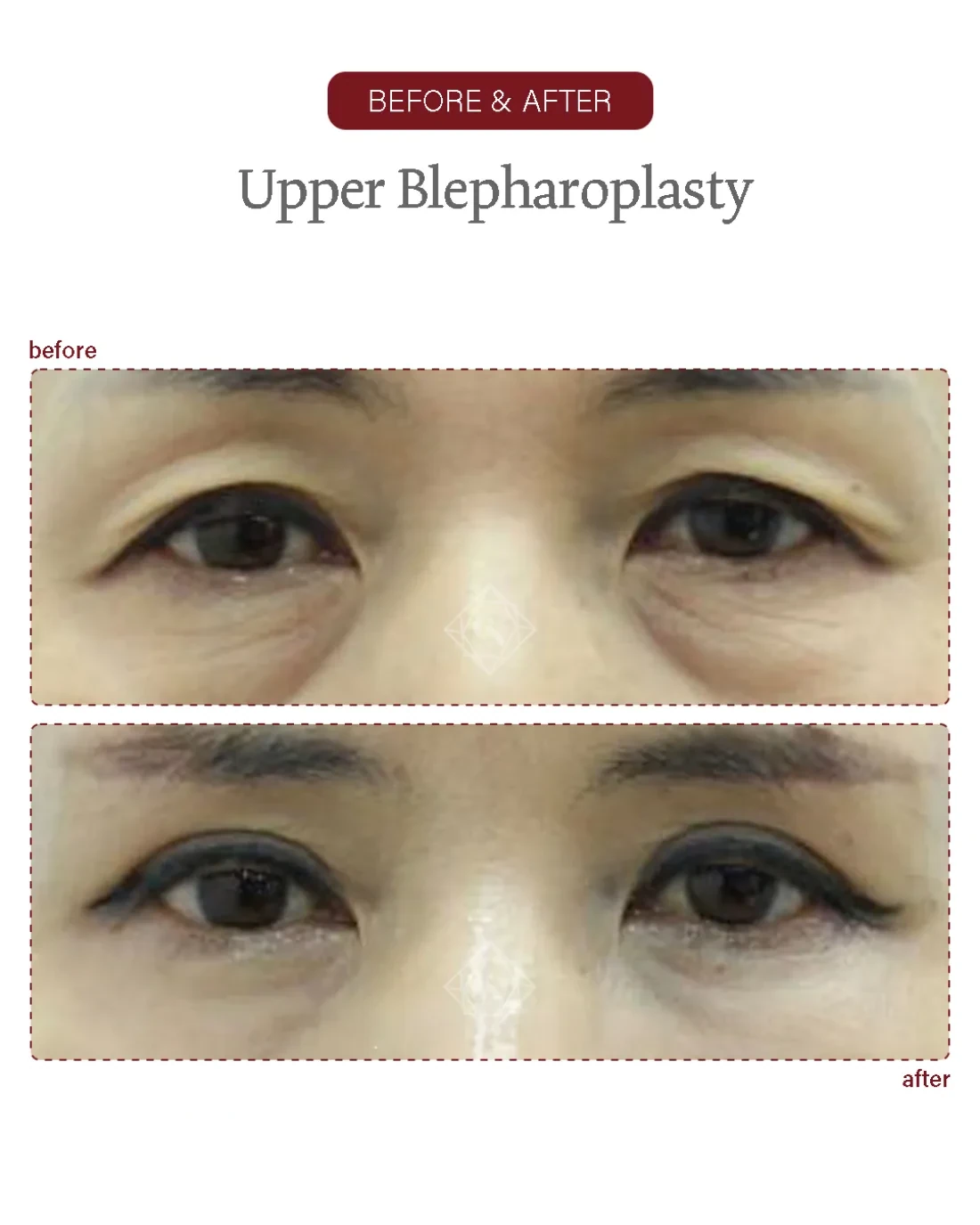
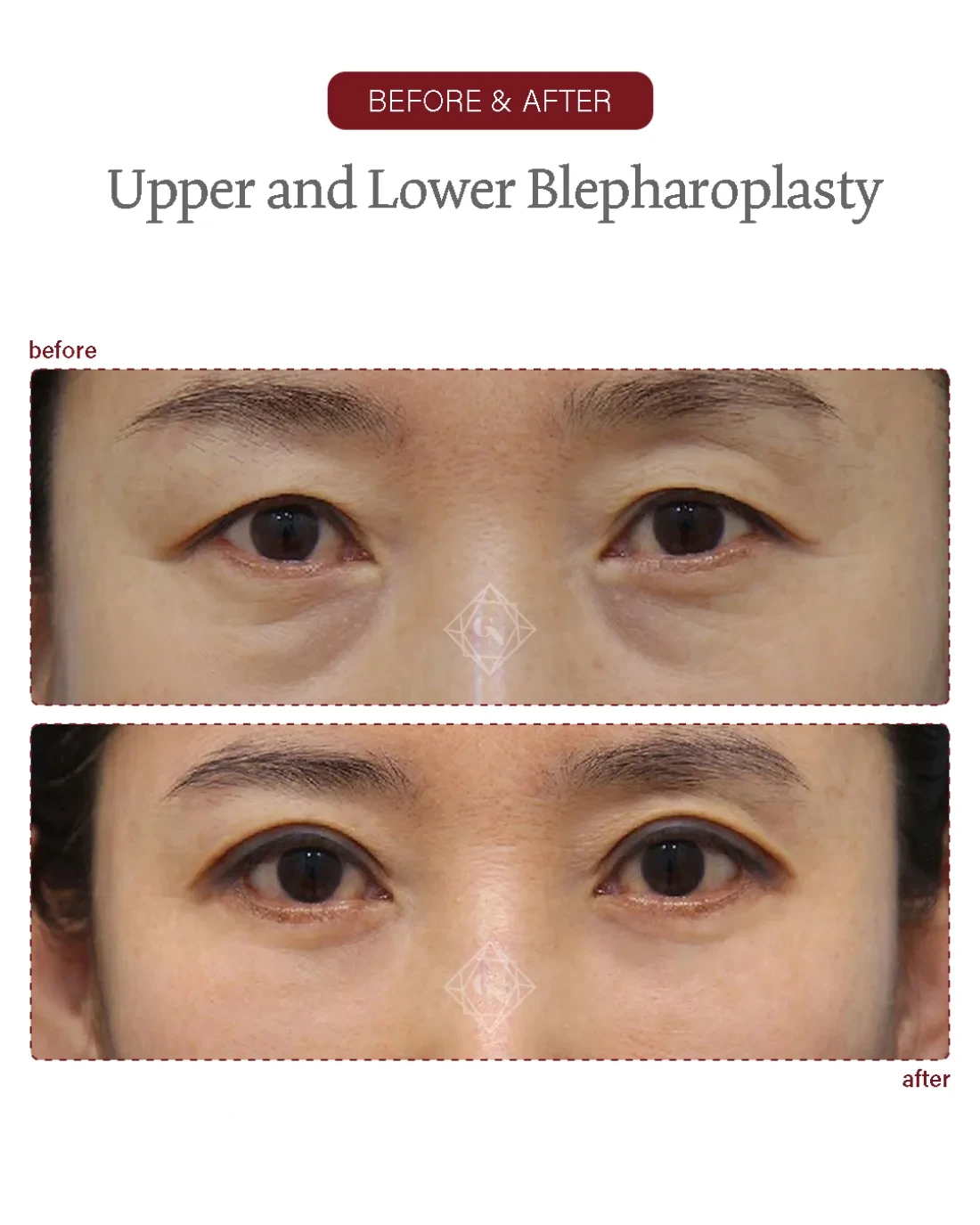
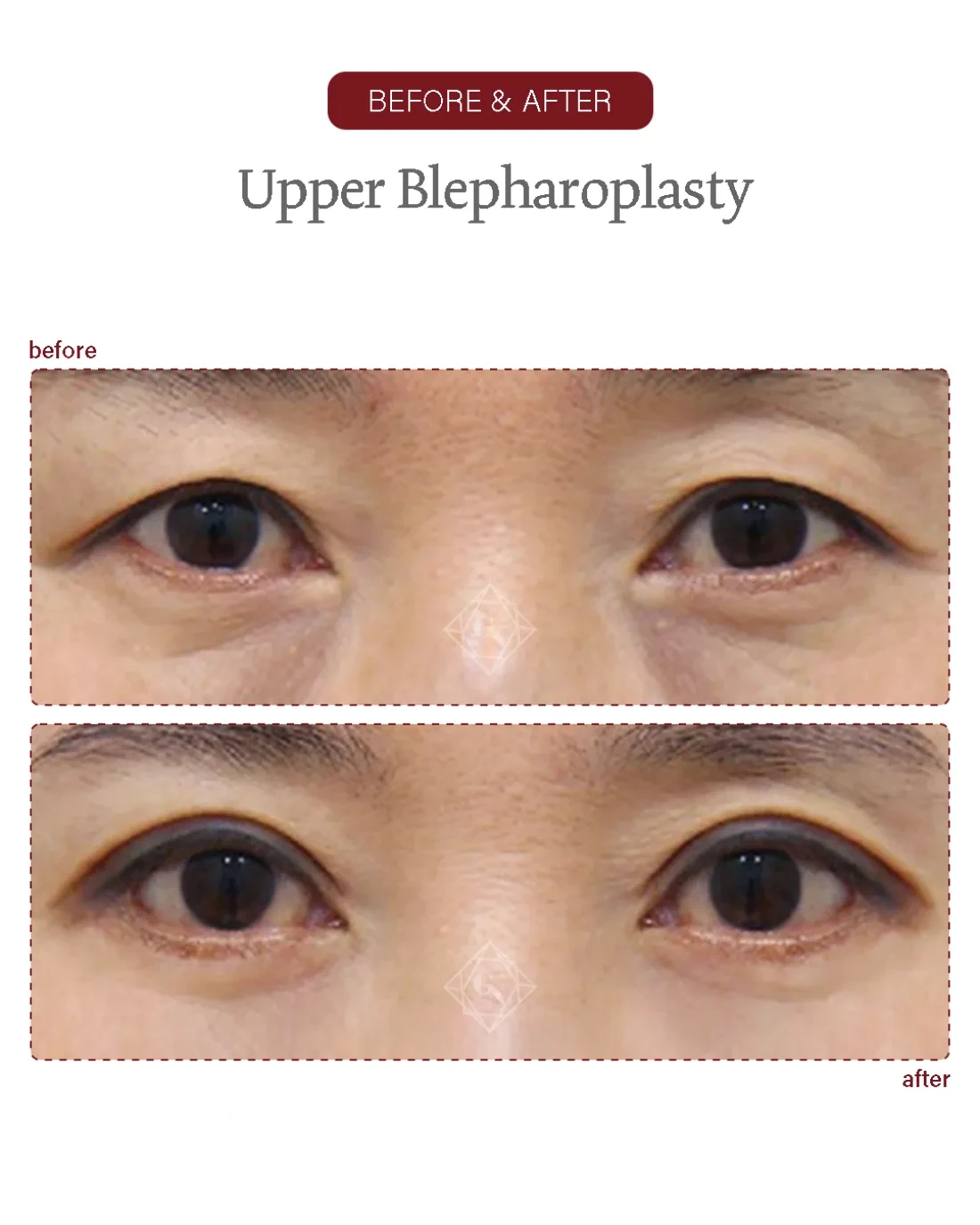
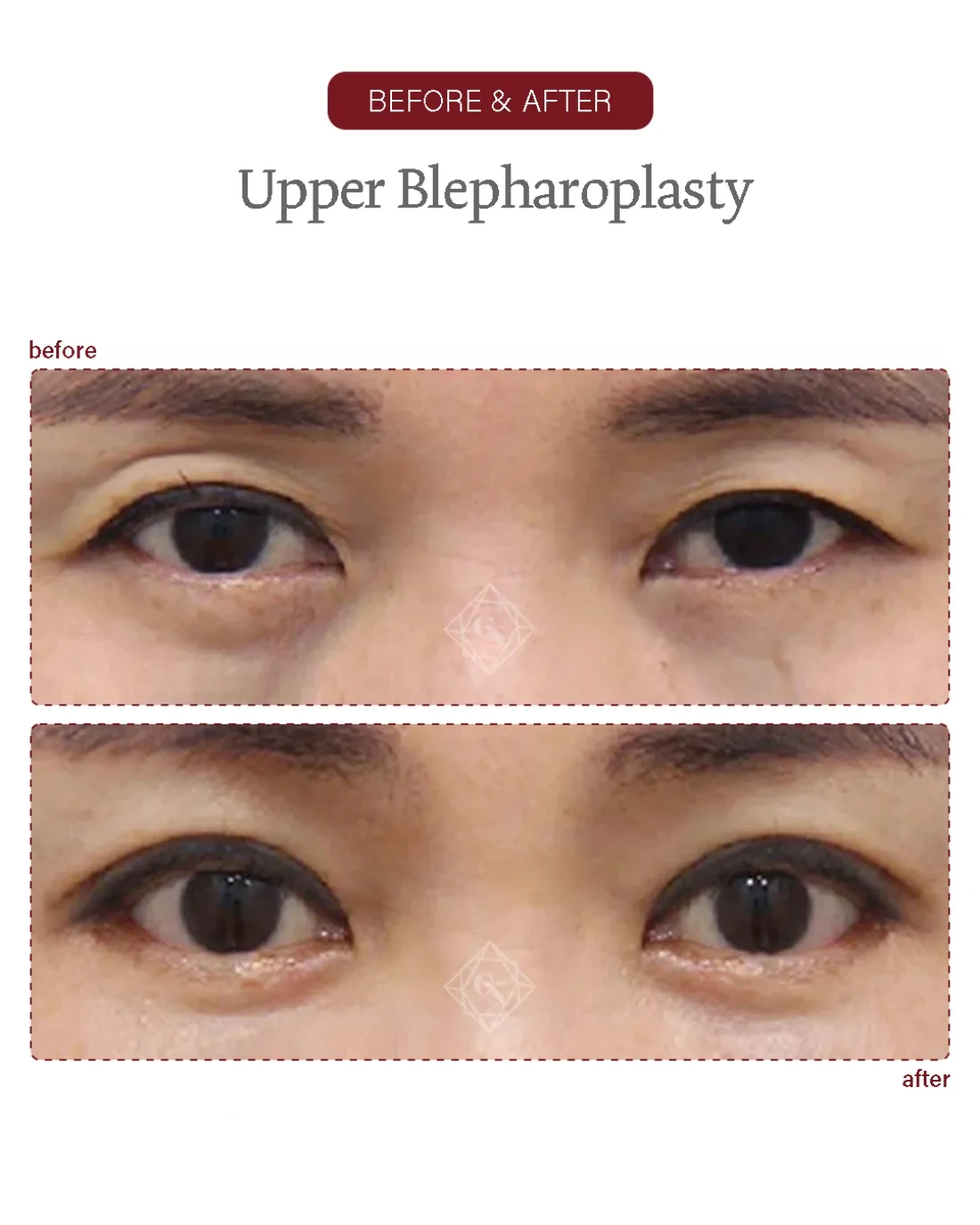
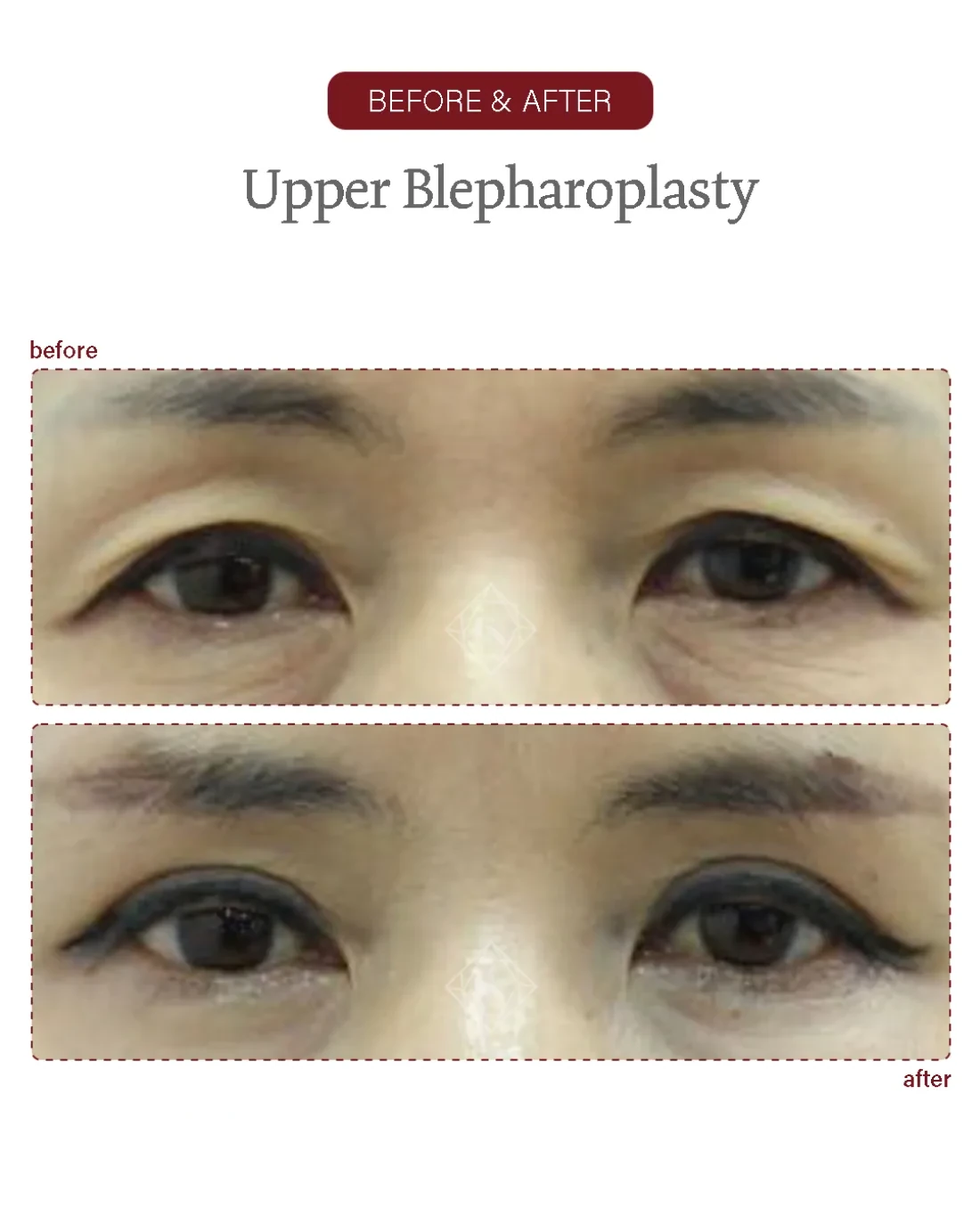
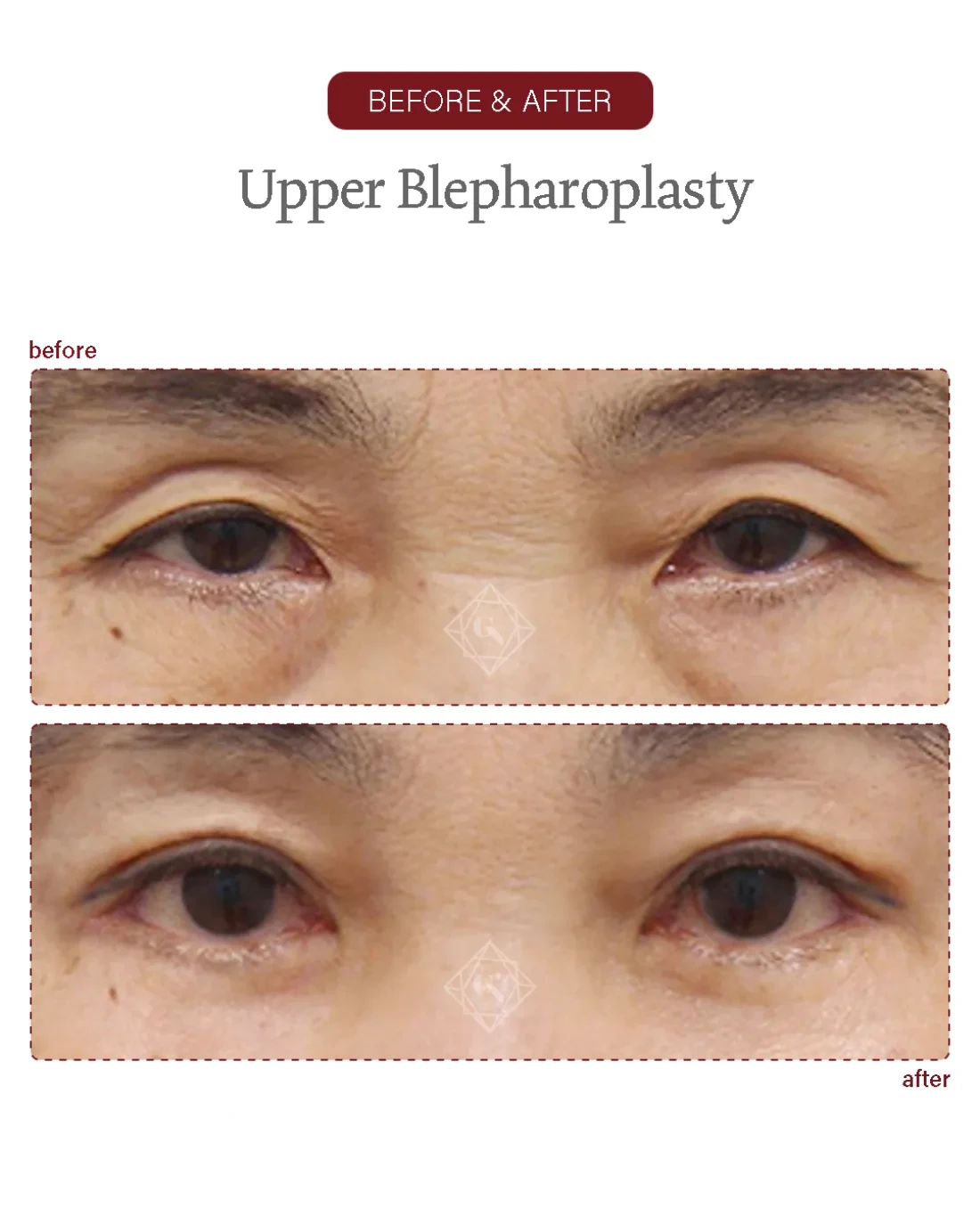
Eyelid before/after examples of actual Garnet patients (published with consent). Results, recovery and suitability vary by individual and are not guaranteed; the right approach depends on an in-person examination.
Prices
Price at Garnet
Lower blepharoplasty
From₩3,500,000 + VATExcluding VAT (10% VAT is added at payment)Book now
Same price as Korean patients. Prices shown exclude 10% VAT; your written quote, issued after the in-person consultation, shows the full amount payable.
Dr. In-Soo Baek
Director & sole operating surgeon
Korean medical licence no. 77407
Operate on what you came for. Trained at Korea University Medical Center. Every case planned, performed and reviewed by the same hands.
1Operating surgeon
~2Surgeries per day
7Registered techniques
Board-certified plastic surgeon
Plastic surgery training at Korea University College of Medicine & graduate school
Korean Society of Plastic and Reconstructive Surgeons member, in its facial-contour, eye & rhinoplasty groups
Consults, operates and follows up each case himself
Peer-reviewed papers behind the facts on this page. Each describes findings in its own study group — not results at Garnet — and none predicts your own outcome.
Hwang K et al. Historical Vignettes of Epicanthoplasty. Journal of Craniofacial Surgery. 2016. doi:10.1097/scs.0000000000002512
Wang S et al. Epicanthal fold correction: Our experience and comparison among three kinds of epicanthoplasties. Journal of Plastic, Reconstructive & Aesthetic Surgery. 2013. doi:10.1016/j.bjps.2013.01.028
Park JI et al. Park Z-Epicanthoplasty. Facial Plastic Surgery Clinics of North America. 2007. doi:10.1016/j.fsc.2007.04.001
FAQ
Common questions
Where are the scars after epicanthoplasty?
Epicanthoplasty changes the inner corner of the eye, so the incision sits in the inner-canthal region and is not hidden in an upper-lid crease. At Garnet it is a fine incision used for a Two-way™ medial-and-upper release of the Mongolian fold. The line is small and follows the inner corner's natural contours, but it is more exposed than incisions tucked into a crease.
Will epicanthoplasty scars be visible?
In the first weeks the line can look pink, slightly raised or firm. That is early healing, and the final line comes later. Over months it typically flattens and fades into something far more discreet, though no incision heals to literally invisible. How visible the mature line is depends on your skin, your healing and how conservatively the corner was opened.
How do epicanthoplasty scars heal over time?
Maturation follows an arc: pinkest and firmest in the first weeks, flattening and fading over one to three months, with colour continuing to settle from three to six months. Full maturation can take six months to a year. Sun protection and not disturbing the corner do most of the work; the body remodels the line on its own schedule.
Why does my inner corner look red and firm soon after surgery?
A fresh incision is pink because new blood vessels form as the tissue knits, and firm because the body first lays down collagen in an unorganised way before remodelling it. Early swelling makes the line look more prominent too. This is ordinary early healing, and judging the scar in the first couple of weeks is judging it far too soon.
What scar care actually helps after epicanthoplasty?
The most useful habit is sun protection, since a fresh scar pigments easily. Beyond that: keep the area clean as instructed, do not rub or stretch the corner while it heals, and follow the clinic's specific guidance on when ointments or silicone products are appropriate. Patience matters as much as any product, because the line remodels over months.
Can epicanthoplasty scars be made completely invisible?
No surgeon can promise an invisible scar, because every incision leaves some trace. What a careful, conservative Two-way™ release and meticulous closure aim for is a small, well-placed line in the inner corner that settles into something difficult to notice in normal conditions. A measured opening under less skin tension gives the ideal chance of a discreet result.
Does the amount of inner-corner opening affect the scar?
Yes. Over-opening puts more tension on the skin and asks more of the healing, while a conservative, well-judged release keeps the line under less strain and tends to settle more cleanly. This is why a surgeon who plans the smallest release that achieves your goal, without over-recommending, is doing your future scar a favour.
How is the healing of the scar followed up, especially from abroad?
At a single-surgeon clinic the same surgeon who operated reviews the line as it matures. Garnet runs structured follow-ups at 1, 3 and 6 months, the window where the scar does most of its settling, and for international patients much of that review is handled remotely through photos, with guidance on scar care at each stage.
What if my epicanthoplasty scar does not fade as expected?
Most inner-corner lines settle well over six months to a year, but healing varies between people. If a line stays raised or red longer than expected, the surgeon can review it at follow-up and advise whether scar care, time or another step is appropriate. Tracking it over months with the same surgeon is exactly why structured follow-up matters.
My mom recently had a brow lift and lower blepharoplasty with Dr. Baek, and our experience has been wonderful so far. The Garnet team was incredibly kind and welcoming, with Kelly assisting us as our English consultant—she made everything…
I’m so happy I chose this clinic for my lower blepharoplasty. I was traveling from abroad by myself, so I was a little nervous, but from the beginning I felt comfortable and truly cared for. Everyone was kind, patient, and professional…
Came in for an in-person consult and ended up choosing Garnet and Dr.Baek for my non-incisional DES and tiplasty/alarplasty. I communicated with Kelly (English consultant) from the start till now (3 weeks post-op). She really help me feel…
My under-eyes have been sagging and folding for years... I tried to cover it up with makeup, but it actually got stuck in the wrinkles and made it stand out even more. While going for consultations, I noticed that the bigger the hospital…
If a visible inner-corner line after epicanthoplasty worries you, send clear photos of your eyes for a no-obligation pre-assessment of where the incision would sit and how the scar is likely to settle, before you decide anything.
Send photos and your question before you travel. An English-speaking coordinator reviews every enquiry and replies with guidance on whether surgery is appropriate, the likely plan and timing.
✓ Reviewed by the clinic coordinator, not a bot
✓ Photo-based pre-assessment before you fly
✓ Foreign-patient scheduling & after-care
✓ One surgeon for consultation, surgery and follow-up
Prefer to chat now? Reach the coordinator directly:









 T S7 months ago



