Forehead reduction shortens a tall forehead by advancing the hairline forward, and the most common question patients ask is whether that change will hold. The short answer is that the new hairline position is structurally lasting. A face still keeps ageing, so it is worth understanding exactly what stays fixed and what continues to move.
The short answer
Forehead reduction lowers the hairline by advancing the scalp forward. Once the tissue heals in its new position, that position is structurally lasting.
What lasts is the distance you bought back: a shorter forehead. What does not stop is normal facial ageing, brow descent and male-pattern hair changes around it.
Because results are positional and involve no volume or filler, there is nothing to 'wear off'. The final look still settles over the first several months as swelling resolves and the scar matures.
A redo is rarely about the surgery fading; it is usually about hairline asymmetry, scar quality or a later wish to lower further, and each of these can be assessed in person.
Forehead reduction is a positional operation. It does not add a substance that can dissolve, and it does not tighten skin that can later relax back to where it started. Instead, the surgeon makes a hairline incision, advances the hair-bearing scalp forward and removes a strip of forehead skin, so the hairline sits lower and the forehead is shorter. Once that tissue heals into its new place, the distance you have gained back is the distance you keep.
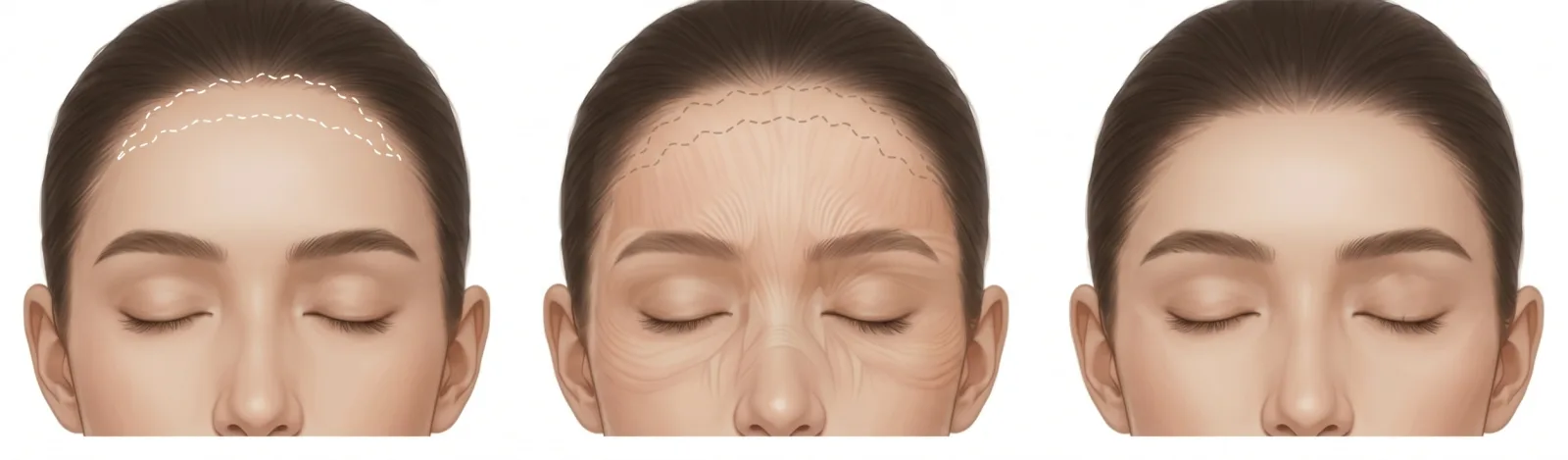
Illustration: through a fine line along the hairline (dotted), the hairline is brought forward to shorten a tall forehead.
This is the key difference from treatments people often compare it with. A filler softens a line for months; a thread lift holds for a year or two; a forehead reduction changes a fixed anatomical landmark: where your hairline is. There is no active ingredient metabolising away in the background and no fixation device that is designed to release over time, which is why the result reads as lasting.
So when patients ask how long forehead reduction lasts, the accurate framing is this: the surgery itself is a one-time, structural change. What changes over the years is the ordinary way every face, operated or not, continues to age around that new hairline. The surgery does not undo itself.
Why it holds
Why the new hairline position holds
The advanced scalp is secured during surgery and then knits firmly to the underlying tissue as it heals, so the hairline does not gradually drift back upward. Hair follicles that were carried forward with the scalp keep growing in their new location, which is why a well-healed forehead reduction continues to look natural at the front edge, without thinning along the scar line.
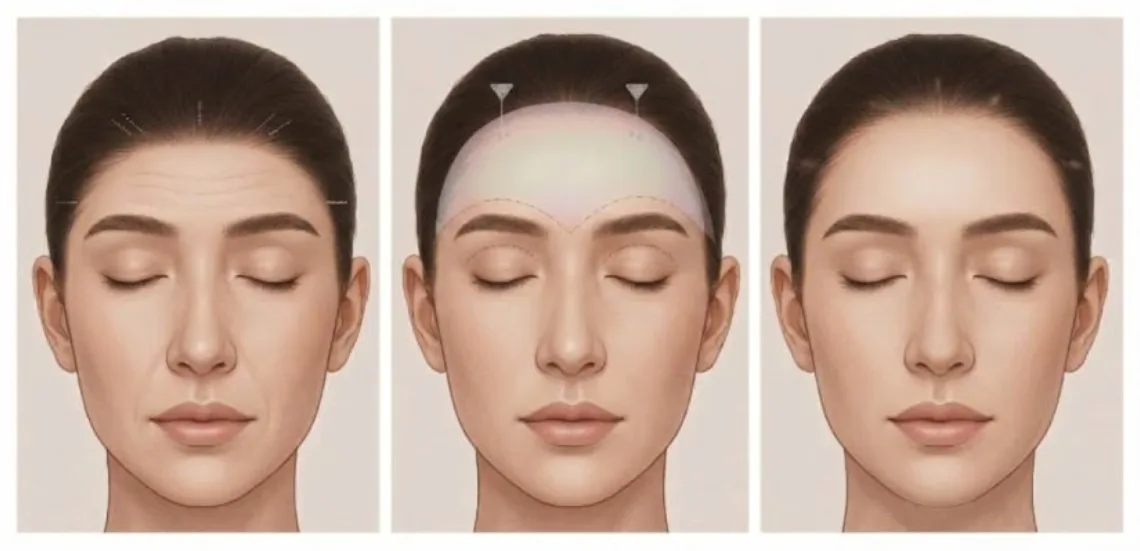
Illustration: the forehead and brow are lifted from within and held at fixation points behind the hairline (Pentafix™), rather than pulled at the skin.
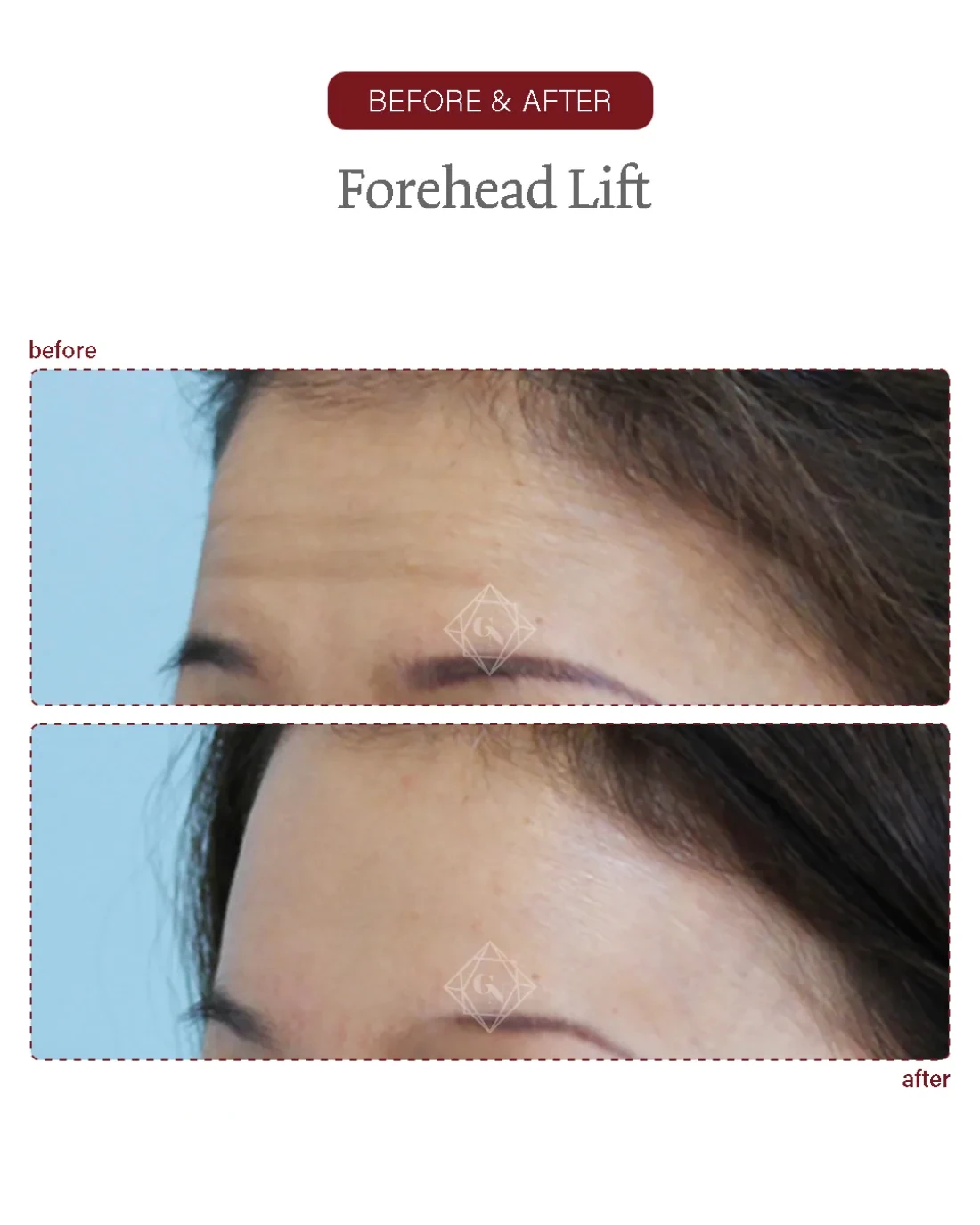
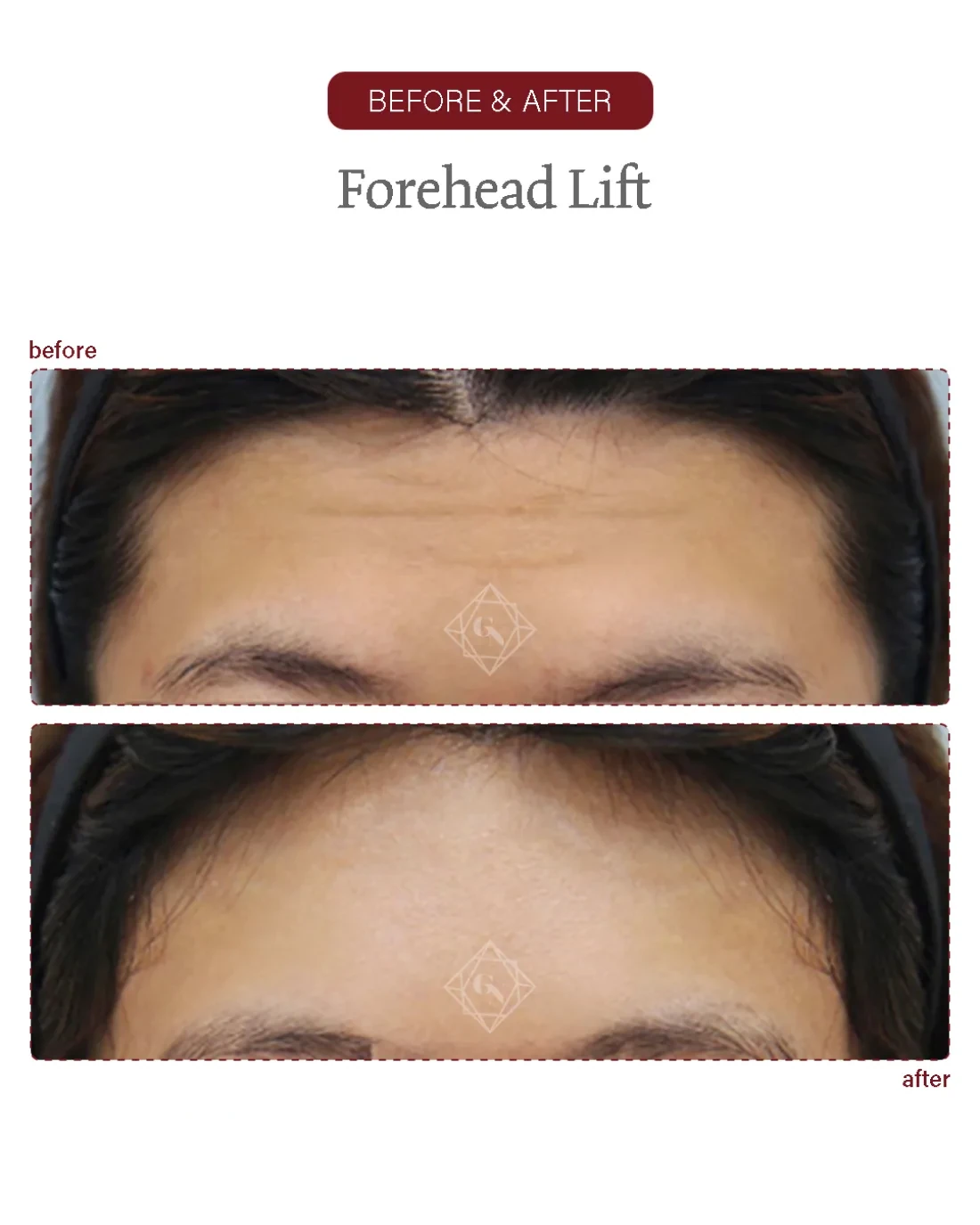
Because the change is anatomical, it is not influenced by the things that shorten the lifespan of non-surgical treatments: your metabolism, repeated muscle movement, or product breakdown. The forehead you see at the end of healing is, in structural terms, the forehead you keep. This is also why the procedure differs from a forehead lift, which lifts and repositions the brow and upper forehead and leaves the hairline where it is. The two address different concerns and age in different ways.
It is worth being precise about language here. Under Korean medical-advertising rules we do not describe any surgical result as guaranteed, and a careful surgeon will not either. 'Structurally lasting' is accurate; 'never changes' is inaccurate, because the skin, brow and hair around the new hairline keep living, as the next section explains.
Ageing
What normal ageing still changes around it
The forehead reduction fixes a measurement: your hairline-to-brow distance. It does not pause the rest of facial ageing. Over the years the brow naturally descends a little, the forehead skin loses some elasticity, and dynamic lines may deepen. None of this reverses the surgery; it simply means the overall upper face continues to mature the way an unoperated face would. Some patients who address a tall forehead in their twenties or thirties later consider a separate forehead or brow lift in their forties or fifties. The reduction has not failed; a different concern (brow position) has emerged.
Hair behaviour is the other real variable. Forehead reduction relocates the existing hairline; it does not stop future hair loss. In someone with a strong family history of male-pattern recession, the hairline can still recede over time, which is why a careful surgeon screens for this before recommending hairline advancement and may steer some patients toward alternatives. We talk this through frankly at the suitability assessment, before any surgery.
Finally, the scar matures over roughly a year, fading and softening as it settles. That is part of normal healing, and the result is not fading. If anything, the result becomes more discreet with time as the fine hairline scar blends, which we cover in detail on the scars and healing page.
Settling
How the final result settles over the first year
Although the hairline position is lasting, the look you see in the mirror keeps refining for several months. In the first weeks there is swelling along the forehead and scalp, and some temporary numbness behind the incision as small sensory nerves recover. This is expected and resolves gradually. The early appearance is therefore not the final appearance; it usually takes a few months for contours to settle.
By around three months most of the swelling has gone and the hairline reads cleanly, and by the six-month mark the scar has typically matured enough to sit discreetly within the hairline. This settling curve is why we schedule structured follow-ups: the same surgeon reviews you so the trajectory of healing is tracked over time. You can see the broader week-by-week picture on the recovery timeline.
Patients sometimes worry that early tightness or an unsettled hairline edge means the result will not last. Almost always it is the opposite: those are features of a result still maturing. Judging longevity fairly means assessing the forehead once it has fully settled, several months after surgery.
Redo
When a redo or refinement is actually discussed
Because the operation is structural, a second procedure is rarely about the result 'running out'. When patients do return, it is usually for one of a few specific reasons: a hairline that healed slightly asymmetrically, a scar that a patient would like refined, or, less commonly, a wish to lower the hairline further than a single, safe advancement allowed. Sometimes the scalp's natural flexibility limits how much can be moved in one stage, and a further small advancement is considered later once tissues have relaxed.
These are planned refinements, and each is assessable in person. If a previous forehead reduction elsewhere has left a concern, that is a different conversation about correction, and we cover it on the dedicated revision and correction page.
The most useful thing you can do is to judge the result only after it has fully settled, and to raise any concern with the surgeon who performed it. Continuity matters here: the doctor who advanced your hairline understands exactly how much was moved and how your tissue behaved, which makes any later refinement far more predictable.
At Garnet
How Garnet plans forehead reduction for the long term
Garnet is a single-surgeon clinic in Apgujeong, Seoul. Dr. In-Soo Baek is a board-certified plastic surgeon (Korean medical licence no. 77407) and the only operating doctor, and he consults, performs the hairline advancement himself and reviews every follow-up. Because the same surgeon sees a forehead reduction from plan to healed result, decisions about how far to advance the hairline are made with longevity in mind from the first consultation.
That continuity is what makes the lasting nature of this surgery genuinely useful to an international patient. The assessment is frank about your hair pattern and brow position, the day is unhurried, and structured reviews at 1, 3 and 6 months track how the result settles, with the same surgeon available by messenger after you fly home. Garnet is registered with Korea's foreign-patient programme.
If you are weighing this procedure, the most reliable first step is a candid pre-assessment of your forehead, hairline and hair pattern. You can start with a no-obligation online consultation before you plan any travel.
Real Results
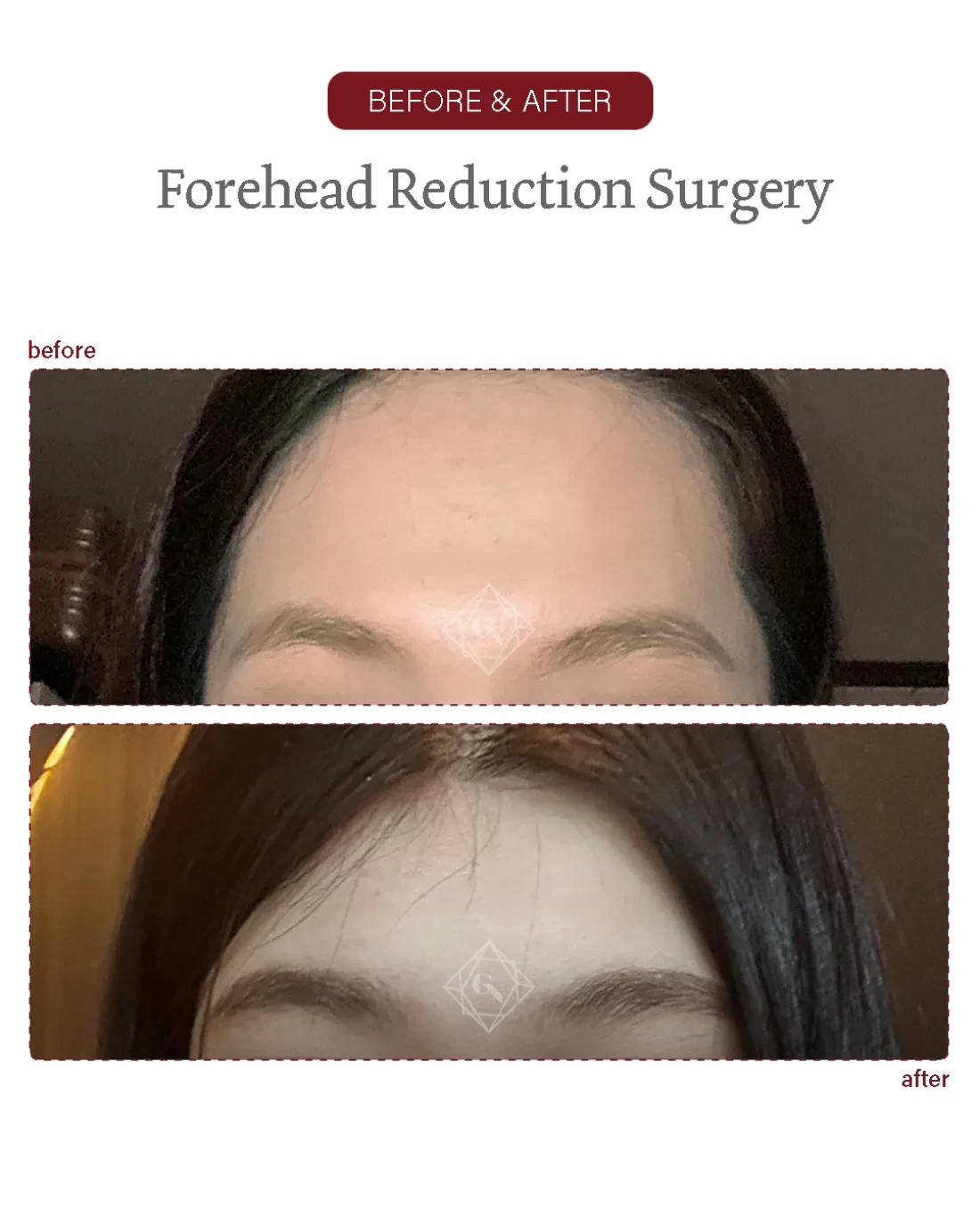
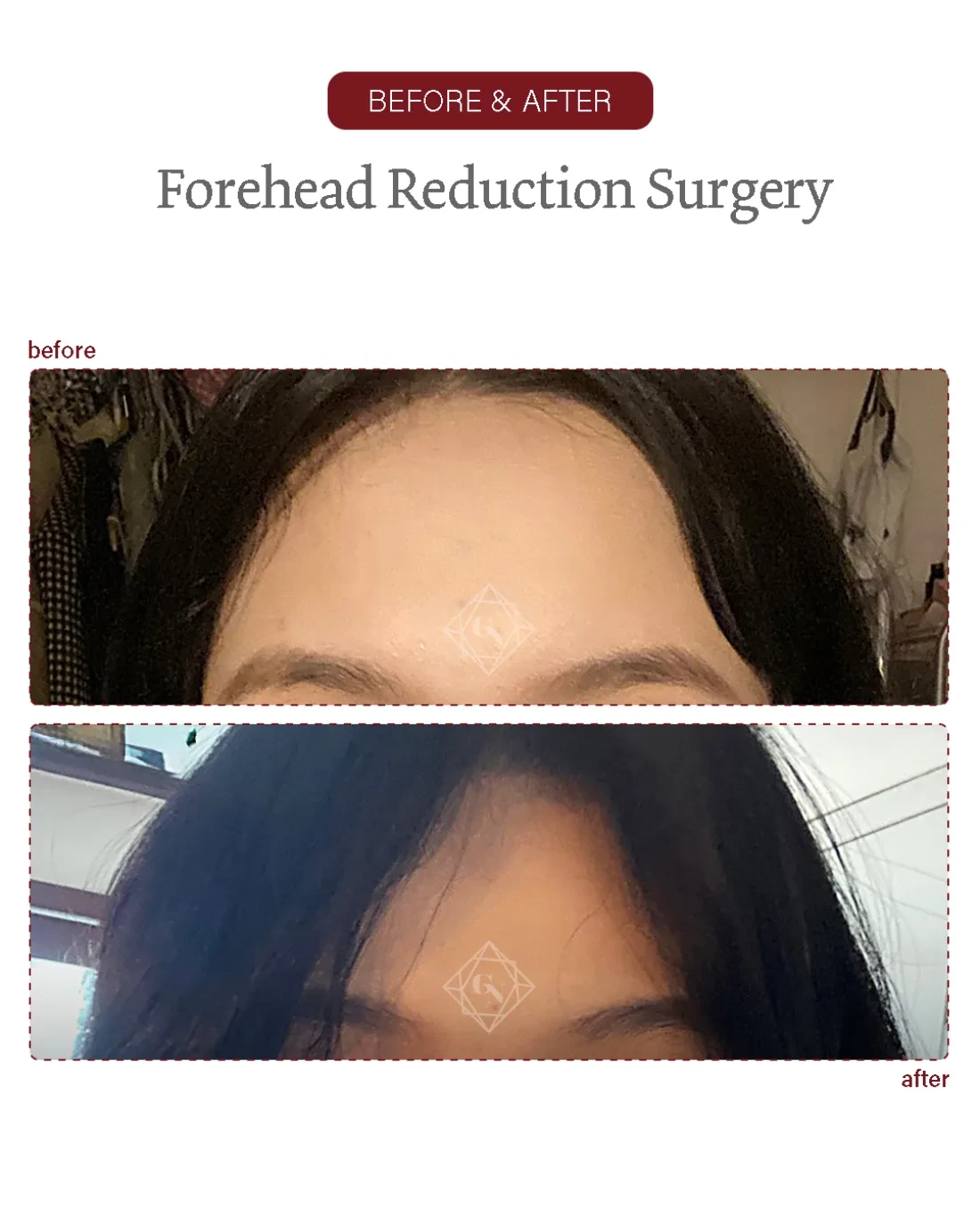
Before & After
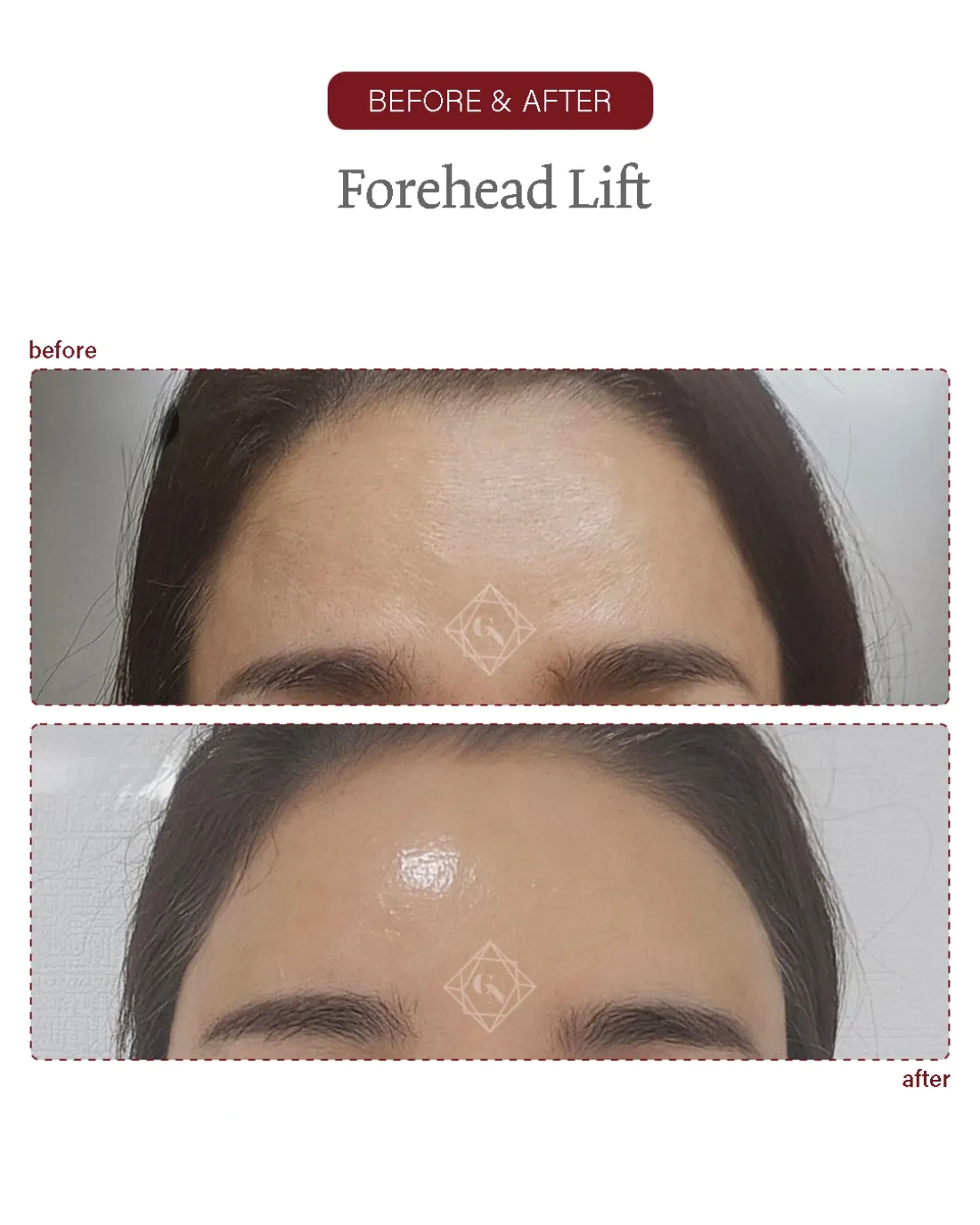
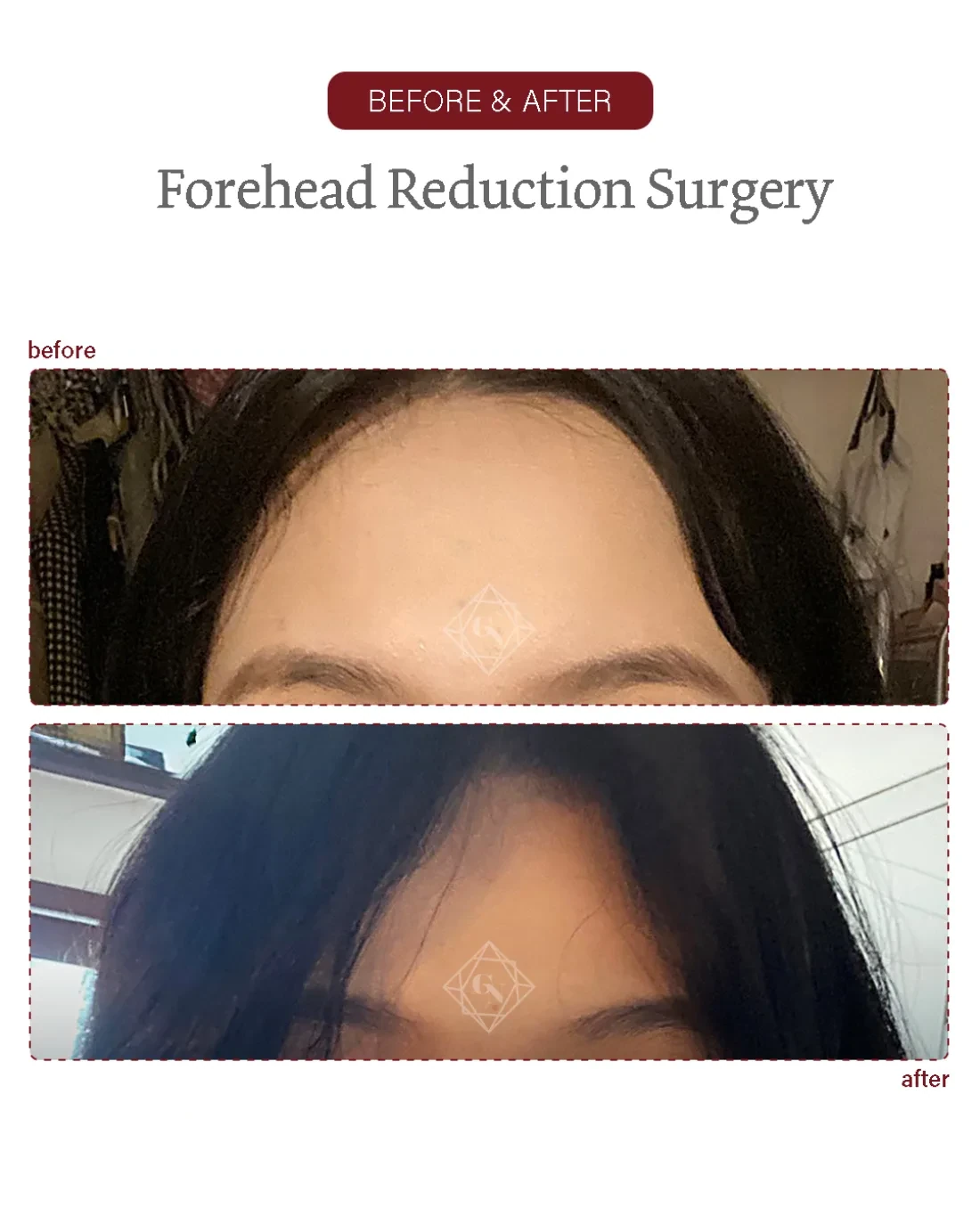
Forehead reduction before/after sets of actual Garnet patients (published with consent). Results, recovery and scar appearance vary by individual, depend on scalp laxity and hair density, and are not guaranteed.
Prices
Price at Garnet
Forehead reduction
₩7,000,000 + VATExcluding VAT (10% VAT is added at payment)Book now
Same price as Korean patients. Prices shown exclude 10% VAT; your written quote, issued after the in-person consultation, shows the full amount payable.
Dr. In-Soo Baek
Director & sole operating surgeon
Korean medical licence no. 77407
Operate on what you came for. Trained at Korea University Medical Center. Every case planned, performed and reviewed by the same hands.
1Operating surgeon
~2Surgeries per day
7Registered techniques
Board-certified plastic surgeon
Plastic surgery training at Korea University College of Medicine & graduate school
Korean Society of Plastic and Reconstructive Surgeons member, in its facial-contour, eye & rhinoplasty groups
Consults, operates and follows up each case himself
Peer-reviewed papers behind the facts on this page. Each describes findings in its own study group — not results at Garnet — and none predicts your own outcome.
Park JH. Masking the Close Eye Appearance in the East Asian Female Population: Infratemporal Hairline Reduction with Hair Grafting. Aesthetic Plastic Surgery. 2016. doi:10.1007/s00266-016-0695-9
Kabaker SS et al. Hairline Lowering. Facial Plastic Surgery Clinics of North America. 2013. doi:10.1016/j.fsc.2013.05.007
Park JH et al. Management of Cowlick in Female Hairline Correction Surgery. Aesthetic Plastic Surgery. 2024. doi:10.1007/s00266-024-04023-z
FAQ
Common questions
How long does forehead reduction last?
The change is structurally lasting. Forehead reduction advances the hairline forward to shorten the forehead, and once the tissue heals in its new position, that position holds. There is no filler to dissolve or device designed to release. What continues is ordinary facial ageing around the new hairline.
Is forehead reduction permanent?
We avoid describing surgery as permanent or guaranteed, but the hairline-advancement is a one-time, structural change to where your hairline sits, and that new position is lasting. The distinction is that the position stays fixed while the surrounding skin, brow and hair keep ageing normally over the years.
Will my forehead get tall again over time?
The advanced hairline does not drift back upward, because the scalp heals firmly into its new place and the relocated hair follicles keep growing there. Future male-pattern hair loss can still recede a hairline independently, which is why your hair pattern is assessed carefully before surgery is recommended.
Does forehead reduction stop hair loss?
No. It relocates your existing hairline lower; it does not prevent future hair loss. If you have a strong family history of pattern recession, the surgeon will discuss this openly and may suggest alternatives, because hairline advancement assumes a stable hairline going forward.
When will I see the final result?
The hairline position is set in surgery, but swelling resolves and the scar matures over several months. Most swelling settles by around three months and the scar typically matures by about six months. Longevity is best judged once the forehead has fully settled; the recovery timeline has the detail.
Might I ever need forehead reduction redone?
Rarely for longevity reasons. When a second procedure is discussed it is usually to refine a slightly asymmetric hairline, improve a scar, or advance further than a single safe stage allowed. These are planned refinements assessed in person; the result itself is not wearing off.
Could I still want a forehead lift later?
Possibly, but for a different reason. Forehead reduction shortens the forehead by moving the hairline; a forehead or brow lift repositions a descended brow. Some patients have both at different life stages because they address different concerns. One does not replace or cancel the other.
Does the scar fade over time?
Yes. The fine hairline scar matures over roughly a year, softening and blending within the hairline so the result tends to become more discreet over time. Proper aftercare and sun protection support this; the scars and healing page covers what to expect.
Why does the same surgeon following up matter for longevity?
The surgeon who advanced your hairline knows exactly how much tissue was moved and how your scalp behaved, which makes tracking how the result settles, and planning any future refinement, far more predictable. At a single-surgeon clinic that continuity is built in by design.
Can I assess my suitability before travelling to Korea?
Yes. You can send photos of your forehead and hairline for a pre-assessment in an online consultation, where the surgeon can talk through how lasting the result is likely to be for your hair pattern and brow position before you commit to any trip.
My mom recently had a brow lift and lower blepharoplasty with Dr. Baek, and our experience has been wonderful so far. The Garnet team was incredibly kind and welcoming, with Kelly assisting us as our English consultant—she made everything…
I’m so happy I chose this clinic for my lower blepharoplasty. I was traveling from abroad by myself, so I was a little nervous, but from the beginning I felt comfortable and truly cared for. Everyone was kind, patient, and professional…
Came in for an in-person consult and ended up choosing Garnet and Dr.Baek for my non-incisional DES and tiplasty/alarplasty. I communicated with Kelly (English consultant) from the start till now (3 weeks post-op). She really help me feel…
My under-eyes have been sagging and folding for years... I tried to cover it up with makeup, but it actually got stuck in the wrinkles and made it stand out even more. While going for consultations, I noticed that the bigger the hospital…
To learn how lasting forehead reduction would be for your hairline and hair pattern, send photos for a no-obligation pre-assessment before you plan a trip.
Send photos and your question before you travel. An English-speaking coordinator reviews every enquiry and replies with guidance on whether surgery is appropriate, the likely plan and timing.
✓ Reviewed by the clinic coordinator, not a bot
✓ Photo-based pre-assessment before you fly
✓ Foreign-patient scheduling & after-care
✓ One surgeon for consultation, surgery and follow-up
Prefer to chat now? Reach the coordinator directly:








 T S7 months ago



