A forehead reduction shortens a high forehead by advancing the hairline forward, so the incision runs along the hairline and the forehead skin is moved and re-fixed. The swelling reflects that: puffiness in the forehead drifts downward with gravity into the eyelids and around the eyes over the first days, while the hairline incision itself settles. This pattern is expected after hairline advancement. Forehead swelling peaks early and eases over the following weeks, and a few simple habits help it along. Below is the week-by-week course, followed by the warning signs that need a prompt call.
The short answer
Forehead reduction advances the hairline forward through an incision along the hairline, so swelling concentrates in the forehead and then, as it settles downward, in the eyelids and area around the eyes, while the hairline incision heals along the front of the scalp.
Swelling peaks in the first two to four days and eases substantially over two to three weeks, with residual tightness across the forehead and along the hairline softening over the following weeks.
Bruising commonly shows more around the eyes than along the hairline as it settles downward with gravity, shifting colour as it fades; most clears within two to three weeks.
Sleeping with the head raised, cool compresses on the forehead early on, rest, less salt, and no alcohol, blood thinners or hard exercise all help the forehead settle sooner. Dr. Baek checks the hairline and forehead at 1, 3 and 6 months.
Why the forehead and eyes swell after a forehead reduction
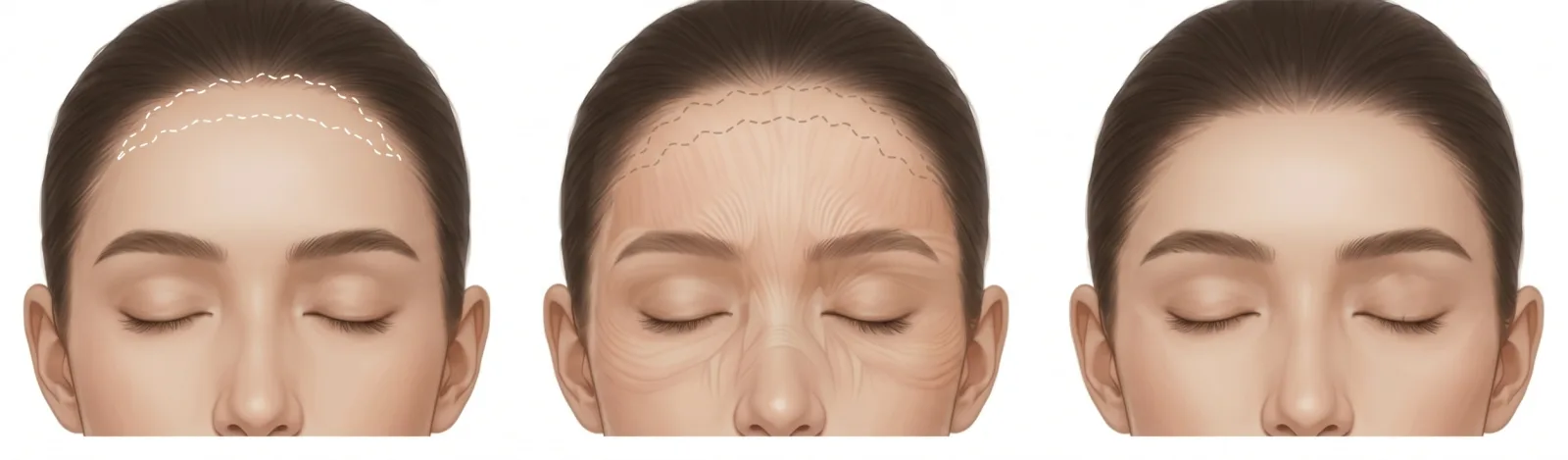
A forehead reduction lowers a high forehead by advancing the hairline: the surgeon makes an incision along the hairline, releases the forehead soft tissue, moves the hairline-bearing scalp forward and re-fixes it, then closes so the incision sits at the new hairline. Because the whole forehead layer is lifted, moved and re-anchored across a broad area, the forehead responds with real, expected swelling. The operation repositions a whole layer of tissue, and the incision line is only one part of it.
Illustration: through a fine line along the hairline (dotted), the hairline is brought forward to shorten a tall forehead.
What surprises most patients is where the swelling ends up. Fluid from the advanced forehead drains downward over the first days into the eyelids and around the eyes, so your eyes may look puffy, heavy or faintly bruised although the surgery was done up at the hairline. Meanwhile the forehead skin between the brows and the new hairline tends to feel tight and firm.
Knowing this makes the early days far less alarming. Puffy eyes under a tight forehead in the first days are fluid moving down, and they say little about the final look. The shorter forehead and new hairline are judged over weeks. The recovery timeline maps the full course, and when you will see results covers the long view.
Timeline
Forehead reduction swelling, week by week
Days 1–4: swelling builds and peaks, usually around days two to four, and is at its most visible, often more around the eyes than along the hairline as fluid settles downward. The forehead feels tight and firm, the hairline incision is dressed early on, and any bruising around the eyes appears and darkens. In these days, keep your head raised, cool the forehead gently and rest as much as you can. Looking quite puffy, with the shorter forehead still hard to see, is expected at this point.
Week 1–2: the forehead puffiness starts to go down day by day, and bruising around the eyes turns from dark to green-yellow. The hairline sutures or staples are typically checked and removed within the first couple of weeks, on a date your surgeon sets for your closure. That visit is also a chance to check that the incision and swelling are settling as expected. By the end of week two, many people look markedly better than the peak, though the forehead may still feel tight and the hairline is still healing.
Weeks 3–6 and beyond: forehead swelling that other people could spot keeps fading, and by around three to six weeks most patients are at ease in normal social settings. What remains after that is subtle and slow: a residual tightness across the forehead and along the hairline, occasional numbness or altered sensation behind the incision as small nerves recover, and a settling of the forehead and hairline that continues over the following weeks. One side of the forehead may also go down a little faster than the other before they even out.
Bruising
Where forehead reduction bruising shows, and for how long
Bruising after a forehead reduction often surprises people. The incision sits up along the hairline, yet that area may show little obvious bruising, while blood and fluid sink with gravity into the eyelids and around the eyes. Lower lids and under-eyes can therefore look puffy and faintly bruised although no one operated there. Bruising that travels down from the forehead in this way is expected.
The colour moves from dark red-purple through blue, green and yellow as it clears. Most of it is gone within two to three weeks, at about the same pace as the bulk of the forehead swelling. A raised head and gentle cooling in the first 48 hours both help keep it smaller and shorter; once the bruising around the eyes has faded enough, makeup can usually hide the rest, on your surgeon's timing.
Some things make bruising after hairline advancement heavier: blood-thinning medication and supplements such as fish oil, high-dose vitamin E, ginkgo and certain anti-inflammatories; drinking alcohol close to the surgery date; and high blood pressure or straining. Disclosing every medication and supplement at your consultation and following the pre-surgery guidance is the simplest way to keep bruising down — we cover the comfort side of recovery in pain and anaesthesia and how the hairline incision heals in scars and healing.
Reduce it
Helping forehead swelling settle sooner
What helps is simple and works best when done every day. Keep your head elevated, sleeping propped up at around 30–45 degrees for the first one to two weeks, so fluid drains away from the forehead and eyes. Puffiness around the eyes collects overnight, so mornings are usually the worst, and a raised head reduces that. Cool the area gently in the first 48 hours with cool compresses across the forehead and around the eyes as your surgeon directs, never ice directly on the skin and never firm pressure over the hairline incision.
Rest and pace yourself. For the first two to three weeks, stay away from hard exercise, heavy lifting, bending over and anything else that raises blood pressure. These add to forehead and eye swelling, can worsen bruising or, rarely, cause bleeding, and put tension on a fresh hairline incision. Keep your blood pressure steady with quiet, easy days at first. Skip alcohol and smoking, since both slow healing of the hairline wound and add swelling; drink plenty of water and eat less salt so less fluid gathers around the eyes.
Beyond that, follow the specifics your surgeon gives you: how to wash your hair around the hairline incision, when the closure feels secure enough to move more freely, and when light activity and then exercise are safe. Each step is small, but together they shorten recovery, which matters most for international patients recovering within a planned trip. More on this is in recovering in Seoul after surgery.
What's normal
Normal forehead reduction healing, and when to call
Normal, expected recovery: swelling peaking in the first two to four days and easing over the following weeks; puffiness and faint bruising around the eyes as fluid settles downward, clearing over two to three weeks; tightness across the forehead and along the hairline, numbness or altered sensation behind the incision, and a heavy-feeling forehead that softens over weeks; and slight differences between the two sides early on. None of this needs treatment; it is how a forehead reduction normally heals.
What warrants an urgent call is anything that breaks sharply from that path: rapidly increasing, tense swelling on one side of the forehead, especially if firm and painful (a possible collection that needs prompt review); severe or escalating pain not eased by your prescribed medication; a sudden change in skin colour over the forehead or hairline; fever or spreading redness, warmth or discharge along the hairline incision suggesting infection; or any wound edge that looks like it is separating. If one side of the forehead suddenly swells a lot in the first day or two, contact the clinic straight away.
It helps most to have direct access to Dr. Baek, who performed your hairline advancement. A photo of your forehead gets an answer from him on whether the swelling, bruising and hairline incision look right, or a request to come in, so you are not left guessing, even after you have flown home.
At Garnet
How Garnet manages swelling and after-care
Garnet is a single-surgeon clinic in Apgujeong, Seoul. Dr. In-Soo Baek is a board-certified plastic surgeon (Korean medical licence no. 77407) and the only operating doctor. He performs the hairline-advancement forehead reduction and reviews your recovery himself, so the person assessing your swelling is the person who did the surgery. With only a few operations on his list each day, there is time to explain after-care for a surgery whose swelling moves down to the eyes while the hairline incision heals.
Aftercare covers the measures above (elevation, gentle cooling of the forehead and eyes, rest, blood-pressure care and what to avoid), and the incision check and suture or staple removal within the first couple of weeks doubles as a check that the hairline and swelling are settling on track. Follow-up is set at 1, 3 and 6 months to match how slowly the forehead and hairline settle. For international patients much of it happens by messenger: a photo of your hairline goes to Dr. Baek, who tells you whether recovery is on course or what needs attention.
If you are still deciding, begin with a no-obligation online assessment. From clear photos of your forehead the surgeon can outline your likely recovery, including how much swelling and bruising around the eyes to expect and how long to stay in Seoul.
Real Results
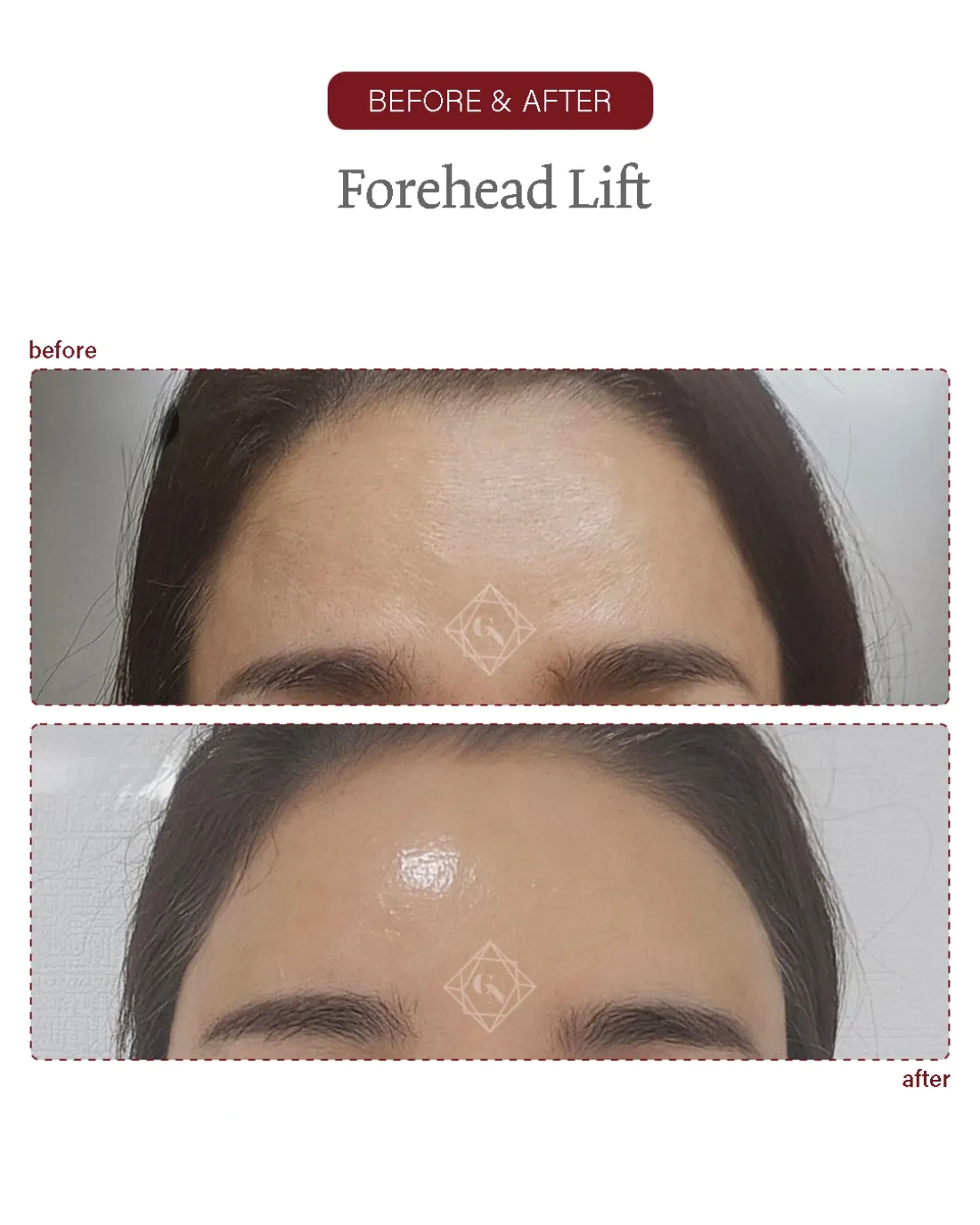
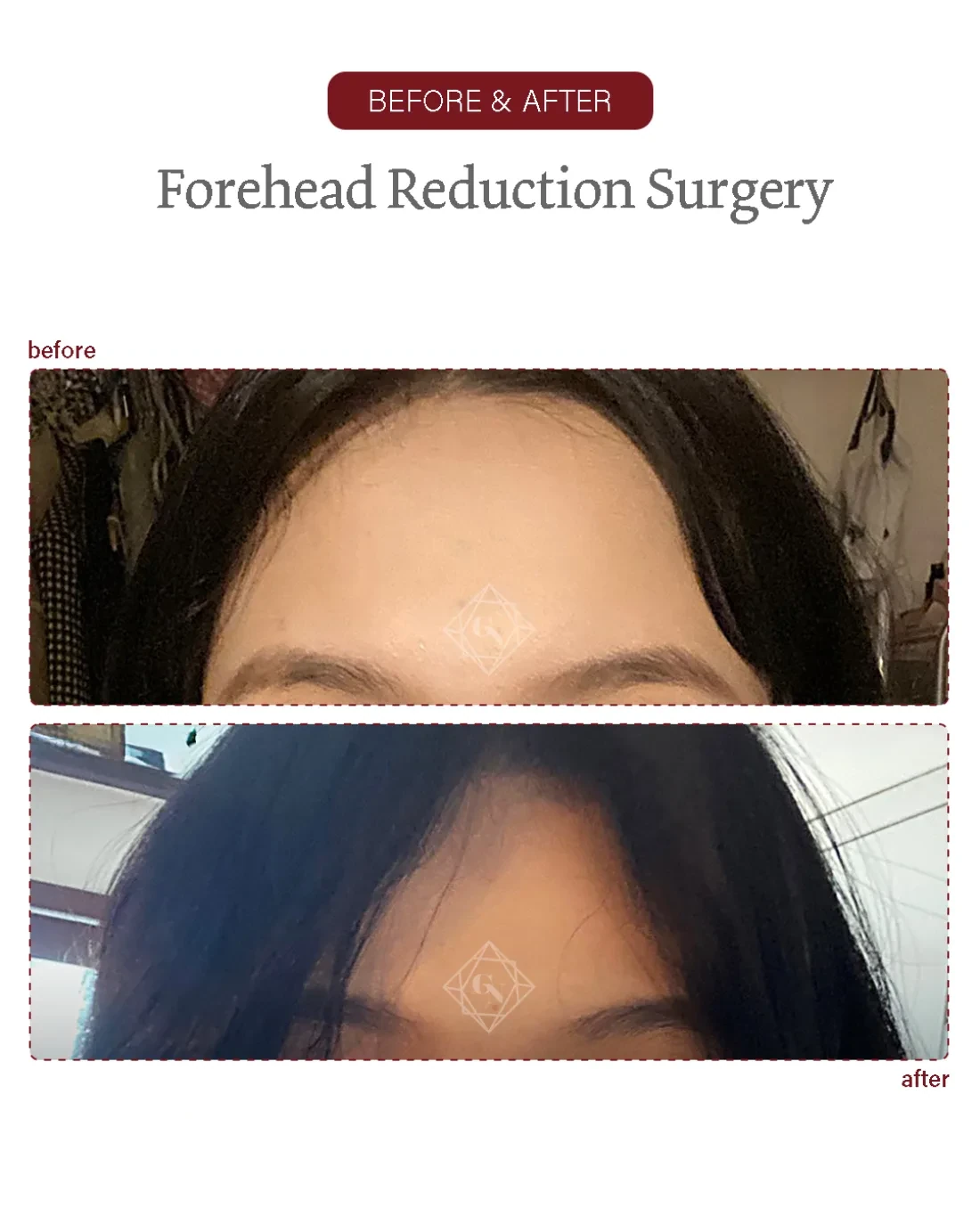
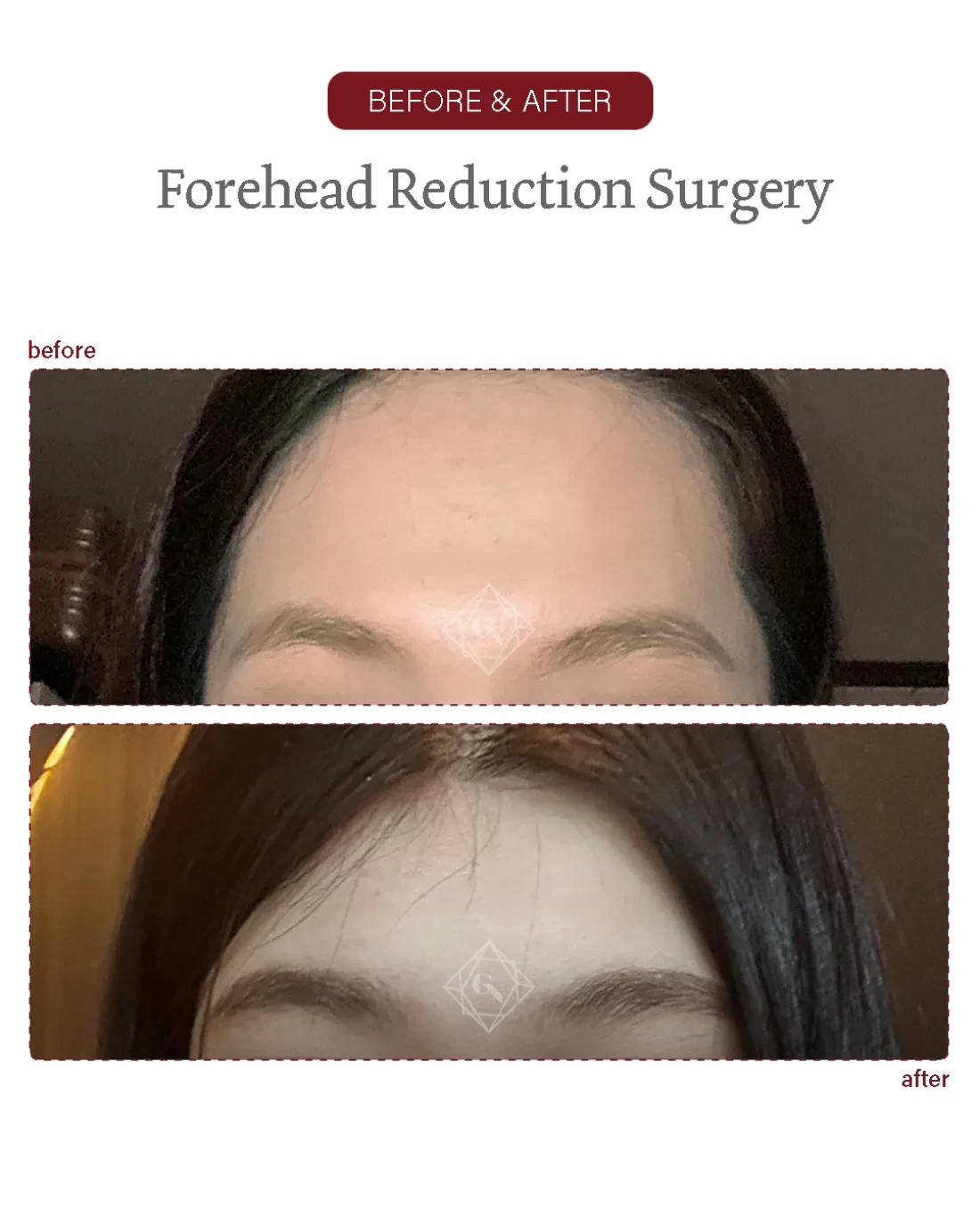
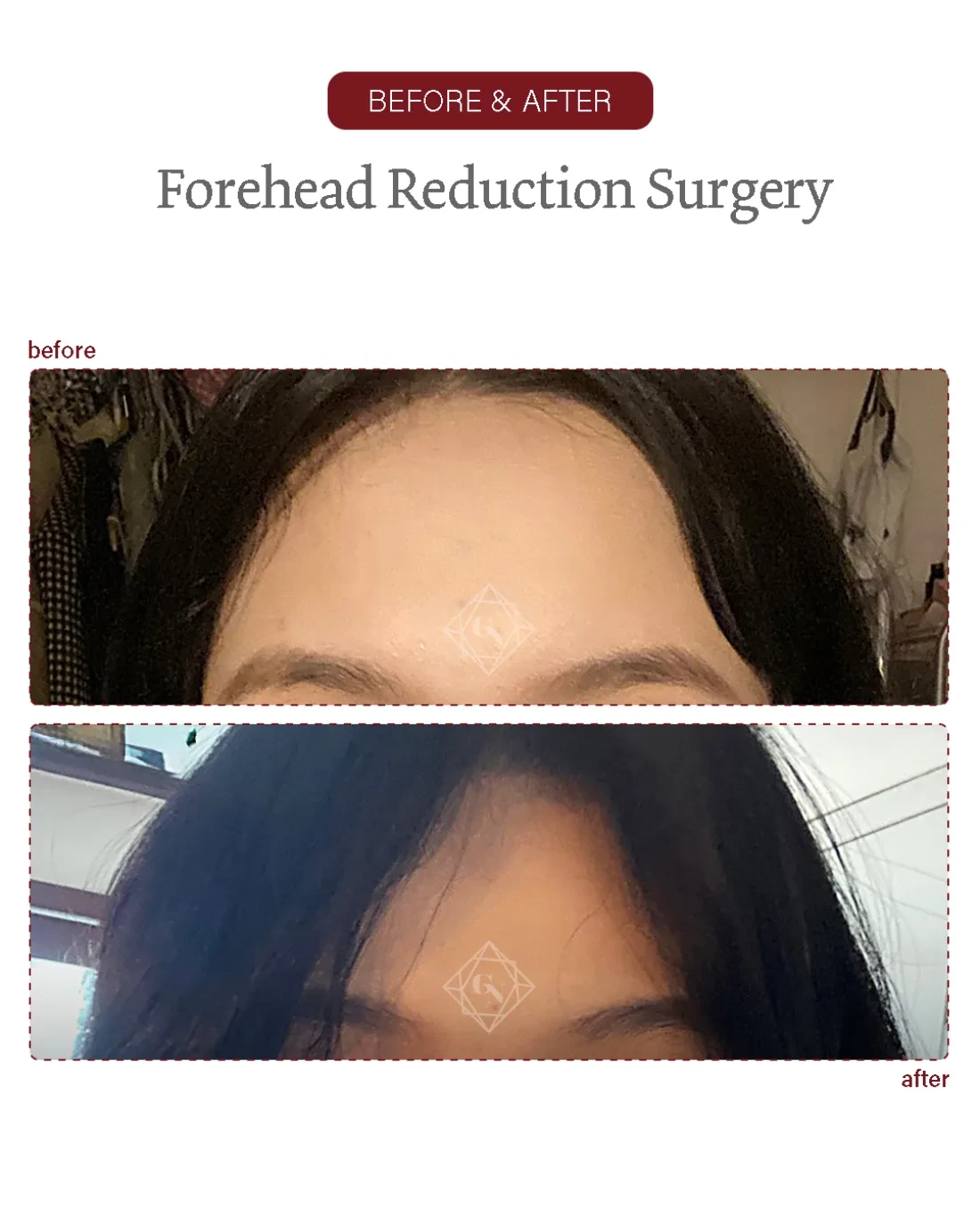
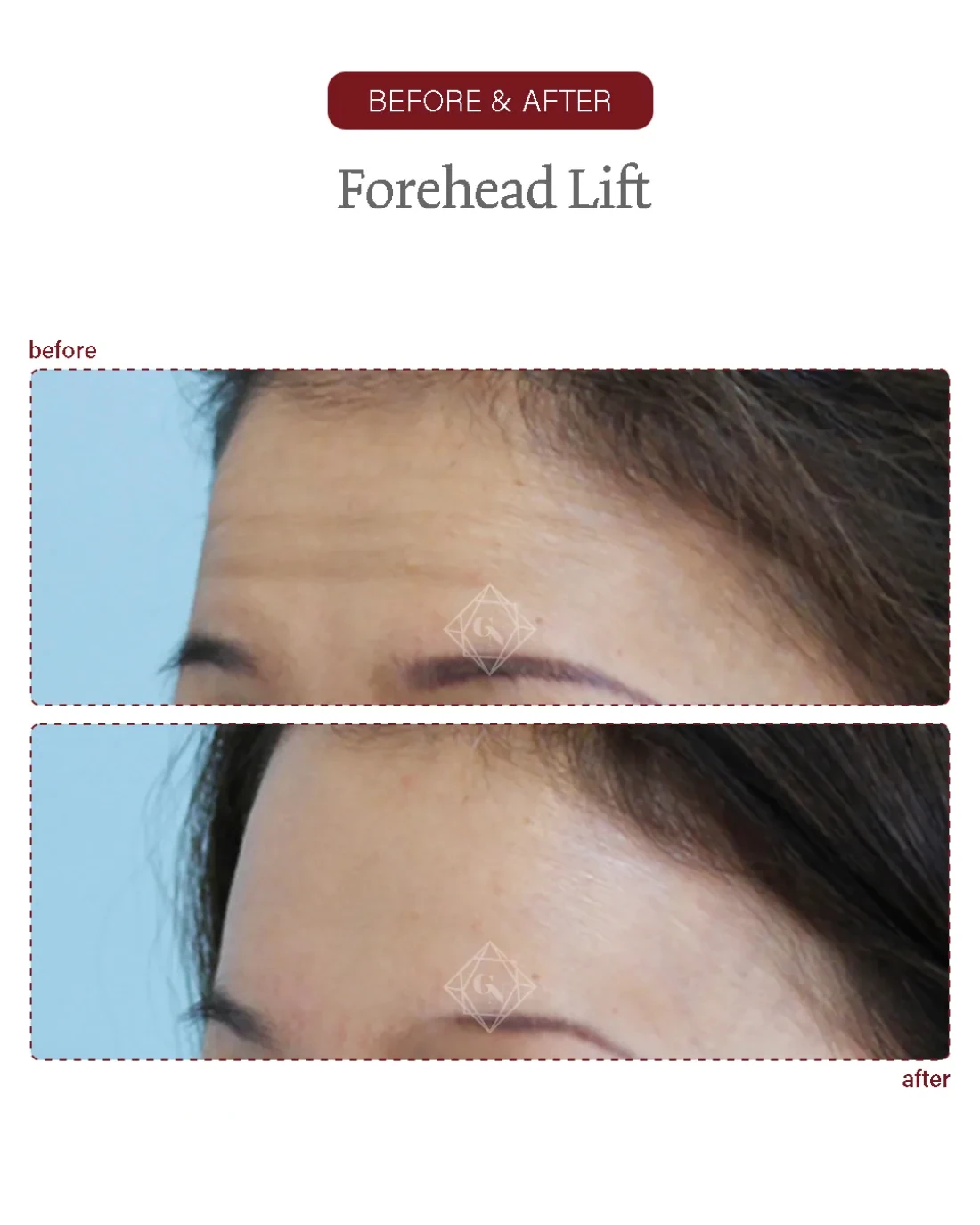
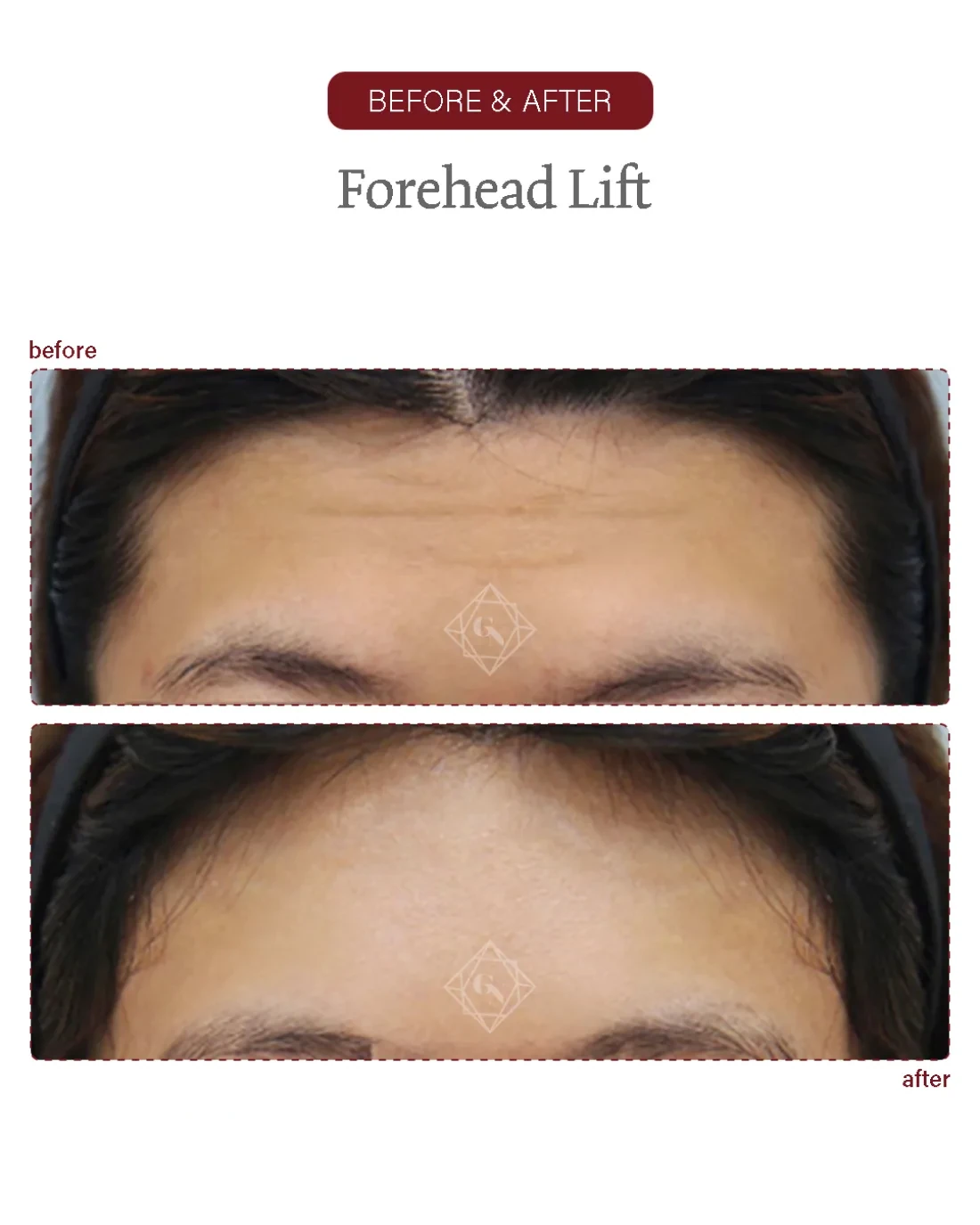
Before & After
Forehead reduction before/after sets of actual Garnet patients (published with consent). Results, recovery and scar appearance vary by individual, depend on scalp laxity and hair density, and are not guaranteed.
Prices
Price at Garnet
Forehead reduction
₩7,000,000 + VATExcluding VAT (10% VAT is added at payment)Book now
Same price as Korean patients. Prices shown exclude 10% VAT; your written quote, issued after the in-person consultation, shows the full amount payable.
Dr. In-Soo Baek
Director & sole operating surgeon
Korean medical licence no. 77407
Operate on what you came for. Trained at Korea University Medical Center. Every case planned, performed and reviewed by the same hands.
1Operating surgeon
~2Surgeries per day
7Registered techniques
Board-certified plastic surgeon
Plastic surgery training at Korea University College of Medicine & graduate school
Korean Society of Plastic and Reconstructive Surgeons member, in its facial-contour, eye & rhinoplasty groups
Consults, operates and follows up each case himself
Peer-reviewed papers behind the facts on this page. Each describes findings in its own study group — not results at Garnet — and none predicts your own outcome.
Park JH et al. Management of Cowlick in Female Hairline Correction Surgery. Aesthetic Plastic Surgery. 2024. doi:10.1007/s00266-024-04023-z
Nusbaum BP et al. Naturally Occurring Female Hairline Patterns. Dermatologic Surgery. 2009. doi:10.1111/j.1524-4725.2009.01154.x
Alabdulkarim A et al. Forehead Length Reduction Surgery: Quantifying Complications and Outcomes Through Systematic Review and Meta-Analysis. Aesthetic Plastic Surgery. 2026. doi:10.1007/s00266-026-05691-9
FAQ
Common questions
How long does swelling last after a forehead reduction?
Forehead swelling tends to be greatest on days two to four and then goes down gradually. By two to three weeks most visible puffiness is gone, and by around three to six weeks many patients are comfortable in social settings. Residual tightness across the forehead and along the hairline softens over the following weeks.
Why do my eyes swell and bruise when the surgery was along my hairline?
Fluid from the advanced forehead drains down with gravity into the eyelids and around the eyes over the first days. As a result the eyes can look puffy and faintly bruised although the incision is at the hairline. This is the usual pattern after a forehead reduction.
How long does bruising last after a forehead reduction?
Because the incision sits along the hairline, that area often shows less bruising while the eye area carries more of it as blood settles downward. The colour fades from dark to green-yellow, and most of it is gone within two to three weeks. Once your surgeon agrees, makeup can usually hide any bruising left around the eyes.
How can I reduce swelling and bruising after a forehead reduction?
Sleep with your head raised at about 30–45 degrees for the first week or two and use gentle cool compresses on the forehead and eyes in the first 48 hours. For two to three weeks, rest and avoid hard exercise and straining, keep your blood pressure steady, and stay off alcohol and cigarettes while drinking enough water and eating less salt. Disclosing your medications beforehand also keeps bruising down.
Is swelling after a forehead reduction normal?
Yes. Swelling peaking in the first two to four days and easing over the following weeks is the normal, expected path, as is puffiness that settles into the eyes and tightness across the forehead and hairline that softens over weeks. Call urgently for rapidly increasing, tense one-sided forehead swelling, severe pain, or signs of infection such as fever or spreading redness along the hairline incision.
When should I urgently contact the clinic?
Call without delay if you have rapidly increasing, tense swelling on one side of the forehead (especially if firm and painful), severe or escalating pain not eased by your medication, a sudden change in skin colour over the forehead, fever or spreading redness, warmth or discharge along the hairline incision, or a wound edge that looks like it is separating. A sudden, large swelling on one side of the forehead in the first day or two always needs a prompt check.
Why does my forehead feel tight and numb behind the hairline?
Tightness comes from the advanced and re-fixed forehead tissue settling, and numbness from the small sensory nerves behind the hairline incision recovering after the forehead was moved forward. Both are expected after a forehead reduction and usually ease gradually over weeks to months. Tell your surgeon if numbness behind the hairline lasts or gets worse alongside other worrying signs.
When can I wash my hair after a forehead reduction?
Your surgeon gives you specific timing, as it depends on how the hairline incision is healing; usually gentle washing is possible within the first several days, avoiding scrubbing directly over the incision. Follow the exact instructions you are given, since the hairline is a healing incision and rough handling too early risks irritation or infection.
When can I wear makeup over the eye-area bruising?
When the bruising around your eyes has faded somewhat and your surgeon agrees, makeup can usually go over it. Keep makeup away from the hairline incision until it has healed and follow your surgeon's specific timing, as applying it too early over healing skin risks irritation or infection.
How does Garnet check my swelling is settling normally?
Garnet runs structured follow-up at one, three and six months with the same board-certified surgeon who performed the procedure, plus the incision check and suture or staple removal within the first couple of weeks. Patients from abroad do much of this by messenger, sending a forehead photo so that Dr. Baek can say whether the swelling and bruising look right or ask to see them.
My mom recently had a brow lift and lower blepharoplasty with Dr. Baek, and our experience has been wonderful so far. The Garnet team was incredibly kind and welcoming, with Kelly assisting us as our English consultant—she made everything…
I’m so happy I chose this clinic for my lower blepharoplasty. I was traveling from abroad by myself, so I was a little nervous, but from the beginning I felt comfortable and truly cared for. Everyone was kind, patient, and professional…
Came in for an in-person consult and ended up choosing Garnet and Dr.Baek for my non-incisional DES and tiplasty/alarplasty. I communicated with Kelly (English consultant) from the start till now (3 weeks post-op). She really help me feel…
My under-eyes have been sagging and folding for years... I tried to cover it up with makeup, but it actually got stuck in the wrinkles and made it stand out even more. While going for consultations, I noticed that the bigger the hospital…
Wondering how much swelling and eye-area bruising recovery would mean for you? Send clear forehead and hairline photos for a no-obligation pre-assessment before you plan a trip.
Send photos and your question before you travel. An English-speaking coordinator reviews every enquiry and replies with guidance on whether surgery is appropriate, the likely plan and timing.
✓ Reviewed by the clinic coordinator, not a bot
✓ Photo-based pre-assessment before you fly
✓ Foreign-patient scheduling & after-care
✓ One surgeon for consultation, surgery and follow-up
Prefer to chat now? Reach the coordinator directly:









 T S7 months ago



