An incision double eyelid forms a crease through a full upper-lid incision that heals into a fixed line, which is what makes it durable and also what makes it harder to revise: unlike a buried-suture fold, the crease is set into healed tissue and scar. Revision here is a serious decision. A line placed too high can look surprised, one too low can look faint, the two eyes may not match, or a scar may have thickened. This page sets out what incisional double eyelid revision really involves, why it demands more time and skill than the first operation, and when patience is the wiser move.
The short answer
The most common reasons to revise an incisional double eyelid are a crease set too high (a staring or surprised look), too low or faint, an unnatural or harsh fold, asymmetry between the eyes, or a thickened or visible scar.
The crease is formed through a healed incision and scar, with no adjustable sutures, so revising it is more demanding than the first surgery and usually needs the tissue to be fully settled and soft first.
The fix is matched to the fault: lowering an over-high crease, deepening or reinforcing a faint one, softening a harsh fold, releasing adhesions, or revising a thickened scar, sometimes with skin or scar management in place of a simple re-cut.
A careful assessment often concludes that a scar or firmness needs many months to mature before any redo, that only one side needs adjusting, or that a modest imperfection is better left than chased.
An incision double eyelid is made by opening the upper lid, forming the crease and letting it heal into a fixed line, which can also address heavy skin, excess fat and, where needed, ptosis at the same time. That is why it lasts and suits thicker or hooding lids. It also means the crease is built into healed tissue and a scar, with no adjustable knot, so when the result is not right, correcting it is a genuine second operation.
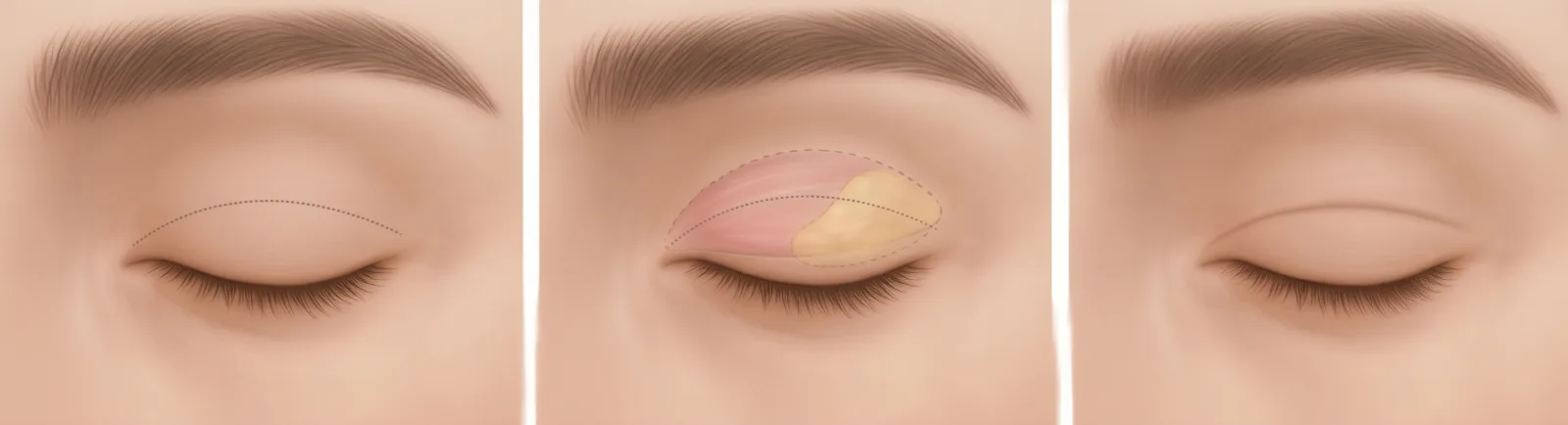
Illustration: the crease is set through an incision along the planned fold; the tissue beneath (muscle in pink, fat in yellow) is adjusted so the crease holds.
The concerns that bring people back cluster around the height, shape and symmetry of the fold. A crease set too high can look permanently surprised or staring and may show too much of the lid; a crease set too low can look shallow or barely there; a fold can look unnaturally deep, harsh or 'operated' where it should look soft; and the two eyes may simply not match in height or shape. Any of these can dominate the face even when the surgery was otherwise clean.
The other common driver is the scar itself. Because there is a real incision, a proportion of lids heal with a line that is thicker, redder, indented or more visible than hoped, or with firmness and adhesions that tether the fold or restrict smooth blinking. Distinguishing a scar that is still maturing from one that has genuinely healed poorly is central to the decision, because most scars soften and fade far more than people expect if given enough time.
What settles
What settles on its own after incisional double eyelid surgery, and what does not
A fresh incisional crease looks higher, deeper, firmer and more prominent than the final result, often for months. Early swelling props the fold up and can make it look staring, uneven or unnaturally deep; as it resolves, the crease drops and softens considerably. Judging the height or shape of a cut crease in the first weeks, or even the first couple of months, reliably overstates the problem, because so much of what looks wrong is swelling that has not yet gone.
The scar follows its own long arc. In the early months an incision line is typically pink, firm and slightly raised, and it can look far more noticeable than it eventually will. Over roughly six to twelve months most lid scars flatten, pale and settle into the crease until they are hard to see. Firmness, small lumps along the line and a tethered feeling on blinking are usually part of this maturing and are not fixed faults. Revising into an immature, still-remodelling scar tends to make things worse.
What does not reliably settle on its own is a crease that remains clearly too high or too low once swelling has fully gone, a genuine mismatch in height or shape between the eyes that persists past the settling phase, a fold that stays harsh or unnatural after months, or a scar that is still visibly thickened, indented or tethering the lid after it has had time to mature. These are the concerns where revision is reasonably considered, after telling them apart from the long, normal settling above.
Matching the fix
Matching the fix to the fault
Incisional revision is not one operation but a range, and the right correction depends entirely on what is wrong. A crease set too high is one of the harder faults, because lowering a fixed line means releasing the old crease and re-forming a new, lower one while managing the skin above. It is exacting work and needs a fully settled, soft lid. A crease that is too low or faint is approached differently, by deepening and reinforcing the fold or, if there is redundant skin, removing a little to give the crease something to sit against.
A harsh, over-deep or unnatural fold is usually softened by releasing the adhesions that make the crease look carved and re-forming a gentler line; a simple re-cut is not the usual answer. Asymmetry is generally corrected by adjusting the mismatched side toward the other, leaving the better eye alone, matching height and shape so the two creases read as a pair. Where the earlier surgery removed too much skin and the lid feels tight or the eyes do not close easily, the plan becomes more careful still, since tissue cannot simply be added back.
A thickened, indented or tethered scar is its own category, often managed with scar-focused treatment and time before any re-cut, or in place of one, because opening a poor scar too early can reset the same problem. Because these faults are so different, matching the response to the specific fault is the whole skill; the aim is the smallest effective correction to the crease. If the underlying issue is heavy skin or brow position and the crease itself is sound, the who an incisional double eyelid suits page explains why the diagnosis drives the plan as much as the fold does.
Timing
Why timing matters more here
Timing matters more in incisional revision than in almost any other lid procedure, and for most concerns the right course is to wait, often longer than people want to. In the early months the crease is still dropping, the scar is still remodelling and the tissue is still firm; operating into that is both harder to judge and more likely to leave a worse scar than the one being corrected. A great deal of what looks wrong at two or three months looks acceptable by six to twelve without any further surgery.
As a general principle, a surgeon prefers a cut crease to be fully settled and the scar mature before revising — commonly around six months at the earliest for the fold, and closer to a year for scar-related concerns, so the redo is planned on a soft, calm lid. This waiting has a purpose: revising a still-remodelling scar can restart the very thickening you are trying to fix, which is why a careful surgeon will often ask you to give a first result more time before committing.
There is a narrow exception. Some functional problems are reviewed promptly and not left to mature: eyes that genuinely cannot close, an incision that has opened, or signs of infection (redness, discharge, spreading pain). For the far more common cosmetic concerns of height, shape, symmetry and scar appearance, patience is the ally, and rushing a redo into fresh tissue is the most common avoidable mistake.
Technique
What a careful incisional redo involves
A careful revision starts with reading the earlier surgery: where the crease was placed, how much skin and fat were removed, whether ptosis was addressed, how the scar has healed and how the fold behaves when the eyes are open, closed and looking down. That assessment decides whether the fault is height, shape, symmetry, scar or an underlying issue such as removed skin or brow position. The same-looking crease can have very different causes, and the redo must target the cause behind the line.
In theatre the work respects the existing scar and any adhesions from the first operation, releasing the old crease where a new height or a softer fold is needed, reinforcing a shallow crease, or revising the scar itself, always balancing the two sides against each other. Because a genuine incision is involved, the recovery resembles a primary incisional double eyelid: swelling and a high, firm fold that settles over months, sutures out at about a week, and a fresh line that matures over the following year. The incisional recovery timeline covers that day-by-day and month-by-month pattern.
Revision is more demanding than the first incisional surgery. The tissue planes are altered, scar is present, and there is less margin to remove more skin, so it is best done on a fully settled lid by an experienced surgeon working conservatively. The realistic goal is to improve the specific fault with the smallest effective step and a scar that will mature well. Repeatedly re-cutting an already operated lid to chase an idealised fold is avoided.
At Garnet
How Garnet approaches incisional revision
Garnet is a single-surgeon clinic in Apgujeong, Seoul. Dr. In-Soo Baek is a board-certified plastic surgeon (Korean medical licence no. 77407) and the only operating doctor. For an incisional double eyelid revision he reads the earlier crease and scar himself, plans and performs the redo, and reviews you at 1, 3 and 6 months. For an incisional revision, where reading the previous surgery and judging scar maturity is so much of the work, that continuity matters: the surgeon who examines your crease is the one accountable for the plan and the result.
Revision assessment at Garnet is deliberately unhurried and frank. That includes being willing to say that a crease or scar needs several more months to mature before any redo is safe, that only one side needs adjusting, or that a modest imperfection is better accepted than chased with another operation on already-scarred tissue. There is no consultation fee and no pressure to book, because a sound incisional revision decision should never be rushed.
If you are considering correcting an earlier incisional double eyelid from abroad, you can begin without travelling. Send your history and clear photos of the eyes open, closed and looking down for a pre-assessment, and read the guide for international patients for how stay length and remote follow-up over the longer healing period are handled.
Real Results
Before & After
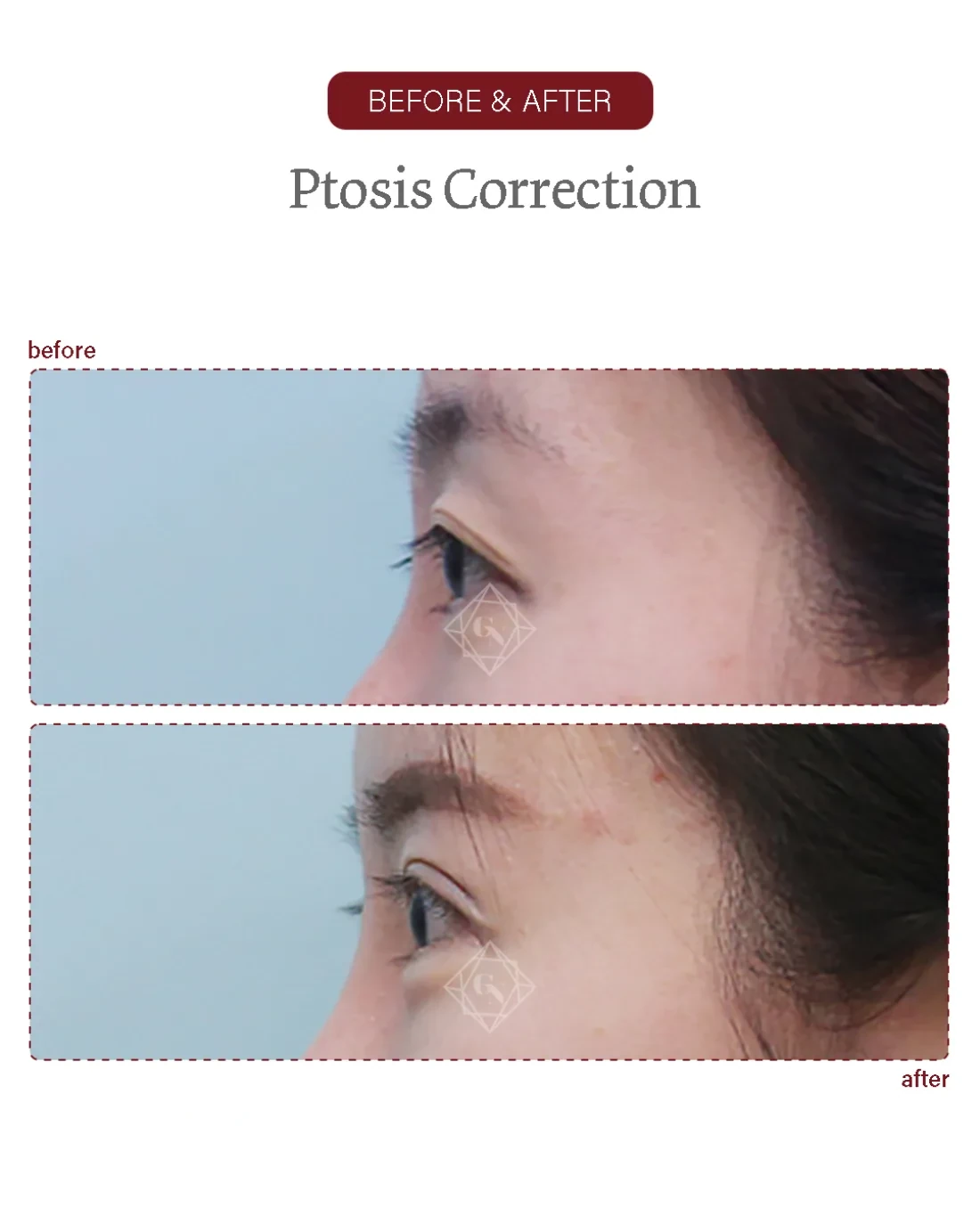
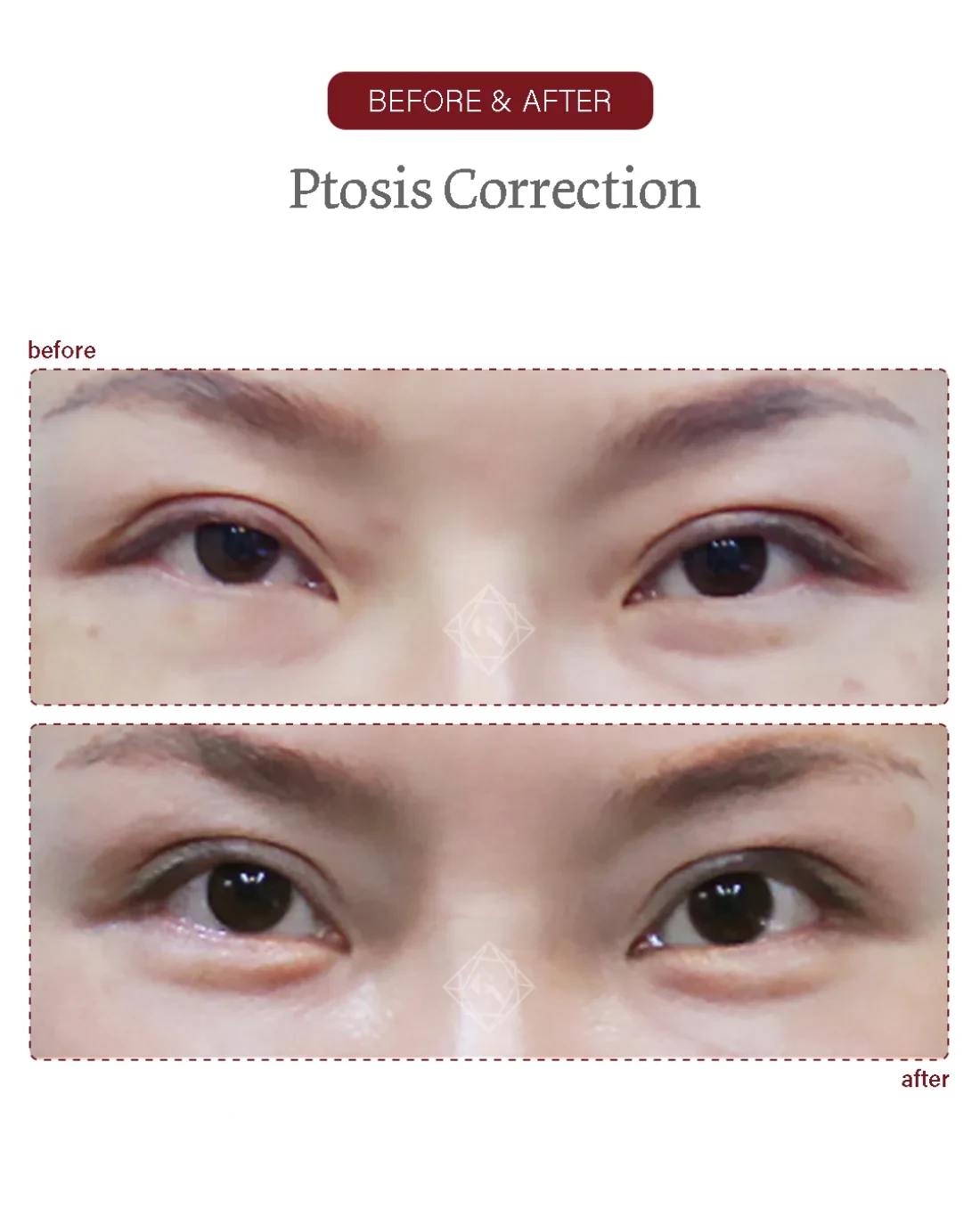
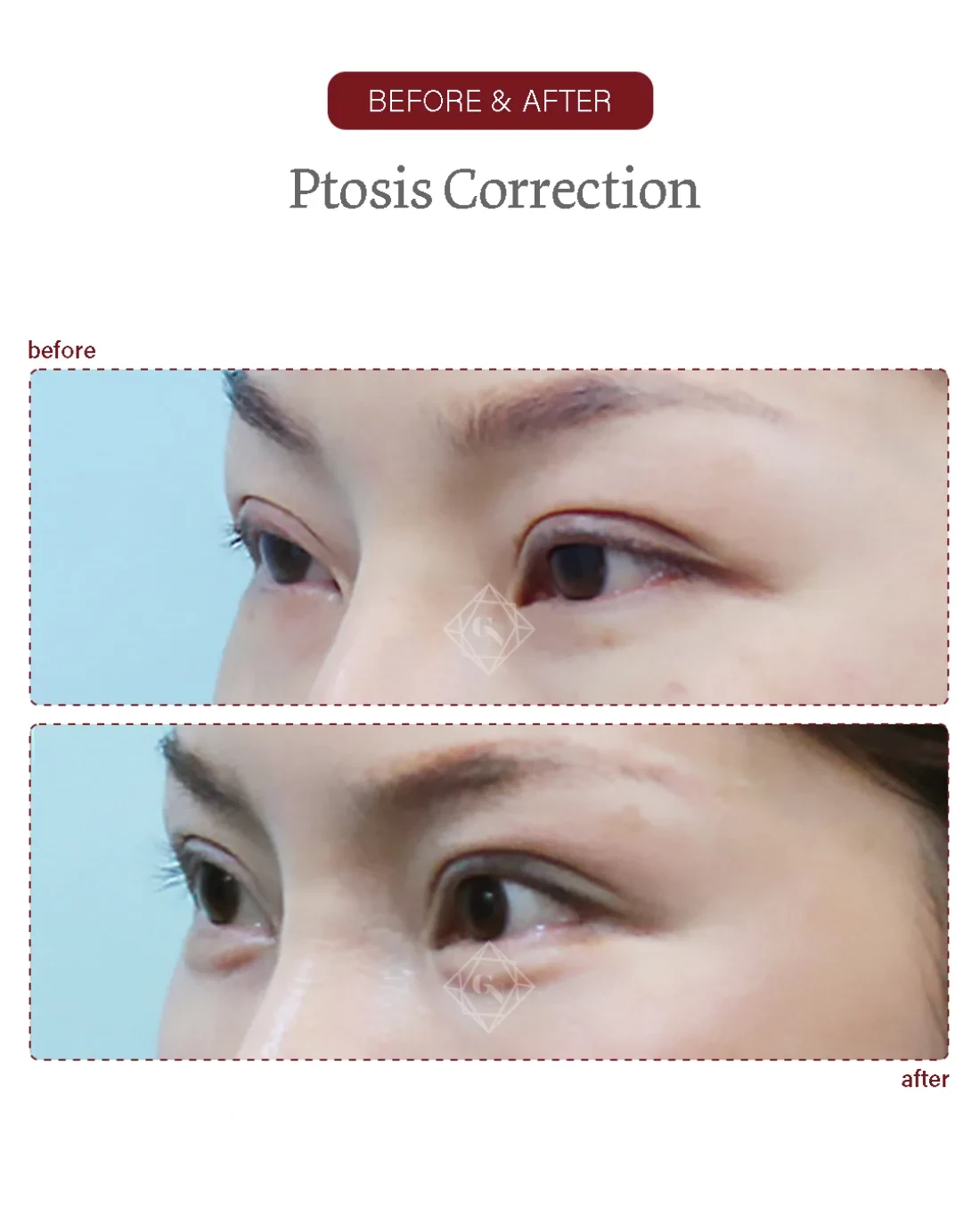
Ptosis-correction before/after examples of actual Garnet patients (published with consent). Results, recovery and suitability vary by individual and are not guaranteed; the right approach is decided at an in-person consultation.
Dr. In-Soo Baek
Director & sole operating surgeon
Korean medical licence no. 77407
Operate on what you came for. Trained at Korea University Medical Center. Every case planned, performed and reviewed by the same hands.
1Operating surgeon
~2Surgeries per day
7Registered techniques
Board-certified plastic surgeon
Plastic surgery training at Korea University College of Medicine & graduate school
Korean Society of Plastic and Reconstructive Surgeons member, in its facial-contour, eye & rhinoplasty groups
Consults, operates and follows up each case himself
Peer-reviewed papers behind the facts on this page. Each describes findings in its own study group — not results at Garnet — and none predicts your own outcome.
Ge M et al. Mini-incision Blepharoplasty with Pretarsal Fasciectomy for Double-Eyelid Surgery. Aesthetic Plastic Surgery. 2021. doi:10.1007/s00266-021-02349-6
Sun W et al. Orbicularis-Tarsus Fixation Approach in Double-Eyelid Blepharoplasty: A Modification of Park’s Technique. Aesthetic Plastic Surgery. 2018. doi:10.1007/s00266-018-1218-7
FAQ
Common questions
Can an incisional double eyelid be revised or corrected?
Yes, but it is a genuine second operation and more than a quick adjustment. Because the crease is formed through a healed incision and scar, a height that is too high or too low, an unnatural fold, asymmetry or a thickened scar can be corrected, but only once the tissue is fully settled and the scar mature. It is more demanding than the first surgery and should follow a careful assessment on a soft, calm lid.
My crease is set too high after incisional surgery. Can it be lowered?
Sometimes, but it is one of the harder revisions. Early on a high-looking crease is usually swelling propping the fold up, and it often drops considerably over the first months. If it remains genuinely too high once fully settled, lowering it means releasing the old crease and re-forming a lower one while managing the skin above. This is exacting work, best done unhurried on a soft, settled lid.
My incisional double eyelid looks unnatural or too deep. Can it be softened?
Often, yes, once it has settled. A fold that looks harsh or carved in the early months is frequently swelling and firmness that soften with time. If a genuinely over-deep or unnatural fold remains after months, it can usually be softened by releasing the adhesions that make the crease look carved and re-forming a gentler line.
What does incisional double eyelid revision involve?
It depends on the fault. Lowering an over-high crease means releasing and re-forming the line; a faint crease is deepened or reinforced; a harsh fold is softened by releasing adhesions; asymmetry is corrected by adjusting the mismatched side; and a thickened scar may be managed with scar-focused treatment before or instead of re-cutting. Because an incision is involved, the recovery resembles the first surgery and the new scar matures over a year.
When is incisional double eyelid revision needed?
For early height, firmness and scar appearance, revision is usually not needed, because these settle over months. Genuine reasons include a crease clearly too high or too low once fully settled, a persistently harsh or unnatural fold, a real mismatch between the eyes, or a scar still thickened or tethering the lid after it has matured. Functional problems such as eyes that cannot close are reviewed promptly instead.
How long should I wait before revising an incisional double eyelid?
Longer than for most lid procedures. The crease keeps dropping and softening for months and the scar remodels over roughly six to twelve, so revision is commonly planned no earlier than about six months for the fold and closer to a year for scar-related concerns. Revising a still-remodelling scar can restart the thickening you are trying to fix. Genuine functional problems are the exception and are reviewed promptly.
My scar is thick or visible after double eyelid surgery. Do I need it re-cut?
Usually not straight away. In the early months an incision line is typically pink, firm and raised, and most lid scars flatten and pale substantially over six to twelve months. A scar still thickened, indented or tethering after it has matured can be revised, but it is often managed with scar-focused treatment and time first, because re-cutting a poor scar too early can reset the same problem.
My two eyes look uneven after incisional surgery. Can that be fixed?
Often, yes, but wait for full settling first. The two lids swell and drop at different rates, so a mismatch at two or three months frequently evens out by six to twelve. A genuine difference in height or shape that persists once both sides have settled is usually corrected by adjusting the mismatched side toward the other, without redoing both eyes.
Will incisional revision leave a worse scar?
It need not, if the timing is right. Revising through the existing crease on a fully settled, mature lid, and working conservatively, generally lets the new line heal within the fold much like the first. The real risk to scarring comes from operating too early into still-remodelling tissue, which is exactly why a careful surgeon asks you to wait until the scar has matured before any redo.
Can I get an incisional revision assessment from abroad before travelling?
Yes. You can send the history of your first surgery and clear photos of the eyes open, closed and looking down for a pre-assessment online before committing to travel. You get a realistic view of what revision could achieve and, importantly, whether the tissue and scar are mature enough to revise yet or whether waiting several more months serves you better, before planning a trip.
My mom recently had a brow lift and lower blepharoplasty with Dr. Baek, and our experience has been wonderful so far. The Garnet team was incredibly kind and welcoming, with Kelly assisting us as our English consultant—she made everything…
I’m so happy I chose this clinic for my lower blepharoplasty. I was traveling from abroad by myself, so I was a little nervous, but from the beginning I felt comfortable and truly cared for. Everyone was kind, patient, and professional…
Came in for an in-person consult and ended up choosing Garnet and Dr.Baek for my non-incisional DES and tiplasty/alarplasty. I communicated with Kelly (English consultant) from the start till now (3 weeks post-op). She really help me feel…
My under-eyes have been sagging and folding for years... I tried to cover it up with makeup, but it actually got stuck in the wrinkles and made it stand out even more. While going for consultations, I noticed that the bigger the hospital…
Considering correcting or refining an earlier incisional double eyelid? Send your history and photos for a no-obligation pre-assessment, including a frank view on whether the crease and scar are settled enough to revise yet, or whether giving the first result more time serves you better.
Send photos and your question before you travel. An English-speaking coordinator reviews every enquiry and replies with guidance on whether surgery is appropriate, the likely plan and timing.
✓ Reviewed by the clinic coordinator, not a bot
✓ Photo-based pre-assessment before you fly
✓ Foreign-patient scheduling & after-care
✓ One surgeon for consultation, surgery and follow-up
Prefer to chat now? Reach the coordinator directly:









 T S7 months ago



