Incision double eyelid surgery is one of the most common procedures international patients travel to Korea for, and the logistics are very manageable. The single fact that shapes your whole trip is simple: the sutures come out at about 7 days, so plan to be in Seoul long enough to have them removed before you fly home.
The short answer
Plan to stay in Korea long enough for suture removal at about 7 days. This is the milestone that sets your trip length.
You can start entirely from home with an online consultation and photos, so much of the planning happens before you travel.
Incision double eyelid is often combined with epicanthoplasty or ptosis correction in one session, which is worth deciding before you book your dates.
A single-surgeon clinic means the same board-certified surgeon consults, operates and reviews you, and can continue follow-up by messenger after you return home.
Starting with an online consultation before you travel
The biggest worry for most international patients is committing to surgery in another country before ever meeting the surgeon. The answer is to start remotely: an online consultation lets you send clear photos of your eyes (front-on, looking up, looking down, and eyes gently closed) and get a pre-assessment of whether incision double eyelid surgery suits you, what crease design would look natural for your face, and whether anything else is worth discussing. You can ask about pain, recovery and cost before you spend a won on flights.
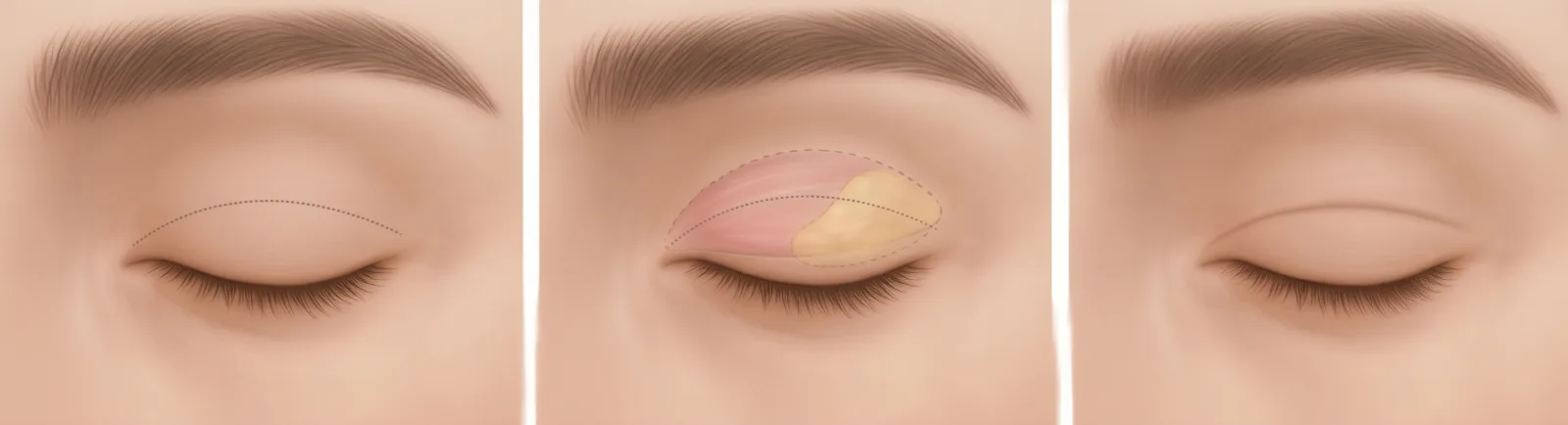
Illustration: the crease is set through an incision along the planned fold; the tissue beneath (muscle in pink, fat in yellow) is adjusted so the crease holds.
A good remote consultation is also where a careful surgeon will tell you if you do not need surgery, or if a different approach would suit your eyelids better. That candour matters more when you are travelling, because you cannot easily come back for a second opinion. Settling the plan in advance means that when you arrive, the in-person consultation is for confirming and fine-tuning the crease plan, with no big decision left for the last minute.
Because everything is agreed before you fly, your in-country time is spent efficiently: a final consultation and examination, the surgery, and the recovery days leading up to suture removal. You walk in already knowing the plan, the timeline and roughly what to expect.
How long to stay
How long you need to stay in Korea
The defining number for an incision double eyelid trip is the 7-day suture removal. The stitches along the upper-lid crease need to come out at around the one-week mark, so you should be in Seoul for that appointment and should not fly home with sutures still in. A practical stay is roughly 7 to 10 days: a day or two before surgery for your in-person consultation and examination, the surgery itself, the healing days, suture removal at about 7 days, and ideally a day or two afterwards before a long flight.
It is wise to build in a small buffer and avoid booking a flight for the morning after suture removal. Swelling and bruising are normal in the first week, and while you will be presentable by the time the sutures come out, you will still be visibly healing, so plan your trip around a crease that is still settling. General guidance on timing flights after surgery is covered in when can I fly after plastic surgery, and longer-stay logistics in how long to stay in Korea for surgery.
If your schedule is genuinely too tight to stay the full week, this is something to raise openly at consultation, because suture removal can sometimes be arranged differently. Flying home with sutures in is not ideal, and it should be a deliberate, discussed decision instead of an accident of booking. The recovery side of this timing is detailed on the incision double eyelid recovery timeline page.
Combining procedures
Often combined with epicanthoplasty or ptosis correction
Incision double eyelid surgery is frequently performed together with other eye procedures in a single operating session, which is especially convenient for international patients who would otherwise need two trips. The two most common partners are epicanthoplasty, which adjusts the inner corner of the eye to lengthen its appearance and complement the new crease, and ptosis correction, which lifts a droopy upper lid so the eye opens more fully. The incision double eyelid technique itself can incorporate ptosis correction through the same incision.
Combining procedures means one anaesthesia, one recovery period and one trip, which is a real advantage when you are travelling from abroad. It does mean a slightly longer operation and sometimes a little more swelling, but the suture-removal milestone and overall stay length stay broadly similar. Deciding whether to combine is exactly the kind of thing to settle in your online consultation, because it affects your surgery date, your recovery expectations and your budget.
Combining should be driven by what your eyes actually need. A careful surgeon will recommend adding epicanthoplasty or ptosis correction only when it genuinely improves the result, and will say so plainly if the double eyelid surgery alone is enough for you.
Planning the trip
Planning the double eyelid trip itself
Beyond the surgery, a smooth trip is mostly about practical planning. Garnet is in Apgujeong, a district of central Seoul well known for plastic surgery and easy to reach from Incheon Airport; choosing accommodation nearby means short, low-stress journeys to and from your appointments while you are swollen. Recovering in a quiet hotel or serviced apartment within a short ride of the clinic is far more comfortable than a long commute across the city.
Korea is registered, regulated and well set up for foreign patients, and clinics treating international visitors register with the country's foreign-patient programme, which sets expectations for coordination and record-keeping. Bring loose, button-front clothing for the surgery days, sunglasses for light sensitivity and the journey home, and any regular medications with documentation. Broader practical advice on accommodation, getting around and pacing your stay is covered in planning a plastic surgery trip to Korea and recovering in Seoul after surgery.
Payment and any questions about what is included are worth confirming at consultation; the guide to paying as a foreign patient explains how this typically works for visitors. With the plan, the dates and the logistics settled in advance, the trip itself becomes the easy part.
Follow-up from home
Remote follow-up after you return home
One genuine concern for international patients is what happens after you fly home. Most of the healing of an incision double eyelid result unfolds over the weeks and months after the sutures come out, long after you have left Korea. This is where staying in contact with your surgeon matters. After suture removal, the swelling continues to settle and the crease softens gradually, and being able to send a photo and ask a question by messenger means you are not navigating that alone.
A clinic where the same surgeon followed you through consultation and surgery is well placed to review your progress remotely, because they know exactly what was done and what your result should look like as it matures. They can reassure you that the swelling and crease height you are seeing are on track, or flag early if something needs in-person attention with a local doctor. Structured check-ins at 1, 3 and 6 months give that long arc of healing a clear shape.
Set expectations before you book: ask how follow-up works once you are home, how you reach the surgeon, and what the plan is in the rare case of a complication. Having those answers in advance is part of travelling with confidence.
At Garnet
How Garnet works for international patients
Garnet is a single-surgeon clinic in Apgujeong, Seoul, registered with Korea's foreign-patient programme. Dr. In-Soo Baek (Korean medical licence no. 77407) is a board-certified plastic surgeon and the only operating doctor. He handles your online assessment, the in-person consultation, the surgery itself and every follow-up. For an international patient that continuity removes the biggest uncertainty of operating abroad: you always know who is responsible for your result, from the first photo you send to the 6-month review.
A dedicated coordinator stays with you from consultation through recovery, helping with scheduling around your travel dates, and the surgeon continues to review your healing by messenger after you return home. You can begin entirely from where you are with a no-obligation online consultation: send photos, get a pre-assessment of your upper eyelids, and decide whether incision double eyelid surgery, alone or combined, is right for you before you book a single flight.
Real Results
Before & After
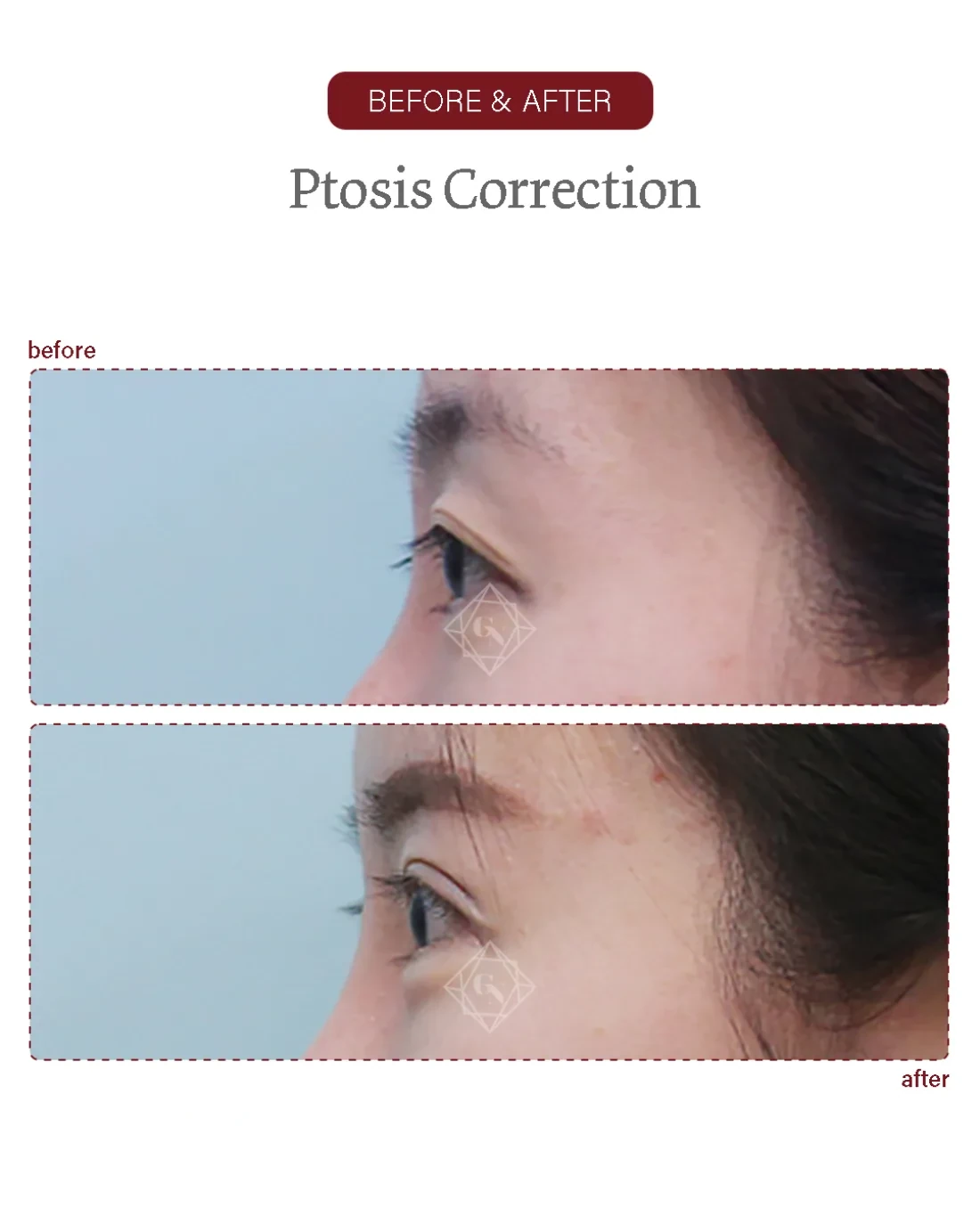
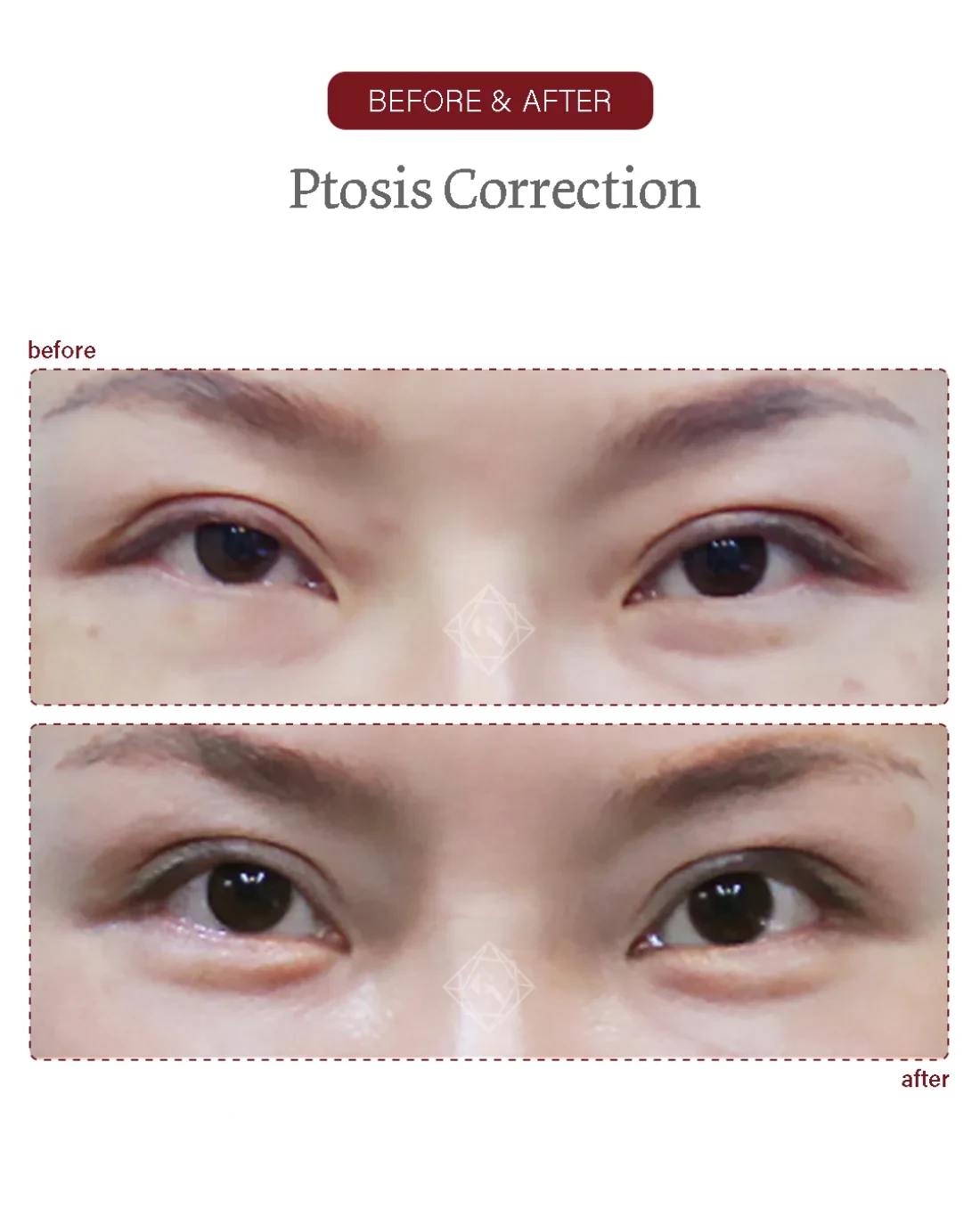
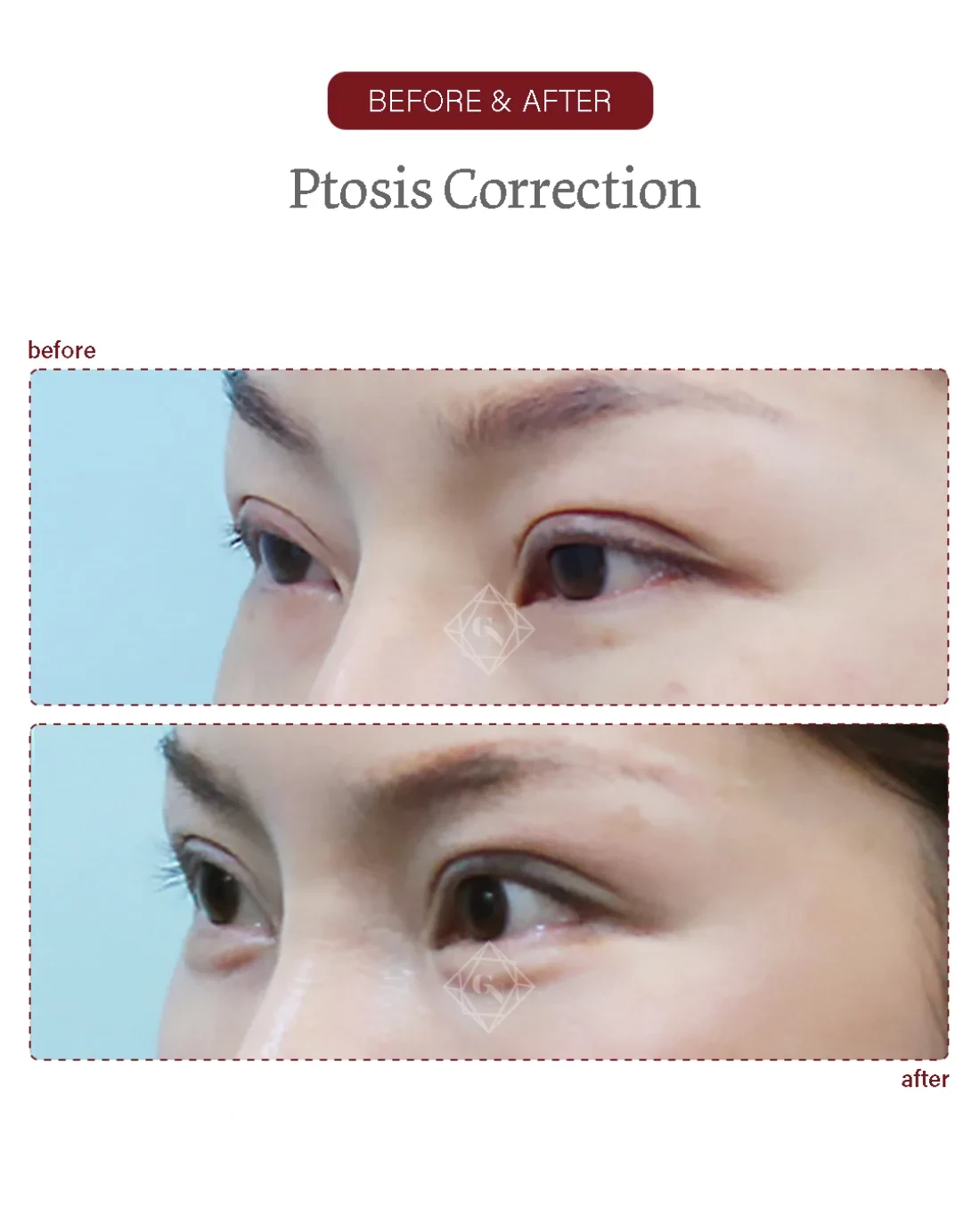
Ptosis-correction before/after examples of actual Garnet patients (published with consent). Results, recovery and suitability vary by individual and are not guaranteed; the right approach is decided at an in-person consultation.
Dr. In-Soo Baek
Director & sole operating surgeon
Korean medical licence no. 77407
Operate on what you came for. Trained at Korea University Medical Center. Every case planned, performed and reviewed by the same hands.
1Operating surgeon
~2Surgeries per day
7Registered techniques
Board-certified plastic surgeon
Plastic surgery training at Korea University College of Medicine & graduate school
Korean Society of Plastic and Reconstructive Surgeons member, in its facial-contour, eye & rhinoplasty groups
Consults, operates and follows up each case himself
Peer-reviewed papers behind the facts on this page. Each describes findings in its own study group — not results at Garnet — and none predicts your own outcome.
McAuliffe PB et al. Complications of Aesthetic Surgical Tourism Treated in the USA: A Systematic Review. Aesthetic Plastic Surgery. 2022. doi:10.1007/s00266-022-03041-z
Sun W et al. Orbicularis-Tarsus Fixation Approach in Double-Eyelid Blepharoplasty: A Modification of Park’s Technique. Aesthetic Plastic Surgery. 2018. doi:10.1007/s00266-018-1218-7
Varma P et al. Cosmetic tourism during the COVID-19 pandemic: Dealing with the aftermath. Journal of Plastic, Reconstructive & Aesthetic Surgery. 2022. doi:10.1016/j.bjps.2021.11.013
FAQ
Common questions
How do international patients get incision double eyelid surgery in Korea?
Most start with an online consultation from home, sending photos of their eyes for a pre-assessment of whether the surgery suits them. Once a plan is agreed, they travel to Seoul for an in-person consultation, the surgery and the recovery days up to suture removal at about 7 days, then return home with remote follow-up by messenger.
How long should I stay in Korea for incision double eyelid surgery?
Plan for roughly 7 to 10 days. The sutures come out at about 7 days, so you need to be in Seoul for that appointment, plus a day or two beforehand for consultation and examination and ideally a day or two afterwards before a long flight. Building in a small buffer is wiser than flying out the morning after suture removal.
Can I start with an online consultation for incision double eyelid surgery?
Yes. You can send clear photos of your eyes and get a pre-assessment, discuss crease design, ask about pain, recovery and cost, and decide whether to combine procedures, all before you travel. The in-person consultation in Seoul then confirms and fine-tunes the plan.
Is incision double eyelid often combined with other procedures?
Yes. It is frequently done together with epicanthoplasty, which adjusts the inner corner, or ptosis correction, which lifts a droopy lid. The incision technique can incorporate ptosis correction through the same incision. Combining means one anaesthesia, one recovery and one trip, which suits travelling patients well.
Can I fly home with the sutures still in?
It is not ideal. The stitches need to come out at around 7 days, so the better plan is to have them removed in Seoul before you fly. If your schedule is genuinely too tight, raise it openly at consultation, and treat flying home with sutures in as a deliberate, discussed decision.
Will I still be swollen when I fly home?
Probably yes, to some degree. You will be presentable by the time the sutures come out at about a week, but the crease will still be settling and some swelling is normal for weeks afterwards. Plan your trip expecting a visibly healing eyelid that has not yet matured.
How does follow-up work after I return home?
Most healing happens after you leave Korea, so staying in contact matters. A single-surgeon clinic can review your photos and answer questions by messenger, with structured check-ins at 1, 3 and 6 months, because the same surgeon knows exactly what was done and what your result should look like as it matures.
Where is the clinic and is it easy to reach from the airport?
Garnet is in Apgujeong, a central Seoul district well known for plastic surgery and straightforward to reach from Incheon Airport. Staying in accommodation nearby keeps your journeys to appointments short and low-stress while you are recovering.
Does Garnet treat international patients?
Yes. Garnet is registered with Korea's foreign-patient programme, and a dedicated coordinator helps with scheduling around your travel dates from consultation through recovery, with the same board-certified surgeon throughout and remote follow-up after you return home.
My mom recently had a brow lift and lower blepharoplasty with Dr. Baek, and our experience has been wonderful so far. The Garnet team was incredibly kind and welcoming, with Kelly assisting us as our English consultant—she made everything…
I’m so happy I chose this clinic for my lower blepharoplasty. I was traveling from abroad by myself, so I was a little nervous, but from the beginning I felt comfortable and truly cared for. Everyone was kind, patient, and professional…
Came in for an in-person consult and ended up choosing Garnet and Dr.Baek for my non-incisional DES and tiplasty/alarplasty. I communicated with Kelly (English consultant) from the start till now (3 weeks post-op). She really help me feel…
My under-eyes have been sagging and folding for years... I tried to cover it up with makeup, but it actually got stuck in the wrinkles and made it stand out even more. While going for consultations, I noticed that the bigger the hospital…
If you are planning a trip for double eyelid surgery, send photos for a no-obligation pre-assessment and we'll help you plan the timing before you book.
Send photos and your question before you travel. An English-speaking coordinator reviews every enquiry and replies with guidance on whether surgery is appropriate, the likely plan and timing.
✓ Reviewed by the clinic coordinator, not a bot
✓ Photo-based pre-assessment before you fly
✓ Foreign-patient scheduling & after-care
✓ One surgeon for consultation, surgery and follow-up
Prefer to chat now? Reach the coordinator directly:









 T S7 months ago



