Incision double eyelid surgery is done under local anaesthesia, and most patients are surprised by how little they feel during the operation itself. The brief sting of the anaesthetic injection is the sharpest moment, and the days afterward are more about tightness and swelling than real pain.
The short answer
Incision double eyelid surgery is performed under local anaesthesia, usually with light sedation available. You stay awake but the eyelid is fully numbed.
The most uncomfortable moment is the few seconds of the numbing injection; once it takes effect you feel only pressure and movement.
After surgery, expect tightness, mild soreness and swelling. Severe pain is unusual, and most people manage with simple oral painkillers.
Sutures are removed at about 7 days, and discomfort fades well before then; a single-surgeon clinic means the same surgeon who numbs you also reviews your recovery.
What anaesthesia is used for incision double eyelid surgery
Incision double eyelid surgery is almost always performed under local anaesthesia, often combined with light sedation if you would prefer to feel drowsy. This means you remain awake and breathing on your own, while the eyelid skin and the tissue underneath are completely numbed. Unlike general anaesthesia, you do not need a breathing tube and you avoid the grogginess, nausea and longer recovery that a full general anaesthetic can bring. That is one reason eyelid surgery is comfortable enough to be a same-day, walk-out procedure.
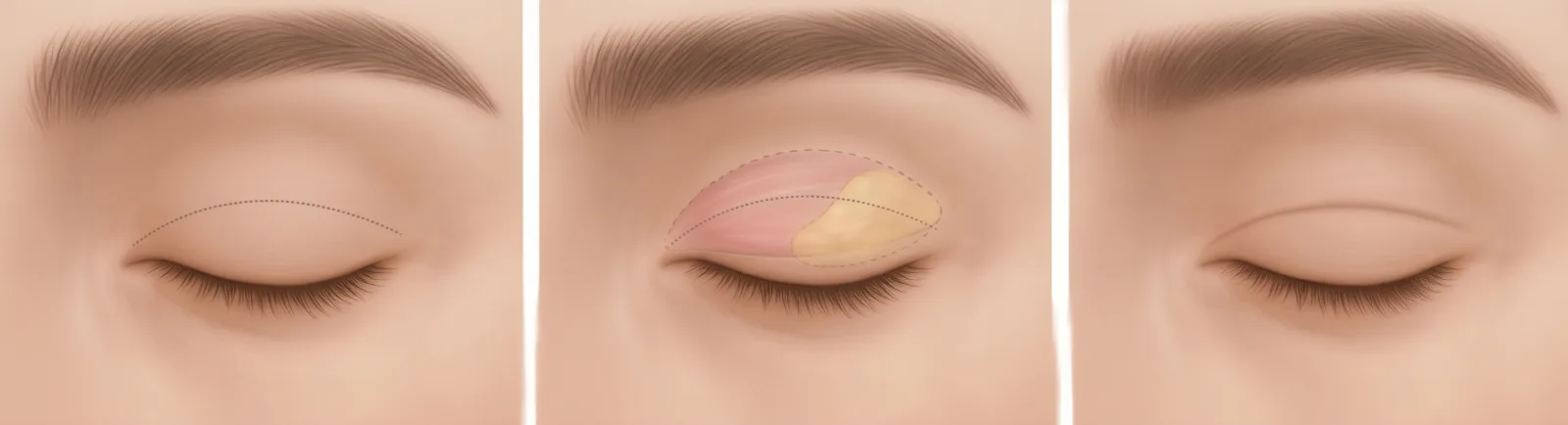
Illustration: the crease is set through an incision along the planned fold; the tissue beneath (muscle in pink, fat in yellow) is adjusted so the crease holds.
Because the incision double eyelid technique involves a full upper-lid incision and reshaping of the crease, the surgeon needs the area thoroughly numb but also needs you able to open and close your eyes on request. Local anaesthesia with optional sedation does both: it removes the sensation of cutting and stitching while letting the surgeon check the height and symmetry of your new crease with your eyes open. If ptosis correction is added to lift a droopy lid, this ability to test the eyelid muscle while you are awake becomes especially valuable.
Sedation, where used, is light and titrated: enough to take the edge off anxiety while you stay awake. Many patients describe feeling relaxed and a little distant, aware that something is happening but not bothered by it. The choice of pure local versus local-with-sedation is something you and the surgeon decide together at consultation, based on how anxious you feel and your medical history.
During surgery
What you actually feel during the operation
Once the anaesthetic has taken full effect, the operating part of incision double eyelid surgery is not painful. What you do feel is pressure, tugging and movement: the surgeon working on the lid, the sensation of the eyelid being handled, perhaps a dull awareness as the crease is formed. None of this is the sharp pain people fear. Patients frequently say afterwards that the anticipation was far worse than the reality.
You may also be aware of sounds, the brightness of the operating light through closed lids, and the surgeon asking you to open and close your eyes. This is normal and expected; being able to respond is part of how a careful surgeon checks a natural, symmetric crease height on the table. The operation itself typically takes around an hour for a straightforward case, longer if it is combined with other eyelid work such as epicanthoplasty or ptosis correction.
If at any point you feel an actual sharp sensation beyond pressure, you simply say so and more local anaesthetic is added. There is no reason to endure discomfort, and topping up is quick and routine. A surgeon who operates on one patient at a time, without rushing to the next room, has the time to keep checking that you are comfortable throughout.
The injection
The numbing injection — the one part that stings
If there is a genuinely uncomfortable moment in the whole process, it is the local anaesthetic injection at the very start. The needle is fine and the volume small, but the eyelid is sensitive, so you feel a brief sting and a stretching, burning sensation for a few seconds as the anaesthetic spreads under the skin. Most patients rate this as a short, sharp pinch: uncomfortable but very brief, and over within seconds per injection point.
Surgeons reduce this in several ways: applying a topical numbing cream beforehand, warming and buffering the anaesthetic so it stings less, injecting slowly, and using the smallest effective needle. Light sedation, if you have chosen it, blunts the memory of this moment further. Within a minute or two of the injection, the eyelid goes numb and the sharpest part of your day is already behind you.
Set your expectations here. Being braced for a few seconds of sting, instead of fearing pain throughout, is what most patients say made the experience easier than they expected. From the injection onward, the procedure is about pressure and time. This pattern is similar across eyelid procedures, including upper blepharoplasty.
After surgery
How the days after the operation actually feel
As the local anaesthetic wears off over the first few hours, you will feel the eyelids becoming tight, sore and a little throbbing. For the great majority of patients this stays at the level of discomfort, well short of severe pain. The dominant sensations in the first days are tightness from the swelling, a pulling feeling along the new crease, and sensitivity to bright light. Sleeping with your head elevated and using cool compresses in the first 48 hours both reduce swelling and ease that tight feeling.
Swelling and bruising peak in the first two to three days and then steadily improve. Sutures are removed at around 7 days, and by that point most patients have little or no real pain. What remains is mainly the cosmetic swelling that takes a few more weeks to settle. The crease can look high and tight early on; this is expected and softens as healing progresses, a timeline covered in detail on the incision double eyelid recovery timeline page.
A useful rule of thumb: discomfort that steadily decreases day by day is normal healing. Pain that suddenly worsens, becomes one-sided and severe, or comes with spreading redness, heat or discharge is not normal. It is a reason to contact your surgeon promptly. Knowing the difference between normal soreness and a warning sign is part of recovering with confidence.
Managing it
Managing discomfort and recovering comfortably
Pain control after incision double eyelid surgery is usually straightforward. Simple oral painkillers, the kind you might take for a headache, are enough for most patients in the first few days, and many find they need very little after the first day or two. Your surgeon will advise which medications are appropriate and which to avoid, since some over-the-counter painkillers can increase bruising. Cold compresses, head elevation when resting and sleeping, and avoiding strenuous activity all keep both swelling and discomfort down.
Keeping the incision clean and dry as instructed, not rubbing the eyes, and avoiding alcohol and smoking in the early days all help the wound settle quickly and comfortably. Reading and screen time are fine in moderation once you feel up to it, though your eyes may tire more easily while swollen. Most people are comfortable enough to return to desk-based work within about a week, around the time the sutures come out.
If you are travelling from abroad, plan your stay so you are not rushing. Comfort in recovery is partly about not having to push yourself. The practicalities of timing and follow-up for visitors are covered on the incision double eyelid for international patients page, and you can ask any pain or anaesthesia question in an online consultation before you decide.
At Garnet
How Garnet keeps you comfortable
Garnet is a single-surgeon clinic in Apgujeong, Seoul, where Dr. In-Soo Baek (Korean medical licence no. 77407) is a board-certified plastic surgeon and the only operating doctor. He performs the local anaesthesia, the surgery and the follow-up himself, which matters for comfort: the surgeon administering your anaesthetic is the same person watching your responses throughout the operation and able to add more numbing the moment you need it. The clinic caps the day at two surgeries, one patient at a time, so no part of your care is hurried.
Because the same surgeon sees you through structured follow-ups at 1, 3 and 6 months, any soreness or concern in recovery is reviewed by the doctor who operated on your eyelids. International patients can also reach the clinic by messenger after returning home, so questions about discomfort do not go unanswered once you fly back. You can begin with a no-obligation first consultation to discuss anaesthesia options and what recovery will realistically feel like for you.
Real Results
Before & After
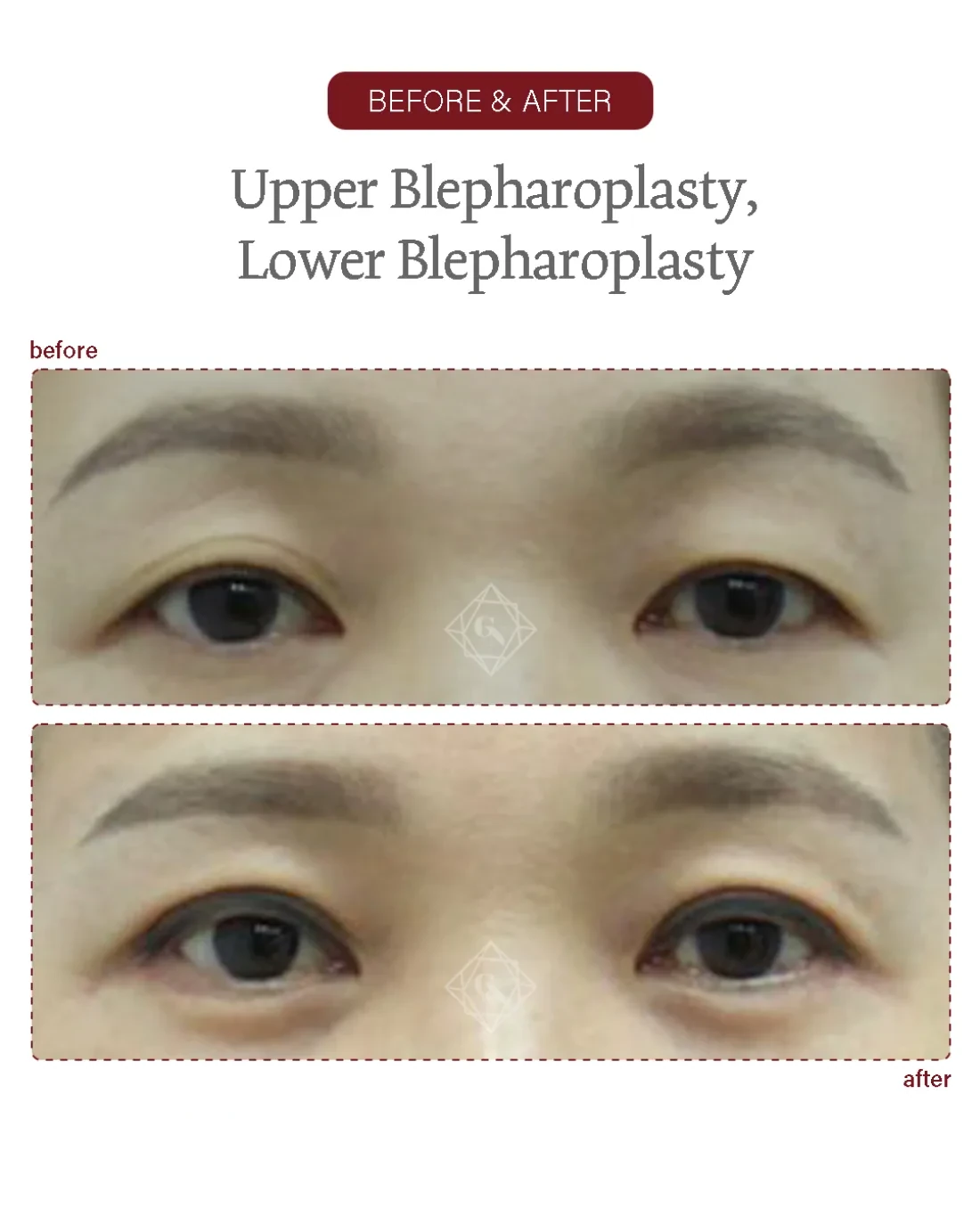
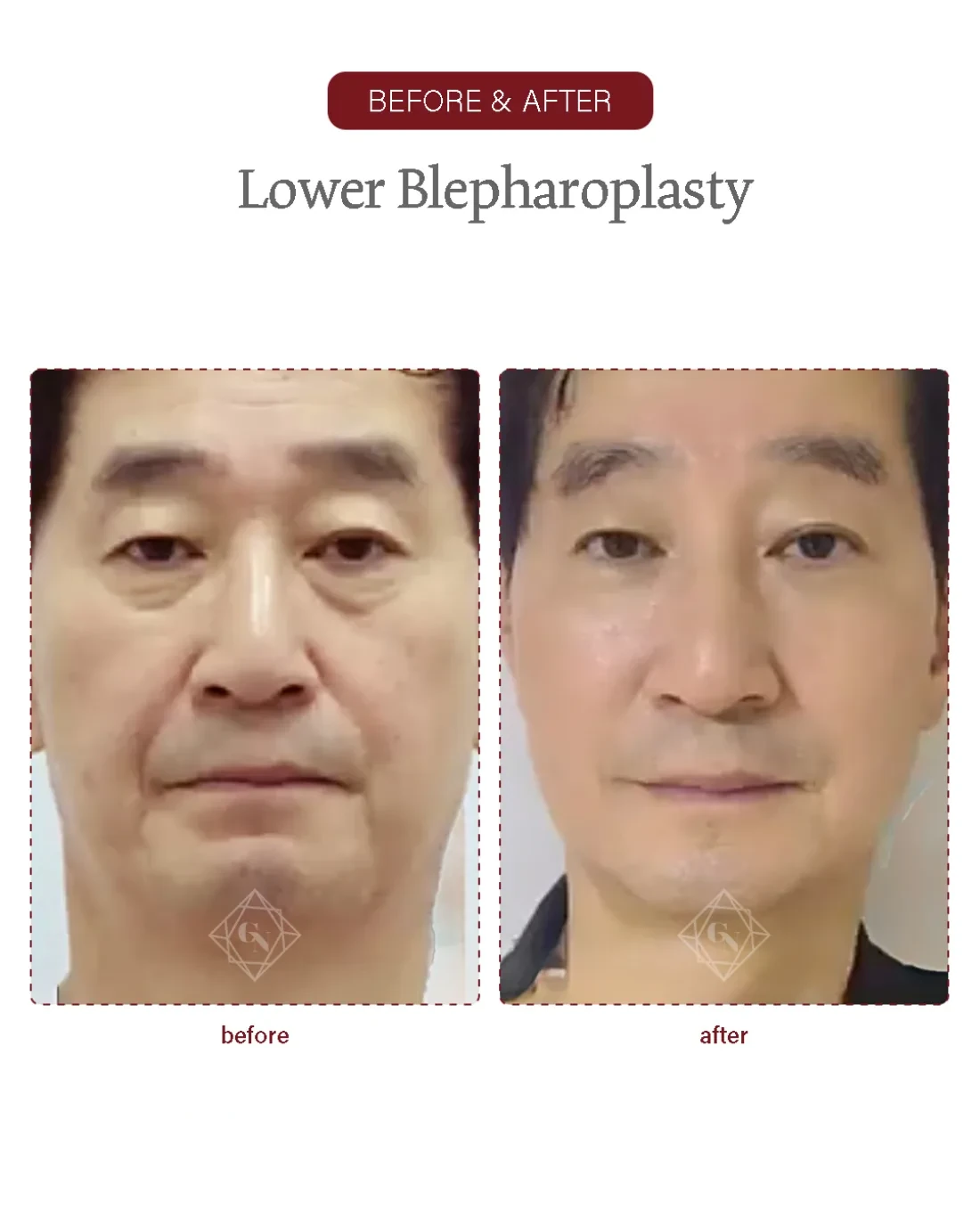
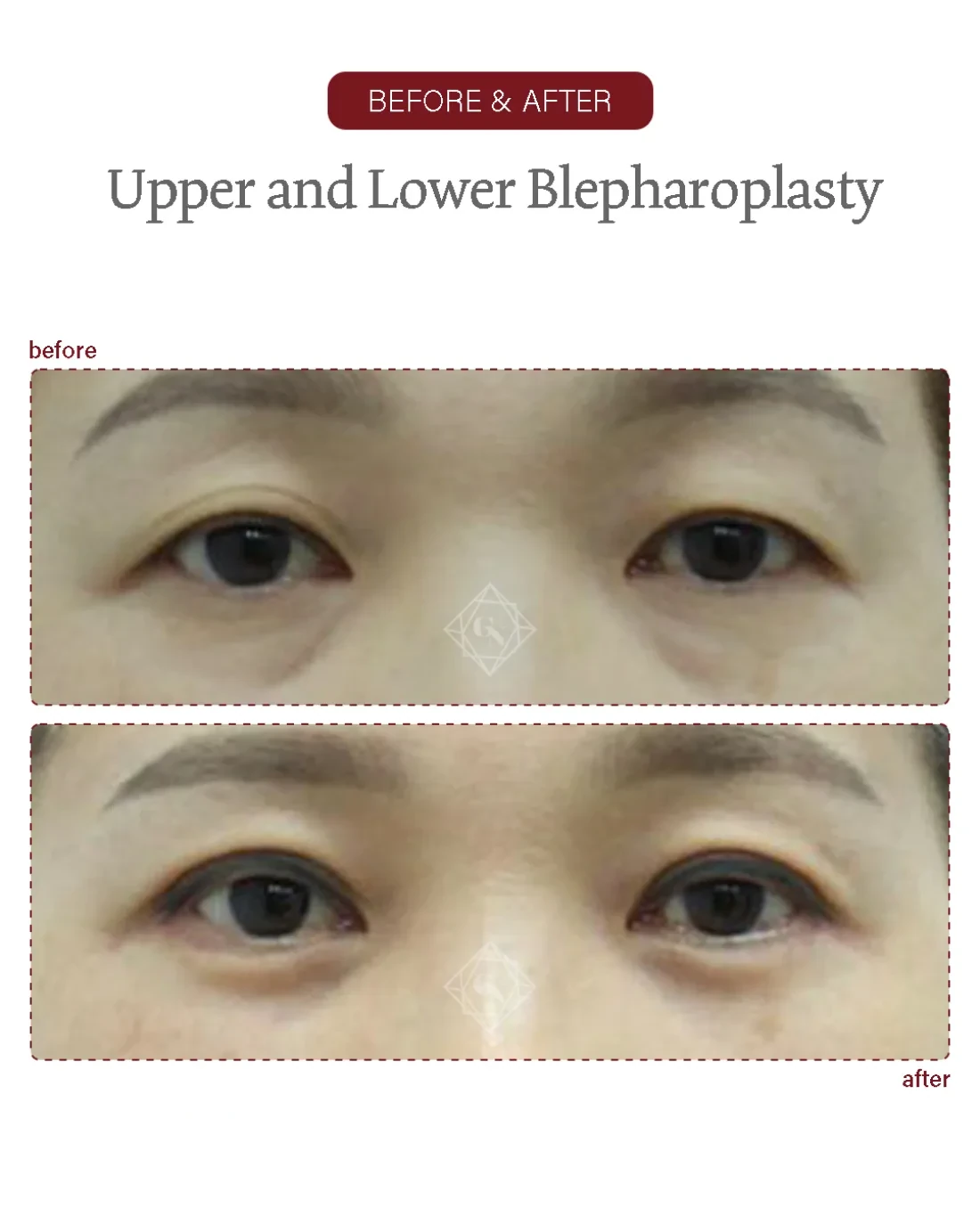
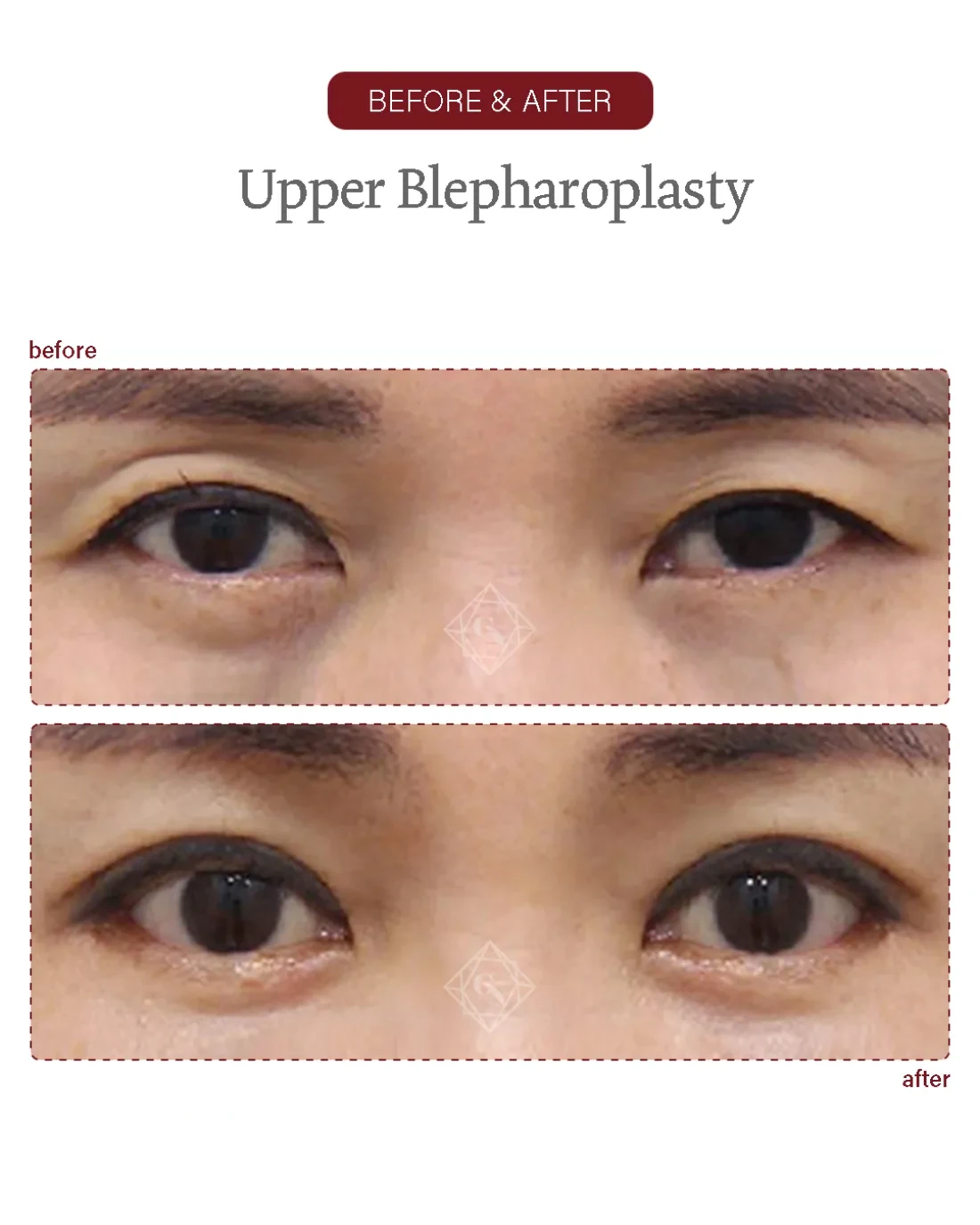
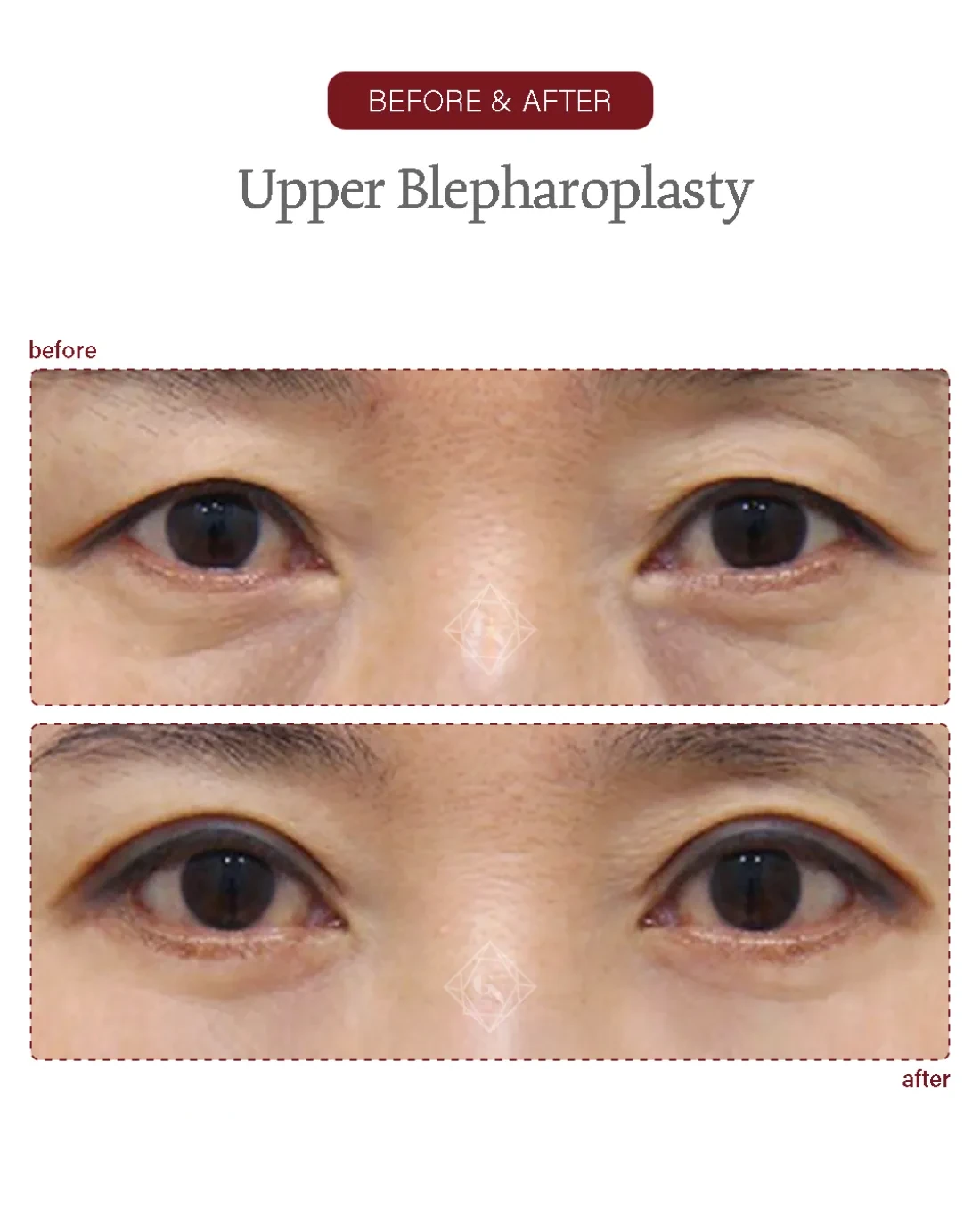
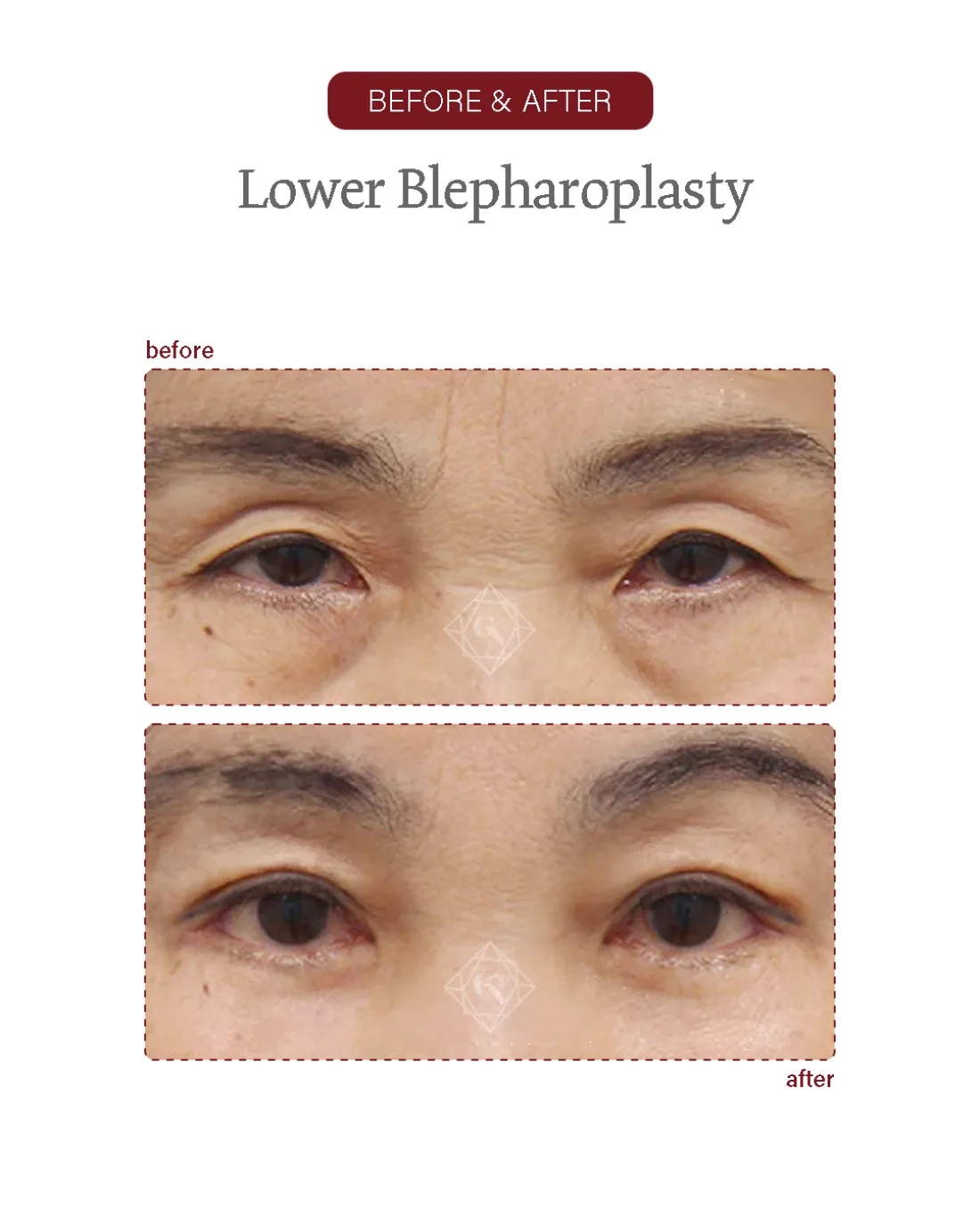
Eyelid before/after examples of actual Garnet patients (published with consent). Results, recovery and suitability vary by individual and are not guaranteed; the right approach is decided at an in-person consultation.
Prices
Price at Garnet
Upper blepharoplasty
From₩3,500,000 + VATExcluding VAT (10% VAT is added at payment)Book now
Same price as Korean patients. Prices shown exclude 10% VAT; your written quote, issued after the in-person consultation, shows the full amount payable.
Dr. In-Soo Baek
Director & sole operating surgeon
Korean medical licence no. 77407
Operate on what you came for. Trained at Korea University Medical Center. Every case planned, performed and reviewed by the same hands.
1Operating surgeon
~2Surgeries per day
7Registered techniques
Board-certified plastic surgeon
Plastic surgery training at Korea University College of Medicine & graduate school
Korean Society of Plastic and Reconstructive Surgeons member, in its facial-contour, eye & rhinoplasty groups
Consults, operates and follows up each case himself
Peer-reviewed papers behind the facts on this page. Each describes findings in its own study group — not results at Garnet — and none predicts your own outcome.
Kim DW et al. Upper Blepharoplasty in the Asian Eyelid. Facial Plastic Surgery Clinics of North America. 2005. doi:10.1016/j.fsc.2005.06.009
Pan S et al. The Impact of Full-Incision Double-Eyelid Blepharoplasty on Dry Eye: Association with Short-Term Meibomian Gland Dysfunction and Increased Incomplete Blinking. Aesthetic Plastic Surgery. 2026. doi:10.1007/s00266-026-06052-2
Fu HX et al. A Surgical Strategy Combining Modified Park Double Eyelid Surgery and Flying-Tail Incision: Technique and Outcomes in Upper Eyelid Skin Laxity. Journal of Craniofacial Surgery. 2025. doi:10.1097/scs.0000000000011533
FAQ
Common questions
Is incision double eyelid surgery painful?
During the operation it is not, because the eyelid is fully numbed with local anaesthesia. You feel pressure and movement and no cutting. The briefly uncomfortable part is the numbing injection at the start, which stings for a few seconds. Afterwards most patients have tightness and mild soreness, manageable with simple oral painkillers.
What anaesthesia is used for incision double eyelid surgery?
Local anaesthesia, often with the option of light sedation. The eyelid is fully numbed while you stay awake and breathing on your own, which lets the surgeon ask you to open and close your eyes to check crease height and symmetry. General anaesthesia is usually unnecessary for eyelid surgery.
Does the anaesthetic injection hurt?
It is the sharpest moment of the procedure, but brief: a short sting and stretching sensation for a few seconds at each injection point. Topical numbing cream, slow injection and light sedation all reduce it. Within a minute or two the eyelid is numb and the rest of the surgery is felt only as pressure.
Will I be asleep during the surgery?
Not fully. Standard incision double eyelid surgery uses local anaesthesia, so you remain awake; light sedation can be added to make you relaxed and drowsy. Staying awake is helpful because the surgeon needs you to open and close your eyes to fine-tune the crease.
How much pain is there after the surgery?
Most patients describe tightness, mild soreness and a pulling sensation more than significant pain. Discomfort peaks with the swelling in the first two to three days and then steadily improves. Simple oral painkillers are usually enough, and many people need very little after the first day or two.
How long does the discomfort last?
The real discomfort fades within the first several days. Sutures come out at about 7 days, by which point most patients have little or no pain. What remains is mainly cosmetic swelling that settles over the following weeks without hurting.
What can I take for the pain?
Your surgeon will recommend appropriate oral painkillers, typically simple ones, and advise which over-the-counter medications to avoid because some can increase bruising. Cold compresses, head elevation and rest all reduce both swelling and discomfort in the early days.
When should I worry about the pain?
Discomfort that steadily decreases day by day is normal. Pain that suddenly worsens, becomes severe or one-sided, or comes with spreading redness, heat or discharge is not normal and is a reason to contact your surgeon promptly. At a single-surgeon clinic the operating surgeon reviews these concerns directly.
Can I ask about anaesthesia before I travel?
Yes. You can discuss whether pure local or local-with-sedation suits you, and what recovery will realistically feel like, in an online consultation before committing to travel. The surgeon can also factor in your medical history and anxiety level when planning your comfort.
My mom recently had a brow lift and lower blepharoplasty with Dr. Baek, and our experience has been wonderful so far. The Garnet team was incredibly kind and welcoming, with Kelly assisting us as our English consultant—she made everything…
I’m so happy I chose this clinic for my lower blepharoplasty. I was traveling from abroad by myself, so I was a little nervous, but from the beginning I felt comfortable and truly cared for. Everyone was kind, patient, and professional…
Came in for an in-person consult and ended up choosing Garnet and Dr.Baek for my non-incisional DES and tiplasty/alarplasty. I communicated with Kelly (English consultant) from the start till now (3 weeks post-op). She really help me feel…
My under-eyes have been sagging and folding for years... I tried to cover it up with makeup, but it actually got stuck in the wrinkles and made it stand out even more. While going for consultations, I noticed that the bigger the hospital…
Send photos and your question before you travel. An English-speaking coordinator reviews every enquiry and replies with guidance on whether surgery is appropriate, the likely plan and timing.
✓ Reviewed by the clinic coordinator, not a bot
✓ Photo-based pre-assessment before you fly
✓ Foreign-patient scheduling & after-care
✓ One surgeon for consultation, surgery and follow-up
Prefer to chat now? Reach the coordinator directly:









 T S7 months ago



