Stem cell fat grafting is done through tiny cannula entry points at the donor area (usually the abdomen or thigh) and on the face, with no long incision. These small punctures are where the fat is harvested and where it is placed. The 'stem cell' element refers to how the harvested fat is prepared; the cut itself is the same. This page explains exactly where those entry points sit, why they leave so little, and how the small wounds settle.
The short answer
Stem cell fat grafting uses tiny cannula entry points at both the donor area (abdomen or thigh) and the recipient site on the face, so there is no scar line across the skin.
The 'stem cell' part refers to enriching the harvested fat with its own stromal fraction before it is placed; the incisions and entry points are the same small punctures as standard fat grafting.
These small punctures usually heal quickly and fade to faint marks; most of the settling you notice is swelling and bruising, with no scar line maturing.
Because the same surgeon who operates also reviews you at 1, 3 and 6 months, the entry points and donor area are assessed directly at each visit.
Where the entry points sit for stem cell fat grafting
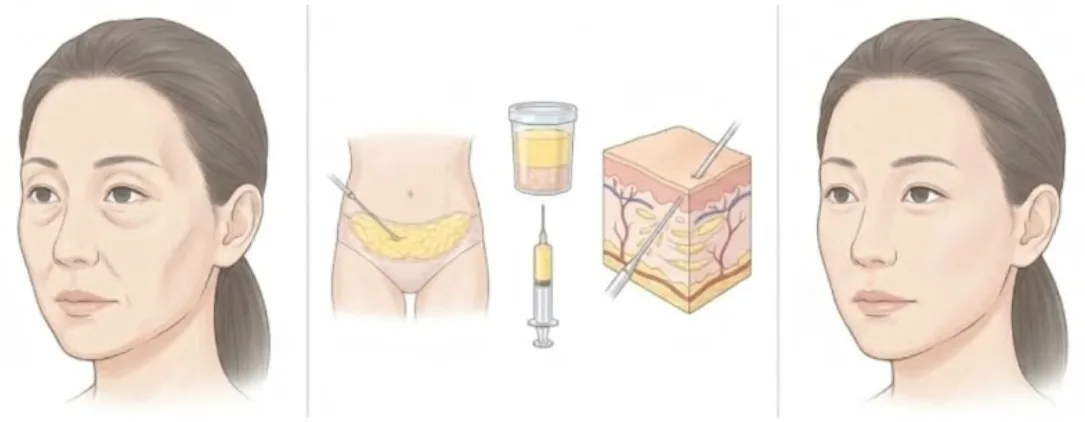
Stem cell fat grafting does not use a long incision. Like standard fat grafting, it is done through tiny cannula entry points: small punctures just big enough for a thin cannula to pass through. There are two sets. First, at the donor area, usually the abdomen or thigh, where the fat is gently harvested by liposuction through one or two small punctures. Second, at the recipient site on the face, where the prepared fat is placed through similarly small entry points, often tucked into a natural crease.
Illustration: the patient's own fat is taken, processed, and re-placed beneath the skin where volume has been lost.
What makes this version different is the preparation of the fat: the harvested fat is enriched with its own stromal fraction before it is layered back in. The openings needed to harvest and place it are the same small punctures as standard fat grafting, so there is no scar line to run across the skin. It is worth being clear about this: stem cell fat grafting is not designated as an advanced regenerative therapy in Korea, so it is presented here simply as a way of preparing the fat, without any claim of superior take or survival.
If you want the full picture of how the procedure is planned and performed, the stem cell fat grafting overview walks through the technique, and this page then goes deeper on the one thing most patients ask about: the entry points and how they heal.
Why the marks stay minimal
Why the marks stay minimal
Several things work in your favour. First, size: a cannula entry point is a small puncture, so there is very little wound to heal and little to leave a mark. Second, placement: the recipient entry points on the face are chosen to sit in creases or inconspicuous spots, and the donor punctures on the abdomen or thigh are placed where clothing covers them. Third, the gentle technique: harvesting and placing fat through fine cannulas keeps the openings small, so the marks that do form are usually faint.
The stromal-fraction preparation changes what is placed. How it is placed stays the same, so the entry points match standard fat grafting and the scarring picture is the same small-puncture story. If you are weighing the standard and stem cell versions against each other, the differences in preparation are covered on the stem cell versus standard fat grafting page. For adding your own tissue with minimal marks, the cannula approach is the discreet route in either case.
One caveat: 'minimal' does not mean 'nothing'. In the early weeks the donor area can be bruised and firm, and the small entry points may look pink before they fade. On the face, the swelling from the grafted fat is far more noticeable than any entry point. What matters is that these punctures typically settle into faint marks that most people never notice once healed.
How they heal over time
How the entry points heal, week by week
In the first one to two weeks, the small entry points are closed and the donor area is bruised, firm and a little swollen. The punctures look fresh (pink and slightly raised), and the harvested area may feel tender. This is normal healing; the bruising is the body reabsorbing the small amount of blood that follows any liposuction. Because the openings are so small, they usually need little or no suture removal, and any dressing is light.
Over the following weeks to about three months, the entry points flatten and fade from pink toward the surrounding skin tone. The donor area softens as the firmness settles, and any lumpiness there smooths out. On the face, this is also the window in which some of the grafted fat that does not survive is reabsorbed, so the volume you see keeps adjusting. The healing of the entry points and the settling of the graft happen alongside each other.
By a few months to a year, the small marks have usually faded to faint spots that are hard to find, on both the face and the donor area. Because the same surgeon at Garnet reviews you at 1, 3 and 6 months, the entry points and donor area are checked directly at each stage, and any guidance is tailored to how yours are actually settling. The stem cell fat grafting swelling and bruising page covers that side of recovery in detail.
Caring for the area
How to help the area heal well
Good outcomes are part technique and part aftercare. Keep the entry points clean and dry as instructed, avoid picking at any small scabs, and protect them from the sun once closed, since even a small mark can darken with ultraviolet exposure, so shade and sun protection help in the first months. On the donor area, wearing any recommended compression garment supports the tissue and helps swelling settle evenly, which also helps the small punctures there heal neatly.
Be gentle with the grafted area of the face early on: avoid heavy pressure, vigorous massage or sleeping face-down until your surgeon says it is safe, because the newly placed fat needs an undisturbed blood supply to settle. Avoid heavy lifting and vigorous exercise in the early weeks, since these can worsen bruising at the donor site. Your surgeon may give specific guidance on the donor area and the face separately, because they heal on slightly different timelines.
Smoking and poorly controlled health conditions slow healing generally, so a full medical history at your consultation helps your surgeon plan around them. For international patients, this aftercare can be guided remotely: you can keep sending photos of both the face and the donor area after you fly home so they are reviewed at each milestone. How long the settled volume lasts is covered separately on the how-long-it-lasts page.
What is normal, what is not
Normal healing versus a reason to check in
Normal, expected findings include bruising and firmness of the donor area, small pink entry points that fade, mild swelling of the grafted area of the face, and some unevenness that smooths as the graft settles. Tenderness at the donor site as it recovers is usually a sign of healing. These ease week by week over the first months.
Reasons to contact the clinic promptly are different: increasing redness spreading from an entry point, warmth, throbbing pain that keeps getting worse, discharge or a fever, a sudden collection of blood or marked one-sided swelling, or an entry point that becomes thick, raised and itchy beyond the early months. None of these are common, but they are worth flagging early because they are easiest to manage when caught quickly.
If you are prone to keloid or thickened scars elsewhere on your body, tell your surgeon before surgery. Even small punctures can behave differently in skin that scars readily, and it can change how the entry points are placed and followed. A consultation is the right place to raise this, and you can do it from abroad before committing to travel.
Care at Garnet
How stem cell fat grafting healing is handled at Garnet
Garnet is a single-surgeon clinic in Apgujeong, Seoul. Dr. In-Soo Baek is a board-certified plastic surgeon (Korean medical licence no. 77407) and the only operating surgeon. He plans the entry points, harvests, prepares and places the fat himself, and reviews both the face and the donor area at every follow-up. That continuity matters here: the person who knows exactly where each small opening was placed is the same person assessing how the marks and the graft settle at 1, 3 and 6 months.
With two surgeries a day at most and one patient seen per hour, there is time to place each cannula entry point with care. Garnet presents the stromal-fraction preparation plainly, without claims of superior take, in line with its being outside Korea's advanced-regenerative-therapy designation. The clinic is registered with Korea's foreign-patient programme, so international patients are supported through scheduling, recovery and the remote follow-ups that let both areas be reviewed after you return home.
If your main hesitation is scarring, the most useful next step is a pre-assessment. You can send photos and ask exactly where the entry points would sit and how they tend to heal in an online consultation before you plan a trip.
Real Results
Before & After
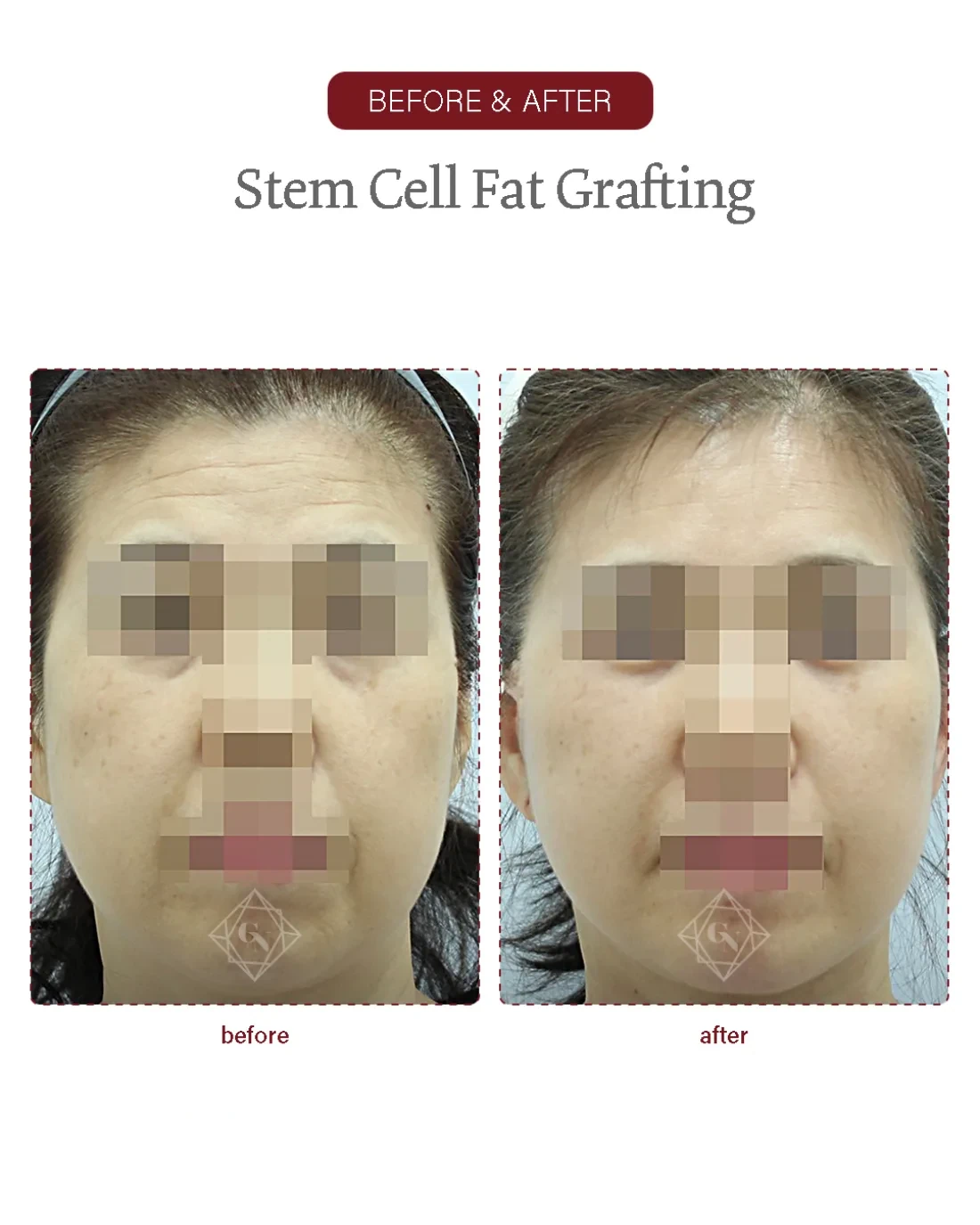
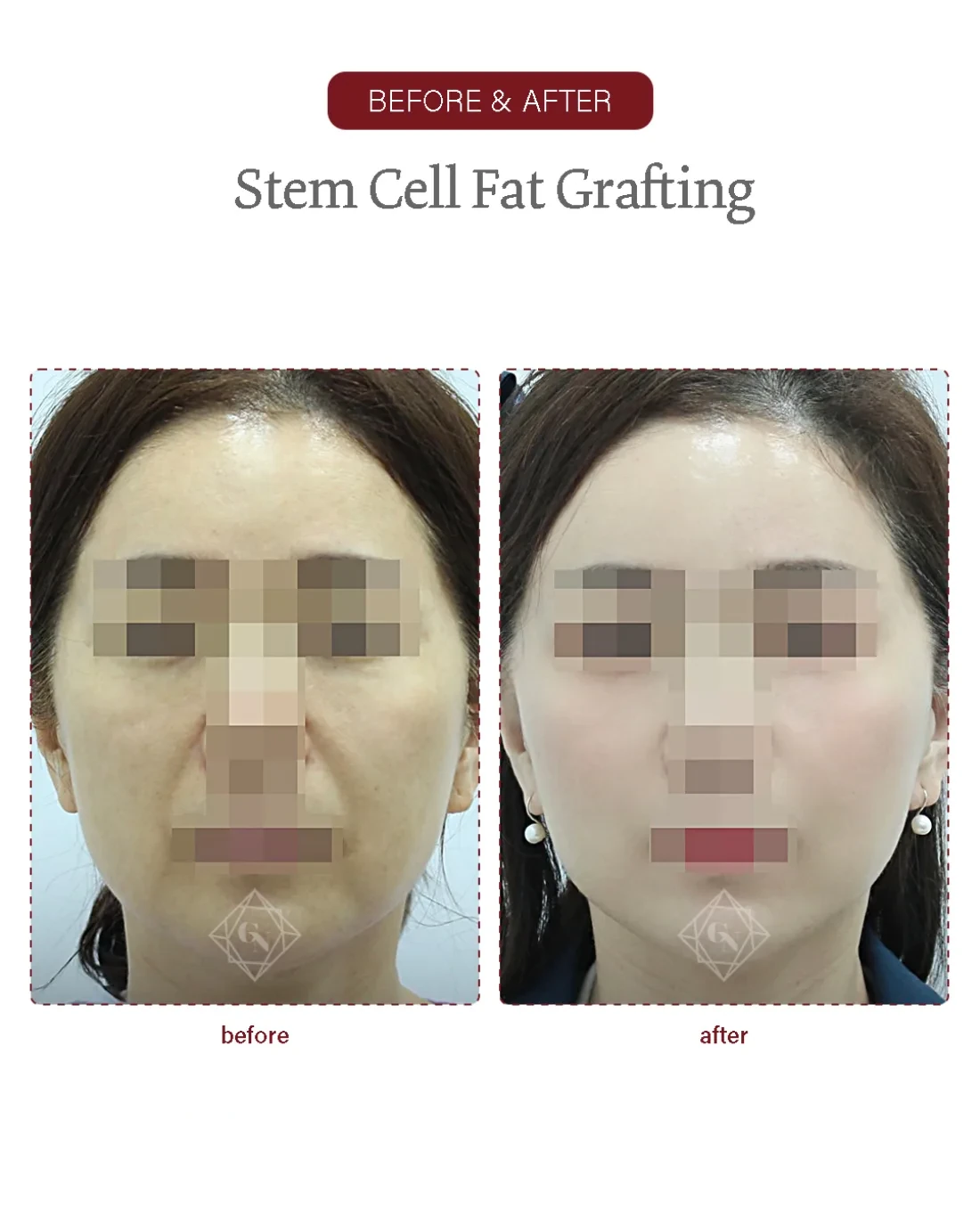
Fat-grafting and contouring results of actual Garnet patients (published with consent, with date, procedure and clinic labelled). Results, the amount of fat retained, recovery and suitability vary by individual and are not guaranteed.
Prices
Price at Garnet
Stem cell fat grafting
From₩3,500,000 + VATExcluding VAT (10% VAT is added at payment)Book now
Same price as Korean patients. Prices shown exclude 10% VAT; your written quote, issued after the in-person consultation, shows the full amount payable.
Dr. In-Soo Baek
Director & sole operating surgeon
Korean medical licence no. 77407
Operate on what you came for. Trained at Korea University Medical Center. Every case planned, performed and reviewed by the same hands.
1Operating surgeon
~2Surgeries per day
7Registered techniques
Board-certified plastic surgeon
Plastic surgery training at Korea University College of Medicine & graduate school
Korean Society of Plastic and Reconstructive Surgeons member, in its facial-contour, eye & rhinoplasty groups
Consults, operates and follows up each case himself
Peer-reviewed papers behind the facts on this page. Each describes findings in its own study group — not results at Garnet — and none predicts your own outcome.
Gontijo-de-Amorim NF et al. Fat Grafting for Facial Contouring Using Mechanically Stromal Vascular Fraction–Enriched Lipotransfer. Clinics in Plastic Surgery. 2020. doi:10.1016/j.cps.2019.08.012
Laloze J et al. Cell‐assisted lipotransfer: Friend or foe in fat grafting? Systematic review and meta‐analysis. Journal of Tissue Engineering and Regenerative Medicine. 2017. doi:10.1002/term.2524
Toyserkani NM et al. Cell-Assisted Lipotransfer: A Systematic Review of Its Efficacy. Aesthetic Plastic Surgery. 2016. doi:10.1007/s00266-016-0613-1
FAQ
Common questions
Where are the scars after stem cell fat grafting?
There is no long incision. It uses tiny cannula entry points: small punctures at the donor area, usually the abdomen or thigh, and at the recipient site on the face, often tucked into a crease. The 'stem cell' part is about preparing the fat and uses the same cut, so there is no scar line across the skin.
Does the stem cell version scar differently from standard fat grafting?
No. The stromal-fraction preparation changes what is placed and leaves the method of placing it unchanged, so the entry points are the same small punctures as standard fat grafting. The scarring picture is the same for both, and the marks fade in the same way.
Will stem cell fat grafting leave visible marks?
Only faint ones, if any. The entry points are small punctures, chosen to sit in creases or covered areas. In the early weeks the donor area may be bruised and the small points pink, but these typically fade to marks that most people never notice.
Does it scar the donor area too?
Only small marks. The fat is harvested by gentle liposuction through one or two small punctures on the abdomen or thigh, placed where clothing covers them. These heal as faint spots with no scar line, and any early firmness there settles over the weeks.
Do the entry points need stitches removed?
Usually little or none. Because the openings are so small, they need light dressing and often no suture removal, which is one reason downtime for the entry points themselves is minimal. Most of recovery is about swelling and bruising settling.
How long do the marks take to fade?
The small entry points usually flatten and fade from pink toward the surrounding skin tone over about three months, becoming faint spots that are hard to find by a few months to a year. The donor-area firmness softens over the same window.
How can I help the area heal well?
Keep the entry points clean and dry, avoid picking at scabs, protect them from the sun once closed, and wear any recommended compression garment on the donor area. Be gentle with the grafted area of the face early on, and avoid heavy lifting and vigorous exercise in the first weeks.
What is not normal during healing?
Spreading redness from an entry point, warmth, worsening throbbing pain, discharge or fever, a sudden collection of blood or marked one-sided swelling, or an entry point that becomes thick, raised and itchy beyond the early months are reasons to contact the clinic promptly. These are uncommon but easiest to manage when reported early.
I scar easily — can I still have stem cell fat grafting?
Tell your surgeon at consultation if you tend to form keloid or thickened scars. It does not automatically rule you out, but even small punctures can behave differently in skin that scars readily, so it can change how the entry points are placed and followed. You can raise this from abroad before travelling.
Can my recovery be reviewed after I fly home?
Yes. As an international patient you can keep sending photos of both the face and the donor area so they are assessed at each milestone, and the same surgeon who operated guides your aftercare remotely through Korea's foreign-patient programme support.
My mom recently had a brow lift and lower blepharoplasty with Dr. Baek, and our experience has been wonderful so far. The Garnet team was incredibly kind and welcoming, with Kelly assisting us as our English consultant—she made everything…
I’m so happy I chose this clinic for my lower blepharoplasty. I was traveling from abroad by myself, so I was a little nervous, but from the beginning I felt comfortable and truly cared for. Everyone was kind, patient, and professional…
Came in for an in-person consult and ended up choosing Garnet and Dr.Baek for my non-incisional DES and tiplasty/alarplasty. I communicated with Kelly (English consultant) from the start till now (3 weeks post-op). She really help me feel…
My under-eyes have been sagging and folding for years... I tried to cover it up with makeup, but it actually got stuck in the wrinkles and made it stand out even more. While going for consultations, I noticed that the bigger the hospital…
Worried about marks or scarring? Send photos for a no-obligation pre-assessment, and we'll explain exactly where the entry points sit and how they heal before you plan a trip.
Send photos and your question before you travel. An English-speaking coordinator reviews every enquiry and replies with guidance on whether surgery is appropriate, the likely plan and timing.
✓ Reviewed by the clinic coordinator, not a bot
✓ Photo-based pre-assessment before you fly
✓ Foreign-patient scheduling & after-care
✓ One surgeon for consultation, surgery and follow-up
Prefer to chat now? Reach the coordinator directly:









 T S7 months ago



