Stem cell fat grafting moves fat from your abdomen or thigh into the face, supplemented with the stromal fraction taken from that harvested fat before it is placed. Two areas therefore recover: the donor site, where fat is gently harvested through a cannula, and the grafted facial areas. The grafted areas are often left deliberately fuller than the final look, so early over-fullness is expected and is no mistake. Swelling and bruising follow a predictable arc: they peak early, ease over the following weeks, and a handful of measures genuinely speed it along. This guide maps that week-by-week recovery across both areas and flags the signs worth an urgent call.
The short answer
Stem cell fat grafting supplements the transferred fat with the stromal fraction of your own harvested fat, so recovery involves two areas: the donor site (abdomen or thigh) and the grafted facial areas.
The grafted areas are usually left deliberately over-full, so looking fuller than your goal in the first weeks is expected as some of the transferred fat settles; the surgeon plans for this.
Facial swelling peaks in the first few days and eases substantially over two to three weeks, with subtle fullness softening over the following weeks; donor-site bruising and firmness settle over a similar or slightly longer window.
Head elevation, gentle handling of the grafted areas, rest, a low-salt diet, and avoiding alcohol, blood thinners and strenuous activity all genuinely help, and the surgeon reviews progress at 1, 3 and 6 months.
Why both the face and the donor area swell after stem cell fat grafting
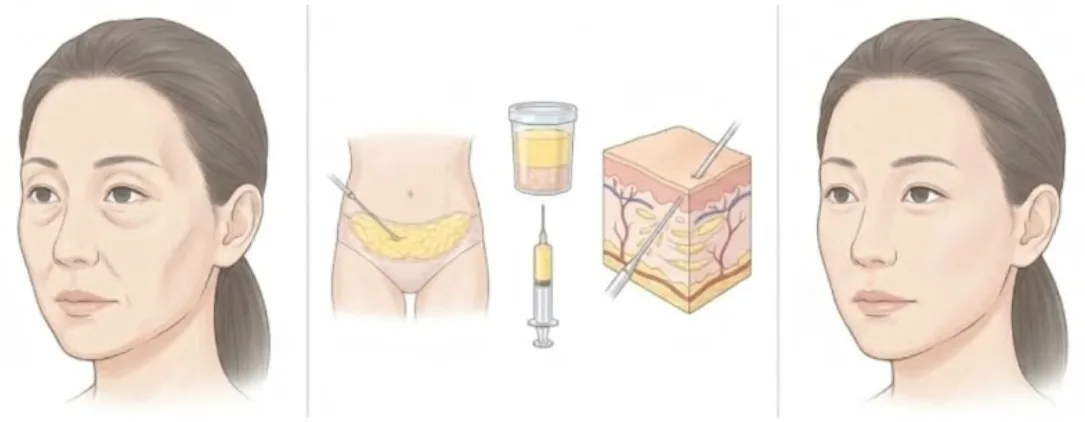
Stem cell fat grafting at Garnet is, at its core, a fat-grafting procedure with an extra processing step. The surgeon harvests fat through a fine cannula from a donor area, usually the abdomen or thigh, through tiny access points that leave no true scar line. Some of that fat is processed to concentrate its stromal fraction, which is added back to the fat being transferred, and the enriched fat is then placed into the face in fine layers. Because two areas are worked on, both respond with swelling: the donor site and the grafted facial areas each recover on their own timeline.
Illustration: the patient's own fat is taken, processed, and re-placed beneath the skin where volume has been lost.
On the face, the grafted areas are usually filled a little fuller than the final target on purpose, because not all of the transferred fat is expected to stay long-term. Early over-fullness is planned for and does not mean too much was placed. On top of that planned fullness sits ordinary post-procedure swelling, so the treated areas can look notably puffy in the first days. At the donor area, the fine cannula work leaves firmness, tenderness and bruising, with no wound to close. The stromal-fraction step changes how the fat is prepared; the two-area pattern of swelling and bruising stays the same.
Understanding this makes the early weeks far less alarming. The over-full, puffy face of the first days is a mix of intentional fullness and swelling, which is why the result is judged over months as the grafted volume settles. The recovery timeline follows the face and donor site day by day, and when you will see results covers how the graft looks months later.
Timeline
Week-by-week: how long does the swelling last?
Days 1–5: facial swelling builds and peaks, usually within the first few days, and is at its most visible on top of the deliberate over-fullness. The grafted areas look full and firm, and any bruising appears and darkens. The donor area feels tender, firm and bruised. This is the window to be strict about head elevation, rest and gentle handling of the grafted areas. It is normal to look quite full and puffy and not yet to see the settled result.
Week 1–2: facial swelling begins a steady decline and bruising, on the face and at the donor site, shifts from dark to green-yellow as it fades. Any tiny access points on the face are usually settled by now; the donor area is still firm and may be tender. By the end of week two, the face looks markedly less puffy than the peak, though the grafted areas remain fuller than they will ultimately be as the fat continues to settle.
Weeks 3–6 and beyond: the swelling others would readily notice keeps resolving on the face, and by around three to six weeks most patients feel comfortable in normal social settings, though a subtle extra fullness remains by design while the graft settles. The donor area's firmness and any lumpiness soften gradually over the following weeks. Final volume is assessed over months, and it is normal for the two sides to de-swell at slightly different rates before evening out.
Bruising
Stem cell fat grafting bruising: where it spreads, what colour, and how long
Bruising after stem cell fat grafting appears in two places. On the face, the grafted areas can bruise around the treated zones and, with gravity, settle a little downward over the first days. At the donor area on the abdomen or thigh, the cannula work commonly leaves bruising and firmness across a broader patch than you might expect, since the surgeon harvests over an area. Both are normal, and neither is a sign of a problem.
On the face and at the abdomen or thigh alike, the bruise passes from dark red-purple to blue, then green and yellow, and then fades. Facial bruising typically settles within two to three weeks; donor-site bruising and firmness can take a similar or slightly longer window to soften fully. Keeping your head elevated and handling the treated areas gently in the first days both help; once facial bruising has faded enough, makeup can usually cover what remains, on your surgeon's timing.
Bruising at the graft and donor sites gets worse with blood-thinning medication and supplements (fish oil, high-dose vitamin E, ginkgo and certain anti-inflammatories), with alcohol around the time of surgery, and with high blood pressure or straining. Disclosing every medication and supplement at your consultation and following the pre-procedure guidance is the simplest way to keep bruising down — we cover the comfort side of recovery in pain and anaesthesia and how the tiny access points heal in scars and healing.
Reduce it
How to bring stem cell fat grafting swelling and bruising down faster
The measures that genuinely help are simple and worth doing consistently. Keep your head elevated, including sleeping propped up for the first one to two weeks, so fluid drains from the treated areas and does not pool. Facial swelling is almost always worse on waking, and elevation blunts that. Handle the grafted areas gently: avoid firm pressure, massage or heat on the face unless your surgeon specifically directs it, because the freshly placed fat needs to be left undisturbed to settle. Cooling, if advised, is gentle only and never ice directly on the skin.
Rest and pace yourself. Avoid strenuous activity, heavy lifting, bending over and anything that raises blood pressure for the first two to three weeks, since all of it feeds swelling and can worsen bruising or, rarely, bleeding at either the face or the donor area. Keep your blood pressure steady so the new graft and the donor site are not pushed to swell, with quiet days in the first weeks. Skip alcohol and smoking (smoking in particular impairs healing and the settling of grafted fat), stay well hydrated, and keep salt low to discourage fluid retention.
Beyond that, follow the specifics your surgeon gives you: how to care for the donor area, when any garment or support helps, whether and when gentle movement is fine, and when light activity and then exercise are safe. Each step is small, yet together they shorten how long the face and donor area stay swollen. That matters most for international patients recovering within a planned trip, and it fits the broader picture in recovering in Seoul after surgery.
What's normal
What's normal after stem cell fat grafting, and what's worth an urgent call
Normal, expected recovery: facial swelling peaking in the first few days and easing over the following weeks; grafted areas that look deliberately fuller than your goal and settle over weeks to months; bruising on the face and firmness, tenderness and bruising at the donor area that clear over two to three weeks or a little longer; and slight differences between the two sides early on. None of this needs intervention; it is the graft healing as it should.
What warrants an urgent call is anything that breaks sharply from that path: rapidly increasing, tense swelling on one side of the face or at the donor area, especially if firm and painful; severe or escalating pain not eased by your prescribed medication; a sudden change in skin colour over a grafted area; fever or spreading redness, warmth or discharge at any access point suggesting infection; or any new visual change if the under-eye area was grafted. If one side of the face or the donor area swells sharply or becomes painful in the first day or two, contact the clinic straight away.
The reassurance that matters most is being able to reach the surgeon who actually performed the procedure. If you can send a photo and get a same-person answer on whether your swelling and bruising, on the face and at the donor area, are on track, or be told to come in, you are not left guessing, which is especially valuable once you have travelled home.
At Garnet
How Garnet manages swelling and after-care
Garnet is a single-surgeon clinic in Apgujeong, Seoul. Dr. In-Soo Baek, a board-certified plastic surgeon (Korean medical licence no. 77407), is the only operating doctor. He harvests the fat, prepares and places the graft and reviews your recovery himself, so the person assessing your swelling is the person who did the procedure. The clinic keeps the day light, with unhurried time and clear after-care guidance for a procedure that recovers across two areas at once. Garnet describes stem cell fat grafting plainly: it explains what the stromal-fraction step involves and makes no claims about outcomes.
Aftercare covers exactly the measures above (elevation, gentle handling of the grafted areas, donor-site care, rest, blood-pressure care and what to avoid), with the deliberate early over-fullness explained up front so it is not mistaken for a problem. Garnet runs structured follow-up at 1, 3 and 6 months, which suits how grafted volume settles over months, and for international patients much of this happens by messenger: you send a photo and the same surgeon confirms your recovery is on course or flags anything that needs attention.
If you are still deciding, start with a no-obligation online assessment: send clear photos and the surgeon will give a realistic view of what recovery would look like for you, including how much swelling and bruising to expect at both the face and the donor area and how long to stay.
Real Results
Before & After
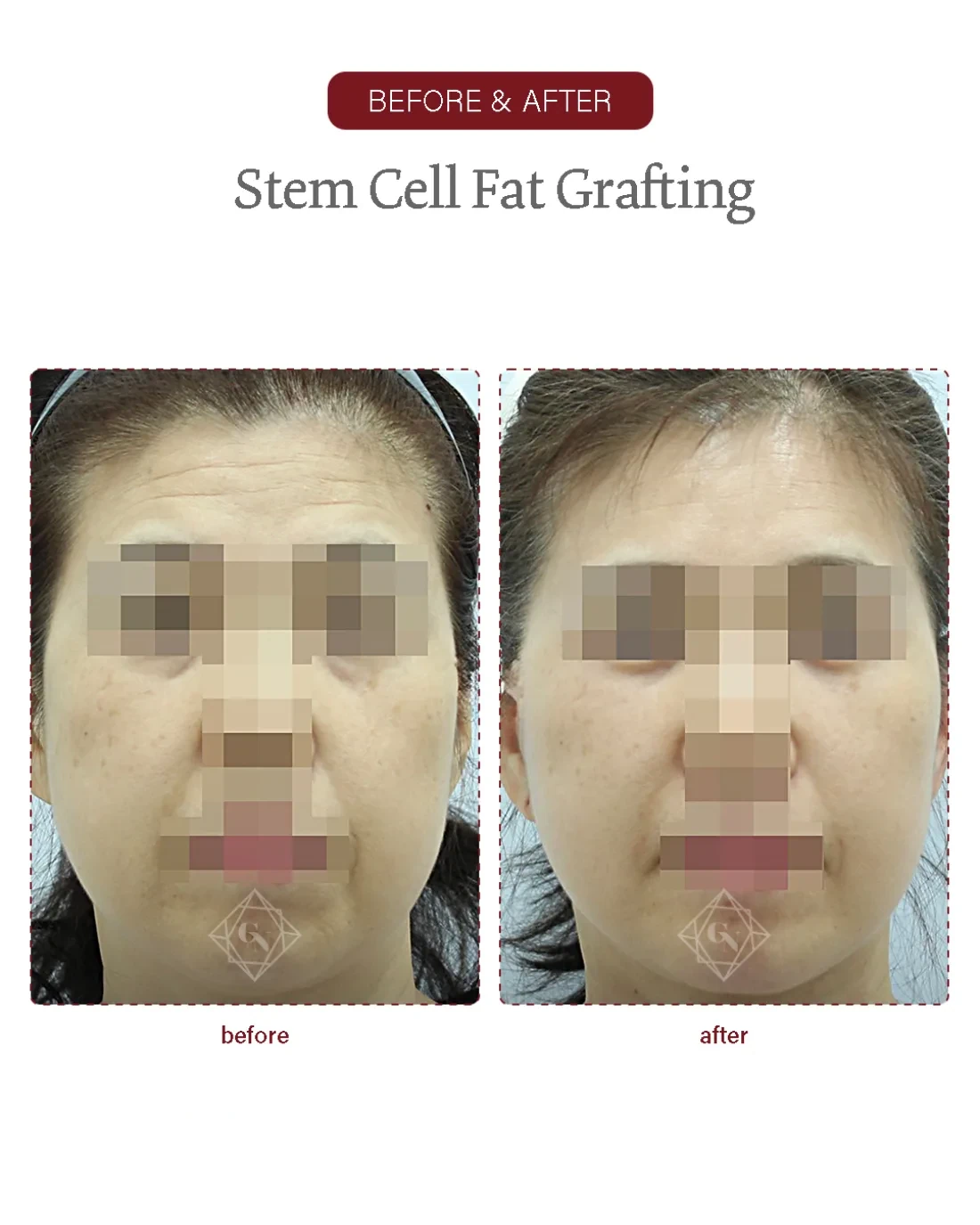
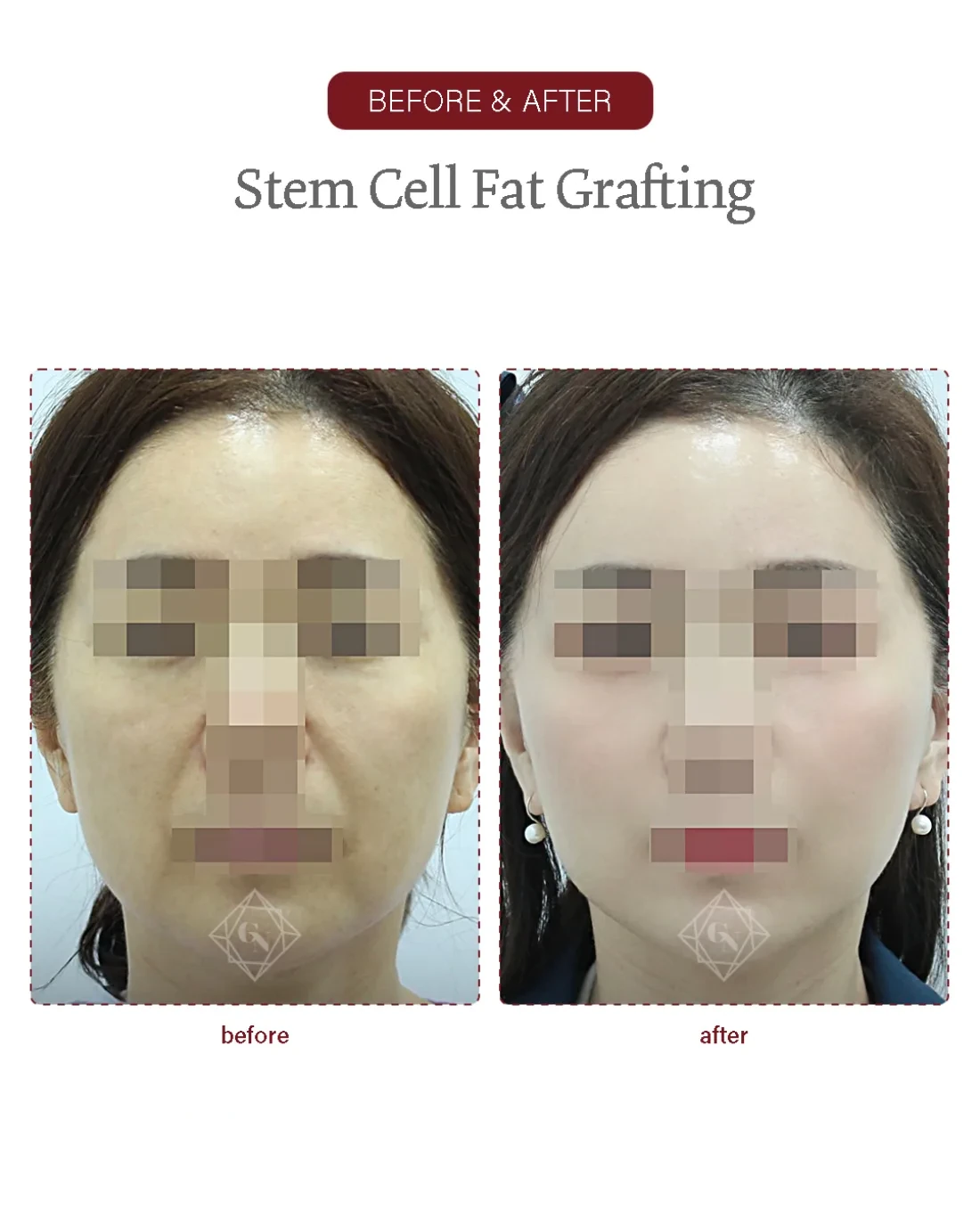
Fat-grafting and contouring results of actual Garnet patients (published with consent, with date, procedure and clinic labelled). Results, the amount of fat retained, recovery and suitability vary by individual and are not guaranteed.
Prices
Price at Garnet
Stem cell fat grafting
From₩3,500,000 + VATExcluding VAT (10% VAT is added at payment)Book now
Same price as Korean patients. Prices shown exclude 10% VAT; your written quote, issued after the in-person consultation, shows the full amount payable.
Dr. In-Soo Baek
Director & sole operating surgeon
Korean medical licence no. 77407
Operate on what you came for. Trained at Korea University Medical Center. Every case planned, performed and reviewed by the same hands.
1Operating surgeon
~2Surgeries per day
7Registered techniques
Board-certified plastic surgeon
Plastic surgery training at Korea University College of Medicine & graduate school
Korean Society of Plastic and Reconstructive Surgeons member, in its facial-contour, eye & rhinoplasty groups
Consults, operates and follows up each case himself
Peer-reviewed papers behind the facts on this page. Each describes findings in its own study group — not results at Garnet — and none predicts your own outcome.
Zhou Y et al. Efficacy and Safety of Cell-Assisted Lipotransfer. Plastic and Reconstructive Surgery. 2016. doi:10.1097/prs.0000000000001981
Ma L et al. Cell-assisted lipotransfer in the clinical treatment of facial soft tissue deformity. Plastic Surgery. 2015. doi:10.4172/plastic-surgery.1000926
Sterodimas A et al. Cell-Assisted Lipotransfer. Aesthetic Surgery Journal. 2010. doi:10.1177/1090820x10362730
FAQ
Common questions
How long does swelling last after stem cell fat grafting?
Facial swelling usually peaks in the first few days, then eases steadily, with most of the swelling others would notice resolving over two to three weeks. A subtle extra fullness remains by design while the graft settles, softening over the following weeks to months. Donor-area firmness and bruising settle over a similar or slightly longer window.
Why do both my face and the harvest area swell?
Stem cell fat grafting works on two areas: the donor site, where fat is gently harvested through a cannula, and the facial areas where the enriched fat is placed. Both respond with swelling and bruising on their own timeline, so tenderness and firmness at the abdomen or thigh alongside puffiness on the face is normal.
Does stem cell fat grafting swell more than standard fat grafting?
The recovery pattern is broadly similar, because both harvest fat from a donor area and place it into the face. The stromal-fraction step changes how the fat is prepared; the two-area pattern of swelling and bruising stays the same. Your surgeon will explain what to expect for your specific plan at consultation.
Why does my face look too full after stem cell fat grafting?
The grafted areas are usually filled a little fuller than the final target on purpose, because not all of the transferred fat is expected to stay long-term. So looking over-full in the first weeks is planned for. That deliberate fullness, plus ordinary swelling, settles over the following weeks to months.
How long does bruising last after stem cell fat grafting?
Bruising appears both on the face around the grafted areas and at the donor site. It shifts colour from dark to green-yellow as it fades; facial bruising typically clears within two to three weeks, and donor-site bruising and firmness over a similar or slightly longer window. Makeup can usually cover facial bruising once your surgeon clears it.
How can I reduce swelling and bruising after stem cell fat grafting?
Keep your head elevated for the first week or two, handle the grafted areas gently and avoid pressure, massage or heat on the face unless directed, rest and avoid strenuous activity and straining for two to three weeks, keep your blood pressure steady, skip alcohol and smoking, stay hydrated and keep salt low. Disclosing your medications beforehand also keeps bruising down.
Is swelling after stem cell fat grafting normal?
Yes. Facial swelling peaking in the first few days on top of deliberate over-fullness, plus firmness and bruising at the donor area, is the normal, expected path. What warrants an urgent call is rapidly increasing, tense one-sided swelling or pain, severe pain, or signs of infection such as fever or spreading redness at any access point.
When should I urgently contact the clinic?
Call without delay if you have rapidly increasing, tense swelling on one side of the face or at the donor area (especially if firm and painful), severe or escalating pain not eased by your medication, a sudden change in skin colour over a grafted area, fever or spreading redness, warmth or discharge at any access point, or any new visual change if the under-eye area was grafted. Swelling that suddenly becomes marked on one side of the face or donor area in the first 1 to 2 days needs prompt review.
Should I massage the grafted areas to reduce swelling?
No, unless your surgeon specifically tells you to. Freshly placed fat needs to be left undisturbed to settle, so firm pressure, massage or heat on the grafted areas can work against the result in the early weeks. Follow your surgeon's exact guidance on what handling, if any, is fine and when.
How does Garnet check my swelling is settling normally?
Garnet runs structured follow-up at 1, 3 and 6 months with the same board-certified surgeon who performed the procedure, which suits how grafted volume settles over months. For international patients much of this is by messenger: you send a photo and the same surgeon confirms your swelling and bruising, on the face and at the donor area, are on track or asks you to come in.
My mom recently had a brow lift and lower blepharoplasty with Dr. Baek, and our experience has been wonderful so far. The Garnet team was incredibly kind and welcoming, with Kelly assisting us as our English consultant—she made everything…
I’m so happy I chose this clinic for my lower blepharoplasty. I was traveling from abroad by myself, so I was a little nervous, but from the beginning I felt comfortable and truly cared for. Everyone was kind, patient, and professional…
Came in for an in-person consult and ended up choosing Garnet and Dr.Baek for my non-incisional DES and tiplasty/alarplasty. I communicated with Kelly (English consultant) from the start till now (3 weeks post-op). She really help me feel…
My under-eyes have been sagging and folding for years... I tried to cover it up with makeup, but it actually got stuck in the wrinkles and made it stand out even more. While going for consultations, I noticed that the bigger the hospital…
Wondering how much swelling and bruising recovery would mean for you, on the face and at the donor area? Send clear photos for a no-obligation pre-assessment before you plan a trip.
Send photos and your question before you travel. An English-speaking coordinator reviews every enquiry and replies with guidance on whether surgery is appropriate, the likely plan and timing.
✓ Reviewed by the clinic coordinator, not a bot
✓ Photo-based pre-assessment before you fly
✓ Foreign-patient scheduling & after-care
✓ One surgeon for consultation, surgery and follow-up
Prefer to chat now? Reach the coordinator directly:









 T S7 months ago



