A Fixpoint thread lift suspends the tissues with barbed threads passed through tiny cannula entry points, with no long incision, so the swelling and bruising that commonly show along the cheeks and jawline are far lighter and shorter than after a surgical lift. Even so, some puffiness, tenderness and pinpoint bruising are normal in the first days, and a few simple measures settle it faster. This guide maps that short recovery day by day, what mild tightness is normal, and the signs worth a call.
The short answer
A Fixpoint thread lift works through tiny cannula entry points with no long incision, so swelling and bruising are mild and short-lived compared with a surgical facelift. The appeal is minimal downtime.
Expect light puffiness, tenderness and a pulling or tight sensation for a few days, with small pinpoint bruises at the entry points; most of the visible swelling settles within about a week.
Bruising is usually limited to pinpoint marks at the entry and exit points and typically fades within one to two weeks; deeper bruising is uncommon but possible.
Head elevation, gentle care, avoiding wide mouth movements and facial massage early, rest, low-salt diet, and avoiding alcohol and blood thinners all help. The surgeon reviews progress at 1, 3 and 6 months.
Why a thread lift swells at all when there is no incision
A Fixpoint thread lift is a minimal-downtime procedure: barbed threads are passed under the skin through tiny cannula entry points and anchored to lift the tissues, with no long incision to close. Because the tissue is still passed through and gathered along the thread path, the body responds with a little swelling and tenderness, though far less than after surgery, which is exactly why people choose a thread lift for its short recovery.
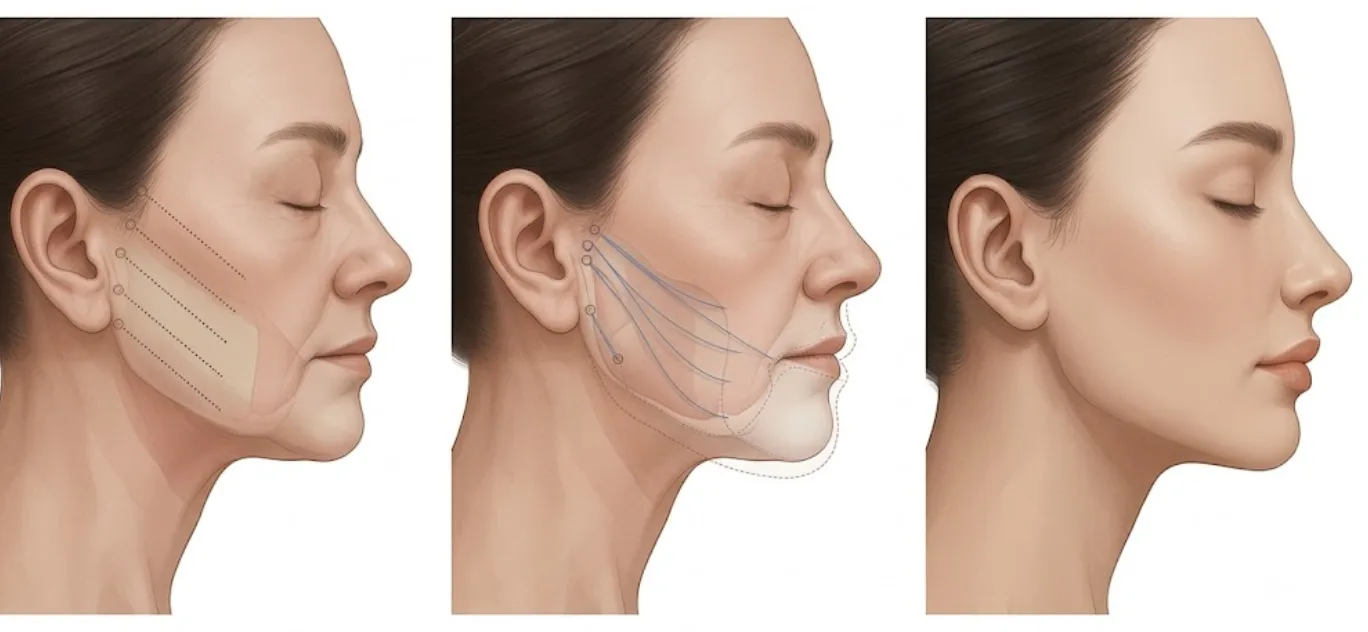
Illustration: barbed threads are placed along the paths shown and anchored at fixed points to lift early laxity of the lower face (Fixpoint Thread Lift™).
The swelling that does appear tends to be light and localised along the thread paths (commonly the cheeks and jawline) and can make the treated area feel slightly puffy or uneven in the first days. It is normal to feel a pulling or tight sensation as the threads take hold, and to notice tiny raised or dimpled points where the threads enter and exit. This is the tissue settling around the threads and is not a problem.
Understanding this keeps the first few days in perspective. The mild puffiness and tightness are temporary and settle quickly, and the natural-looking lift becomes cleaner as the swelling fades. That is why the result reads more clearly after the first week or two than on day one. We map the full arc in the recovery timeline and cover the longer view in when you will see results.
Timeline
Day by day: how long does the swelling last?
Days 1–3: light swelling and tenderness are at their most noticeable, and the face may feel tight or slightly pulled as the threads take hold. Small pinpoint bruises can appear at the entry points. This is the window to be gentle: keep your head elevated, avoid wide mouth movements, chewing tough food and any facial massage, and rest. It is normal to look mildly puffy and to feel some tightness when you smile or open wide.
Days 4–7: the visible swelling eases quickly and the pulling sensation softens as the tissues settle. Any pinpoint bruising shifts from dark to green-yellow as it fades. By the end of the first week many people feel comfortable in normal settings, though the treated area may still feel subtly tight and the lift can look a touch overcorrected before it relaxes.
Week 2 and beyond: most of the swelling others would notice has resolved, and the tightness continues to ease as the lift settles into a natural position over the following weeks. Small dimples or puckering where threads were placed usually smooth out; if any lingers, it is worth mentioning at review. A thread lift's recovery is short by design, but the tissues keep relaxing for a few weeks, so give the final look a little time.
Bruising
Bruising and tightness: pattern, colour, and how long
Bruising after a thread lift is usually limited to small pinpoint marks at the cannula entry and exit points, because there is no long incision and no wide dissection. These little bruises typically fade within one to two weeks, shifting colour from dark red-purple through blue, green and yellow as they clear. Occasionally a slightly larger bruise appears where a small vessel was crossed; this is uncommon and usually settles within the same window. Keeping your head elevated and being gentle in the first days both help limit how far bruising spreads and how long it lasts.
Tightness is the more prominent sensation. As the threads anchor and lift, it is normal to feel a pulling or taut feeling, especially with big facial movements, and this eases over the first one to two weeks as the tissues relax. You may also feel the threads faintly under the skin at first. Avoid facial massage, saunas, wide yawning and sleeping on your face early on, since all of these can disturb the freshly placed threads before they have settled.
A few everyday factors make bruising worse: blood-thinning medication and supplements such as fish oil, high-dose vitamin E, ginkgo and certain anti-inflammatories; alcohol around the time of the procedure; and high blood pressure. Disclosing every medication and supplement at your consultation and following the pre-procedure guidance is the simplest way to keep bruising down. We cover the comfort side in pain and anaesthesia and how long the lift holds in how long it lasts.
Reduce it
How to settle swelling and bruising faster
The measures that genuinely help are simple. Keep your head elevated, including sleeping propped up for the first few nights, so fluid drains from the face instead of pooling. Puffiness is almost always worse on waking. Be gentle with your face: avoid facial massage, firm cleansing, wide yawning or laughing, chewing tough or chewy food, and sleeping on your side or front for the first one to two weeks, so the freshly placed threads settle undisturbed.
Cool gently if your surgeon advises in the first day or two, never ice directly on the skin and never firm pressure over the treated area. Rest and skip anything that raises blood pressure, such as strenuous exercise, saunas, hot yoga and heavy lifting, for the period your surgeon specifies, since all of it feeds swelling and can worsen bruising. Skip alcohol and smoking, which slow healing, stay well hydrated, and keep salt low to discourage fluid retention.
Beyond that, follow the specifics your surgeon gives you: when you can resume massage, facials and exercise, and how to sleep in the first week. None of these are dramatic alone, but together they keep an already short recovery smooth. That matters most for international patients fitting a lift into a brief trip, and for anyone comparing a thread lift with a longer-lasting surgical option in thread lift vs facelift.
What's normal
What's normal, and what's worth an urgent call
Normal, expected recovery: light swelling and tenderness that peak in the first two to three days and settle over about a week; a pulling or tight sensation that eases over one to two weeks; small pinpoint bruises at the entry points that fade within one to two weeks; faint dimpling or puckering that usually smooths out; and being able to feel the threads slightly under the skin at first. None of this needs intervention. It is a thread lift settling as it should.
What warrants an urgent call is anything that breaks from that path: rapidly increasing or lopsided swelling, especially if tense and painful; severe or escalating pain not eased by simple measures; fever, or spreading redness, warmth, or discharge at an entry point suggesting infection; a thread that becomes visible, extrudes through the skin, or leaves a persistent dimple or hard lump; or a sudden, marked asymmetry. A thread lift is low-risk, but these signs are worth prompt review. Do not wait to see if they pass.
After a thread lift, the most reassuring thing is being able to reach the surgeon who placed your threads. If you can send a photo and get a same-person answer on whether your swelling and tightness are on track, or be told to come in, you are not left guessing, which is especially valuable once you have travelled home.
At Garnet
How Garnet manages swelling and after-care
Garnet is a single-surgeon clinic in Apgujeong, Seoul. Dr. In-Soo Baek is a board-certified plastic surgeon (Korean medical licence no. 77407) and the only operating doctor. He performs the Fixpoint thread lift and reviews your recovery himself, so the person assessing your swelling is the person who placed the threads. The clinic keeps the day unhurried, with clear after-care guidance for a procedure whose appeal is a quick, comfortable recovery.
Aftercare covers exactly the measures above: elevation, being gentle with the face, what to avoid, and when to resume massage, facials and exercise. The freshly placed threads then settle cleanly. Garnet runs structured follow-up at one, three and six months, and for international patients much of this happens by messenger: you send a photo and the same surgeon confirms your recovery is on course or flags anything that needs attention. If a surgical lift would suit you better long-term, the assessment will say so, and threads will not be upsold.
If you are still deciding, start with a no-obligation online assessment: send clear photos and the surgeon will give a realistic view of what recovery would look like for you, including how much swelling and bruising to expect and how long to stay.
Real Results
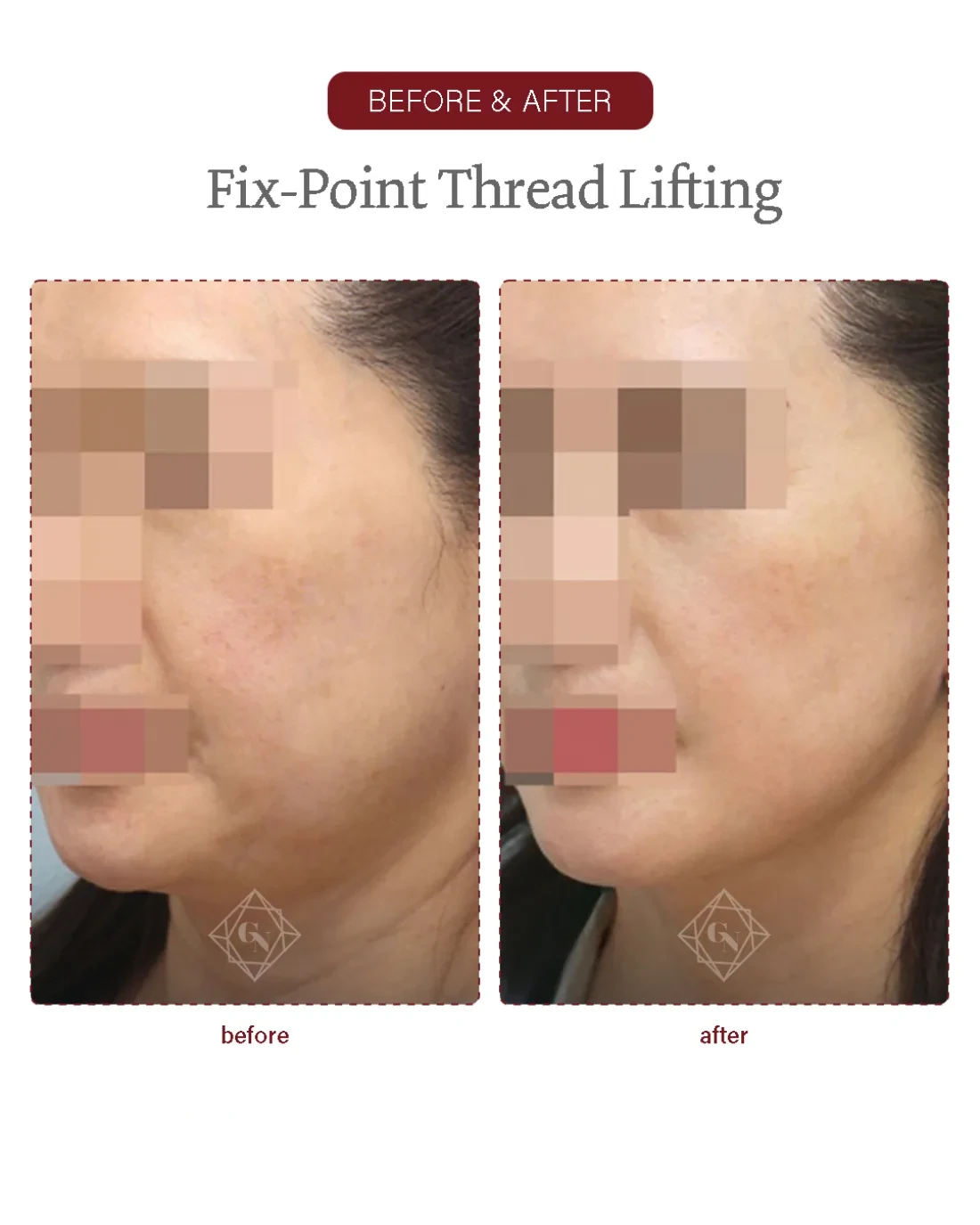
Before & After
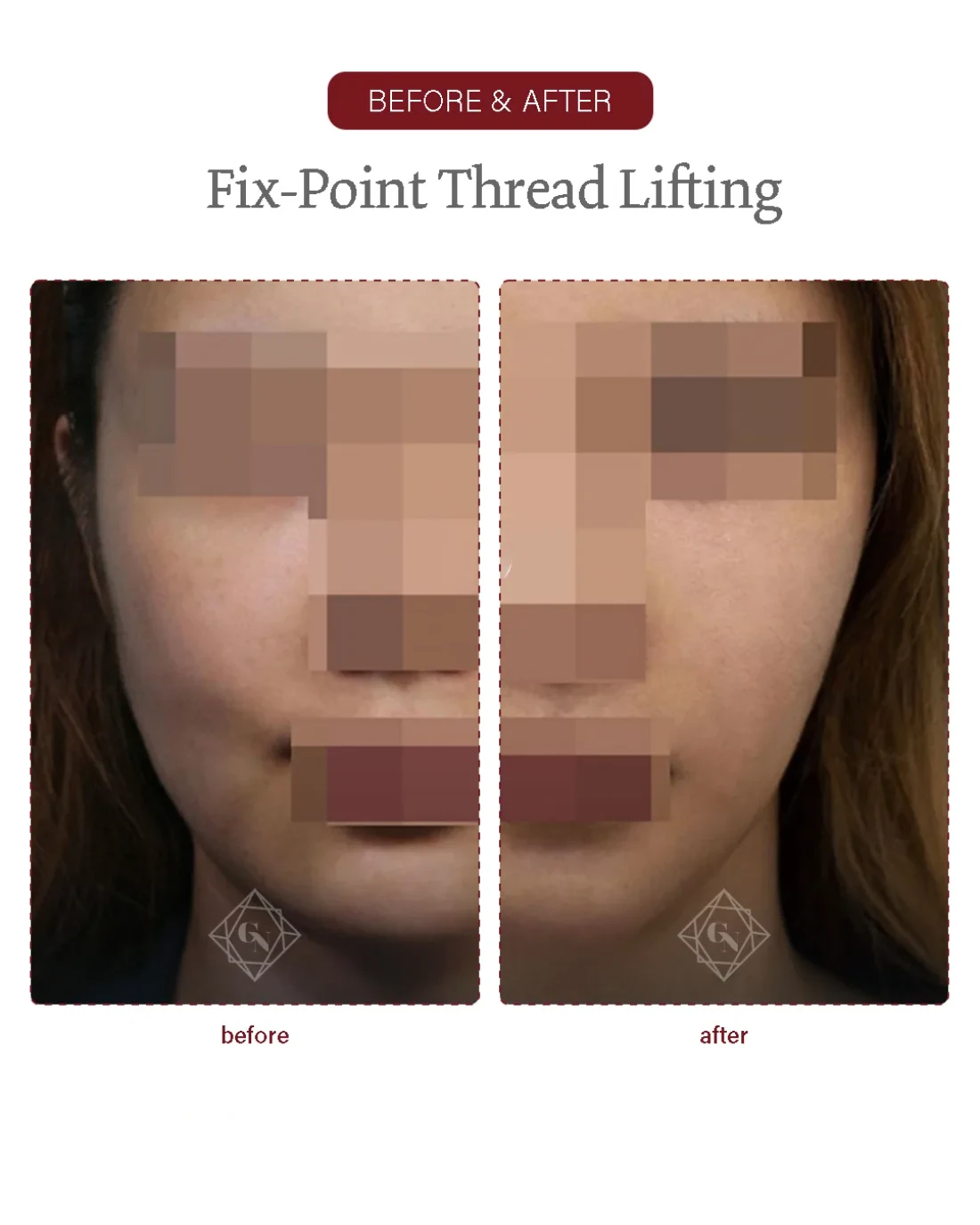
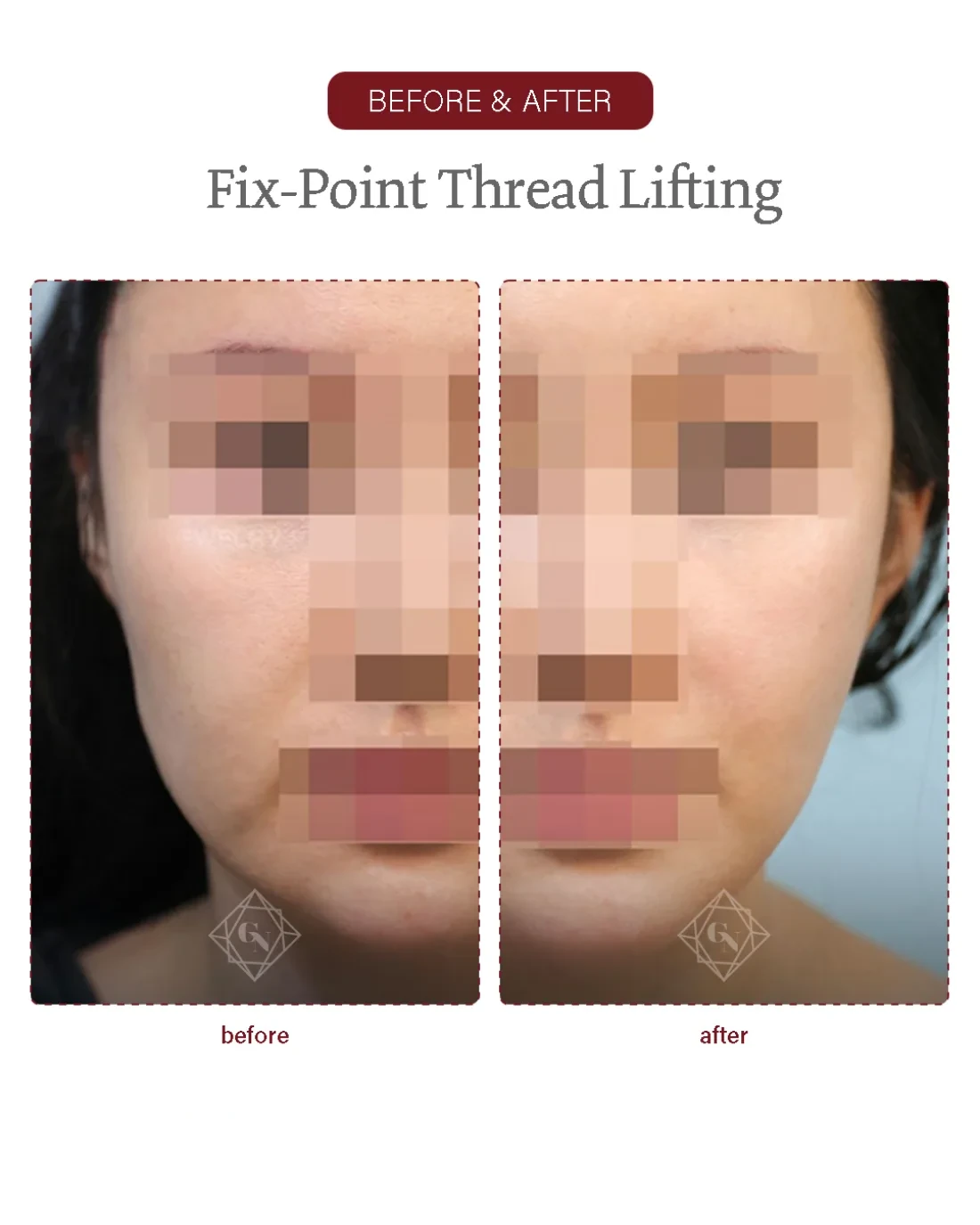
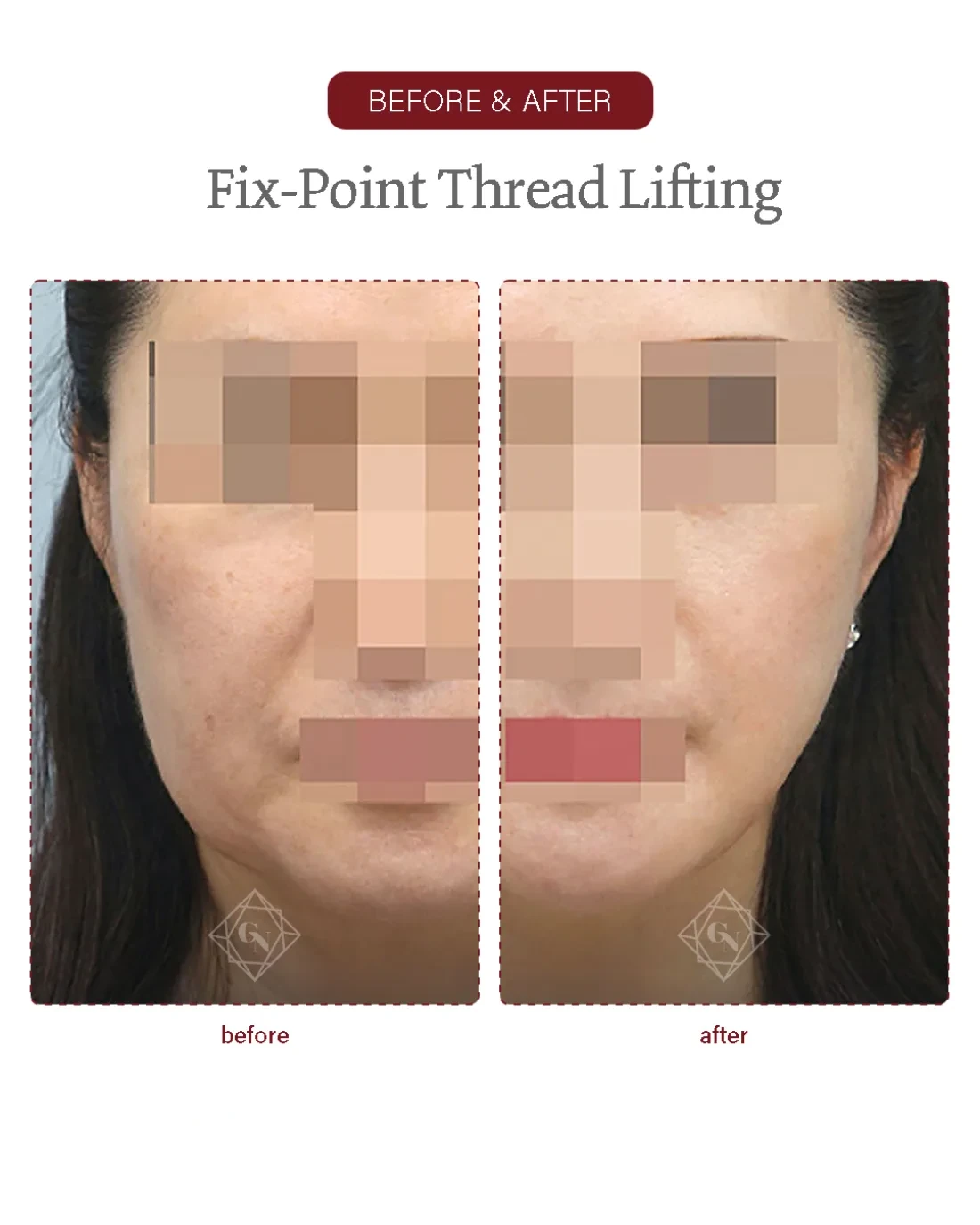
Thread-lift and contouring results of actual Garnet patients (published with consent, with date, procedure and clinic labelled). The lift is temporary and results, recovery and suitability vary by individual and are not guaranteed.
Prices
Price at Garnet
Thread lift
From₩100,000 + VAT per threadExcluding VAT (10% VAT is added at payment)Book now
Same price as Korean patients. Prices shown exclude 10% VAT; your written quote, issued after the in-person consultation, shows the full amount payable.
Dr. In-Soo Baek
Director & sole operating surgeon
Korean medical licence no. 77407
Operate on what you came for. Trained at Korea University Medical Center. Every case planned, performed and reviewed by the same hands.
1Operating surgeon
~2Surgeries per day
7Registered techniques
Board-certified plastic surgeon
Plastic surgery training at Korea University College of Medicine & graduate school
Korean Society of Plastic and Reconstructive Surgeons member, in its facial-contour, eye & rhinoplasty groups
Consults, operates and follows up each case himself
Peer-reviewed papers behind the facts on this page. Each describes findings in its own study group — not results at Garnet — and none predicts your own outcome.
Atiyeh BS et al. Percutaneous Thread Lift Facial Rejuvenation: Literature Review and Evidence-Based Analysis. Aesthetic Plastic Surgery. 2021. doi:10.1007/s00266-020-02095-1
Fundaro S et al. Expert consensus on soft-tissue repositioning using absorbable barbed suspension double-needle threads in Asian and Caucasian patients. Journal of Cutaneous and Aesthetic Surgery. 2021. doi:10.4103/jcas.jcas_138_19
Villa MT et al. Barbed Sutures: A Review of the Literature. Plastic and Reconstructive Surgery. 2008. doi:10.1097/01.prs.0000299452.24743.65
FAQ
Common questions
How long does swelling last after a thread lift?
Swelling is mild and short-lived. It usually peaks in the first two to three days, then settles quickly, with most of the visible puffiness resolving within about a week. A subtle tightness can linger a little longer as the threads settle, easing over one to two weeks. Recovery is short by design compared with surgery.
How long does bruising last after a thread lift?
Bruising is usually limited to small pinpoint marks at the cannula entry points and typically fades within one to two weeks, shifting from dark to green-yellow as it clears. Occasionally a slightly larger bruise appears where a small vessel was crossed, but this is uncommon and settles in a similar window.
Why does my face feel tight or pulled after a thread lift?
That taut, pulling feeling is normal as the barbed threads anchor and lift the tissue, and it is most noticeable with big facial movements like smiling or yawning. It eases over the first one to two weeks as the tissues relax and the lift settles. You may also feel the threads faintly under the skin at first, which also fades.
How can I reduce swelling and bruising after a thread lift?
Keep your head elevated for the first few nights, be gentle with your face (no massage, firm cleansing, wide yawning or chewing tough food), avoid saunas, hot yoga, strenuous exercise and sleeping on your face for one to two weeks, keep your blood pressure steady, skip alcohol and smoking, stay hydrated and keep salt low. Disclosing your medications beforehand also keeps bruising down.
Is swelling after a thread lift normal?
Yes. Light swelling and tenderness peaking in the first two to three days and settling over about a week is the normal, expected path, as are small pinpoint bruises and a temporary tight, pulling sensation. What warrants a call is rapidly increasing or lopsided swelling, severe pain, infection signs, or a thread that becomes visible or extrudes.
When should I urgently contact the clinic?
Call promptly if you have rapidly increasing or lopsided swelling that is tense and painful, severe or escalating pain, fever, spreading redness, warmth or discharge at an entry point, a thread that becomes visible or extrudes through the skin, a persistent dimple or hard lump, or a sudden marked asymmetry. These are worth prompt review; do not wait to see if they pass.
When can I get facials or massage after a thread lift?
Avoid facial massage, facials, saunas and firm pressure on the treated area for the period your surgeon specifies, usually a few weeks, so the freshly placed threads settle undisturbed. Massaging or manipulating the area too early can shift the threads and affect the lift. Your surgeon confirms when it is safe to resume based on your recovery.
Why can I feel or see small dimples where the threads are?
Faint dimpling or puckering at the thread points is common in the first days as the tissue settles around the barbs, and it usually smooths out over the first week or two. If a dimple, visible thread or hard lump persists beyond that, mention it at review. It is easily assessed and, if needed, adjusted.
When can I fly home after a thread lift?
Because a thread lift has minimal downtime, most people can travel within a few days, once your surgeon confirms the entry points are settling. Mild tightness may remain and continues to ease after you land, and is not a reason to delay travel on its own. Stay hydrated and avoid alcohol on the flight; your surgeon confirms the right timing for you.
How does Garnet check my recovery is on track?
Garnet runs structured follow-up at one, three and six months with the same board-certified surgeon who placed the threads. For international patients much of this is by messenger: you send a photo and the same surgeon confirms your swelling, bruising and the settling lift are on track or asks you to come in.
My mom recently had a brow lift and lower blepharoplasty with Dr. Baek, and our experience has been wonderful so far. The Garnet team was incredibly kind and welcoming, with Kelly assisting us as our English consultant—she made everything…
I’m so happy I chose this clinic for my lower blepharoplasty. I was traveling from abroad by myself, so I was a little nervous, but from the beginning I felt comfortable and truly cared for. Everyone was kind, patient, and professional…
Came in for an in-person consult and ended up choosing Garnet and Dr.Baek for my non-incisional DES and tiplasty/alarplasty. I communicated with Kelly (English consultant) from the start till now (3 weeks post-op). She really help me feel…
My under-eyes have been sagging and folding for years... I tried to cover it up with makeup, but it actually got stuck in the wrinkles and made it stand out even more. While going for consultations, I noticed that the bigger the hospital…
Wondering how much swelling and downtime a thread lift would mean for you? Send clear photos for a no-obligation pre-assessment before you plan a trip.
Send photos and your question before you travel. An English-speaking coordinator reviews every enquiry and replies with guidance on whether surgery is appropriate, the likely plan and timing.
✓ Reviewed by the clinic coordinator, not a bot
✓ Photo-based pre-assessment before you fly
✓ Foreign-patient scheduling & after-care
✓ One surgeon for consultation, surgery and follow-up
Prefer to chat now? Reach the coordinator directly:









 T S7 months ago



