A neck lift tightens the deeper platysma muscle and SMAS layer through a small incision under the chin and behind the ears, reshaping the under-chin and jawline. Because the neck is a mobile area that swells readily and drains slowly, the swelling and bruising here settle over a longer window than after a small facial procedure, and the neck often feels tight, firm or banded before the clean jawline emerges. That is normal, and it follows a predictable arc. Below is the neck-lift swelling course week by week, with the warning signs that call for a same-day contact.
The short answer
A neck lift tightens the platysma and SMAS through submental and behind-the-ear incisions, so expect swelling and bruising concentrated on the neck, under-chin and jawline. The mid-face is largely spared.
Swelling peaks in the first days and eases substantially over two to three weeks; the sutures come out in two stages, around day 10 and day 14, which are also healing checks.
Bruising spreads across the neck and under-chin and settles downward with gravity, sometimes drifting toward the collarbone and upper chest; most clears within about two weeks.
Sleeping propped up, gentle early cooling, the support garment, rest, low salt and no alcohol, blood thinners or strenuous activity all help the neck de-swell faster. Dr. Baek reviews the neck at 1, 3 and 6 months.
Why the neck, jawline and under-chin swell after a neck lift
A neck lift works on the deeper structures of the neck as well as the skin. Through a small incision under the chin and behind the ears, the surgeon tightens the platysma muscle and the SMAS layer to redefine the under-chin and jawline, sometimes adding a corset platysmaplasty to cinch the midline bands, or Pelican-style contouring where indicated. Because that involves the deeper tissue across the neck, the area responds with real, expected swelling, and the neck feels tight and firm as it settles.
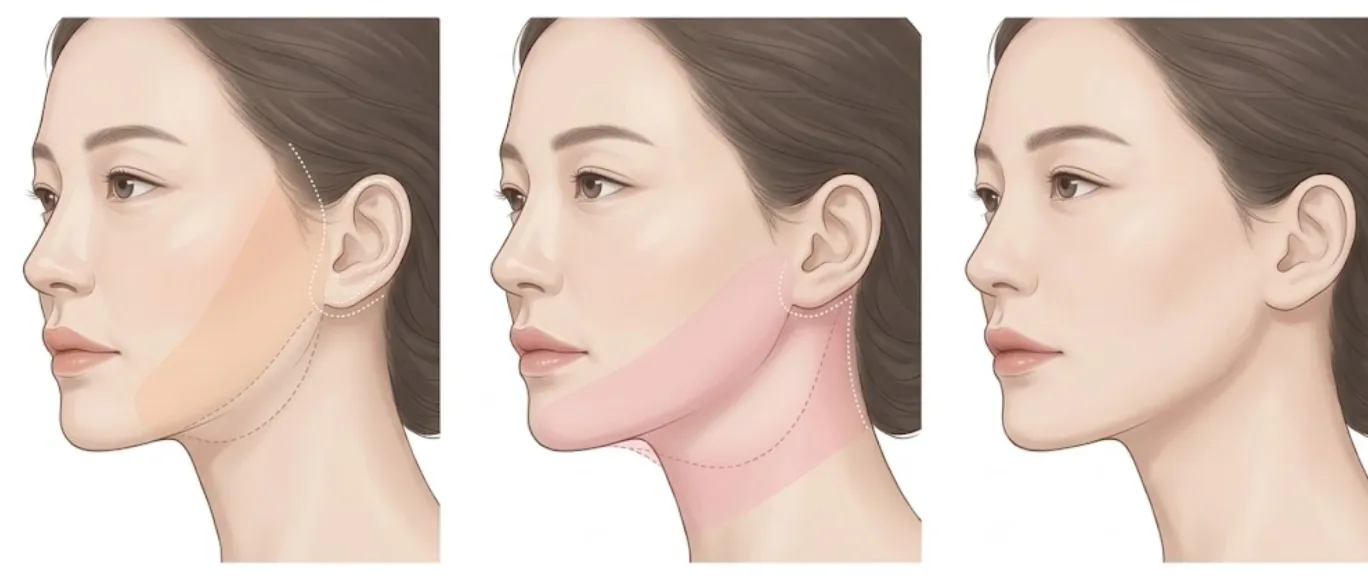
Illustration: through a fine line around the ear (dotted), the sagging lower face and neck are lifted up and back toward the ear (shaded); the dashed outline shows the old contour.
The neck also swells readily and drains slowly, and it obeys gravity, so fluid tends to pool low. Over the first days the under-chin and lower neck look fuller and feel firm, and it is common for the neck to feel banded or tight and for the jawline to look softer than it will be once the swelling clears. A snug dressing or support garment is often used early on to help the tissues settle against the new contour.
Understanding this makes the early weeks far less alarming. The full, firm, slightly heavy neck of the first days is swelling masking the result. The clean jawline emerges from underneath as the swelling settles, which is why the contour is judged over weeks and months. The whole neck-lift recovery is laid out in the recovery timeline, and the months-long jawline change in when you will see results.
Timeline
Week by week: how long neck lift swelling lasts
Days 1–5: swelling builds and peaks, usually around days three to five, and the under-chin, neck and jawline are firm and full. Any dressing or support garment is in place early, and bruising appears and darkens across the neck. This is the window to be strict about head elevation, gentle cooling and rest, and to keep your chin from pressing hard into your chest. It is normal to look swollen and not yet to see the defined jawline.
Week 1–2: swelling begins a steady decline and bruising shifts from dark to green-yellow as it fades and drifts downward. The sutures come out in two stages, around day 10 and day 14, which are also checks that the swelling and incisions are settling as expected. By the end of week two, many people look markedly better than the peak, though the neck still feels tight and is visibly recovering.
Weeks 3–6 and beyond: the neck and under-chin swelling that others might notice keeps going down, and by around 6 weeks most patients feel comfortable in normal social settings. What remains after that is subtle and slow: a residual tightness and firmness along the neck and under-chin, occasional banding, and a faint fullness that softens gradually over the following months as the deeper tissues settle and the jawline fully emerges. It is normal for the neck to feel firmest in the first weeks and for the two sides to de-swell at slightly different rates before evening out.
Bruising
Neck bruising: where it spreads, what colour, and how long
Bruising after a neck lift concentrates on the neck and under-chin, because that is where the work is done. With gravity it settles downward, so bruising can appear lower than you might expect, drifting toward the collarbone and even the upper chest over the first days. This downward migration is normal. It is simply how a bruise drains in a mobile, low-lying area.
Neck bruising passes through the usual colours as it clears, from dark red-purple to blue, then green and yellow, before it fades. Most bruising settles within about two weeks. Keeping your head elevated and cooling gently in the first 48 hours both help limit how far it spreads and how long it lasts, and a support garment, where used, helps the tissues settle; once bruising has faded enough, a high collar or scarf can cover what remains while it clears.
Neck bruising tends to be heavier with blood-thinning medication and supplements (fish oil, high-dose vitamin E, ginkgo and certain anti-inflammatories), with alcohol around the time of surgery, and with high blood pressure or straining. Telling Dr. Baek about every medication and supplement before the neck lift, and following the pre-surgery guidance, is the simplest way to limit it. Neck-lift comfort is covered in pain and anaesthesia and how the incisions heal in scars and healing.
Reduce it
How to bring neck swelling and bruising down faster
After a neck lift, a few simple habits done every day make the real difference. Keep your head elevated, including sleeping propped up at around 30–45 degrees for the first one to two weeks, so fluid drains from the neck instead of pooling. Swelling under the chin is usually at its worst first thing in the morning, and sleeping raised reduces it. Cool the area gently in the first 48 hours with cool compresses as your surgeon directs, never ice directly on the skin and never firm pressure over the incisions. Wear the support garment exactly as instructed, as it helps the neck settle against the new contour.
Rest and pace yourself. Avoid strenuous activity, heavy lifting, bending over and anything that raises blood pressure for the first two to three weeks, and avoid sharp neck movements or pressing your chin hard into your chest, all of which feed swelling and can worsen bruising or, rarely, bleeding. Keep your blood pressure steady; calm, low-effort days in the first weeks protect the neck incisions. Skip alcohol and smoking, since both slow healing and add to neck swelling, drink plenty of water, and keep salt low so less fluid collects under the chin.
Beyond that, follow the specifics your surgeon gives you: when to gently mobilise your neck, how long to wear the garment, and when light activity and then exercise are safe. Each step is small, but together they shorten neck-lift recovery. That matters most for international patients recovering within a planned trip, and is part of the broader picture in facelift in Korea for international patients.
What's normal
What's normal after a neck lift, and what's worth an urgent call
Normal, expected recovery: substantial swelling peaking in the first three to five days and easing over the following two to three weeks; bruising across the neck and under-chin that drifts downward toward the collarbone, shifts colour and clears over about two weeks; tightness, firmness, numbness, occasional banding and a feeling of heaviness in the neck that softens over months; and slight differences between the two sides early on. None of this needs intervention; it is the platysma and SMAS repair settling as expected.
What warrants an urgent call is anything that breaks sharply from that path, because a neck lift involves a surgical field low on the neck: rapidly increasing swelling on one side, especially if tense, firm and painful (a possible collection that needs prompt review); severe or escalating pain not eased by your prescribed medication; a sudden change in skin colour over the neck; any difficulty breathing or swallowing, or a rapidly enlarging, tight neck; fever or spreading redness, warmth or discharge suggesting infection; or any difficulty that worries you. Sudden one-sided neck swelling in the first day or two is the classic reason to contact the clinic without delay.
With a neck lift, what reassures most is direct access to Dr. Baek, who did the operation. A photo of your neck sent to him gets an answer from the same person on whether the swelling and bruising look right or whether you should come in. That matters most once you have flown home.
At Garnet
How Garnet manages swelling, after-care and flying home
Garnet is a single-surgeon clinic in Apgujeong, Seoul. Dr. In-Soo Baek is a board-certified plastic surgeon (Korean medical licence no. 77407) and the only operating doctor. He performs the neck lift and reviews your recovery himself, so the person assessing your swelling is the person who did the surgery. Aftercare covers the measures above (elevation, gentle cooling, the support garment, rest, blood-pressure care and what to avoid), and the staged suture-removal visits around days 10 and 14 double as checks that the swelling and incisions are settling on track.
Because a neck lift heals over a longer window, international patients usually plan to stay in Korea through both suture-removal stages, around day 10 and day 14, so the surgeon can confirm the incisions are healing and the swelling is settling before a long flight; flying before then is generally discouraged. By the time the sutures are out the worst of the swelling has passed, although the neck still feels tight and firm, with some fullness under the chin that keeps softening once you are home. On the flight, the cabin's dry, pressurised air can make the neck feel slightly more swollen for a few hours, so stay hydrated and avoid alcohol. How long to plan for in Seoul is covered in how long to stay in Korea and the flying question in when you can fly after surgery.
Garnet runs structured follow-up at one, three and six months, which suits the neck's months-long settling, and for international patients much of this happens by messenger: you send a photo and the same surgeon confirms your recovery is on course or flags anything that needs attention. If you are still deciding, start with a no-obligation online assessment: send clear photos of your neck and jawline, and Dr. Baek will tell you how much swelling and bruising to expect after a neck lift and how long you should plan to stay in Korea.
Real Results
Before & After
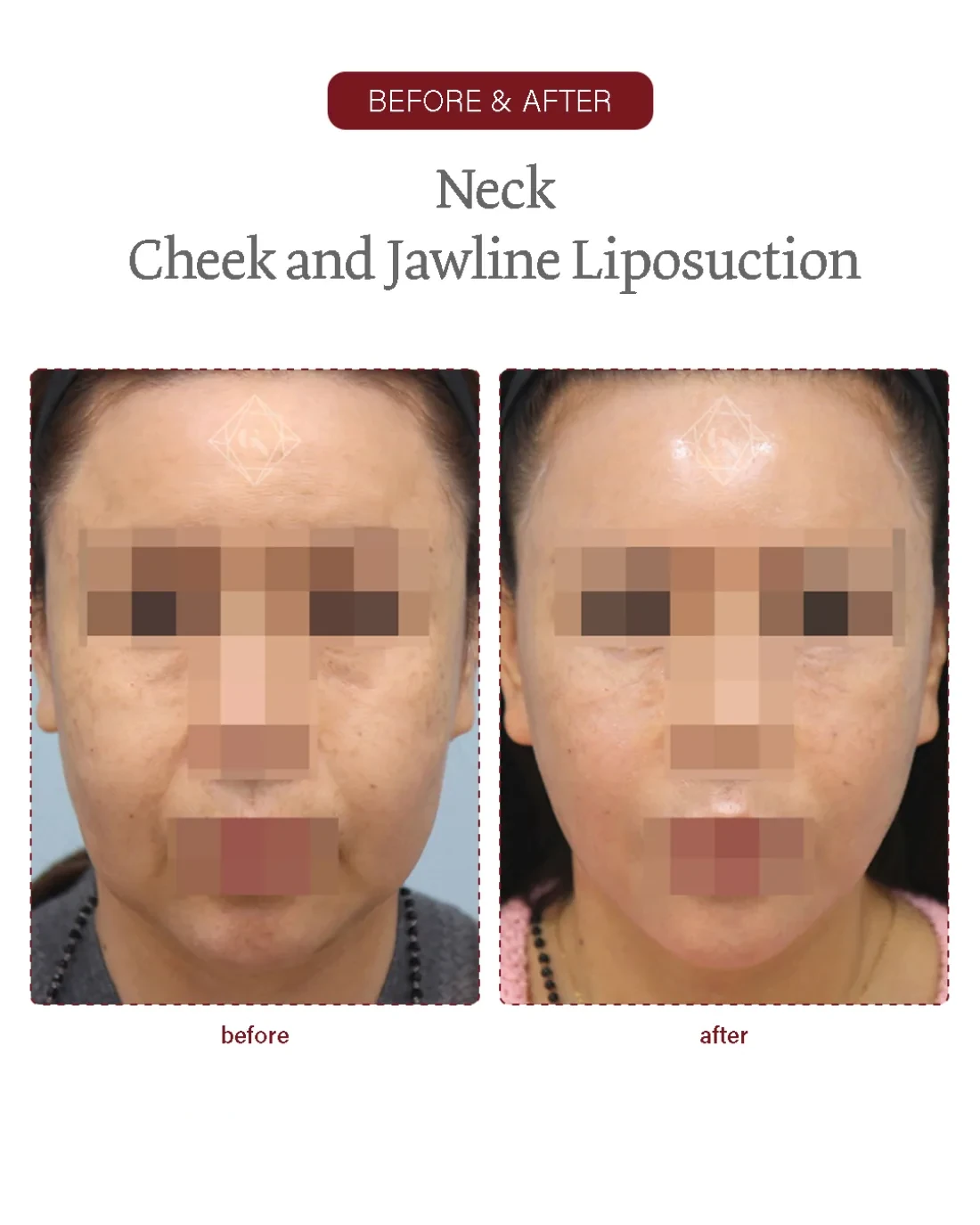
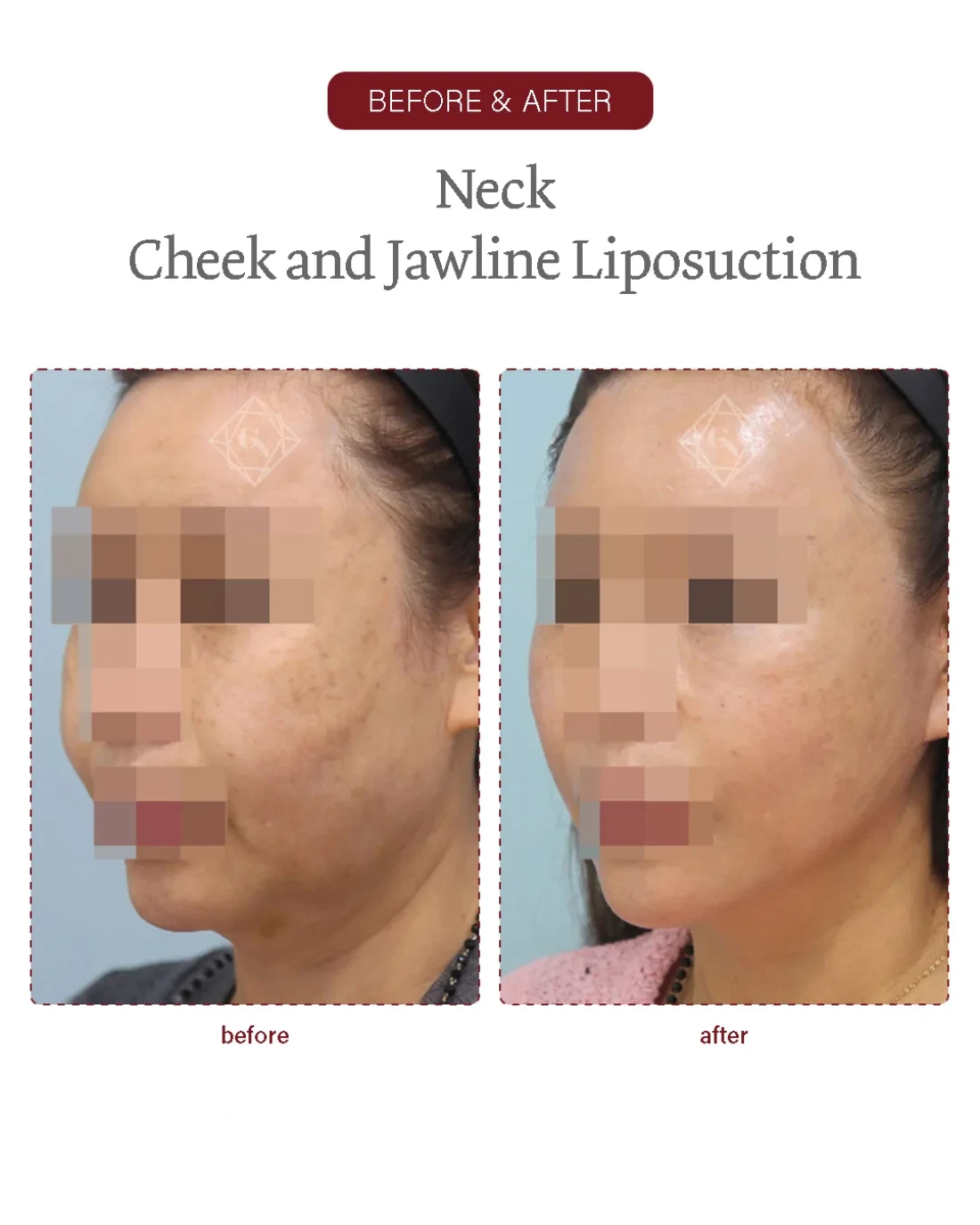
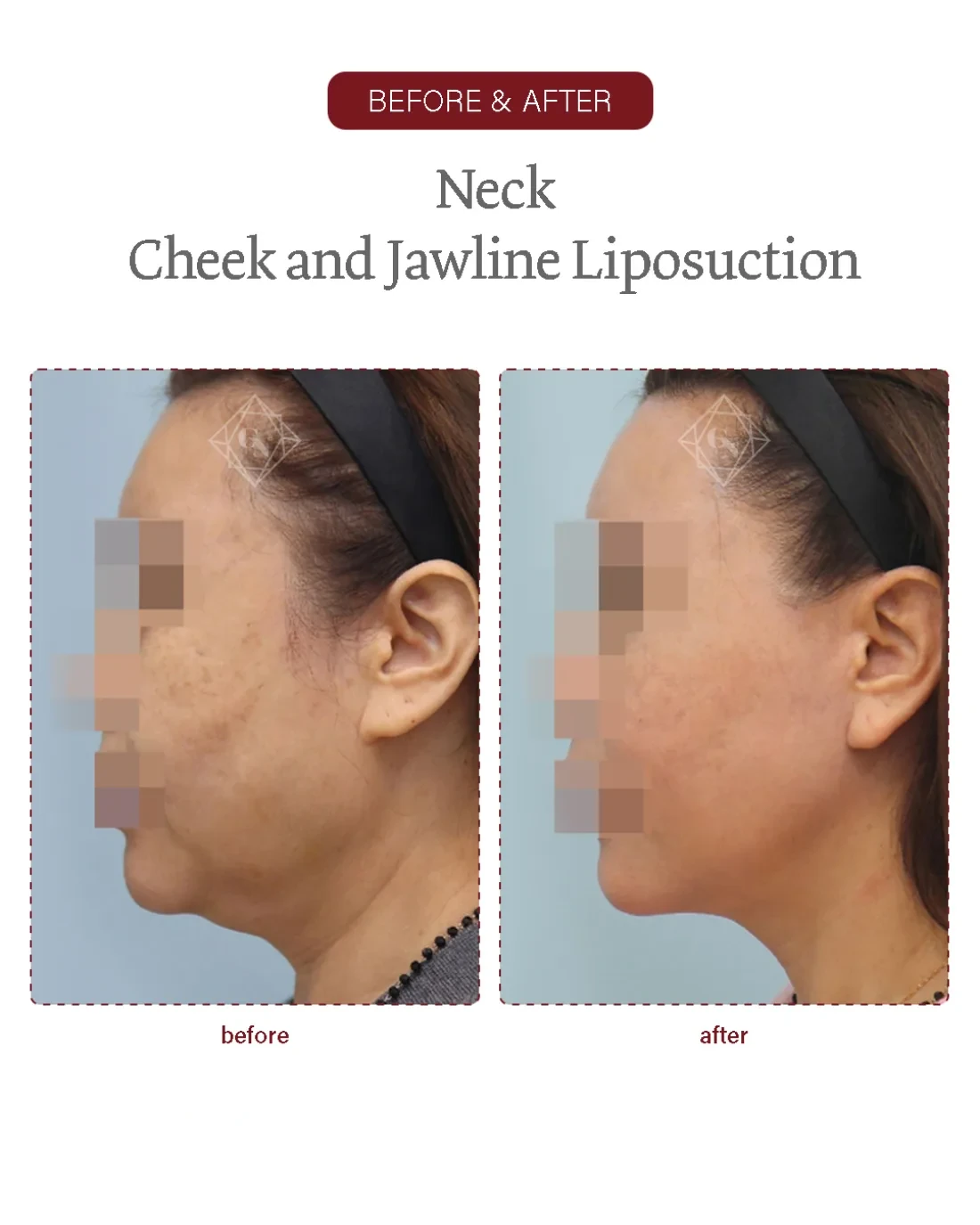
Neck and jawline contouring results of actual Garnet patients (published with consent, with date, procedure and clinic labelled). Results, recovery and suitability vary by individual and are not guaranteed.
Prices
Price at Garnet
Pelican™ — double chin & neck lines
From₩4,000,000 + VATExcluding VAT (10% VAT is added at payment)Book now
Same price as Korean patients. Prices shown exclude 10% VAT; your written quote, issued after the in-person consultation, shows the full amount payable.
Dr. In-Soo Baek
Director & sole operating surgeon
Korean medical licence no. 77407
Operate on what you came for. Trained at Korea University Medical Center. Every case planned, performed and reviewed by the same hands.
1Operating surgeon
~2Surgeries per day
7Registered techniques
Board-certified plastic surgeon
Plastic surgery training at Korea University College of Medicine & graduate school
Korean Society of Plastic and Reconstructive Surgeons member, in its facial-contour, eye & rhinoplasty groups
Consults, operates and follows up each case himself
Peer-reviewed papers behind the facts on this page. Each describes findings in its own study group — not results at Garnet — and none predicts your own outcome.
Batniji RK. Complications/Sequelae of Neck Rejuvenation. Facial Plastic Surgery Clinics of North America. 2014. doi:10.1016/j.fsc.2014.01.007
Yellin S et al. Direct Cervicoplasty. Facial Plastic Surgery. 2014. doi:10.1055/s-0034-1383553
Bitner JB et al. Direct Submentoplasty for Neck Rejuvenation. Archives of Facial Plastic Surgery. 2007. doi:10.1001/archfaci.9.3.194
FAQ
Common questions
How long does swelling last after a neck lift?
Neck lift swelling usually peaks between day 3 and day 5, then eases steadily. Most of the swelling others would notice resolves over two to three weeks, with many patients comfortable socially by around six weeks. Residual tightness, firmness and occasional banding in the neck soften over the following months as the deeper tissues settle.
How long does bruising last after a neck lift?
Bruising concentrates on the neck and under-chin and drifts downward with gravity, sometimes reaching the collarbone or upper chest. On the neck it moves from dark to green-yellow as it fades, and most is gone within about two weeks. A high collar or scarf can cover what remains while it clears.
Why does my neck feel tight and banded after a neck lift?
Because the operation tightens the platysma muscle and SMAS layer, the neck feels firm, tight and sometimes banded as those deeper tissues settle against the new contour. This is expected and usually eases over weeks to months. A support garment worn as instructed helps the neck settle. Persistent hard banding is worth raising with your surgeon.
How can I reduce swelling and bruising after a neck lift?
Keep your head elevated (sleeping propped up at around 30–45 degrees for the first week or two), cool gently in the first 48 hours, wear the support garment as instructed, rest and avoid strenuous activity, straining and sharp neck movements for two to three weeks, keep your blood pressure steady, skip alcohol and smoking, stay hydrated and keep salt low.
Is swelling after a neck lift normal?
Yes. Substantial swelling peaking in the first three to five days and easing over the following weeks is the normal, expected path, as is bruising that drifts toward the collarbone and a neck that feels tight and banded before settling. What warrants an urgent call is rapidly increasing, tense one-sided swelling, difficulty breathing or swallowing, severe pain, or signs of infection.
When should I urgently contact the clinic?
Call without delay if you have rapidly increasing swelling on one side (especially if it is tense, firm and painful), any difficulty breathing or swallowing or a rapidly enlarging, tight neck, severe or escalating pain not eased by your medication, a sudden change in skin colour over the neck, or fever, spreading redness, warmth or discharge. Sudden one-sided neck swelling in the first day or two needs prompt review.
Do I have to wear a compression garment after a neck lift?
A snug dressing or support garment is commonly used after a neck lift to help the tissues settle against the new contour and to limit swelling. Your surgeon will tell you how long to wear it and when it can come off. Wearing it as instructed genuinely helps the neck settle and keeps swelling down in the early weeks.
When can I cover the bruising to go out?
Bruising on the neck often clears within about two weeks, and a high collar, turtleneck or scarf can cover what remains while it fades. Avoid anything tight enough to press on the incisions before your surgeon clears it, and follow their timing for makeup near healed incisions.
When is it safe to fly home after a neck lift?
Most international patients stay through both suture-removal stages, around day 10 and day 14, so the surgeon can check the under-chin and behind-the-ear incisions and the swelling before a long flight. The neck may still feel tight and slightly full after you land. Drink water and skip alcohol on the plane; Dr. Baek sets the flying date for your own recovery.
How does Garnet check my swelling is settling normally?
Garnet runs structured follow-up at one, three and six months with the same board-certified surgeon who performed the procedure, plus the staged suture-removal checks around days 10 and 14. For international patients much of this happens by messenger: you send a photo of your neck, and the surgeon who operated tells you whether it is settling normally or whether you should be seen.
My mom recently had a brow lift and lower blepharoplasty with Dr. Baek, and our experience has been wonderful so far. The Garnet team was incredibly kind and welcoming, with Kelly assisting us as our English consultant—she made everything…
I’m so happy I chose this clinic for my lower blepharoplasty. I was traveling from abroad by myself, so I was a little nervous, but from the beginning I felt comfortable and truly cared for. Everyone was kind, patient, and professional…
Came in for an in-person consult and ended up choosing Garnet and Dr.Baek for my non-incisional DES and tiplasty/alarplasty. I communicated with Kelly (English consultant) from the start till now (3 weeks post-op). She really help me feel…
My under-eyes have been sagging and folding for years... I tried to cover it up with makeup, but it actually got stuck in the wrinkles and made it stand out even more. While going for consultations, I noticed that the bigger the hospital…
Send photos and your question before you travel. An English-speaking coordinator reviews every enquiry and replies with guidance on whether surgery is appropriate, the likely plan and timing.
✓ Reviewed by the clinic coordinator, not a bot
✓ Photo-based pre-assessment before you fly
✓ Foreign-patient scheduling & after-care
✓ One surgeon for consultation, surgery and follow-up
Prefer to chat now? Reach the coordinator directly:









 T S7 months ago



